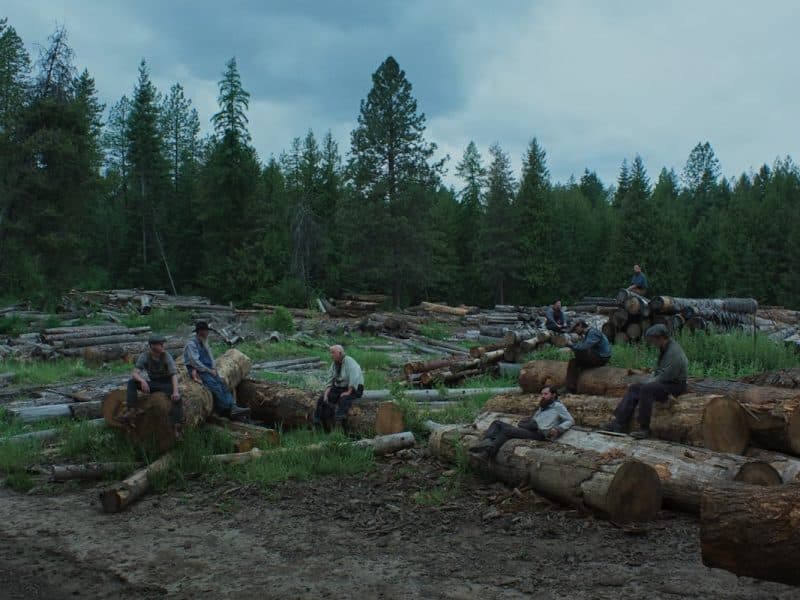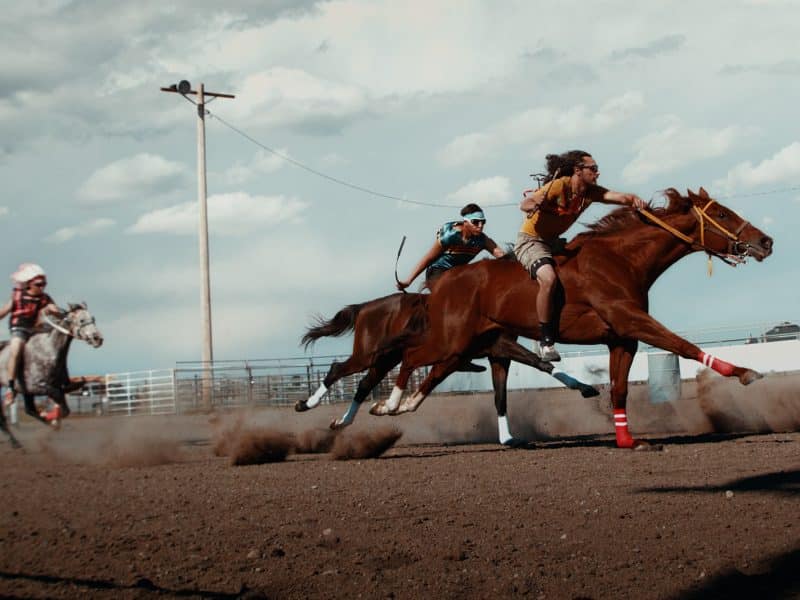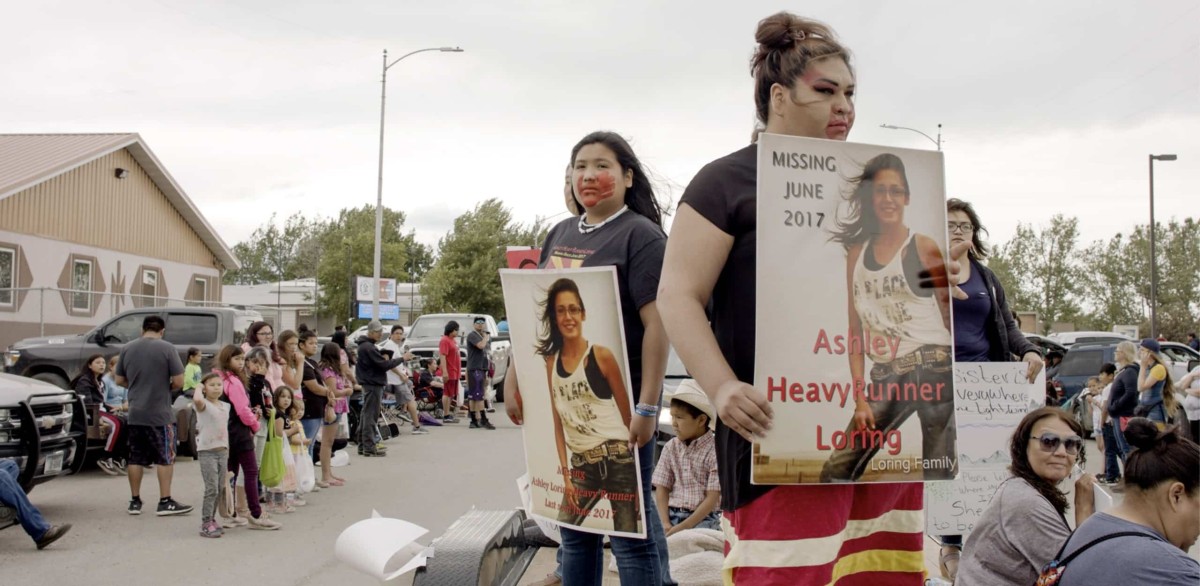
Ashley Loring Heavyrunner went missing on the Blackfeet reservation in Northern Montana in 2017. That was also the year searchers from Bonnie Three Irons’ family found her body near the Wolf Mountains on the Crow reservation. Two years later, Lonette Keehner, Blackfeet Nation, was murdered by two white supremacists at the Super 8 Motel she had worked at for more than 20 years.
Families and whole communities have asked why. Who has answered? Missing person reports drag on. The FBI, the state and county attorneys all share a loaded lethargy. Often, tribal police fail to act with enough urgency amid murky jurisdictional questions.
Over the past three years, two members of the Blackfeet Nation have developed intimate relationships with those deeply affected by this crisis, looking closely at what happened with Heavyrunner, Three Irons and Keehner. Filmmakers and siblings Ivy MacDonald and Ivan MacDonald, who live in Billings and were producers on the Showtime series and crime documentary, Murder in Big Horn, among other projects, are close to finishing production on When They Were Here, a doc project detailing the crisis of missing and murdered Indigenous people.
With a unique blend of perspective and intention, the MacDonalds’ various joint projects draw from Ivan’s academic/social-work experiences and Ivy’s expertise informed by a BFA in digital filmmaking from the University of Montana in Missoula. Both are experienced technicians, producers and actively involved in community-building both on the Blackfeet Reservation in Northern Montana and nationally.
When They Were Here is a portrait of powerful insistence. With this project, the MacDonalds are exemplifying what it means for filmmaking to build and repair beyond the clapper boards and credits. The Pulp spoke with Ivy and Ivan about their film, their intentions and their communities.
This interview has been edited for length and clarity.
The Pulp: Could you give some context to how you two work together? How do you view your creative relationship?
Ivan MacDonald: Ivy and I are brother and sister. We both grew up on the Blackfeet Reservation. Our first collaboration was probably around 2017, and we have been collaborating off and on since. We just try and support each other’s work in any way we can.
Ivy MacDonald: A lot of our projects merge together, whether that’s us directing together or producing each other’s work or what have you. So it’s a good dynamic, I think.
Do you find yourselves bringing certain skills or sensibilities individually to your projects?
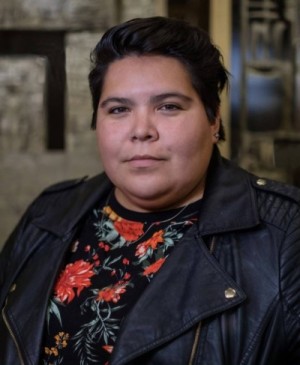
Ivan M: Ivy is helping produce my Hulu project: Breaking the Silence (in development) right now. And I’m going to be one of the lead producers on her narrative film: Buffalo Stone (in development), working on the script that Lily Gladstone co-wrote. So I think that is the way we support each other in those various roles. We also have both When They Were Here, which we are co-directing and our second film Bring Them Home, which Lily is executive producing, which we are co-directing. We both have our own interests and ideas. Most of my experience, to be totally honest, has been producing. I produced our Showtime series, the ESPN stuff (Blackfeet Boxing: Not Invisble), and produced Ivy’s stuff. I think producing up until this point has been my strength. The Hulu project will be my first solo directorial debut.
Ivy M: I went to film school at UM, graduated from there in 2017 and have been bouncing around between directing, producing and cinematography. I do a lot of cinematography for other projects. So my roles are kinda all over the place, but it encompasses all of filmmaking. Producing is a little bit newer to me because, it’s funny, we only had one class in school that actually taught us how to produce. But it’s different, it’s fun. And I can support Ivan and he supports a lot of the work that I do. So it’s just that back and forth.
Could either or both of you speak about When They Were Here? I know you sometimes refer to this project as your baby. You’ve been working on it for quite some time and with quite a deal of care. It has incredible significance and importance and relevance. Perhaps this film is a starting point to understand how you bring your skills and background to a project? Or how the project has grown as you’ve grown as filmmakers?
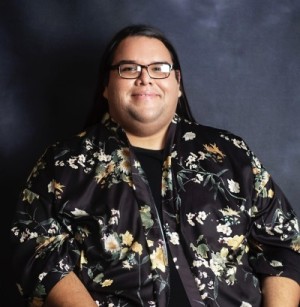
Ivan M: When They Were Here is the project we started out with, and we’ve had many other projects come out tangentially to it. It’s probably the project we are best known for. But WTWH film is definitely our passion project. It’s the one we are taking the most time and care with. Of course, all of our projects are really important to us, but this one is the one that was the jumping-off point. We really want to hone it and tell it in the best way possible, the way that is most reflective of our community and the culture we grew up in in Browning. When we did our first short (which later expanded into When They Were Here), that’s what grew our profile and how we got connected to news agencies. And then it’s how we got connected with ESPN, when they were working up in our community. And that also led to our Showtime series.
Ivy M: This is our brainchild in a way. But also personally, it’s been such a journey. Like Ivan said, taking our time with it has been an amazing collaboration. It’s really cool to see this shift from when we first initially did WTWH to where it is now, and seeing that difference and growth in the story, with the community, with the healing aspect. Especially with this film, it’s gonna touch a lot of people.
Could you speak more about what “taking-your-time” filmmaking looks like? There is a real intentionality and consideration of space in this project.
Ivy M: We are taking our time and, specifically, with our perspective of the film. Time and space isn’t a thing. In the film, the land is a character, also. It doesnt change a lot, but there are the memories that are in the land. There is this, intentionality like you said, to be in that space, in that time. When we are doing the interviews, Ivan does most of the interviews, his background in social work helps quite a bit. There is this “pause” moment when we do interviews. Time isn’t a consideration.
Ivan M: Thinking about time, growing up, there’s that funny saying, “Indian time.” It’s actually a deliberate theoretical idea and complex way of experiencing time as a circle. For this project we were really aware and dependent on the participants. Also, twofold, we have taken our time on this project, but this project has gone through these different iterations and lifecycles. For instance, we had characters who dropped out due to personal issues. You’re constantly tugging and pulling on your trauma with a project like this, so of course it keeps wounds fresh. But we are still close with those people and every “character” we have worked with. For us, it’s mainly been more of understanding, as our parents always tell us, it’s spiritual work when something comes about. When we get a grant from Sundance or PBS or something like that, it means that the project is getting closer. Anytime we get something like that it means the life of the project is to go on. So it’s being aware of that.
I imagine aspects of this project don’t have an end. Aspects of this work are restorative, but also there are things that are systemic. Such as the stalling ineptitude of the U.S. to address the crisis of MMIW and MMIP. So with that in mind, what do you see as your role as filmmakers in your communities?
Ivy M: I think filmmaking in general, documentary filmmaking, needs to have a shift in a way, to where—and it’s happening, but happening very slowly—to this non-extractive filmmaking. Ivan and I talk about how in a documentary space, usually you go in, tell a story and then leave. We are a part of the community, we are embedded. Especially with MMIW and MMIP, it’s not just us going in, taking stories and leaving. Ivan helps run Snowbird Fund (which is part of the Montana Community Foundation and offers emergency financial assistance when Indigenous people go missing). Any chance we get, we go on searches, we go to rallies. It’s not just for the film, it’s for our community. It’s aso this bigger sphere, that community support during and after the filming. For me, that’s one of the most important things that I want with the film is that you continue, even after the film is done, you continue to support the community. For the role of the filmmaker it’s about taking what you can from this project into others. There has to be a shift in filmmaking where you can’t just “one and done.”
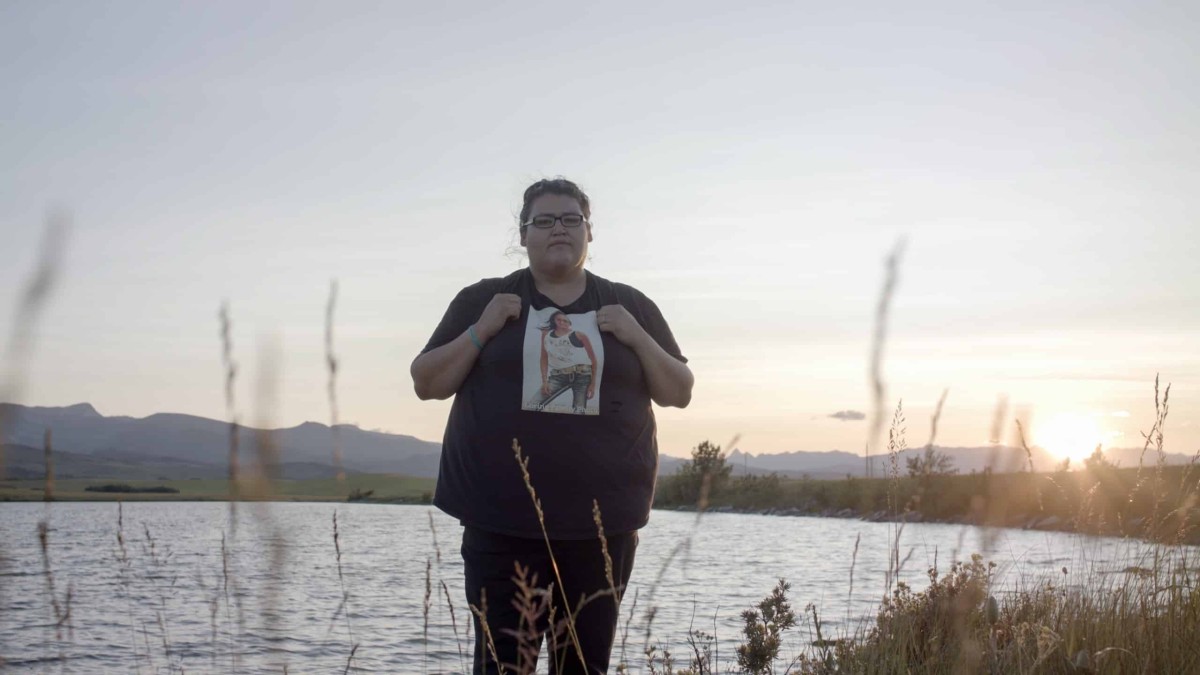
Ivan M: Before filmmaking I worked as a clinical therapist and social science researcher. My work was always based in community and providing support and care, not just for my community but many Indigenous communities. I worked at the All Nations Health Center in Missoula. I really don’t like calling myself a director and am much more open to collaboration and working with a community. Having the support from our peers, community and former collaborators has always been really important. As Ivy said, it’s, “How can you support these people beyond the film?” Where can you build in these spaces for reciprocity, kinship and community-building? We have collaborated, or worked with or in pretty much all the Indigenous communities in Montana. We still have existing relationships with all of them. And I think of our tribe, which has repeatedly invited us back to collaborate. That was the funny thing with my Hulu project. I was going to give my tribe a rest or my community a rest, but then I connected with someone who was working on a similar topic, just to run some ideas past her and they said, “Oh so-and-so with the tribe is doing that kind of work.” And I connected with them and next thing I know, they are the community this project is focused on. I think that’s a big thing, too. Sharing these stories from a person who understands their importance.
Why the documentary art form? What is it able to do and what are its limits for your project?
Ivan M: We were really deliberate when we first started this project. People get their education and idea of who Indigenous people are through media. So we wanted to use that to put stories out that we think are authentic, that we feel people aren’t paying attention to. And we have always been in that realm. I do also come from an academic background, having done peer-reviewed articles, which that stuff is great, and good for academia, but where we are going to make the most impact is going to be from and for our community. A big thing Ivy and I always talk about is accessibility. Ultimately When They Were Here will be on something like PBS, which is something that communities have greater access to than, say, Netflix or Hulu or HBO. I think we try to be cognizant of that accessibility to storytelling as we understand it. We have experience working with these larger media platforms, and sometimes how they see Indigenous communities, it’s always a kind of push and a pull, and sometimes not, but often there are these diametrically opposed ideas of who we are as a people. It’s definitely a working-through process. You consider how you frame things when pitching for executives. You have to speak in finite terms they understand.
Ivy, what are your thoughts about the documentary form and its limits?
Ivy M: I actually went to film school to do horror movies. That was my main goal, and then a year into my degree, I took an experimental documentary class with Talena Sanders (now at Sonoma State University). We watched these two sister documentaries, The Look of Silence and The Act of Killing, both about Indonesian genocide and for some reason, those films shocked me to me to my core in a lot of ways. This thing happened in my brain where I was like, “This is real-life horror that you can’t recreate in a horror space.” So I think, especially with When They Were Here, it’s not a horror movie, but there are horrors that happened and are coming to light. It’s this shift with documentary filmmaking where there are so many different aspects to what that is. Me and Ivan have so many ideas about hyper-artistic stills throughout WTWH, so there is this wave of going from documentary to sort-of artsy filmmaking, I don’t really know how to explain it in words. For a story like this, documentary is the base, but you can branch out into different aspects and push the boundaries of what filmmaking is, of what documentary filmmaking could be. In filmmaking, you throw whatever you can into the film. Narrative, documentary—in a way it’s all the same.
So how do you consider place and space in your work? I’m also thinking about, as you said Ivy, about the land being a character and having agency in your films.
Ivan: I think place is a huge character in this film because understanding a place is so key to understanding crisis and why this crisis is such an issue. It’s the place in which our reservation was created. It’s the place where these borders and jurisdictions play out. It’s a place where justice isn’t often accessible. Our film does touch on that. It’s a place where we call home and you know Browning isn’t necessarily a place where Blackfeet would have set up a permanent camp with how windy it is, but the place is really important to the story because it’s such a central part to the importance of us as a people. Also it’s such an important part of understanding how this crisis is as it is. So understanding the place, its genesis, is important to understanding why justice is so absent.
You both are very much artists who are aware of where your films are made. What does making films in Montana mean for you? How would you describe the film culture in Montana?
Ivan M: With our projects, we hire local, hire people from the community, virtually all the people we hire have been from Montana in some capacity. We are always very cognizant that there is a lot of good local talent. I think that working with Montana people, they may not have a full understanding of Indigenous communities, but there is an awareness. I mean, Montana is one of two states where the largest demographic after white is Native. So that geographic positionality, I think people have a more informed understanding of Indigenous communities. You know the best people I’ve worked with have been Montanans. I worked on a shoot recently and the producer was from Montana, and we were the two Montana people on set, and there were all these other big name industry people and we said, “Wow, it’s way more low-key working with our Montana crews.” It’s those small things.
Ivy M: Yeah, there is a lot of talent here. Like Ivan said, we utilize it a lot. For When They Were Here, we worked with multiple people from Montana, in and out. I feel like the artistic vision is similar in a lot of ways. Also I did cinematography for a series on HBO and you could tell the producers had never been to a reservation before. They’re asking questions like, “Where can we get this, get that?” And I told them, “You’ll have to drive at least two hours for something like that.” When you work with Montana people, they know what to expect.
How do you both see your various identities informing or complicating your filmmaking?
Ivan M: I am always informed by being an Indigenous person. I’m always cognizant of intersecting identities and other communities inside of that. Even the two projects I’ve been working on recently are completely different. One is Montana-based but it’s a whole different story and community and world outside of one I would have ever been a part of. Another idea in my head is related to a book about an art thief. I’m always cognizant of projects where stories aren’t being told. But I think ultimately, Indigeneity or Indigenous identity and stories are my strong suit and what I feel the most comfortable telling. But I totally am open to stories beyond that.
Ivy M: As Indigenous storytellers, we are the original story tellers. So I think, there is a way of thinking, at least for me, that every story that I try and tell or every project I try and work on, I am intentional. I am proud to be Native, I am proud to be a Native woman, proud to be Blackfeet. I just got done shooting my first narrative film about two Blackfeet women trying to connect to their past through bison, to heal through bison, through buffalo. Every time, as an Indigenous filmmaker, I want to bring some sort of identity of being an Indigenous woman to my work.
Who do you see as your audience for your projects? How do you see your films existing after they are made?
Ivan M: With all the grants we’ve written over the years and funding we’ve gotten, like we’ve had a small screening in a gymnasium on a reservation to screenings at the upper echelons, big festivals like Sundance. I think that when we first started, I don’t know if I’d say we were quite naive, but a bit more idealistic, saying, “We are making stories for our community and our community will be the main people to watch them.” But over the years, you’re able to translate your experience to this broad view that many other communities and groups of people can share it. I think of Reservation Dogs, which I think is very tied to the minutiae of everyday life on a reservation and Indigenous communities, but it has such universality in its storytelling. Everyone can find a part of it they can like, which I think is why its success is as it is. I think for me, when I think of an audience, I tend to think in that realm. We are telling this small story of our community in a way that our community will understand, but where are the ways in which you can build in universal themes? Such as justice, injustice, working through trauma, understanding healing. The simple thing is how do you take your world view and lived experience as an Indigenous person and translate in a way that non-Indigneous communities will understand?
Ivy M: I agree. As Ivan said, there are multiple communities that we want to touch. The universal thing is that everyone has experienced some sort of loss in their life. Especially for people of color, that’s tenfold. I’m really looking forward to people seeing When They Were Here.