Excuse our blatant gushing, but we are big, big fans of the Big Sky Documentary Film Festival over here at The Pulp. In its 21st year, the festival has grown and honed its style, and made a place for itself among some of the most renowned festivals in the country (and beyond), without losing its local roots.
The 10-day extravaganza can be experienced however you like: Maybe you’re going to wing it and see a couple films. Or maybe, like us, you will basically eat, sleep and breathe the festival by viewing an optimized combination of anticipated in-competition films along with some daytime screeners of potential sleeper hits, plus the all-access parties.
The festival gets an astounding number of entries, which means the 150 or so chosen films are top-notch. Where to start? Here we review 18 of them to help you get with the program.
Selections | Schedule | Tickets
Happy Campers
78 minutes
Wilma, Monday, Feb. 19, 3 p.m.
Streaming Feb. 19-24
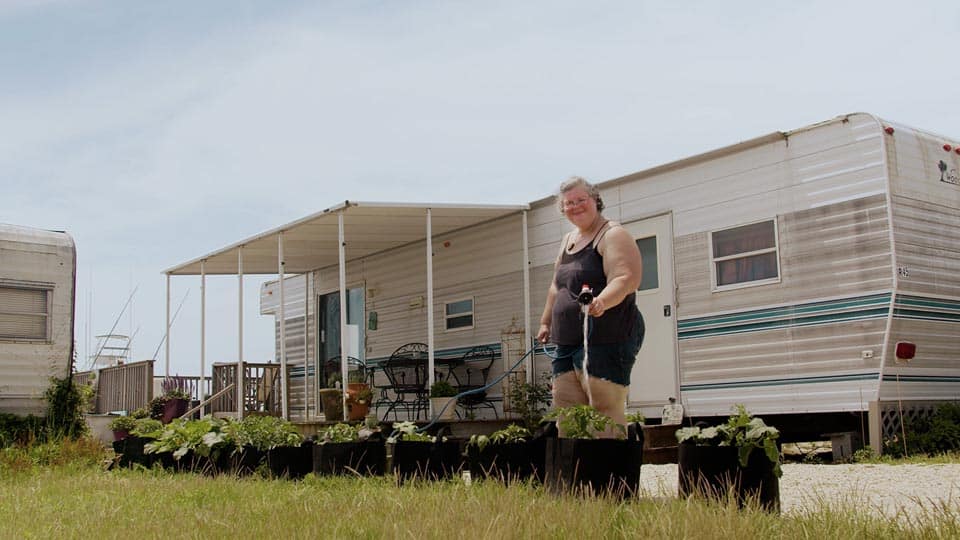
My family had a camper at Sunny Hill that never moved. My dad built a big, rickety deck around it and stained it poop brown. The dirt patch in the back was a whole other room, the one where everyone ended up, around tire rims stacked as a burn barrel. Amy Nicholson didn’t film Happy Campers at Sunny Hill, but she could have. It could be any place you love that doesn’t look like much. In this film, the loved place is in its death throes. Everyone—from the recent converts, including Nicholson, to families who’ve come for generations—knows the bulldozers and the developers are coming for Inlet View Campground on Chincoteague Island, Virginia. This film is its final summer, the last party in paradise, and Nicholson lingers lovingly on every shot of the people and the place. That love lasts for a long 1 hour and 18 minutes where no one person becomes the narrator. Nicholson’s approach instead keeps the collective as the center. That can feel a little loose until you let go of convention and pay attention to how it all sounds. Seagulls and kids on bikes, squeaky lawn art and fireworks mingle artfully with sparse dialog and original music. In the end, it’s all these blendings of sounds that carry Happy Campers to the inevitable crack of demolition. A time and a place can’t last forever—a truth, even if, as one Inlet View denizen puts it: That just sucks. —Jule Banville
Called to the Mountains
53 minutes
Roxy, Friday, Feb. 23, 8 p.m.
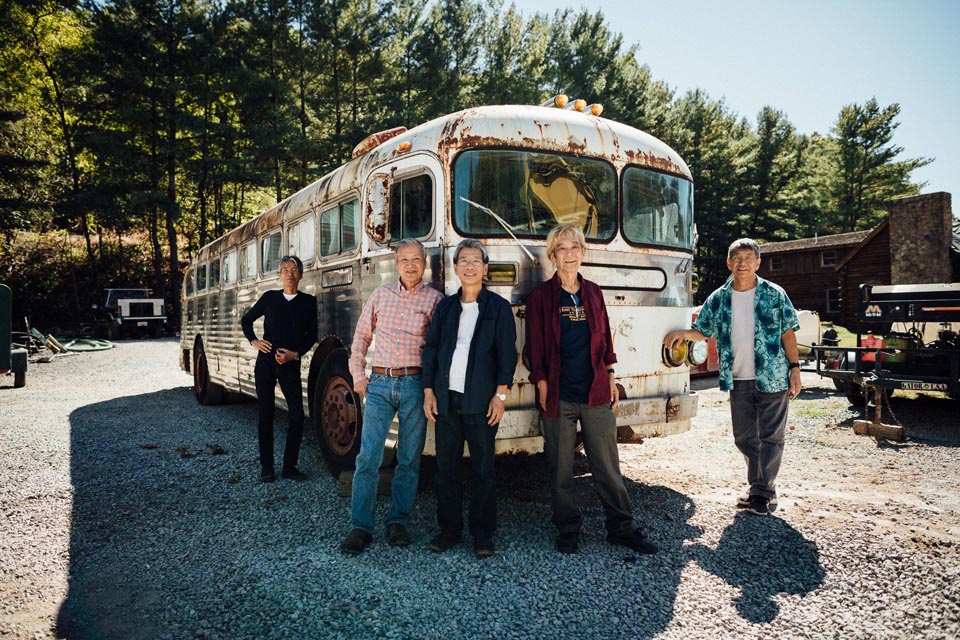
When Saburo Watanbe Inoue first heard bluegrass music from his brother, he didn’t realize it would dominate the rest of his life. But, when the intoxicating licks from the banjo and fiddle hit his ears they became ingrained in him, defining his identity and his future. Called to the Mountains is the story of Bluegrass 45, a band composed of five friends from Kobe, Japan. They were by no means your typical bluegrass band, and that’s what makes them so special. A passion project born in 1967, Bluegrass 45 spread the joy of their music from their home country to the states for over 50 years. This film is a walk down memory lane. It begins with grainy clips from their first trip to the states in 1971, where they performed at Carlton Haney’s Labor Day Weekend Bluegrass Festival in Virginia. The band exits their tour bus with wide eyes and matching pinstripe pants, ready to put on a show for the crowd. You can see the looks of awe on the audience’s faces as their idea of traditional bluegrass performers is shattered by five fast-fingered Japanese guys who don’t even know what the English lyrics they’re singing mean. As the film jumps back to real time, the band takes a trip to where they started for their 50 year anniversary tour. They track down the owner of their old tour bus at a scrap yard. The owner is starstruck when the band comes to visit. You wouldn’t expect a beer-bellied Southern scrap yard owner to be overjoyed by five old Japanese men, but that shows just how influential they were. In the final scene, the band takes to the same stage they did during that first trip. Although it’s covered in vegetation, they help each other climb up for one final encore, a full circle moment of beauty and nostalgia for the band. Inoue died in 2019, but he will always live on through his stories, his music and the Takarazuka Bluegrass Festival he started in 1972 in his hometown. Bluegrass 45 altered the vision of bluegrass for so many, defining it as a lifestyle rather than just a genre of music, and truly encapsulating the idea that music is a universal language. —Sam Phillips
Queendom
98 minutes
Wilma, Saturday, Feb. 17, 8:30 p.m.
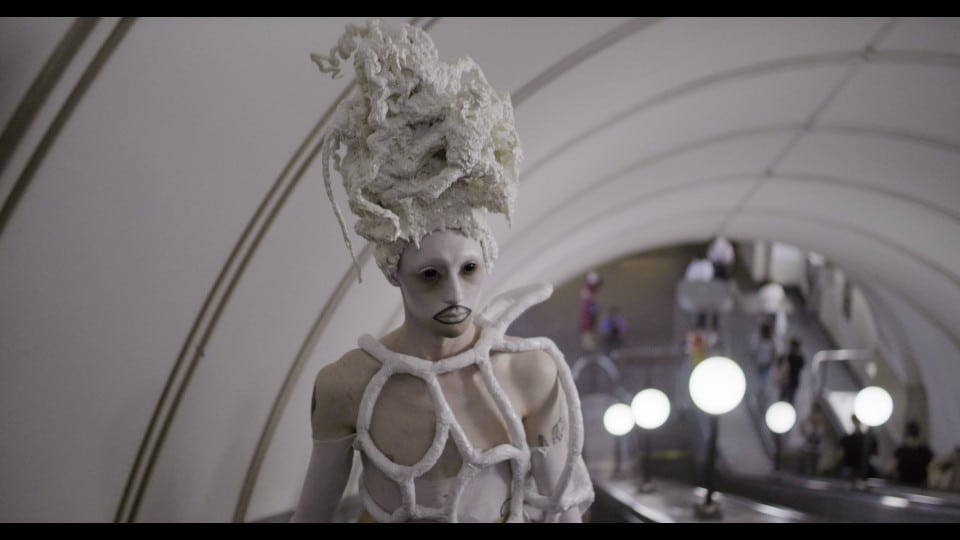
Why insist on self-expression if it’s so dangerous? Why can’t you just fit in? In Queendom, queer artist Gena Marvin’s well-meaning family asks these questions of her repeatedly, while Gena never wavers. The film, heavier on striking visuals than on narrative exposition, takes us through the young nonbinary artist’s life in Russia in the months leading up to the invasion of Ukraine. Queendom doesn’t offer much literal explanation about Gena’s art, which is what we might call drag in the West. And it’s not the sparkly RuPaul kind of drag, or the campy pantomime in Jeannie Findlay’s “Panto,” (also screening at BSDFF) but a transgressive, freaky, gender-bending aesthetic. Director Agniia Galdanova lets Gena’s neo-Goth, surreal costuming wordlessly express the strife and ugliness that she sees in the world. We see the spartan winter landscape of Gena’s small Russian hometown, and the humble home where she lives with her grandparents. The story weaves in her stunning, cathartic performance art pieces that incorporate mud and barbed wire and red paint and silent howling. Gena uses her already tall, slender frame to create spidery and bizarre shapes, and must be about 8 feet tall while wearing platform Pleasers. On Instagram, she earns a following that celebrates edgy style and queer identity. We see her get to experience some joy with friends, at fashion shoots and cuddling a kitten. But Gena can’t study or hold down a job in an oppressive regime that criminalizes LGBTQ expression as “propaganda” and suppresses anti-war protests. Many tense, suspenseful scenes just show her trying to exist in public without being attacked. She’s frequently kicked out of stores and parks. “I’m not harming you. I don’t affect you at all,” she tells one heckler. And yet, gender non-conforming people are villainized as a threat to the social order by right-wing regimes the world over and close to home. I don’t know that a person like Gena is safe fully expressing their identity in many spaces here in Montana, where our supermajority Republican legislature passed a law banning drag performances in public last year. My queer friends and family are sometimes harassed for simply being themselves. I have seen how vital it is for people to be allowed to live as they truly are, instead of squishing their personality into a box to try to make other people more comfortable. Some of the strongest scenes in Queendom show Gena trying to figure that out–not in view of regimes and supermajorities, but just on the phone with her family, trying to convey she can’t be anything else but herself, even if it costs her everything. —Kate Whittle
For This and Future Generations
57 minutes
Roxy, Tuesday, Feb. 20, 1:30 p.m.

I never cared much for history lectures as a high school student, so those days in 10th grade when Mr. Roberts wheeled in the TV and DVD player were my favorite. Watching For This and Future Generations took me back to that dark classroom, a narrator informing me of, say, the Rhine valley’s strategic importance or how papyrus was made. What I didn’t appreciate back then is that we are where our progenitors left us, and we can’t change our circumstances without understanding how they came to be. In Montana, we enjoy the protection of a strong state constitution, courtesy of a long and unusual sequence of events. The first constitution was written in 1866, just after Montana became a territory, and was lost on its way to the printer, never becoming law. The second one was written and ratified (and presumably printed) in 1884, but Congress did not approve it, dropping it into legal limbo. Third time’s the charm, and the 1889 constitution became official. But it was a rushed document, and as time passed, it became clear it was rigid, unwieldy, unresponsive to the people, and it favored incumbent interests. This straightforward, expositional documentary made in 2002 documents Montana’s 1972 Constitutional Convention in Helena when 100 delegates were elected to overhaul the old constitution. There’s a heavy emphasis on the democratic nature of the Constitutional Convention (“ConCon”), and how the delegates were a socially-diverse group of “extraordinarily ordinary” Montanans—lawyers, ranchers, farmers, educators, secretaries and one beekeeper. No Indigenous people, though, as Rick Champoux, a delegate from Kalispell, points out. “I looked around one day and wondered where the Indians were. I walked out the door, and there were four Indians, sitting there, outside…just like in the old days, they’re outside and the white men are on the inside making all the decisions.” Produced by Big Sky Pictures and Montana PBS and directed by Gus Chambers, this is a balanced look at how the ConCon came to be, and it’s worthwhile for anyone looking to understand Montana’s history or current state. Its mission is clear and its borders are well-defined. Questions about how the constitution has shaped the last 52 years are not raised. Watching this in 2024 one can’t help but wonder, for instance, what legislation will we adopt, post Roe, in a deeply Christian state whose constitution enshrines the right to privacy? What does having the right to a “clean and healthful environment” mean exactly, when we must balance preserving the environment and allowing important industries like ranching and farming to thrive? How far has the state come in bringing Indigenous people into the room where the decisions are made? And is the spirit of democracy and cooperation depicted in the film still to be found in Montana? —Evan Wedsworth
This World Is Not My Own
97 minutes
Roxy, Saturday, Feb. 24, 1 p.m.
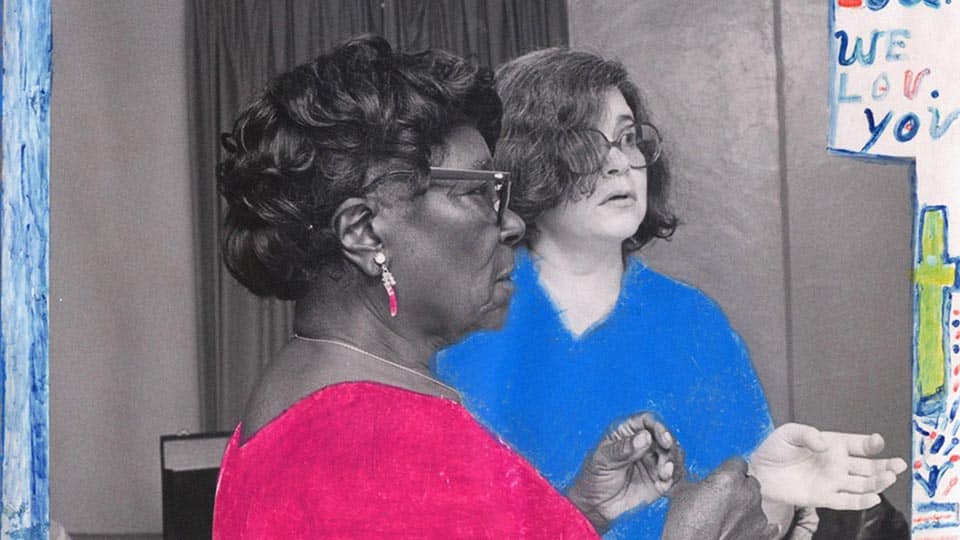
Lots of people in Vinings, Georgia, knew about Nellie Mae Rowe’s house. After her second of two husbands died, she did what she wanted with it and what she wanted to do was make it art. She made dolls and chewing-gum sculptures and hung them from the trees and stuck them on a fence. In The World Is Not My Own, that yard and house are reimagined as a hybrid experiment of filmmaking that feels like a ticket to a wholly original place. Kaktus Films out of Sweden created it with sophisticated animation and motion-capture, along with the acting talents of Uzo Aduba (Suzanne/Crazy Eyes in Orange Is the New Black), who reads Rowe’s words from an interview she did with the wealthy white woman who became her biggest fan and gallerist. Nellie Mae Rowe was one generation removed from slavery, a kid living outside Jim-Crow Atlanta who worked hard, always, and drew and colored and painted and sculpted and sewed whatever her mind saw whenever she could. She’s an important person, now, in the world of folk art. This documentary about her life travels pretty far beyond her yard, diving into events that shaped her times, down odd paths of murders and lynchings and academic ponderings that eventually loop in Wakanda. A major portion of the film dwells on Rowe’s agent and friend, Judith Alexander, whose foundation helped fund it. Those wanderings are often interesting, but they aren’t the heart of the film; her art is. When Rowe speaks through Aduba while figures of colorful animals and people and otherworldly characters dance at the edges of the screen and then come together in compositions she created, this film is a wonder. It leaves a very clear impression Nellie Mae Rowe was one, too. —Jule Banville
4DWN
17 minutes
ZACC, Friday, Feb. 23, 7:15 p.m.
Streaming Feb. 19-29

When I first read the summary of this short film, I was worried it would take the rebellious nature of skateboarding culture and turn it into a sappy story about the power of friendship. Although it does have some sap, 4DWN retains the hardcore and rebellious vibe that any good skate film should have. Normally skaters rebel against curmudgeonly old people who tell them not to skate on their property, but the founders of 4DWN are instead rebelling against food insecurity in their south Dallas community by creating an urban-farm system to feed those in need. This documentary directed by Danny Schmidt has the feel of a ʼ90s skate edit with the grainy clips and heavy punk guitar riffs, as well as the feel of an inspiring underdog story with the character-driven narrative of companionship and resilience. 4DWN chronicles the lives of the founders both past and present, and follows the growing potential of one young skater named Zion who finds kinship through the sport. Zion’s story is what makes this short film truly uplifting. This goofy, energetic and eager-to-learn kid shows why 4DWN was founded in the first place. “If I was a kid and there was something like 4DWN around, I could’ve saved myself a lot of knocking my head against a wall,” says co-founder Rob Cahill. It speaks to why 4DWN is so important for the community, and especially for kids like Zion. Zion’s mother lives with heart failure, so he had to grow up earlier than most. We see him checking his mother’s medicine for her and taking care of his younger brother. Despite being forced to step up for his family, 4DWN gives Zion a space to simply be a kid. You can feel his excited energy beaming through the screen as he laughs, learns and skates alongside his friends. 4DWN is a place that offers liberation and hope to many people facing daily hardship, and it’s a story that needed to be told. —Sam Phillips
Wonder and the Worry
98 minutes
Wilma, Sunday, Feb. 25, 6:30 p.m.
Streaming Feb. 26-29

Wonder and the Worry combines several shorter narratives into one feature-length film, touching on conservation, human-animal conflicts, photojournalist Chris Johns’ career, his family life, the history of National Geographic and the future of journalism. I most enjoyed the behind-the-scenes stories of some iconic Nat Geo photos, like how it took more than 100 photos and several photographers to create one composite image of a 3,000-year-old sequoia in the winter. Other stories, like an opening anecdote about elephant slaughter, are hard to watch, but certainly illustrate the trauma of a journalism career. It all mostly works together, although I could use a touch more journalistic rigor from a documentary about journalists, especially when it comes to a grizzly encounter that doesn’t explain why the person attacked by the bear is not named or quoted. The film also acknowledges current challenges in the journalism industry and tries to end on an optimistic note about plucky freelancers, but that didn’t land for me. In mid-2023, Disney-owned Nat Geo laid off its entire writing staff and ceased newsstand printing, a devastating loss in a year of devastating losses to the media industry. Wonder and the Worry fails to offer real critique of the shareholder-driven corporate culture that is shredding legacy publications and creating an information desert. But maybe that, like a California sequoia, is just too much to capture all in one shot. —Kate Whittle
Photophobia
71 minutes
Wilma, Thursday, Feb. 22, 2:45 p.m.

One morning, 12-year-old Nikita’s stepfather tells him, “Get up. The war has started.” Nikita responds it’s too early for school and he’d like to go back to sleep, thanks all the same. For the next two months, he and his parents and his little sister won’t be above ground. Instead, they’ll live in a metro station under Kharkiv, Ukraine, with about 1,000 others. Photophobia documents the hard claustrophobia of life underground while shelling rumbles menacingly above. It documents the extreme loss of these survivors and the organized chaos of their lives near turnstyles and trains with whatever objects they thought to bring with them. But it’s not strictly a documentary. That’s not clear till the end, with credits including a screenplay writer and a cast. It was filmed in that station, just 2.5 kilometers from one of the front lines, and certainly people were living there, but the arc of Nikita’s friendship with Vika, a girl with a bunny-ears hoodie and a fabulous smile, and the intimate recording of his parents’ worries needed a bit of help. It never feels that way, though. It’s a beautiful film sort-of made up about an ugly reality. These days, children are not only living in metro stations in Ukraine, they’re going to school there, too, and it’s the stuff of long features in the New York Times. It’s sad, but safer, to steer kids away from being outside. In Photophobia, a doctor prescribes Vitamin D and hopes the best for Nikita. After 71 minutes of watching him adjust, you, too, will want the best for him—and all of these people stuck below the surface. —Jule Banville
American Grail: A Quest for the Ivory-Billed Woodpecker
16 minutes
MCT, Sunday, Feb. 18, 8:15 p.m.
Streaming Feb. 19-29
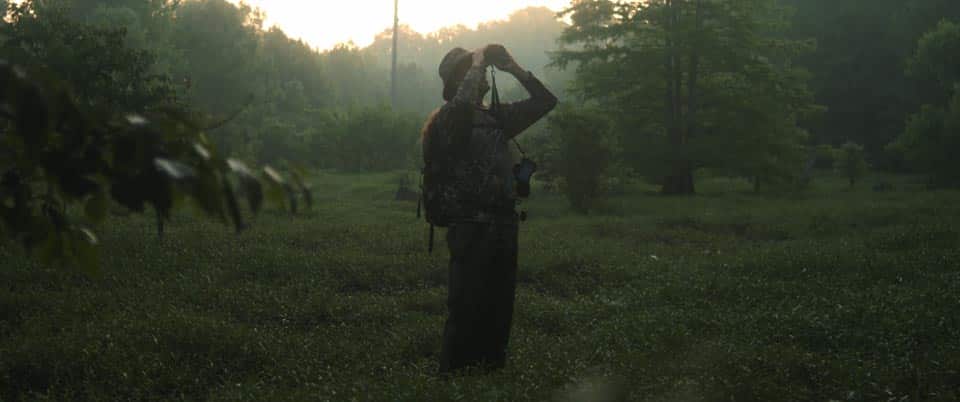
You don’t often hear a bird-watcher say something like, “I’ve had a lot of sex and I’ve only been sure I’ve seen an ivory bill once. So.” But it makes sense coming from Mark Michaels, the titular grail-seeker and co-founder of Project Principalis, an organization dedicated to the search for the ivory-billed woodpecker. Michaels is a compelling figure. A lawyer who became a tantric sex guru who became a passionate seeker of a mythic bird. The film hints at his polarizing reputation in ornithology, where some seem to view him as a weirdo dreamer ill-suited to doing actual science. “One guy doxxed me and used my involvement in tantra and my initiation as a swami to treat me as somehow not serious.” Personally, I think Michaels comes across as plenty serious, but with a great sense of humor. The only time he’s not speaking in thoughtful, eloquent sentences is when he’s laughing at himself, turned shy at being asked to compare seeing an ivory bill to the best sex he’s ever had. The last official sighting of the ivory bill was in 1944 by an artist on assignment for the National Audubon Society, who sketched a single female. Since then, there have been rumors and reams of articles (“A Vanished Bird Might Live On, Or Not. The Video Is Grainy;” “Back from the dead? Elusive ivory-billed woodpecker not extinct, researchers say;” “Ivory-billed woodpecker to be officially declared extinct in U.S.”)—but no proof. And the “Lord God Bird” and its fraught ontological status have become something of a symbol of our relationship with our planet. Either it went extinct and we are a blight on other animal species and we’re damned, or it’s still out there somewhere and we still have a chance for redemption. This debate plays out in Michaels as he tramps through the Louisiana swamp, his hope not quite extinguished. —Evan Wedsworth
Please Ask For It
20 minutes
Wilma, Friday, Feb. 23, 12:30 p.m.
Streaming Feb. 19-29
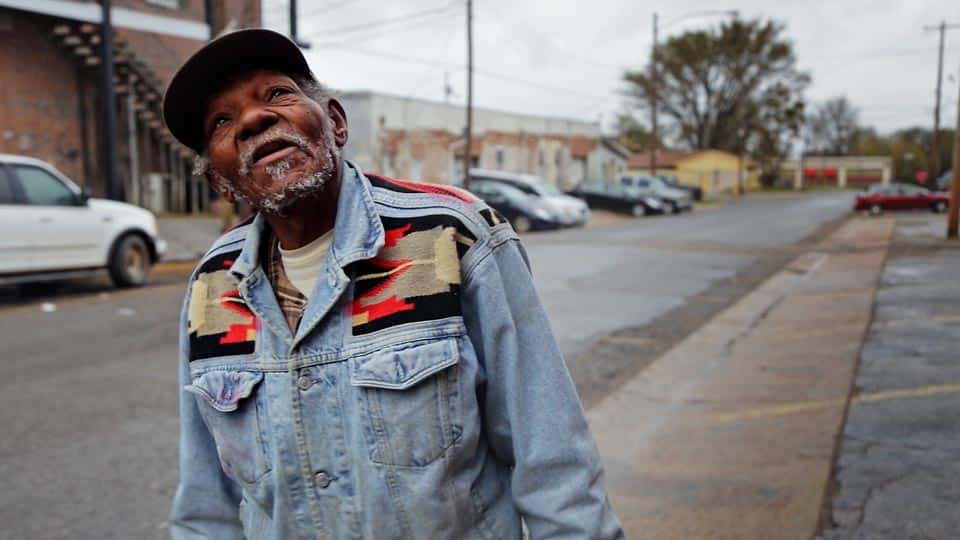
There’s a moment in Please Ask For It outside Aikei Pro’s Record Shop in Holly Springs, Mississippi, where the owner gets into it with a hipster collector. The owner is David “Fox” Caldwell, who served in World War II (though he wasn’t quite old enough), and who comes across as one of the kindest men you might ever meet. He turns 89 in the film and came to Holly Springs after the war, where he opened a number of businesses that sold anything the town’s Black community might need. Aikei Pro’s is his most legendary, a landmark on Blues Alley in the place known as the home for Hill Country Blues, the kind Caldwell’s late friend, Junior Kimbrough, made famous. You don’t go into Aikei Pro’s, open since 1960, to flip vinyl. That’s near impossible in a place packed to the ceiling with boxes, car parts, junk-shop stuff. It can barely fit a person. The collector talking to Caldwell after making an attempt is a guy named Stephen with a hole in the back of his shirt. When Caldwell says to him, “And the old records are still there. And all you got to do is pull it out, put it on the turntable and put it on. And it sounds as good as ever,” Stephen gets what the filmmaker, Allison Waid, clearly did when she made this small and beautiful film. Aikei Pro’s is not about records and whatever else is crammed in there; it’s about the man often sitting outside it, still, willing to drop wisdom on anyone from anywhere. —Jule Banville
Anagama
60 minutes
ZACC, Tuesday, Feb. 20, 6:15 p.m.
Streaming Feb. 24-29
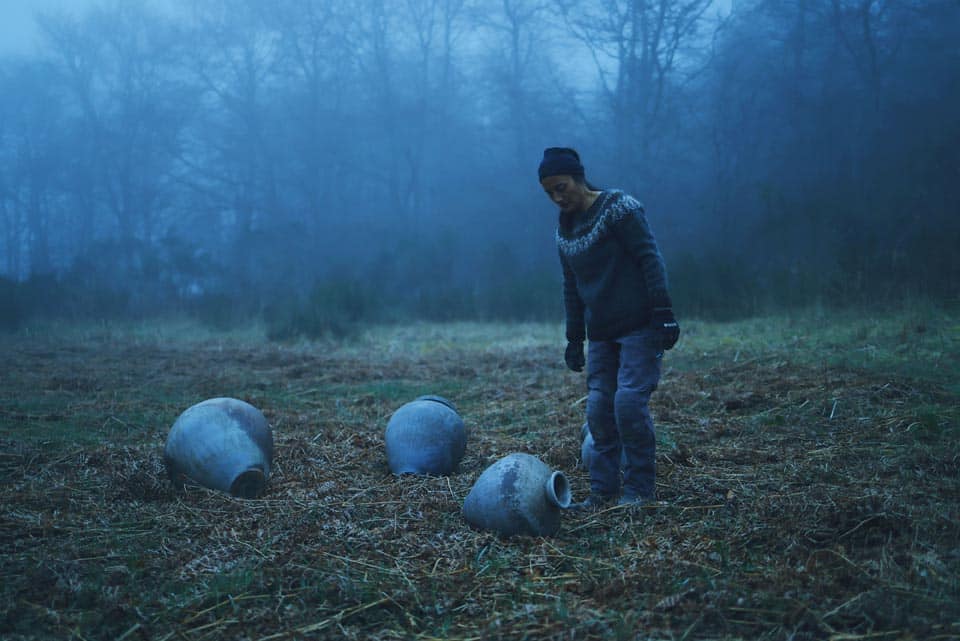
Much like the wood fire kiln this film is named after, Anagama maintains a slow burn. Rather than aiming for excitement and falling short, director Guillermo Asensio’s sedate approach to this story seems purposeful. The melancholic string music, drawn-out shots of the pottery-making process, and monotone narration from the main character Nancy Fuller (born Chen Su Li) drive this film along at a leisurely, often boring pace. Despite Fuller’s story having a lot of potential, we find out too little about her through her monologue. She’s a Taiwanese-born woman who grew up in Scotland and found her identity through pottery. Certainly interesting, but that’s all we get. She even mentions a Japanese master she studied the art of pottery under, but again, we don’t learn anything else. Fuller never dives below the surface of who she is, which is where this film falls short. She describes her struggle of not knowing where she fit in the world after being adopted, but seldom goes into detail. The film is broken up into episodes that correlate with the long process of wood firing. First comes the molding of the clay, then the preparation of the kiln, and finally the firing of the pottery. Each episode coincides with Fuller’s storytelling, the first being largely centered around the identity struggles that led her to pottery, and the others focused almost exclusively on the actual firing process. The long shots of Fuller crafting her pottery, the scenic views of the Scottish countryside, and the raging fire of the kiln, while certainly visually pleasing, are not elevated by the story. —Sam Phillips
Jeanie Finlay Retrospective
Teenland (2007)
60 minutes
Roxy, Friday, Feb. 23, 2:30 p.m.

If you know a teen or if you were a teen or if you ever, even one time, felt like you wanted to be actually seen, Teenland is a must. Jeanie Finlay’s first full-length feature doc is honestly a masterpiece. And props go, too, to the Big Sky fest, which premiered it 16 years ago when Jeanie Finlay was not Jeanie Finlay, Britain’s superhero documentarian. As Finlay returns to Missoula for a full retrospective of 12 films, Teenland stacks up as among her best works so far. It follows four unforgettable people—Immy, Lizzie, Scott and Vikki—mostly in their rooms. And if you think it’s hard to follow people just being in a room of their making, there lies the brilliance. Phones and social media for sure make life different for teens everywhere now, in rooms all over the world, but revisiting this way of figuring out life at an age not quite as tender as we think does not come off as cute or antiquated. It comes off as honest and without judgment, a true hallmark of Finlay’s films that seems fully grown up in this one. Be ready to recognize yourself in the no-bullshit that is Teenland. It’s OK! Jeanie Finlay and I see you. —Jule Banville
Sound It Out (2011)
75 minutes
Roxy, Thursday, Feb. 22, 3:15 p.m.

Stockton-on-Tees in North East England has seen better days, which you know because almost everyone associated with what was its one solid, remaining record shop will tell you. Or, rather, they’ll tell filmmaker Jeanie Finlay, who’s one of them, though this legendary documentary about this legendary store is never about her. A bit of research shows she met Sound It Out owner Tom Butchart when they were both 14, and they stayed the kind of friends who make mixtapes for each other. And while Tom does emerge as the clear hero atop an organized heap of all variety of records and tapes and CDs, Sound It Out also introduces (and goes home with) several memorable patrons. I have flashing heart eyes for two in particular, Sam and Gareth (pictured in the still that accompanies this film’s marketing). They self-describe as delinquents who live for music I’d describe as thrasher metal, but I bet they’d have a more nuanced description of the main and sub-genres that soundtrack their lives. They’re adorable in a non-condescending way—I mean they deserve the adoration Finlay clearly has for them and for the rest of the characters wandering in and out of this special place. The research that turned up Finlay’s long friendship with Tom Butchart was in a lovely remembrance of him she’d written for The Quietus. He had an apparent heart attack at work and died in June 2023 at age 50. His wife announced that this shop he poured his heart into would have to close. It makes me terribly sad for the people of this film who absolutely needed the home that was Sound It Out, but also so glad that this film exists: a documentary that documents the space where music can save a couple of delinquents—and also everyone else. —Jule Banville
Your Fat Friend (2023)
96 minutes
Wilma, Friday, Feb. 23, 8:15 p.m.

Unlike most people populating documentaries by filmmaker Jeanie Finlay, the subject centered in Your Fat Friend is kind-of famous. When Finlay started this project with Portland-based writer and podcaster Aubrey Gordon, that wasn’t true. She was an anonymous writer of a letter to a friend published by another friend and signed, Your Fat Friend. It famously reads “just say fat”—not heavy or plus-sized or whatever less-kind euphemism exists. Finlay follows Gordon for about six years, during what ends up being a journey to book deals and a pretty successful career. It’s a journey for her divorced parents, too, who work through a lot of feelings in front of Finlay’s camera. The result is an Important film with an Important message. But it’s not Finlay’s best. It has all the fabulous empathy and honesty and none of the judginess that mark her particular way of documenting people’s lives, but it lacks surprise. It lacks humor. It lacks, well, Britishness. And I missed that. In Finlay’s other films, the delight she has for certain people and certain small moments lights up the big narrative arcs. Here, it’s all one super-earnest, well-meaning note that rings about 20 minutes too long. If you’re a follower of Gordon’s—or, for sure, Finlay’s—see Your Fat Friend and absorb this smart take on bodies, how we see ourselves and how we hurt others. But maybe couple it with a few other films in the Finlay retrospective to see where it fits in the overall shape of her pictures. —Jule Banville
Cristo Negro
18 minutes
MCT, Sunday, Feb. 18, 8:15 p.m.
Streaming Feb. 19-29
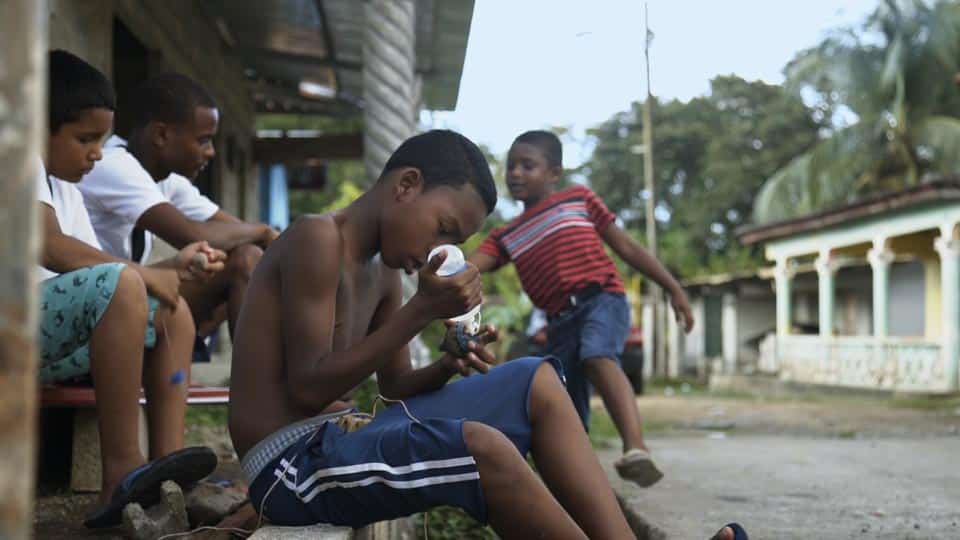
On the long tail of North America, where it arches up into the Gulf, lies the town of Portovelo, Panama. Once a famous port for the Spanish and Portuguese, it’s now an important site for hundreds of pilgrims who each year come to pay homage to the Cristo Negro, for the Festival of the Black Christ, crawling on their hands and knees to the church. Portovelo itself is bursting with color—the buildings, the decorations, and the people. Nearly everyone on-screen wears vibrant, multi-colored garb. The scenes of the festival are striking and wonderful. Hundreds of people dancing and singing, surrounding an enormous wooden float carried by dozens, on which the life-size Negro statue bears his cross. The local people who host the festival are the focus, pulled aside for informal, candid interviews. One young man is interviewed sitting on the side of the road, obviously interrupted mid-crawl, and shares how he’s making this pilgrimage so that his recently-passed mother can rest in peace. The strict observational style does have some trade-offs. Some helpful exposition would go a long way for the uninitiated viewers (like myself) who might find themselves confused by some basic details like, “Wait, where is this town Portovelo?” or “How many people around the world follow this particular tradition?” or “Do the surrounding towns also believe in the Negro, and if not, does that cause any tension?” (After the fact, some quick Googling was instructive.) Nonetheless, this is a lively short that sweeps the viewer up into a day in the life of the residents of this distinctive festival. —Evan Wedsworth
Bicycle Island (A donde nos lleva)
23 minutes
ZACC, Sunday, Feb. 18, 7:45 p.m., and Friday, Feb. 23, 4:30 p.m.
Streaming Feb. 19-29
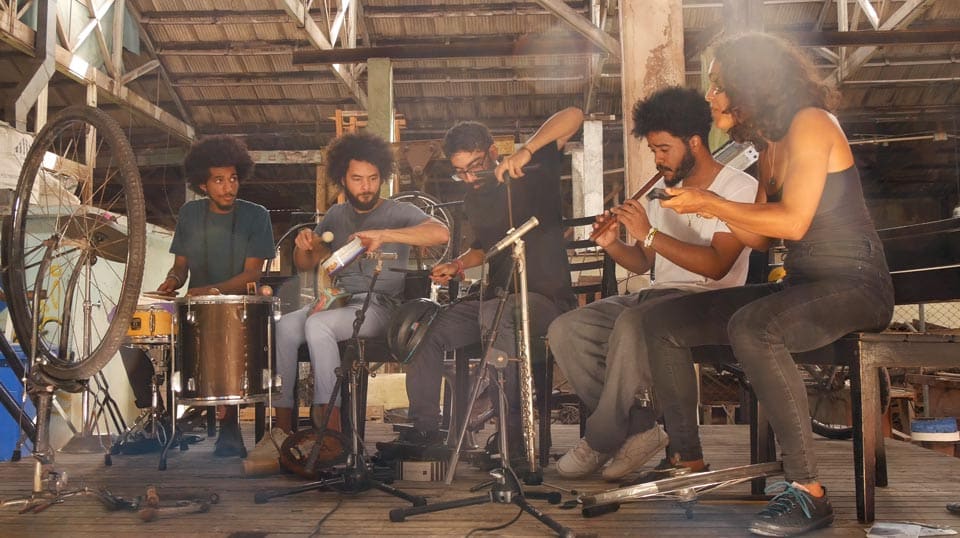
Bicycle Island documents the prevalence of bicycles in Cuba’s capital city of Havana as not only a method of transportation, but a symbol of freedom. Through the intimate interviews, aesthetic shots of Havana’s streets and the organic soundtrack, this documentary makes you feel as if you are in the heart of the city. The film starts and ends with a group of friends who repurpose bicycle parts to make instruments. The ensemble pedals the film forward all while acting as a representation of the way bicycles are more than just a way for Havana’s citizens to get around. Havana’s citizens depict all the varying ways in which bicycles have influenced the city. From a deaf animal protector, to a Paralympic cyclist, to a marionettist, Bicycle Island offers the people of Havana a platform to speak on the way bicycles offer them liberty in a city history plagued by economic instability. The Special Period was a time of economic calamity in Havana in 1991 that left many Cubans jobless, homeless and unsure of the future. Unable to afford cars, they turned to bicycles. “There was a shortage of oil, food, many things,” said one citizen. “The solution the country gave was the bicycle.” The film also highlights ways bicycles offer protection and empowerment to Havana’s women. Although women in Havana have the same constitutional rights as men, their society remains skewed. “To find a way to break into the world of transportation gives women the independence of not having to hitchhike or take a taxi,” a woman said. “It’s a series of barriers you can overcome by having more control over your own mobility.” This film depicts the bicycle as a generational binder, a multipurpose tool and an instrument of exemption for the people of Havana. Although centered around a two-wheeled mechanical system, Bicycle Island is an entirely human story. —Sam Phillips
!Aitsa
89 minutes
Wilma, Sunday, Feb. 18, 8:30 p.m.
Streaming Feb. 19-24
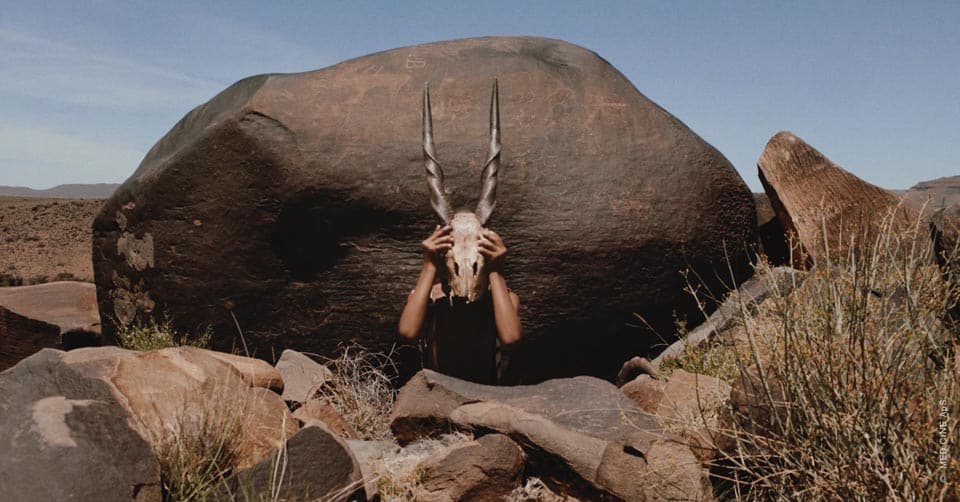
!Aitsa invites us to consider the scale of existence from insects to the Milky Way galaxy, the landscape through geologic as well as human time, and how people find God in the wonder of it all. It reminded me of camping in the desert as the stars come out. Although the film’s premise is about the installation of a radio telescope that might discover extraterrestrial life, the storytelling prioritizes the present-day Indigenous people of the Great Karoo desert in South Africa and their relationship to the land, creatures and stars. This is one to see if you’re in the mood for stunning landscapes and contemplation. —Kate Whittle
Eternal Father
30 minutes
ZACC, Saturday, Feb. 17, 4:30 p.m.

The harsh reality of death is something all humans wrestle with. Many turn to religion for answers, others simply accept the absolute truth of death, and some hold out hope that the prolonging of life may soon be possible. Eternal Father tells the story of Nasar, a man who believes cryonics will offer himself and his family hope for a new future—a hope that could very well be false. His story is told as one of inspiration and familial connection, but it comes off rather like one of a man who can’t cope with the hard fact that he will one day die. He becomes so obsessed with the idea of extending his own life that he can’t seem to just live. He forces his children to grapple with the potential of cryonics for themselves, leading them to ponder their death long before they should have to. As they play with their toys and discuss their father’s choice, you see the stress on their faces. Seriously, what 9-year-old kid should have to worry about his dad freezing himself? Nasar convinces himself that his intentions are for the good of his family, but it’s hard not to view them as selfish. Why is he so important that he should get a second chance at life? Even if he were to be frozen, who’s to say someone would wake him up? The redeeming qualities of this film come from the technical aspects. The motif of dreary colors throughout, the well-framed shots of conversation, and the closing scene of the family members lifelessly floating in a dark pool are much more interesting than the narrative. We all get one shot at life, so why not live every day to the fullest instead of trying to cheat death? —Sam Phillips