A proposal to construct hundreds of starter homes and a new travel plaza along the Blackfoot River in Bonner unleashed a torrent of public comment this month during a March 5 hearing on the multi-phase Blackfoot Crossing Riverfront Project.
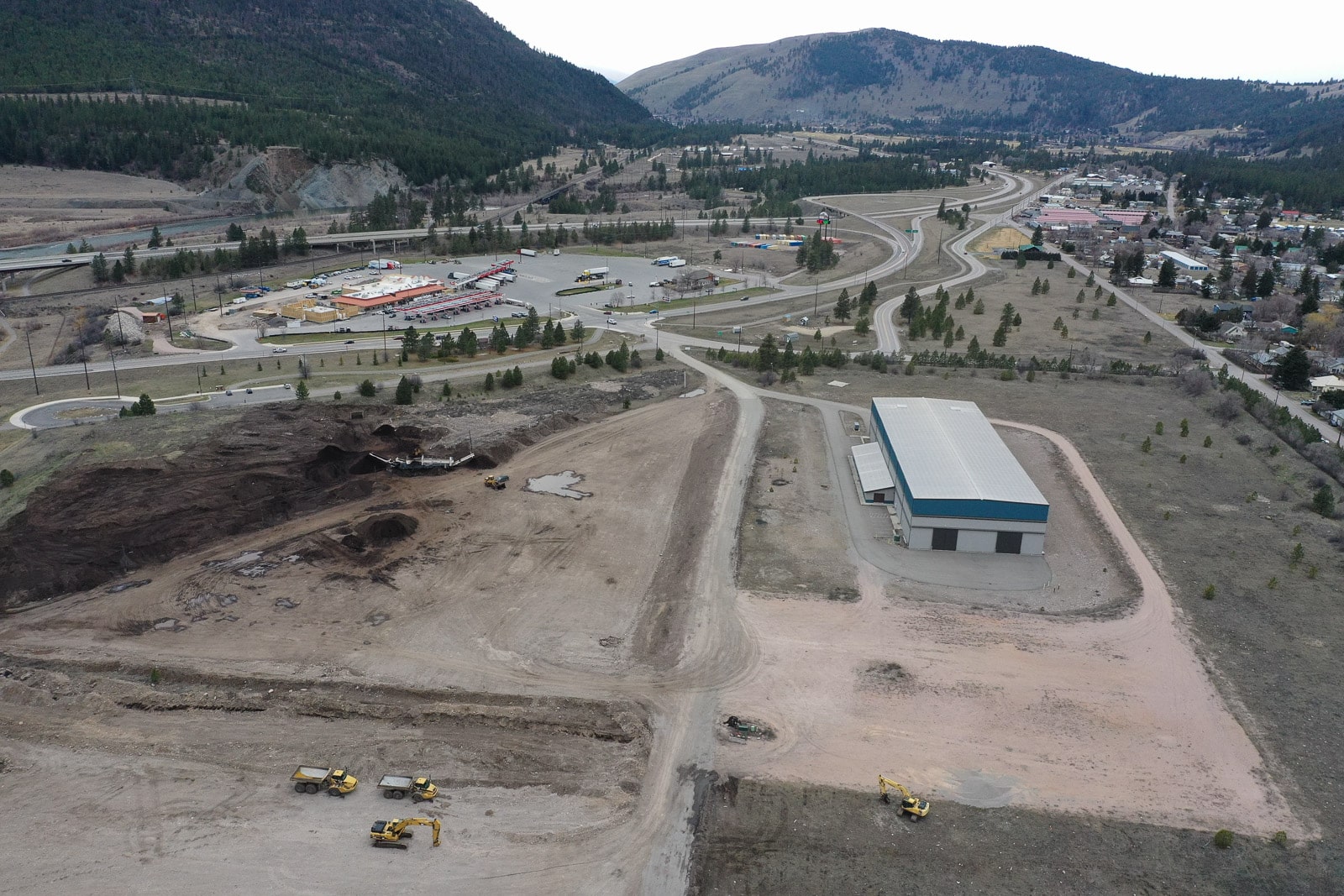
The 107-acre swath of land in question lies just across Montana Highway 200 from Bonner’s existing Town Pump station. The now-vacant site is where the Blackfoot Crossing project proposes transforming what was once the home of Stimson Lumber Co.’s Bonner Mill into a mix of commercial and residential uses. To accomplish that goal, developer Gregory Morse has requested the county commission change the current “heavy industrial” zoning designation that’s hung over the property like a cloud for years. In public discussion, neighbors broadly support such a move, dreading the sort of gravel-and-asphalt operation that might otherwise move in. They have been swayed, too, by Morse’s vision of modern single-family homes with solar-paneled roofs and attainable price tags.
Indeed, aspects of the project seem tailored to the type of growth residents in Missoula County have generally craved: replacing weedy lots and industrial blight with affordable houses, small retail spaces and unfettered public access to a beloved waterway. But the idea of such growth coming alongside a second highway-fronting truck stop and casino is proving too much for many area residents.
Critics took to the microphone last week urging commissioners to resist the travel plaza and they have continued to voice opposition in the days since in feedback through the county’s online comment portal. They’ve expressed concerns about increased traffic, noise and light pollution, about added vehicle runoff near the Blackfoot and residential wells. In a newsletter post this week, two-time Democratic congressional candidate Monica Tranel cited data from a public records request showing the Missoula County Sheriff’s Department receives roughly 180 emergency calls per year to Bonner’s existing truck stop. Adding a second truck stop will only increase the number of calls, Tranel argued.
Critics have expressed concerns about increased traffic, noise and light pollution, about added vehicle runoff near the Blackfoot and residential wells.
The criticism is primarily focused on the travel plaza, but the commission’s proceedings have brought more attention to the issue from Missoula city residents, kicking loose concerns about density, affordability and the project’s impacts to local water supplies. For Emily Herndon with the Bonner Milltown Community Council, the concerns are all too familiar. They’ve come up regularly during the council’s last 13 monthly meetings as Morse and community members discussed Blackfoot Crossing, and, she said, more than a few questions have been answered. On the topic of density, Morse has capped his proposed subdivision at 400 units. And if approved, that subdivision will be held to a county workforce housing policy with strict density- and size-based affordability requirements — a policy the commission was originally scheduled to take up this Thursday but pushed it back to April 2 to continue deliberating on the Blackfoot Crossing rezoning.
All this is known ground for Herndon and many others in the Bonner area. But for those who have come fresh to the debate, attracted by word of the truck stop, Herndon says she understands the details of such a complex and nuanced proposal are still new.
“If you’re new to the conversation, this is scary,” Herndon told The Pulp. “There’s lots of scary points, and they’re just like, ‘I don’t know if I can trust this.’”
Morse is working hard to win that trust. During the commission’s meeting March 5, he self-deprecatingly called out his California roots, his current Bozeman resident status and his MSU Bobcat fandom as “everything bad about me.” He thanked his critics for helping make the project better and vowed not to compromise on his core mission of building attainable housing, then yielded his consultant’s presentation time in order to open the mic to public comment. In a lengthy interview with The Pulp this week, Morse expanded on his plans for sleek modular houses, a centralized retail hub for local businesses and public trails connecting nearby Milltown State Park to upstream stretches of the Blackfoot.
“I have a belief that home ownership is people’s path to saving and generating some wealth for retirement,” Morse said, referring to the homes in Blackfoot Crossing as “missing middle housing.” “I’m trying to build something that looks more like a house than an apartment, but it may not be your dream house. They’re starter houses.”
The travel plaza only surfaced on the county’s radar last fall as part of the project. Critics have questioned why that investment has to come from a gas station rather than a more neighborhood-centered amenity like a grocery store. Morse characterizes the truck stop as a necessary first step to generate funding for the subdivision itself.
Grocery chains almost always require population growth — not just the promise of it — before they commit to building. But travel plazas and convenience stores will commit earlier because they attract not just locals but through-traffic, and can start making money right away. It’s also the case, in places where housing developments have increased local population, that travel plazas have been converted to supermarkets or shopping centers — though there’s no guarantee.
Morse says the travel plaza will be the first user of the new wastewater treatment plant accompanying the development — another of the project’s facets that Bonner residents have broadly supported.
“No project is perfect,” Morse said, “and if you want all the good things, sometimes you’ve got to have something that’s not as good.”
“No project is perfect, and if you want all the good things, sometimes you’ve got to have something that’s not as good.”
In public meetings and in comments to The Pulp, Morse said the site had interest from a gravel pit and asphalt plant, both before and after he purchased the property in fall 2024, which he believes is a worse fate than the travel plaza.
Some community members have expressed concern that the full promise of affordable, sustainable housing won’t be realized once the travel plaza is complete. But even if the worst happens, Morse said, Bonner will still get a wastewater plant, a sidewalk along a busy street and public access to riverfront trails in perpetuity. It’s a worst-case scenario Morse insists is unlikely.
“If the project is approved, we will be building attainable housing at the same time, in parallel with the travel plaza,” he told The Pulp. “And I bet that I will have houses built before the travel plaza is even live.”
During the March 5 hearing, Missoula County commissioners were unable to accommodate everyone who wished to speak, prompting them to delay action until this week and hold additional space on their calendar for more public input March 19 if needed. While Morse may still be facing public pushback, that pushback isn’t necessarily hostile. Several critics of the travel plaza on March 5 gave friendly nods to Morse’s openness and candor, ribbing him that they’d be keeping an eye on Blackfoot Crossing and holding him to his promises.
One such voice — Monica Tranel — commented that Morse had been “very generous” in walking the property with her and sharing his vision for its future, and thanked him for investing in Montana. Still, she urged the commission to heed staunch local opposition to the travel plaza, quoting a conversation she’d had from John Maclean, the son of acclaimed A River Runs Through It author Norman Maclean.
“The people of Bonner should decide their own fate,” Tranel said.
The Missoula County Commission convenes again to discuss Morse’s Blackfoot Crossing Riverfront Project at 2 p.m. March 12. Public comment will be taken in person and virtually, and will be limited to three minutes per person.