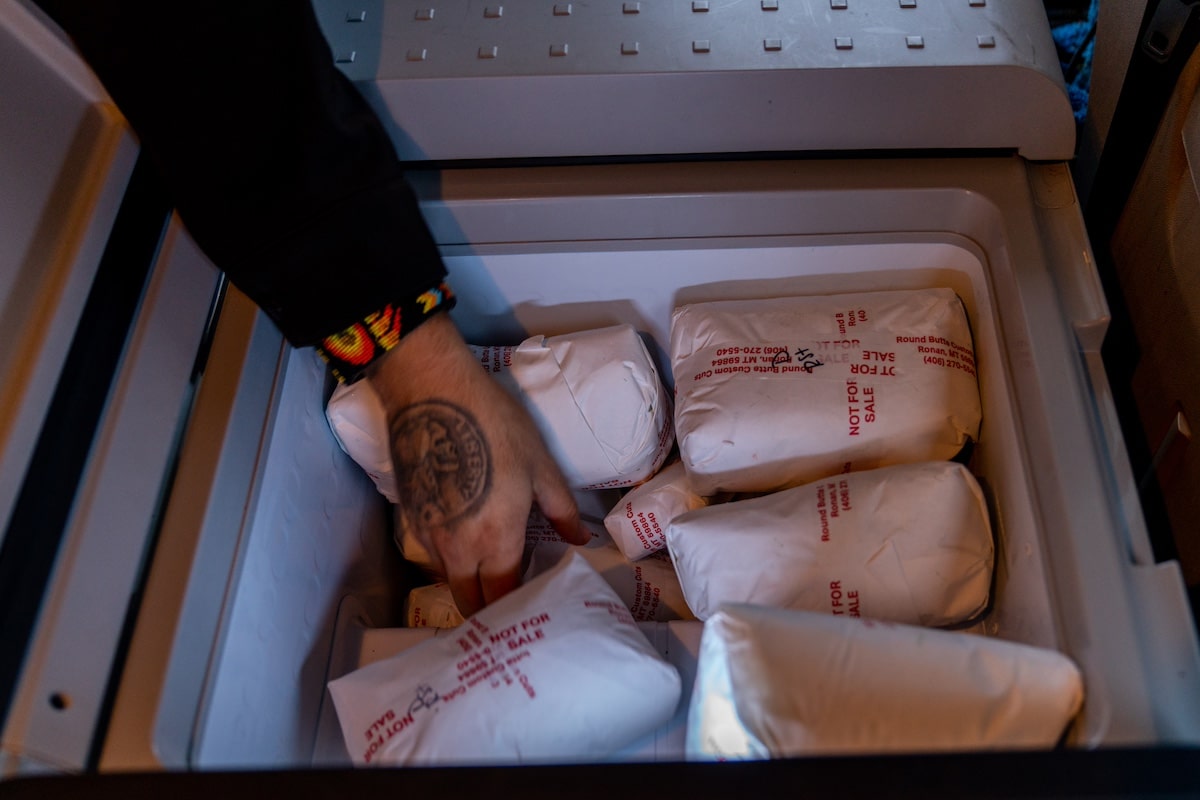
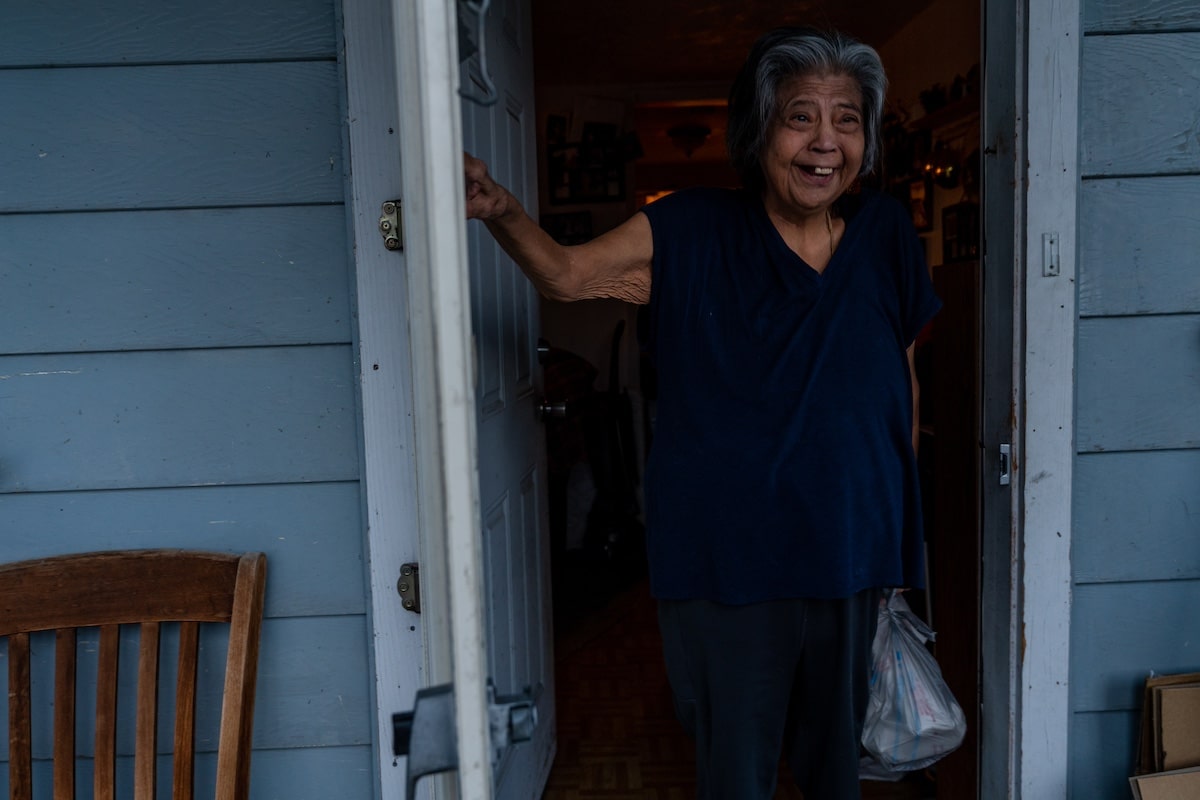
On a recent rainy Friday afternoon, Patrick Yawakie and Lexx Sapiel were driving around St. Ignatius in a white minivan weighed down by a cooler full of frozen wild game. They stopped at nine homes. At each one, Yawakie and Sapiel filled a plastic bag with deer and elk meat—a mix of roasts, steaks and ground burger, all wrapped in butcher paper—and then knocked on the door.
One of the homes, a trailer located near the St. Ignatius Mission, belonged to Anthony Plant, who’s been receiving these occasional deliveries of free meat for about three months now. He makes it into burger patties.
“A lot of elders can’t get out and do what they used to, hunting and stuff,” Plant said. “That’s very helpful.”
These deliveries—among dozens Yawakie and Sapiel will make around the Flathead Reservation over the fall and winter—are part of the People’s Food Sovereignty Program, which Yawakie and his wife, Regina Yawakie, founded in 2020. What began as a practical response to the COVID-19 pandemic on the reservation has broadened into a Native-led grassroots organization that connects Indigenous communities to traditional food sources.

In its first year, the program delivered culled wild game to roughly 400 tribal members. Now they’re supplying some 1,500, with each individual receiving three pounds of deer and/or elk meat—and bison meat when they can get it. To be eligible at least one person in the household must be a member of any federally recognized tribe.
“A lot of the tribal members that we meet have told us that this has given them purpose,” Yawakie said in his father-in-law’s garage while packing frozen meat into coolers before the day’s deliveries. “They’re now introducing their children to hunting and then they’re hunting for us as well. It’s kind of like what tribes did back in the day—create that reciprocity as well as being able to teach your youth about what you do and how to take care of your community.”
Sapiel, who is Salish, said his family history inspired him to get involved.

“We all know that hunger is an issue and food insecurity is an issue,” he said. “I can’t directly affect homelessness the way I want to as of right now, but one way I can absolutely help—and have helped—is through our food sovereignty program. That’s more effective and has an immediate result and it’s really rewarding having contributed in that way.”
The People’s Food Sovereignty Program initially received around $8,500 in COVID-related federal funding to cover meat processing and fuel costs. Now one of its primary funders is the First Nations Development Institute, a nonprofit that supports economic development in Indian Country. Ethan Gallegos, who leads the organization’s Nourishing Native Foods & Health program, which funds a range of meat processing and distribution projects, said PFSP is unique compared to most food pantry programs in that it focuses on delivering traditional food rather than just calories.
“It keeps the dollars cycling within the Native food economy,” he said, especially because local hunters are supplying the protein.
Yawakie said roughly 14 CSKT hunters have volunteered, Sapiel and Yawakie’s father-in-law among them. He added that, in 2020, about 875 pounds of elk and deer meat came from the Bison Range.
“People cry about it, cry about receiving this,” Yawakie said. “In Indian Country it’s kind of hard because of all the assimilation that tribes have faced. There’s this kind of feeling that I’m being left out or someone forgot about me. Responsibility to your elders, responsibility to people who can’t physically do it…we’re doing this for them.”
Yawakie, who is Zuni Pueblo, also has family and ancestral ties to the Turtle Mountain Band of Chippewa in North Dakota, and hunting has long been part of their lifestyle. He described kids “pushing bush”—flushing deer from the brush while their uncles waited to shoot. He remembered seeing dozens of deer in a single pile before they were processed and distributed to all of the families in the area, and said providing food for their community is something tribes have been doing since the beginning.
“Those are foods that our bodies are accustomed to,” Yawakie said.
This spring, the People’s Food Sovereignty Program will start its gardening program again, through which they deliver garden boxes, soil and plant starters to participants—all for free. In the meantime, it’s working to become a nonprofit.
“In our eyes, we’re not doing a job or running a program,” Yawakie said. “It’s a duty now.”