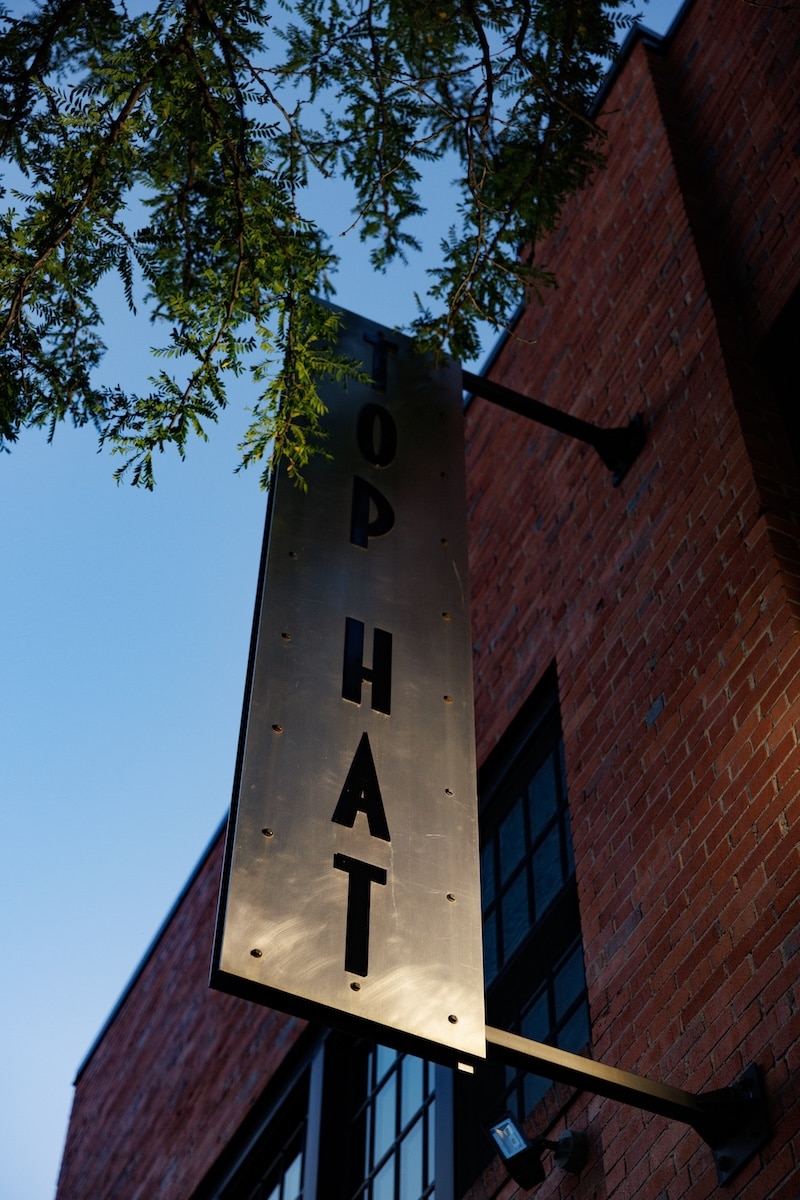
In early December 2024, Missoula-based promotion and production company Logjam Presents announced that Richy Mitch and the Coal Miners, an indie band I’d been listening to for a while, was coming to the Top Hat in the spring. Since COVID, shows by touring bands had become a rare event at the popular downtown venue, so I was understandably psyched for this one.
I missed the presale window thanks to being in the backcountry on a ski trip, but thought nothing of it; the Top Hat, holding 550 people, is a good-sized space for a relatively obscure band – and I’d seen much more mainstream bands there in years past. So when I sat down at my laptop to buy a ticket shortly after the general sale started, I was shocked that tickets sold out before I could get one.
I immediately damned Live Nation, the global entertainment company with which Logjam had partnered the year before, and Logjam for partnering with that corporate behemoth. Since 2010, Live Nation — along with AEG, the other major player in the entertainment promotion and ticketing industry — has been on an aggressive binge of acquisitions, gobbling up venues, ticket sellers, and independent promoters in its path. I can’t even get tickets to shows in my own town anymore, I thought. I assumed, as Missoula’s music scene grew more popular and more corporate, that tickets were all going to out-of-towners and bots — or directly on the resale market, as Live Nation admitted to doing back in 2019.
It’s been 12 years since entrepreneur Nick Checota bought the old Top Hat and restored it, turning it from a dive-bar music venue into a world-class concert lounge. And it’s been 10 years since he revitalized the historic Wilma Theatre, transforming it from a movie theater with occasional concerts into a major music venue, and with that, launched Logjam Presents. In that time, the company — and the man — have fundamentally transformed the Missoula music landscape. Undeniably, it’s been largely for the better, especially in bringing music that resonates with a broader audience — but, some will argue, also for the worse. Colin Hickey, who from 2000 to 2013 booked bands at The Badlander and at Missoula’s most infamous punk and garage rock venue, Jay’s Upstairs (now closed), says the “worse” perspective partially comes from the fact that “it’s not unique to Missoula, but it does seem like a uniquely Missoula thing to complain about change.”
“It’s not unique to Missoula, but it does seem like a uniquely Missoula thing to complain about change.”
When Logjam partnered with Live Nation for access to its artists network and capital (Logjam said in its statement on the partnership that it would retain full control of marketing, booking, and ticket pricing), it was the latest sharp turn in a whiplash period of change that already had Missoulians reeling. The character of the town, says Grace Decker, who played fiddle in well-known Missoula bands Broken Valley Roadshow and Cash for Junkers, used to be that people could make enough money pouring coffee or teaching preschool (as Decker did in her 20s while playing music) to build their dreams in the basements of their low-rent houses.
Then the pandemic hit and reshaped local life in profound ways, while the runaway success of the television show “Yellowstone” landed Montana squarely on the national radar. Out-of-staters flooded in, housing costs soared, rental vacancies dropped to zero, and tourism skyrocketed — all of it shifting the culture of the community.
And because Missoulians despise corporate change more than any other kind (we ran Starbucks out of downtown, scared a business mogul away from buying Marshall Mountain, and torpedoed a deal for a resort developer to buy Holland Lake Lodge — and that’s just for starters), Checota and Logjam became easy scapegoats for mourning the slipping away of the gritty, small-town feel that had defined Missoula for a century.
Was it fair? Not necessarily. But maybe it’s the complicated relationship Logjam has with this town that made it an easy target upon which to pin our resentment of quicksilver, unwieldy change. That, and the fact that Missoulians are fiercely protective of the iconic places and scenes we consider “ours.” As I sat at my computer, ticketless for a show at a legendary venue that had of late become more known as an upscale dinner option than for its live music, I determined to sift through what had become local folklore around the company — and the man — to approach a frenetic summer music scene in Missoula with some sense of a way forward.
I’ve seen some of the best shows of my life at what long-timers in town call “the old” Top Hat. Back when the Garr family owned it, starting in the mid-1980s, the one-time saloon in the old red-light district on Front Street was the perfect example of a grungy and beloved Missoula joint. The floor was crunchy with shuffleboard sawdust. The walls were permanently infused with decades of cigarette smoke. The stage sat too low for a good view from the back of a crowded room, and the sound was, most of the time, as questionable as the view.
And damn, it was a hallowed dive, one that hosted live music several nights a week, from local bands and picking circles to famed musicians like B.B. King and Stevie Ray Vaughan. Starting in the early 2000s, I saw Charlie Parr play for two dollars there, caught a mind-blowing show from Cloud Cult, and saw the Lumineers, who came in 2010 at the quaint, emailed behest of a friend of mine. They played a short set of their then-little-known LP to maybe a dozen people, and when a show let out at the Wilma and late-night concertgoers flooded into the Top Hat, they played the whole set again.

In 2013, news broke that a real estate developer with a passion for music had bought the Top Hat. Nick Checota, a Wisconsin native whose wife, Robyn, is a fourth-generation Montanan from Great Falls, had already made a name for himself in town. He’d bought the old Army Navy on North Higgins and turned the building that once held cheap-as-dirt outdoor gear into Plonk, a high-end wine bar. When he bought the Top Hat, I heard many people mutter the traditional incantation of a community that loves its salt-of-the-earth spots almost to a fault: “I hope he doesn’t ruin it.”
Here’s what Checota did do: He invested heavily in a historic gem that it was unlikely anyone else was going to sink the necessary money into to restore. He raised the stage and fully revamped the sound. He restored the old mahogany and oak bar that was central to the place. And he not only brought in shows — from St. Paul and the Broken Bones and Lord Huron to Jeff Tweedy and Heartless Bastards — screened old classic movies every Monday on a big screen he installed, and launched a restaurant with startlingly good bar food; he also continued the beloved Missoula institution the Garrs had begun with Family Friendly Fridays.
For hours every week, the dance floor below the stage “turned into a mosh pit of toddlers,” said Daniel Kiely, drummer of the WhizPops, the band that frequently provided musical entertainment for the night. Even people without kids often came to Family Friendly Friday (including yours truly), such was the good vibe as a music-based community gathering. “I looked at him as a very positive transformative figure for the Missoula music scene,” Kiely said.
“I was of the belief that someone needed to take that place over,” said Mark Price, a founding member and bass player in the local blues and rock band Moneypenny. “It had its issues, and I was hoping someone was going to come in and take it to a different level.”
Decker told me that one of the first things Checota did after renovating the Top Hat was host a soft opening for local musicians to come and check the place out before it opened to the public. “And there was a lot of chat about how cool it was. People were cautiously optimistic about what it was going to mean and how it was going to feel.”
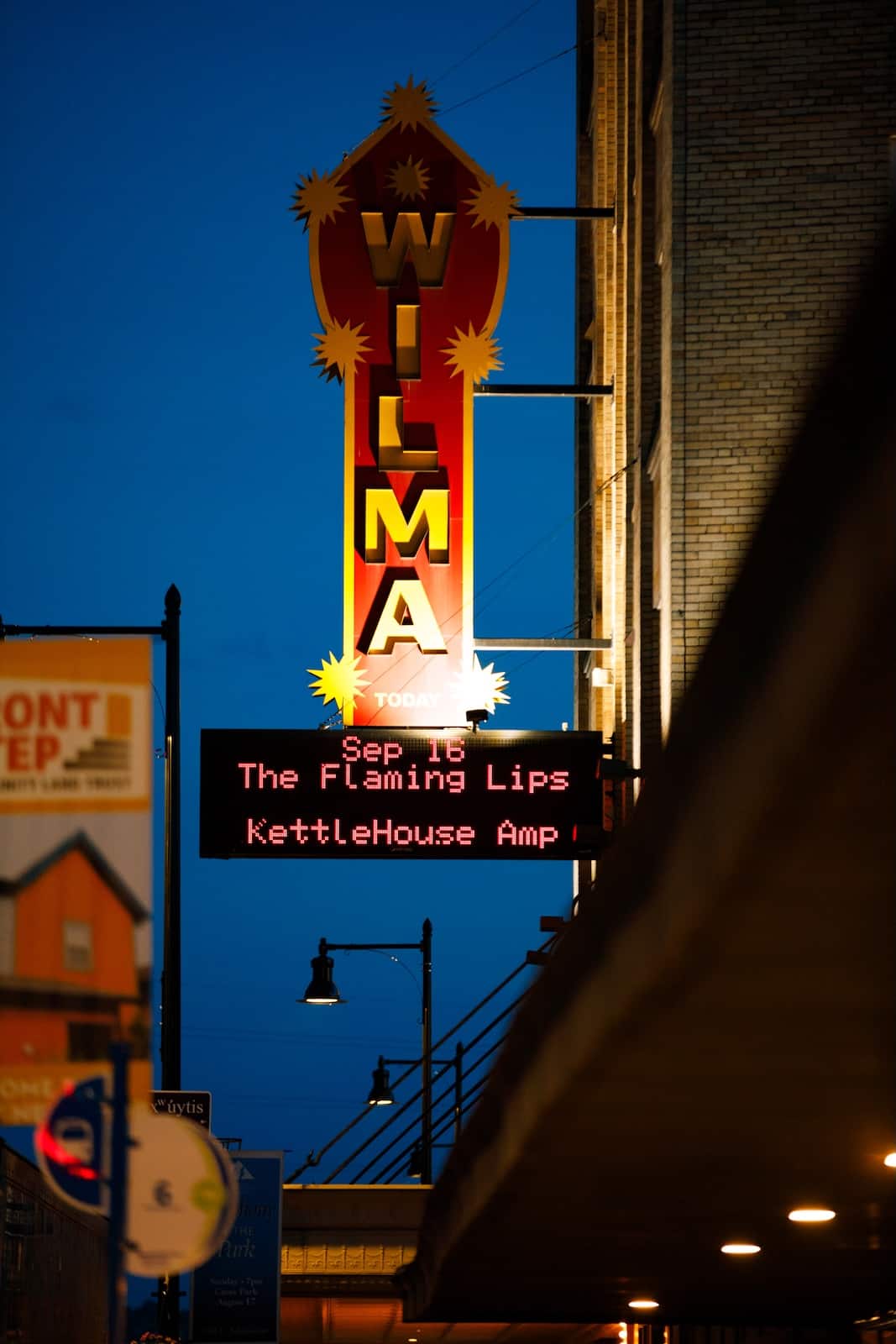
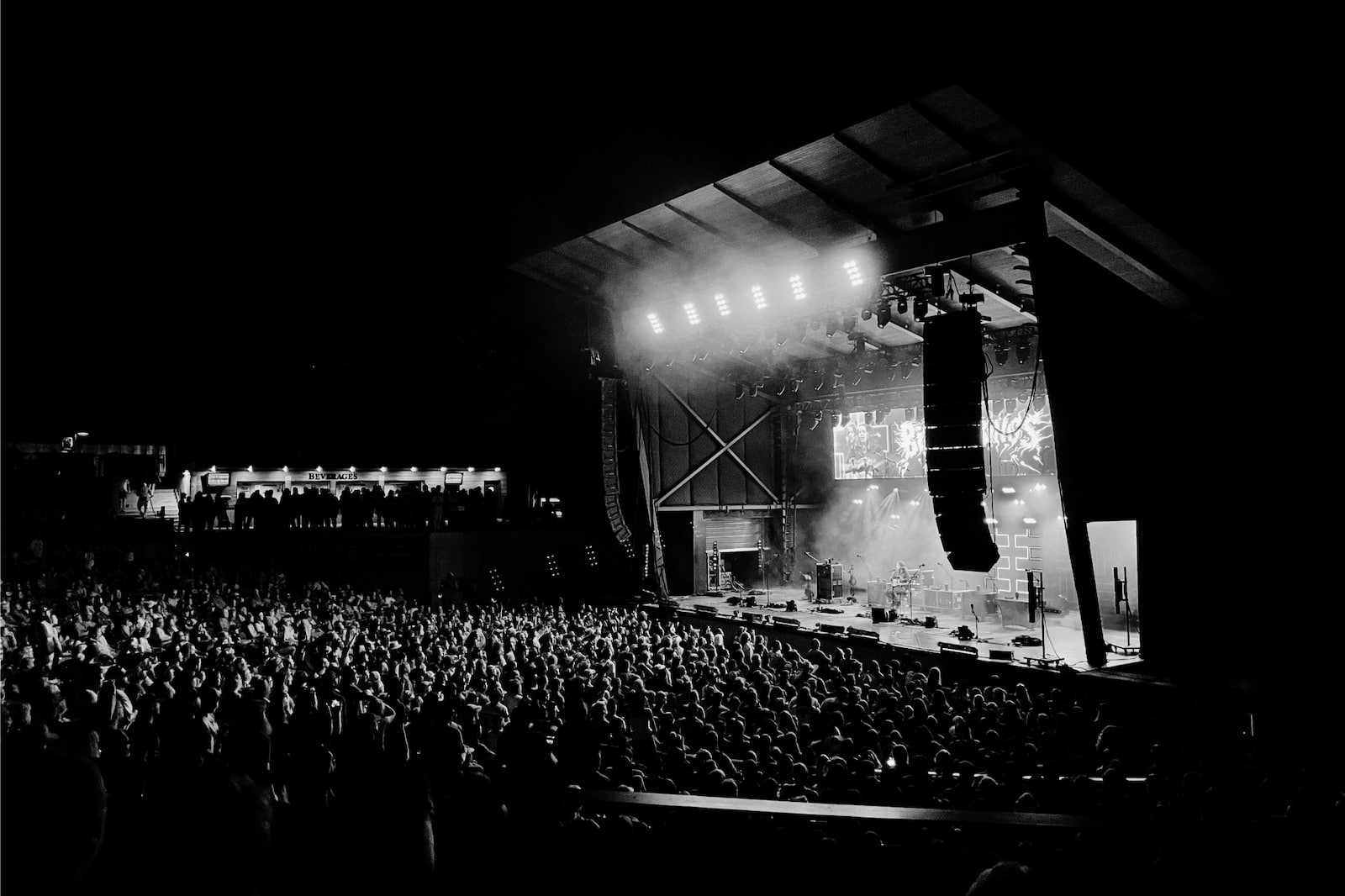
When Checota bought the Wilma, Missoulians were much more on board with the kind of change he was slinging. He seemed to be the only developer with the kind of money to give the Wilma the structural facelift it needed. We trusted he’d respect the character of the old theater (well, he had to, in adhering to historic preservation rules) while upgrading everything about it. He didn’t let us down. By the time he built the KettleHouse Amphitheater in 2017 in partnership with one of the town’s longstanding breweries, we were a bunch of devotees.
Well, not all of us. Many local musicians and promoters who bore the brunt of the shifting tides were, in fact, pissed.
“I remember local bands talking about payouts really shrinking,” Missoula-based musician Izaak Opatz said. “The way Logjam deals with artists is more corporate and businesslike, to the extent it felt ungenerous and cold-blooded.”
Opatz acknowledges that as a businessman who’d sunk an astronomical amount of money into the venues, it only made sense that Checota would need to make the numbers work. “But when you’re showcasing the arts at the same time you’re treating artists like commodities, that doesn’t feel great.”
Then the music scenes at The Palace, The Loft, and The Elks toppled like dominoes in the early days of Logjam. Although there’s no evidence that Logjam’s tightening grip on downtown music caused their demise, the optics were that those small venues couldn’t compete, and the number of spaces for local music and small touring bands to thrive was shrinking.
“When I was playing music in this town, for years there were lots of places where a local band could play,” Decker said. “There was live music in Charlie’s more often, and the Blue Heron. You used to be able to go back and forth between Sean Kelly’s and the Old Post, and there’d be live bands playing in both of those places with minimal to no cover. But this change in Missoula is kind of chicken and egg. Did Nick Checota start changing things, or was he just an early adopter?”
“This change in Missoula is kind of chicken and egg. Did Nick Checota start changing things, or was he just an early adopter?”
Checota himself is a polarizing figure around Missoula. And as polarizing figures often are, he’s wreathed in mythology — much of it created by the side that’s not fond of him or his approach. On the lift at Snowbowl last winter, one skier told me that Checota drives an Audi and parks it to block the exit lane in the dirt lot. (This is false. People close to the Checotas confirm he doesn’t even own an Audi.) He donated to the Trump campaign, an unforgivable offense in vehemently liberal Missoula. (This is true. He gave $486 in 2024. He also donated $4,800 to Democratic Sen. Jon Tester’s campaigns and $2,800 to Democrat Steve Bullock’s 2020 presidential campaign.)
He’s rumored to have a fragile ego, responding to criticism and competition with blackballing and intimidation. More than one person related to the local music scene told me they couldn’t speak to me on the record because they’d been threatened with lawsuits, having their contracts pulled or being banned from Logjam venues for voicing anything perceived as negative against the company. Even I was advised by a few people not to write anything critical, or I would be banned, too.
For some smaller local promoters, those tensions sometimes play out in the unglamorous trenches of booking and marketing. Cameron Smith of Dead Eye Productions, a local event promoter that’s popped up to fill the void in bringing small touring bands to Missoula, told me that Logjam papers over theirs and other small promoter event flyers around town with their own. Even years ago, when Missoula’s alt-weekly, the Independent, was publishing, Checota complained about an in-house advertisement for the newspaper’s Zoo City Awards because it directly competed with an event advertisement he had paid for on the opposite page. Other events run by other organizations in town have experienced similar complaints about their events “competing” with Checota’s.
I was not able to confirm any of this with Checota himself. Although I communicated with him extensively back in 2019 for a possible story in Rolling Stone about his determination to remain independent from music giants Live Nation and AEG — and I’m a local writer writing for a local publication and a frequent patron of Logjam shows — he did not respond to multiple requests for comment for this story. Neither did anyone else at Logjam I reached out to.
“It probably comes from a place of him being scapegoated for a decade,” Hickey said. “He just assumes he’s going to get negative press. And there’s likely to be a comments section he can’t control and can’t turn off.”
Missoulians who defend him, including many of his employees. Logjam is a big employer in this town, and it’s known to be a pretty cool job, with good perks, to sell concessions at the amphitheater or work crowd control at a show. Many of Logjam’s employees have been with the company since the beginning and spoken well of their boss off the record in the past.
Kiely believes all of this mythology is a result of Checota being misunderstood by many in the community.
“He’s been turned into this villain, when in fact, the opposite is true,” he said. “He supported local music for a long time.”
Kiely reminds me that the opening show at the Wilma after its renovation was not a major touring band. It was The Lil Smokies and the WhizPops. And recently, Checota donated the Wilma space for a memorial to local honky-tonk legend Russ Nasset, who passed away in April.
“He probably did more to foster local musicians’ exposure to the wider public than any single figure in Missoula,” said Kiely. “And now we’re a destination for some of the most talented acts in the country, who want to come here because he built, by far, one of the best outdoor venues I’ve ever seen a show at.”
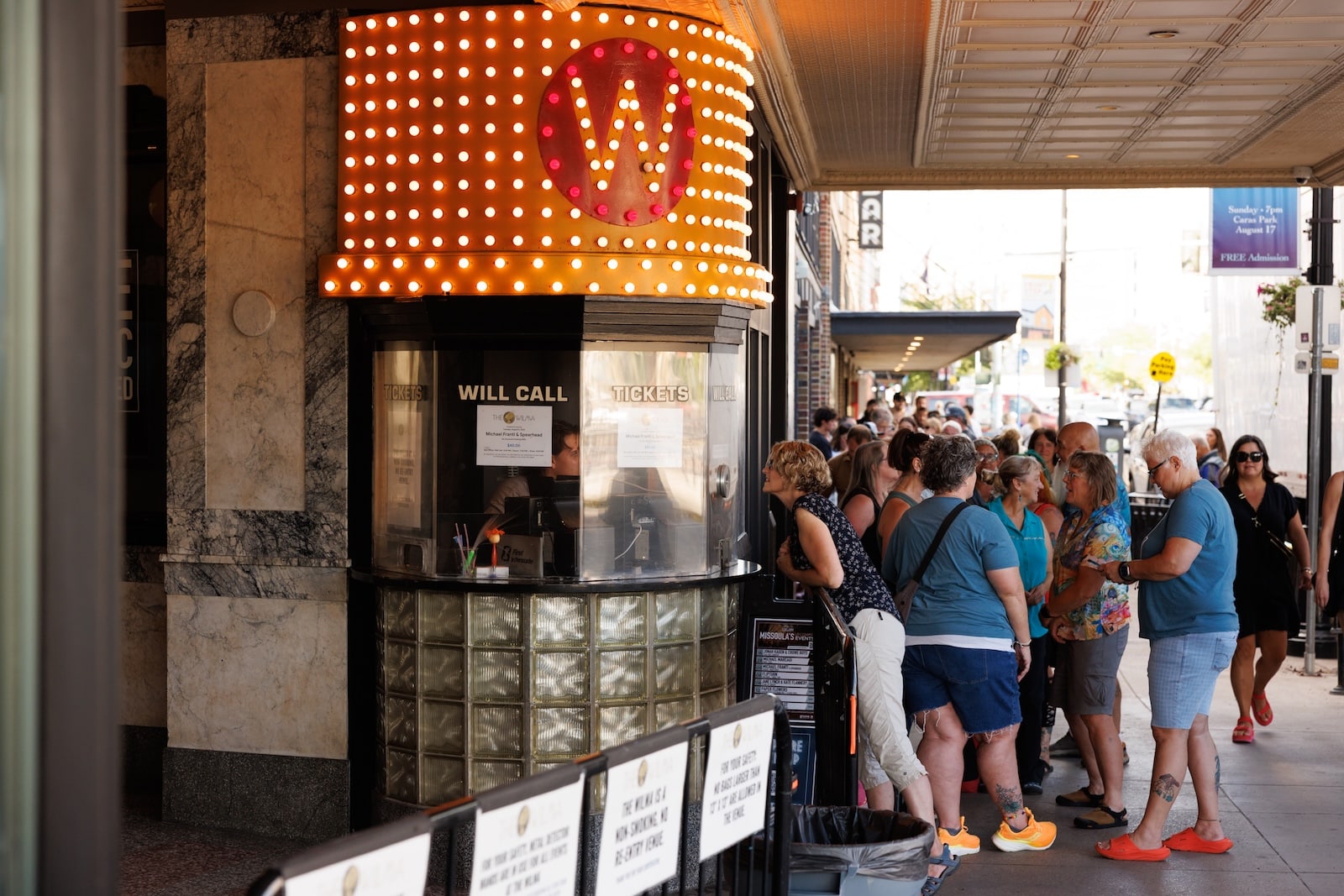
In many ways, those first years after the KettleHouse Amphitheater hit the scene were a golden era. We could go to an intimate show at a beautiful downtown theater one night and watch a major band on the banks of the Blackfoot River the next. And thanks to Checota’s unique (and, it could be said, genius) vertical integration, we could have dinner at a top-rated club and catch a shuttle out to the amphitheater all in one go. We could even pick up our tickets in person at the Top Hat’s historic ticket window. And those tickets were (gasp) affordable.
“Checota probably did more to foster local musicians’ exposure to the wider public than any single figure in Missoula.”
At that time, Logjam was an increasingly rare entity in the modern music world: a small, fiercely independent group with the capital to get agents’ and artists’ attention — to the point that in 2019, Logjam brought Mumford & Sons to play to the smallest crowd of the band’s entire tour. Some of the first shows Brandi Carlile played after COVID restrictions lifted were at the amphitheater — shows people in the audience told me were transcendent after pandemic social isolation. Logjam was determined to keep the music in local hands (Checota told Pollstar in 2019 that the company had been “approached by one of the large, national promoters, but at this time have decided that our customers, artists, agents and community are best served by a local, Montana-based company that is owned and operated in the communities in which we promote and produce shows”), which, in our minds, translated to our hands.
Missoula still had the uncrowded feel of an underground scene, even though it was no longer passed over on bands’ tours between Denver and Seattle. Musicians, almost without fail, said Missoula was a gorgeous surprise. The Head and the Heart, Trevor Hall, Melissa Etheridge, so many others — they said we were their favorite audience, ever. And we probably were. It felt like we knew we were keeping some incredible secret and getting away with it.
But the thing about golden eras, local music lover Kevin DePuy told me, quoting the great musician Greg Brown who’s played many Missoula shows, “is that when you’re in one, you don’t realize it’s never going to be that good again.”
In July of 2023, Logjam announced that it was partnering with Live Nation. Live Nation had already merged with ticket sales and distribution giant Ticketmaster back in 2010 “to become one of the largest live entertainment conglomerates in the world,” reported MTPR. Given that no one at Logjam would speak to me about this about-face — and were possibly under a non-disclosure agreement anyway — I asked others in the industry about why they think a promoter might make this kind of decision.
The obvious reason, says Bozeman-based Adam Foley of Red Light Management who works with bands including ODESZA, is for access to bands on Live Nation tours that would otherwise overlook Missoula. Our music scene might be growing, but we’re not Los Angeles or New York — or even Seattle. (Yet. Or hopefully ever.)
“And then on a marketing level, you get to tap into the nationwide marketing campaign for an entire tour, so you’re getting exposure on a nationwide level for that tour and that date,” Foley said.
The thing about golden eras, local music lover Kevin DePuy told me, quoting the great musician Greg Brown who’s played many Missoula shows, “is that when you’re in one, you don’t realize it’s never going to be that good again.”
When it comes to Ticketmaster, Foley believes it’s still the best ticket platform out there, regardless of the bots and scalpers. “If you’re the biggest ticketing company, you probably have the best tech, and the most infrastructure to be able to build the systems to try to stop the bots and scalpers to pull as much money into that Ticketmaster ecosystem as possible, which then flows back to the promoter and the artist or the band.”
Hickey points out that for most entrepreneurs, the goal of creating a business is to sell it. “And then you want to get out, you want to retire, you want to watch your kids grow up.”
Logjam hasn’t said what prompted its decision to partner with Live Nation other than to stay competitive while retaining local control. Live Nation is one of only two massive concert entities in the country, both of which are known for stamping out competition. And Logjam, as it put western Montana definitively on the music map, would have been an appealing company for Live Nation to bring into its fold.
Before Live Nation’s acquisition, Logjam Presents had employed business tactics that some critics described as aggressively consolidating the local market. In 2015, for instance, Checota faced accusations from competing promoter Knitting Factory Presents that he used control over key venues like the Wilma Theatre and the Top Hat Lounge to limit competition and increase personal profit through closely held entities. The allegations included claims of “unlawful restraint of trade.”
These claims were disputed by Checota and his attorneys, who rightfully pointed out that other venues operated by the Knitting Factory Presents also engage in similar promotion and venue control strategies including exclusive arrangements and radius clauses to maintain its position within Missoula’s relatively small live music market. Logjam’s business strategy was neither illegal or unfamiliar elsewhere in the music industry. But it was fairly new to Montana’s music scene, and for many local artists and fans it was a new normal that was tough to swallow.

These tactics have been part of Live Nation’s playbook, too. Public records and media coverage show that Live Nation acquired a majority stake in Logjam and, after an existing ticketing contract expired, moved Logjam’s venues to Ticketmaster — which has been part of Live Nation’s broader strategy of consolidating ticketing, promotion, and venues under one roof, a strategy that has repeatedly drawn antitrust scrutiny.
Indeed, last May, the U.S. Department of Justice brought a lawsuit against Live Nation and its subsidiary Ticketmaster for, among other things, stifling competition, and cited Live Nation’s partnership with Logjam as one piece of evidence in the case. The DOJ doesn’t claim Logjam was forced into partnership, but it portrays the outcome as baked in once Live Nation took ownership. By entwining itself with an independent promoter and consolidating ticketing under Ticketmaster, the DOJ argues, Live Nation tightened its control over the live events industry, leaving fans and artists with fewer options and higher costs.
Live Nation disputes the DOJ’s claims, stating, “During the time period at issue (roughly the last ten years or so), Live Nation has never acquired any U.S. promoter that could plausibly be viewed as a meaningful potential competitor in the alleged national touring market.” This March, a federal judge rejected Live Nation’s bid to dismiss the antitrust lawsuits, with a trial set for March 2026. If it loses, Live Nation could face a Ticketmaster breakup and steep financial penalties.
In September of 2023, two months into the partnership, the Lumineers returned to Missoula to play the amphitheater. I couldn’t get a ticket. Prices were astronomical anyway — $59 for the lawn, all the way up to $129, plus the fees that had appeared courtesy of Ticketmaster.
When Sturgill Simpson tickets went on sale the next year, I was an astonishing 9,054 in the queue. CNN — whom Checota did speak to for its article on Missoula as one of its top ten “Best Towns to Visit in 2025” — reported that Logjam confirmed 67 percent of summer concert ticket sales are now from out-of-state buyers.
The golden era was over.
“There’s this false idea that you have a right to a ticket to a show,” Foley told me. “It’s the world’s right to have access to a ticket to a show. That doesn’t mean that you are going to get one.”
“There’s this false idea that you have a right to a ticket to a show. It’s the world’s right to have access to a ticket to a show. That doesn’t mean that you are going to get one.”
As the local culture of Missoula shifts and morphs and balloons so quickly — so seemingly out of our control — it can be easy to feel personally wronged by the loss of things that once felt like ours alone. But the reality is that it was only a matter of time until our secret was blown. And although the pandemic that put the kibosh on indoor musical gatherings was over, Logjam still hadn’t revived the Top Hat’s old robust musical offering, save for its late-night Groove series of free shows from local and regional bands that start at 10:30 pm.
I asked Moneypenny’s Price how the band’s experience was playing the Groove series in 2024. As a group with a big sound that doesn’t fit the singer-songwriter bill for the brewery music scene that’s popped up here, Price said the Top Hat is one of the few spots left that Moneypenny can still play in town, along with the Union and the Sunrise Saloon.
“The staff was fantastic,” he said. “We had a place to hang out. We could do what we wanted.”
I asked about how the crowd was, given I can’t make it out to a show that starts at 10:30 these days. Price laughed and said none of his friends can, either.
“I mean, the crowd was pretty good, kind of filtering in all night. Whereas the Union Club is just packed all the time, it’s kind of the place people love to go see music. The Top Hat seems to have lost a little bit of that.”
And, he says, it also feels corporate now. “I mean, we’re local bands, and we have to sign waivers if we want to record or bring a photographer in, and then they have to approve any footage before we can use it. And, of course, that gives them access to it all. I know it’s just a standard issue thing, but we’re not national acts with major resources. The Top Hat is a Missoula institution with a long history of great locally made music. We need support from Nick and other venues to help support and sustain our homegrown talent.”
Family Friendly Friday too was long gone, likely incompatible with serving food (and likely less lucrative), as I heard from many people I spoke to.
“It used to be more of a free-for-all, more easy come, easy go,” Decker said. “But then you felt awkward standing around with your kids without ordering a table full of appetizers and spending a hundred bucks to go have happy hour with your family, which wasn’t what everybody was into.”
Decker says she’s excited about what Checota and Logjam did with the Wilma, and the great acts that come through there on the regular. “But the Top Hat was this storied place, and now it doesn’t even have music anymore. It’s just another upscale downtown restaurant. It’s a loss.”

Decker says she’s been worried about her musician friends moving away from Missoula now because they can’t make it work. We’re no longer the same town in which people could build dreams in their low-rent basements working blue-collar jobs.
“The things people look at as Missoula icons — The Big Dipper, Le Petit, Garden City Harvest, Home ReSource, the KettleHouse — all started out as people’s projects in their closets or garages, and now they’re cornerstone businesses and nonprofits in Missoula. If we don’t nurture the dreamers and musicians and artists and weirdos in their 20s in this community, they’re going to have to leave. What will be the institutions 20 years from now, if all we’re left with are corporate franchises?”
There’s an inevitable reckoning with the idea that bringing new culture to a smaller town means losing a bit of the old culture to make space for it. But that old culture isn’t gone forever. When it comes to music, the Union Club still hosts rocking local bands on Friday and Saturday nights — in addition to launching a Live and Local Thursday tradition — and probably will as long as it stands. Small promoters and bands are ringing in a new kind of heyday in music here, utilizing places like the VFW, Free Cycles, the Longstaff House, and even the alley behind the skateboard shop Board of Missoula to nurture blossoming musicians and touring artists who prefer more intimate venues. And, as my Pulp editor Erika Fredrickson, whose been covering music in Missoula for decades, reminded me, “The DIY local music scene here, from dive-bar to underground and warehouse venues to house shows, has always been in a perpetual cycle of dying and being reborn.”
Perhaps, in thinking about transformation and Logjam’s role in it, the trick is in focusing less on that trepidation-laden word “change,” and more on “expansion.” There’s enough room for a rebirthed local scene alongside massive shows like P!NK at Washington-Grizzly Stadium, the Black Keys at the amphitheater, the Big Sky Brewing Summer Concert Series that brings in big names like Whisky Myers and Caamp, and the multi-day Zootown Festival that headlined Hozier and Kacey Musgraves.
That’s not to tie a neat bow on all of this. I don’t know that there is one. We’re allowed to mourn when things change. Including the fact that, even though Logjam recently started booking a few touring bands to play the Top Hat again, it seems like we did, in a way, end up losing that place as the venerated musical institution it was in its golden-era days. The only certainties are that change is constant, and that we’re the ones who get to decide how we receive it.
As for me, I plan to be much more on top of it with presales when Logjam announces a show I want to see at some of the coolest venues in the country. And, as a music lover, I’m grateful that I don’t have to drive eight hours to Seattle to see those shows. But I’ll go to the small local shows, too, to support all the dreamers and weirdos stitching together the fabric of this modern Missoula — the well-loved grungy threads all woven in with the new designer ones. Grit, after all, can be hard to wash out entirely.