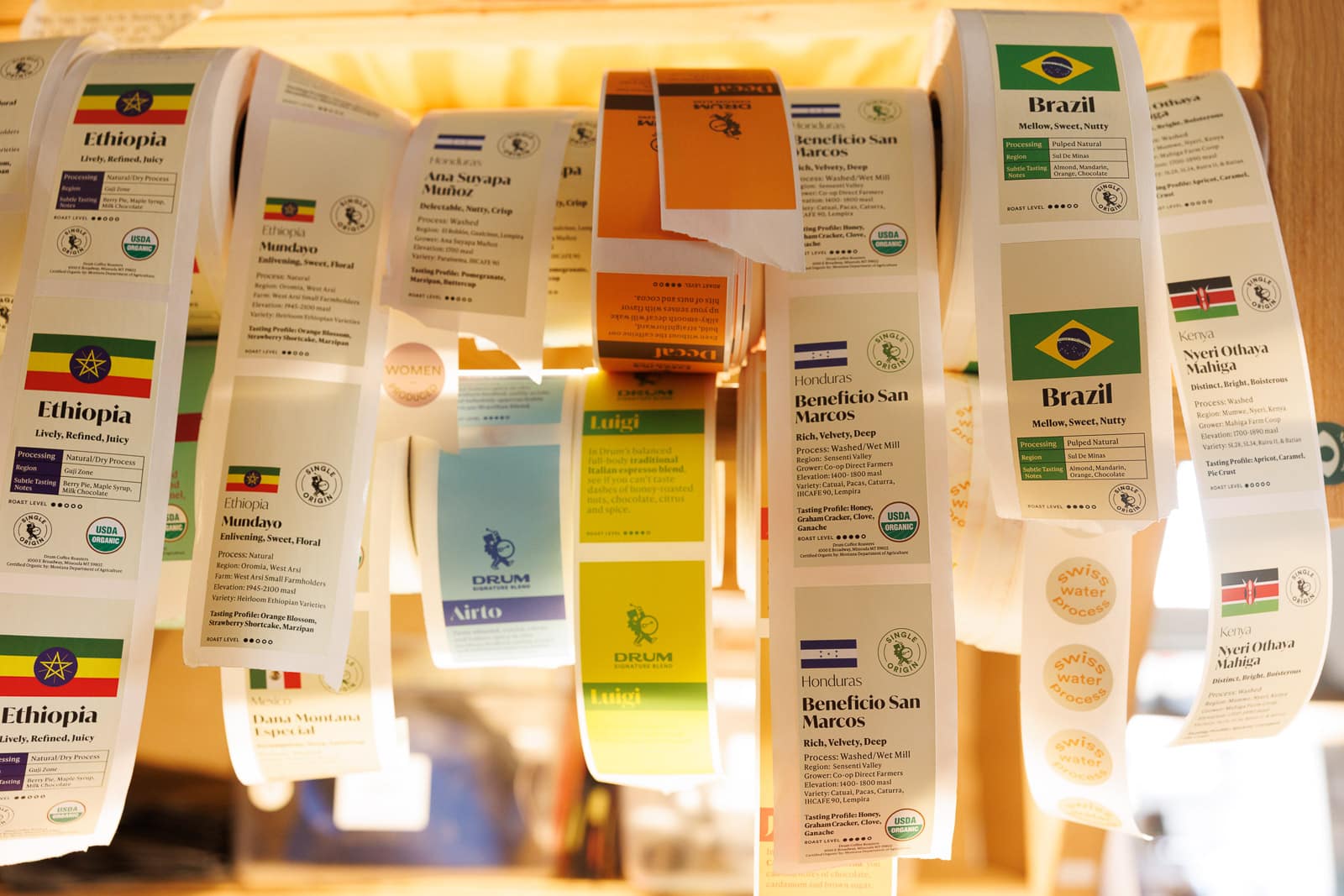
Ben Gaude, the director of coffee at Missoula’s Drum Coffee, is used to calculated risk. It’s part of the business. He’s negotiating prices today for coffee that won’t reach the shop until 2027. But President Trump’s tariffs have introduced a whole new level of uncertainty.
“With the tariffs, it becomes even more important for me to book ahead,” he explains. “I have to say, ‘No, I want it and I’ll pay the tariff. And whatever the tariff is in the future, I’m going to pay it.’ So, as a business owner, I’m terrified.”
No pun intended.
Gaude isn’t alone. From hunting knives to quilting fabric, Missoula business owners are bracing for years of disruption as tariffs reshape their supply chains and force price increases.
On Wednesday, the U.S. Supreme Court heard arguments over President Donald Trump’s sweeping tariffs on goods imported into the U.S., the world’s top importer. Two cases brought by small businesses — backed by the libertarian-leaning Liberty Justice Center — both argue that the president doesn’t have the power to enact them.
The White House has targeted a wide range of products and imposed tariffs on dozens of countries. Tariffs anywhere from 10 percent to 50 percent now apply to foreign cars, steel, copper, wood products and other goods, according to the Atlantic Council GeoEconomics Center’s Trump Tariff Tracker. Trump hit Brazil — the world’s top coffee producer — with a whopping 50 percent tariff.


It’s a bitter brew for businesses reliant on imports. Polling shows the tariffs are broadly unpopular.
For Gaude and Drum Coffee, which operates two shops and roasts between 1,000 and 1,500 pounds of beans each week, the timing couldn’t be worse. About 99 percent of coffee consumed in the United States is imported, and climate change, Covid and political instability were already pushing coffee prices to record highs.
“We were reaching a breaking point before tariffs hit,” he says. But the tariffs represent a jolting escalation. “With the tariff, it is such a huge doubling, tripling, quadrupling of the cost.”
Gaude says he was concerned about tariffs on Brazil and spent the last six months shifting contracts to Colombia growers only to see Trump threaten punitive tariffs on that country in late October.
“Everything is going to be much more expensive and people are going to have to curb their spending.”
The tariffs are useful to the Trump administration for three reasons, according to the Atlantic Council: gaining leverage over trade partners such as China, punishing countries for non-trade issues such as drug smuggling, and serving as a “macroeconomic tool” to restore domestic manufacturing and decrease U.S. trade deficits.
But even Trump supporters say it’s unrealistic to expect a restoration of domestic manufacturing.
In Missoula, Josh Smith is owner and founder of Montana Knife Company, which produces high-end knives aimed at the outdoor recreation and hunting market. His company imports European steel and German-made machinery that face steep tariffs of 30 percent to 50 percent.
Smith generally likes Trump and touts personal connections to the family – Donald Trump Jr. has stayed at Smith’s house – but he’s spoken out publicly to say the tariffs on raw materials and steel will only hurt businesses like his.
Smith says he can’t source knife-quality steel from a U.S. maker, and is currently building a production facility near the Wye that could cost an extra $50,000 because he needs German-made bevel grinders. He’s already opted to raise prices about $1 per knife — not a huge percentage on knives with a retail cost that ranges from $200 to $575 — but he’s unsure about the future
“This isn’t a case of ‘I’m buying a material overseas because it’s cheaper.’ It’s the only steel available,” Smith says.
“I don’t think Americans care if the steel for their knives comes out of Germany or Austria. But all of a sudden a 50 percent tariff applies to steel that we can’t buy here,” he continues. “And the argument is that [Trump] is trying to bring back the steel industry. I’m all for that but it’s going to take five to 10 years and the government would have to be involved in making that happen. To build a new steel mill in America and compete on a global scale is damn near impossible from scratch.”
At the Confident Stitch, a quilting and sewing shop downtown, owner Kate McIvor says her business also relies on materials no longer made in the U.S. The $5 billion quilting industry relies on fabric and notions all made overseas. The “de minimis” exemption ending in August especially hurt the hobby and craft industry, including sewers, crocheters and knitters. Many foreign yarn companies stopped shipping to the U.S. in September.
Previously, ordering less than $800 worth of imported goods like fabrics exempted most shipments from tariffs.
“So I can only order from American distributors now,” McIvor says. “They all had a lot in their warehouses, so I’ve really only paid an extra 10 percent so far. But as they sell through what’s in their warehouses, and start importing, I think the tariffs will go up. I don’t know exactly how much.
“Because of my business margin, I will be passing those costs onto my customers. I can’t avoid that.”
McIvor is keeping a close eye on the court proceedings. She’s not optimistic about how the Supreme Court will rule after it hears the government’s arguments this week. She posts regular tariff updates on the shop’s Instagram page.
“I think people are going to feel the effects pretty soon, in the next couple months,” she says. “It’s going to be not just fabric. Everything is going to be much more expensive and people are going to have to curb their spending.”
A short stroll down Front Street from Confident Stitch’s storefront, Grizzly Hackle Fly Shop offers mostly imported fly fishing gear. Nonetheless, retail manager Matt Bryn seems unconcerned.
“We’re seeing a little bit of a rise in prices, but not too bad,” Bryn says. “I think some companies are using tariffs as an excuse to raise prices.”
He adds that his customers don’t appear to be too worried, either. “The kinds of clients who go on our guided trips won’t notice. Those guys have millions of dollars.”