If you walked through downtown Missoula in the 1990s, you probably saw them — the skateboarders grinding ledges, ollieing curbs, and getting chased off private property. Among them was Andy Kemmis, part of that restless, DIY “skateboarding is not a crime” crowd that turned empty concrete into playgrounds.
These days, Kemmis is better known behind a camera. He’s a respected photographer and one of the people who helped turn Montana’s skate scene from scattered and scrappy into one of the most connected in the country.
On October 14, he releases “Grit to Grind: Shaping Montana Communities One Skatepark at a Time,” a new hardcover book that tells the story of how a handful of kids with decks and nowhere to ride ended up building one of the most expansive rural skatepark networks in the U.S. Through photos and essays, Kemmis captures the early Missoula skate scene and the formation of the Missoula Skatepark Association (now Montana Skatepark Association), founded with Ross Peterson and Chris Bacon of Board of Missoula. The group’s efforts led to MOBASH Skatepark — and eventually, more than 40 skateparks across the state, each becoming its own kind of small-town gathering place.
Ahead of the book release and Q&A event with Kemmis and Bacon at the Missoula Public Library on Oct. 14, I caught up with Andy — who’s also contributed some stellar photos to The Pulp — to talk about the project, the scene, and what keeps Montana’s skateboarding culture rolling.
The Pulp: How did you decide to create this book?
Andy Kemmis: We were super fortunate that Chronicle Books reached out to us, noticing a lot of the work has been happening around the state the past little while. I have no idea how long they’ve had their eyes on the scene here, but it’s definitely the rising tide of Montana’s entire scene [that caught their interest]. It’s been catching the eyes of lots of people, lots of places. And the editors at Chronicle Books knew about us and reached out to us about the whole thing, just to see if we would be interested in working on a project — a project meaning a book, I guess. As soon as I read that email, my eyes lit up, and I was like, “Hell yes.”
What was it like to work on this book and, in the process, get to look back on the evolution of the skate community here?
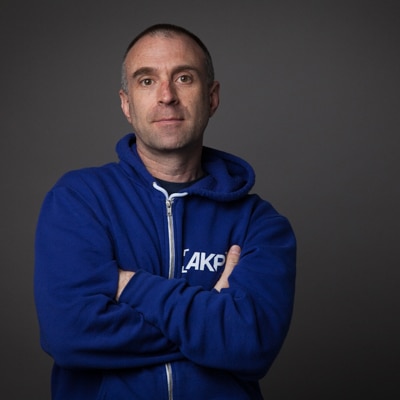
Through the process of writing the book, and as I was constantly thinking about the then versus the now — meaning when I first started skateboarding here in 1985, 40 years ago — I was having these pinch-me moments of like, “This can’t be real.” It’s wild to be working on a book about this scene here and going from where it started — when I was in elementary school — to where it is now, when I just turned 50. It was all these jaw-dropping moments over and over, whenever I would think about it. And then I would go through my mental database of all the little micro moments that happened as we were all kind of coming of age, way back when, some of which I wrote about in the intro.
One specific one was when a guy named Rodney Mullen came to town and put on a demo in Skaggs parking lot. It was just earth shattering to us. He was one of the larger skateboarders in the world, national champion for years and years and years in a row, and he ends up in Missoula, Montana, doing a demo. I don’t have the book in front of me, but I think I said something in it like, “The earth wobbled off of its axis for a while.” It was just so mind blowing to all of us that he would actually be in Missoula then. So thinking about those kinds of experiences way back then, comparing that to how now we have so many world-class skate parks here. It’s just wild. And even wilder to be in the hot seat writing a book about it.
“The earth wobbled off of its axis for a while.”
Did you ever imagine back when you first started skateboarding that you would be writing about it later in life?
Absolutely not. I didn’t even know I’d still be skateboarding. When you’re a 15-year-old kid or a 10-year-old kid, 50 seems like it’s eons away. I’m sure that back then I thought there was no way I would still be doing this at this point in my life. So, yeah. I never expected it, never planned on it, and I couldn’t be more fortunate and happier that it has turned out to be the reality.
Between the time of being a young skateboarder to helping found the skatepark association, when did you start noticing how skateboarding and skateparks could have a positive social impact?

Starting the MSA — and it wasn’t just me, it was Ross Peterson, Chris Bacon, and, at that time, a loosely grouped crew of people. Nobody was in charge. We were just kind of doing this thing to get a skate park built here. We went through fits and starts of other trials and errors, like trying to get a skate park built under the Higgins Street Bridge that failed. We tried to get one off the ground at the YMCA, which worked out for a while, and then it failed. And then we tried to get one built in a church parking lot, which turned out to be laughably weird.
And through it all, none of us had any sort of larger mission-driven idea to it. It was just like, “We want a skate park.” And then we began to witness what was happening around Portland and up and down the West Coast from Portland to Seattle, where there was kind of this explosion of concrete skate parks. And so eventually, once those started to come online more and more often, we started to think, like, “God, we need to have nice things too! We should be able to do this. Their towns are just like our town.”
So then we eventually got real. And it never felt like there was a larger mission to it, it was just like, “I want to skateboard. I want to do this thing with my friends. We’re working on it together. It’s fun. Let’s just see where we can take it. I think over the years, it has turned into more of a mission-driven type thing, but also still — at the core of it — it’s a way to hang out with my friends and skate with my friends and stay involved in skateboarding.
And you have all these different skateparks to go skate.
Yeah. And I’m certainly past the point of progressing at skateboarding at this point, but doing all this work and being involved in it just makes me stay in it. So I still get to keep skateboarding in my life, and I get to work with the MSA doing all these fun contests and helping parks and communities and answering questions. And just being active in it makes me feel like I’m still a 15-year-old kid skateboarding.
What were the challenges of putting together this book?
It was no joke. I mean, I was so enamored with the idea, and certainly fueled by my past in photojournalism and my career with my camera, that I realized there’s no way this is going to not happen. I’m going to do it. So that fueled me a lot, just being so passionate about getting this thing to the finish line. However, along the way — any writer would probably say that there are good days and bad days. Some days I would sit down for eight hours and have a paragraph to show for it. And other days would be like, “Wow, I got a half a chapter done. This is great. I can see the mini micro deadline I set for myself within reach now.” The writing part just took time. I had to kind of take the bigger idea, break it into smaller ideas, then conquer those little ideas — which I did — and then eventually it gets accomplished.
“It’s about celebrating how we’ve taken this thing and it’s become this wildly popular and increasingly cool and helpful scene around the state.”
But then layered on top of that was the whole photo piece, which I intentionally pushed off to the end of the process thinking, well, that’s going to be the faster part, because a lot of it’s already created, and I can just kind of cruise through it. As it turns out, I hadn’t finished all the writing when the whole crush of the photo work hit me. I was still trying to bounce around the state as much as I could last summer, shooting as many photos as I could.
What else do you want us to know about the book?
The overwhelming feeling here is that it’s just so cool to have a book that comes out that celebrates the entire Montana scene. It’s not about Chris. It’s not about me. It’s about celebrating how we’ve taken this thing and it’s become this wildly popular and increasingly cool and helpful scene around the state. And now there are teenage kids in Wolf Point, Montana, and Laurel, Montana, in Lewiston and in Browning — all over the place — that are getting really good and having this infrastructure given to them so that they can take it to the next level. It just feels cool to do all the work and then be, like, “Not ours.” Everyone else gets to take it and run with it and do what they do, but it’s not for us. It’s for everybody else.
“Grit to Grind’s” official book release event takes place Tue., Oct. 14, from 6 p.m. to 8 p.m. at the Missoula Public Library. Other events include a reading and Q&A Thu., Oct. 16, at 6 p.m. at Montana Book Co. in Helena, a sidewalk signing Sat., Oct. 18, from 11 a.m. to 3 p.m. at Fact & Fiction, and a reading and Q&A Thu., Oct. 23, from 6 p.m. to 7 p.m. at Chapter One Books in Hamilton.