On a recent evening, just a block down from Missoula’s City Hall, a group of about 15 people sat outside watching a TV screen, set up in ad hoc style to broadcast that evening’s weekly Missoula City Council meeting. Some people stood next to shopping carts filled with blankets, sleeping bags and jackets, others sprawled on the ground smoking cigarettes and occasionally cursing when the mayor or other city officials spoke. A volunteer from Food Not Bombs Missoula, a local chapter of the global movement that preaches free food as a right and encourages social activism, passed out hot dogs.
The group of advocates and houseless individuals were there to give public comment on a controversial urban camping ordinance. The ordinance was a product of an urban camping work group formed in February by Mayor Andrea Davis, composed of City Council members, service providers, businesses and houseless individuals.
The proposed law would designate buffer zones around city property, require camps to be taken down between 8 a.m. and 8 p.m. in designated public spaces, establish a series of cleanliness and safety rules for unhoused campers, and create a vehicle permit system. Those who don’t comply could be fined. And it stipulates eventually establishing designated campsites with resources and services, as well as the city conducting an annual review of the law.
Two weeks before, the law was presented to the full City Council for the first time during a highly emotional meeting that lasted 10 hours.
On this night, June 24, the council was hearing more public comment and taking a final vote on the ordinance that would change the way some houseless people—like many of those sitting outside—find shelter during Missoula’s days and nights.
Those in favor of the ordinance have viewed it as a necessary next step to address particular aspects of the growing problem of houselessness in Missoula, including houseless populations taking up residence in high-traffic public spaces, and lived-in cars and trailers parked along residential streets. They point to the taxpayer money spent to clean up garbage, needles and human waste—which, as of March, had totaled roughly $138,000 since the beginning of last summer, according to the Missoulian.
Those against the ordinance have argued it’s inhumane. They’re concerned pushing people out of buffer zones will exacerbate the houselessness problem because Missoula lacks enough indoor shelter beds to serve everyone in need and authorized camping zones aren’t established yet. They argue people will likely be pushed farther from the services they need. Other concerns about the ordinance regard communication and implementation. There’s currently no physical map of buffer zones that can be handed out to people in public spaces so they know which areas to avoid. And they point out that the ordinance doesn’t specify how the vehicle permit system will work, nor how the city will levy fines.
At the heart of the debate is the question of how Missoula balances the needs of all its residents during a housing crisis. Missoula isn’t alone in searching for an answer: Between 2007 and 2023, the number of individuals experiencing chronic patterns of homelessness in Montana jumped 551 percent, the highest percentage increase in the country, according to HUD’s 2023 Annual Homelessness Assessment Report. The Montana Legislature hasn’t provided communities with consistent funding to help address the problem, though last year’s one-time allocation of $5 million directly supporting homeless shelters across the state—including about $229,000 for Missoula’s Poverello Center—is a significant acknowledgment that there is one.
“No one city has mastered this. We are attempting to manage as best we can with compassion and accountability.”
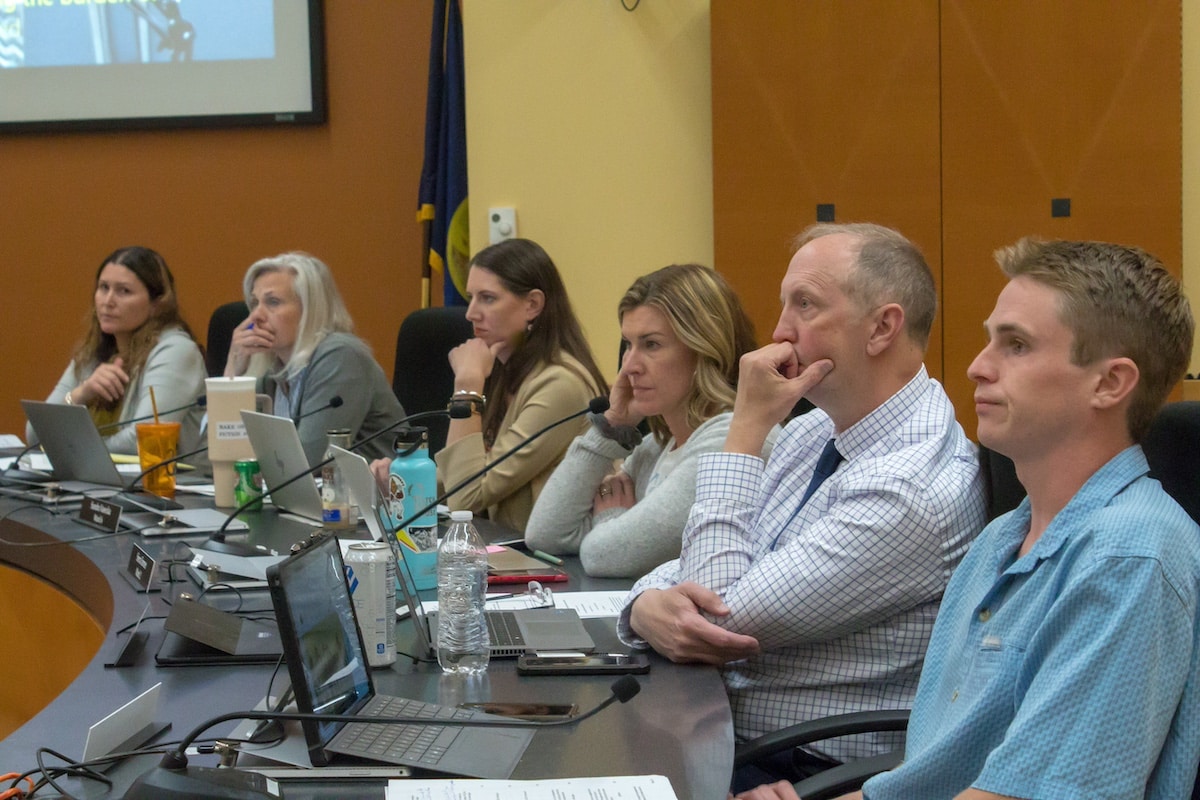
On this Monday night, Missoula City Council chambers were packed and the crowd of people waiting to speak spilled into the hallway. During the previous meeting, the majority of public commenters had spoken out against the ordinance, while most of city council was for it—save for Councilman Daniel Carlino and Councilwoman Kristen Jordan, who were adamantly against it. That dynamic played out again.
While everyone in the room agreed houselessness in Missoula has gotten worse and requires a solution, the two sides clashed over whether the ordinance is pragmatic or draconian—a compassionate approach to a very complicated problem, or the criminalization of people who don’t have a house to live in.
Mayor Davis, who was elected last November after campaigning on her experience directing the affordable housing nonprofit Homeword, addressed the room before the council began its discussion.
“I recognize that this is an extremely controversial issue for many people,” Davis said. “And I will often say that no one city has mastered this. We are attempting to manage as best we can with compassion and accountability.”
For nearly five hours, residents, one after another, took to the podium to speak. The overwhelming majority of commenters—unhoused individuals, social service providers, members of housing coalitions and attorneys—argued against passing the ordinance.
Luke Santore, a sociologist at the Rural Institute for Inclusive Communities at the University of Montana, called the ordinance “inhumane” during public comment saying, “You can not legislate and beat and harass trauma out of an individual.”
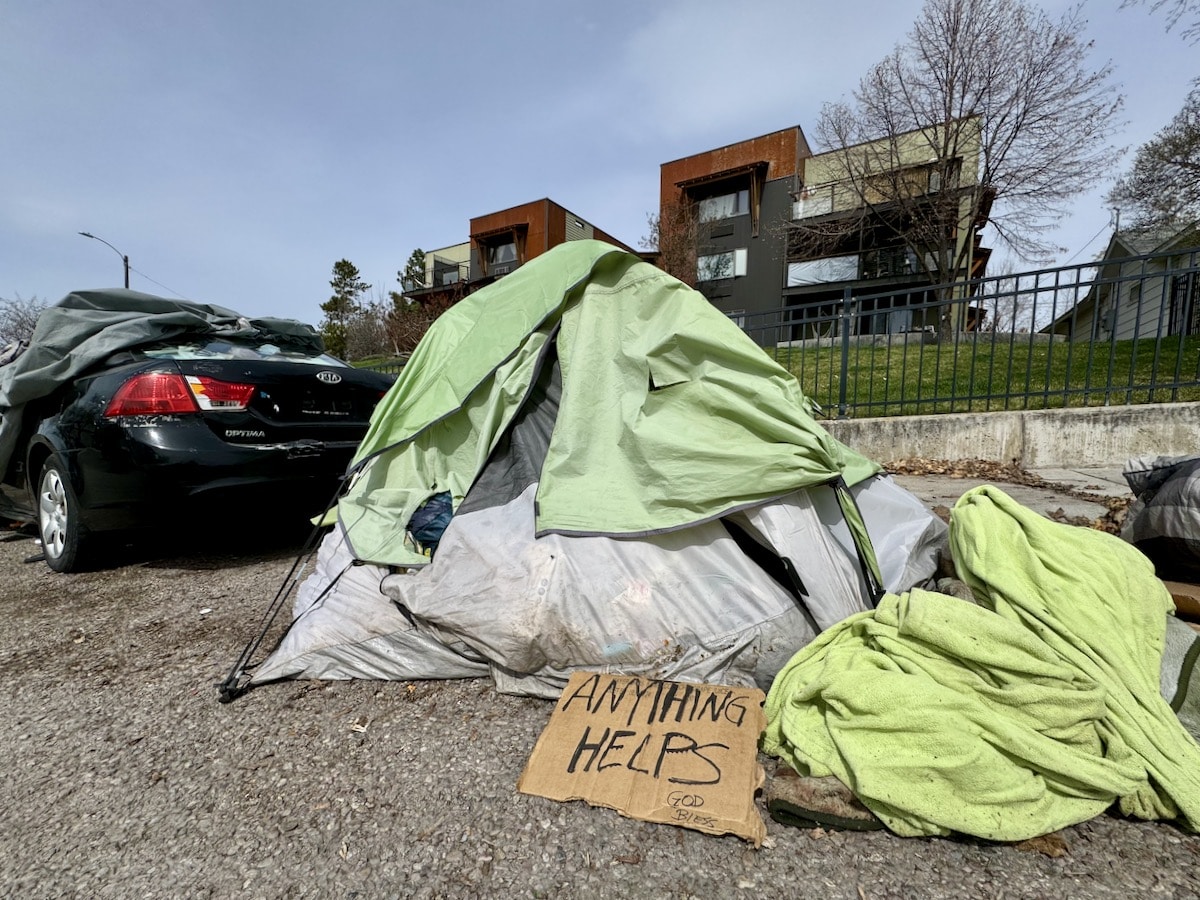
Raphael Hagen, a lifelong Missoula resident, agreed. “Homelessness is not a choice, it’s a structural issue,” he said. “If you guys think that you can find your way out of this with small tickets and more police action, you’re completely wrong.”
Pushing for safer parks, former City Council member Heidi West teared up at the podium as she showed her support for the ordinance. “In May of last year, one of those [parks] smelled like I’d been trapped in a Porta-Potty on the third of a three-day music festival,” she said. “I just want people to be afforded the same opportunity that I was and my kids had to thrive and grow.”
By the time public comment finished it was close to 2:30 a.m. The discussion fell back to the council, where tense and tired councilors argued back and forth over proposed amendments.
Throughout the meeting, the question of “criminalization” continued to be debated, with Jordan and Carlino arguing against the ordinance, and the rest of the councilors arguing for it.
The constitutionality of urban camping bans that impose criminal penalties have been a question before the courts. In 2013, Grants Pass, Oregon, began fining people $295 for sleeping outside, a penalty struck down in 2022 as unconstitutional by the U.S. 9th Circuit Court of Appeals. That decision, along with a 2018 9th Circuit decision—Martin v. Boise—applied the Eighth Amendment. The court said prohibiting houseless individuals from sitting, lying or sleeping on public property, or from using things like blankets or sleeping bags to protect themselves from the weather, amounts to cruel and unusual punishment.
Currently, urban camping in Missoula is technically illegal under Chapter 12.40, which outlaws camping or sleeping in any public area. But the 9th Circuit decisions have prevented the city from enforcing the law. The city has been able to ask urban campers to move only if they pose a threat to health or safety.
The ordinance places restrictions on where people can tent camp including specific distances from public buildings, parks, sidewalks, the Clark Fork, Bitterroot River, Rattlesnake Creek and Grant Creek water bodies and sidewalks. Camping in McCormick Park, Caras Park, Westside Park, Jacob’s Island Bark Park and Montana Rail Link Park is not allowed. No more than 30 tents are allowed in one place at a time.
“If you guys think that you can find your way out of this with small tickets and more police action, you’re completely wrong.”
Similar restrictions apply to RV and car camping, with parking adjacent to or across from public parks, schools or residential housing also prohibited. Those living in RVs or cars also need a 30-day permit, and can’t stay in the same location for more than 90 days.
Those camping can’t have fires or unleashed pets, and they must properly dispose of all garbage and waste. Councilwoman Amber Sherrill, who sponsored the law alongside Davis and six other council members, said the ordinance was “not a ban on camping” and “did not criminalize homelessness.”
After this comment, several people in the crowd laughed.
To clarify the ordinance was not intended to criminalize, Councilman Bob Campbell asked city attorney Ryan Sudbury to explain the difference between a civil infraction and a criminal offense.
“There’s not a great definition of the difference,” Sudbury said. “Criminal procedure is outlined in state law and has sort of required elements and procedures. [Civil] infractions more analogize to a parking ticket. A penalty for a violation of the code applies but it’s not criminal in nature.”
One point of contention during the meeting was how the city would fine individuals who violate camping and parking restrictions. When Councilman Carlino asked for actual fine amounts, Sudbury gave no specifics, estimating $25 for the first charge and increasing from there, noting that state law allows fines up to $300 for civil infractions.
The ordinance outlines that enforcement would be achieved through a “graduated response.” First, law enforcement or city officials must refer individuals to alternative housing or shelter and provide information on available support services. The second step is a written warning. The individual would have 24 hours to comply before being issued an infraction. Multiple offenses result in higher fines.
The city could also clear encampments, including towing vehicles and removing items, after giving a 120-hour notice for unsanitary or unsafe conditions on city streets, a 72-hour notice on city property, and 24 hours after giving notice of time and place violations, with exceptions made during extreme weather. Jordan asked whether the city would spend resources tracking down those who hadn’t paid their fines.
“I suspect a majority, if not all, of the people who may incur a fee cannot pay,” she said.
Sudbury said they “don’t anticipate spending a lot of time chasing people down,” similar to the city’s approach to unpaid parking tickets. But it’s unclear how the city will seek to collect outstanding fees.
“We’re not looking to fine people,” Davis said. “This isn’t a revenue source. What I’m more interested in seeing is that people actually get connected with the resources and services that are actually going to help them.”
Carlino also pressed Sudbury on what towing fines could cost but Sudbury said the city would not be responsible for setting towing charges.
Opinions also diverged over the ordinance’s requirement that camps are taken down between 8 a.m. and 8 p.m. Those in favor of it argued it’s a way to ensure safe and sanitary parks for the general public while still accommodating those without shelter. Those against the requirement called it impractical and unsympathetic. A letter signed and submitted to City Council by service providers across Missoula, including the Poverello Center, Open Aid Alliance, Missoula YWCA, Hope Rescue Mission, Missoula Food Bank and several others, expressed concern about the time limit and requested that the law go back to the committee.
“The [time restriction] hinders their ability to apply for jobs or maintain employment, attend necessary medical appointments, and even access basic amenities,” the letter said.
Mayor Davis responded that the restriction was an improvement, allowing for a window of time that was not technically legal before.
Carlino disagreed. One of his biggest concerns was that certain aspects of the February working group discussion were not reflected in the ordinance. One proposal from the working group not included in the ordinance was the creation of a map showing where people can and can’t camp and for how long. The ordinance also directs the mayor to “investigate developing a program to support unsheltered individuals,” whereas the working group suggested to establish a task force for “the smaller numbers of unsheltered individuals needing more, additional, and perhaps acute services.”
“If you don’t have safe campsites in place, we will just be using all the resources and time moving people in circles,” Carlino said, his voice slightly raised. “I was wondering if you all have an answer to that?”
Davis responded, “My intention for the administration is to have a compassionate approach and compassionate accountability on this…. Parks are illegal to camp [in] and we are making it available to folks and we are putting together a program that makes sense for the community.”
Not every park in Missoula will be available for the 8 p.m. to 8 a.m. camping period, Davis said, because the city needs to provide more trash receptacles and more bathrooms and syringe disposals at approved areas. Some of the approved areas already have trashes and bathrooms but the city will seek to outfit other spaces that need it.
After more than nine hours, the council held a vote. Ten city council members voted yes, Jordan and Carlino voted no, and the ordinance passed. It was nearly 3 in the morning. At the end of the meeting, a few council members gave final comments.
“These are hard decisions to make,” Council member Stacie Anderson said. “We know there is more work to continue to do and we will continue to engage with the homeless advocates.”
“Cities like Bozeman and Missoula can’t hide behind the lower court’s flawed decision any longer.”
Carlino called the process “undemocratic” and expressed concern about how quickly the ordinance was pushed through. “I think the biggest elephant in the room is that this is being proposed as something that is coming out of the urban camping working group when it’s really lacking all of the resources they spent time talking about and advocating for,” he said.
The meeting ended with the decision that the ordinance will go into effect in 30 days, on July 25.
But then, on Friday, June 28, four days after the City Council meeting, the Supreme Court overturned the 9th Circuit Court’s ruling in the City of Grants Pass v. Johnson case, now allowing cities to enforce bans on houseless individuals sleeping outside even when no shelters are available.
In his majority opinion, Supreme Court Justice Neil Gorsuch argued that imposing fines on individuals for public camping and incarcerating repeat offenders does not constitute cruel punishment, as it is not intended to inflict “terror, pain, or disgrace.” He also noted that such penalties are commonplace nationwide, making them not unusual. And he also argued that local governments, not the Supreme Court, should make the decisions on how to address housing and homelessness in their jurisdiction.
In a press release on June 28, Montana Attorney General Austin Knudsen called the ruling a win. “Cities like Bozeman and Missoula can’t hide behind the lower court’s flawed decision any longer,” he said. “Now, they can enforce the laws that stop Montana streets from becoming camps for the homeless.”
The Associated Press called the ruling “the most significant to come before the high court in decades on the issue.” Four days before, when Missoula’s city council passed the ordinance, criminal penalties as a means of enforcement were not an option. Now, they are. It’s not clear how different cities within the 9th Circuit will shift their policies. Those cities that want to take more punitive action, can. Other cities might choose to pursue alternatives to criminal penalties. And so in that sense, for the City of Missoula and its residents, the process of implementing the new urban camping law is just the beginning.