Cowboy troubadours, Elizabethan storytellers, roaming Montana historians and other artists and educators funded through Humanities Montana are losing work after federal spending cuts from Elon Musk’s Department of Government Efficiency came for the Missoula-based arts nonprofit.
Humanities Montana gets a substantial majority of its budget from the National Endowment of the Humanities, said Jill Baker, the organization’s director. In early April, the NEH told its grantees their funding would be terminated as part of sweeping DOGE-ordered cuts to the agency’s staff and programming budget. At 10:25 p.m. on April 2, Baker received notice: Humanities Montana, established by an act of Congress over 50 years ago, would lose about $1 million — 90 percent of its funding.
The organization offers conversation series, lectures, performances, and school and library visits in all 56 counties of the state, Baker said. Almost all that will cease as Humanities Montana turns to its small reserve funds — enough to stay afloat through June — and caps its staff and tries to weather the storm. While the organization receives some private funding as well as a small share of the state’s coal severance tax trust fund, that can’t make up for the loss of federal dollars.
“It’s very concerning,” Baker said. “The humanities, they’re the foundation of democracy. It’s the fabric of our communities, it’s what brings people together to find common ground, to understand each other’s humanity and points of view.”
“The humanities, they’re the foundation of democracy. It’s the fabric of our communities, it’s what brings people together to find common ground, to understand each other’s humanity and points of view.”
The federal government has given little justification for the cuts, other than that the agency would be “repurposing its funding allocations in a new direction in furtherance of the president’s agenda.”
In a letter obtained by The Pulp, Montana U.S. Sen. Steve Daines, a Republican, told University of Montana history professor Anya Jabour, who had reached out to voice concern about the cuts, that he believes they are necessary to rein in the federal deficit.
“For decades,” he wrote, “Washington has been plagued by out of control spending and I’m thankful President Trump and DOGE are reducing bloated cost, increasing transparency and promoting efficiency.”
Humanities organizations are used to uncertain funding environments. Each of President Donald Trump’s proposed budgets in his first term called for eliminating or significantly reducing NEH and National Endowment for the Arts funding. But the cuts didn’t survive Congressional negotiations. This time, there’s no bargaining: The cuts came outside of the regular budget cycle and affected grants that Humanities Montana was supposed to have access to until 2027.
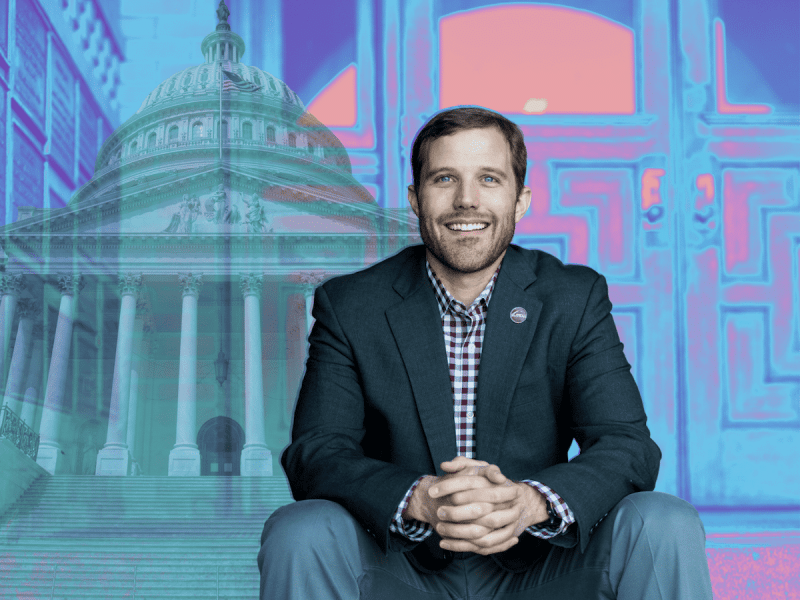
“It’s basically put everything into a coma,” said Austin Haney, a public historian whose early Montana history programming is funded through Humanities Montana. “Other organizations like the Park Service are being told to do more with less. For us, alright, you’re just gonna sit in the hospital bed and hope you wake up.”
Haney, who now lives in Missoula but grew up near Ulm, had events in Fort Benton and East Helena lined up when he found out that Humanities Montana was losing most of its funding.
“It was a punch in the gut,” he said.
The cuts jeopardize livelihoods, said Leslie Van Stavern Millar, a western Montana visual artist and educator whose paintings and performances, among other content, tell stories of Queen Elizabeth I appearing at moments in Montana history via time travel. Van Stavern Millar said she had six upcoming events funded through Humanities Montana — two she’s doing regardless of funding, one she may be able to pull off and three that have evaporated.

“I’m small potatoes. I’m not going to be out on the street,” she said. “But there are other people that get part of their yearly income from these performances.”
Humanities Montana also makes a range of programming feasible for small towns and rural places. Missoula has arts events to spare. A place like, say, Harlowton? Not so much.
“Humanities offers a level of programming we wouldn’t be able to get on a regular basis,” Tina Peterson, the head of the Harlowton Library, told The Pulp. “We’re saddened by it. We just wish it can be remedied quickly.”
Towns like Harlowton only need to pay a $75 copay to book a speaker or performer through Humanities Montana if their applications are accepted. The library was set to host a now-canceled event from educator Bridger Lutz about the history of Bigfoot and Bigfoot stories in the Northwest, Peterson said. If the library had to pay for it out of pocket, costs would exceed $600 when factoring time, mileage, and other expenses, she said.
“We’ve had a real — I know we’re not supposed to say it — ‘diverse’ range of programs,” she said — histories of red light districts and early madames of the West, cowboy poets and more. “Our programming, it brings in people who are not regular library patrons, and kind of sparks a love for the library that way. It’s fun to see who comes in. It’s a broad array of people. These people may not normally engage in a conversation. But now they share that common bond. And to me, that’s what makes the community.”
“These people may not normally engage in a conversation. But now they share that common bond. And to me, that’s what makes the community.”
The Trump administration is broadly cracking down on federal funding for programs that promote ideas of diversity and inclusion or discuss sordid moments in the country’s history. Even if the feds did not specifically call out the content of NEH-funded programming in the termination notice, it’s hard not to be alarmed, Haney said.
“It’s extremely uncomfortable,” he said. ”You look back in the past, and as people who study the past, you’re more aware of these sorts of leanings. When you’re trying to control the way public discourse goes, it’s not exactly always on the up and up. Doesn’t matter what side of the aisle. When you’re trying to control what people think, what people say, that’s not on the up and up.”
He has to chuckle, he said — “My programming really does cover that stereotypical Old West kind of history you’d think they’d be interested in.”
His most popular lecture, for example, is called “Iron Dreams: Montana and the Pacific Railway Surveys of 1853.”
But that lecture, and Haney’s programming writ large, still deals with the complicated past of this region’s incorporation into a country with an already difficult past.
“It’s an under-talked about instance in Montana history,” he said. “The 1850s is really the first time people have been sent out by the government since Lewis And Clark. It’s really the moment that creates modern Montana in terms of our transportation infrastructure as well as the problems we have, particularly when it comes to how we treat our Indigenous communities. It’s the birth of the 1855 treaties.”
Haney said the cuts are narrowing the public discourse, especially in rural communities.
“I think if we can respectfully acknowledge where we’ve gone wrong and learn from our mistakes, that’s what makes us better people and a better country,” he said. “That’s where humanities come into play. If you’re studying history to feel good, I’m sorry, you’re going to be disappointed. We’re here to make you feel all the emotions.”