The Missoula Consolidated Planning Board voted Tuesday to recommend passage of the city’s growth plan, a document that lays out a strategy for managing the city’s significant projected growth — and the associated demand on housing and other infrastructure — over the next two decades.
The unanimous vote by the board, which comprises nine community members representing both the city and county, sends the plan to the Missoula City Council, which will hold a public hearing and take a final vote on the evening of Dec. 9.
“I think that it acknowledges and attempts at least to tackle some of the most pressing land use and development challenges that we have in Missoula,” board member Josh Schroeder told his colleagues in explaining his vote. “Primarily the severe housing shortage. I think it attempts to address that in a balanced way, a more inclusive way.”
The growth plan, technically titled Our Missoula 2045 Land Use Plan, says Missoula needs to build 22,000 new homes in the next 20 years in order to achieve a 5 percent vacancy rate — considered a healthy balance between supply and demand. This, in theory, would accommodate the roughly 128,000 people that are projected to reside within the plan area by that time.
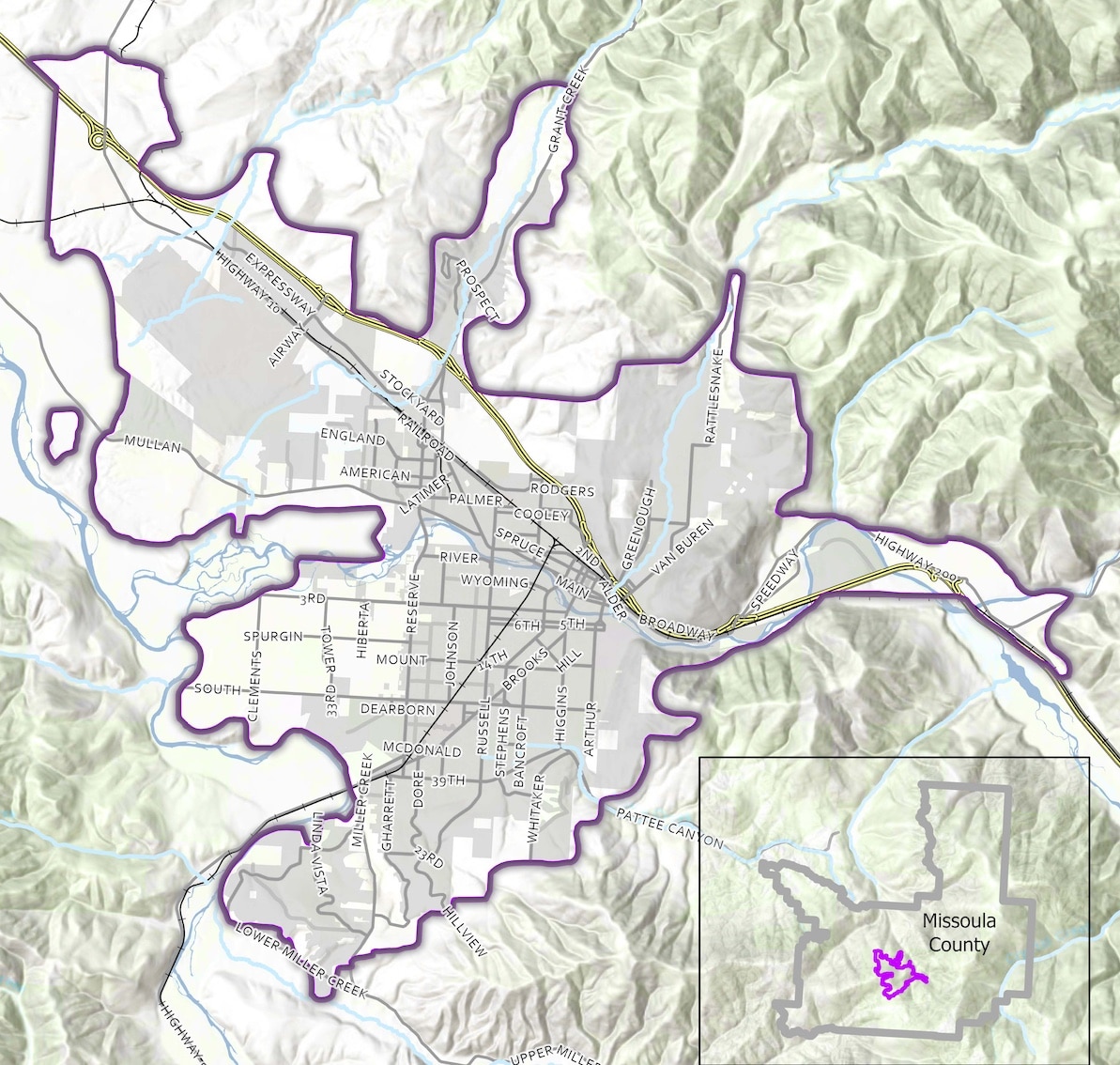
At a high level, the plan calls for inward development of homes across price points in all neighborhoods in the city, spreading the burden of growth evenly where possible. This means overhauling most existing neighborhood plans, reclassifying place and road types, and amending chunks of the city’s outdated building codes, a process that will culminate next spring if and when the city adopts the growth plan. The plan specifically calls for more “missing middle” housing — duplexes, triplexes, and other alternative housing types somewhere on the spectrum between a single-family home and an apartment building — throughout the city.
“We believe that in order to achieve a healthy community and environment we must increase housing availability and access at all levels in all neighborhoods, enhance resiliency and adaptability, emphasize connectivity, and support protection and improvement of natural resources including air quality, water quality, and wildlife habitat,” the plan states.
The city had already begun the process of amending the growth plan when the state Legislature passed a suite of zoning reform bills in 2023 that require, among other things, cities with more than 5,000 people and counties with more than 70,000 people to comprehensively update their land use and growth plans. Missoula is also now required to allow duplex, triplex and fourplex housing on residential lots.
Public comments during the meeting were generally supportive of addressing the challenges the plan diagnoses, if not all the specifics of the plan itself.
“I have a daughter and a son-in-law that want to start a family. They live in a small apartment across from Walmart, and they just want to start a family and be able to have a place that’s conducive to raising a family,” one public commenter, Dave Ashworth, told the planning board. “ I’m also a grandfather. My daughter and son, both of them have two children. They would like to move back to Missoula, but can’t afford the housing.”
Some commenters expressed concern about the impact of adding multi-story buildings to confined historic neighborhoods on the Northside, while others worried that new residential development would outpace the arrival of services and amenities in certain neighborhoods.
But “we need to push back on the notion that any neighborhoods should not change,” said another commenter, Chris Chitty, a builder and member of the group ProHousing Missoula. “But we also need to realize that traumatic change, drastic change, is hard and that we shouldn’t expect any neighborhood to have to take it all on.”
Designated urban camping site?
Homelessness services providers are engaged in preliminary discussions about the possibility of operating a designated urban camping site in the city, officials told a city council committee Wednesday.
Several service providers have been collaborating on an early estimate of the costs involved, Poverello Center director Jill Bonny told the council. The city council would ultimately have to approve any such camp.
Discussion of an authorized camp comes as the city is contemplating significant changes to its recently adopted urban camping ordinances. The changes would outright ban camping in city parks, which was allowed in some instances under the current law. The amended law would also impose misdemeanor criminal violations.
The ledger #️⃣
90%
Democratic U.S. Sen. Jon Tester’s vote share in Missoula’s Lowell 100 A precinct, which includes much of the Northside, in the 2024 election. It was Tester’s highest urban vote share of any precinct in the state, per analysis by Montana Free Press. Tester lost the overall race to Republican challenger Tim Sheehy by about 7 points, ending an 18-year run in the Senate.
The feed 🗞️
Missoula zoning regs making Montana Sauna Co.’s owners sweat (The Pulp)
Neighbors of proposed city land purchase concerned about plan (Missoulian)
First Street housing project to move forward with reduced scope(Missoula Current)
Citizen grand juries and county militias: The quiet rise of Tactical Civics in Montana(Missoulian)
Montana avoids federal grizzly bear trial with new wolf trapping rules (Courthouse News)
Tester bill to designate sections of Montana rivers as wild and scenic clears Senate committee (Daily Montanan)
Behind the scenes of a turbulent 2024 election in Cascade County (Montana Free Press)