I was a few strides from the summit of Mount Sentinel after an hour-long struggle uphill. Cresting the ridge, I saw Lolo Peak rising from the hazy blue of the Bitterroots, then the twin ribbons of I-90 and the Clark Fork winding west, away from the streets of downtown Missoula, and then the University of Montana’s brick buildings and the lush grass of the Oval. It was the kind of view that intensified the pounding of my heart — 2,000 feet above the valley in late May’s cool evening air.
Even as I gasped for breath, all I could think was, I can’t believe I did that.
My sister, Elsa — already at the top but barely winded — shaded her eyes and grinned. “Nice job,” she said.
Still trying to catch my breath, I tossed her a thumbs up and she turned and floated down the steep, rocky trail toward town. My quads already burned, but I wasn’t worried about trying to keep up on the descent. I’d take it slow and enjoy the view.
Elsa has always been fast. An elite athlete with cheetah-like energy who, after her “retirement” from triathlon, occasionally does 30-mile solo wilderness loops for fun. She was visiting for the weekend, and I had been excited to run around Missoula’s abundant trails with her.
And that excitement? That was brand new. Practically unthinkable, if you ask anyone who has known me for a long time. For most of my life, I wasn’t just unexcited about running — I straight up hated it.
It wasn’t that I wasn’t athletic. I could hold my own in the sports I’d grown up with — football, lacrosse — where size and strength mattered. But put me next to distance runners like Elsa, and I was instantly slow, lumbering, left behind. That gap felt like failure, so I steered clear of running whenever I could.
“At some point, running stopped being about physical recovery and started becoming something else — a kind of quiet practice among the trees, a way of loosening the grip of perfectionism.”
I’d seen trail running explode in popularity — and watched Elsa get hooked. I’d envied her ability to explore her local Vermont mountains on foot. But until very recently, I still clung to an identity I’d forged years ago: I was not a runner. I couldn’t imagine completing a 5K Turkey Trot, let alone running to the top of a big mountain. Running wasn’t just something I avoided, it was a thing that defined what I wasn’t.
And I formed that identity early. As a strong but chubby little kid, I discovered that size could be an advantage — nobody teased me when I was tossing them around on the football or lacrosse field. It taught me that I was built for power and violence, not speed and grace.
Once I made tryout teams in middle school, however, coaches took conditioning more seriously. I dreaded post-practice sprints — terrified of finishing last and feeling like a loser. By high school, I had mastered the formula of hiding behind my weight-room strength and my bruiser’s identity as a linebacker and lacrosse defenseman. A dangerous idea had taken root: If I wasn’t good at something, it wasn’t worth doing.
Change came with an injury. During a flag football game after college, I busted my ACL and tore my meniscus. I moped around for weeks waiting for surgery. My body — my carefully cultivated armor made up of breakable bones and rippable ligaments and doomed to the inevitable decay of time — had failed me. In rehab, I was told to jog. Slowly. On purpose. At first, I hated it. But then something strange happened: I didn’t.
Moving at a medically mandated shuffle, I noticed everything: my breath, the muscles in my legs. I learned to love the soreness in my calves, the slow rebuilding of a body I’d always treated like a battering ram. For the first time, I felt certain I could outrun a shambling zombie horde, at least for a mile or two. That old fear of failure didn’t disappear. But it shut up and sat down in the back of the room, at least long enough so I could get out for a jog.
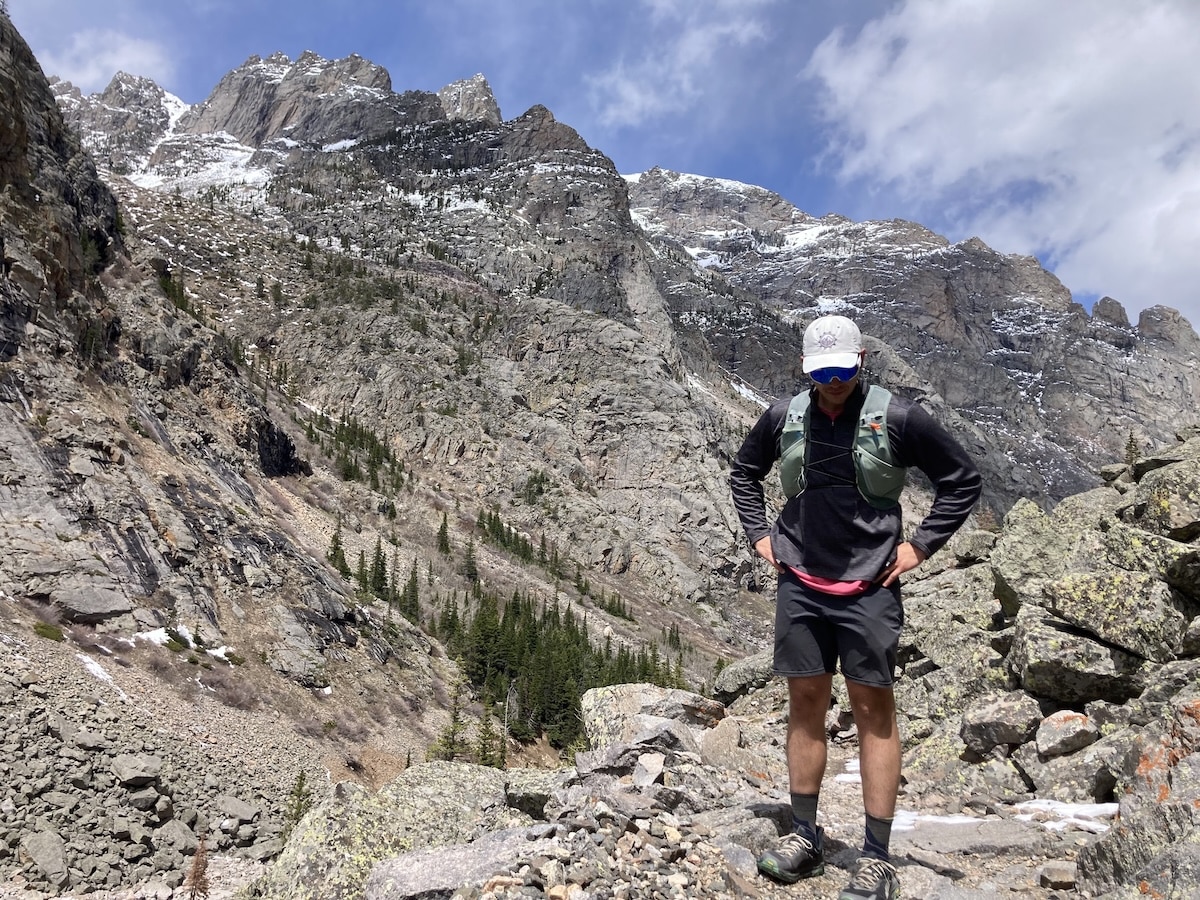
I had always loved hiking, and so it felt natural when my short jogs on the road stretched into long, slow rambles in the hills. At some point, running stopped being about physical recovery and started becoming something else — a kind of quiet practice among the trees, a way of loosening the grip of perfectionism.
Once, running along the Eno River in Durham, North Carolina, I was lost in the rhythmic thump of my sneakers on packed dirt and the rush of water over rock, when a flicker of movement ahead startled me. I stopped, breathing heavily, and watched as a herd of deer crossed a narrow point in the river. The last was a young spike buck — an albino with white fur and pink eyes. He struggled against the current, then leapt to the far bank and locked eyes with me. After a beat, the herd scampered into the trees.
It’s something I might have missed if I was a faster, “better” runner.
From that secret, shared glance, I had come to realize that moving slowly might actually be the entire point. And slowness wasn’t about pace, necessarily, but a mindset. Even as my runs became faster (marginally), they were slow, in a deeper sense. They were about finding moments to breathe, to disconnect from the mindblurring speed of stress and anxiety, to let go of my fear of not measuring up to traditional standards of athleticism. To notice the world around me and accept my place in it.
When I moved to Missoula, one of the country’s best trail running towns, this realization blossomed into a full blown passion. I began pushing the distance, running with friends and proselytizing about big, slow days in the mountains around town. On a slow and euphoric bike-to-trail-run adventure up to Stuart Peak, my running partner and I were happy to be lapped by a young woman with two corgis at heel, loaded with packs carrying their own food and water. Everywhere I looked I saw firsthand evidence of trail running’s explosive growth — a trend that I had become part of. As I became more invested in the community and culture, it seemed to me that other runners, even fast ones, had also come to love trail running as an embrace of slowness.
But I also began to see how easy it would be, in a world where social media is an undercurrent in all our lives, to slip into that same fear of underperformance that had kept me from running in the first place. Through conversations with Missoula running friends, I started to understand the evolution of the sport over the past few decades. In the early 2000s, it was a niche sport with a long history of attracting a tiny group of dedicated runners. This is perhaps exemplified best by the popularity of Anton Krupicka, an icon of the sport, whose run journal/blog arguably inspired an entire generation of followers, who were enamored by his huge mileage and his minimalist, hippy-ish approach to long days in the mountains around Boulder, where he was often seen in the high alpine, bare-chested, long hair and beard flowing in the thin air.
Part of the evolution, though, has been a turn from this minimalism toward a sort of maximalism. Helicopter livestreams of races, obsessing with gear, tracking every last run on our watches or phones, hyperfixation on optimizing everything for maximum performance. Some of this is inevitable with the sport’s extreme growth; a study published by the International Association of Ultrarunners and RunRepeat reported a 1676 percent increase in participation in ultra trail running events since 1996, with the curve hockey-sticking skyward right around 2007.
“There is extreme social currency at the Missoula dinner party in going out for a 30-mile mountain run.”
—Nick Triolo
But, also skyrocketing to popularity right around 2007: iPhones and the beginnings of the social media revolution. This doesn’t appear to be a complete coincidence. In my research for this piece, I found that the growth in trail running is often attributed to the rise of social media, where the hunt for “kudos” on Strava, the social value in the performance of the run versus the run itself, and the desire to emulate the lives of influencers peddling false narratives can impact our own intrinsic motivations.
Nick Triolo, a competitive trail runner and former senior editor of Outside and Trail Runner magazines, who has written extensively about the quasi-spiritual dimensions of the sport, admitted that his cynical side sometimes gets the best of him. Reacting to the rising popularity and social media usage within trail running, he occasionally longs for the earlier stages of his own running journey, where he fell in love with the almost-ceremonial solo practice of pushing his body in wild space, as a direct counterbalance to his first-ever cubicle job. He also echoed some of what I read about influencer-chasing.
“There is extreme social currency at the Missoula dinner party in going out for a 30-mile mountain run,” he said. “Endurance running has always been a way to drop the ego, to find solitude and communion with the more-than-human world. But now, we’re obsessed with monitoring every second of our runs and surveilling ourselves online.”
In speaking with other accomplished Missoula runners, I found a similar skepticism toward the effect that social media has had on running. Mike Foote, pro runner and race director of the mountain running event The Rut, cut his trail running teeth in Glacier National Park, and was eventually embarking on ultra-distance adventures by himself before starting to win races and joining the North Face athlete team. He’s seen the sport change and grow about as much as anyone, from niche community races to massive, mindbogglingly difficult events that tens of thousands of people are watching online. He thinks the growth is a net positive, with more runner diversity and more willingness to support his other passions, conservation and land stewardship.
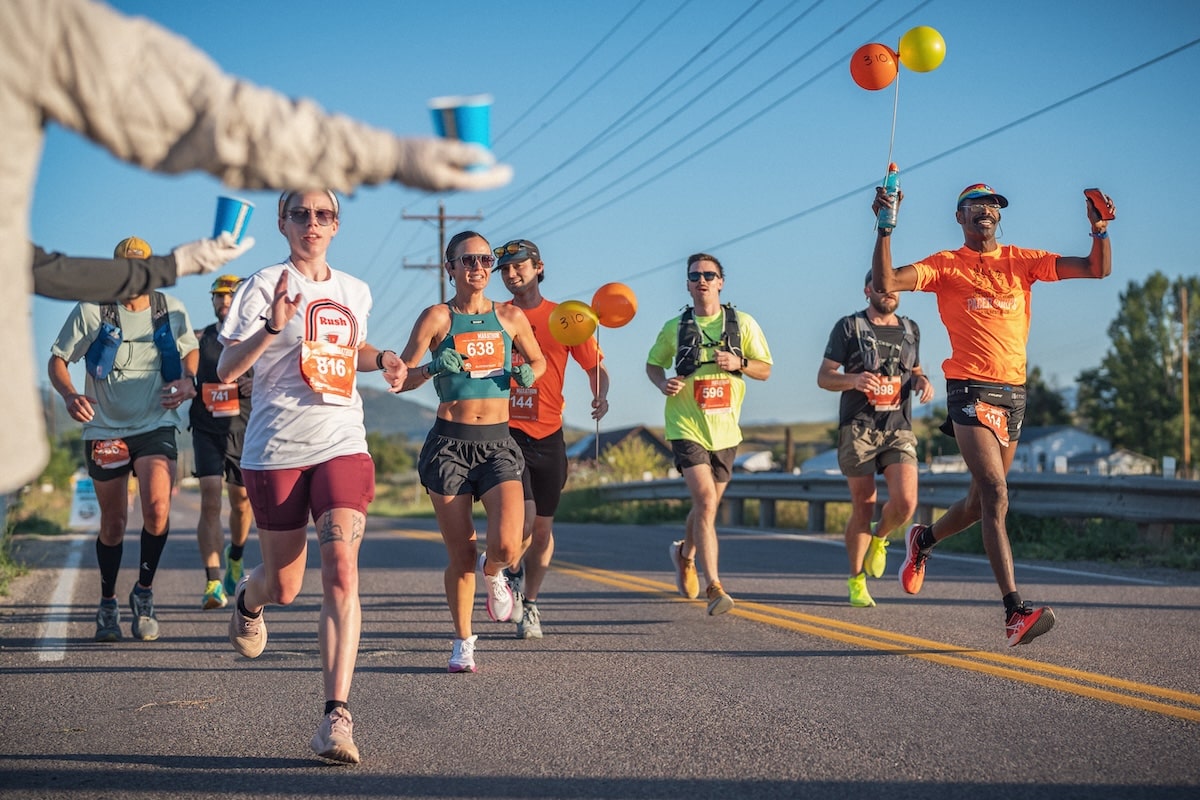
Mike, who is Secretary of the board of the Five Valleys Land Trust, a Missoula-based conservation organization, believes that as more people fall in love with the sport, whatever the reason, there will be more support for efforts to conserve the landscapes in which it is practiced. But he also said that just because more people are doing something, doesn’t necessarily mean it’s good for them.
“You can make [running] as complex as any other thing in your life, if you want,” he said, laughing. “Not that I do this, but you could go for a run with both headphones in, listening to an angry politics podcast, staring at your watch out of fear.”
And it is true, that the more I’ve become enmeshed in the running community, I feel the pressure to be fast, to take the summit selfie just for Instagram, and post on Strava in order to prove to my online friends that I did, indeed, run this morning and thus capture the social currency that Nick spoke of. I have run slow enough that I felt the competitive urge to label my Strava file “easy run,” when it was anything but. I have been influenced by cheery runners in pretty brand-name gear. I empathize with Mike, who spoke wistfully of running before the existence of Instagram, saying, “There’s so much comparison and information now. Some days, I feel like I’ve lost the script of why I started in the first place.”
But when the Vibram™ hits the road, I have to believe that we are the ones in charge. That some of the booming popularity of the sport has to be a rebellion against, or at least an escape from, the ever-growing speed and complexity of our increasingly online world. In a culture where the answer to any question is more, better, faster, it makes sense that we might start looking for a place to slow down, to take a breather. And what better way to do that than a long, slow, Saturday run in the mountains?
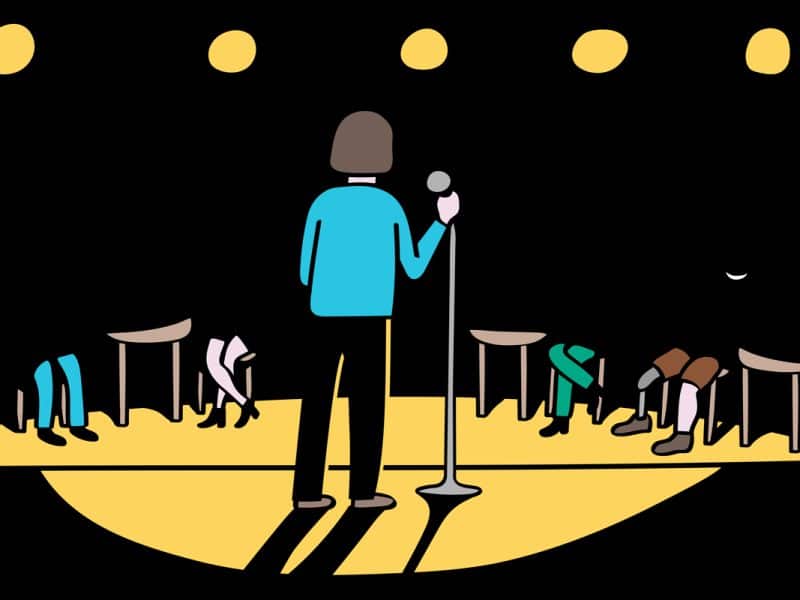
“I had a crazy revelation: If you’re tired, you can just walk. Nobody calls the police. I ran with other slow runners. We basked in our collective mediocrity, and then shared chocolate croissants.”
I know I am at my best when I stop worrying about outside expectations, regardless of source, and just run. And in the end, even these fast runners agreed that, at the core, running is about moving slowly, about breathing and not giving in to fear, about communing with the proverbial albino deer. Mike, even while lamenting the post-social media world of running sees it, too. “In better moments, though, I remember that I run to connect with myself, connect with the landscape.”
That sense of connection comes up again with Trisha Drobeck. She is a four-time winner of the Missoula Marathon and executive director of Run Wild Missoula, a nonprofit that supports runners of all levels. For Drobeck, the act of running has become less about performance and more about presence.
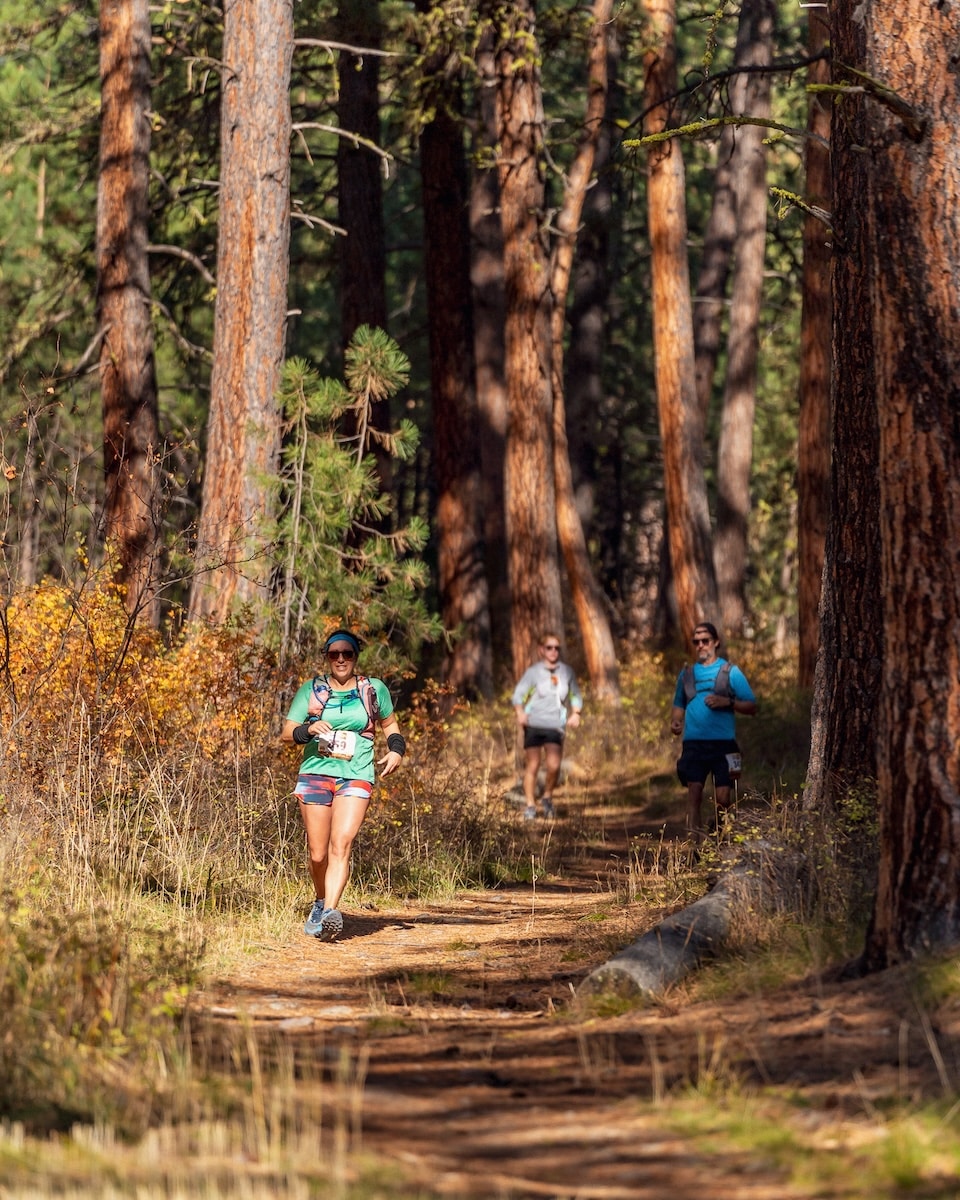
“We try to accommodate everyone,” she said, with obvious excitement. “Fast people, slow people. It doesn’t matter if you walk or run. Everyone’s just looking for a healthy social outlet.”
These days, she’s not training for races — she’s training for life. “My daughter likes to run 5Ks now,” she said, “and I’d much rather run a 12-minute mile with her than race a six-minute mile and win the day.”
These three are runners who could easily define themselves by speed and race wins. And yet, again and again, their words point toward something else: slowness not as a weakness, but as a kind of wisdom. Not necessarily a lack of ambition, but a shift in orientation from trying to prove something to finding a sense of inner quiet in movement.
“I do think there is a rebellion to a deeply sedentary online lifestyle,” Nick said. “As we metabolize the collapse of everything, there’s a desire to move. There’s this quote from [big wave surfer] Laird Hamilton that I think about a lot. It’s something like, ‘I have a funny feeling that we’re all exercising because we just want to breathe more.’”
By the time I had lived in Missoula for a few months, the transformation was complete. I had stopped learning how to not hate running. Instead, while getting lapped by most of the fastest trail runners in the world in the mountains around town, I learned to love it.
I chugged uphill and waved out-of-breath hellos to passing speedsters.
I had a crazy revelation: If you’re tired, you can just walk. Nobody calls the police.
I ran with other slow runners. We basked in our collective mediocrity, and then shared chocolate croissants.
I came to appreciate my body’s abilities — not quite a Porsche, but no longer the wheezing jalopy of my childhood. A Honda CRV, maybe. Something that doesn’t quite rev, but gets up and goes for a long time without complaining too much.
I ran the Pengelly Double Dip, a trail half-marathon that starts from downtown and summits both Sentinel and University Peak. I finished dead last in my age group. It was awesome.
“No matter how overwhelming things get,” Elsa told me, “running up and down a mountain never changes.”
In the simple focus of a trail that winds uphill, I let go of fear, released the breath pent-up in my chest from days spent staring at screens, and did things I once imagined I would never do.
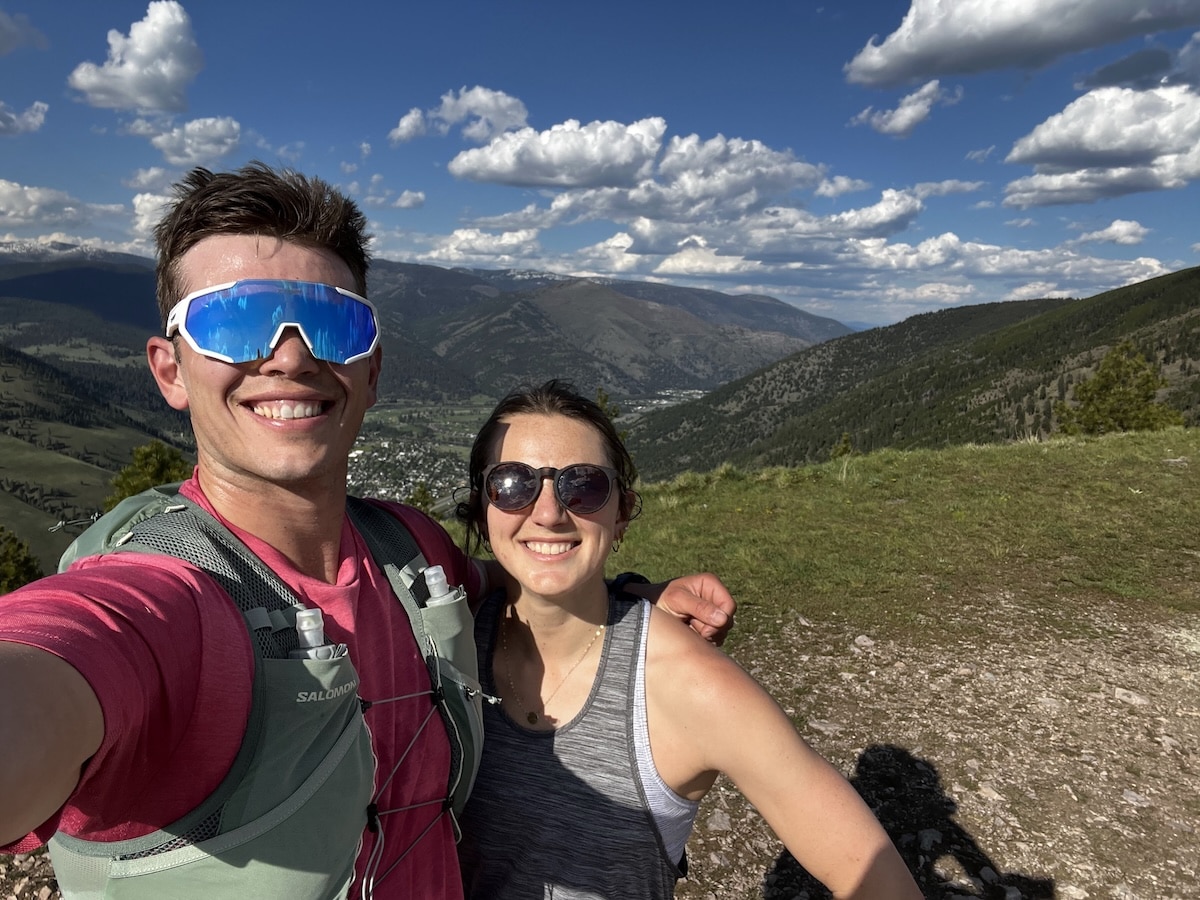
You are forced to be present. To recognize that a slow, steady pace will reach the summit. That May, when Elsa and I reached the top of Mt. Sentinel as the sun began to set, we felt the air chill and thicken with golden haze. I couldn’t keep the smile off my face. I felt proud to be up there, one of the first summits that I was able to run with her.
And the views! On Bitterroot ridgelines, I surveyed craggy peaks across valleys I couldn’t believe I’d started from. In dark, quiet corners of the Rattlesnake Wilderness, I rubbed fir needles between my palms and inhaled sweet spice from my cupped hands.
I ran slowly and ever longer. I let my feet do all the thinking, and found myself breathing hard in beautiful places.