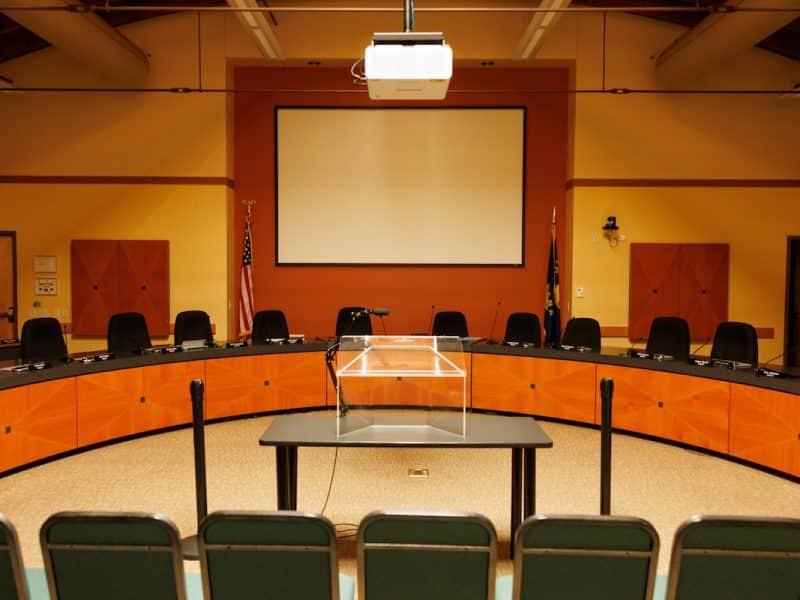
Missoula County Public Schools will use $1 million in rainy day funds to fill holes left by a federal funding freeze following a unanimous vote by district trustees last week.
The move will help pay the salaries of at least seven employees at schools across the district — not just teachers but also tutors and other staff.
The Trump administration has frozen almost $7 billion in K-12 funds nationwide while it assesses whether the spending aligns with its policy goals. That total includes about $26 million in Montana.
Many educational programs also face cuts in the recent federal budget. The freeze and potential cuts would be especially damaging to afterschool programs, English language learning, summer school, and professional development.
The district’s rainy day fund sat at about $3 million before the transfer was authorized last week. While Missoula schools were in a better financial situation than some others because of these savings, replacing ongoing federal funds with one-time transfers from the rainy day fund isn’t sustainable, district superintendent Micah Hill told the trustees.
“There’s no plan after it is spent,” he said.
Federal cuts and spending freezes have had wide-reaching effects across Montana and in the Missoula area, as The Pulp reported recently. The cuts have come for everything from highway infrastructure projects with cursory references to “equity” grants for local food banks.
The trustees also voted to fill an open seat on the board with Leslie McShane, an attorney and former college counselor who most recently served as the director of human resources for the Missoula Family YMCA.
“As a college counselor, I enjoyed helping students and families find a good-fitting, post-high school path for their students’ continued education and growth,” McShane wrote in her application for the position. “As the HR director at the Missoula Y, a large portion of our staff were students in their first job and it was rewarding to see them grow and thrive as working contributors to the Missoula community.”
ICYMI: Bubble bursts?
A couple weeks back, we reported on the lofty sums required to heat the University of Montana’s new indoor practice facility, known around town — with some degree of derision — as “the bubble.”
Well, it’s a good thing it’s not winter: Last week, Montana Public Radio reporter Austin Amestoy happened to be walking by the facility when he noticed a tear in the bubble, air streaming out. (He dubbed it #burstgate.)
Indeed, there was a hole in the bubble, though the university isn’t sure what caused the rip, per spokesman Dave Kuntz.
“We are working with the manufacturer/installing company to see if any additional fixes need to be made,” he told The Pulp. “But it is back to being fully operational.”
To fee or not to fee
Only about 43 percent of city program expenses across five departments are covered by fees paid for those services, per a third-party report shared with the Missoula City Council last week.
In real numbers, that’s $3.7 million in revenue against $8.7 million in cost. The city has to cover the rest of those expenses through the general fund or other sources. The deficit indicates that the city is effectively subsidizing development services with taxpayer dollars, Chad Wohlford, the consultant who prepared the report, told the council. And in some cases, that’s to the benefit of businesses, developers and other interests who use, for example, business licensing or planning services.
“User fee activities, such as development application reviews, are primarily discretionary services provided only to those who request the services or cause the services to be required (e.g., development projects in the City),” Wohlford’s report reads. “These services are not provided to the public at large, which is why local government and taxpayers often consider it appropriate to recover the full cost of the services from those applicants that receive the services.”
But that’s not happening in Missoula, at least not currently. That said, this kind of deficit isn’t necessarily out of the ordinary, Wohlford told the council. But it may factor into the council’s decision-making as it faces down a potentially multimillion dollar budget deficit and considers increasing some fees to better reflect the cost of the programming they support.
Increasing fees, however, is a hot-button issue.
“After local governments embraced the concept of user fees, special interest groups (led by the building industry) began regularly challenging development fees in a number of cities and counties (primarily in California and other Western states),” Wohlford wrote. “The overall result is an environment of significant scrutiny of any and all fee actions. Local government has been forced to pay greater attention to the methods and bases for new fees, since they can be readily challenged.”
City governments in Montana are all but fated to run at a persistent structural deficit because of state laws restricting how much revenue they can raise without asking for voter approval.
The ledger #️⃣
66%
Increase in the value of the median home in Montana from 2021 to 2025, according to an analysis of newly released Montana Department of Revenue property valuation data by the Montana Free Press’s Eric Dietrich.
The median home value in Missoula now sits at $507,000, representing a more than 70 percent increase since 2020. Still, the median value of a Missoula home — while higher than most of the state, to be sure — pale in comparison to those in the state’s most expensive market, Gallatin County ($685,000).
And the real numbers are likely higher — these valuations, while newly released, represent the department’s estimates as of January 2024, Dietrich notes. That said, the increase statewide from 2023 to 2025 — about 22 percent — is less than the 35 percent from 2021 to 2023.
These higher valuations also mean higher property taxes, a source of persistent political and economic heartburn in the state as it grapples with a cost of living crisis. By comparison, average per-capita income in the state increased by about 25 percent in the last four years.
The week ahead 🗓️
- On Monday, July 21 at 6 p.m., Missoula Mayor Andrea Davis will present her executive budget proposal to the city council, which will hold deliberations on the budget on Wednesday, July 23.
- On Thursday, July 24 at 2 p.m., Missoula County staff will present a preliminary 2026 fiscal year budget to the county commissioners.
Find a list of all upcoming city meetings here and county meetings here.
The feed 🗞️
Montana public media faces cuts as D.C. passes rescissions package (Montana Free Press)
More than 20 states sue Trump administration over frozen after-school and summer funding (Associated Press)
Missoula City Council candidates dive into housing at forums (Missoulian)
Poverello Center leader expects higher demand for limited space after Johnson shelter closes (Missoulian)
Missoula City Council passes resolution to increase police wages (Missoulian)
Mobile home residents find little relief amid rent hikes, ownership changes (Montana Public Radio)
Legislature overrides Gianforte’s veto of bill reimbursing county jails for holding state inmates (Montana Free Press)
Montana farmers worry about impact of Trump’s tariff negotiations (KPAX)
Grizzly growing pains (bioGraphic)
Did Idaho’s coroner system let a man get away with killing his wife? (ProPublica)