Fourth in a four-part series, “Community for Profit.”
Part 1: “Care on hold”
Part 2: “The selling of Community”
Part 3: “Inside Community’s post-pandemic problems“
Geri Unbehend has been an ER nurse at Community Medical Center in Missoula, Montana, for 18 years. She’s also part of the bargaining team for the local nurses’ union.
After witnessing steady turnover at the hospital since the pandemic, she said she now feels optimistic. In fact, Unbehend was thinking of retiring, but decided to stay on a little longer now, especially after securing a raise that amounts to a 37.5 percent bump over three years.
The nurses’ contract was ratified in September. It was her fourth round negotiating a contract as part of the union, and she said it was the smoothest yet. “They were much more open to some of the things that were going to recruit nurses, because that’s become a more difficult thing to do, and in understanding that nursing is a profession, but you still have to have a work-life balance,” she said in November.
And, she said, the hospital is taking some steps to hire key positions to help staff it up. The new contract increased pay for the float pool — nurses who can fill in on more than one unit — and CMC started to hire for weekend-specific positions, Unbehend said.
She’s heard of steps being taken to address the reported shortage of nurses in the Medical-Surgical Unit, which cares for adults recovering from surgery or otherwise admitted for overnight stays. Staffing for adult care is a nationwide issue, many sources said, and is at the root of some of the post-pandemic challenges explored in Part 3 of this series.
Unbehend said there’s still cause to be concerned about adult-care staffing, and fixing the problem has been a slow process. A solution will take time, she offered, and the nurses’ contract is still fairly fresh, as are the new recruiting measures. Those expecting big changes immediately will be disappointed.
“That has never happened in the history of hospitals, and I doubt that it’s going to start now,” she said.
The coming changes are hard-fought and have happened as Community Medical Center has settled into its for-profit status. CMC was a nonprofit hospital until 10 years ago, when it was sold to the hospital chain RegionalCare Hospital Partners with partial ownership going to Billings Clinic. After a series of mergers, the hospital remains partly owned by Billings Clinic, but since 2018, it’s also part of Lifepoint Health, a large chain owned by private equity firm Apollo Global Management. Apollo owns 220 hospitals, according to nonprofit advocacy watchdog Private Equity Stakeholder Project — about half of the private equity-owned hospitals in the nation. Both Lifepoint and Apollo are subjects of U.S. Senate investigations concerning their impacts on healthcare.
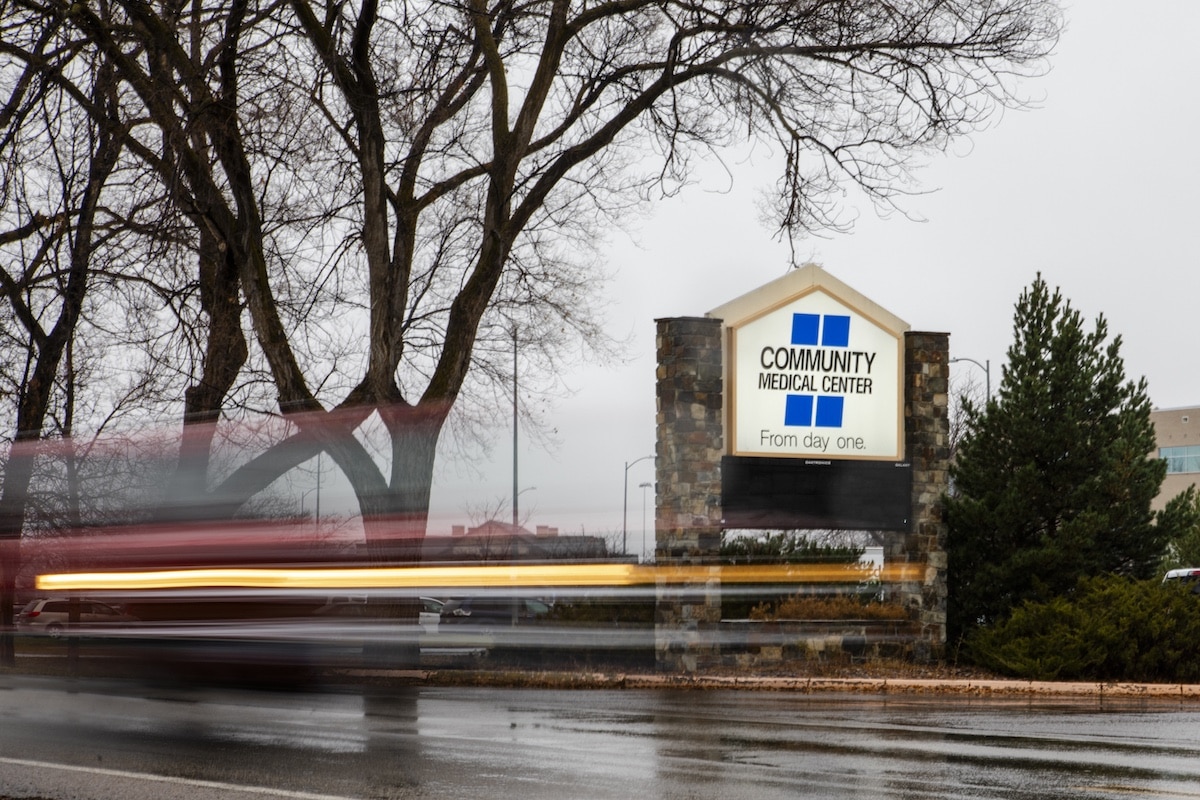
This series explores what’s happened since the decade-old sale of Community, one of two Missoula hospitals, the other being Providence St. Patrick, one of 51 hospitals operated by the faith-based nonprofit Providence network.
In addition to other sources, The Pulp interviewed more than 20 current or former employees who worked at the hospital or in its primary care clinics since the start of the COVID-19 pandemic that upended healthcare globally. These sources were critical of the way Lifepoint Health and former local administrators have run CMC since Lifepoint took over. Those who remain anonymous declined attaching their names, either because they were not authorized to speak about their time at Community or because they fear speaking out could damage future opportunities.
CMC is entering a new era, which includes the recent hiring of its latest chief executive, Greg Cook, who started the job in late November. Following post-pandemic struggles at the hospital, which employs around 1,000 people, some sources report morale has improved, especially in light of the approved nurses’ contract, but that there are still problems to be resolved.
Negotiating for nurses
Unbehend and other sources said Providence St. Patrick Hospital’s union negotiations earlier last year helped pave the way for CMC nurses. St. Pat’s nurses reported concerns about workplace violence and wages below housing prices, as well as issues with turnover and retention leading up to the contract, covered by the Missoulian. After months of negotiation, during which “I Support St. Pat’s Nurses!” signs adorned the lawns of homes across Missoula, they ended up with a 43 percent wage increase over the three-year contract in addition to other incentives, according to Robin Haux, program director for the Montana Nurses Association. The St. Pat’s contract was approved by 56 percent of voting nurses, while the Community contract that followed was approved by more than 90 percent. In addition to the 37.5 percent wage increase over three years, CMC, like St. Pat’s, secured new contract language to address workplace violence.
The pressure was on to match St. Pat’s, Unbehehend said, and nurses at the two hospitals ended up securing comparable base wages.
“The local [union bargaining unit] was proud of what they were able to accomplish at the table,” Haux said, adding that current local CMC leadership has been a true partner in improving working conditions and patient care. “However, safe nurse staffing remains a large concern and is constantly being discussed.”
That’s the top concern among nurses in Montana in general, she said, noting that MNA brought a safe staffing bill to the state legislature during its last session two years ago and it was tabled in committee, but MNA intends to bring another this session.
“The local union was proud of what they were able to accomplish. However, safe nurse staffing remains a large concern and is constantly being discussed.”
CMC administration also praised the ratification.
“Through the course of friendly, collaborative negotiations, representatives from CMC, Lifepoint and the MNA worked together to develop a contract that supports our nurses and addresses staffing needs and challenges within the hospital,” CMC spokesperson Megan Condra wrote in an email.
New to the process was solidarity with a hospital within its network. Unbehend said her union issued a letter of support to nurses negotiating at Willamette Valley Medical Center, a Lifepoint facility in McMinnville, Oregon.
After negotiating their contract in 2021, Willamette nurses secured a big bump in base wages. Wage scales in contracts for Willamette and CMC show that newer nurses at Willamette had secured base wages by 2023 that were comparable to what base wages for newer CMC nurses will be in 2026. Among more veteran nurses, however, CMC nurses will make significantly more by then. But the cost of housing in Missoula is also more expensive. According to Realtor.com, the median listing home price in Missoula is $675,000 compared to McMinnville’s $527,000.
Willamette is negotiating a new contract now, and those negotiations have been rocky by comparison, according to messaging put out by Willamette’s nurses’ union. “The hospital’s anti-union lawyer who bargains on their behalf doesn’t even seem to understand what the basic functions of a hospital are,” union representatives wrote in a newsletter on Nov. 6. In another newsletter sent six weeks later, on Dec. 20, they wrote: “Our bargaining team left those sessions feeling disrespected and extremely undervalued.” The Pulp asked Lifepoint for comment on these assertions and a Lifepoint spokesperson declined. Meanwhile, at Providence hospitals in Oregon, 4,000 nurses went on a multi-day strike this month.
Techs and health insurance
At Community, multiple employees said turnover has slowed since ratification of the nurses’ contract. But a sticking point remains: techs. Certified nursing assistants (CNAs) and patient care technicians, both referred to as techs, only received about a 3 percent raise from the hospital, according to Unbehend. The Pulp asked CMC to confirm this percentage and CMC declined comment. A tech at St. Pat’s said techs there also received only a small raise this year.
“Probably it didn’t look very appealing after the raise that we got,” Unbehend said.
A chief limitation of the nurses’ union is that they’re unable to negotiate for support staff like techs. “Should they get better raises? One-hundred percent,” Unbehend said.
Another CMC nurse added: “The rest of the hospital staff that is non-union also deals with wages well below the cost of living. That has caused a rift. … They aren’t unionized, so they don’t have any support. And their workload is insane.”

At some hospitals in other states, including California, some support staff are unionized. At a hospital in Vermont, some have recently voted to join a local nurses’ union. In Montana, the Teamsters Union Local 2 in Butte has unionized CNAs, surgery techs, radiology techs and others since the 1980s, and represents workers at St. James Hospital in Butte, Community Hospital of Anaconda and Great Falls Clinic Hospital, according to Erin Foley, the principal officer for Local 2. She notes that hospital staff who want to unionize have to follow the rules set by the National Labor Relations Board, the independent federal agency that establishes organizing policy in the private sector.
Under those rules, all medical tech jobs are organized as a single “class,” Foley said, and have to bargain together. This rule was put in place to prevent small-scale disruption of hospital operations potentially caused by small groups of employees organizing, she said. CNAs, for example, wouldn’t be able to organize without including all the technical positions in a hospital — radiology techs, medical laboratory techs, surgical techs, and so on. If an entire class does manage to organize, Foley said, the members have more bargaining power as a part of a larger group.
CNAs and other support staff positions who’ve unionized with the Teamsters have seen substantial wage increases, especially since the pandemic, Foley added.
Techs provide basic care for patients so the nurses can do their assessments, care for wounds and dispense medication. At CMC, techs faced much higher patient ratios than techs at St. Pat’s until changes last year. In addition, CMC techs take on much of the responsibility of phlebotomy, or blood draws, although a part-time phlebotomist was added last year. Current employees say the hospital is still having a hard time hiring enough techs, and nurses from multiple units are having to fill in — not unusual at CMC since the pandemic, but a trend that’s caused employee dissatisfaction in the past, multiple sources said.
Holly Nagel, CMC’s chief nursing officer, told The Pulp that improving ratios means you have to hire more positions, and that takes time.
“We are actively hiring into those positions, getting applicants, and filling those roles,” she said.
As for support-staff wages, Nagel said that the hospital makes sure wages at CMC are market competitive.
Greg Cook, the new CEO, said setting fair wages is a priority for Lifepoint in general.
“I was always taught, never make wage an issue,” he said. “Meaning if we identify an area that there are some deficiencies, let’s fix it.”
Several CMC employees have told The Pulp the quality of employee health insurance had already declined significantly after Lifepoint took over. But after open enrollment this winter, four CMC employees told The Pulp that many hospital staffers were upset to discover premiums had shot up for those working part-time.
“Nobody really expected that the health insurance benefits would get worse,” a nurse said. “That really tanked everybody’s morale.”
“There’s no way you can carry our insurance and be happy with the way things are,” another nurse added.
CMC declined comment on employee health insurance.
“There’s no way you can carry our insurance and be happy with the way things are.”
Employees said the nurses’ union has taken an interest in recent health insurance concerns.
“This is definitely correct,” Robin Haux, program director for the Montana Nurses Association, wrote to The Pulp. “And the MNA Labor Department, along with assistance from our national union, AFT (American Federation of Teachers), are working to investigate and gather more information to understand the nurses’ challenges, and [we’re] gathering comp data on other Lifepoint facilities’ health plans.”
Emergency department issues
After Lifepoint came on in 2018, there was an approximately 25 percent reduction in the number of ER nurses staffed daily, according to Unbehend, a veteran ER nurse at CMC.
“We had been seeing maybe 40 patients a day. We see 50 to 60 a day now,” she said this past fall. “And they certainly have not increased the amount of people.”
CMC spokesperson Condra said the reduction in daily ER staffing was a response to lower patient volumes at the time.
“We did cut staffing. Yes, we did. But that was due to volumes,” she said.
Unbehend noted additional EMTs were added to the roster — a considerable resource — and a variety of solutions have been attempted as the patient load increased, but the number of actual nurses scheduled in a day remains fewer than it once was. At a point, secretarial help was cut, Unbehend said, which made things worse, and had to be reversed.
“We had been seeing maybe 40 patients a day. We see 50 to 60 a day now — and they certainly have not increased the amount of people.”
Boarding patients in the ER who would typically be admitted to the adult-care Med-Surg unit has become common practice since the pandemic, Unbehend and multiple other sources said. If there aren’t enough staff or beds for patients to be moved from emergency to Med-Surg or other adult units, they have to recover somewhere.
This is a national trend, multiple current and former CMC workers said, as did Holly Nagel, the nursing supervisor. The number of ER boarders — some stay there for 24 hours — varies daily, sources said. The first week of December, Nagel reported there was only one patient boarded in the ER.
But when it happens, it creates issues for ER nurses, said Unbehend, because they then have to attend to both the Med-Surg patients and anyone else who comes through the door of the ER. That’s one of the reasons why Med-Surg patients don’t receive the best level of care in the emergency department, multiple current or former employees said.
A caregiver who worked at CMC and had knowledge of the process said patients are held in a less comfortable situation in the emergency department than they would be on Med-Surg floors. In addition, the source said certain medications are not as quickly available, and the ER is not set up as well to provide meals or get patients to the bathroom. Other sources confirmed this.
Like other sources, the former caregiver noted this is a nationwide trend post-pandemic, but said it’s still a concerning issue because if an emergency patient comes in, it may take all of the nurses in the ER to stabilize the patient, so the Med-Surg patients may not get the monitoring or care they should. Multiple sources shared this concern.

Unbehend addressed the question of safety in the ER.
“It’s as safe as the people that are working there want to make it. We voice our concerns when we feel that it’s become unsafe, and that concern gets voiced to the powers that be. And we ask them to fix the situation so that our patients can be taken care of safely,” she said.
When they hit that point, staff and leadership may have to start looking for another facility to send the boarded patients, Unbehend said. “And sometimes that is what we have to do,” she added. “We have to ship them out in order to keep it safe in the ER.”
Unbehend said ER staff have shared suggestions with administrators. “They’ve been receptive to doing some things to make it so we’re not trying to take care of ER patients and those boarded patients, too,” she said.
“We voice our concerns when we feel that it’s become unsafe, and that concern gets voiced to the powers that be. And we ask them to fix the situation so that our patients can be taken care of safely.”
Boarding in the ER has been an issue, said Robin Haux, program director for MNA.
“It is being addressed currently with the Local No. 15 nurses, MNA representatives, and CMC administration, and is currently improving,” she said.
Nagel said that sometimes the limitation is space at other facilities like nursing homes.
“It’s a nationwide issue because there aren’t enough of those post-acute facilities open and available to take patients, whether it’s staffing, whether it’s bed capacity, whatever those challenges might be, that creates a backlog in the system for us,” Nagel said.
The fix to the ER boarding problem, Nagel said, is robust acute care staffing on floors like Med-Surg.
Unbehend recognized this need as well — the “solution to the pollution,” she called it — and said the hospital is hiring in that department.
Staffing up Med-Surg
Nagel described new efforts to recruit and retain Med-Surg staff. In addition to some traveling nurses, she said CMC hired at least 27 new permanent nurses in 2024, the majority of them serving inpatient acute-care needs. CMC has also launched a student-nurse program that employs active nursing students. Three student nurses in the program were set to graduate this past December and come on board as nurses at CMC, Nagel said.
“They’re already part of our culture,” she added.
Lea Bossler, a former health unit coordinator at CMC (similar to a unit secretary), and multiple other sources described chaotic patient flow between adult units and the ER in the years following the worst of the pandemic, and stressful, even hostile interactions among short-staffed units about where those extra Med-Surg patients should be held.
“It just doesn’t have to be like that,” a nurse said.
“When you have a Med-Surg nurse problem, you have to increase wages, increase job satisfaction and make sure nurses feel supported,” a former caregiver at CMC said, adding that the higher wages should help.
Related
Community named in Senate investigation’s report
A report released Jan. 7 by a U.S. Senate committee investigating the practices of private equity-owned hospitals and prompted by a sexual assault investigation in Iowa names Community Medical Center in Missoula.
Read more
Unbehend said she’s hopeful the big raise and various recruiting efforts have the hospital on a positive trajectory.
Multiple sources said two improvements tied to the new contract — higher wages for the float pool of experienced nurses who can jump in on any unit, and hiring for weekend-specific positions — should help.
New leadership
Unbehend isn’t highly critical of Lifepoint’s for-profit model, unlike the majority of sources interviewed for this series. She said she’s not intimately familiar with the ownership structure of the hospital, but said current local leadership has given the unionized nurses fair treatment and representation.
Unbehend does have high expectations of the hospital’s new leader, however. And she’s persistent when she thinks something needs to be changed.
“I’m sure they see it as a complaint,” she said, with a laugh, in the fall. “I see it as a suggestion for improvement.”
“I’ve been in all the CEOs’ offices, except Bob Gomes,” she added. Gomes became CEO in 2021, and resigned this past July.
Before Cook started at CMC, on Nov. 25, Unbehend said she wanted the next leader of the hospital to be a straight-shooter — to do what they say they are going to do and lead.
“I like to hear how it’s going to be,” she said. “You don’t have to pretend that everything’s going to be good. If things aren’t going to be good, then let’s have that discussion.”

Cook was brought in from another Lifepoint facility, Castleview Hospital in Price, Utah, where he was chief financial officer before becoming CEO in 2018. He’s spent his entire 20-plus-year career in leadership roles at Lifepoint hospitals.
“We are excited to welcome Greg to the Missoula community and look forward to working with him to continue to drive the positive momentum we have seen at Community Medical Center as we expand the ways we serve this region,” said Sandy Shepherd, family medicine and obstetrics physician and current board chair for CMC, in a press release.
In an interview with The Pulp, Cook said he’s thrilled to be in Missoula. Having grown up on a cattle ranch in Utah, he said Missoula’s rural feel checks all the boxes.
Cook, whose resume includes a bachelor’s degree in accounting from Utah Valley University, couldn’t say enough good things about Lifepoint. He pointed to the capital investments made at CMC — it tallied $150 million in total “strategic and capital investments” since 2018, he said — and the hospital’s current “A” rating from the Leapfrog Group.
“I love Lifepoint. I will always support Lifepoint, assuming they stay the same company they’ve been for years,” he said in an interview. “I wouldn’t have stayed with a company for 21 years if I didn’t believe in their mission, if I didn’t know the people and what they’re about. Quality is the focus.”
“I wouldn’t have stayed with a company for 21 years if I didn’t believe in their mission, if I didn’t know the people and what they’re about.”
Safety scores
CMC sent a press release in the fall to announce it had received an A safety grade from the Leapfrog Group.
“We are proud to be recognized among the nation’s best for patient safety,” Bonnie Stephens, Community’s chief medical officer, wrote in the release. “We have worked hard to develop a culture at Community that is focused on safety. This award reflects the dedication, care and professionalism our staff and medical providers exhibit each day to keep our patients safe from harm.”
Like Community, Cook’s previous hospital, Castleview, has earned an A safety grade from Leapfrog — one of several hospital ratings systems — in two of the last three review periods. Castleview’s latest rating from Leapfrog was a C. St. Patrick Hospital was also downgraded to C by Leapfrog in the fall after mostly earning A ratings, but it continues to score better than Community in overall star ratings from the Centers for Medicare and Medicaid Services (CMS), a federal agency that also rates hospitals and conducts patient satisfaction surveys.
But what do these rating systems really tell us about a hospital’s quality of care?
Leapfrog relies on both federal data and hospitals’ self-reported safety data to gauge how well they prevent medical errors, injuries, accidents and infections. The CMS star ratings, from zero to five, are based on the data the agency collects with categories that include mortality, complications, infections, patient experience, readmission rates, and timely and effective care.
Both systems have received criticism.
A widely cited 2017 study scrutinized the Leapfrog Group’s methodologies, concluding that its Hospital Safety Grade is likely skewed by the information hospitals themselves volunteer. When asked about its approach, Katie Stewart, Leapfrog’s director of health care ratings, said in a statement that the data submitted “undergoes extensive verification to identify reporting errors … through a combination of automated algorithms, required documentation audits, and intensive staff reviews and one-on-one hospital follow-ups. … On-site verification is also performed each year for a randomly selected group of hospitals.”
The CMS star ratings, meanwhile, have been criticized by the American Hospital Association since they were first released in 2016. Last summer, after CMS updated its ratings, the trade group downplayed their relevance, saying they’ve “continued to encourage CMS to make improvements to the methodology to ensure hospital performance is portrayed accurately and fairly.” Around the same time, the Journal of the American Medical Association published a study highlighting the CMS system’s limitations.
As for the CMS patient satisfaction surveys, it’s worth noting that a relatively small percentage of patients fill them out.
In any case, Lifepoint Health has increased from nine to 19 the number of its hospitals with A safety grades from the Leapfrog Group in the last year, and 34 of its 46 eligible acute hospitals achieved either an A or a B rating in fall of 2024, according to a company press release.
Of the 19 Lifepoint hospitals awarded A ratings in fall 2024, only one currently has a 5-star rating from CMS and only three have 4-star ratings. Six have 2-star ratings. Only one had a 5-star ranking on the CMS patient satisfaction survey, while nine earned 4-stars ratings.
In Missoula, CMS gives St. Pat’s a 5-star overall rating and 4 stars on the patient satisfaction survey, while Community received a 3-star rating on both. CMC scored below Montana and national averages on most patient survey responses.
The Pulp asked Lifepoint for comment on the two ratings systems and did not receive a response.
Navigating change
Having worked at CMC for 18 years, and at St. Pat’s before that, Unbehend has seen many changes at Missoula’s two hospitals and across the healthcare industry.
When she started at CMC, it was a mom-and-pop shop, she said, and very tight-knit. Scores of employees had been there for two decades or more. That’s just not common now, she said, adding that society has changed, and fewer nurses come out of school ready to commit to a long-term career in one place. She also sees the impact of pandemic burnout on healthcare workers.
“I think COVID definitely made people re-examine what it was they were willing to do and what they were willing to put up with,” she said, adding that she encourages nurses who want change to get involved in their union.
One thing that hasn’t changed at Community, she said, is that people stay because they like the people they work with. Unbehend and several sources reported staying at CMC for that reason.
“I think COVID definitely made people re-examine what it was they were willing to do and what they were willing to put up with.”
There are challenges associated with being swept up by a huge organization like Lifepoint, though, Unbehend said.
“They’ve given this group of people some latitude as far as getting things done,” she said of local leadership. “Small things, small equipment changes, I think they probably have the latitude to do that. I think bigger expenditures, they probably don’t.”
Negotiating the hierarchy of leadership can be slow, she said in early November, but added she felt those currently in leadership positions at the hospital were receptive to working out the kinks.
The Pulp asked Cook about local decision-making power.
“I’m the CEO of the hospital,” he said. “I want to be able to make decisions for the hospital, and I can. We have a fair amount of autonomy. We have those resources if we need them, but I don’t have to go seek approval for every decision that I make, which I love.”
The for-profit stigma
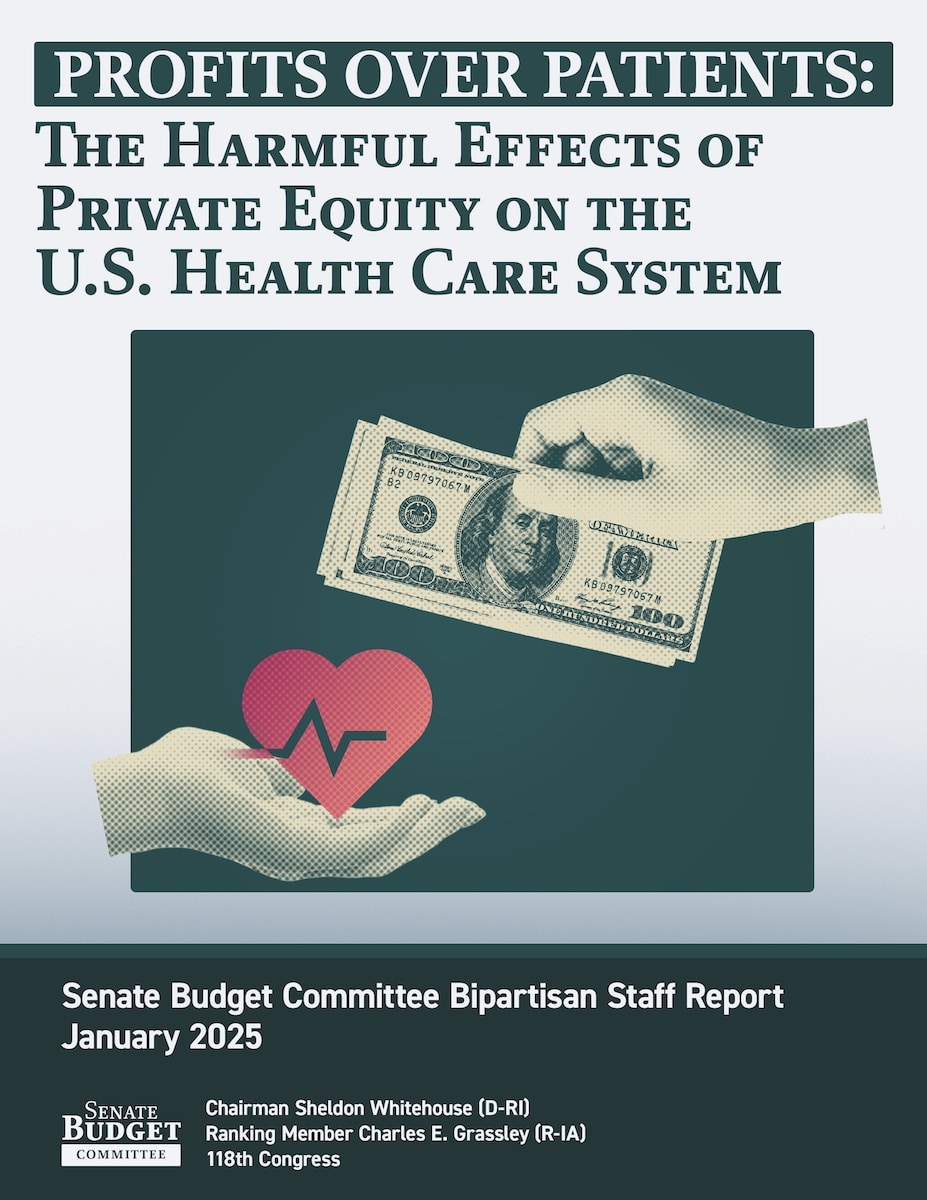
Critics, including several U.S. senators and nonprofit advocacy watchdogs like Private Equity Stakeholder Project, have publicly raised concerns that private equity firms negatively impact healthcare. Whether two Senate investigations — one from the Budget Committee and another from the Homeland Security and Governmental Affairs Committee — looking at Lifepoint Health and its owner, Apollo Global Management, will result in policy changes is an open question. The Budget Committee released its extensive — and troubling — report on a Lifepoint hospital in Iowa on Jan. 7.
Meanwhile, Apollo’s co-founder and CEO, billionaire Marc Rowan, was reportedly up for consideration for Treasury secretary by then president-elect Donald Trump in November, but Trump nominated another Wall Street executive, hedge-fund manager Scott Bessent, instead.
At a hearing of the U.S. Senate Subcommittee on Primary Health and Retirement Security in April, some senators continued to assert that private equity firms put healthcare companies further into debt when buying them out, and then create profits by cutting costs before they sell.
Still, a credit ratings synopsis from S&P Global in December of 2023 raised Lifepoint’s debt outlook to “stable” and attributed the rise partly to a better labor environment and improved staff retention.
Senate Budget Committee investigators, however, said that Lifepoint remains a “highly leveraged” company.
In Missoula, the question remains: What’s next for Community? Investigators from the Budget Committee contend that Apollo stands to make a windfall when it sells Lifepoint Health, noting that private equity firms typically hold on to their portfolio companies for five to seven years. Apollo bought out Lifepoint in 2018. Private equity firms divest in multiple ways, including through initial public offerings, sales to corporations, sales to funds affiliated with other private equity firms, and sales across their own funds, investigators said. Apollo already sold Lifepoint from one of its investor-owned funds to another in 2021.
While it was still a community-owned nonprofit, Community Medical Center navigated major financial challenges, especially in the early 2000s. When the hospital was sold 10 years ago to for-profit RegionalCare Hospital Partners, the CEO of that company told community members, as detailed in Part 2 of this series, that they’d be here for the long haul. CMC’s ownership structure has since changed multiple times, and RegionalCare doesn’t exist anymore.
Since becoming a for-profit, the hospital eliminated what sources report was an effective in-house referral center to arrange patient transport between hospitals and instead outsourced that service — “to the detriment of everything else,” as a nurse told The Pulp in Part 1 of this series. CMC added the responsibility of blood draws onto nursing and support staff caring for adult patients, and some employees alleged unsafe staffing on the Med-Surg floor, as detailed in Part 3 of this series. CMC also saw a dozen primary care doctors leave the hospital physician group during and after the pandemic. In addition, the hospital cut daily staffing in the ER.
Citing these concerns and others, 20 sources who at some point worked or still work at the hospital or in its physician clinics said they were specifically concerned about how the hospital’s for-profit model affects care.
“I don’t think for-profit healthcare should exist in America,” a former CMC nurse said.
The Pulp requested information on CMC’s financials to better understand the hospital’s profitability.
“We are not going to share financial information,” new CEO Greg Cook said. “It’s not something we’ve historically done. We’re not unique in that. There are many healthcare companies and hospitals — companies in general — that don’t share that information.” He offered that the hospital is in a healthy and stable financial position, and it stands out as one of the larger hospitals in Lifepoint’s network.
Megan Condra, CMC’s spokesperson, added that CMC’s positive margins have allowed capital investments — including a new $13.5 million ER and a $17.9 million cardiology center that opened in January — as well as the significant wage increase in the latest nurses’ contract. Condra and Cook also noted that CMC has continued to provide millions of dollars in charity care — over $11 million in 2023, they said — and paid almost $12 million in taxes in 2023. They noted the hospital has opened new services, including a limb preservation program and capabilities to perform bariatric weight-loss and spine surgeries. They reiterated the healthcare-wide difficulties of the pandemic.
Condra said she feels part of the negative attention Community has received is related to its status as a for-profit, a stigma she had to overcome herself when she started at CMC seven years ago.
“I thought it was going to be this big scary corporate structure, and it has not been that for me. It opened my eyes,” she said.
As CMC marks 10 years since the hospital was sold to a for-profit company, new leadership is in place, and administrators said they are ready to focus on a bright future.
“This place is a vital necessity for this community,” Condra said. “We’ve been here for 100 years and we want to be here another 100 years.”
This series was made possible by supporters of this nonprofit Missoula news organization. You can help The Pulp produce more in-depth local journalism by becoming a member for as little as $5/month.