
First in a four-part series, “Community for Profit.”
Part 2: “The selling of Community”
Part 3: “Inside Community’s post-pandemic problems“
Part 4: “Community’s next chapter“
At the onset of the pandemic’s peak in 2020, a healthy young nurse contracted long COVID and soon required an oxygen tank to breathe. Nurses at Community Medical Center in Missoula wondered who would be next, since some units cared almost exclusively for dying COVID-19 patients. Those patients included their friends and family members of their co-workers.
“You’d have three days off, and you’d come back and the room would be empty. You’d ask your co-worker, and they’d look down at their shoes and start tearing up,” a former nurse there said.
They all believed brighter days had to be ahead. “I couldn’t imagine a world where things didn’t change for the better after that,” the nurse said.
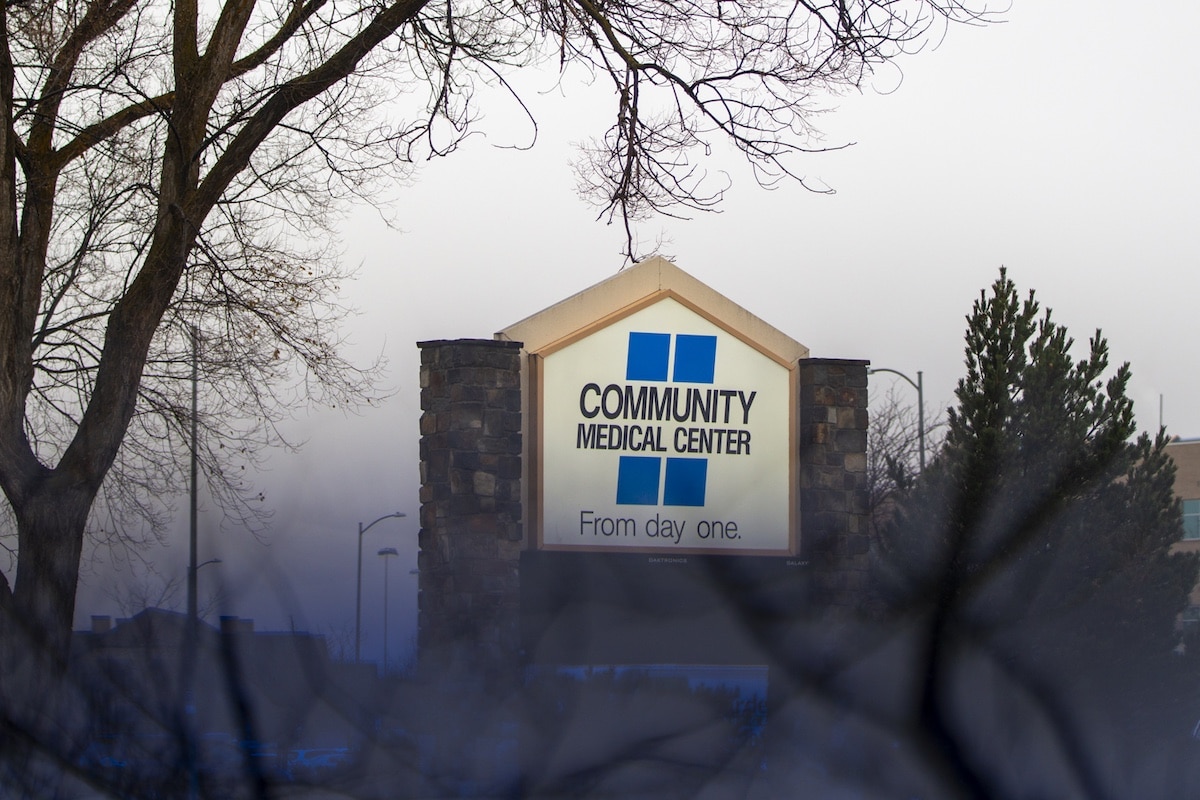
Following the sale of the hospital 10 years ago this month, and a series of mergers, Community Medical Center in 2018 became one of 84 hospitals run in total or in part by Lifepoint Health, a for-profit hospital chain based in Tennessee and owned by Apollo Global Management, a private equity firm. The change in ownership, which also involved joint management with the biggest hospital in Billings, means the previously nonprofit hospital is now one of about 460 hospitals in 36 states owned or partly owned by private investors, nearly half of which are owned by Apollo.
Missoula’s other hospital, St. Patrick, is part of Providence, a nonprofit network affiliated with the Catholic Church that runs 56 hospitals across seven states.
Over months of reporting, 20 current and former Community Medical Center employees who have worked on the hospital’s medical floors or for its physician group since the start of the pandemic said they were concerned with the way the administration and Lifepoint ran the hospital in the years after the pandemic, including decisions affecting patient care. Those unnamed in this series requested anonymity because they lacked authorization to speak about their experience at Community or feared career repercussions related to still working in healthcare.
Both Lifepoint and Apollo Global Management have been or are currently the subject of two U.S. Senate investigations, one from the Senate’s Homeland Security and Governmental Affairs Committee, and the other from the Budget Committee. On Jan. 7, the Budget Committee released the results of its bipartisan probe, “Profits Over Patients: The Harmful Effects of Private Equity on the U.S. Healthcare System.”
Investigators are looking into whether or not private equity firms milk hospitals for short-term profits at the expense of patient care by cutting costs and consolidating services as they rapidly grow hospital chains and then sell.
Investigators are looking into whether or not private equity firms milk hospitals for short-term profits at the expense of patient care by cutting costs and consolidating services as they rapidly grow hospital chains and then sell.
One major change at CMC — outsourcing the arrangement of patient transport to and from other hospitals — is a clear-cut example of a change made after the peak of the pandemic and despite criticism from hospital staff who say that and other cost-cutting changes have impaired the hospital’s ability to care for patients.
CMC spokesperson Megan Condra has provided some comments about issues reported in this series and about the transfer center decision. Those have been included whenever applicable. She met twice with representatives of The Pulp in late 2024, with one of those meetings including Community’s new CEO, and sent an email in December that CMC would no longer respond to specific questions. She was sent a final list for comment this month and also declined.
Managing transfers
Everyone knows the frustration of dealing with a slow, disorganized and distant call center. For most people, it’s a minor annoyance when trying to pay a bill or change a flight. For patients being transferred from other hospitals to CMC and vice versa, it could mean a delay in reaching care a patient needs, according to 13 current or former CMC employees.
Until summer of 2022, if a physician in another regional hospital had a patient needing a higher level of care, they could call CMC’s local referral center.
It was staffed on-site by clinically experienced CMC employees, some of them nurses or former nurses. They determined if CMC had room and staff for the patient by confirming with accepting physicians. They then arranged transports.
Arranging patient transport around Montana is more complex than it may seem at first glance, said Megan Maurer. Maurer worked from 2019 to 2023 as a nurse in CMC’s neonatal intensive care unit, the department that provides around-the-clock care to sick or preterm babies. She was also part of the CMC neonatal transport team, made of clinical staff trained to mobilize and give babies specialized care en route by air or other means to CMC and other area hospitals.
According to Maurer and multiple other sources familiar with the old referral center, the in-house nurses knew the geography and regional hospitals. They knew which emergency services to call for air or ground transport and for weather checks and road conditions. They knew the medical staff at CMC, who primarily worked down the hall. They knew bed capacity in each unit, and knew the people to call to find out if space was available for patients.
For transfers of infants, they knew to alert CMC’s own on-call neonatal transport team, and if the team was unavailable, as sometimes occurred, they knew to seek out transport teams from around the region, Maurer said.
They knew which equipment and personnel were required to transfer critical patients, and kept in touch with everyone involved so receiving physicians and nurses would be prepared for a patient’s arrival, multiple sources said. The in-house referral center required just a few employees per day, in a hospital that employs around 1,000 people.
“When you knew the transfer center employees by name and could troubleshoot issues together, there is no doubt that the process was more efficient and there was less room for error,” a nurse said.
A former nurse agreed, saying, “That all worked real well when we had our actual referral center here. Now it is an absolute dumpster fire.”
“When you knew the transfer center employees by name and could troubleshoot issues together, there is no doubt that the process was more efficient and there was less room for error.”
In 2022, this critical service was outsourced to a call center in the southern U.S. servicing Lifepoint facilities across the country. It was announced as an improvement, multiple sources said. Staff were told the company was consolidating and streamlining.
“What that means to me is that it costs too much money,” the former nurse said.
CMC defends the move. “Centralized transfer centers have become the common model for handling and documenting patient transfers for most larger health systems nationwide and provide benefits, including more advanced monitoring and reporting, and allow local nurses to be redeployed to other critical roles within the hospital, including direct patient care,” CMC spokesperson Condra wrote to The Pulp in October.
When contacted multiple times, via email and in a phone message, Lifepoint communications did not respond to questions about the call center.
A CMC nurse and another caregiver who worked in the hospital both said that they’ve worked in other hospital systems — both nonprofits and for-profits — that have outsourced their referral centers, and that it is not an uncommon practice. The nurse said it’s never been a good idea at any hospital.
“The only benefit to outsourcing your transfer center is saving money — to the detriment of everything else,” the nurse said.
Condra said improvements to the system have been made along the way.
“Nearly half of all patients transferred to CMC are accepted for transfer within 30 minutes or less from the time the call is initiated; however, we are committed to continuous process improvement, and several opportunities have been identified since implementation. Our local workgroup and the transfer center team collaborate regularly to simplify the transfer process and streamline intake to improve response times. Based on feedback from referring providers and local staff, we are piloting a new transfer portal that allows referring providers to enter information online instead of relying on a phone call,” she wrote to The Pulp this past fall.
When the switch was announced, CMC employees protested the change on grounds that it would be terrible for patient safety and efficiency, according to Maurer and multiple other sources.
“Nobody thought that it was a good idea,” Lea Bossler said.
Bossler, who worked as a health unit coordinator in the NICU and Medical-Surgical Unit from fall of 2021 to early 2023, remembered physicians and nursing staff upset at the change.
“A lot of us spoke up and said we do not want it. We think it’s dangerous.”
Maurer said she and other nurses on and off the transport team raised their concerns at an event called Ignite the Night administration put on to hear from employees. Another source confirmed this.
Multiple sources said they know the event better as “Gaslight the Night.”
“A lot of us spoke up and said we do not want it. We think it’s dangerous,” Maurer said of the transfer center.
“It was an unbelievable disaster,” Bossler said.
“It was just utter chaos,” Maurer added.
Multiple sources reported the worst problems occurred when the center was first outsourced in 2022, and multiple sources reported that the transfer center was still problematic in late 2024. The Pulp did not receive reports detailing harm to patients, but did listen to employees discuss their experiences and concerns.
Transfer incidents
In 2022, shortly after the change was made, a CMC doctor told Maurer a baby would be arriving shortly from an outlying rural hospital. The request included a description of a baby showing signs of a possible cardiac defect, Maurer said.
“There are several congenital defects that can start to present themselves at around 24 hours of life. So it was important to have that baby at a facility with a higher level of care that can do diagnostics, labs and provide medications if a life-threatening defect presents itself,” Maurer said.
Maurer was the charge — lead nurse — on the NICU floor that night. She was told the new transfer center would arrange transport. CMC’s neonatal transport team was unavailable, so employees at the transfer center were supposed to arrange another form of transport to pick up the baby, Maurer said.

The baby didn’t show up, so Maurer said she called the transfer center to see what was going on. Maurer made multiple calls, and said she was put on hold for 10 minutes at a time while workers at the transfer center tried to find the patient in the system. When they did, Maurer said she discovered they hadn’t yet arranged the transport. She said she then asked them to do so.
“The person at the referral center was not aware of who could even be contacted should Missoula not be able to complete a transport,” Maurer said, adding that the in-house nurses who previously arranged transport would have known to contact other regional transport teams for infants, for example in Kalispell or Great Falls.
While juggling the hectic duties of a charge nurse on the busy NICU floor, Maurer said she also kept in touch with a nurse at the sending rural hospital. That nurse was also having trouble communicating with the Lifepoint transfer center, according to Maurer.
Hours passed without clear communication from the transfer center, Maurer said, whereas the in-house nurses would have known to keep CMC’s NICU updated.
Ultimately, the parents of the baby called off the transfer, and the baby turned out fine, according to Maurer, who said she found that out from the nurse at the other hospital.
“It’s scary to think about the possibility of having a baby that actually needed urgent attention being lost in the system of Lifepoint’s referral center.”
The Pulp provided CMC a summary of this account, and CMC didn’t comment on the specific incident in its response. Lifepoint did not respond to questions about the transfer center.
“It’s scary to think about the possibility of having a baby that actually needed urgent attention being lost in the system of Lifepoint’s referral center,” Maurer said, adding that the nurse at the outlying hospital also shared her concern.
Maurer was furious, and wrote an email to CMC leadership. She provided The Pulp with a screenshot of the message.
In it, she wrote: “The organization took no stock into what we said about the importance of having our own referral center. And I said it during Ignite the Night, and I’ll say it again. If we have delays in how we handle transports, babies could die or suffer extremely poor outcomes.”
Maurer said leadership reviewed the phone calls from that night, and said the transfer center was not at fault for the delay. Maurer said she was told a local emergency transport company had botched communication.
“I don’t understand how that was the conclusion. … My point was always that, yes, if there was a breakdown in communication, we still had no follow-up call to tell us that someone was or wasn’t going to pick up that patient,” she said.
The confusion would surely have been avoided, she said, if employees down the hall had been arranging the transport.
It was not a one-off incident.
In 2023, Maurer said she called the transfer center to arrange an urgent transport for a child only to have a worker say they didn’t know how to arrange that type of transport.
Maurer said she started to walk the employee on the phone through the steps, but the clock was ticking, and she and the NICU team ended up arranging transport themselves.
“I didn’t have time to orient someone to their job role. The child in question was needing a good deal of respiratory support and there was question about whether this child needed intubation and nitric oxide, which we give in cases of severe pulmonary hypertension,” Maurer said.
In another incident Maurer said happened in summer of 2023, the transfer center patched through a call from a physician at another hospital to a traveling nurse practitioner in CMC’s NICU. The nurse practitioner, unfamiliar with Montana’s geography, accepted the transfer of a baby from a small town, and, according to Maurer, contacted her as part of the neonatal transport team to let her know the team would get the baby.
The name of the town was unfamiliar to Maurer, so Maurer said she called the Lifepoint transfer center to get clarification. A transfer center employee eventually realized someone had made a mistake, Maurer claims, and she said she found out the baby was actually in another state. By then, around an hour had passed, and Maurer said the employee told her they still hadn’t arranged transport.
“It’s difficult to say if that delay caused patient harm. I had no follow-up afterwards. The baby described to me by my practitioner was one that needed an immediate higher level of care,” Maurer said.
She said she filed an incident report afterward.
A CMC nurse told The Pulp about a more recent incident involving a delay in care. This past summer, the nurse said a CMC physician accepted over the phone the transfer of an infant requiring a higher level of care from a rural hospital. Caregivers waited hours for the transfer only to discover the transfer center hadn’t contacted CMC’s neonatal transport team, the nurse said. The local transport team then mobilized and transported the patient by air, according to the nurse.
By the time the infant was able to leave the sending facility, the nurse said at least four hours had passed.
Asked to comment on these incidents, CMC’s Condra said, “While federal law prohibits us from discussing specific patient cases, all cases are reviewed daily by local leadership and the transfer center leadership team, and any quality concerns are elevated and addressed immediately. The transfer center also conducts regular audits of patient cases as part of its quality assurance process.”
“While federal law prohibits us from discussing specific patient cases, all cases are reviewed daily by local leadership and the transfer center leadership team, and any quality concerns are elevated and addressed immediately.”
Nurses again encountered difficulty with the transfer center last fall when trying to arrange transportation from CMC to another hospital, according to the same nurse. That source said a transfer center employee called CMC nurses multiple times for procedural details — details that are supposed to be arranged by the transfer center, the nurse said — distracting nurses from caring for the patient as they intermittently fielded calls.
“In scenarios when a different level of care is needed, time is of the essence, and lately I am left wondering afterwards if time was wasted because of our transfer center difficulties,” the nurse said.
Both CMC and Lifepoint were provided summaries of the incident and did not offer comment.
Another nurse described an incident this winter. A patient had already been transferred out of the hospital for nearly an hour when a transfer center employee called to find out if CMC nurses knew when the patient was getting picked up, according to the nurse.
“When the nurse has to call the transferring or destination hospital multiple times for updates and follow up with multiple phone calls, and then has to update their own transfer center, how efficient is that?” the nurse said.
Thirteen current and former employees said they believe the Lifepoint transfer center has delayed patients from efficiently reaching a higher level of care.
Maurer, Bossler, Geri Unbehend, a current ER nurse who has worked at CMC for 18 years, and multiple other sources all said the outsourced transfer center was slower to arrange transport than the old in-house referral center.
Important information on patient conditions sometimes fell through the cracks because of incomplete reports, Bossler said and six other sources agreed.
Bossler, who left CMC in early 2023, said patients were more likely to arrive before a full report on their conditions after the transfers were outsourced during her time at the hospital.

A nurse said that getting a good report remains an issue, and that nurses have taken on more work to this end.
“We have learned from experience that a report from the transfer center is oftentimes useless, and we will always attempt a nurse-to-nurse report from the transferring facility and update the transfer team,” the nurse said.
As noted above, CMC is piloting a system that allows online data as an alternative to phone calls, according to its spokesperson.
Multiple sources described incidents when the transfer center didn’t answer in a timely manner, lost track of information and didn’t call back with updates during transports.
“It’s absolutely insane talking to the new referral center. It’s insane,” a former nurse said.
Finding workarounds
A nurse remembered being put on hold by the transfer center for over 30 minutes while trying to get a report and arrival time on a ventilated ICU-status patient. Finally, the nurse said they gave up and looked up the number to call the outlying facility’s emergency department, only to find the patient was 10 minutes out.
“It was so insane how much time I had to work on that. Meanwhile I had another ICU-status patient that I was supposed to be taking care of. But I’m taking all this time away from that to try and get a basic report,” the nurse said, adding that the patient arrived with incomplete information about medications.
Seven sources described at least one incident of a surprise patient arrival because of bad communication with the transfer center, and one source remembered workers at the outsourced transfer center trying to arrange air transport to and from St. Patrick Hospital, instead of ground transport.
Physicians were frustrated, Maurer, Bossler and several other sources reported, and often used workarounds to avoid having to deal with the transfer center. But those workarounds could be problematic as well, because receiving nurses didn’t necessarily get looped in, and information could fall through the cracks, multiple employees confirmed.
“We’ve had patients show up on our helipad that we didn’t know were coming to the ICU, and we don’t have any room,” a former nurse said.
Lifepoint’s transfer center also affects the referring hospitals, Maurer and multiple other sources said.
“Some of the doctors in the referring hospitals were saying how frustrating it is to deal with our new referral center. Our unit operates on transports, and we bring a lot of kids in through western Montana. It’s really hard if you think you’re hurting the relationships around you — that they don’t even want to deal with you,” Maurer said.
“Our unit operates on transports, and we bring a lot of kids in through western Montana. It’s really hard if you think you’re hurting the relationships around you — that they don’t even want to deal with you.”
“I have friends in outlying hospitals in this area that say we won’t transfer to Community because your referral center is impossible to get a hold of,” another nurse said.
Maurer and nine other sources said they believed CMC has lost referrals because of the transfer center.
CMC spokesperson Condra said in an email that CMC has encouraged providers to avoid using the transfer center in certain circumstances.
“We have found that faster provider-to-provider communication with sub-specialists in the NICU, Pediatric ICU and cardiology can sometimes avoid a patient transfer altogether. Instead of going through the transfer center for these patients, we now encourage providers to call our specialists directly, so they can collaborate and make the decision that is in the best interest of the patient. If a transfer is necessary, our providers offer the use of our transfer center to referring facilities to coordinate the patient transfer,” she said.
Unbehend, the current ER nurse, noted that some personnel use the transfer center, and some don’t, so the process lacks consistency.
Nurses haven’t been quiet about the issues. When incidents delayed response time, Maurer said she and other nurses sent off emails to leadership to let them know it was a chronic problem.
Multiple other sources said they have personally reported issues.
Nurse not on call
For about 40 years starting in the 1970s, Community was the only hospital choice in Missoula to give birth. Until St. Patrick opened its Family Maternity Center in 2015, every mom in Missoula, it seemed, had a baby at Community.
It was also the home for a free 24-hour Nurse-On-Call line.
A former primary care provider at a CMC’s Community Physician Group clinic said the Nurse-On-Call line was popular, especially to new parents.
“These were local, on-site nurses that could help triage individual patient situations and coordinate important off-hours care,” the provider said. The ask-a-nurse number was included on all discharge papers.
That’s no longer the case. When Lifepoint outsourced the referral center, Nurse-On-Call was unceremoniously canceled and no longer exists.
CMC declined comment related to the loss of the Nurse-On-Call.
Airing concerns
Some issues brought forward by employees of Community came to a head with an article in the Missoulian by David Erickson, in which anonymous sources detailed dysfunction in the hospital around staffing adult care units.
No sources in this series said they contributed to the Missoulian article.
Lifepoint’s Chief Nursing Officer for the northwest region flew into Missoula to meet with employees after the article was published Feb. 1. Lifepoint communications was asked for comment on this, but opted not to respond.
At the meeting in late February, hospital employees identified the transfer center as a top concern, affecting service units that include the NICU, pediatrics and adult care. Employees still reported using workarounds to avoid using the transfer center altogether, according to sources with knowledge of the meeting.

At St. Patrick Hospital, all patient transfers are coordinated within the doors of the hospital by local referral coordinators, confirmed Stacy Rogge, director of communications at Providence.
CMC offered the nurses who had run the in-house referral center other jobs in the hospital or its clinics, but they were upset, multiple sources reported, and at least one of them was swept up by St. Patrick Hospital to work in its referral center, according to one source.
“Before our transfer center was outsourced, I never had one single problem, so it is a stark comparison,” a nurse said.
Maurer agreed. “Several of us, especially the transport nurses I worked with, we all voiced our concerns about just how unsafe it was for our patient population, because if a kid is sick — especially babies — you can’t have a lot of delay. You can’t have that. It’s a matter of life and death.”
This series was made possible by supporters of this nonprofit Missoula news organization. You can help The Pulp produce more in-depth local journalism by becoming a member for as little as $5/month.