Second in a four-part series, “Community for Profit.”
Part 1: “Care on hold”
Part 3: “Inside Community’s post-pandemic problems“
Part 4: “Community’s next chapter“
At 97 years old, Ty Robinson, a beloved Missoula lawyer known for his involvement in local causes, narrated a video history of Community Medical Center. This was just over a decade ago, in 2013.
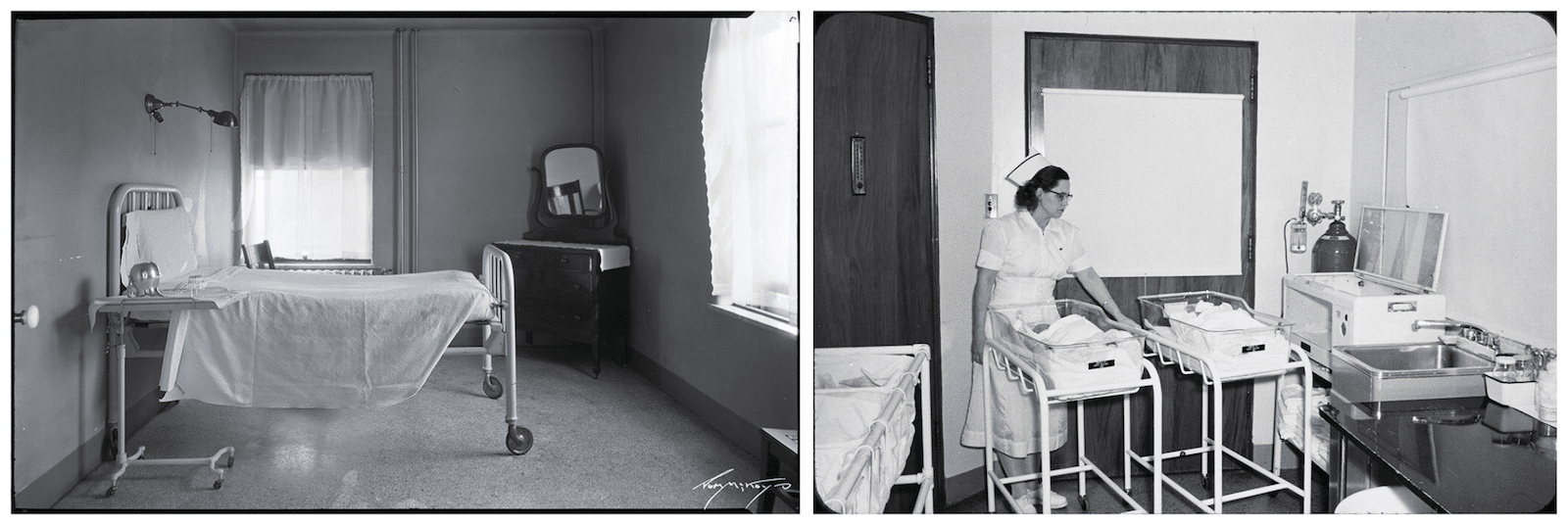
In it, he tells viewers the private 28-bed Thornton Hospital opened its doors in downtown Missoula in 1922 and stood where the former public library building was on the 300 block of East Main Street. A local cooperative, seeing the need, bought the hospital in 1949, creating not-for-profit Missoula Memorial Hospital, the entity which would become CMC. It moved to its spot on Fort Missoula Road in the ’70s, on land bought from the county after a fund drive netting $1 million in under a month. The county commissioners and the hospital’s board of directors at the time were adamant the money had to come from within Missoula and its surrounds.
“This is a community effort. If it has any real meaning, then the community must be the factor that builds it,” says Robinson, who was instrumental in the legal proceedings. “It is a community hospital. There’s no question about it.” Robinson died at 102 in 2018, the year a new chapter much different from its founding began for Community.
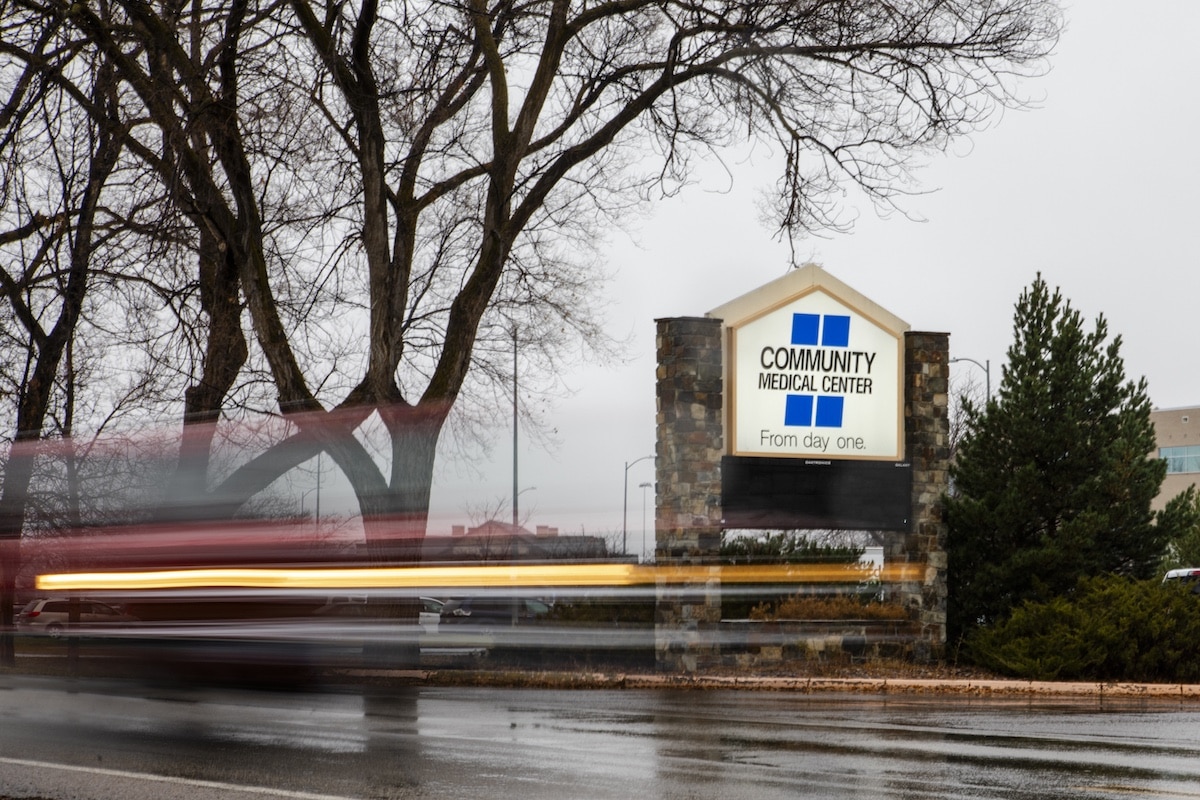
In the past decade, CMC went from a standalone nonprofit hospital to part of the largest collection of private equity-owned for-profit hospitals in the nation. Both the firm that owns the hospital chain, Apollo Global Management, and the chain itself, Lifepoint Health, now the co-owner of Community, are the focus of two U.S. Senate investigations amid criticism for the way they run their hospitals. One investigation is from the Senate’s Homeland Security and Governmental Affairs Committee. The other, from the Budget Committee, released a report on its findings on Jan. 7 that named Community Medical Center, pointing specifically to the case against a contracted doctor accused of sexually assaulting 15 women (see The Pulp’s story).
So how did Community, one of two hospitals in Missoula — the other, St. Patrick, is part of the nonprofit, faith-based Providence chain — end up among roughly half of the private equity-owned hospitals in the country crowded under Apollo Global’s umbrella?
“No matter the question, the answer’s money,” Barry Kenfield said about managing healthcare.
How did Community, one of two hospitals in Missoula, end up among roughly half of the private equity-owned hospitals in the country crowded under Apollo Global’s umbrella?
Kenfield, 77, worked at Community from 1970 to 2006, most of those years as the chief financial officer alongside CEO Grant Winn. To him and to other former employees interviewed for this series, Winn embodied the family culture that defined Community in those years.
Winn, he said, was empathetic and knew everyone on the floors; it was a good place to work. Kenfield offered that leadership would adjust some policies to benefit the many single mothers working as nurses. The executive staff would occasionally surprise night staff by showing up and serving them dinner, and also served staff dinner for the holidays. Bob Hendryx, a long-time CMC pharmacist, remembered this tradition continuing at least into the mid-2010s. “Like Jesus washing his disciples’ feet,” he said.
Winn even hired an executive chef, Arthur Streano, to run the cafeteria. But, Kenfield said, “it was not always nirvana.”
A nurses strike in 1978 over wages lasted for eight months and tested the hospital’s culture. It was a painful time.
“I think we came through it with a sense you had to be more committed to employees than you were before,” Kenfield said.
There were already scars from fights between Providence and Community from before Kenfield’s CMC days, he said, but his tenure was a time of considerable cooperation — together, the hospitals created the nonprofit hospice Partners in Home Care in 1987 and purchased Clark Fork Valley Hospital in Plains in 1992.
But the economics of healthcare eventually caught up with Missoula’s community hospital.

CMC leadership learned a hard lesson when their surgeons left to form Big Sky Surgery Center in 1998, taking a lot of the outpatient business with them. Doctors have the power to move a business, Kenfield said. CMC had a 35 percent share in the physician-led venture, according to reporting in the Missoulian, but Kenfield said it hurt the hospital’s bottom line.
Meanwhile, the medical staff’s capital requests ramped up as the hospital grew. The wishlist from just the operating room, laboratories and radiology was more than the hospital would ever be able to afford, Kenfield said, but the hospital would fill the requests it could.
“And it’s at the expense of other things,” Kenfield said with a laugh. “Like fixing the roof!”
As the costs of providing care mounted, leadership raised questions that had come up before: Could Missoula sustain this stand-alone community hospital?
The next generation of CMC leadership turned those conversations into a plan, and Kenfield was on Community’s board when a sale to a for-profit was put on the table. Though he spent most of his life on the business-end of the healthcare business, Kenfield said he still believes healthcare is meant to be a charitable enterprise.
“I’m not a fan of for-profits. I’m just not. For-profits have left their mark on healthcare in this country,” he said, bringing up incidents that have occurred across the nation. “You need to go no further than HCA.”
Deciding to sell
Hospital Corporation of America (HCA) was founded in Tennessee in 1968, and changed healthcare forever when it built the first giant for-profit hospital chain. Whistleblowers triggered a Medicare fraud investigation of Columbia/HCA, the company it became, in 1997 for allegations dating back to the late 1980s. Two HCA subsidiaries pleaded guilty to criminal conduct and paid initial fines in 2000, and then HCA/Columbia settled the remaining civil suits in 2003, in total paying $1.7 billion. The company did not admit guilt in the 2003 settlement to resolve allegations. It was the largest healthcare fraud case in United States history at the time. LifePoint Hospitals, later to be renamed as Lifepoint Health, emerged in 1999 in a spinoff of hospitals shed from Columbia/HCA.
By 2004, CMC hit a particularly rough patch, according to Mary Windecker, who started at Community that year and finished her career 11 years later as the vice president of strategic planning and business development. The hospital only had 11 days cash on hand, or days a business can pay operating expenses without additional revenue, she said.
“They were in really bad shape,” she added. “They had deferred maintenance on everything and patient satisfaction wasn’t high.”
In terms of profit margin, family medicine, births and physical rehab are on the lower end. Cardiothoracic surgery, orthopedics and complex trauma cases that lead to surgery are on the higher end.
St. Patrick Hospital was doing most of the high-earning procedures in Missoula, while CMC specialized in births and physical rehab.
During a turnaround starting in 2007 with a new CEO, Steve Carlson, CMC opened several new service lines, including an $8.5 million oncology center, a $17.8 million women and infants center, and it successfully recruited some high-end specialists to its campus, including neurological and orthopedic surgeons.
By 2014, Windecker said the hospital had around 100 days cash on hand. Though this represented a massive improvement, credit ratings groups at the time considered that number just below an “adequate” rating for a stand-alone nonprofit hospital.
Windecker said the gains were accompanied by hardship. The Missoulian in late 2013 reported furloughs and layoffs at the hospital, and a general tightening of budgets at hospitals nationwide.
By then, Carlson announced that CMC hired a consulting firm to explore options for an affiliation or partnership with another health system.
Carlson promoted a partnering strategy — which in the end was a sale — as the best way for the hospital to stay afloat long-term, despite publicly declaring CMC was not in a dire financial situation.
“Pursuing a partnering strategy while the hospital was financially stable allowed us to negotiate from a position of strength,” Carlson wrote in an email to The Pulp. “The full implementation of the Affordable Care Act or ‘Obama Care’ in 2014 introduced significant changes for how healthcare was to be provided. The prognosis for stand-alone hospitals competing head-to-head with large healthcare systems in mid-sized markets was not good. Becoming part of a larger healthcare system would provide CMC access to economic and strategic resources that CMC could not access on its own.”
“The prognosis for stand-alone hospitals competing head-to-head with large healthcare systems in mid-sized markets was not good. Becoming part of a larger healthcare system would provide CMC access to economic and strategic resources that CMC could not access on its own.”
Of note: While not related to competition between hospital systems of different sizes, one of the controversial features of the Affordable Care Act, Medicaid expansion, turned out to be an overall positive for hospitals’ bottom lines in the states that adopted it, according to an analysis by the nonprofit KFF Health News. This includes Montana, which became a Medicaid expansion state in 2016, according to a report commissioned by the Montana Healthcare Foundation, a private foundation created from the charitable assets when Blue Cross Blue Shield of Montana was sold in 2013.
Medicaid expansion remains a hot-button issue and will be up for debate in Montana’s current legislative session when it comes up for renewal. Meanwhile, the American Hospital Association found more rural hospitals closed in states that didn’t adopt Medicaid expansion as of 2022. Montana has not seen any hospital closures since becoming a Medicaid expansion state, Katy Mack, spokesperson for the Montana Hospital Association, told KFF Health News in March of 2024. CMC’s current administrators — spokesperson Megan Condra, Chief Nursing Officer Holly Nagel and new CEO Greg Cook — all stressed the importance of renewing Medicaid expansion for hospitals and patients.
Windecker is still unable to guess how Community would have fared if it hadn’t merged with a larger health system.
“Personally, I thought we should merge with St. Pat’s, given the size of Missoula, but there was too much antagonism between the two hospitals at that time. I don’t think ‘for profit’ and ‘healthcare’ belong in the same sentence, let alone the same hospital,” she said.
A merger with St. Patrick Hospital was considered, but failed. Competition between the two systems grew in the aftermath, with St. Patrick planning to branch out into labor and delivery, which Community had dominated for decades, as CMC anticipated moving deeper into cardiology, which had been the bread-and-butter of St. Pat’s.
Instead, the hospital was sold to for-profit RegionalCare Hospital Partners (RCHP) and not-for-profit Billings Clinic for $74.8 million in January of 2015 — with the bulk of CMC ownership going to RegionalCare.
A done deal
The sale didn’t happen overnight.
During a long internal process to evaluate options, a physician advisory council was formed, and physicians and board members made visits to various hospitals owned by potential partners. CMC’s board ultimately voted between two final options, a partnership with Providence St. Patrick and a sale to RegionalCare and Billings Clinic.
By all accounts, that vote was extremely close. Barry Kenfield, the former CFO at Community, was on the board at the time, and confirmed this. The board’s decision to go with RegionalCare was announced in April 2014.
RegionalCare was a for-profit chain based in Tennessee and backed by private equity firm Warburg Pincus. Leading up to the sale, Marty Rash, RegionalCare’s founder and CEO, promised growth, physician recruitment, capital investments, and that quality care would continue at CMC.
Montana’s attorney general, Tim Fox, still had to approve the sale, however. Editorials for and against the sale appeared in the Missoulian after the board’s decision became public. Some members of the community wrote letters of support. The Missoulian Editorial Board endorsed the sale.
Leading up to the sale, Marty Rash, RegionalCare’s founder and CEO, promised growth, physician recruitment, capital investments, and that quality care would continue at CMC.
Physician Phil Barney was at the forefront of the opposition. Barney had been a pathologist and director of CMC’s laboratories, retiring after 22 years. Along with five others who had long ties to the hospital, Barney formed the opposition group, Save Community Hospital Committee. Together, they hired a lawyer to review the sale and dig into the old county bonds from when it sold the land where Community now sits.
In editorials, Barney said the public had been left in the dark leading up to the board’s vote, which former CEO Carlson contested in his own editorial, saying that confidentiality helped CMC get the best deal in seeking a partner. Barney also questioned Carlson’s assertion that passage of the Affordable Care Act would negatively affect the hospital’s financial viability.
“Contrary to concerns from the CMC administration, the taxpayer subsidized Affordable Care Act (Obamacare) has enhanced reimbursement to hospitals, while the cost of charity care has diminished due to less cost shifting from the uninsured to the insured. Thus, the cost of charity care will diminish and profit will increase,” Barney wrote in a 2015 Missoulian editorial opposing the sale of CMC to a for-profit.
Some of those opposed contended RegionalCare and its backer, Warburg Pincus, would profit off the hospital for a few years and sell, noting that Rash had founded and been the CEO of for-profit hospital chain Province Healthcare, which he had grown before a sale to for-profit LifePoint Hospitals a decade earlier.

In the 2005 Province sale, Rash, in exchange for his Province stock options, received $13 million and 333,632 shares of LifePoint Hospitals stock — then worth $14.7 million, according to an article in Modern Healthcare and Securities and Exchange Commission filings. LifePoint Hospitals later changed its name to Lifepoint Health.
Modern Healthcare reported that Rash said the payout recognized the risk he took in leaving his job as chief operating officer of Community Health Systems in 1996 to start Province. “A big part of that was founder’s stock, so a fair amount of that goes back to the formation days of the company,” Rash said then. “To talk a guy who’s got a three-year severance package and running a large corporation to leave and go work off his kitchen table requires a little bit of potential upside, and the reality of it is it could have turned into zero.”
As part of Montana Attorney General Fox’s evaluation of the CMC sale, a public hearing was held at Hellgate High School on Nov. 19, 2014. The forum was overseen by Fox, and Carlson, Billings Clinic CEO Nick Wolter, CMC Board Chair Scott Stearns and Rash took questions from members of the public. More than 200 people attended.
Significant support for the sale was evident among hospital leadership, and a few medical staff members also spoke in favor. Speakers alluded to the challenging financial situation the hospital had emerged from that decade and said they believed the merger would provide the capital for better care and resources.
Janice Gomersall, a family physician for Community who was also on the advisory council evaluating the hospital’s options, spoke of the need for resources, and said she saw the sale as an opportunity to partner with Billings Clinic physicians with whom she and her colleagues already worked.
“Yes, RegionalCare’s got some money and we’re using their money,” she joked, causing a stir of laughter, but said she believed RegionalCare was committed to their baseline promises to promote better quality of care.
The physicians on the advisory council established in advance of the board’s vote had to sign non-disclosure agreements, two physicians speaking at the hearing confirmed. Glenn Jarrett, an orthopedic surgeon who had performed surgeries at CMC for 16 years, was critical, joining others who had said there wasn’t enough public input in advance of the board’s decision.
“It’s a process that the community should have been involved in,” he said.
His father, Jim Jarrett, was on the Save Community Hospital Committee, and also spoke against the sale. He was the first doctor to move onto the CMC campus.
Related
Community named in Senate investigation’s report
A report released Jan. 7 by a U.S. Senate committee investigating the practices of private equity-owned hospitals and prompted by a sexual assault investigation in Iowa names Community Medical Center in Missoula.
Read more
Windecker, who was a vice president at Community at the time of the sale, reminded everyone how difficult it was to reach financial stability that decade, and vehemently defended the board’s decision and the process at the hearing.
“I think I speak for most of the employees when I say we’re right. This is the decision that is the best for Community Medical Center and the best for Missoula as a whole,” she said then.
Today, she calls supporting the sale one of the greatest regrets in her career.
“I was stupidly naive. I was raised to believe that a person’s word was sacred. I truly believed that when RCHP got up in front of all the employees, the board, and the public and said they would honor the traditions of Community and treat the employees well, that they were being honest. They weren’t,” she told The Pulp.
Instead, she said, “they have driven our Community hospital into the ground.”
Some of those who opposed the sale at the hearing questioned RegionalCare’s intentions.
Early in the meeting, Sue Kirchmyer, a former nurse at Community, said Community’s top asset is the trust of the people of Missoula and Montana. She mentioned the Province sale to LifePoint and the typical five-to-seven-year investment period of private equity firms. She asked Rash two questions: What proportion of Community would RegionalCare own; and whether the hospital would be sold down the road to a larger for-profit system.
“We need and deserve a delay in this sale until we know more about how potential future buyers would impact our community. As you said, not everyone manages hospitals the same way,” Kirchmyer said at the hearing.
“Clearly, it is our intention to be here for the long run,” Rash answered, adding that he had no intention to sell, and that the company would likely go public.
Rash did not say what proportion RegionalCare would own, but said RegionalCare would have majority ownership. More important, Rash said, was how the hospital would be governed, and alluded to a decision-making joint venture board and a local board.
“They promised the moon, of course,” Phil Barney, the retired doctor who opposed the sale, told The Pulp.
Later in the hearing, Monica Weisul took it upon herself to clarify who would have control of the hospital. Weisul, among those on the Save Community Hospital Committee with Barney, was long involved in local healthcare and married to the former chief medical officer at Community.
With the deal paperwork in hand, she encouraged those present to read it.
“I was stupidly naive. I was raised to believe that a person’s word was sacred. I truly believed that when RCHP got up in front of all the employees, the board, and the public and said they would honor the traditions of Community and treat the employees well, that they were being honest. They weren’t.”
Kirchmyer, the former nurse, told those at the hearing what she thought RegionalCare would do with Community. Weisul told them why they would be able to do it: Control of the hospital was going to be left to a board of managers, she said, with the voting majority appointed by RegionalCare.
Shari Lister Linjala, the daughter of Ed Lister, chair of the hospital’s board for 17 years, was one of the last to speak.
Her father had dug the first shovelful of dirt at the site, she said, and he would be rolling in his grave at the idea of selling to a for-profit company.
Linjala recognized hospital employees’ support for the sale, but echoed others who opposed it — and in the same solemn tone — saying there were other avenues to seek the resources the hospital required.
“If it does happen, I hope you’re as happy with it in five or seven years, when the hospital is sold again,” she said.
Kenfield, the former CFO at Community, was on the board during the sale. As previously noted, he isn’t a fan of for-profits. During the sale, he was the last of the old guard on the board and wasn’t terribly involved in the process, he said. But he remembered being impressed with what RegionalCare said the company would do. In particular, he remembered they said important services done in-house would not be outsourced out of town.
Rash, in his opening statement at the hearing, specifically addressed outsourcing services.
“A lot of times you hear about hospital systems that will centralize functions. And what they’ll do is, essentially, to try to save a dollar, they’ll take, for example, the back office, the billing department, and they’ll centralize it in a location out of Missoula. As a company, we’re dedicated to not doing that. We think it’s a disservice to the community. And if we’re going to be good corporate citizens, good community citizens, we just don’t do that. A lot of people in our industry are doing that now, and we are opposed to it as an organization,” Rash said.
CMC’s billing department was outsourced after the hospital was merged into Lifepoint Health a few years later, and the first story in this series described the consequences of one service — arranging patient transfers to and from other hospitals — being moved to a centralized location outside of Missoula in 2022.
Fox, the Montana attorney general, approved the $74.8 million sale in January 2015, and CMC became a for-profit hospital. This year marks a decade since that change.
The next question then was where the sale proceeds should go.

Under Montana law, when a hospital goes from a nonprofit to a for-profit entity, the proceeds from the sale and its other charitable assets must be transferred to a nonprofit organization that supports the mission of the former nonprofit and in the same region. In the case of Community Medical Center, this meant promoting health in Missoula and the surrounding area.
Fox, who was also required to approve the distribution of assets, oversaw the lengthy process. Giving the assets to existing organizations was considered, but ultimately a new nonprofit entity, the Missoula Community Hospital Legacy Foundation, was formed and renamed in 2017 as the Headwaters Health Foundation of Western Montana. By then, the assets amounted to a $100-million endowment. The foundation annually distributes grants to a variety of causes. In 2023, Headwaters made 113 grants to 107 organizations, totaling $4.1 million, foundation spokesperson Robyn Windham told The Pulp. In July 2024, a job listing seeking a new CEO of Headwaters included a salary that topped out at $352,000.
For Barney, the sale of Community was personal, not least of all because his own widowed mother had pitched in to buy the place during the local fund drive. Barney, now 86, said the blow was crushing.
“I felt betrayed. The hospital board, they had the legal right to sell the hospital. But they didn’t have the moral right,” he told The Pulp.
“I felt betrayed. The hospital board, they had the legal right to sell the hospital. But they didn’t have the moral right.”
The Pulp attempted to contact Rash at his LinkedIn and via the communications department at his current company multiple times. He did not respond to requests for comment. Carlson, who left with the sale, declined comment on the subsequent mergers and current operation of the hospital. His resignation was made public the day before the hearing. A week later, the Missoula Independent reported he’d been given a three-year, $1.2-million severance package.
The ink was still wet on the sale contract when CMC’s ride on corporate healthcare’s new wave began in earnest. Notably, those opposed were wrong about waiting five to seven years for another change in ownership.
Reselling Missoula’s for-profit hospital
Less than a year after the sale, RegionalCare’s backer, Warburg Pincus, agreed to sell the company to Apollo Global Management.
A year later, Apollo acquired Capella Healthcare, founded by former executives at Province, Rash’s former company, which had been previously sold to what became Lifepoint. Apollo then merged its acquisition with RegionalCare to create RCCH Healthcare.
In 2018, Apollo acquired Lifepoint Health and its 70 hospitals for $5.6 billion, including $2.9 billion of Lifepoint’s debt, and merged RCCH into Lifepoint, creating a chain of 84 non-urban hospitals in 30 states, plus a large number of other healthcare assets. Lifepoint and RCCH had combined revenues of $8 billion in 2017, according to the press release about the merger.
During the merger, Lifepoint’s board recommended shareholders vote “yes” for four of its executives to share $120 million in “golden-parachute” payouts promised in their contracts in the event of a change in ownership, according to SEC filings. Shareholders overwhelmingly voted down the payout, Modern Healthcare reported, but almost unanimously voted to approve the buyout.
Rash, according to an article in the Nashville Post and in Securities and Exchange Commission filings, initiated conversations that helped Apollo and Lifepoint reach an agreement after talks stalled. Rash did not return requests for comment.
“The healthcare delivery system in America is changing rapidly, and it is vital that we take the steps needed to ensure that high quality, compassionate care will be available to non-urban communities across the country,” Rash said, praising the merger in a press release. He went on to serve on Lifepoint’s Board of Directors. “The merger of these two companies creates an organization that is well positioned to be impactful to our patients and our communities for years to come.”
The Pulp received comments from Billings Clinic spokesperson Zach Benoit. He didn’t comment on whether Billings Clinic was involved in decisions related to the mergers, but said there is ongoing cooperation between the two hospitals today. Billings Clinic has physicians in cardiology, radiation oncology and other specialties based at CMC, Benoit said.

“Billings Clinic is proud of the high-quality care our excellent physicians and staff working at CMC are providing for patients. There is a record of excellence that has attained third-party recognition for their care, such as becoming an accredited Chest Pain Center serving patients at CMC, which also attained a Leapfrog Group grade ‘A’ in 2024 for hospital quality,” he said.
Windecker, the former vice president, left CMC in 2015 during what she described as a period of heavy turnover in leadership after the sale.
David Lechner stayed on. Lechner was president of CMC’s physician group from 2011 until 2019 and served as the hospital’s chief medical officer from 2013 to 2019. Like many in administration, he supported the sale at the 2014 hearing before the attorney general. During the first years CMC ran as a for-profit, he worked with CEO Dean French, who came on in 2015, to oversee hospital operations. Both Lechner and French are physicians, and they built a stronger safety culture in those years, according to Lechner.
“I’m incredibly proud of that work,” Lechner said.
At the hearing before the sale, many said they looked forward to a close partnership with Billings Clinic. Lechner, however, said that in those initial for-profit years, there was much more engagement with RegionalCare. Billings Clinic spokesperson Zach Benoit didn’t offer comment on Lechner’s claim.
“They were excellent. They were respectful,” Lechner said of RegionalCare management he worked with, adding that their officials asked his team to share management techniques he’d developed building Community’s physician group.
The biggest challenge, he said, was that the Tennessee-based leadership he worked with changed on about a yearly basis as mergers occurred. Then Lifepoint came in. Though Lifepoint was the acquired hospital system in the 2018 merger, Lifepoint had its own plans to run CMC, he said. Whereas RegionalCare management had been curious and interested in learning from his team, Lechner described his view of Lifepoint’s management as “dictatorial.”
“You’re going to fit the model that they bring,” he said.
“You’re going to fit the model that they bring.”
It was his perception that Lifepoint didn’t intend to keep him on, Lechner said. He left to take a job with Blue Cross Blue Shield in 2019. A representative from Lifepoint was asked to comment on Lechner’s claims, but declined.
“It was my impression that my role was not part of their practice model. My role being a physician executive running a medical group and overseeing hospital operations and the medical staff,” he said, adding that he didn’t believe Lifepoint had other physicians in similar leadership roles at the time. He said the company brought in a non-clinical director while he was still there to help oversee the physician group he previously managed alone.
“I don’t really hold any blame or judgment against that, but I’m disappointed that I didn’t get to continue to build on something that was working well,” he added.
Lechner looks back on his time at Community as some of the best years of his career. As for the fast mergers, the end result, and his experience working in both nonprofit and for-profit systems, he drew this conclusion:
“My perception is the real money for a for-profit entity doesn’t come out of operations. It comes in transition of management or ownership,” he said.
Funding for profits
Along with a lack of transparency, one of the chief criticisms of private equity healthcare deals is the use of debt to finance them. Investors are naturally looking for returns. Big investors in private equity funds include large institutions like public pensions, university endowments and wealthy individuals who put their money into funds controlled by firms like Apollo. In one of its strategies, Apollo in turn uses that money, along with borrowed money, to buy out companies, then manages the companies to increase value to investors via growth, consolidation, improved efficiency and cost-cutting. It then profits from management fees and when later selling the companies.
In these leveraged buyouts, as they’re known, the private equity firm often leverages the company that gets bought against the loan. That way, the company, and not the private equity firm, is saddled with the debt used to buy them out, Eileen O’Grady explained. O’Grady is the former healthcare research director at Private Equity Stakeholder Project, a nonprofit watchdog, and is now the programs director there.
The strategy works well for Apollo. The firm and its funds have around $700 billion in assets under management, and its stock has risen 235% in the last five years.
In these leveraged buyouts, as they’re known, the private equity firm often leverages the company that gets bought against the loan. That way, the company, and not the private equity firm, is saddled with the debt used to buy them out.
The stuff of Apollo’s early days — aggressive, high-risk, debt-ridden deals — is detailed in Bloomberg’s 2020 story, “Nobody makes money like Apollo’s ruthless founder Leon Black.” The authors make a convincing case that Black, the firm’s founder and former CEO was “the most feared man in the most aggressive realm of finance” as the buyout firm bought out struggling companies before the 2008 financial crisis and profited as some acquisitions went bankrupt. Apollo’s takeover of Caesar’s casino is also the subject of a book, ”The Caesars Palace Coup.”
Black resigned from Apollo in 2021 after a firm contracted by Apollo revealed he had paid Jeffrey Epstein millions for financial advice years after Black knew Epstein had pleaded guilty to charges of solicitation of prostitution and procuring a person under 18 for prostitution. The report and a spokesperson for Black have said he was unaware of Epstein’s other criminal activities. Apollo has continued to soar without him under co-founder and current CEO Marc Rowan, who, in November, was reportedly under consideration for treasury secretary by president-elect Donald Trump.
Lately, Apollo, in cooperation with Sony Pictures, has been negotiating to buy Paramount Global, the entertainment company, and offering to invest in Intel, the struggling computer chip manufacturer. The firm recently announced a shift of focus to debt underwriting with private capital, moving in on the role traditionally served by banks, a plan Apollo expects will double its assets under management in the next five years.
But Apollo’s big move into healthcare continues to raise eyebrows.
Private Equity Stakeholder Project’s reports contain a list of alleged incidents at Lifepoint hospitals since Apollo took over. Emily Serck, Lifepoint’s senior vice president of communications, contends the reports put out by the project lack appropriate context and contain inaccuracies, particularly sections addressing Lifepoint’s use of pandemic funds and charity care.
She wrote The Pulp in an email: “Most notably, the assertion that charity care, salaries and benefits and supply costs were cut from 2019 to 2020 is false. Lifepoint divested a facility in late 2019, which meant the company had fewer total facilities, employees and communities served, which in turn lowered our total overall salary and benefits and supply costs as well as our charity care provision during this period. Labor and supply costs as a percentage of Lifepoint’s revenue increased from 2019 to 2020 as we worked to ensure our hospitals had the appropriate resources in place to serve our communities and employees.”
The Stakeholder Project reports include:
- The sale-leasebacks of 10 of Lifepoint’s hospitals in late 2019 and five more Apollo-owned hospitals this past September. These happen when a hospital’s property is sold to a real estate investment trust, resulting in a hospital having to pay rent on property it once owned. This maneuver is a subject of inquiry in the Senate Budget Committee’s report and has drawn criticism from the Stakeholder Project, but it’s not uncommon in healthcare. In a press release concerning the 2019 sale-leasebacks, Lifepoint President and CEO David Dill wrote, “This sale-leaseback transaction further solidifies our existing relationship with a proven partner, and allows us to stay focused on operations and the delivery of high quality patient care. … Lifepoint is committed to the communities we serve and will continue to operate these facilities. Our hospitals’ employees, physicians and patients will not experience any changes.”
- The highly publicized disputes around Lifepoint’s SageWest hospitals in Lander and Riverton, Wyoming, covered by the Wall Street Journal, among others. In December, community organizers in Riverton broke ground on a new community-owned hospital, which supporters say is a response to issues and loss of services at the Lifepoint hospitals. Reporting from WyoFile quotes the SageWest CEO in 2023 defending a consolidation of services between two SageWest hospitals as being in the best interest of safe patient care.
- And a more local dispute when nurses at Community Medical Center alleged the hospital had underpaid 257 of them following a ransomware attack on CMC’s computer system in winter of 2021. CMC issued a long statement to the Missoulian following the resulting class action lawsuit, saying the hospital handled the situation appropriately, was committed to reconciliation, and that the amounts nurses were underpaid were exaggerated in the lawsuit. CMC declined to provide an updated comment on the situation.
The Pulp asked Lifepoint for an updated comment on each of the allegations at the other hospitals, and a Lifepoint spokesperson declined.
Private Equity Stakeholder Project’s reports were also part of an April hearing of the Senate Subcommittee on Primary Health and Retirement Security examining the broader impacts of private equity on healthcare.
After still more mergers and acquisitions taking place during and after the pandemic, Apollo now owns or partly owns about 220 hospitals, about half of the private equity-owned hospitals in the country, according to the Private Equity Stakeholder Project.
Apollo’s communication department was contacted multiple times by email with questions regarding the Senate investigations and Private Equity Stakeholder Project reports, and did not respond to those requests.
U.S. Senate investigations
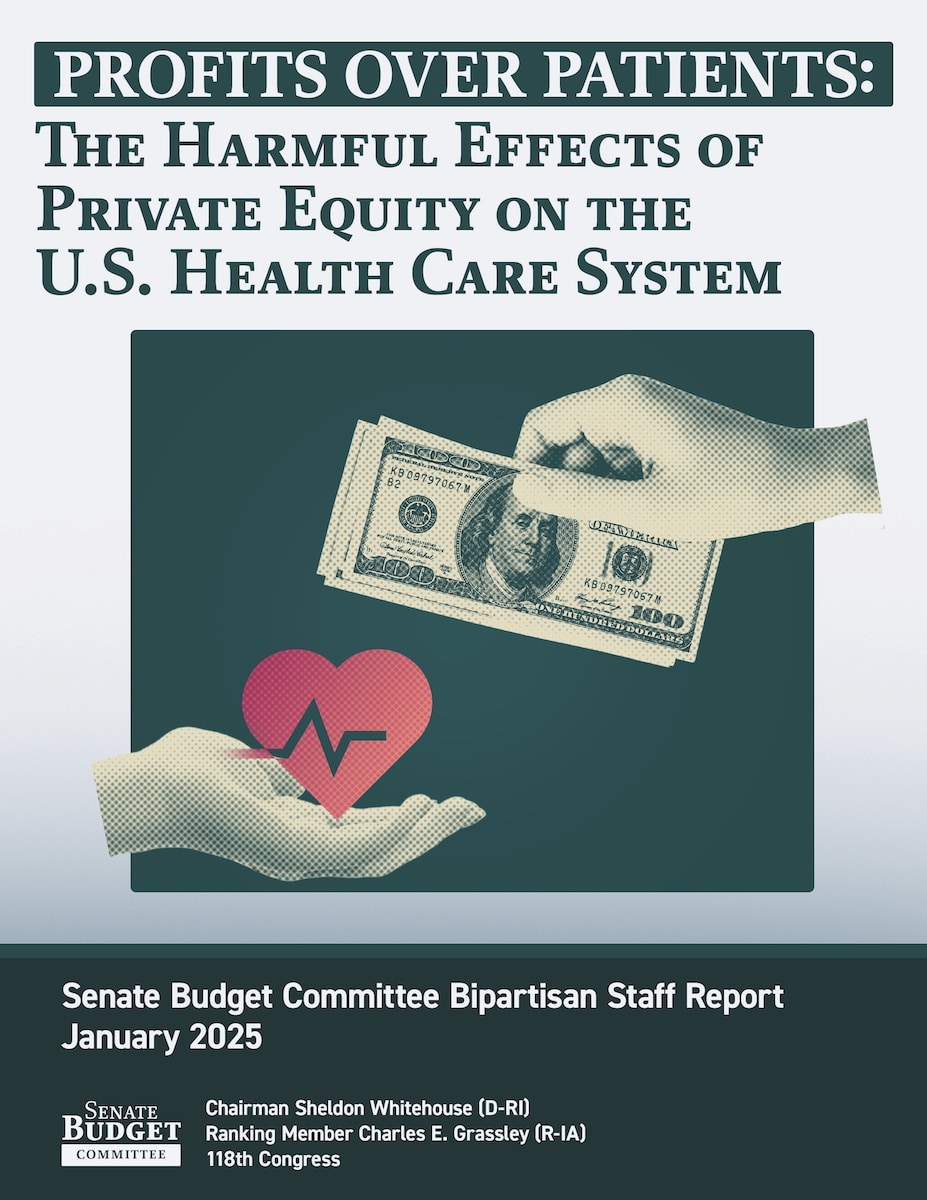
Two separate U.S. Senate investigations into Apollo and Lifepoint are underway, one by the Homeland Security and Governmental Affairs Committee and another by the Budget Committee, which released this month its report, “Profits Over Patients: The Harmful Effects of Private Equity on the U.S. Healthcare System.” Apollo is a key subject of both and Lifepoint is the only hospital group named in both.
The Homeland Security Committee in April 2024 began investigating Apollo and two other major private equity firms that own hospital staffing companies, along with Lifepoint. The inquiry’s focus zeroes in on hospital emergency departments in the U.S., a third of which are overseen, staffed or managed by companies owned by private equity firms, according to a Senate press release. Investigators interviewed more than 40 emergency department physicians, revealing significant concerns related to patient safety and care at ERs funded by private equity and sent inquiry letters to Lifepoint and Apollo in April.
The Senate Budget Committee investigation began in 2023 after an incident at Lifepoint’s Ottumwa Regional Health Center in Iowa. Its Jan. 7 findings also give a brief mention to a sexual assault case in Missoula, which The Pulp covered in an article published Jan. 15, “Community Medical Center named in U.S. Senate investigation’s report.”
In Iowa, police investigating the overdose death of a male nurse practitioner, Devin Michael Caraccio, at Ottumwa Regional discovered video and photographic evidence on Caraccio’s cell phone that he sexually assaulted nine female patients, two under 18, local and national news sources reported. The incidents occurred in 2021 and 2022.
In Missoula, Tyler Hurst, a doctor with Clark Fork Valley Emergency Physicians Group, treated 15 patients he’s accused of sexually assaulting in Community’s emergency department. Hurst pleaded not-guilty to eight counts of rape or sexual assault, six of them felonies, and faces two civil suits. That case is ongoing. Several of his accusers are also pursuing legal action against Community and the physicians group that employed Hurst, and they’re considering action against Apollo, as well, according to Kasodie West, a Billings-based attorney representing several plaintiffs in the case.
In a statement sent to The Pulp, CMC spokesperson Megan Condra said she’s aware of the inclusion of Community Medical in the Senate’s report “and can affirm that it does not reflect our experience with Lifepoint Health,” which she describes as a great partner in quality care.
In regard to the charges against Hurst, Condra provided the following statement: “When Community Medical Center was notified last year of a patient allegation regarding Dr. Tyler Hurst, an independent physician, we immediately removed Dr. Hurst from the facility. We have zero tolerance for inappropriate conduct towards our patients. To the extent the allegations against Dr. Hurst are true, he took advantage of the trust placed in him by our patients, our staff members and our community. When a predator evades policies and procedures and takes advantage of the access they gain in healthcare settings, they should be prosecuted to the fullest extent of the law. We are fully cooperating with those efforts, and our team continues to work closely with all relevant agencies to ensure full accountability.”
The case against Hurst popped up in the Senate budget committee’s report on page 102: “ORHC may not be the only hospital in the Apollo portfolio where patients have been sexually assaulted by a medical provider. At Community Medical Center in Montana, a contracted physician has been accused of sexually assaulting at least 15 female patients while he treated them in the hospital’s ED between 2017 and late 2023.”
Ottumwa, like CMC, was a nonprofit community hospital until it was bought out by RegionalCare and later merged into Lifepoint.
The budget committee report specifically alleges several commitments made when Ottumwa Regional was sold to RegionalCare that weren’t fulfilled by RegionalCare or its successive owners, including Lifepoint Health, but notes some short- and long-term commitments were honored and that recent improvements have been made. The investigators aimed to tie various shortcomings at the hospital to the profits gained by Apollo, which charges Lifepoint $9.2 million annually in management fees.
Lifepoint, via its response, said the company provided $43 million in charity and uncompensated care services over the past five years at Ottumwa. “That commitment … has allowed Ottumwa Regional to remain open in the face of the widespread national closures of rural and regional hospitals,” the statement reads.
Nationwide, nearly 200 rural hospitals have closed in the last two decades, and currently more than 700 are at risk of closing because of serious financial problems, according to a 2024 report from the Center for Healthcare Quality and Payment Reform.
The Pulp asked representatives from both Lifepoint and Apollo for a response to the report and did not receive a response from Apollo.
NBC News previously reported that both companies released statements saying that they were cooperating with the investigations.
Lifepoint spokesperson Emily Serck sent The Pulp a statement.
“Lifepoint is dedicated to providing quality healthcare to people around the country, often serving as the only provider in many of our nation’s rural and underserved communities. … We are proud of the progress we are making at Ottumwa Regional Health Center and of how we have partnered with the hospital team to make broad facility updates, improve quality, support employees, invest in new equipment and technology, and expand local access to services in areas including cardiology, women’s health, behavioral health and imaging. Lifepoint remains steadfast in our commitment to continuous improvement and to providing the best possible care to all the people we serve in Ottumwa and beyond.”
NBC News reported statements from Apollo, including a dispute of the senate committee’s findings. “Apollo Funds have invested billions of dollars in Lifepoint and its predecessor companies, which has been used to improve facilities, expand local healthcare services, recruit care providers, build new centers of care and upgrade technology across Lifepoint’s network,” the Apollo spokesperson said. “As a result of these investments, quality of care at Lifepoint hospitals has improved, according to third party ratings like Leapfrog as well as CMS Star Ratings. … At a time when many rural hospitals are under pressure and at risk of closing, Lifepoint has not had to close a single hospital and is committed to providing critical services in underserved areas.”
Across the country, private equity firms are under the spotlight for their healthcare activities.
“In theory, private investment in health care services could lead to increases in output, reduced prices, and improved quality, but the comments we received — which are consistent with the growing body of research — suggests that the opposite is true.”
In addition to the two U.S. Senate Investigations, the collapse of the private-equity owned Seward Healthcare system inspired U.S. Senators Elizabeth Warren and Edward Markey, Democrats from Massachusetts, to introduce the Corporate Crimes Against Health Care Act last summer. The bill, according to the senators, would increase criminal penalties for executives involved in healthcare transactions that negatively impact care, and it would require transparent reporting of financial transactions.
The U.S. Department of Health and Human Services, the U.S. Department of Justice and the U.S. Federal Trade Commission launched a tri-agency inquiry into corporate healthcare this past spring, with a focus on private equity. The agencies released a report of their findings last week. The report was based in part on a survey of patients and providers.
“In theory, private investment in health care services could lead to increases in output, reduced prices, and improved quality, but the comments we received — which are consistent with the growing body of research — suggests that the opposite is true,” the agencies wrote.
A section of the report — pages 15-17 — is focused on Apollo. Investigators said they received feedback from nearly 20 commenters “regarding this owner’s actions” and that “several commenters complained of staffing cuts and related quality concerns, which they attributed to ownership.”
While senators and watchdog groups like O’Grady’s organization are keeping tabs on Apollo’s acquisitions and financial successes, the profits gained from Lifepoint and hospitals like CMC remain a mystery.
“They really don’t have to report that to the public,” O’Grady said to The Pulp. “For people like us, it’s really hard to parse out exactly how profitable these hospitals are.”
This series was made possible by supporters of this nonprofit Missoula news organization. You can help The Pulp produce more in-depth local journalism by becoming a member for as little as $5/month.