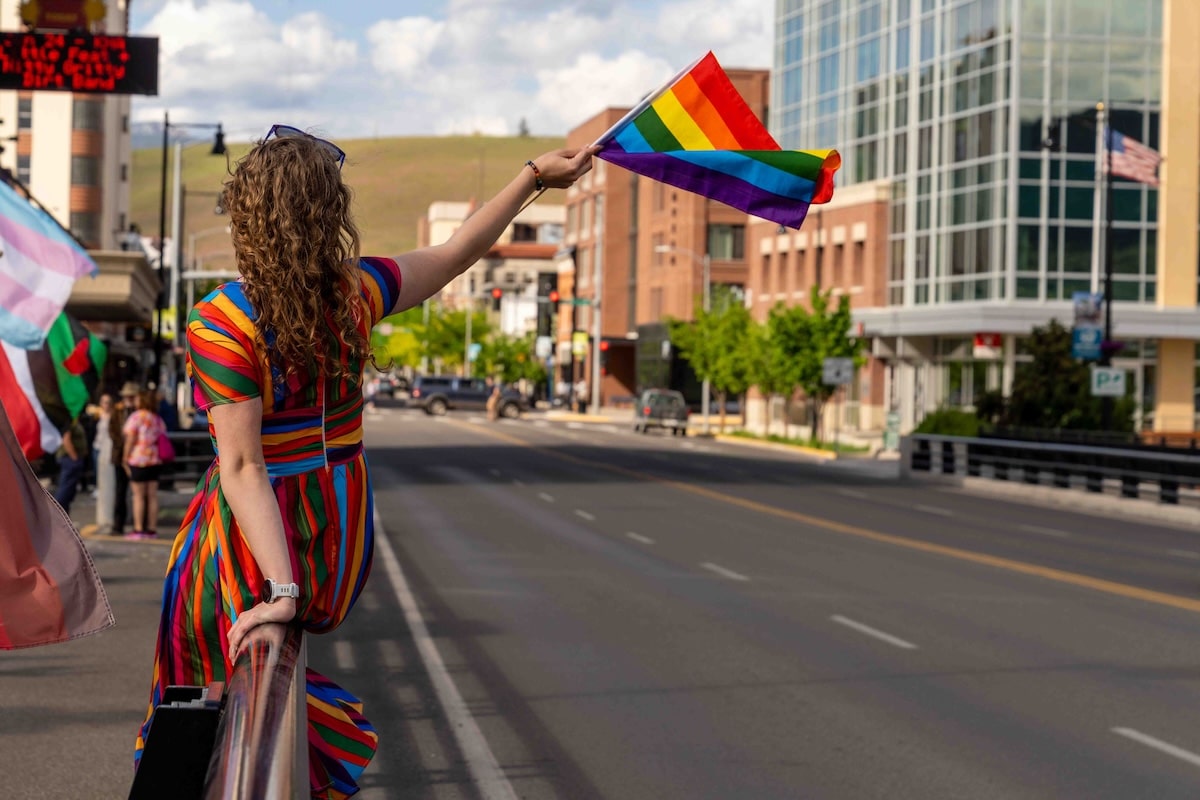
The Missoula City Council on Monday voted to adopt the LGBTQ+ Pride flag as an official flag of the city.
The vote comes in response to state legislation recently signed by Gov. Greg Gianforte that bans the “government-controlled display” of flags “that represent a political viewpoint, including but not limited to flags or banners regarding a political party, race, sexual orientation, gender, or political ideology.”
The new state law, House Bill 819, exempts displays by individual government employees from the ban and also creates carveouts for flags officially associated with governments, sovereign nations and universities; historical flags, like the Betsy Ross or Gadsden flags, and flags honoring law enforcement and the military. The council resolution, carried by council member Jennifer Savage, elevates the Pride flag to an official flag of the city, thus circumventing the new law’s restrictions. (There are no statutory limits on the number of official flags a city can adopt, the resolution notes.)
“If we pass this resolution tonight, we take a stand against a bill that was only meant to silence marginalized groups,” Savage said during the council meeting Monday evening. “We will say we won’t go back to the days before Stonewall. We will say that every kid is safe here, and to those kids just trying to be exactly who they are, we will say, ‘We see you, we really see you.'”
While the text of the resolution doesn’t flaunt its intent to exploit a statutory loophole, it does acknowledge, with a degree of tongue in cheek, an explicit connection to the new state law. HB 819 “establishes a protocol for the display of flags by municipalities,” the resolution notes, and the city “seeks to abide by the intention of Montana State law that states government property should create an inclusive space where everyone feels welcome.”
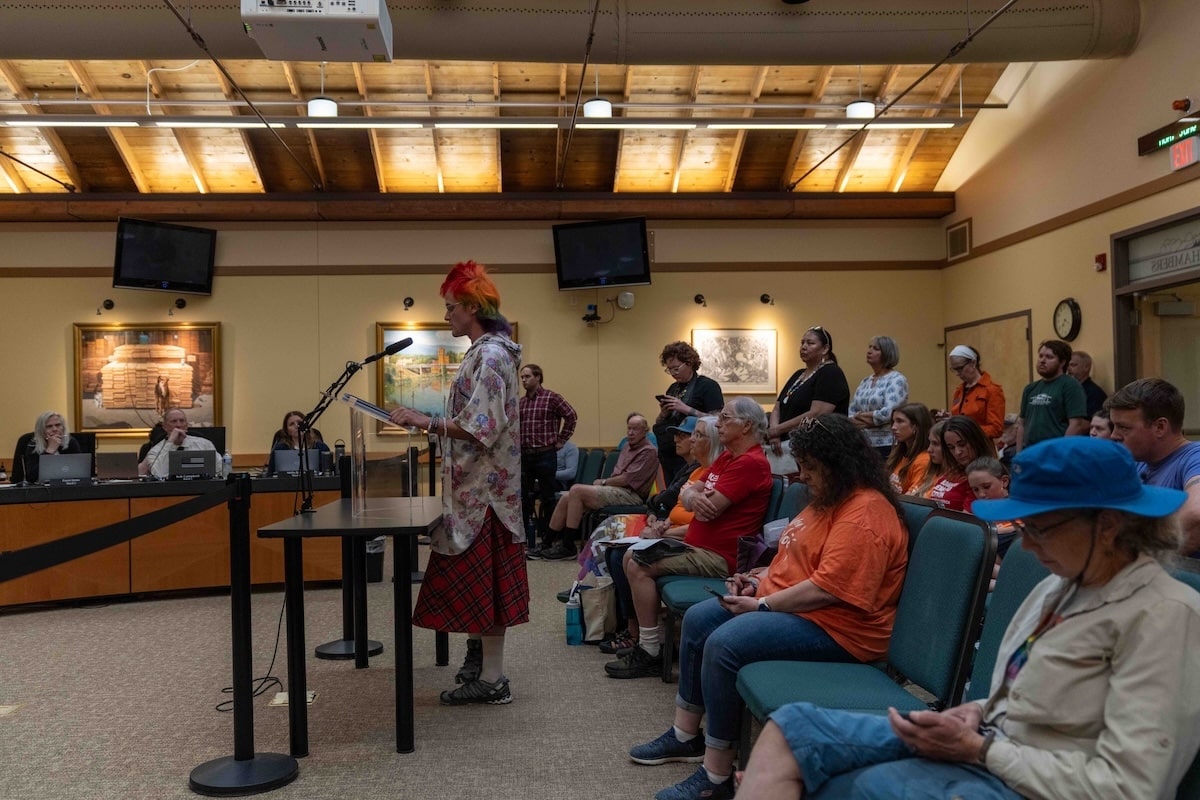
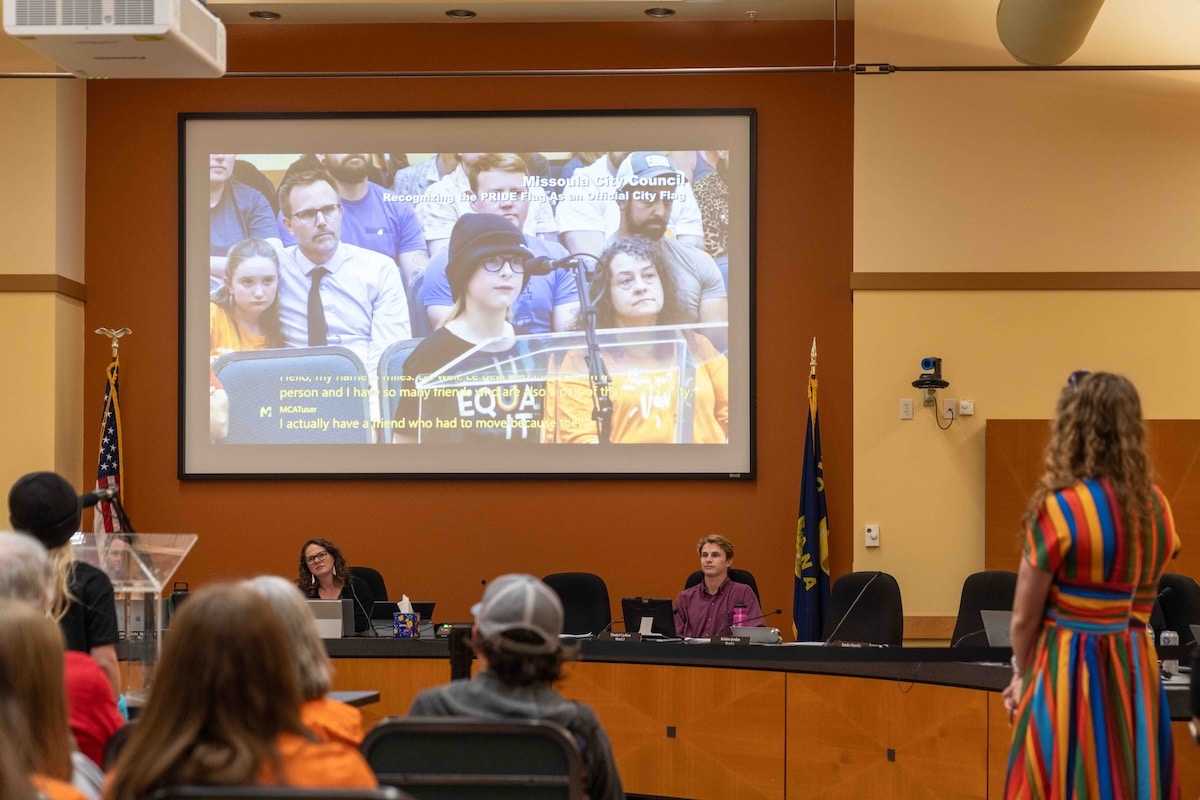
Members of the public who came to comment on the resolution Monday were overwhelmingly in support of the new flag, as was the majority of the council.
“When I walk into a classroom and I see a pride flag, I instantly know that I am safe,” Ash Gregoire, 15, who attends Willard Alternative High School, told the council. “When the teachers were told to take down their pride flags, it was a punch in the gut.”
“When I walk into a classroom and I see a pride flag, I instantly know that I am safe.”
Only Bob Campbell and Sandra Vasecka — typically thought of as the body’s conservative flank, at least by Missoula standards — voted against the proposal.
“Unfortunately, adopting the Pride flag, or any other flag — whether it be the thin blue line flag, the BLM flag, the Gadsden flag, accepting any of those as an official flag — it does choose sides,” Vasecka told her colleagues. “We do need to remain neutral as a local governing body.”
In the lead-up to Monday’s meeting, dozens of Missoulians gathered on Beartracks Bridge to rally in support of the resolution and protest the new state law, before descending on council chambers.
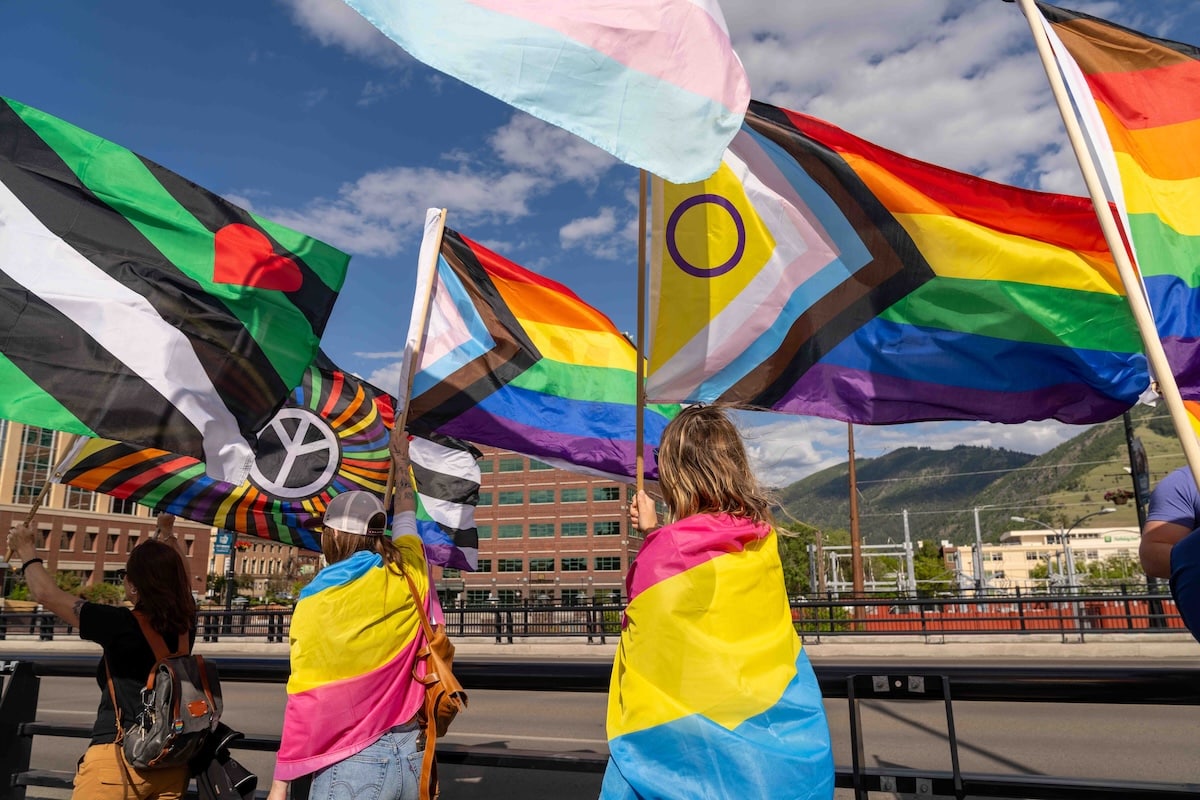
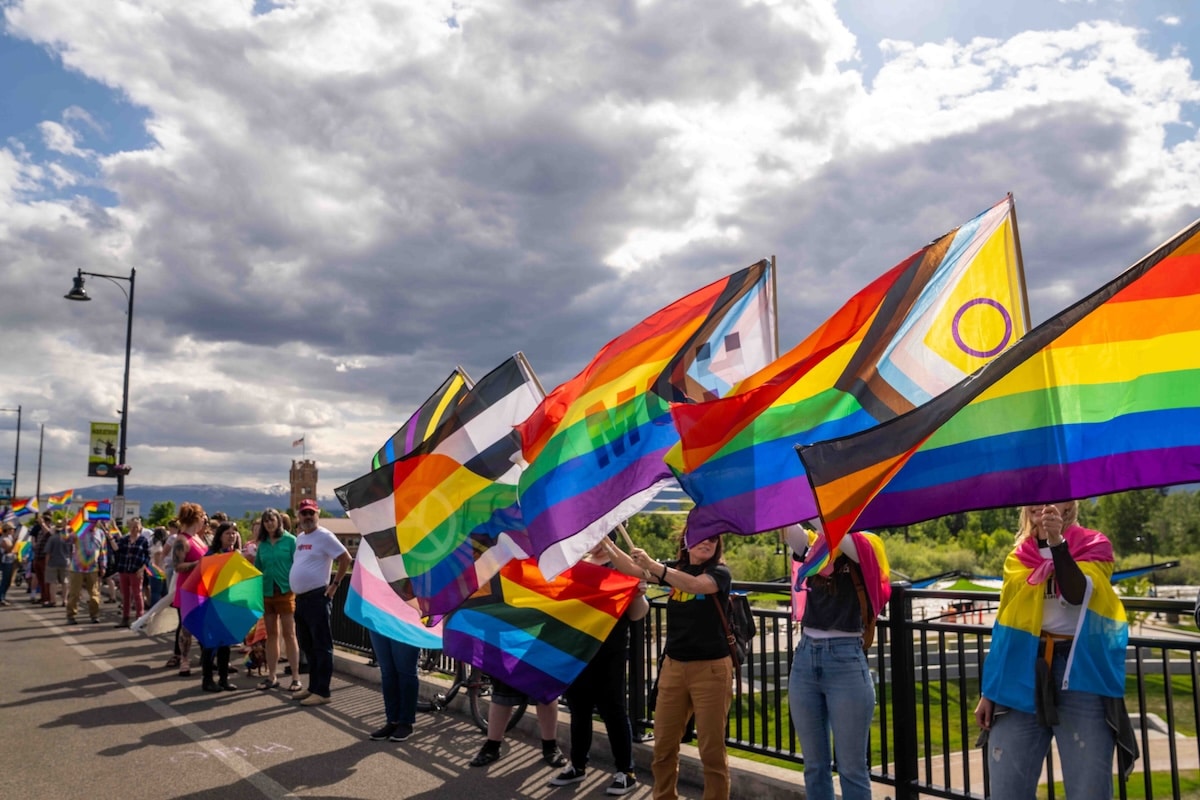
Several Republican-led states have adopted flag laws similar to Montana’s since the beginning of the second Trump administration. In turn, several large, mostly liberal municipalities in those states have adopted ordinances codifying Pride flags and other banners celebrating diversity as official city flags. Missoula joins municipalities like Boise and Salt Lake City in adopting new flags either by council vote or mayoral proclamation in the run up to Pride Month and in response to conservative state legislation.
Sarah Mosquera contributed reporting.
County pleads for promised East Missoula road funds
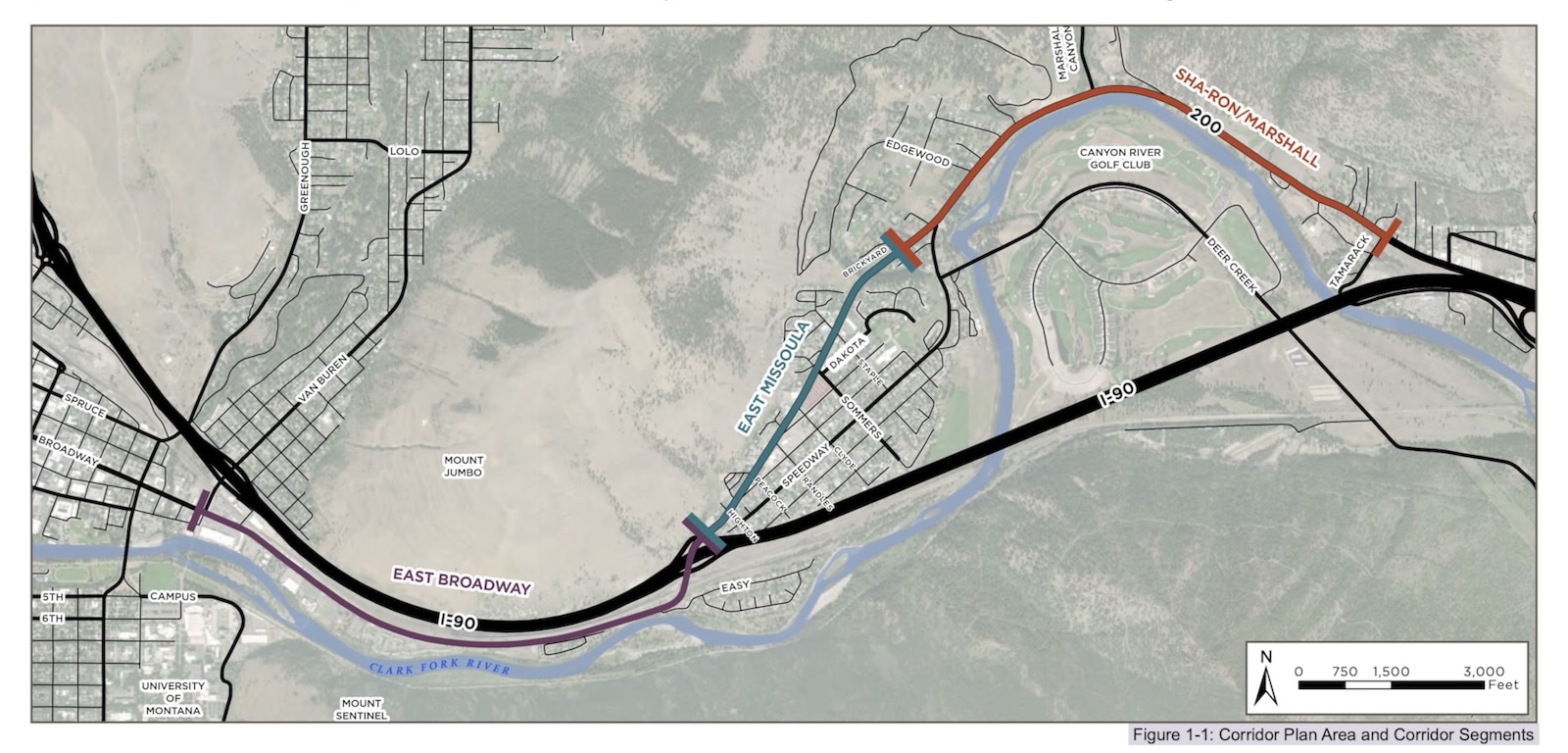
The Missoula County Commission last week penned letters to Montana’s U.S. House and Senate delegation requesting the preservation of federal funding to improve a nearly five-mile stretch of Highway 200 from East Broadway through East Missoula.
Last year, the long-anticipated East Missoula Highway 200 Corridor Plan received a $24 million grant from the federal government as part of the Reconnecting Communities Pilot Grant Program, designed to “reconnect communities harmed by past transportation infrastructure decisions, through community-supported planning activities and capital construction projects that are championed by those communities,” according to the U.S. Department of Transportation.
The project’s primary objective is improving safety, and includes installing or revamping bike lanes, sidewalks, street lights, roundabouts and other physical infrastructure.
But ongoing budget reconciliation negotiations between the White House and Congress jeopardizes the Biden-era funding that supports the Reconnecting Communities Pilot Grant Program. In particular, the House GOP spending bill written to actualize President Donald Trump’s budgetary vision calls for canceling about $2 billion in unspent funds that would otherwise support the Missoula project and similar infrastructure projects across the country.
In their letter, Missoula County commissioners Juanita Vero, Josh Slotnick and Dave Strohmaier asked the federal delegation to advocate for either keeping the funding whole or moving it under a different program that won’t be kiboshed during the budget reconciliation process.
“We thank you for your longstanding support of infrastructure and public safety initiatives in Montana, and we ask for your leadership to ensure this critical program remains viable, either by protecting its funding under current law or relocating the program to a more stable statutory home,” the letter reads. “Without your intervention, years of local investment and progress will be lost.”
The commissioners said the current state of Highway 200 through East Missoula — “a narrow, outdated highway with poor visibility” — has limited connectivity and a poor safety record. The East Missoula Highway 200 Corridor Plan notes six crashes that caused incapacitating injury as well as three fatalities between 2004 and 2014.
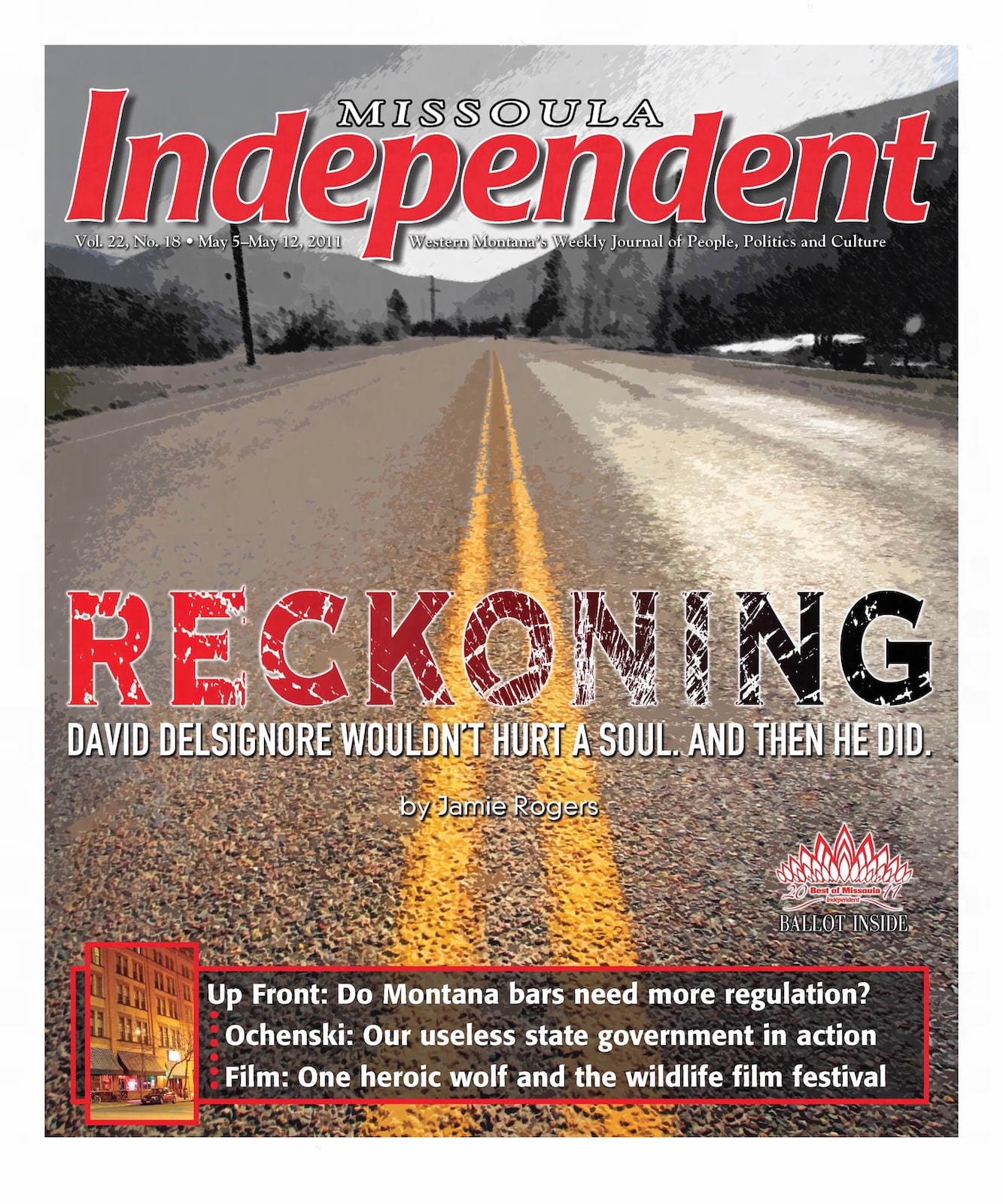
Editor’s note: Two of those fatalities were 14-year-old Ashlee Patenaude and 15-year-old Taylor Cearley, who were struck and killed while walking along East Broadway just before midnight on Dec. 26, 2009. We’re reminded of a particularly memorable Missoula Independent cover story, published in May 2011, about the man behind the wheel, David DelSignore. So we tracked down a PDF of that award-winning piece, “The Reckoning,” by Jamie Rogers. Here it is. —MF
The ledger #️⃣
$8.5 million
The sum of federal and state funding for upgrades to the Garden City Compost facility recently approved by the Missoula City Council. The upgrades are designed to bring the facility into compliance with new state law requiring composting to be done on impervious surfaces like concrete pads, among other improvements. Some members of the public and advocates asked the city to pause the project in order to address PFAS contamination — sometimes called “forever chemicals” — in composting materials. But officials with the city and Garden City Compost have said that contamination from PFAS, used in everything from nonstick pans to waterproof jackets, is more or less unavoidable, and that blocking improvements to the composting facility will not help address contamination.
For more background, check out this Montana PBS investigation that aired in December 2023.
The week ahead 🗓️
- On June 4 at 4:30 p.m., in the Floriculture Building at the Missoula County Fairgrounds, the Missoula Redevelopment Agency is hosting an open house to solicit public feedback on the city’s plans for an eight-acre property north of Montana Rail Link park.
Find a list of all upcoming city meetings here and county meetings here.
The feed 🗞️
5 months in: Missoula’s new camping law leads to dozens of citations, a single conviction (Missoulian)
City, Roseburg rethinking annexation plan because of federal funding uncertainty (Montana Free Press)
Rematch underway for Missoula City Council election, other candidates talk (Missoulian)
Nonprofits plant ‘green infrastructure’ in Missoula as storm recovery continues (MTPR)
As hot and dry conditions take shape in Montana, officials predict ‘critical’ 2025 wildland fire season (Flathead Beacon)
Lacking federal oversight, attorneys warn private property in Glacier Park remains ‘open to unrestricted development’ (Flathead Beacon)
‘Slap in the face’: Federal cuts halt Indian boarding school digitization effort (Montana Free Press)