Photos by John Stember
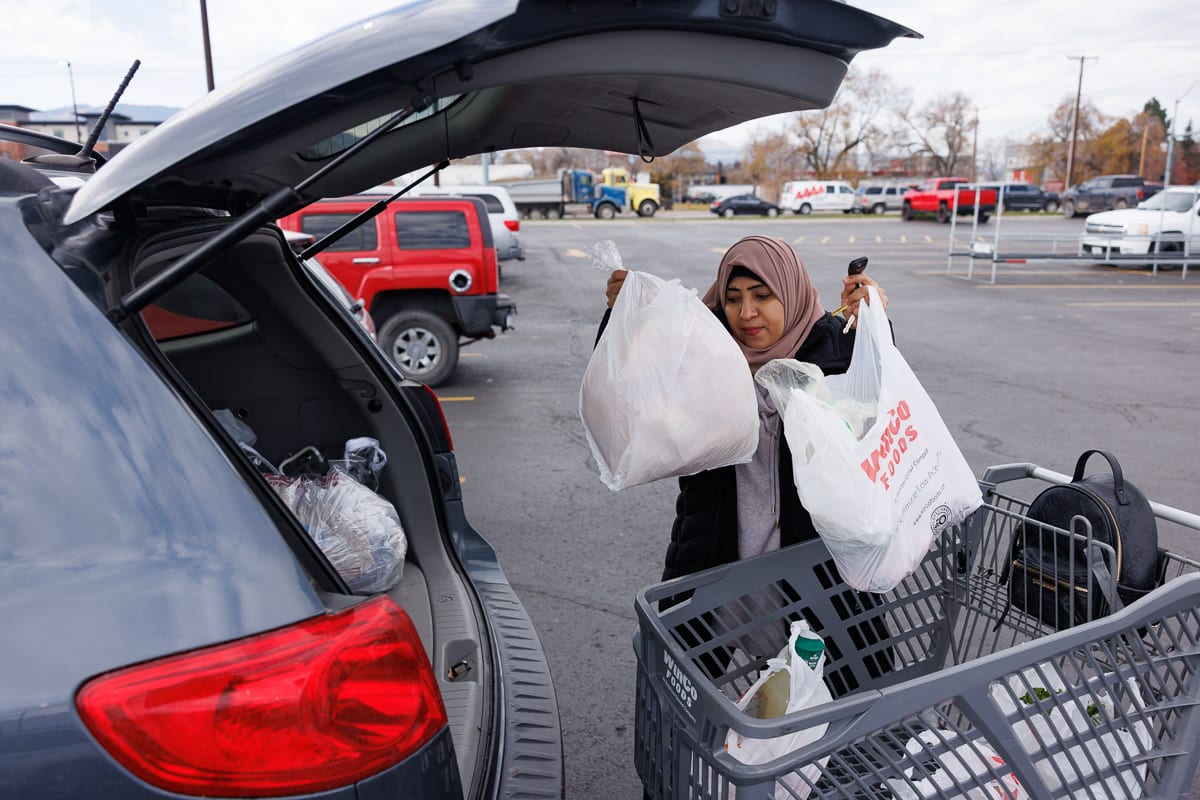
When Abeer Naji and her husband arrived in Missoula in 2023, they didn’t have much. Clothes, some headscarves, $50 and a beautiful, timeworn silver watch Naji received as a gift from a friend in her home country of Yemen. That watch had traveled with her for years and across multiple countries as she and her family sought safety and permanence, eventually finding themselves in the snowy, welcoming corner of the Northern Rockies.
As a newly resettled refugee from a small war-torn country on the Arabian Sea, Naji relied heavily on Medicaid and the Supplemental Nutrition Assistance Program, colloquially known as SNAP — federal benefits made legally available to refugees and asylum seekers alongside the millions of native and naturalized U.S. citizens who rely on them. Now a lawful permanent resident, or green card holder, Naji continues to depend on those supports to complement her meager retail wages and help her care for a husband who faces significant health issues. The freedom to no longer worry about such essentials has allowed Naji to build a reputation in Missoula as an advocate and informal advisor for fellow refugees, and as a consummate gifter of food and homebrewed chai among the staff of Soft Landing, the local resettlement nonprofit that helped her begin her life here.
“Like I feel when people give to me, I need people to feel when I give to them,” Naji told The Pulp in a recent interview. “I need to see the happiness here.”
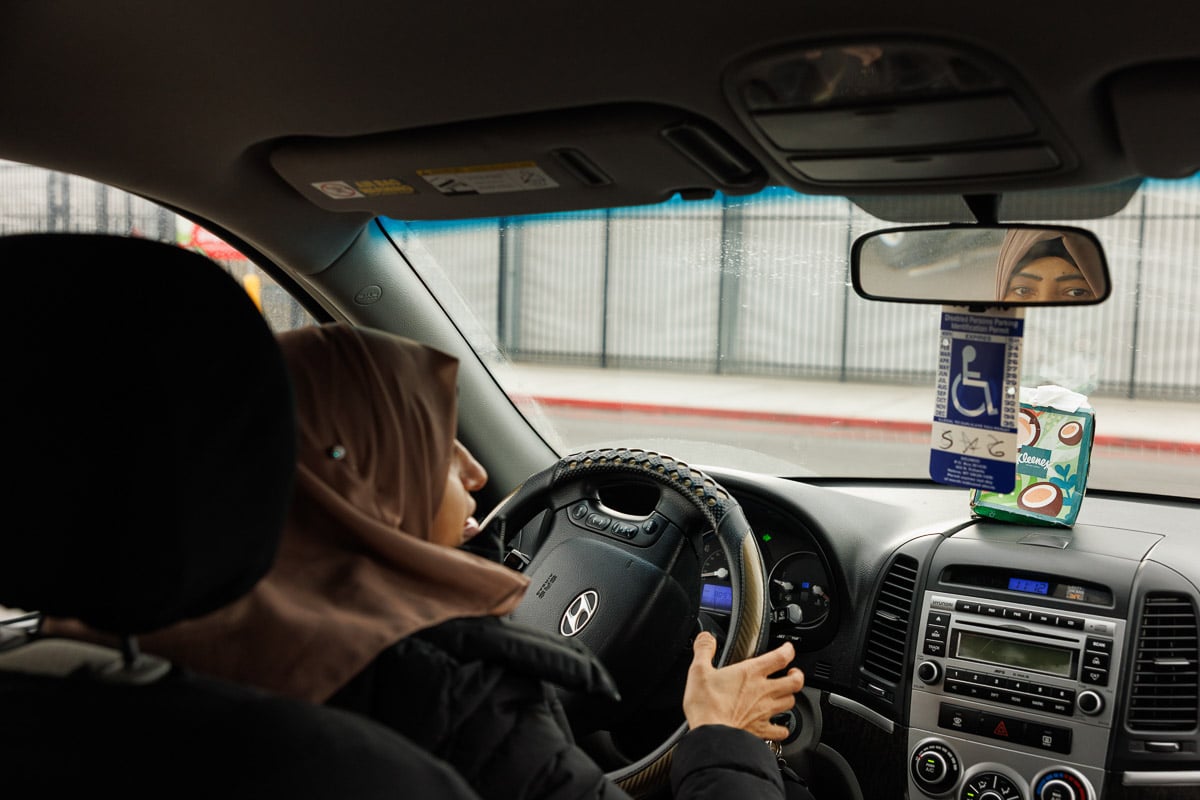

But changes to food and health care benefits approved by the Trump administration this summer have Naji feeling uncertain about her family’s security and unsupported by her adopted country. As of Nov. 1, refugees are no longer eligible for the federally funded SNAP benefits due to a change included in the 2025 congressional spending package that President Donald Trump dubbed the “Big Beautiful Bill.”
In theory, Naji’s status as a lawful permanent resident should protect her from that eligibility change. But guidance sent on October 31 by the U.S. Department of Agriculture to state agencies that administer SNAP are sowing confusion and fear — even among organizations that specialize in helping resettled families navigate the system. Last week, attorneys general in 20 states sent a letter to the USDA, calling the guidance misleading and demanding the agency rectifies it. In the letter, the state AGs argue that the USDA’s instructions incorrectly imply that refugees and other humanitarian entrants with permanent residency status are ineligible for SNAP, saying that actually contradicts the Big Beautiful Bill and creates confusion for states trying to enact it.
The 20 state attorneys general also objected to the timeline. Although state agencies technically had from July 4 — when Trump’s bill passed — until Nov. 1 to notify refugees and others losing benefits, the USDA didn’t issue its guidance to state agencies until Oct. 31, just one day before the change took effect. The 20 state AGs argued that the USDA’s late guidance was crucial in how states decided who would lose benefits, and that federal rules require 120 days for transition after a policy is issued.
Montana Attorney General Austin Knudsen was not among those signatories, and his office did not immediately respond to an email request for comment on H.R. 1’s potential impact on refugees in the state.
The recent interruption to SNAP stemming from the government shutdown was scary enough. Now, depending on their legal status or simply their resident state’s interpretation of federal guidelines, refugees and asylum seekers across the country could see a permanent loss of assistance in the weeks and months to come.
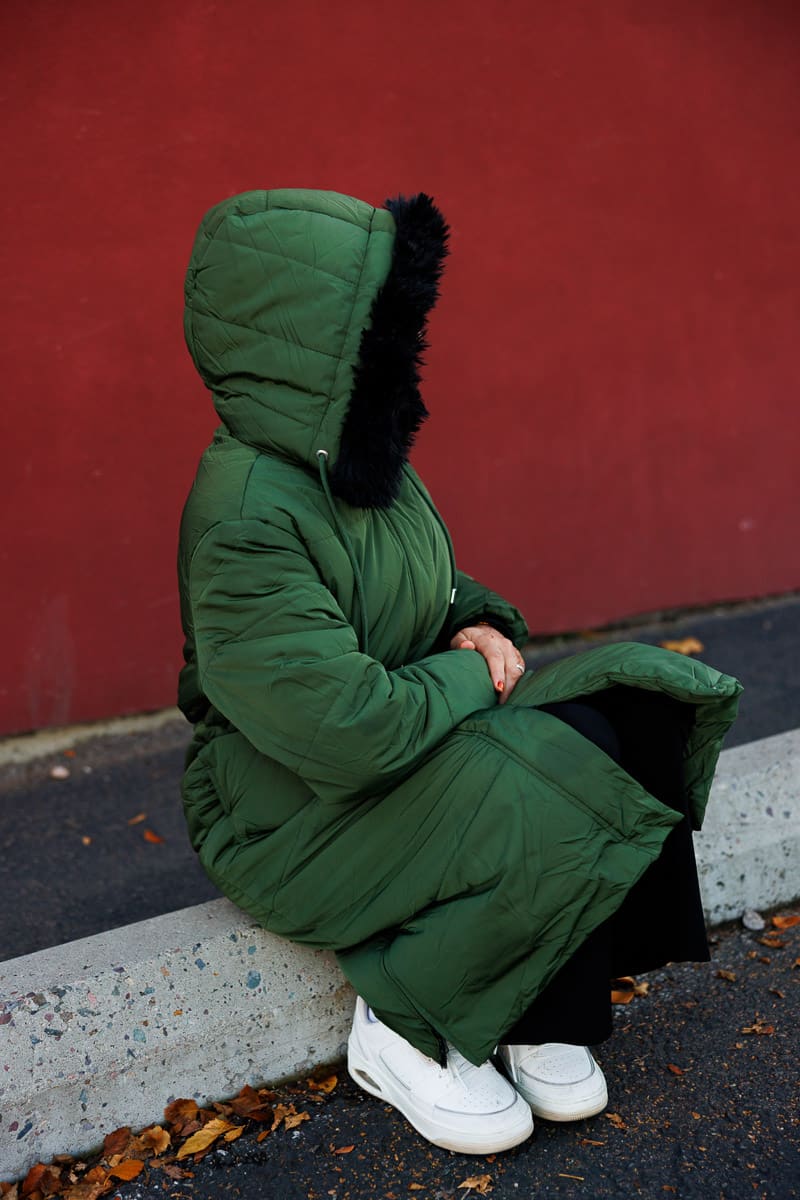

“Coming to America was a dream. I am not safe here now.”
The Congressional Budget Office expects that about 90,000 noncitizens in a given month who would have qualified for SNAP benefits will no longer be eligible. According to the International Rescue Committee, all refugees resettled in Montana rely on SNAP benefits when they first arrive, and roughly three quarters continue to access the program for years afterward due to low wages and the state’s high cost of living. The IRC is a global humanitarian nonprofit that has helped nearly 1,000 refugees start to establish themselves in Montana since 2016.
“These new eligibility restrictions will deepen hardship for refugee families in the US, who are finding work, learning English and rebuilding their lives,” Margaret Hinson, the IRC’s site director for Missoula and Spokane, told The Pulp via email. Hinson added the change also removes eligibility for survivors of human trafficking as well as individuals who have been granted legal asylum in the United States.
H.R. 1 also included revisions to Medicaid that similarly render refugees and asylees ineligible for coverage beginning in October 2026.
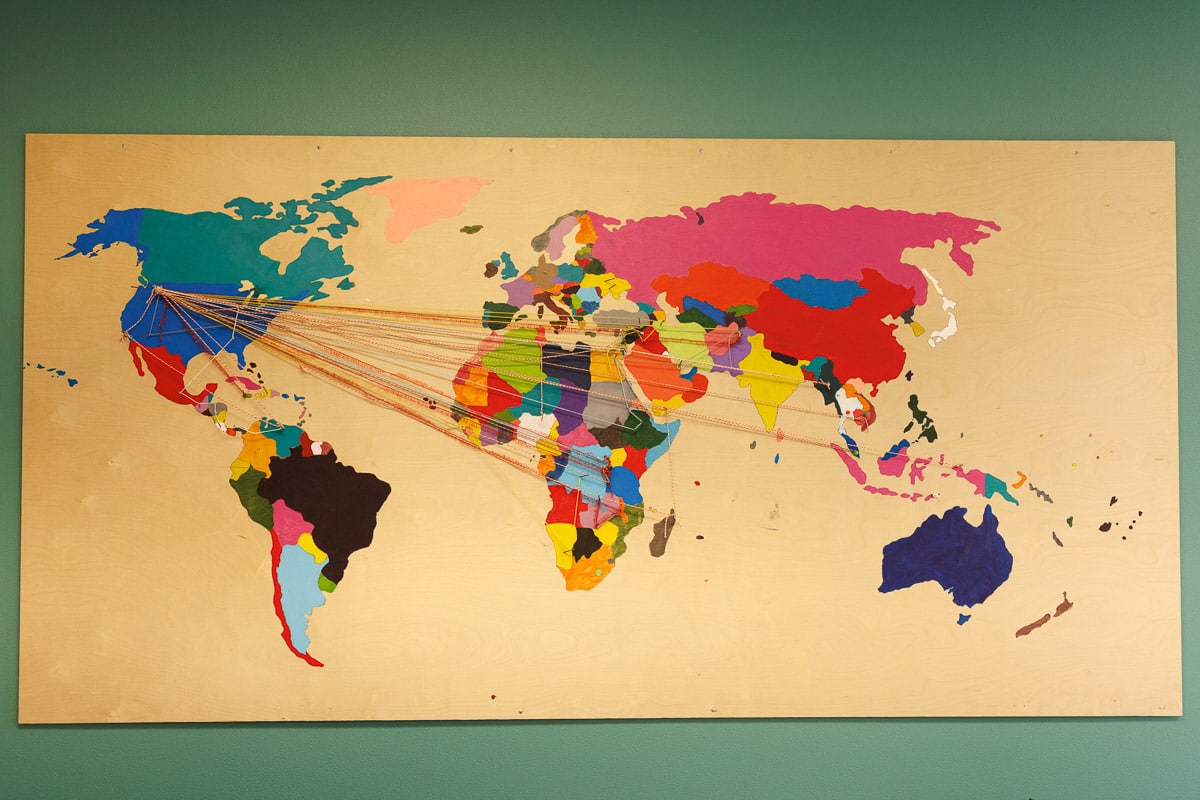
Naji and others in the resettlement community have walked a hard road to Missoula. They’ve fled wars, political persecution and humanitarian crises in Yemen, Afghanistan, Eritrea and the Democratic Republic of the Congo. Countries like Uganda, Madagascar and Egypt often served as temporary stops as they sought lasting refuge. They’ve traveled thousands of miles by plane and hundreds more by bus to western Montana, greeted by harsh winter conditions and their first sight of snow. Through it all, they’ve dreamt of safety.
Even that hope is fading. In recent interviews with The Pulp, four resettled refugees in Missoula, all speaking on condition of anonymity due to fears for themselves or family abroad, described a stark emotional shift over the past year.
Dreams of houses, college and career advancement have shrunk to basic needs: shelter, affordable health care, a kind government. Even refugees who are now naturalized citizens say they feel fear — for themselves and others in Missoula’s resettlement community.
“When you’re scared, you don’t have a dream,” said one naturalized refugee interviewed for this story. “Everything is shut down in your mind.”

The Montana Department of Public Health and Human Services, which administers the state’s SNAP and Medicaid benefits, confirmed that the eligibility change took effect in October. Spokesman Jon Ebelt told The Pulp via email that DPHHS formally notified refugees, asylees and humanitarian parolees that same month that they will no longer be eligible for Medicaid as of Oct. 1, 2026, with exceptions for U.S. citizens, green card holders and entrants from Haiti, Cuba and certain Pacific islands. DPHHS did not immediately respond to a request for data on how many resettled individuals in Montana will lose coverage, or for clarification on its interpretation of USDA guidance related to lawful permanent residents.
“When you’re scared, you don’t have a dream. Everything is shut down in your mind.”
Those cuts come as some refugees working in Missoula’s child care sector are already reeling from the loss of state-sponsored assistance for their own child care costs. The Trump administration’s termination of scores of grants and contracts resulted in significant funding cuts for the IRC, reducing its local cultural orientation, job placement and legal services for refugees. Hinson said the Missoula IRC office shrank from 23 employees to 10 since November 2024, leading to longer waits and delayed responses for the resettlement community.
Despite funding cuts, the IRC continues working with community partners including Soft Landing, the Missoula Food Bank and Missoula County Public Schools to respond to the situation. MCPS spokesperson Jennifer Savage said about 180 children from refugee families enrolled this fall, though not all receive SNAP benefits. Savage says MCPS has reached out to the state health department for clarity on how the federal changes will impact refugees.

At the Missoula Food Bank, Program Application Coordinator Tate Besser said changes to SNAP under H.R. 1 restrict access to food assistance but may also discourage refugees and others from engaging with the program in the first place.
“We were helping about 25 people [apply for SNAP] per month from January to June, and then July through this month, November, I believe it’s at like 15 to 17 per month,” Besser said. “That’s a pretty significant drop-off since the bill was passed.”
Soft Landing Executive Director Mary Poole said questions continue to swirl about who, exactly, will be impacted — and when. And whether families with children will continue to qualify. The situation is especially distressing for those who come from more reciprocity-centric cultures, Poole noted. People like Naji, for whom giving is a natural impulse.
“It’s very confusing for someone who is coming from this type of culture where they give and the thing that is given to them is now taken away,” she said.