Some documentaries tell stories that don’t end when the credits roll. These stories are made for darkened theaters, sure, but they’re also built to live beyond the screen — in classrooms and community centers, on picket lines and at protests, in public libraries and parks and, sometimes, in ways that change laws. Or maybe change hearts and minds, then laws. And for those who attend the Big Sky Documentary Film Festival, the stories spill into late-night conversations on sidewalks or in bars over beers and burgers.
Films in the festival’s Activism & Justice category are examples of storytelling that can — or already have — changed things. Maybe not the world, but a place or a group of people, and the mindsets and policies that govern them.
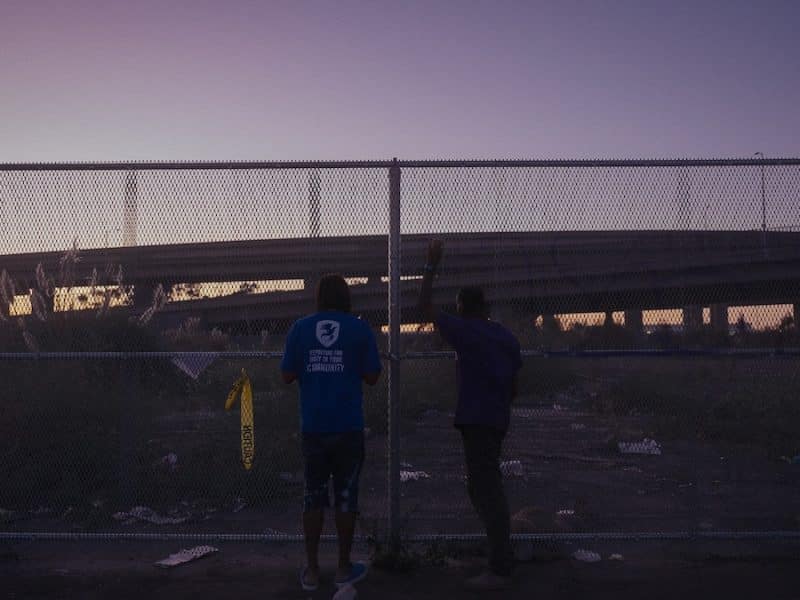
Take Wood Street, which follows members of Oakland, California’s largest unhoused encampment — particularly John and LaMonté — as they organize against eviction and fight to stay in the community they built. Rather than relying on outside “experts,” the film centers the lived experience of unhoused people themselves, showing that those most impacted are also the truest authorities on the issues. The filmmakers have used screenings and conversations with the community as spaces for dialogue and organizing, inviting audiences to reckon with how housing, policy, and dignity intersect in real time.
And then there’s Steal this Story, Please!, which is a portrait of Amy Goodman, the investigative journalist, author, and host/executive producer of “Democracy Now!” It’s about Goodman’s reporting in the field and from the newsroom, but it’s also about journalism in general. [Editor’s note, Feb. 13: This story originally stated that Goodman would be attending the festival. She will not be attending after all, according to Big Sky’s programming director.]
To prep you for BSDFF’s 23rd year, The Pulp watched a bunch of films — you can read all 18 reviews below. And we just scratched the surface.
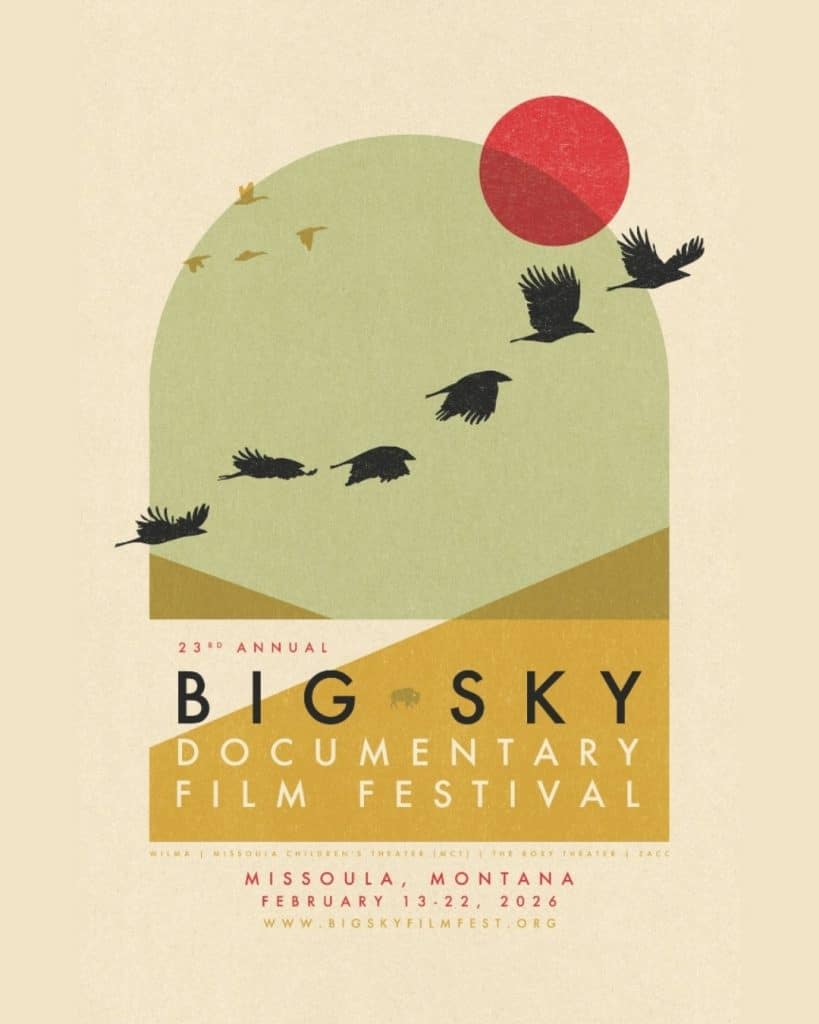
Maybe you’ll just catch one screening or maybe you’ll skip work to see a dozen — a great way to “quiet quit” your job. In any case, the festival is a good excuse to ditch the anti-social habit of late-night couch scrolling (you heard me) and head downtown. For two weeks, Missoula becomes a nonfiction crossroads: locals and more than 200 visiting filmmakers and industry guests filling theaters, coffee shops, and sidewalks, digging into films that are urgent, strange, funny, devastating, or D) all of the above.
There are music-centered stories like Summer Tour, where the last run of Dead & Co. becomes a lens on fandom and aging. There’s John Wilson’s first feature, History of Concrete, born from a creative crisis and a Hallmark screenwriting class, transforming something as inert as building material into a deadpan epic. Threaded throughout the festival are Indigenous works like Siksikakowan: The Blackfoot Man and Ni-Naadamaadiz: Red Power Rising. There’s a short about a hotline for baking emergencies. See? It’s got everything.
How to Fest at BSDFF
🗓️ Fri., Feb. 13 — Sun., Feb. 22
🎞️ Selections
⏰ Schedule
🎟️ Tickets & Passes
📍 Locations
The Wilma Theater • ZACC • The Roxy Theater • Missoula Children’s Theater
ℹ️ Festival HQ
ZACC, 216 W. Main St. — pick up passes, ask questions and grab merch.
Big Sky is also unusually candid about the ecosystem surrounding these films. Some of the most fascinating events don’t happen in theaters at all. DocShop, hosted at the Missoula Public Library, might sound like inside baseball, but its panels on AI, ethics, and the tricky economics of getting a film seen are fascinating for anyone. You get to hear about the legal knots, the funding scrambles, and the moral gray areas behind the films, which makes the work on screen feel even more remarkable.
Then there’s Big Sky Pitch, which turns a day at the Missoula Children’s Theatre into a live proving ground. Filmmakers get 10 minutes to sell works-in-progress to commissioning editors and distributors. It feels like you’ve slipped into a room you’re not usually invited into — except you are! And the payoff is real: many of those pitched projects return to Missoula in later years as finished films.
If you’ve got an all-access pass, there are parties. But this year, attending the awards screening also gets you into the reception afterward for free, which is a nice little bonus.
A few tips: plan carefully, reserve your seats ahead of time, and don’t just go to the films everyone, including us, is talking about. Some of the festival’s quietest, least-anticipated screenings — the sleepers — will stay with you the longest.
🎞️
Jump to: The Bend In The River • The Butterfly Lab • How to Kill a Mermaid • Big Sky Falling • Seventeen • Inaccessible • Seized • Dear Mae • Montana Grind • Boys of Summer • Hyodo’s Paradise • Gatorville • Barbara Forever • Stalin Boys • A Derailment • Still Standing • Crime and Parody • Ghost Elephants
The Bend In The River
The first scene of The Bend In The River recalls an Eden or utopia. We see a group of beautiful young people, naked and unashamed, in love with the world, delighting in the glory of nature. It’s 1978 and a gaggle of 20-something river guides are floating down the Colorado together. It looks like a trip of a lifetime — though this group of tanned, bright-eyed, full-bushed youth has absolutely no idea.

“We had nothing but time,” one woman comments in retrospect, watching the footage.
About 20 years after the golden-lit river trip, in 2002, filmmaker Robb Moss, who was on the first trip as an amateur cameraman, released a film called The Same River Twice, revisiting the group of friends in their late 40s and early 50s, deep in the throes of middle age. Carefree had been starkly replaced with careful, as each person navigated children, family, marriage, betrayal, aging, disease, and falling out of love. The film offered an eye-opening look at becoming an adult — and losing the innocence of youth.
Now we are in 2026, and Moss has returned a third time to his group of river friends. They’re now in their late 60s and early 70s, with grown children and most of their lives behind them. What have they learned about life? What is important to them now, after all this time? And what happens when they return to float the river again — a river that has changed as much as they have?
There’s no better metaphor for life than a river, and I’m not sure I’ve ever seen a better documentary about the big picture of life before. To see snapshots of this group at 25, 45, and 65 (especially when I’m turning 45 in a few weeks) was like a huge zooming out of perspective. It took me from worrying about whether my kids’ lunches were packed and in their backpacks to wondering if the way I’m living is true to my values and beliefs. It pushed me to really think about how I can hold on to what matters — relationships, creativity, nature — even against the flow of modern life so garbled by materialism, greed, ego, and societal norms.
We meet one couple whose idyllic love story on the river turns into an affair-riddled nightmare in the late ’90s. Now, in the present day, they live across the street from each other, and she’s his campaign manager in a local election. We meet a woman who has somehow managed to balance her happiness and her connection to the natural world alongside her life and career — all she had to do was quit her job as a geneticist and go her own way.
There’s also Jimbo, the golden boy of the original trip, who never left the hippie lifestyle, who never married or had children, who chose to Peter Pan his way through life as his friends descended into the buzz of the conventional world. Where is Jim now, at 70, and did he game the system? Or is finding the right path more complicated than just never leaving the woods? —Sarah Aswell
Screening at the Wilma on Fri., Feb. 13 at 7 p.m.
Director: Robb Moss
83 minutes
Montana Premiere
The Butterfly Lab
If you’re in the mood for some beautiful, meditative caterpillar footage, I’ve got the doc short for you. But lest you think this one got lost on its way to the International Wildlife Film Festival, The Butterfly Lab, directed by Sean Grasso, is as much about the metamorphosing of two women inside the Coffee Creek Correctional Facility in Wilsonville, Oregon, as it is about the endangered Taylor’s checkerspots they’re helping.
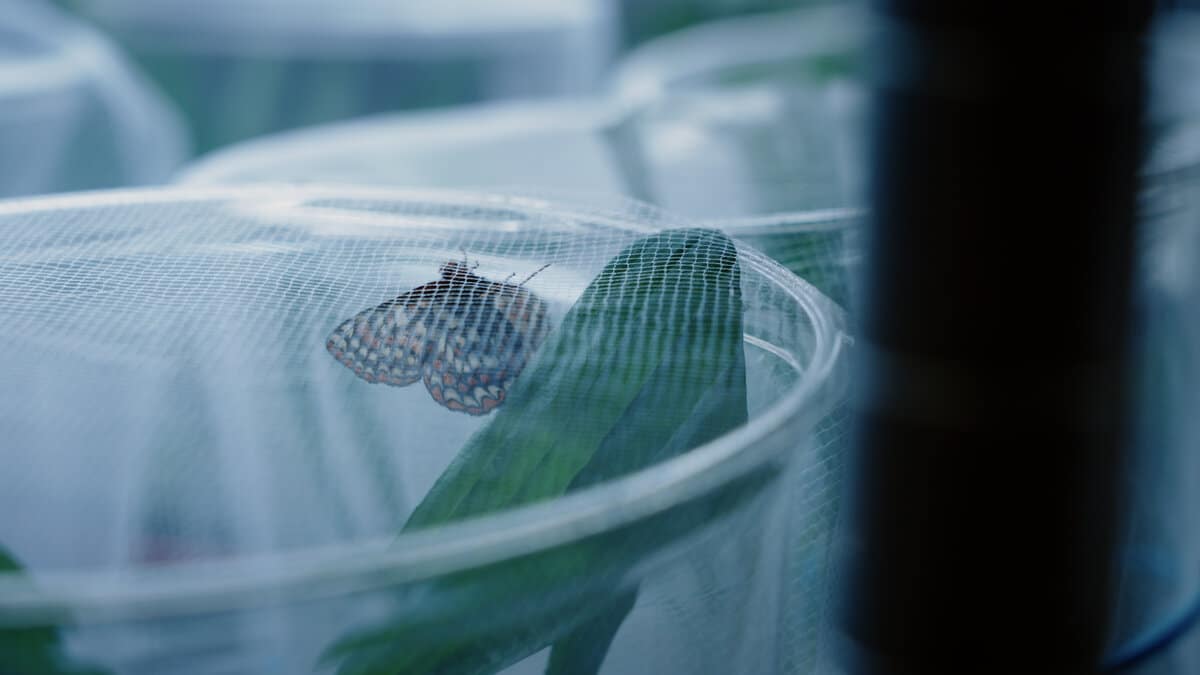
Carolyn was the first person to work in the lab. Now she works outside of it, tending the plants needed for its controlled habitat. Melissa’s inside, carefully monitoring the egg-laying and the caterpillar-crawling. They have similar views about what the program is doing and has done for them. Melissa says, “It makes me feel like more of a human.” But there’s a difference between them. After serving 25 years, Carolyn’s about to walk out or, really, dance out, which is what she said she’d do if she was able.
A final-ish scene in this 18-minute film has Carolyn walking up a grassy hill in Philomath. She’s in the Beazell Memorial Forest not far from Corvallis, one of the last natural habitats for the Taylor’s checkerspots, an orange-brown beauty native to prairies.
Seeing the vibrancy of butterflies not handled in the lab isn’t lost on her and her new freedom. Meanwhile, Melissa, back at the lab, is in year 14 of her sentence. She’s not likely to be released until 2034. But at least she has her work with the eggs and the caterpillars, right? Get pumped for a twist at the end you maybe saw coming and yet still can’t believe. —Jule Banville
Screening at the ZACC on Sat., Feb. 14, at 2 p.m.; Sun., Feb. 15, at 8 p.m.; and Wed., Feb. 18, at 4 p.m.
Director: Sean Grasso
18 minutes
World Premiere
How to Kill a Mermaid: The Linnea Mills Story
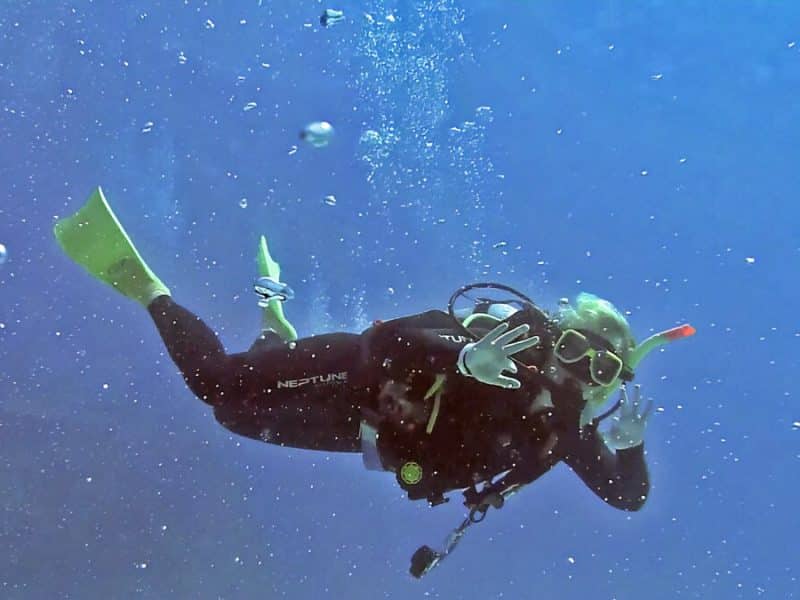
How to Kill a Mermaid is a deeply moving documentary about Linnea Mills, an 18-year-old from Missoula whose death during a scuba diving class exposed a chain of preventable mistakes and systemic failures. Over the course of three years, Missoula-based filmmaker Damon Ristau pieced together the story about the November day in 2020, at Glacier National Park’s Lake McDonald, when Mills went under water and didn’t come up despite there being a certified instructor nearby. Working with family home video, Go-Pro camera footage, archival news video, legal documents, and other records, Risatu is able to clearly lay out what happened.
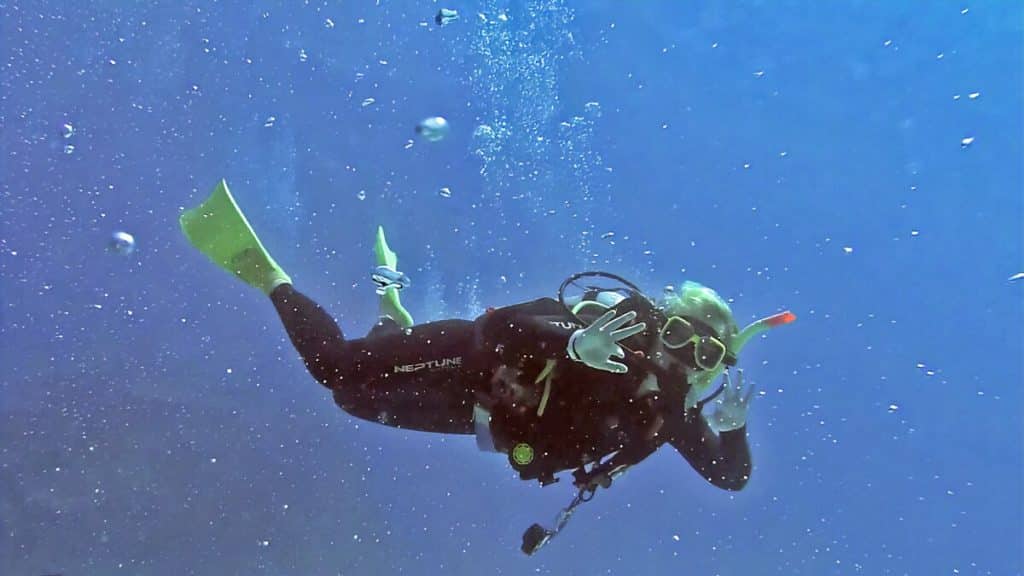
Ristau has worked on plenty of projects, including his own docs — like The Bug, about the history of the Volkswagen Bug. But How to Kill a Mermaid is a much more emotionally complex film, partly because it’s inherently tragic and maddening, but also because it’s not just a story for Ristau — Linnea Mills was best friends with his daughter, and a familiar face in their lives. So, it’s personal. And, in this case, that connection comes through at a level of care and warmth you won’t find in police reports and newscasts.
The result is a meticulous investigative film that’s also a tribute to Linnea’s life. It doesn’t flinch at the heart-wrenching stuff but also doesn’t exploit anyone’s grief. How to Kill a Mermaid is a film that deftly traces the grief of a family while grappling with the broader accountability of an industry that does what capitalism does: treats people like numbers. And you may think you know what kind of film this is – how heavy and dark it might be. It is. And it will outrage you. But without giving too much away — go. Stay with it. Because Linnea’s gone, but her brother is still here, and what he does in the film after losing his sister makes everything about this story remarkable. —Erika Fredrickson
Read our Q&A with Damon Ristau about making the film.
Screening at the Wilma on Sat., Feb. 14, at 3:30 p.m.
Director: Damon Ristau
135 minutes
World Premiere
Big Sky Falling
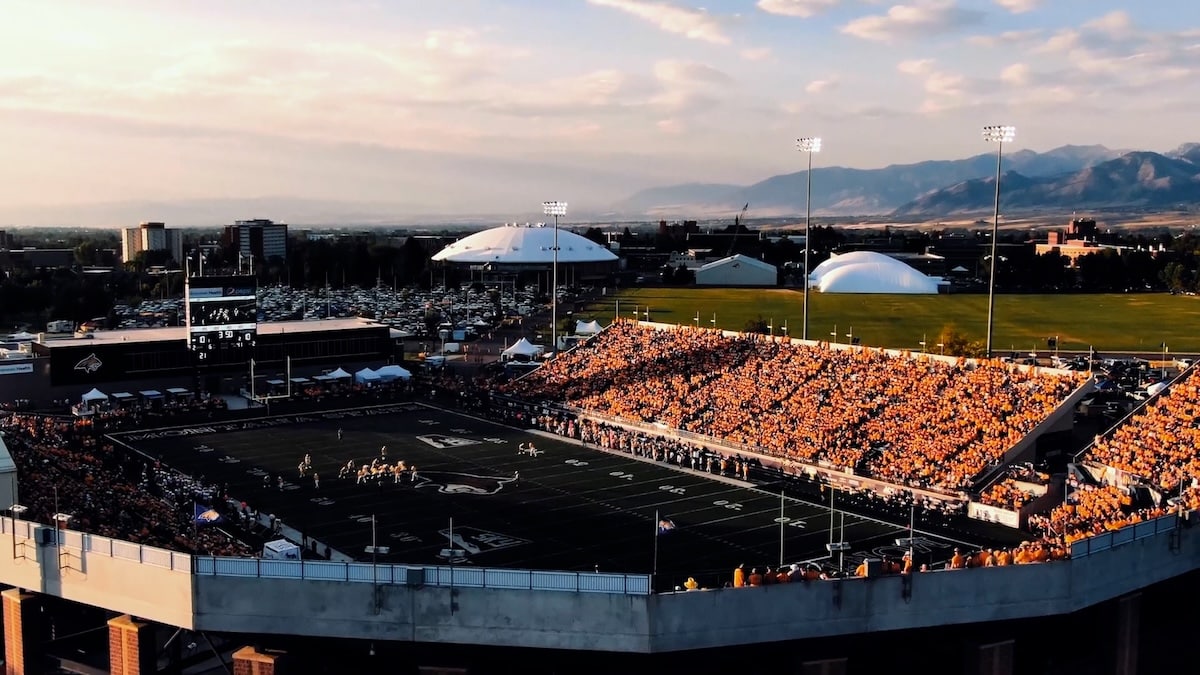
Big Sky Falling is a new documentary reexamining a scandal that rocked Montana State University and Bobcat Athletics in 2006, which included a cocaine-dealing ring and the conviction of two former MSU athletes in a homicide. To this day, it’s unclear who exactly pulled the trigger that killed Jason Wright in a drug robbery gone wrong. Big Sky Falling doesn’t linger on the mystery, or the cocaine-fueled orgies in Bozeman party houses. The filmmakers seem more interested in a nuanced, compassionate portrayal of the convicted men at the center of the story, and the way two young, underprivileged black men were treated in a white community. (As a side note, the filmmakers received impressive access inside two prisons — it’s rare to see cameras brought to the other side of the glass.)
Big Sky Falling’s most interesting and challenging subject is Branden Miller, who pleaded guilty to involvement in Wright’s death. People who knew him attest that he was a good person at heart who did a terrible and stupid thing. Gallatin County investigators believe he’s a killer who doesn’t deserve redemption. It’s a complicated, thought-provoking view. Beyond the more striking contrasts — black athletes in an outwardly white, folksy Montana college town — this story is a lot like any drug crime story I’ve encountered. Most people caught in horrible crimes arrive at that moment after years of being failed by everyone and everything around them, and even they can’t fully explain just what happened. I’d recommend Big Sky Falling to anyone drawn to true crime stories that critically examine the systems that prop up violence and injustice. —Kate Whittle
Screening at the Wilma on Sun., Feb. 15, at 2:30 p.m.
Directors: Scott Diener, Mark James
92 minutes
World Premiere
Big Sky Award Competition
Seventeen
Originally released in the early 1980s, but banned from airing on PBS as planned due to its coarseness, Seventeen is a slice-of-life documentary that follows a group of teens through their senior year in Muncie, Indiana. If you want to be reassured that teens are exactly as they have always been—but, at the same time, starkly different — this is the film for you. I felt pinballed between shock at the world as it stood in 1982 and comfort in the reminder that the human experiences of love, loss, striving, and struggle are universal and timeless.

At the center of this film is race. Two of the main subjects — a white student named Lynn and a Black student named Robert — navigate the world and their relationship in a time and place where segregation had ostensibly ended, but racism remained out in the open. My jaw dropped when Lynn’s mom casually mentioned that someone had burned a cross in their yard — but that it hadn’t been very big — and again when the women socialized with and dated Black men … but then “naturally” took white guys to prom. It was a totally different world, and yet you’re left with the uncomfortable feeling that this past, just 40 or so years ago, still lurks not far beneath the surface of our daily lives.
This documentary feels like a pristine time capsule. After watching it, I couldn’t help but look at my own life, and my kids’ lives, with a radical new perspective. —Sarah Aswell
Screening at the ZACC on Sun., Feb. 15, at 5 p.m.
Director: Joel DeMott, Jeff Kreines
120 minutes
Tribute
Inaccessible
Across the West, more than 15 million acres of public land remain locked away from their rightful owners. Montanans don’t just know this. We live it. Any time a hunter, an angler or a hiker ventures out, the reality of America’s checker-boarded public lands system reinforces the need to know how to read a map. One foot over the wrong property line and who knows what legal troubles might follow.

Inaccessible arrives at a moment when the political side of this issue feels all but played out. How many election cycles have Montana voters heard candidates vow to safeguard access against the looming threat of a federal sell-off? And how often have the campaign slogans felt slightly out of alignment with the pet bills and votes cast once in office? When it comes to public lands, Montanans can be forgiven for a bit of a “Yeah, thanks — but what have you done for me lately?” mentality.
Director David Byars skillfully sidesteps this potential topic fatigue with a blend of high-fiving adventure, breathtaking scenery and good old-fashioned ski porn. His sojourn into the Montana backcountry follows pro skier Griffin Post on a quest for some truly tasty lines in the Crazy Mountains north of Livingston. Despite the remote setting, Post and his two pro-snowboarder compatriots end up having to thread their way between privately owned parcels in order to avoid trespassing — a challenge they fear could threaten their chances at the gnarly footage promised to the expedition’s sponsors.
The choice of the Crazies makes sense given the prominent access battles waged in the range’s shadows over the decades. Just last year, the U.S. Forest Service authorized a sprawling land swap between public and private owners in the Crazy Mountains — one of them a guest ranch with ties to southwest Montana’s ultra-exclusive gated ski community, the Yellowstone Club. Some access-focused groups praised the deal as a compromise that could help resolve longstanding public-lands disputes. Other conservationists criticized it for not going far enough to protect wildlife from residential and commercial development, and called out the perceived influence of wealthy interests on the outcome.
Meanwhile, that same Yellowstone Club-affiliated guest ranch became the focus of a lawsuit in July 2025 alleging it had illegally irrigated its 112-acre golf course. The suit was filed by Montana’s lead conservation and natural resources agency.
Byars leaves the specifics of any such localized skirmishes unmentioned, letting Post’s heartfelt reflections and the grandeur of the Crazies’ snowy peaks take Inaccessible on a more generalized course. The checkerboard itself becomes, in essence, the primary antagonist, its origin story rooted in century-old land management bureaucracy and sheer bad luck. Post maligns the reality we’re left with, but he doesn’t arrive in the backcountry in the name of crafting a lasting solution to one of the West’s most frustrating and puzzling dilemmas. His mission is to shred like they do in the annual lineup of ski flicks from Warren Miller and Matchstick Productions and Teton Gravity Research.
To that end, Inaccessible serves both as an engrossing primer for the uninitiated and as a mirror for Montana viewers who carry frustrations about the public-lands debate. We all (or most of us) have our own ideas on how to resolve it, on who should lead that charge, and on what the greatest existential threat to our future access is. But we can all agree on one thing: It really sucks when forces beyond our individual control stand between us and our outdoorsiest dreams. —Alex Sakariassen
Screening at the Wilma on Sun., Feb 15, at 5:30 p.m.
Director: David Byars
31 minutes
Montana premiere
Seized
Last month, the FBI descended on the home of a Washington Post reporter with a reputation for getting inside tips from government workers on how the Trump administration is reshaping federal agencies and their missions. Agents scooped up her phone, watch and laptops in an enforcement action derided by free press advocates as aggressive, chilling and a potential deterrent for anyone seeking to hold America’s elected officials accountable.
“I strongly suspect that the search is meant to deter not just that reporter but other reporters from pursuing stories that are reliant on government whistleblowers,” Jameel Jaffer, executive director of the Knight First Amendment Institute at Columbia University, told the Associated Press. “And it’s also meant to deter whistleblowers.”
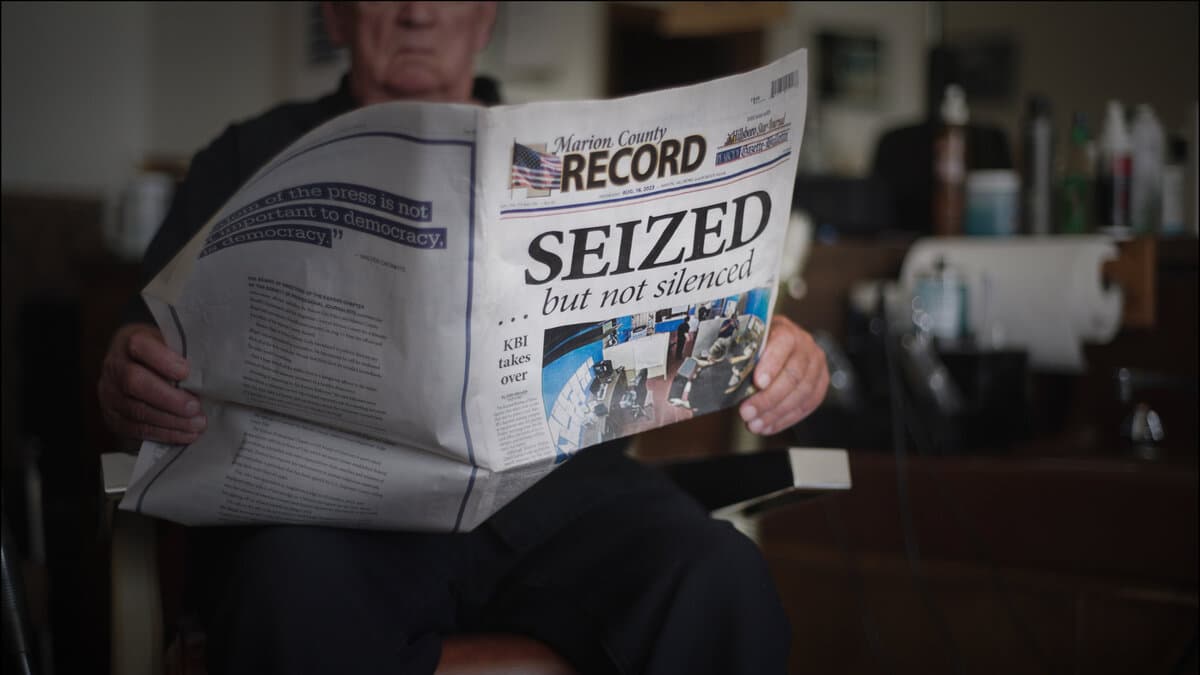
You know the real rub, though? That concern is far from new. Freedom of the press has been a live wire for the entire 20-plus years I’ve been in professional journalism, and we ink-stained wretches have an almost preternatural awareness of anything that may pose a threat to our constitutional station. If you need proof, look no further than filmmaker Sharon Liese’s Seized, which peels back the layers surrounding one of the most high-profile moves against the media in recent memory: the 2023 police raid on a small-town newspaper in Marion, Kansas.
Through security and body camera footage, Liese transports viewers inside a fraught day for the staff of the Marion County Record as local police and sheriff’s deputies descended on their downtown newsroom and on the home of editor Eric Meyer. But Seized doesn’t dwell for too long at a time on that day in particular, nor on the death a day later of Meyer’s 98-year-old mother (and the Record’s owner) that propelled the situation to national attention. Liese’s documentary serves more as an update than a revisitation, chronicling how the raid came to pass and how it altered the fabric of an entire town.
That alteration stems in part from the natural tension between small communities and the journalists who cover them. Meyer sees himself as a defender not just of the First Amendment but of truth itself, even when some Marion residents see his coverage as flawed or going one truth too far. People love the news until they don’t, and in the case of seasoned journalists in particular, it can be easy to confuse ethical adherence and dogged resolve for moral absolutism and a prickly demeanor. To some degree, the issues Seized touches on regarding skepticism and distrust toward the media were there long before the raid. It just took a little political chicanery and a lot of national attention to draw it out.
Ultimately the question Seized raises is as chilling as any law enforcement raid: What does it look like to exist as a journalist these days? Do your job poorly and the public suffers. Do your job well and risk the cops knocking on your door. Heck, do your job at all and it’s a coin-flip whether your neighbors like you or hate you. Tough-skinned veterans like Meyer still see the profession as a calling, something done in the name of a higher civic duty, and they’re able to take the personal consequences and condemnations in stride. But Seized reminds us that we need more than the Meyers of the world to care about the mission and those who choose to weather its endless slings and arrows. Truth doesn’t just die in silence. It dies in animosity and apathy too. —Alex Sakariassen
Screening at MCT on Sun., Feb. 15, at 5:30 p.m.
Director: Sharon Liese
93 minutes
Northwest Premiere
Dear Mae
Set in Chiang Mai, Thailand, Dear Mae follows two sisters, Nai and Noi, trying to preserve their late mother’s restaurant and legacy. The film is less about the Michelin-starred kitchen than the emotional labor of inheritance. Told through each sister’s reflections, it frames them as uneasy co-heirs struggling to find common ground in how the restaurant should be run. Noi takes a solitary approach, often cutting Nai out of daily decisions, while Nai asks to be trusted and included — a divide that quietly drives the film’s tension.

The film relies heavily on atmosphere. Slow, mournful music accompanies close-ups of vegetables being chopped and carefully plated dishes, and this attention to detail underscores the discipline required to keep the restaurant running. But it also emphasizes how cooking becomes an act of memory as much as an act of survival.
Dear Mae leaves the impression that legacy isn’t something inherited once, but something negotiated on the daily, in kitchens, but also in grief and in the space between siblings learning how to share both things. —Sam Phillips
Screening at the Roxy on Mon., Feb. 16, at noon
Director: Mona Patterson, Josiah Mendoza, Zoey Franklin
16 minutes
North American Premiere
Boys of Summer
Boys of Summer follows a group of teenage boys at Vermont’s Camp Timberlake, a remote camp in the woods built around one simple rule: no screens. The short film from National Public Radio documents how the boys learn to connect once they temporarily break free from a culture shaped by digital distraction and increasing social isolation. Interviews with the boys show them opening up about the often solitary lives they lead at home. They struggle to make meaningful friendships, secluding themselves in front of their screens.

At Camp Timberlake, a camp counselor confiscates all “contraband.” Once they’re separated from their phones and begin to experience digital distance, connection happens. Without phones, summer camp activities become the focus and small moments of interaction carry more weight. Shared music, encouragement during physical challenges, and rituals like the camp’s bead ceremony become exercises in emotional fluency.
“Vulnerability is a skill you have to learn,” says one camper named Wolf. “If you don’t open up to what the people in the space have to teach you, you’ll remain the same.” The film takes that idea seriously, showing how connection builds slowly through experience and repetition rather than sudden breakthroughs. There may be no escaping the roller-coaster of adolescence, but at camp, the boys learn to navigate it with attention and compassion, developing small habits that gradually reshape how they see one another and themselves. Without the distraction of devices, Camp Timberlake becomes a testing ground for another version of boyhood, one where openness isn’t exceptional but expected. —Sam Phillips
Screening at the ZACC on Mon., Feb. 16, at 5:30 p.m.; Tue., Feb. 17, at 1:30 p.m.; and Fri., Feb. 20, at 4 p.m.
Director: Mito Habe-Evans, Annabel Edwards
30 minutes
World Premiere
Montana Grind
Over the past decade, a feel-good story has been playing out across Big Sky Country, one that centers around kickflips and griptape and tribal youth. It has its early roots in the concrete drops and rolls of Missoula’s MOBASH Skatepark, the first in the state partially financed by Pearl Jam bassist Jeff Ament, but began to truly take shape with the opening of the Thunder Park in Browning in 2015. Since then, Montana’s skatepark boom has touched dozens of rural and Indigenous communities — 40 parks and counting — generating steady buzz about the impacts on kids yearning for something constructive to do.

In the words of the Big Sandy native who’s helped shine a light on this work, “We’ve just been following this energy around, and if you work hard at it and you surround yourself with great people, it’s the right thing to do.”
Ament is only one in an impassioned army of skateboard enthusiasts and civic folk-heroes who serve as the narrative backbone for director Danilo dos Reis’ film Montana Grind. Through the memories and motivations of people like Montana Skatepark Association co-founders Chris Bacon and Andy Kemmis, Reis chronicles the explosive proliferation of high-quality skateparks across smalltown Montana and the positive role they’re playing in the lives of young people.
Community leaders and skaters from Stevensville, St. Ignatius, Livingston and Missoula speak not only to the physical health benefits of skatepark access, but to its mental health benefits as well. Youth are at particularly high risk of issues like drug use and suicide in Montana’s rural pockets — longstanding deserts for mental health intervention and care — and Reis sprinkles Montana Grind with voices speaking to the emotional tonic skating can provide.
“I do believe it’s going to change our suicidal statistics,” Lesa Maher, chief juvenile probation officer for Park County, says of the skatepark established in Livingston. “This is a protective factor. There’s risk factors and there’s protective factors and this is a protective factor.”
Part of that protection lies in the ability to build a strong and healthy community for oneself, an ability Tyson Running Wolf, a Blackfeet tribal member and state legislator, notes for the camera is something kids aren’t born with but rather have to learn firsthand. From what he’s witnessed at Thunder Park, skateboarding is helping Browning youth do exactly that.
Along with MSA, Ament sparked a movement, one inspired by his own lifelong passion for skating that began in a small town. While many have likely heard about that movement in passing, Montana Grind — along with the fall 2025 book “Grit to Grind” penned by Bacon and Kemmis — gives viewers an intimate, long-form look at how this dispersed concrete jungle came to be, the partnerships that made it possible and the young beneficiaries who continue to reap the rewards. —Alex Sakariassen
Screening at the Roxy on Wed., Feb 18, at noon
Director: Danilo dos Reis
67 minutes
Northwest Premiere
Hyodo’s Paradise
Hyodo’s Paradise is a portrait of a complicated man named Hyodo, who lives in a house-turned-museum filled with hundreds of sex dolls. The film opens on the streets of Yashio, the city where he lives, about 20 miles outside Tokyo. Ordinary scenes of traffic and pedestrians give way to Hyodo’s living space, where everything feels anything but ordinary. An eerie, resonant sci-fi soundtrack plays as the camera moves through his eclectic collection of dolls, lit by pink, blue, and green neon lights. Some are life-sized, while others resemble classic collectible dolls. They wear outfits ranging from military garb to lingerie, though many are nude.

Hyodo’s home doubles as an adult museum, open to the public. He is often stoic and matter-of-fact about his collection. His interest in dolls began in childhood, when he gravitated toward cyborgs, and deepened after he pulled a mannequin from a dumpster at age 26. What began as a private hobby gradually drew public curiosity.
The film quickly addresses an obvious question: Hyodo once had sex with many of the dolls. In one scene, while washing a nude, headless doll in the shower, he explains bluntly that post-coital cleanup became difficult to manage, and that age and health issues eventually left him unable to perform.
Hyodo is aware of how strange he appears to others, but insists he does not see the dolls as substitutes for real people. Instead, he creates elaborate dioramas and photographs them — some staged as historical scenes with WWII Red Cross uniforms, others erotic or pornographic, including BDSM scenarios. At times, he places himself within these tableaux, posing as a patient in a wheelchair or as a submissive figure.
As the portrait unfolds, the forces that shaped him come into view: trauma, loneliness, and regret over a woman he once loved. His feelings about women remain complicated, but Hyodo’s Paradise doesn’t ask viewers to resolve their discomfort so much as sit with it, allowing Hyodo to be both unsettling and sympathetic. In doing so, the film turns the lens back on the viewer, inviting reflection on our assumptions about happiness, art, companionship, and the uneasy line between private desire and social acceptability. —Sam Phillips
Screening at the ZACC, Wed. Feb. 18, at 6 p.m.
Director: Jacque Rabie
22 minutes
North American Premiere
Gatorville
Formerly a tilapia farm, the Colorado alligator sanctuary that siblings Lily and Bodhi call home is filled with exotic wildlife and wide-open land. To outsiders, it might sound like an ideal place for energetic kids to grow up. But Lily and Bodhi, who are homeschooled and rarely leave the sanctuary, wonder what their lives would be like if they had grown up under different circumstances.
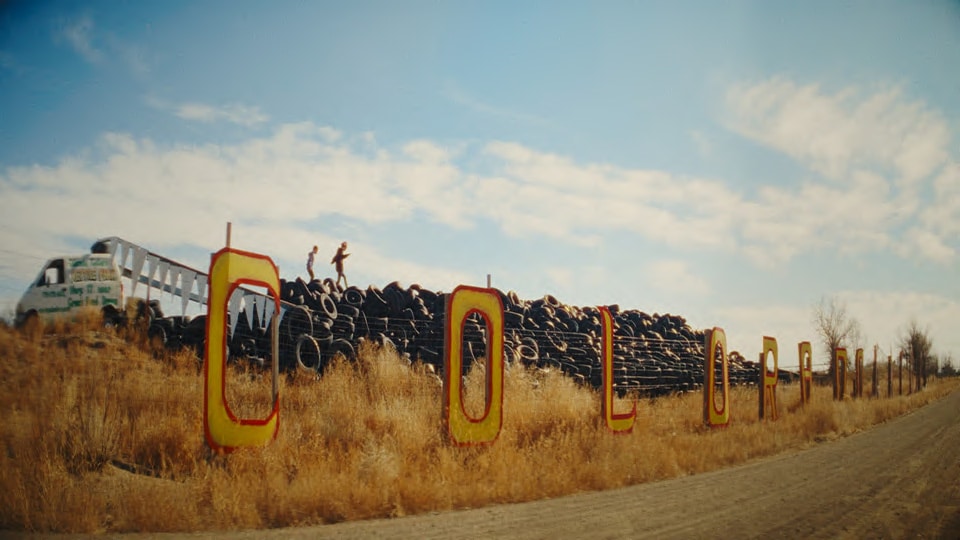
Directed by Freddie Gluck, Gatorville examines an adolescent desire for independence and a search for identity. While life on an alligator sanctuary appears fascinating to others — including many of the kids the siblings encounter — for the siblings, it’s the life they’ve always known. It’s the world outside the sanctuary that’s exotic.
What ultimately makes Gatorville a captivating watch isn’t the novelty of exotic wildlife in rural Colorado, or moments like Bodhi handing his father a young gator as casually as if they were car keys. The film’s strength lies in the relationship between the siblings themselves. Though the camera often lingers on the creatures that surround them, Gatorville remains, at its core, a story about growing up and about the quiet restlessness that comes from wondering who you might be elsewhere. —Sam Phillips
Screening at the ZACC, Thu., Feb. 19, at 6 p.m. and at the Wilma, Sat. Feb. 21, at 12:30 p.m.
Director: Freddie Gluck
19 minutes
World Premiere
Barbara Forever
I didn’t know the first thing about Barbara Hammer when I walked into this film, and I’m here to tell you that that’s OK. The trailblazing experimental lesbian filmmaker passed away in 2019, leaving behind 80 avant-garde films over an iconic career that spanned more than 50 years. Now, in a new documentary that remembers both her life and her work (two things that it’s clear cannot be separated), the spirit of her art and the strength of her voice are captured gorgeously.
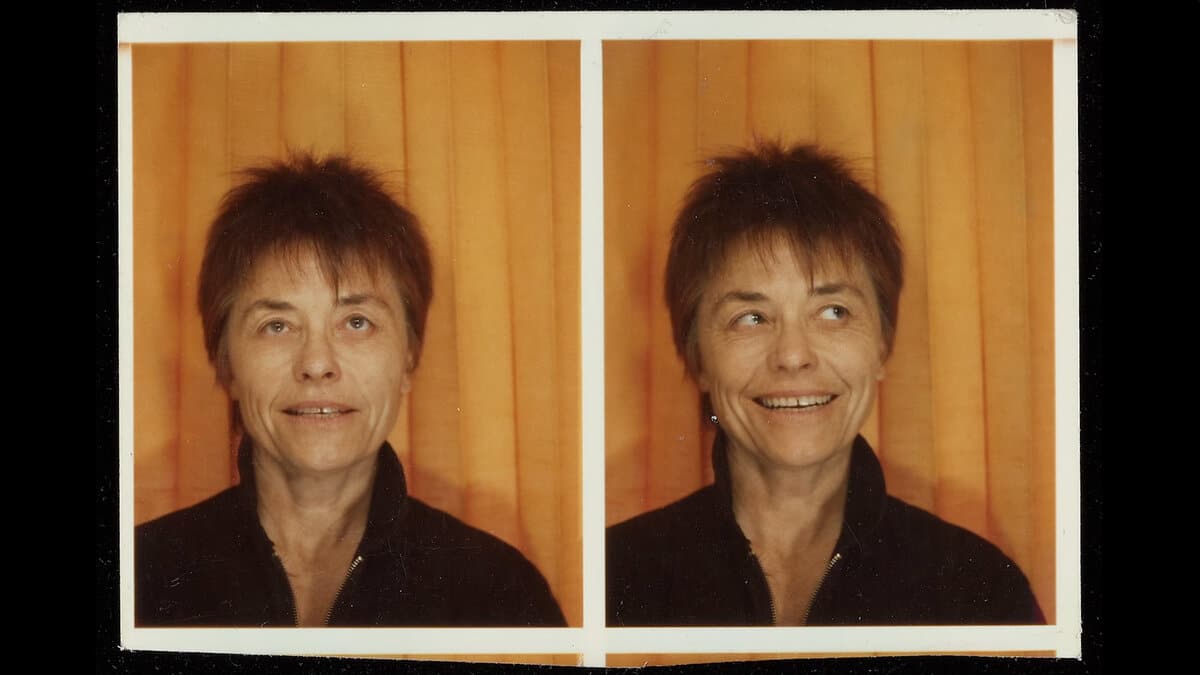
I know everyone is busy watching and re-watching Heated Rivalry (including me), and honestly, I don’t think there’s a better moment to watch this film — right now, during this mainstream/pop acceptance of queer love. Hammer came out as a lesbian in the early 1970s at the same time she started making films. No one had made films about female lovemaking from the female perspective, ever. It took decades for her art to be recognized for the pioneering, radical, and beautiful thing that it was. Through it all, Barbara never stopped creating — and never stopped insisting on the legitimacy her art deserved.
As a writer, I’ve spent a good deal of time reading early queer literature. Learning about early queer filmmaking through the lens of Barbara Hammer was incredibly moving, riveting, and inspiring. This is a must-watch for anyone interested in queer film, queer history, or just art itself. —Sarah Aswell
Screening at the Roxy on Fri., Feb 20, at 3 p.m.
Director: Brydie O’Connor
101 minutes
Montana Premiere
Stalin Boys
Forgive me for giving away the ending to Stalin Boys, but I’m going to: The New York Times is not responsible for any historical inaccuracies depicted in this film, which is about a play written by middle-school boys.
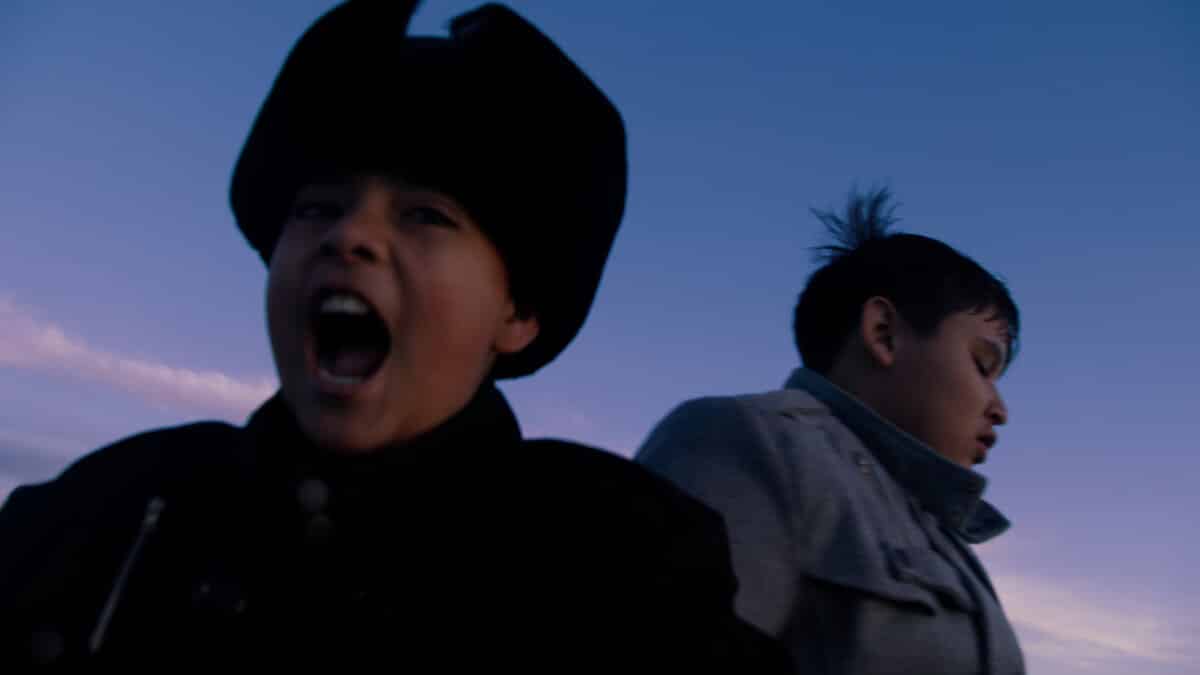
Also a spoiler: Joseph Stalin died at 50. As the young actor playing him reveals in what I think is a mostly accurate play, “He died of a stroke. He died alone.”
The play’s the thing that happens at the state-level history fair on the campus of University of Texas at Austin. This 22-minute film from NYT Op-Docs does proper and predictable building to a big moment there — will these kids make it to the next level of the competition? That, I will *not* spoil, but I will tell you that I physically crossed my fingers as their teacher-coach refreshed her phone to finally reveal the answer.
What’s less predictable and no less great is how beautiful this movie is, though, honestly, that’s a tiny lie. I did expect beauty since the co-director with Ora DeKornfeld is Bianca Giaever. Giaever is a darling of the public radio and podcast worlds for her quirky approach to audio stories, and I’ve long been a fangirl of other little films she made while she was in college. There’s The Scared is Scared, which, like Stalin Boys, celebrates what comes from kids’ minds and mouths, and my personal fave, Holy Cow Lisa, which blends young heartbreak with an interview of the most charming professor on the planet. PLEASE GO WATCH IT.
But back to *this* movie about Stalin and his boys. It’s a subtle big thinker. To wit: The four boys making up a play about a guy who lowered a hammer on humanity all live in Marathon, Texas, which is on the border with Mexico. Their clear leader is Malachai Gonzalez, whose obsession with Joseph S ropes in the other three, who are all Mexican-American. Gonzalez knows what he’s doing, but he still has to be coached and, at one point, a teacher imparting a lesson says to these kids: “What would you do if the government violated your rights and those of your family and took you to jail or a gulag for no reason at all?”
I’ll ask you what this teacher then asked them: Anyone else have thoughts on that? —Jule Banville
Screening at the Wilma on Fri., Feb. 20, at 5:30 p.m. and on Sat., Feb. 21, at 12:30 p.m.
Director: Ora DeKornfeld, Bianca Giaever
22 minutes
World Premiere
A Derailment
Anyone who’s ever thrilled to light a fireworks fuse or even just click on a vid of a planned implosion will know the excitement of “Fire in the hole!!”

But by the time that exclamation happens in the 26-minute film, A Derailment, you also know that warning isn’t exactly sufficient. The doc’s mainly a montage of news footage, found videos and doorbell-cam recordings that tell the story both before and after the fire-hole moment that transformed East Palestine, Ohio, in February 2023.
To be sure, the derailment itself was bad. An axle throwing sparks under one car eventually caught fire and sent about 50 cars off track on the Norfolk-Southern line that regularly roars through this spot south of Youngstown. As someone surveying the wreckage says off-camera: What a mess.
But it got so much worse. Several of the cars contained vinyl chloride, used to make PVC pipes. It was leaking, so that was also bad. Then someone or multiple someones decided the best course of action would be to fire that already smoking hole and blow up toxic train cars, sending a nuclear-level cloud of who-knows-what over and beyond this working-class town. That decision and its consequences drive the film, though it does so without a central character or narrator.
That’s a familiar structure from filmmaker Nathan Truesdell, who traffics in films about bad calls gone horribly wrong. Before A Derailment, there was 2022’s When the LAPD Blows Up Your Neighborhood about cops finding a bunch of illegal fireworks and exploding them on a residential street. Before that, there was 2018’s The Water Slide about the world’s tallest water slide in Kansas City and the decapitation of a 10-year-old who tested it out. That followed Balloonfest, about a disastrous 1986 promotional event in Cleveland that sent about 1.5 million balloons floating down into traffic, onto runways and into Lake Erie.
The consequences in A Derailment hit like buckshot — they’re scattered and cause a lot of damage and, here, they’re also scored by heavy metal. The result is a tad clunky. But you know what’s clunkier? Execs from Norfolk Southern Railway Corporation trying to convince an Ohio town that this “Fire in the hole!” was in their best interest. —Jule Banville
Screening at MCT on Sat., Feb. 21, at 5:30 p.m. and Sun., Feb. 22, at 6:30 p.m.
Director: Nathan Truesdell
25 minutes
World Premiere
Still Standing
More than 9,000 houses and other buildings burned in the Eaton Fire that ripped through Altadena, California. Still Standing is about the places that survived.

There’s no federal regulation — and therefore no standard for insurance claims — on when a home left mostly intact after a wildfire is safe as a place to return to or live in. But there is evidence that a bunch of chemicals hanging in the air are linked to respiratory problems and cancer.
Phone-call audio from one man whose house did not burn relates a conversation he had at a barber shop. That’s where he heard what he now is: the “lucky unlucky.” That resonates as the 10-minute film by Victor Tadashi Suarez and Livia Albeck-Ripka lingers on a depressed woman sitting in a chair, seen from a dirty window inside her house. Other scenes shot in 16mm focus on someone in a white protective suit walking through a living room still dotted with kids’ toys and a dollhouse.
Wider shots show the horror of what it would be like to come home here. Even if what’s left wasn’t toxic, the neighborhood of houses is now one of holes — not exactly the dream of California. —Jule Banville
Screening at MCT on Sat., Feb. 21, at 5:30 p.m.
Director: Victor Tadashi Suárez, Livia Albeck-Ripka
10 minutes
Montana Premiere
Crime and Parody
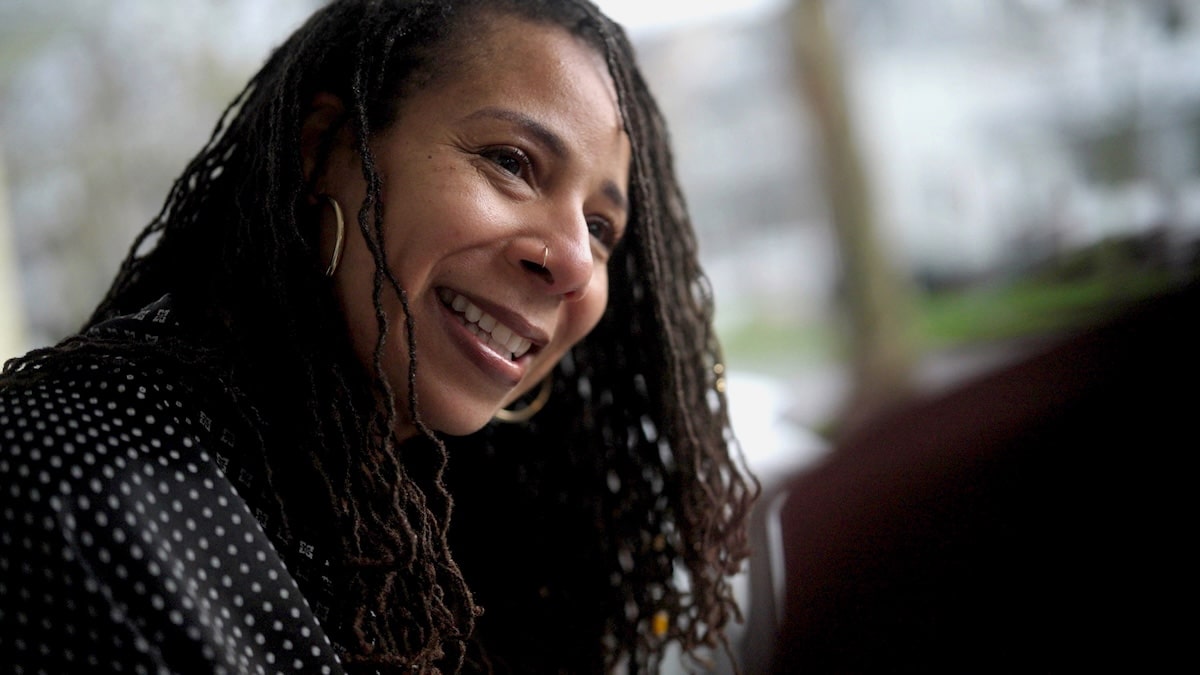
This film’s protagonist says at one point, “If the police can’t be held accountable, then your rights don’t exist.” I wrote that in my notes and despaired for a while. Crime and Parody relays what happened to Ohio man Anthony Novak in 2016 when city police arrested him for making a parody Facebook page of their department. Novak just can’t help but joke about everything — even some of the scariest and worst moments of his life — and he’s enjoyable to watch.
After telling Novak’s story, Crime and Parody turns to its meatier subject: qualified immunity, a legal doctrine that protects cops from prosecution in many instances. It would take a U.S. Supreme Court ruling to overturn this defense on a national level, and we meet a nonprofit group pushing for the court to revisit the issue. While some of this film could benefit from a tighter edit — and the outlook on the Supreme Court is pretty grim — Crime and Parody is an important story. —Kate Whittle
Screening at MCT on Sat., Feb. 21, at 8 p.m.
Director: Will Thwaites
90 minutes
World Premiere
Ghost Elephants
Oh, Werner. Only you could turn a decade-long quest to uncover an elusive population of elephants into an existential statement on life, truth and boundless obsession.

In his latest filmmaking foray, one of the field’s most iconic documentarians finds a perfect pairing for that familiar and wistful Herzogian voice: the manic, haunted eyes of South African naturalist Steve Boyes. When Ghost Elephants first introduces him, Boyes is nearly brought to tears by the mere sight of the world’s largest recorded elephant, brought down by a hunter’s rifle in the 1950s and now on display in Washington, D.C. Boyes’ frenzied search for the descendants of this 11-ton behemoth in the wilds of Angola fuels Herzog’s own examination of humanity: the lengths we’ll go to for answers, the joy we might feel upon finding them, and just how absolutely bat-shit crazy we can look along the way.
“We chase dreams, as humans. We share dreams with each other,” Boyes tells the camera on the eve of his quest for Angola’s ghost elephants and a shred of their DNA. His reflection prompts viewers to wonder how far he and Herzog will take them in pursuit of an animal as seemingly incorporeal mist.
Indeed, it’s humans rather than elephants who occupy much of Herzog’s stage. Alongside the conservation community’s version of Captain Ahab marches a steady stream of African trackers and guides, whose relationship with elephants feels distinctly different. While they share in Boyes’ passion, their groundedness and practicality balance Boyes’ romanticism and determination. Herzog takes us inside their families, communities and customs.
These snapshots both cement Herzog’s leading man as a dream-seeking nonconformist and remind us of the personal stakes for those following him into treacherous terrain. It’s as much for them as for Boyes — and the broader cause of preserving a species hunted to the brink — that, by its closing moments, Ghost Elephants will have us all crossing our fingers for a positive result on a DNA test and a glimpse of tusks amid the African foliage. —Alex Sakariassen
Screening at the Wilma on Sun., Feb. 22, at 7 p.m.
Director: Werner Herzog
99 minutes
Montana Premiere
🍿
Jump to: The Bend In The River • The Butterfly Lab • How to Kill a Mermaid • Big Sky Falling • Seventeen • Inaccessible • Seized • Dear Mae • Montana Grind • Boys of Summer • Hyodo’s Paradise • Gatorville • Barbara Forever • Stalin Boys • A Derailment • Still Standing • Crime and Parody • Ghost Elephants