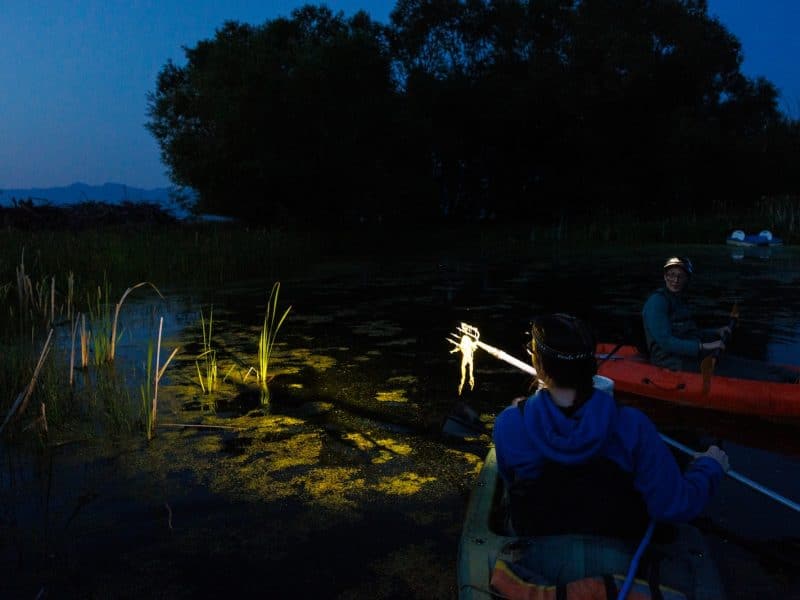
When the sun sets, the preparation for herding cats begins. Joyce Nesselhauf, a cat trapper who lives outside Ronan, lines up traps—small, boxed cages roughly three feet long and one foot across—and prepares the bait to lure them in. The bait needs to be pungent, the fishiest and smelliest you can get, like a good helping of Mackerel atop a pad soaked in salmon oil.
“Cats were never meant to be a wild animal,” says Nesselhauf, as she rigs the front door of the trap to a trigger plate inside the cage. “With the right techniques, though, you can catch one from up to two miles away.”
Nesselhauf, 65, is like an Old West trapper, except this purr-trader’s prowess is rooted in her affinity for felines, and she’s on a mission to fix—quite literally—a severe overpopulation problem.
Around Polson, Nesselhauf, whose straight, burgundy-red hair frames rimless glasses, is known as a cat whisperer. She estimates she and her team have trapped more than 700 feral and stray cats up and down the Mission Valley since last August. Her home’s daylight basement serves as a sort of halfway house—“Cat Disneyland,” as she calls it—that’s currently providing room and board to around 40 cats. Her cellphone has become a hotline for reporting roaming cats and cat “colonies.”
“People will knowingly allow these unaltered animals to roam but they don’t understand the quickness [with which] they can multiply.”
Yes, cat colonies. And these herds of cats are more prevalent than you think, including somewhere around 55 in Missoula. Nesselhauf trapped her first colony at the Hollywood Trailer Court mobile home park on the Westside near where North Russell Street ends at the railroad tracks.
“It’s astonishing how many people are unaware of spaying and neutering,” Nesselhauf says. “People will knowingly allow these unaltered animals to roam but they don’t understand the quickness [with which] they can multiply. When it becomes apparent, that’s when they are screaming for help.”
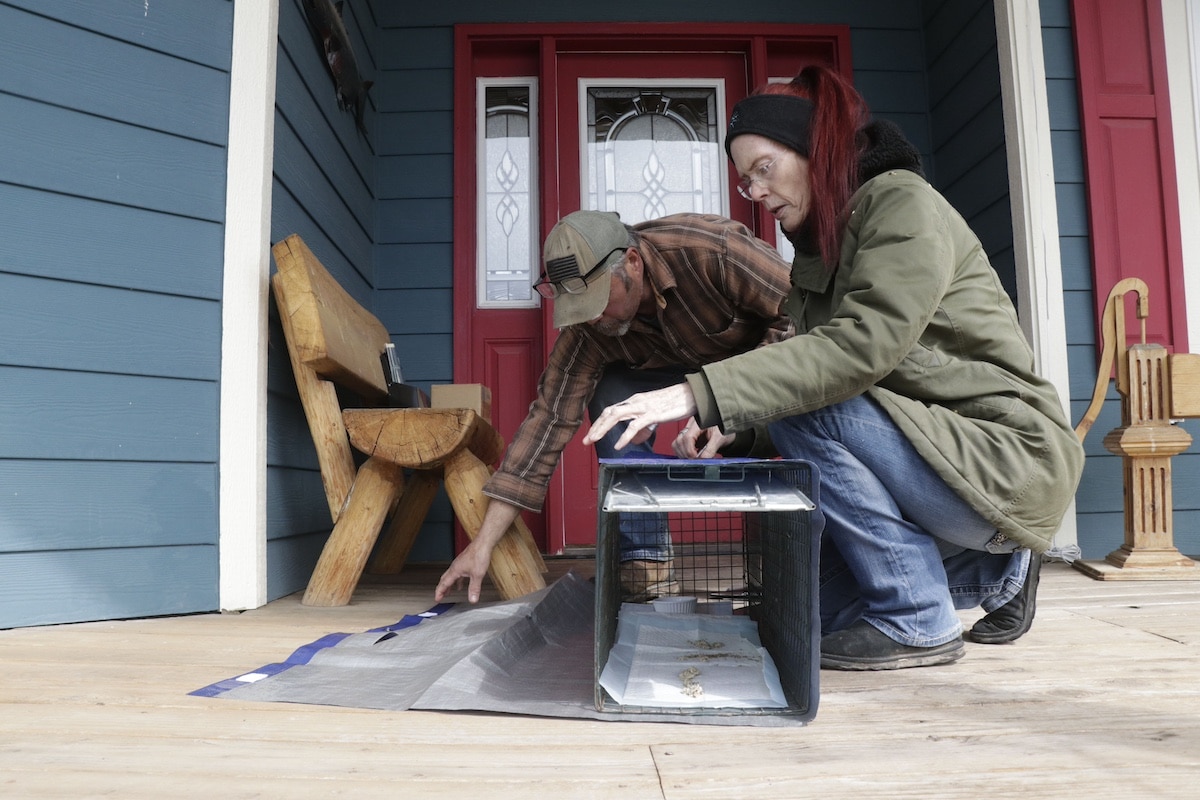
Now, after retiring from the corporate world, she’s running a nonprofit she and the owners of Aloha Veterinary Services in Polson founded in January called White Wings Rescue, and spending most of her week catching feral cats that the vet then sterilizes. When she isn’t trapping, she’s coordinating rehabilitation for these found felines, or filling out adoption paperwork.
“I had no idea how all-encompassing this gets to be,” Nesselhauf says. “It’s become a full-time job and I am still trying to find my personal boundaries.”
On a rainy, overcast day in early April, I ride along with Nesselhauf for a visit to a dairy farm near St. Ignatius swarming with roughly 40 cats. I spot at least 12 when we pull up. The farmer tells us that when he bought the land a couple years ago, there were only two or three sickly cats, but then his wife started to feed them, and they quickly multiplied.
“They’re having them faster than we can neuter them,” he says.
That’s when Nesselhauf typically gets a call—when the situation has spiraled out of control. Later she would tell me about a woman who started out with two unsterilized cats, and by the time she called Nesselhauf, there were 61 cats inside the woman’s trailer. About half of them were females, and all but one—roughly 30 cats—were pregnant.
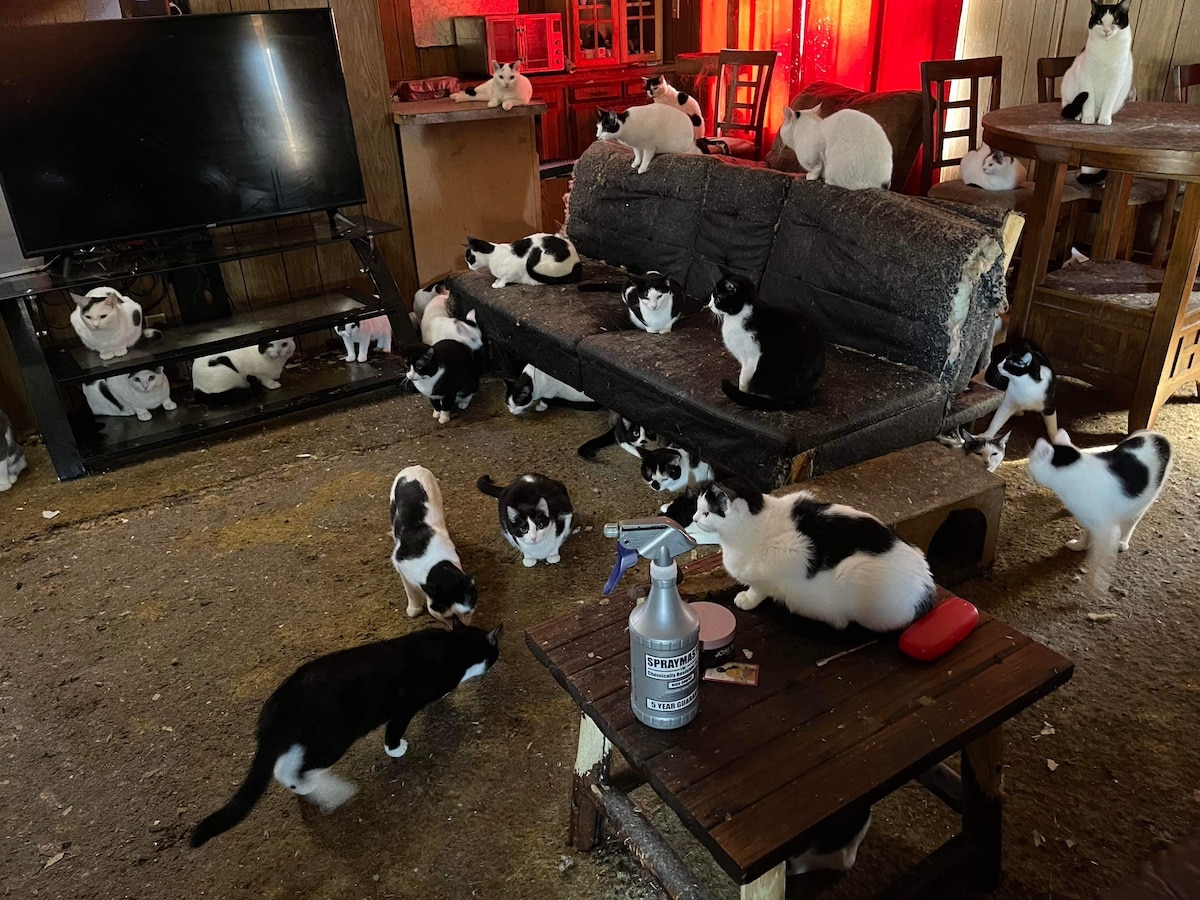
“We’re trying to give them a better life by not having these kittens born into, you know, predation and sickness,” Nesselhauf says. “Right out of the womb their heads are on a swivel. They have to fight for hierarchy, they have to fight for food, they have to fight to survive.”
But this isn’t just about the fate of cute and vulnerable kittens. In Missoula and the surrounding valleys, all of these cats combine to have a big ecological footprint, with consequences for native wildlife.
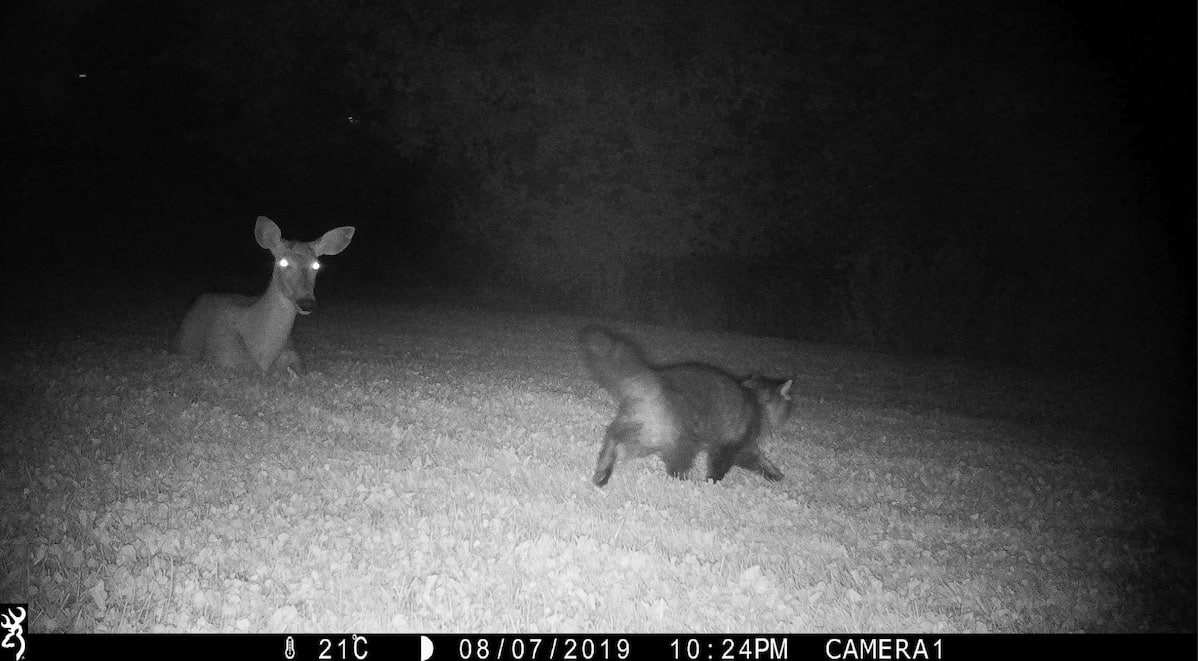
A couple of years ago, Jay Schutze was sifting through images taken by motion-sensing cameras that had been placed around the Missoula Valley. At the time, Schutze was two years into the wildlife biology program at the University of Montana, and she was helping postdoctoral researcher Christopher Hansen investigate how urbanization affects biodiversity. As Schutze, who uses she/they pronouns, looked through the photographs, which had captured critters common to the wildland-urban interface, she noticed that cats made more than a few cameos, sometimes more than the other animals they had expected to record.
Then, last fall, Schutze saw a cat colony with their own eyes. She was driving up Butler Creek Road, in the hills between Missoula and Frenchtown, to check out the changing foliage when a band of cats—at least 15, maybe as many as 30—crested the rise.
“When I saw all these cats coming over the hill I almost couldn’t believe my eyes,” Schutze recalled. “I was so shocked I couldn’t pull my camera out fast enough. I just thought to myself, “Of all the people to see this…”
Schutze suddenly found themself focusing their undergraduate research on this phenomenon of felines intermingling with wild species.
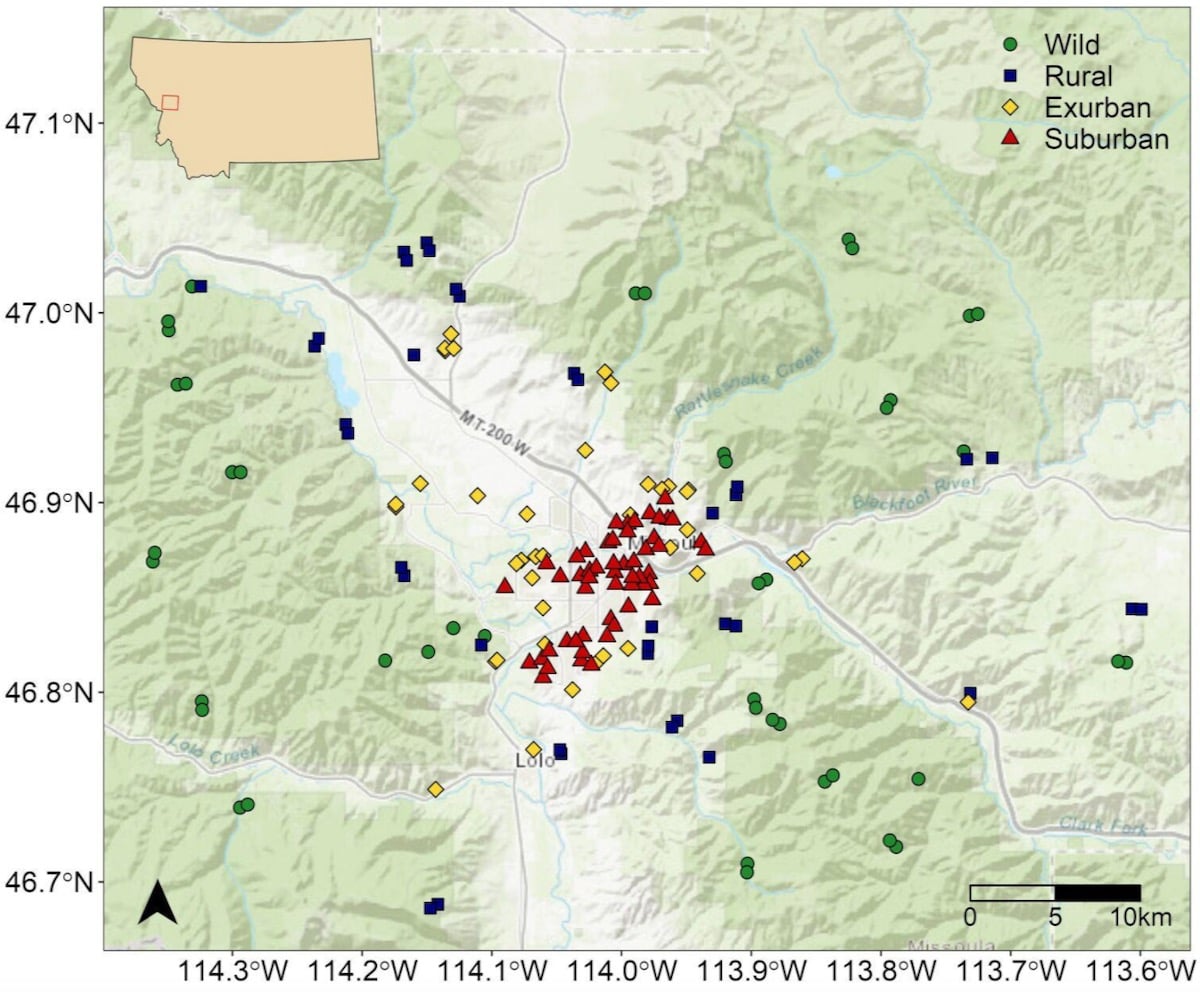
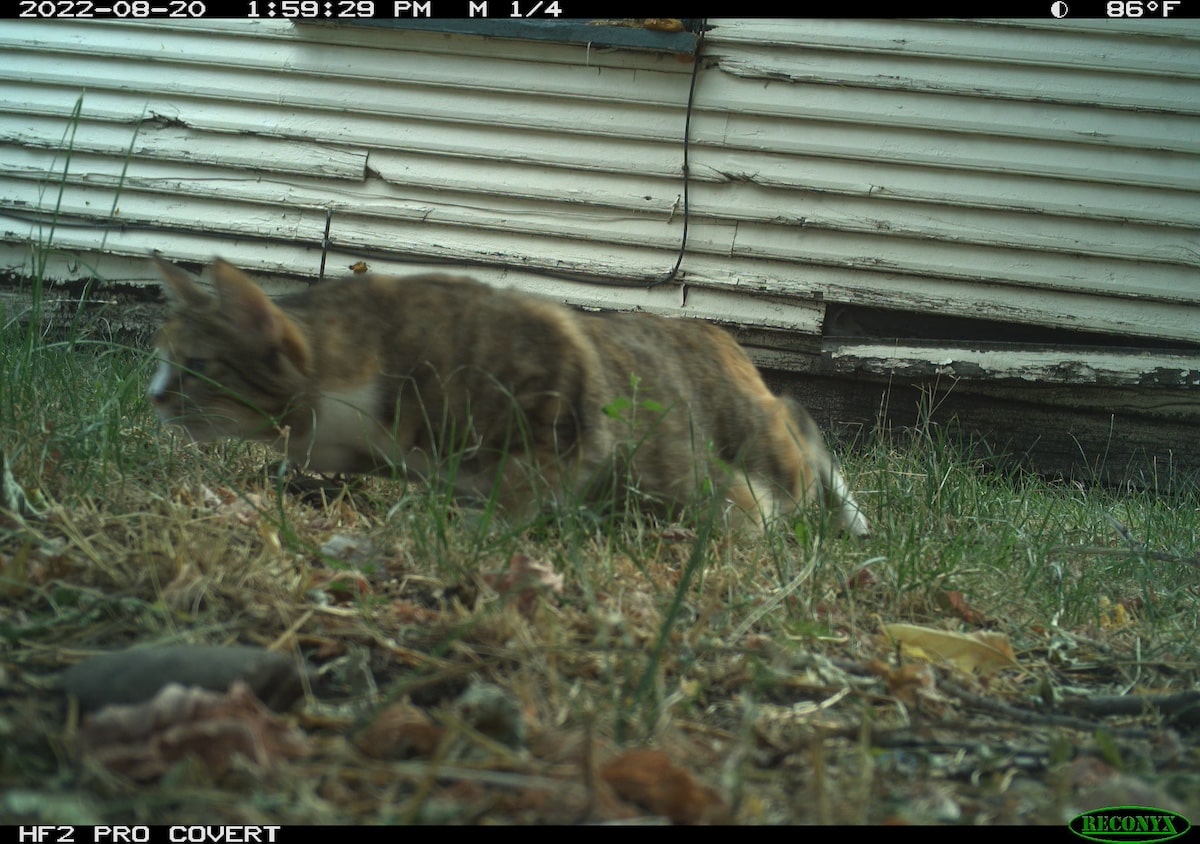
The camera traps Hansen set up in 2019 yielded around 1,300 cat sightings, with cats populating around 70 percent of suburban sites around Missoula. In one image, it looked as if there was a cat scaring off a deer. Another showed a coyote and a cat seemingly hunting in the same territory.
Last summer, Schutze set up 28 camera traps of her own around Missoula, and 10 of them captured cats a total of 120 times. Most of the cats were photographed in developed urban areas, except for one that had ventured out to Mount Jumbo.
We know this is bad news for wildlife. Across the country, free-ranging domestic cats—a non-native invasive species—kill somewhere around 2.4 billion birds and 12.3 billion mammals annually, according to estimates published in the journal Nature Communications in 2013. (Cats with owners accounted for roughly a third of bird deaths.) The toll suggests, the study’s authors wrote, that cats are likely the single greatest source of anthropogenic mortality for birds and critters in the U.S. Globally, they eat more than 2,000 species, almost half of them birds, according to a study published in the same journal late last year.
But we don’t know much about how Missoula’s free-ranging cats affect native species’ behavior. Schutze is hoping their research will provide some answers.
“A cat’s mere presence in an animal’s habitat could be enough for a mammal to avoid an area, a bird to abandon their nest or even attract other potential predators to the area.”
“Cats can create what is known as a ‘landscape of fear,’” Schutze said. “A cat’s mere presence in an animal’s habitat could be enough for a mammal to avoid an area, a bird to abandon their nest or even attract other potential predators to the area.”
Not that cats are safe in this interface between wild and urban critters. Mountain lions, coyotes, dogs and birds of prey have been known to kill feral cats, which might explain why they tend to band together.
“The primary difference is that apex predators are native to the ecosystem and have distinct roles,” Shutze said. “Cats do not have this established ecological relationship and can disrupt the roles of others in the ecosystem.”
Schutze is currently synthesizing the camera-trap data and hopes to develop a working hypothesis on cat-predator dynamics in Missoula.
Meanwhile, a few deer have an interesting dynamic with a stray cat in Anita Vasquez’s neighborhood in Missoula’s South Hills.
About three summers ago, Vasquez noticed a black cat that hung around and always looked hungry, and so she started to feed it. Now, she even sometimes sets out a heating pad for the cat in the winter. And she’s noticed that the cat is often in the company of a resident family of three deer.
“It seems like the cat was partially raised by the deer,” Vasquez said. “I even see them cleaning it.”
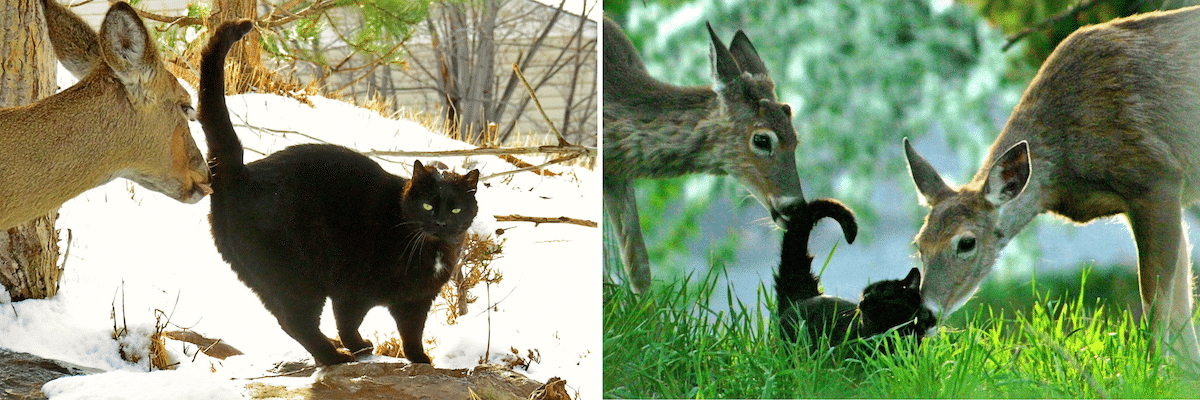
In her yard, in addition to marking its territory and making her mulch its litter box, the cat has even designated a spot for its groomings.
“It wants to be cleaned by the deer in the rock garden,” Vasquez said. “It goes there, and the deer stand on top of the bush and lick it—right there in the middle of the yard.”
Vasquez has two cats of her own. One often sits in the front window and watches the stray cat. Vasquez sometimes worries when she doesn’t see the stray for a while, which is usually in the summer when the cat’s out hunting. She hasn’t named the cat for fear she might get too attached.
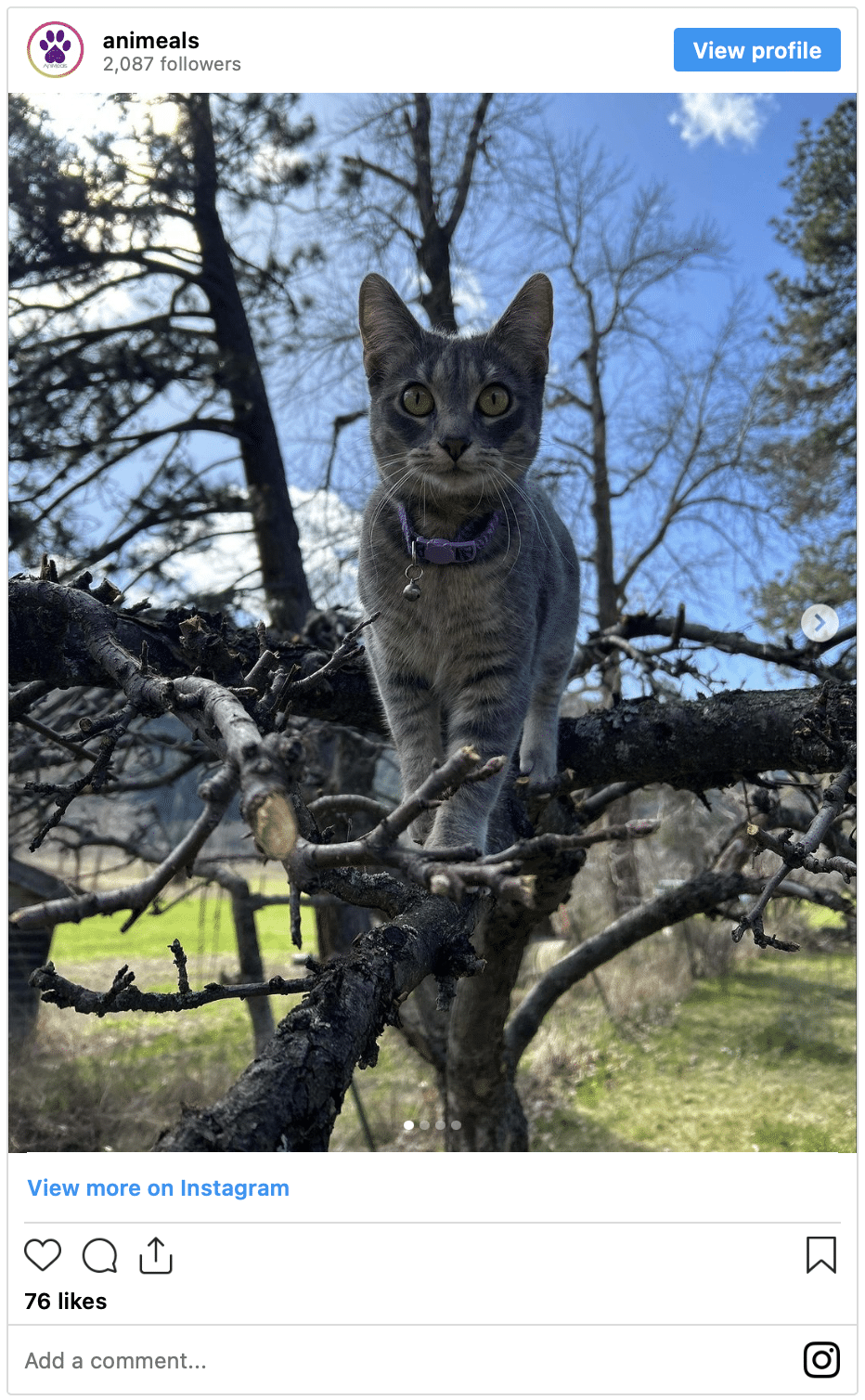
AniMeals, a no-kill cat shelter in Missoula, is doing what it can to manage Missoula’s 55 cat colonies. It only takes three or four cats to make a colony, but here they average around 25. Some are much bigger. A couple of years ago, AniMeals rescued 66 cats from a colony residing under the Reserve Street Bridge, where there was an encampment of houseless people. As of last month, all but three of the cats had been adopted. (We don’t know how many of the houseless people found homes.)
Josie Rodgers, the manager at the AniMeals shelter, says volunteers feed the colonies, with the nonprofit providing an average 35 to 40 pounds of food a day.
There are probably colonies we don’t know about. And AniMeals isn’t the only entity in town working to manage them. The Humane Society of Western Montana and Missoula County Animal Control chip in, too, and they maintain two major colonies, one near the Thunderbird Motel on East Broadway and the other out by the Wye west of town. Another big one AniMeals hopes to soon target is near the St. Mary’s Cemetery on the Northside.
Colonies include cats that are feral, stray, and domesticated. Feral ones, born in the “wild,” are unsocialized and fend for themselves, often displaying aggressive behavior. Strays are formerly socialized cats and tend to be less aggressive, making them potential candidates for adoption. Domesticated free-ranging cats, perhaps former pets abandoned by their owners, are very tame.
Schutze says one contributor to Missoula’s cat quandary is city code that pretty much gives them license to roam freely.
The city of Missoula defines cats and dogs as “domestic animals,” but unlike dogs, cats can come and go as they please, so long as they’re neutered. The only way for the untrained eye to tell if a feral or stray female cat has been neutered is if the very tip of one of its ears is missing. This isn’t fool-proof, however, because not every time a cat is neutered does it have its ear tipped.
If a cat is discovered roaming freely and not neutered, it qualifies as a “nuisance” and Animal Control can get involved. Otherwise, cats lack restriction and can run amok. As fertile cats inevitably intermingle, reproduction happens at a rate that is two steps ahead of birth control mitigation efforts by organizations like White Wings Rescue and AniMeals. And because ferals and many strays can’t be adopted, these cat colonies become, well, a part of the community. This makes for another population of animals that requires management—but with few resources to devote to it.
Fuzzy municipal policies like Missoula’s only feed the problem, according to Ledy VanKavage, a senior attorney at Best Friends Animal Society. The nonprofit is based in Kanab, Utah, where it runs the nation’s largest animal sanctuary, and it’s at the forefront of the no-kill movement. Best Friends is campaigning for every shelter in the country to achieve no-kill status—which it defines as saving at least 90 percent of the cats and dogs taken in (allowing for euthanasia in the cases of very sick and aggressive animals)—by 2025. In 2022, roughly 208,000 cats were killed in shelters nationwide, according to the group.
One contributor to Missoula’s cat quandary is city code that gives them license to roam freely.
“Prior to this year, there were two cats dying for every one dog dying in shelters,” VanKavage said. “So that’s a huge amount and it’s also a huge expense for cities and municipalities.”
And it’s a huge challenge for communities to keep free-ranging cat populations in check strictly through a no-kill approach. Best Friends advocates for a policy of trap-neuter-return, or TNR. That’s how AniMeals in Missoula, and the new Missoula nonprofit Advocats, among many other cat-welfare organizations here and across the country, usually confront the problem: They trap cats, sterilize them, and then return them back to the landscape.
VanKavage says TNR is the only humane and effective way to achieve population reductions. She points to studies suggesting that if 70 percent of a group of cats are sterilized, the population stabilizes. At higher percentages, populations decline.
“If TNR was not done, we have to ask ourselves how many more cats there would be on the landscape,” VanKavage said.
She added that TNR is also the only approach Americans can stomach, referencing a poll commissioned by the nonprofit Alley Cat Allies in 2007 in which 81 percent of respondents said leaving a stray cat outside to live out its life is more humane than trapping and euthanizing it. (Besides, outside, according to Alley Cat Allies, is a cat’s “natural outdoor home.”)
“I think the key thing about TNR, and why it’s successful, is that there is an ecological need for a cat colony to survive,” Rodgers at AniMeals said. “If you remove that community, you have left a vacuum within the ecology of the environment and another colony is going to step into that.”
But TNR has many critics. Count the National Audubon Society, the Cornell Lab of Ornithology, and the American Bird Conservancy among them (the last calls TNR “a waste of time, money, and resources”). It’s not just bird conservation groups, though. The Wildlife Society and the Association of Fish and Wildlife Agencies have also been critical of TNR.
Perhaps one of the more surprising anti-TNR groups is People for the Ethical Treatment of Animals.
“We’re opposed to outdoor cats, period,” Lisa Lange, a senior vice-president at PETA, was quoted as saying in a feature about the no-kill movement published by The New Yorker last December. “TNR isn’t ‘better than nothing’—it’s worse than nothing. It doesn’t reduce the number of homeless cats, but it does normalize the idea that cats should be outdoors, and it turns a blind eye to their suffering. We see it every day in the diseased faces and broken bodies of feral cats. There is a fate worse than death.”
Megan Fylling is an avian ecologist at the UM Bird Ecology Lab, and her work gives her access to the zoological museum on campus. A while back, Fylling told a few neighbors she can take bird specimens to the museum, and ever since, those neighbors have, not infrequently, brought Fylling dead birds killed by their cats—a small and perhaps guilt-driven contribution to science.
Fylling, who’s the lab’s research co-director, says it’s not always clear that a cat was the culprit, and not, say, a run in with a window, but in any case, she said she’s seen more birds killed by cats than she’d like. And because a cat poses a threat to birds whether it’s fixed or not, she’s skeptical that TNR on its own can put the cat back in the bag, so to speak, and meaningfully limit bird mortality.
“It depends on where our value system lies: Is it with native birds, or is it with cats?”
“If you feel that the TNR strategy is actually resulting in the reduction of cats, then yes, it’s a feasible solution,” Fylling said. “But if it’s not reducing cat populations, then we’re putting an animal with teeth and claws back out there and they will inevitably kill other species like birds.”
Which means, of course, that Missoula’s cat problem, and whether we can reduce their numbers and impacts, is less about cats and more about humans.
“It depends on where our value system lies: Is it with native birds, or is it with cats?” Fylling said. “We have to be humane on both ends of trying to control species’ populations.”
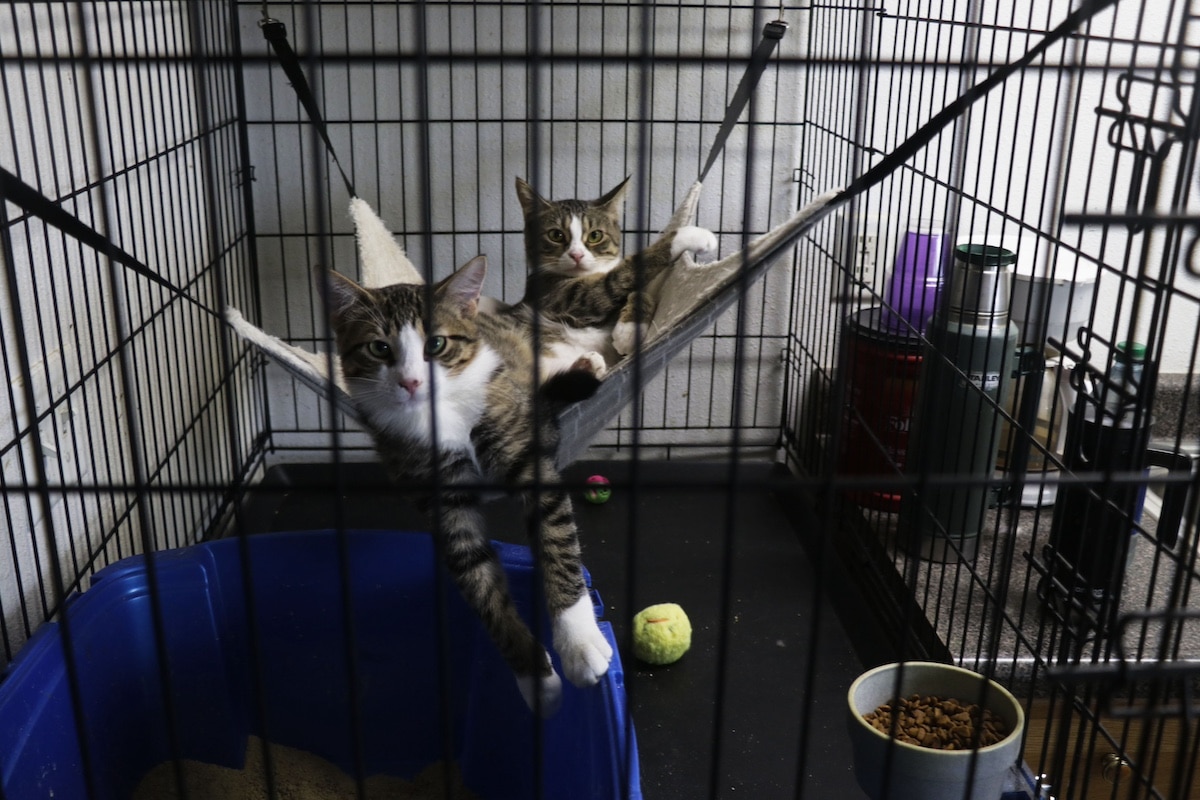
That begins with what’s become something of a mantra at Missoula County Animal Control, according to manager Holli Hargrove: “If you feed them, you have to fix them.”
Ledy VanKavage at Best Friends Animal Society said the same: “We need to find a way to mobilize the people that are feeding the cats to also sterilize them.”
And Josie Rodgers at AniMeals put it this way: “I think that if community members came together and crowdfunded and worked together to get cats in their area fixed, it would really help. It’s a community problem, so it’s going to take a community solution.”
Back in Joyce Nesselhauf’s old white Chevy truck, parked outside her home, she scratches off another name and location scribbled on a loose leaf piece of paper that served as her cat-trapping field guide for the day. As she considers the next stop on her mission to find every cat a home, she reiterates to me the need to educate the many well-meaning humans who aren’t doing cats any favors.
“I want people to care about this issue because cats are a living thing,” she says. “They’re not vermin.”
Correction: This story was updated to reflect that Joyce Nesselhauf lives in Ronan, not Polson, and to clarify that White Wings Rescue was formed by Nesselhauf in partnership with Aloha Veterinary Services in Polson. Additionally, Nesselhauf drives a Chevy, not a Toyota as originally reported.