Words by Emma White, photos by John Stember.
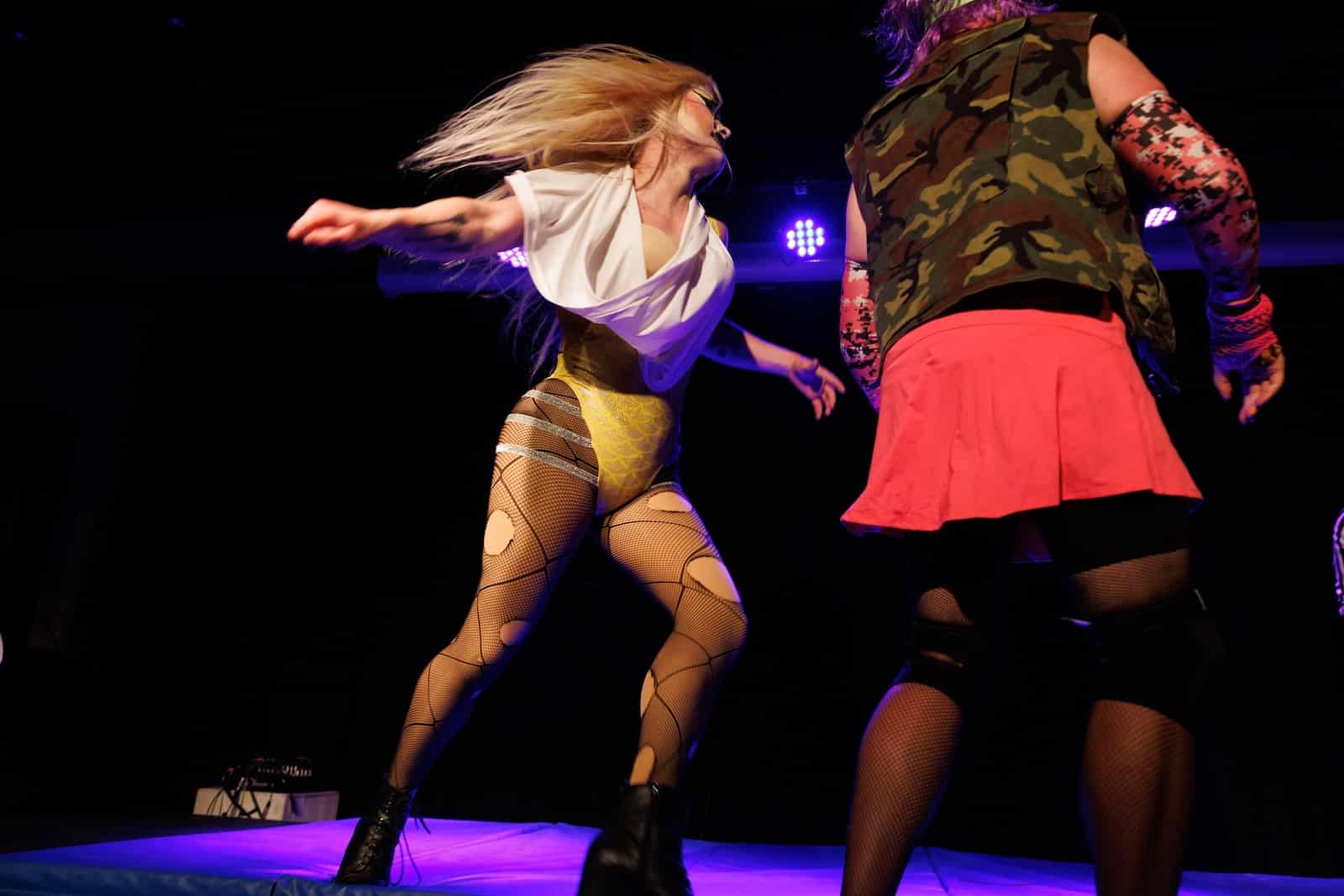
On a recent Saturday night, on a small stage inside Missoula’s Zootown Arts Community Center’s Show Room, two figures prowl beneath pink and blue spotlights. They mirror each others’ footwork, charting a circular course around a blue mat. From below the stage, people are chanting “Margaret, Margaret!” while others yell, “Stella!” The feral howling of the crowd escalates as the two opponents collide in a flurry of limbs, until, finally, the slap of a fishnet-clad thigh against the mat brings the chaos to a sudden, theatrical halt.
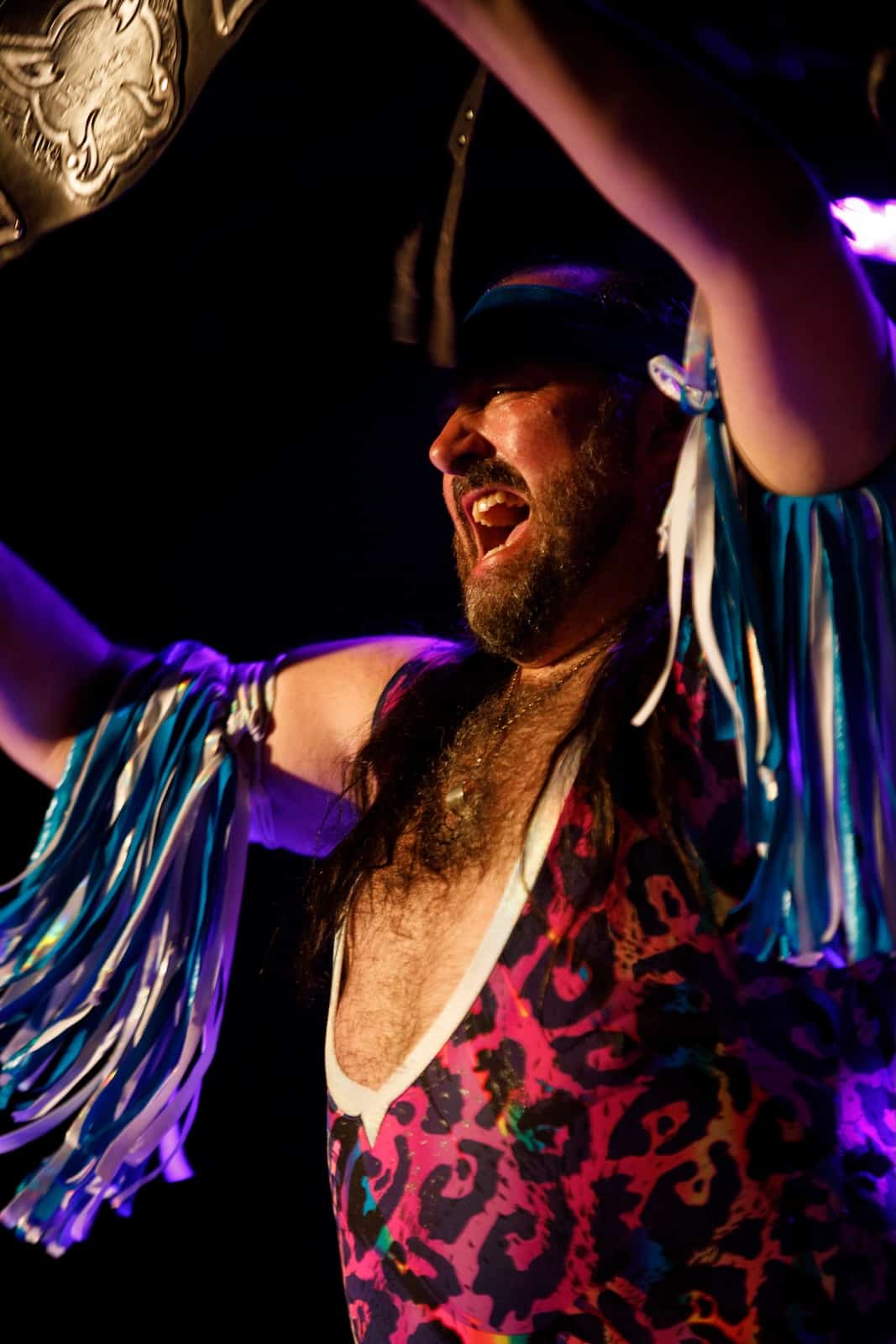
The room is loud. Not just in volume, but in spirit — a fringed and feathered, sequined and striped scene. A referee weaves between chairs, collecting dollar bills in a top hat that quickly starts to overflow. Nearby, another performer, clad head-to-toe in a pink leopard print bodysuit leans against a backlit doorway at the side of the dark room, blue and white streamers hanging from bands on their arms.

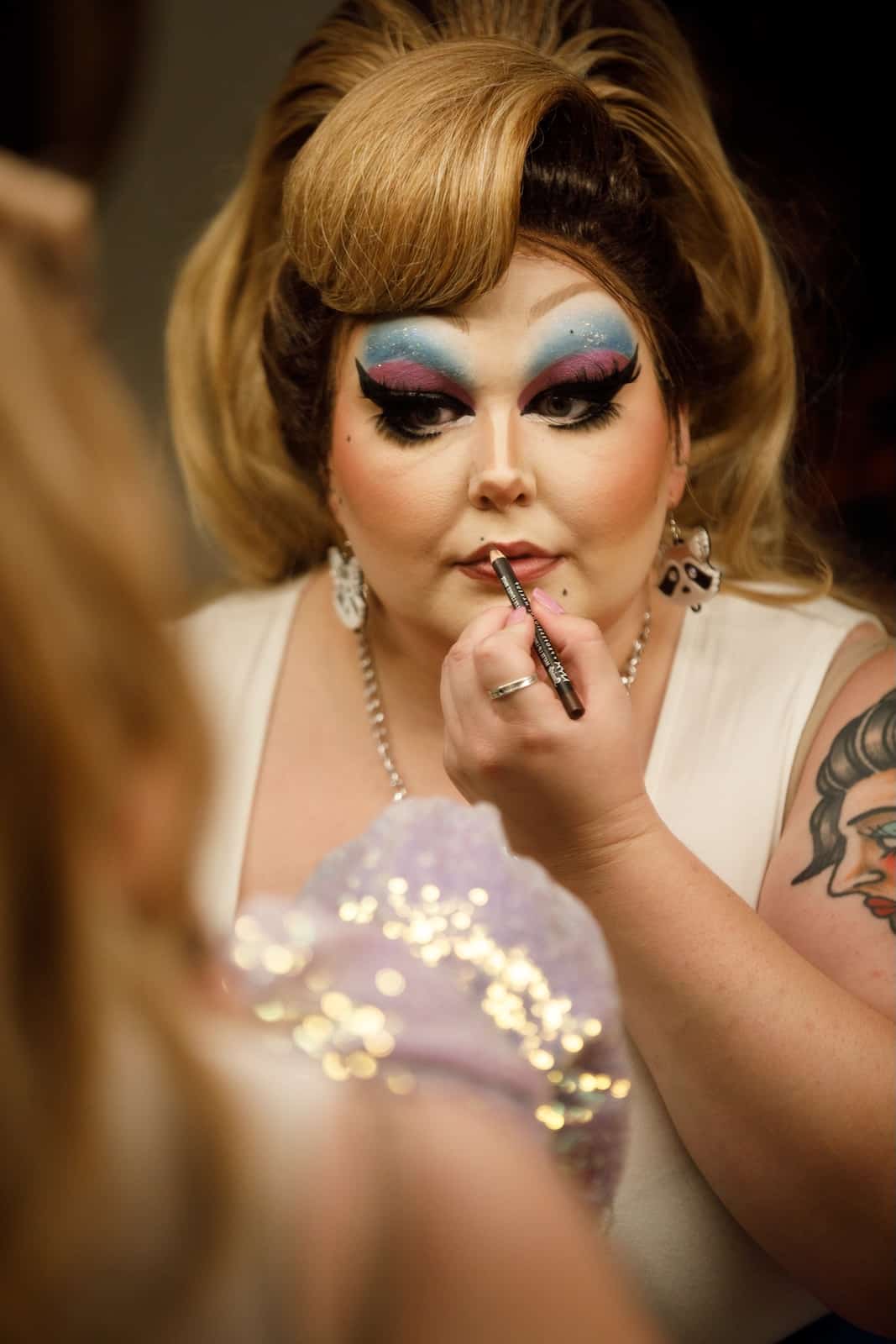

On stage, Margaret, dressed in neon and camouflage, lands the pin. Stella sprawls beneath her, hair splayed, arm wrenched just enough for drama. The audience is in on it, fully committed. They gasp, they count along with the referee, helping to create suspense — cheering like something real is at stake. And, in so many ways, there is.
This is Montana Drag Wrestling. A glittery, gritty collision of drag performance and traditional pro-wrestling. It’s funny and over-the-top, but it’s also part of a long lineage. Drag and wrestling have long been interconnected, beginning in the 1940s with the emergence of exóticos — male wrestlers who disrupted rigid codes of masculinity norms in Mexican Lucha Libre wrestling. The coy and flirtatious exóticos blew kisses and winked at the crowd showing off their sparkling lids as they faced down their opponents.
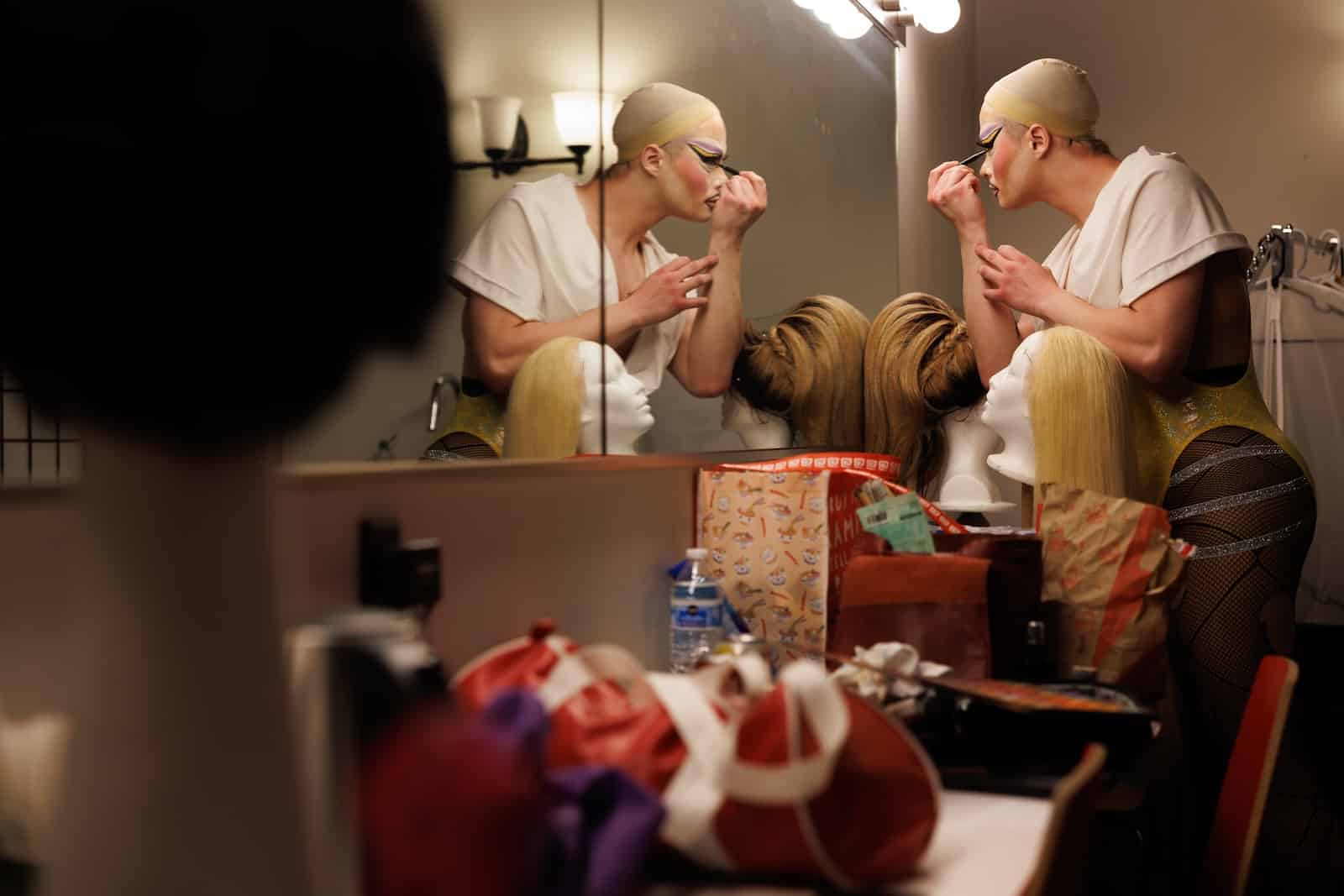
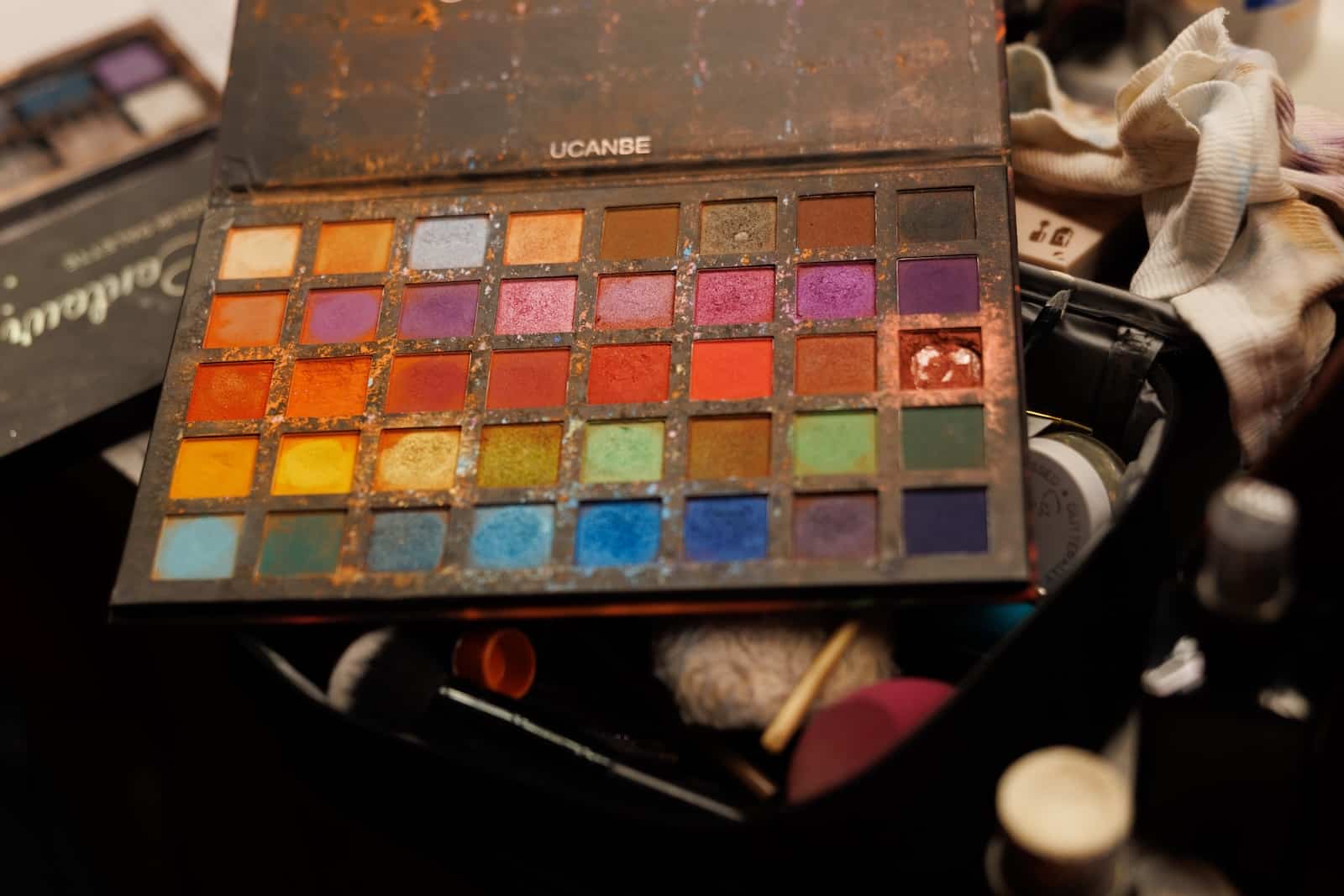

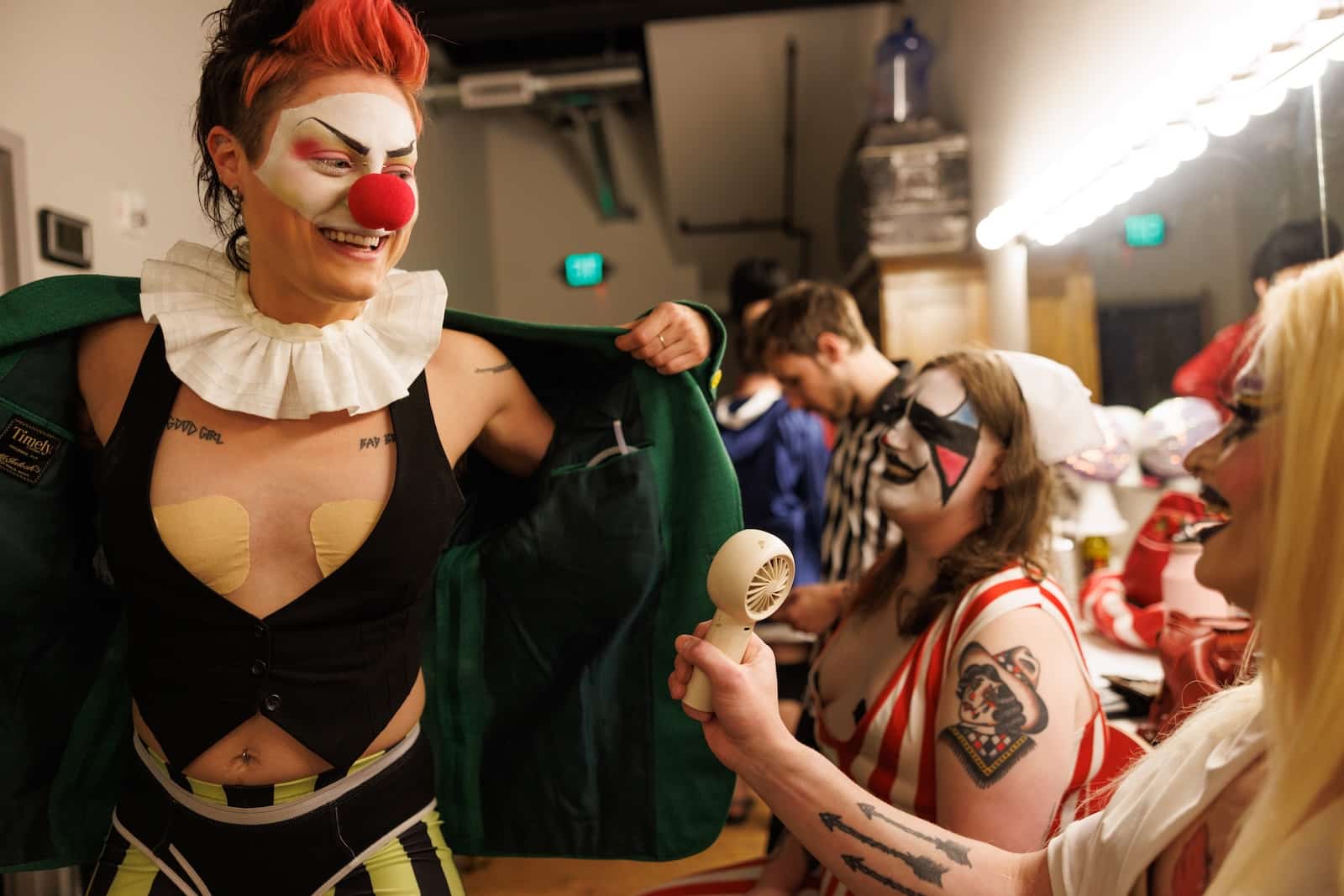


Montana Drag Wrestling is a much newer tradition. Comedians and drag queens saw an opportunity for it when anti-drag bills started coming through the Montana Legislature in 2022. They wove a cast of drag performers, and created personas, some of whom are parodies of people hell-bent on abolishing the art form of drag.
The MDW villains (known as “the heels” in wrestling-speak) are a wrestling faction known as the Bitterrooters Against Drag, AKA “The Brads.” They represent the anti-drag contingent of Ravalli County, Missoula’s deeply conservative neighbor to the south in the Bitterroot Valley. The “Brads” are tough-talking country types who despise the drag queens that they face in the ring. Clad in camouflage jackets and muscle tees, they swagger into the ring amid boos and jeers, with theme songs that belong on the scratchy stereo of an old Ford pickup.


Anti-Brad animosity runs rampant in the crowd at each match. Jessie Smith and Korey Bell, two die-hard fans who say they make it to every show if physically possible, brought a sign to the Saturday match reading: “Brad Moved Here From California.”
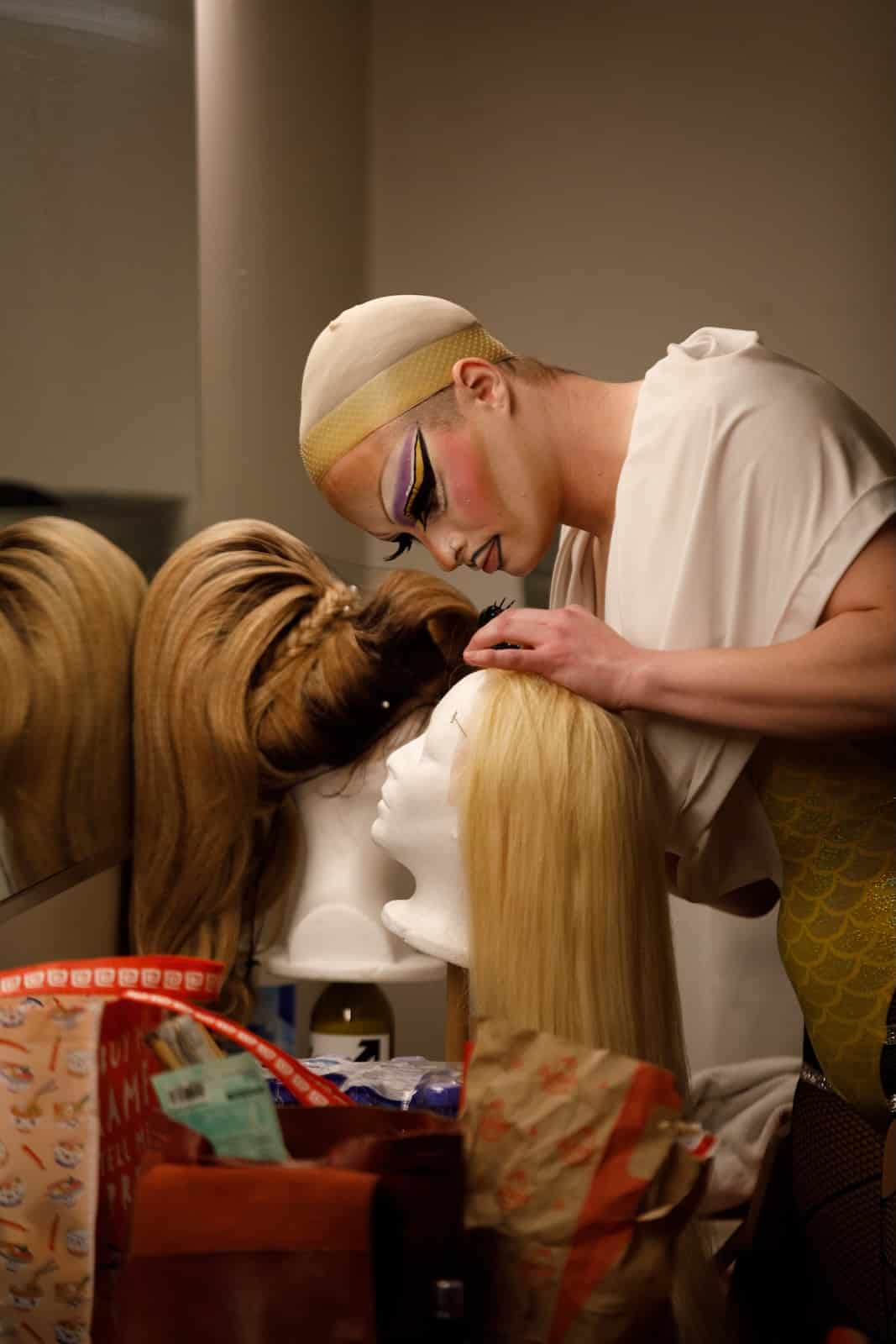
Their rival faction is The Bounce Haus, a group of drag queens who face off against The Brads — and against each other — to win the ultimate championship. They’re the heroes (AKA “The Faces”) or the heroes of the fights. They dress in fishnets, brightly colored leotards and impeccable makeup.

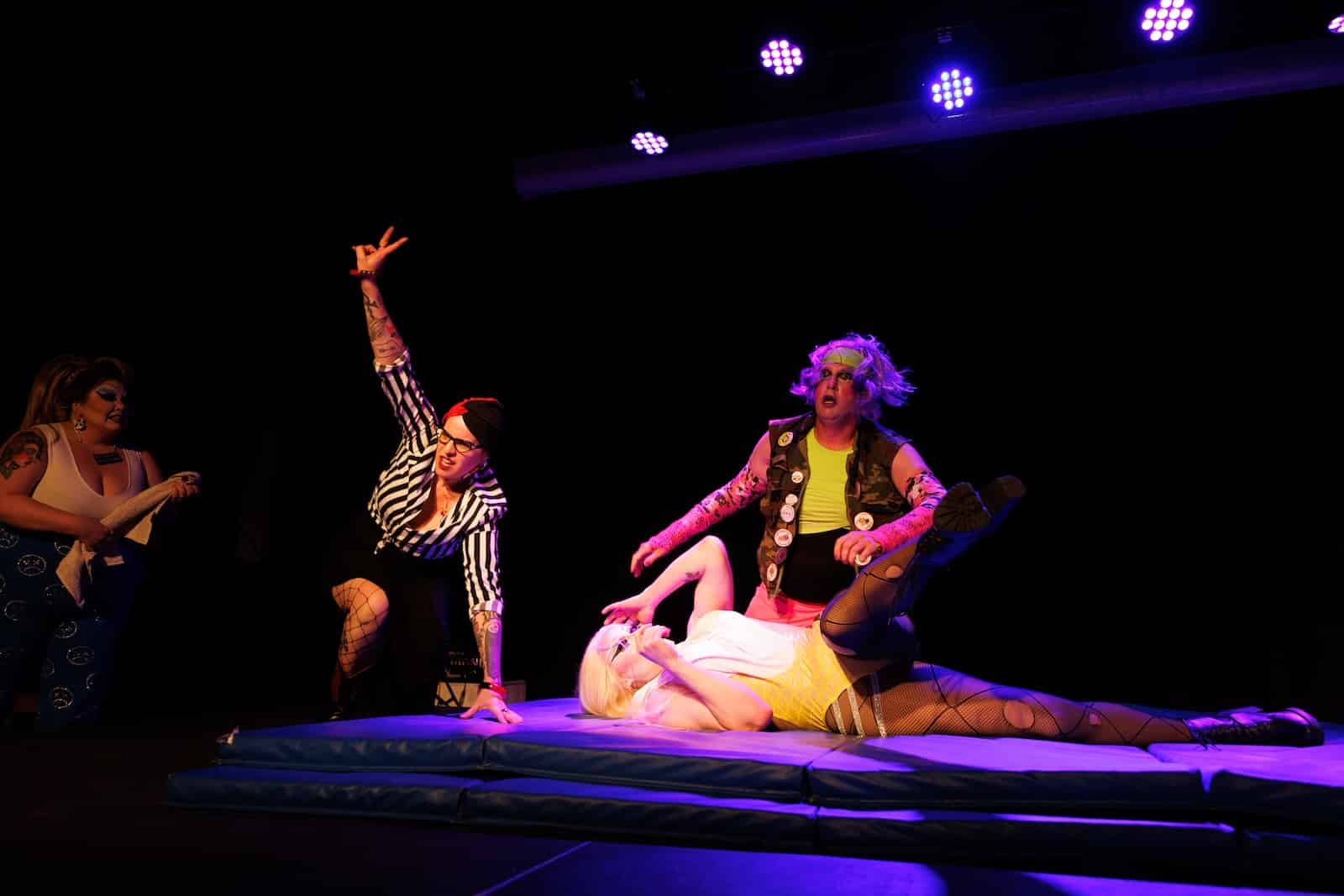

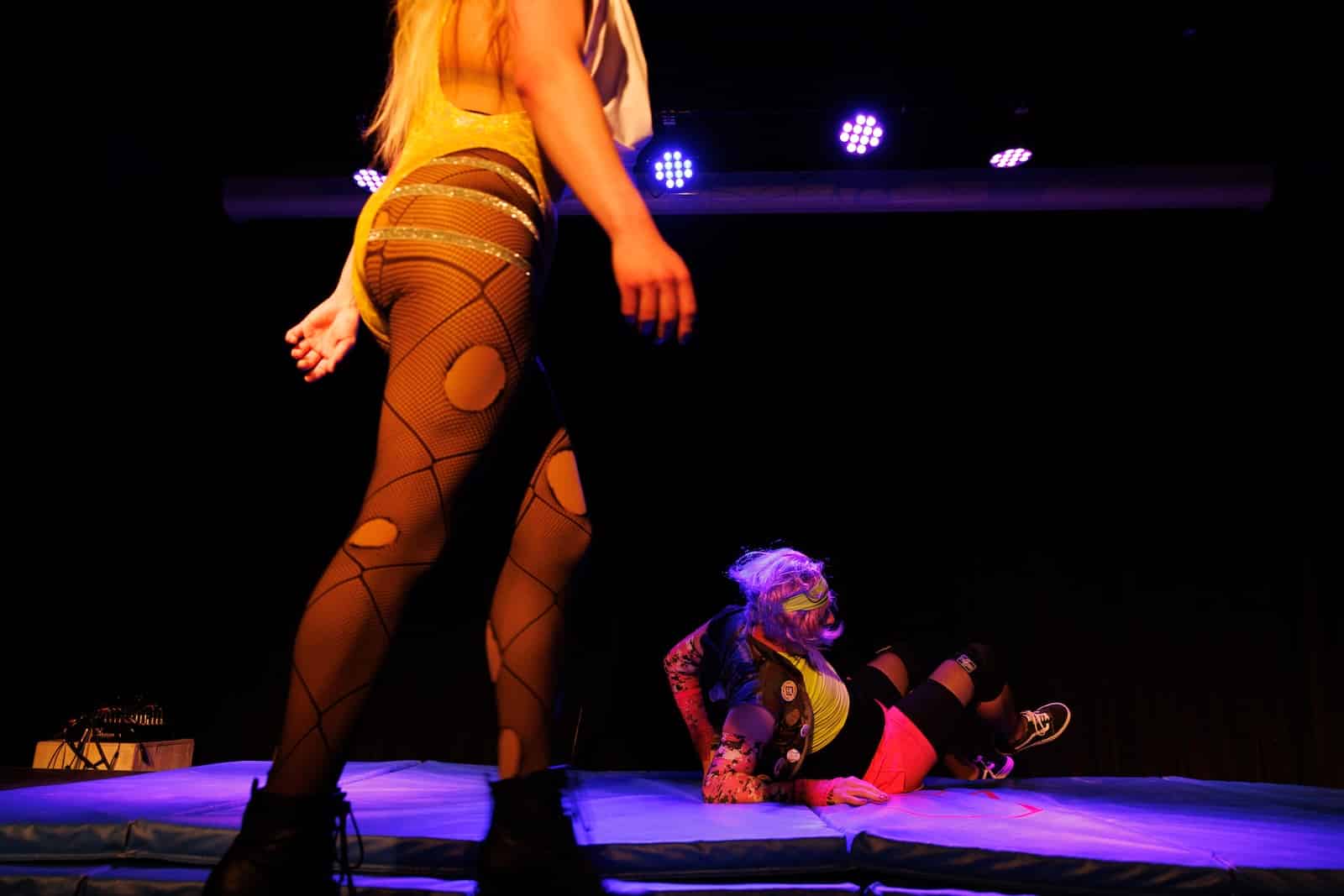
But the show’s storyline expands past traditional ideas of heroes and villains with a central character who defies easy classification: Margaret Murder. Murder is a die-hard wrestler who joined Montana Drag Wrestling as an outlet to continue her art. She doesn’t do drag professionally, and she doesn’t identify with any of the main factions. Her patchwork neon outfits are the source of much mocking from the stylish queens who face her, but her signature bellyflop and relentless fury make her a formidable opponent in the ring.

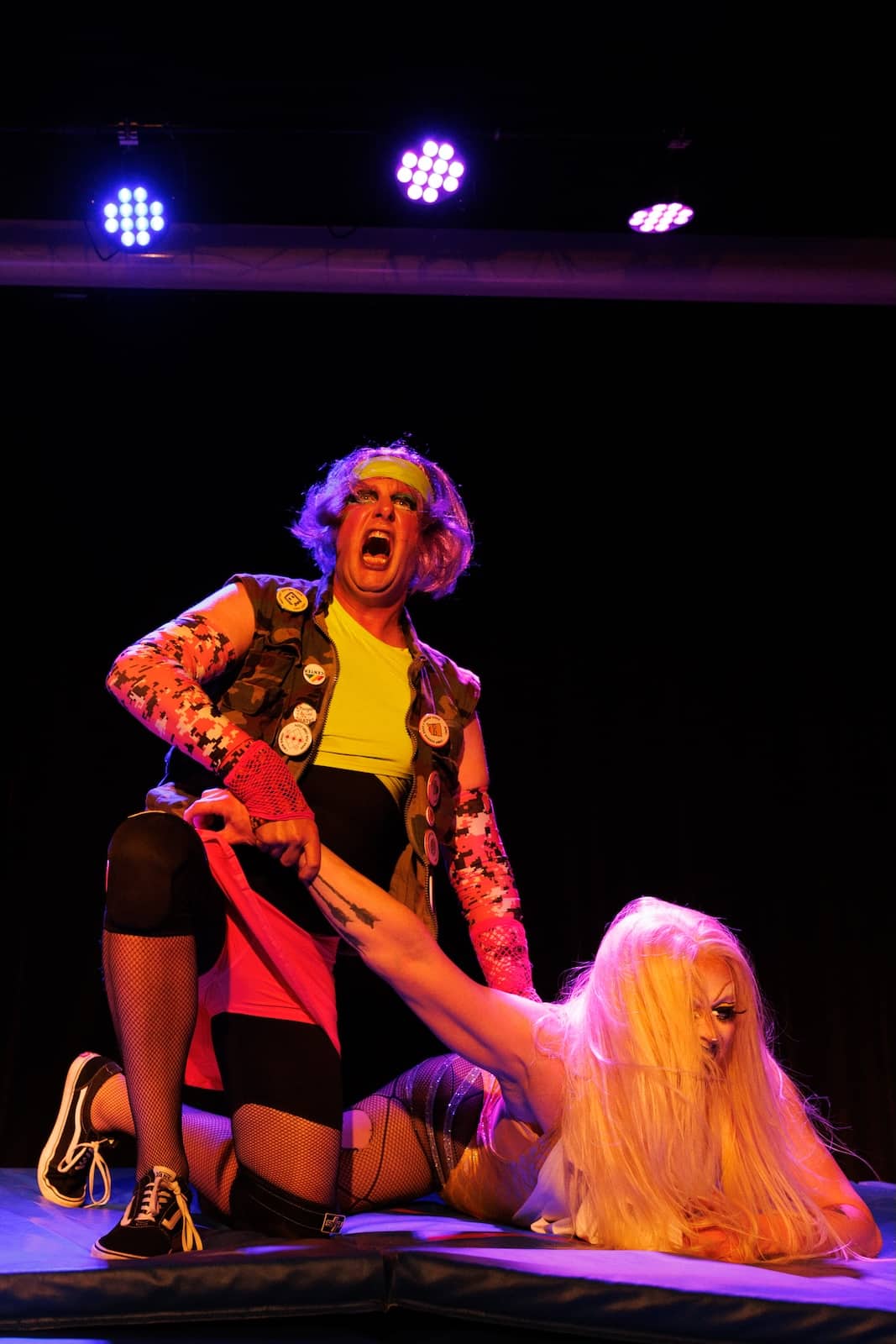

Murder challenges stereotypes in and of herself as a drag queen disconnected from the trends and the culture of her fellow performers. She’s surly, a woman of few words, grunting as she elbows her opponents in the face.
“You’ll soon realize that Margaret is the crunchiest of all of the drag queens,” Murder told The Pulp in a pre-fight interview. “In fact, I don’t even like to call her a drag queen — she’s a drag wrestler. Because there’s other people that really care for their art and do it. And part of the thing is, Margaret is just this drag schlub that just wants to come in and fight.”
The shows are light-hearted and welcoming, and always a bit rowdy. But beneath the hilarity is something more pointed. The performed violence of drag wrestling adds a new layer to drag’s long history of playful subversion. In a time when drag is being restricted and mischaracterized, Missoula’s drag wrestling leans in, playfully exaggerating the drama and, in the process, exposing its absurdity. On Saturday night, the body slams may or may not have been fake (wink), but the defiance was real.