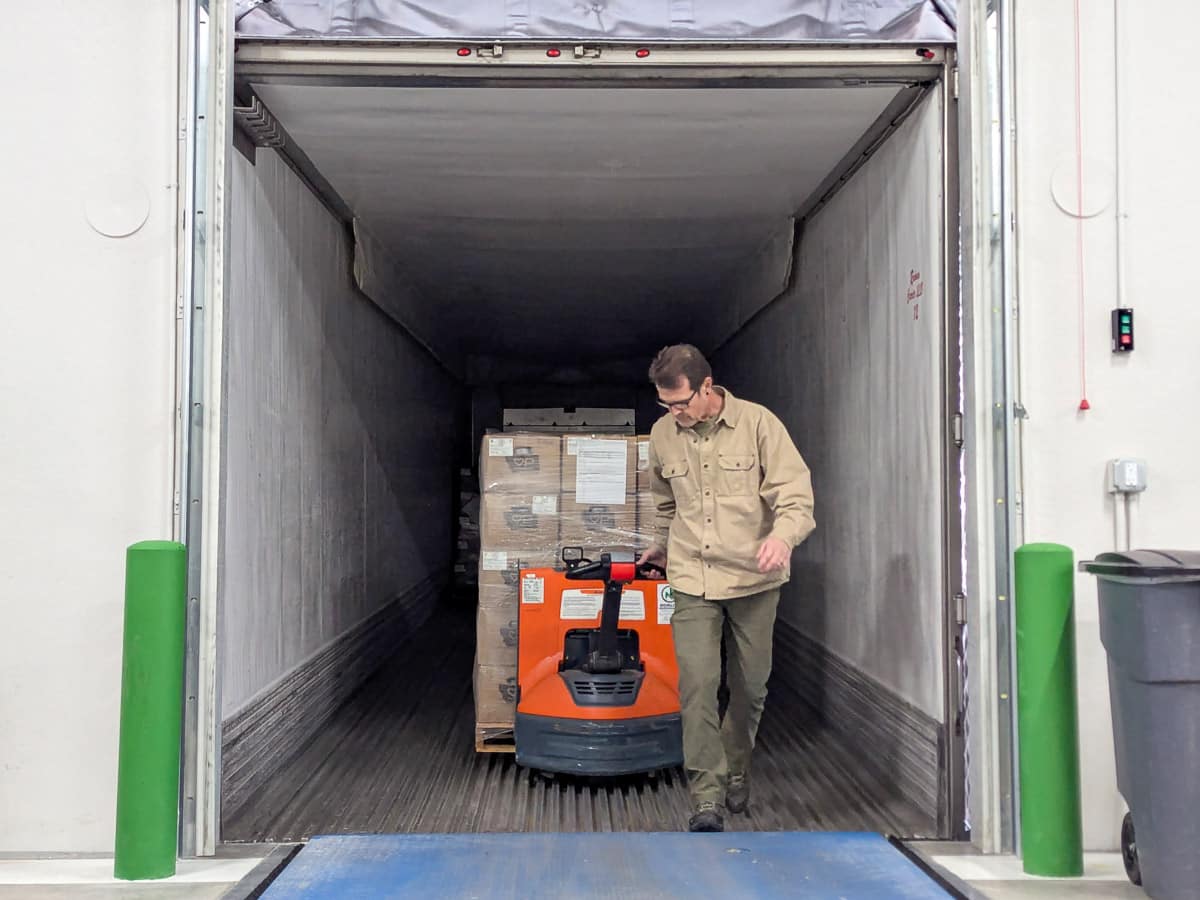
A couple dozen denim-clad workers crowded the Montana Food Bank Network’s loading dock in the industrial northwest edge of Missoula last week, eagerly awaiting the arrival of 12,160 pounds of ground pork. The shipment marked a key step in the journey of a group of Phillips County pigs, first reported last fall as potentially feral and now bound for food bank freezers across the state.
As the loading door scraped open and pallets of packaged meat rattled over the metal ramp, staffers from the Montana Food Bank Network (MFBN) and its partner organizations snapped photos and murmured to one another. Small wonder considering the headlines generated by the Montana Department of Livestock’s resolve to trap the swine before a feral population could establish itself in the state, and the equally compelling effort to turn an averted ecological nightmare into a boon for hungry Montanans.
At a time when need is high and uncertainty is rampant, the statewide food assistance nonprofit has leveraged a familiar Montana trait: ingenuity. And when it comes to meat finding its way from the wilds into pantry freezers recently, Phillips County pork hasn’t been the only item on the menu.
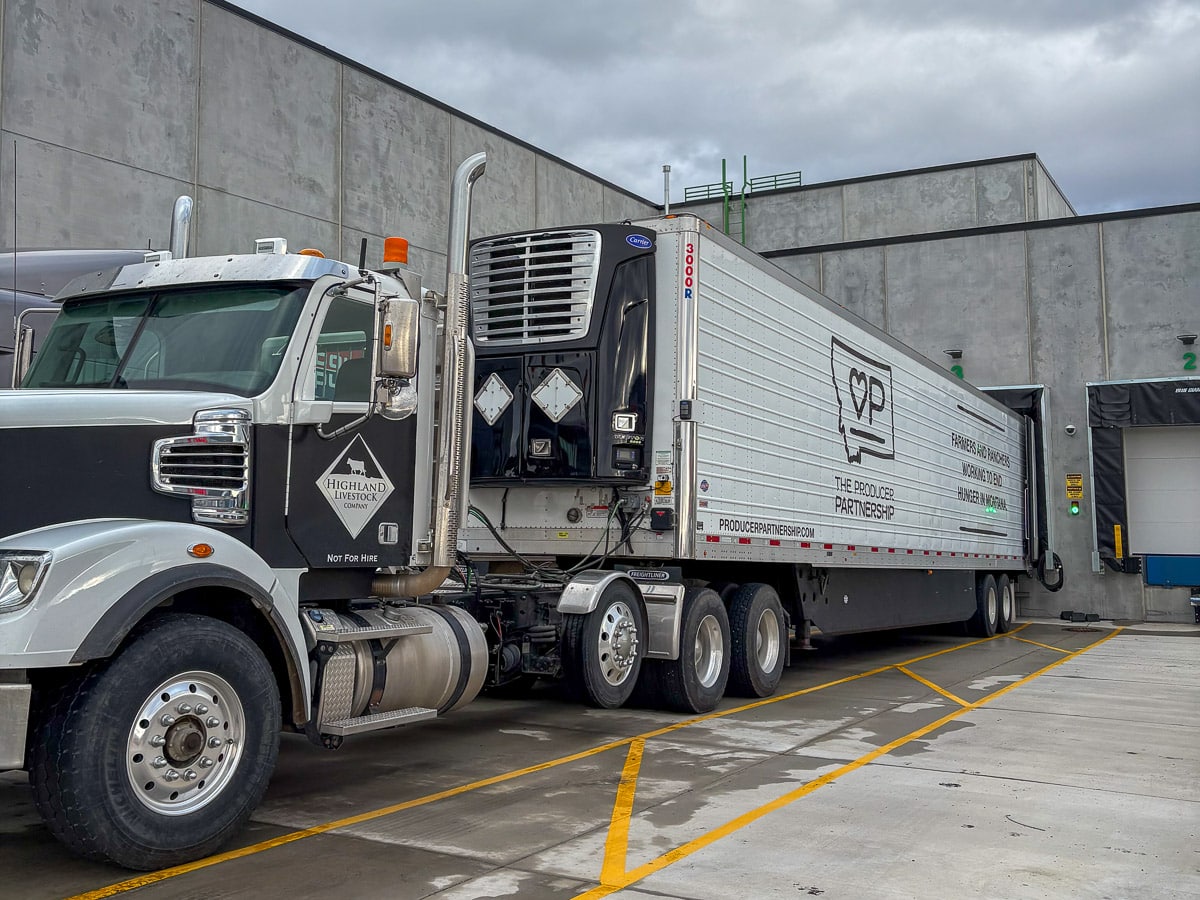
MFBN President and CEO Gayle Carlson told The Pulp the donated pork came courtesy of Livingston-based Producer Partnership, the nation’s only nonprofit, USDA-inspected meat processor, whose staff and board members made up the bulk of the attendees. Carlson said Producer Partnership has made an estimated 200,000 pounds of protein accessible through its work with MFBN since the organization was established in 2020. According to Producer Partnership founder and president Matt Pierson, this latest contribution of meat alone will translate to roughly 48,000 meals, and that’s meat that would have likely gone to waste if someone hadn’t stepped in to slaughter and process the pigs.
It’s a significant amount of meat from a single culling effort, Pierson said. And now that they made it happen, they can do it with future cullings of uncontained pigs, just as they have with other unwanted livestock over the past five years. “It’s a lot out of this one moment, this one [livestock culling] project,” Pierson said. “[Agencies] now know that they have an outlet that can have a better outcome, that we can actually utilize these animals.”
According to state livestock inspectors, the Phillips County pigs were from an uncontained domestic herd that had broken into livestock feed last fall — activity that was initially attributed to bears. As soon as investigators determined the pigs were displaying signs of feral behavior, state and federal officials moved quickly to trap them. Feral pigs have become an unrelenting nuisance across the border in Canada, and Montana continues to run a “Squeal on Pigs!” campaign against any potential beachhead here in the state.
“Hopefully a lot of the people at the federal level recognize that food banks can’t handle this capacity.”
The resulting infusion of pork that arrived in the MFBN freezer this month couldn’t have come at a more opportune moment, as meat prices on grocery store shelves have skyrocketed during the past year. The latest consumer price index in December showed a 12-month increase of 9.4 percent in the average cost of beef, pork, fish and poultry, and in-state meat processors are keenly aware of the impact rising prices have had on cash-strapped families.
“We are hitting all time highs,” said Lauren Archibeque, owner of the butcher shop Hamilton Packing. She’s seen ground beef prices hit $8 a pound in the Bitterroot Valley recently. “I talk to people all across the Northwest — suppliers and ranchers and cattle people and the people who come and drop off their beef for slaughter and processing — and everybody seems to be a little bit in shell shock going, ‘I can’t believe it either.’”
Like Producer Partnership, Hamilton Packing has recently served as a critical connector between the Montana landscape and the dinner tables of those in need. Archibeque’s outfit is one of 30 meat processors statewide that participated in the latest round of MFBN’s Hunters Against Hunger, a program established by the Montana Legislature in 2013 to make wild game donations to local food pantries easier. Hunters who drop off their harvest at participating meat processors can opt into the program, and state funding through Montana Fish, Wildlife and Parks reimburses those processors for the cost of their work.
MFBN is still calculating statewide totals tied to the latest general rifle season, but so far the organization’s tally for 2025 has surpassed 25,000 pounds — nearly 5,000 of it donated through Lolo Locker, from which the Missoula Food Bank receives some of its wild game.
At Hamilton Packing, Archibeque estimates her team processed more than 2,000 pounds of game donated through Hunters Against Hunger that included poached or abandoned carcasses brought in by game wardens with FWP, for which processors are also reimbursed through program funds. So far, MFBN has issued roughly $72,600 in reimbursements, with Carlson estimating the reimbursement rate at between $3 and $4 per pound.
“I heard people who said, ‘You know what, I looked in my freezer and I’m going to be OK this year. But I know other people are not.’”
Archibeque, who purchased Hamilton Packing with her husband last year, had her first brush with Hunters Against Hunger at a time of rising meat prices and when public concern over food insecurity was in high gear. Last fall’s government shutdown, along with eligibility changes to federal food subsidy programs like SNAP, sent shockwaves through America’s food assistance community. Many families in Missoula and elsewhere faced questions about their short- and long-term access to life’s essentials. Carlson said the situation put pressure on MFBN to meet the sudden increased need, prompting it to spend $185,000 on emergency food boxes and serving as a “wake-up call” about the limits even a well-established statewide organization has to fill such a void.
“Hopefully a lot of the people at the federal level recognize that food banks can’t handle this capacity,” Carlson said. “If they start eliminating food public assistance programs and expecting us to pick it up, we can’t do that. We’re not intended and we’re not designed to be able to supplement families 100 percent.”
Amid that national cloud, Archibeque said she encountered hunter after hunter at Hamilton Packing willing and eager to contribute a few dozen pounds of elk, deer or antelope to the cause. Occasionally, even those who declined to participate in the program explained to her that the meat from their kill was already headed to a friend or neighbor in need. Throughout the season, Archibeque heard stories from people who love the hunt but didn’t need what came from it — stories that still leave her choked up.
“I heard people who said, ‘You know what, I looked in my freezer and I’m going to be OK this year,’” she said, her voice cracking. “‘But I know other people are not.’”

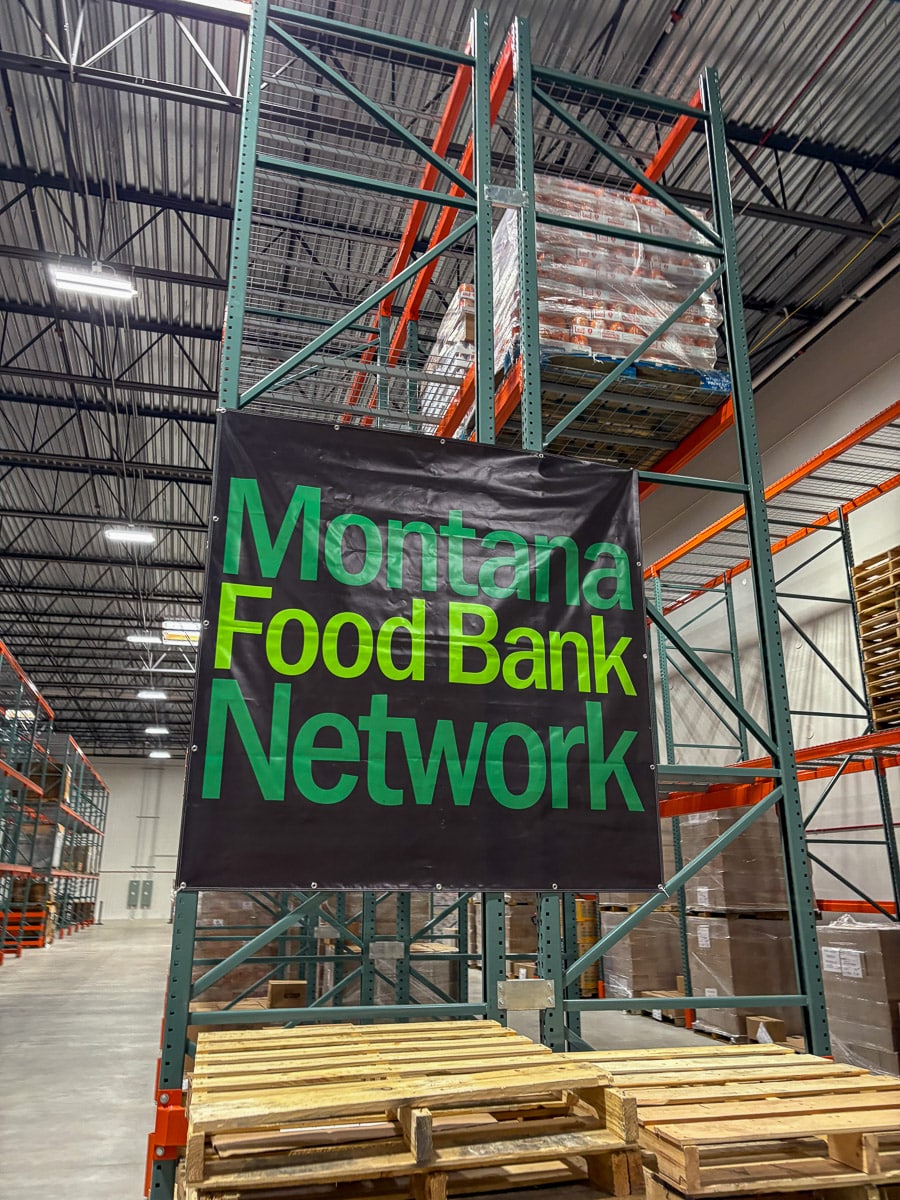
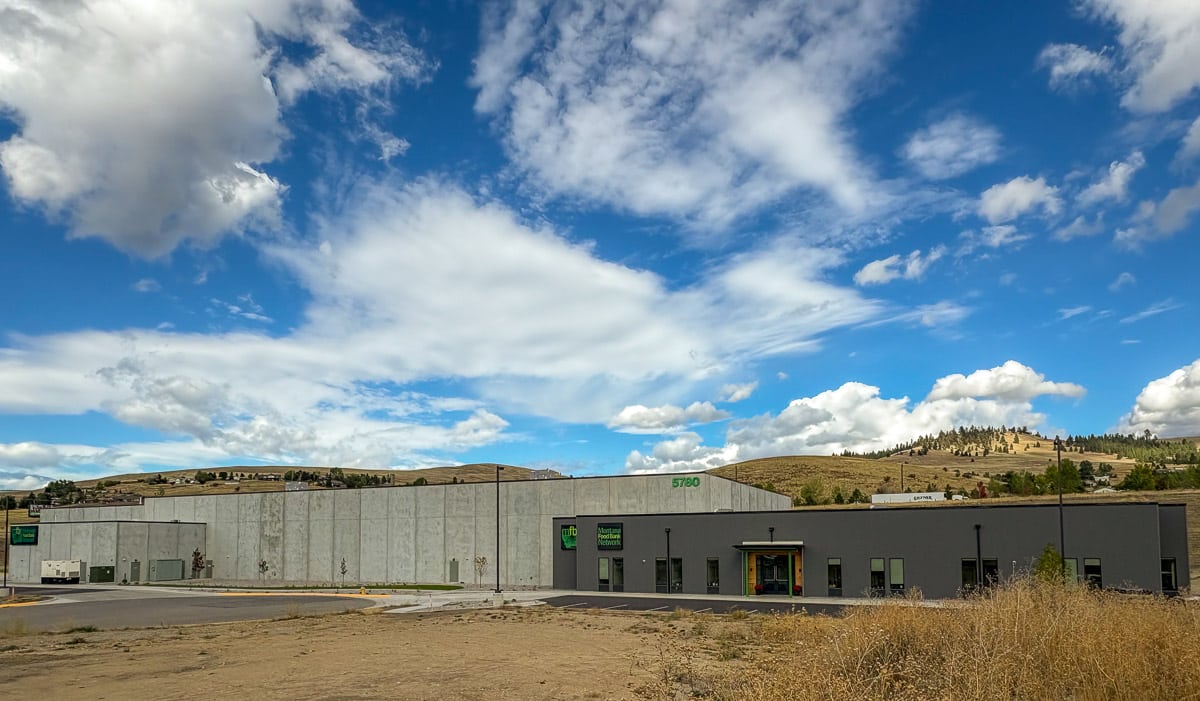
On top of this creative flow of protein, MFBN also doubled its repacking capacity last fall as part of its move into a massive new warehouse facility. The expansion was made possible by donations from a variety of community partners, with the waste disposal company Republic Services providing grant money specifically for the new repack room. In this room, Carlson explained, volunteers from various organizations and businesses are able to package drygoods from donors like Pasta Montana for distribution to hundreds of food sites statewide.
Ground elk, venison, homegrown pork provide staple protein that’s reflective of Montana’s culinary culture, Carlson noted. And the drive not to let good food go to waste reflects Montana’s culture, too. While supporters of both initiatives acknowledge that thousands of pounds of meat won’t feed everyone, they remain heartened by the temporary impact those meals will have in trying times.
“This isn’t going to solve everybody’s problems,” former Democratic U.S. Sen. Jon Tester told The Pulp while milling about the pallets of freshly delivered pork. “But it’s going to help. It’s going to help people to be able to not only have decent food on the table for themselves and their kids, but also be able to afford medicine or rent or whatever else they’re buying.”