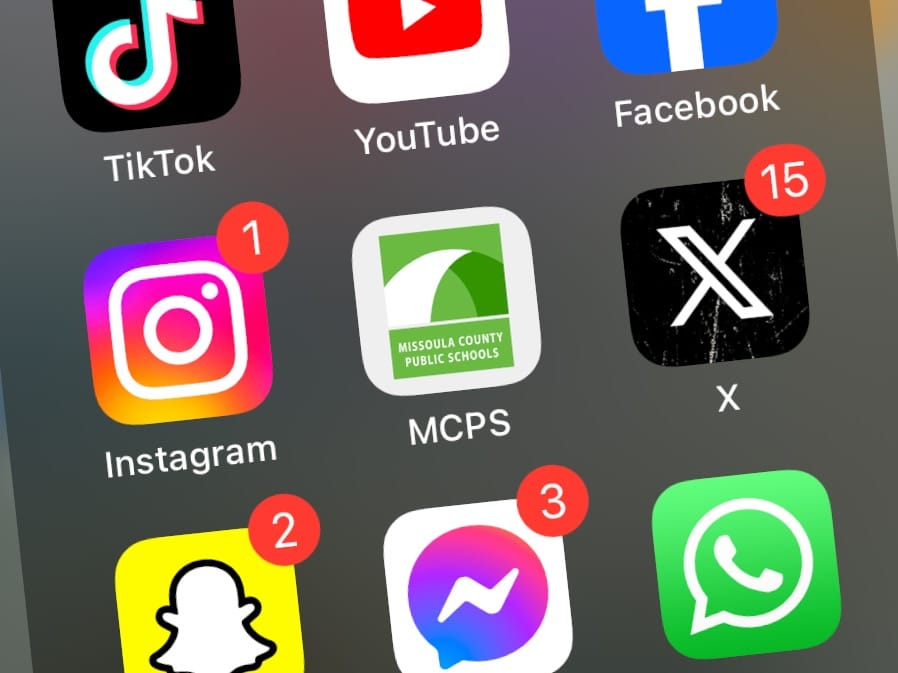
One afternoon in May, Erika Peterman’s 16-year-old son came home from Hellgate High School in Missoula and told her he thought smartphones should be banned from school.
Peterman, who also attended public school in Missoula and now works as an attorney, was thrilled—the two had been discussing the negative impacts of smartphones over the past year and she hoped her son would start a student initiative to remove them. But he wasn’t interested.
“I laid out all the steps of what he should do and he just looked at me like, ‘I’m not doing that,’” Peterman said. “And at that moment I thought: You’re right. You shouldn’t have to. You’re the kid. We’re the adults, and we need adults in the room right now who are saying, ‘Enough.’”
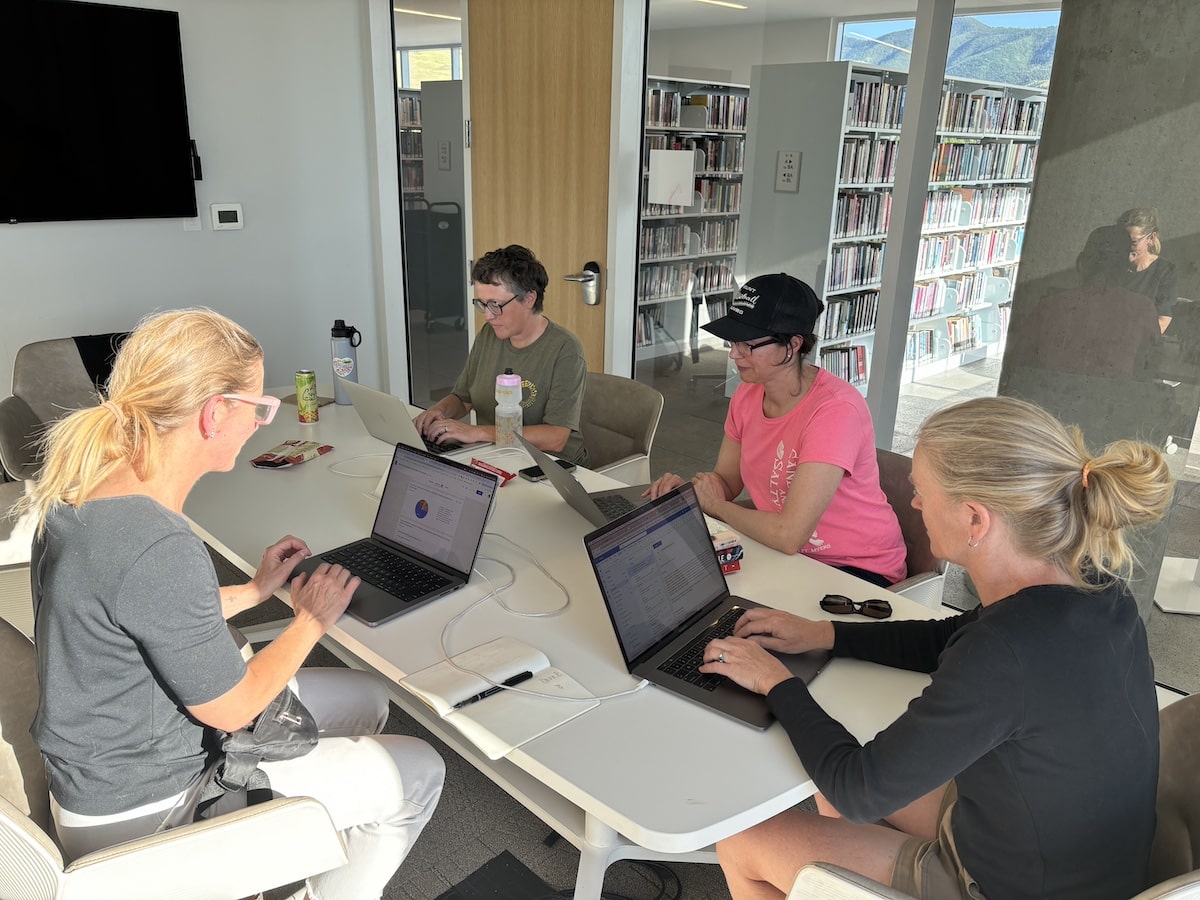
After posting on Facebook about the conversation, Peterman was approached by another parent, Morgan Slemberger, who had also become exasperated by the smartphone situation. The two moms decided to take action. First, they designed a pair of surveys—one geared toward teachers in Missoula County Public Schools and one for parents—to gather feedback on the impact of smartphones at home and in the classroom.
“We’re the adults, and we need adults in the room right now who are saying, ‘Enough.’”
They emailed the surveys to around 400 MCPS teachers on June 3, targeting mostly middle and high schools, and solicited responses from parents via email and social media beginning a few days later. In a little over 48 hours, Slemberger says, 144 teachers responded, and over the course of five days nearly 250 parents weighed in.
Next, Peterman and Slemberger formed what they call the Smartphone-Free Schools Working Group, composed of parents and teachers who had indicated at the end of the survey that they were interested in getting involved. The working group has met four times since June 18 and aims to pitch a district-wide smartphone-free policy to the MCPS Board of Trustees on July 30.

While the survey results are informal, both parent and teacher responses indicate that smartphones are having an impact: Over 75 percent of those who took the parent survey said they are in favor of enacting a “collaborative, thoughtful smartphone-free school policy,” while 90 percent of surveyed MCPS teachers identified smartphones as “distracting” in the classroom.
Meanwhile, a movement toward smartphone-free schools has been gaining momentum around the U.S., with policies banning student smartphone use being proposed and adopted at both district and statewide levels. Experts like social psychologist Jonathan Haidt, author of the book “The Anxious Generation,” argue that childhood has shifted from being play-based to phone-based, and that the arrival of smartphones and social media aligns with a spike in depression and anxiety rates among young people. Evidence of how social media specifically is contributing to the youth mental health crisis prompted the U.S. surgeon general last week to call for warning labels on social media platforms—the latest and among the loudest alarm bells alerting parents to how social media can “prey on” developing brains.
The surgeon general says more research is needed to fully understand the impact of social media on youth mental health—a gap in knowledge that a 2023 advisory attributes to lack of data transparency from tech companies. That’s not stopping the growing number of parents, educators, administrators and lawmakers pushing for top-down rules intended to mitigate phones’ and social media’s effects on education, childhood development and mental wellbeing.
Molly Norton, who teaches eighth grade English language arts and social studies at Washington Middle School and has a ten-year-old son, attended one of the first working group meetings led by Peterman and Slemberger.
Norton has worked in the same classroom for 16 years and, in an interview following the meeting, described the mental health decline she has witnessed among her students.
“I’m so worried about these kids,” Norton said. “I just see that their anxiety, more than anything about school, has really increased over the years. A few years ago, I didn’t even know what KMS stood for, and now it’s part of their vernacular.” KMS, Norton explained, stands for “kill myself.”
Norton says she has received notes from students who share that they are experiencing suicidal ideation, or that they are scared to come to school or feeling lonely and unhappy. Some students tell her that she is the only teacher they can talk to.
“Nothing sounds good to them. … There’s a level of apathy and disengagement that just didn’t used to exist,” Norton said. Witnessing these emotions among her students also negatively affects her own mental health; she says she has to work hard to maintain positivity and not bring those feelings home with her.
According to Norton, Washington leaves it up to individual teachers’ discretion to set their own smart device policy, with most classrooms adopting an “off and out of sight” rule. Norton requires students to keep phones in their backpacks, but still finds it difficult to enforce with 30 students. Social media, she says, is a huge issue and has impacted students’ attention span in a way that has made teaching feel less effective.
“No matter how compelling a teacher is or the subject matter, [or] how engaging a lesson can be, [it] will never be as interesting as an algorithm that’s specifically designed for their specific interests,” Norton said. “They can’t swipe against us to get rid of us.”
In recent years, she has started bringing in board games from home or that she finds at garage sales in order to offer students an alternative reward to playing on their phones. At first, she says, students feel disappointed that they’re not able to use their devices, but once they get into a game, they enjoy themselves and are able to connect to other students.
“We often forget that school’s supposed to be fun and it’s not supposed to be a time of isolation,” Norton said. “You’re supposed to interact with other kids, you’re supposed to be exposed to new ideas.”
Moving forward, Peterman says that the working group’s goal is to engage in an open, collaborative process with MCPS parents and teachers to arrive at the best solution to propose to the school board.
“We want to have the hard conversations,” Peterman said, adding that she hopes they can hold a public forum prior to the July school board meeting where, ideally, those who oppose a smartphone ban will be able to come to the table and share their perspectives.
“I think that it’s important to open it up in as many different ways as possible to get as many voices around it as possible, even if they’re very different from each other,” Peterman said. “It makes the arguments better. It would make the policy better. I would feel much better if I knew that all voices had been vetted and it had been discussed really thoroughly.”
In addition to pulling together research about how other schools are implementing smartphone bans and if they are seeing positive results—Park City Schools outside of Billings, for example, recently adopted a smartphone ban to limit classroom distractions and address bullying issues—the group also aims to include the perspectives of public health officials, pediatricians, and school counselors in order to present a complete picture of the impacts of smartphones on kids.
“No matter how compelling a teacher is or the subject matter, or how engaging a lesson can be, it will never be as interesting as an algorithm that’s specifically designed for their specific interests.”
Based on the feedback she’s received from teachers, Peterman believes a statewide ban that allows for local control is the kind of top-down approach needed to address the enforcement issues faced by teachers and administrators. She also advocates for medical exceptions for those students who may use apps to monitor their health, or who utilize smart devices as part of an individualized education program, or IEP.
Ultimately, Peterman says she wants to protect and preserve what she sees as Montana’s greatest strength: its communities. The “root” of that strength, she believes, is in the public schools.
“I got such a great education [in Montana]. I feel strongly that it’s the backbone of our communities. And if we allow kids to have phones in schools, we break down those communities because kids aren’t looking up, they’re not engaging, they’re not learning, and they’re not looking at people who look different than they do and come from a different background than they do,” Peterman said.
“If those communities fall apart in our public schools, I feel strongly that our communities fall apart altogether.”