Quinn is an outgoing teenager who’s into reading, paintball and the Gaelic game of hurling, which looks like a mix of lacrosse, rugby and ultimate frisbee.
Some of Quinn’s best interpersonal qualities also made the pandemic particularly hard on the 17-year-old, who uses they/them pronouns. In turn, Jobyna McCarthy, Quinn’s mom, struggled to support them. She felt they were navigating choppy seas alone. McCarthy couldn’t see then that she’d find a lifeboat in a new Missoula program.
When their freshman year at Hellgate High School rolled around, then-15-year-old Quinn was already living with depression and anxiety, exacerbated by a couple years learning from home. During the first week, a gun threat at the school prompted a multi-hour lockdown and added debilitating nightmares to Quinn’s mental health load.
Together, Quinn and McCarthy decided they wouldn’t return to Hellgate and instead prioritized Quinn’s mental health journey—a journey that McCarthy, a single parent working multiple jobs, had been keeping mostly private.
“Because we’re all so quiet about it,” McCarthy said. “We’re still like, ‘Just try to power through.’ And ‘everybody’s fine.’ And ‘we’re fine.’”
But she wasn’t fine. She felt alone. And she needed more resources to help her help her child.
For Quinn, the pair opted for Saint Patrick’s Adolescent Partial Hospitalization Program, which offers crisis stabilization, treatment and education support for teens. They eventually landed at Willard Alternative High School.
For herself, McCarthy joined the inaugural cohort of the Missoula County Parent Leadership Training Institute, or PLTI, in late 2021.
PLTI is housed within the Zero to Five program at the United Way of Missoula County, which implements systems changes for young children, who don’t receive centralized support until they start school.
It’s a free, 20-week civics and leadership course designed to promote agency among youth caregivers to advocate for children within their communities. PLTI is relatively new to Missoula, but the program started in Connecticut in 1992 and a national structure, the National Parent Leadership Institute, was developed in 2012. There are currently sites in 18 states and three tribal nations.
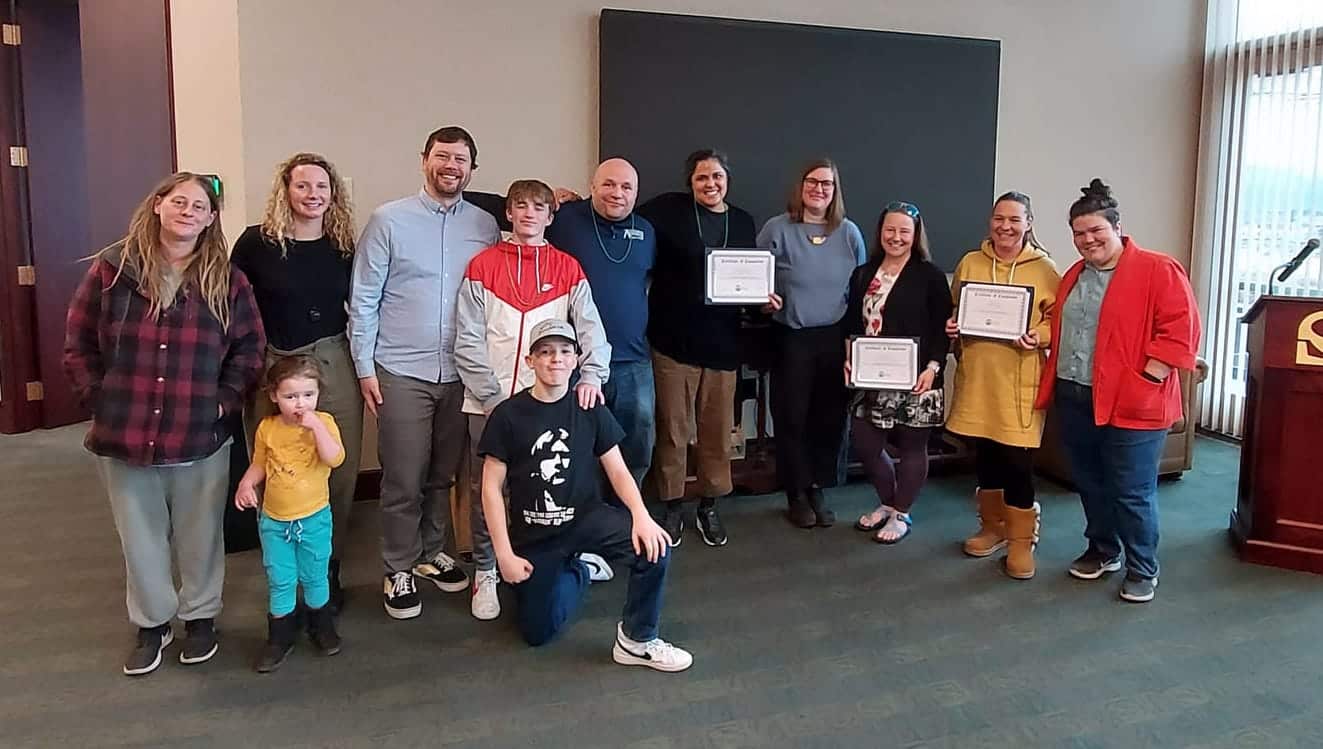
The curriculum gets into the nitty-gritty of how systems like elections and government work. It also helps participants understand their relationship with those systems—inequities and all. Critically, PLTI also offers benefits like childcare, free meals and transportation assistance to participants during programming.
PLTI Site Coordinator Sam Duncan said it’s meant to bring together diverse caregivers—“people who would have never come upon each other and who have a lot of things not in common.” Participants bring a range of experiences and ideologies, and the group’s process of building trust, Duncan said, is “a microcosm of a functioning democracy.”
Participants design a community impact project during the course of the program. Once the program is over, the parent leaders can take their projects with them out into the world and, ideally, find them a more permanent home. Past projects include creating civil discourse around gun reform, developing a cooking class for kids, creating parenting programs focused on dads and increasing access to education and economic opportunities for refugee families.
A neighbor mentioned the program to McCarthy and she signed up primarily to connect with other parents. She saw it as “a group of parents learning how to make change for our kiddos, for our community, for maybe even the world,” she said. As it turns out, it also served as a place for her to carve out a new career path.
Half of the 20-week course, made up of 10 biweekly classes, is, essentially, Civics 101. But the other half is much more personal, said Grace Decker, Zero to Five Missoula’s strategic collaboration coordinator.
During those first few weeks, Decker said, “folks are talking a lot about racism, they’re talking a lot about structures and systems and how those are built. They’re talking with each other a lot about their experience of identity and how that has influenced their lives.”
It was through these talks with her cohort that McCarthy found the peer support she needed to open up about her family’s mental health journey. She choked up remembering the power of “having those other parents reflect back onto me what I had done—that I was strong and I was brave and I was tenacious,” McCarthy said.
That peer support proved so critical for McCarthy that she centered her PLTI work around it. Her community impact project was an effort to support parents and caregivers with adolescent mental health via an online resource list and online or in-person support groups. Since then, this work has become her full-time job at the Family to Family Health Information Center at UM’s Rural Institute, where she connects caregivers that have children with unique mental health needs–a position created for her because of her lived experience.
McCarthy’s story is a textbook outcome for PLTI. Decker, who advocated to bring the program to Missoula, used the metaphor of a slingshot.
“We want to slingshot people forward in their capacity to understand how systems work,” Decker said. She’s especially passionate about getting underrepresented people to the decision-making tables, including the table she’s sat at for nearly nine years on the Missoula County Public Schools’ School Board.
Showing up to school board meetings is a time commitment and privilege that not all parents can access. Some of those that have been showing up–in large numbers–at meetings across the country the last few years are part of the nationwide push for parents’ rights in public education. Some recent agendas? Barring COVID-19 vaccination requirements, removing books from libraries, and limiting students’ freedom to use their preferred pronouns.
But the founding flag of the parents’ rights movement was planted in critical race theory–the academic understanding that racism is systemic in U.S. institutions and that, in turn, those systems keep the fires of racism stoked. A 2019 New York Times initiative, the 1619 Project, contextualized the founding of the country within the framework of slavery. In response came the 1776 Project PAC, a political action committee working to elect school board members across the country “who want to reform our public education system by promoting patriotism,” according to its website.
The 1776 Project PAC spent more than $2 million during the 2022 election cycle campaigning for school board candidates across the country.
Critical race theory is not being taught in children’s classrooms. But parents’ rights groups use the idea to claim that any discussion about oppression and race that could make white kids in school feel shame or guilt should be cut. The language (and legislation) that seeks to throw out anti-racist curriculum is so vague that it jeopardizes the ability for teachers to discuss racism on any level, even as history.
In many ways, PLTI is a localized answer to the 1776 Project PAC. It invites them to picture the world they want their children to grow up in, and to help make that a reality.
One of Decker’s future measures for success with PLTI is “when there is an ability of parents, regardless of zip code, neighborhood, race, length of time that they’ve lived in Missoula, whatever the things are, to make sure that we are considering [their perspective] at the board level,” she said.
Decker can see—like a periscope—the bigger cultural contexts in which parenting happens and, therefore, the stormy seas that affect navigation through parenthood. Step one for parents suffering from seasickness is often just recognizing that the problem lies not with the ship, but in the waters it’s navigating: the problems aren’t parental, they’re systemic.
According to Decker, that clarity in vision is one of the main points of PLTI.
“It’s trying to help parents pull back for just a minute from the personal to the [systems-level] thinking,” she said. She knows that’s a luxury for overwhelmed parents like McCarthy. But she also knows it can have big rewards.
McCarthy is living out those rewards and is excited to facilitate PLTI’s next cohort through the program. She chalked up her new role as “another piece of my life changing and me growing, and I just expect it to keep happening, you know?” McCarthy said. “Year three. Here we go.”
There’s still time to be part of year three. Priority deadline for 2024’s cohort is Dec. 15.