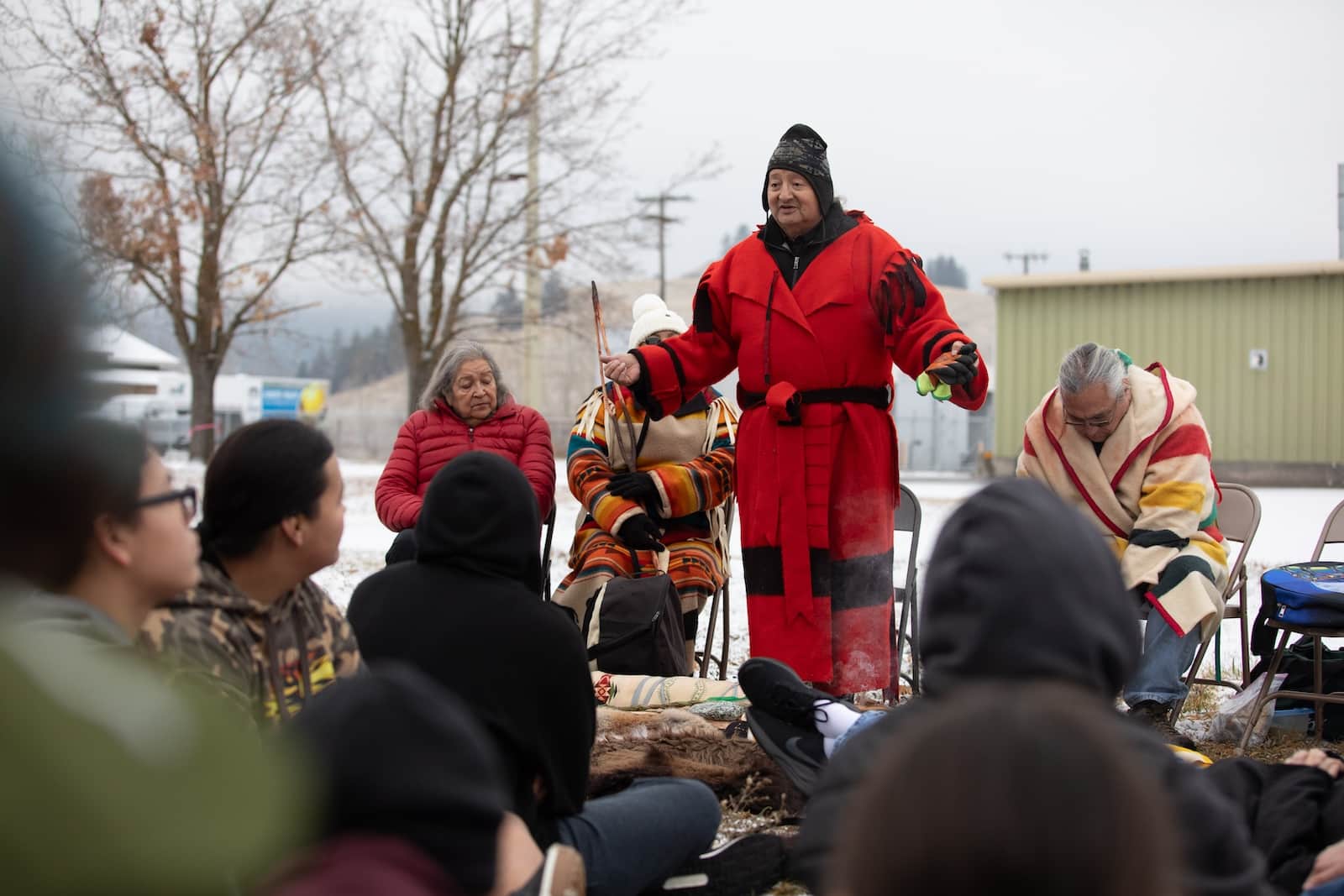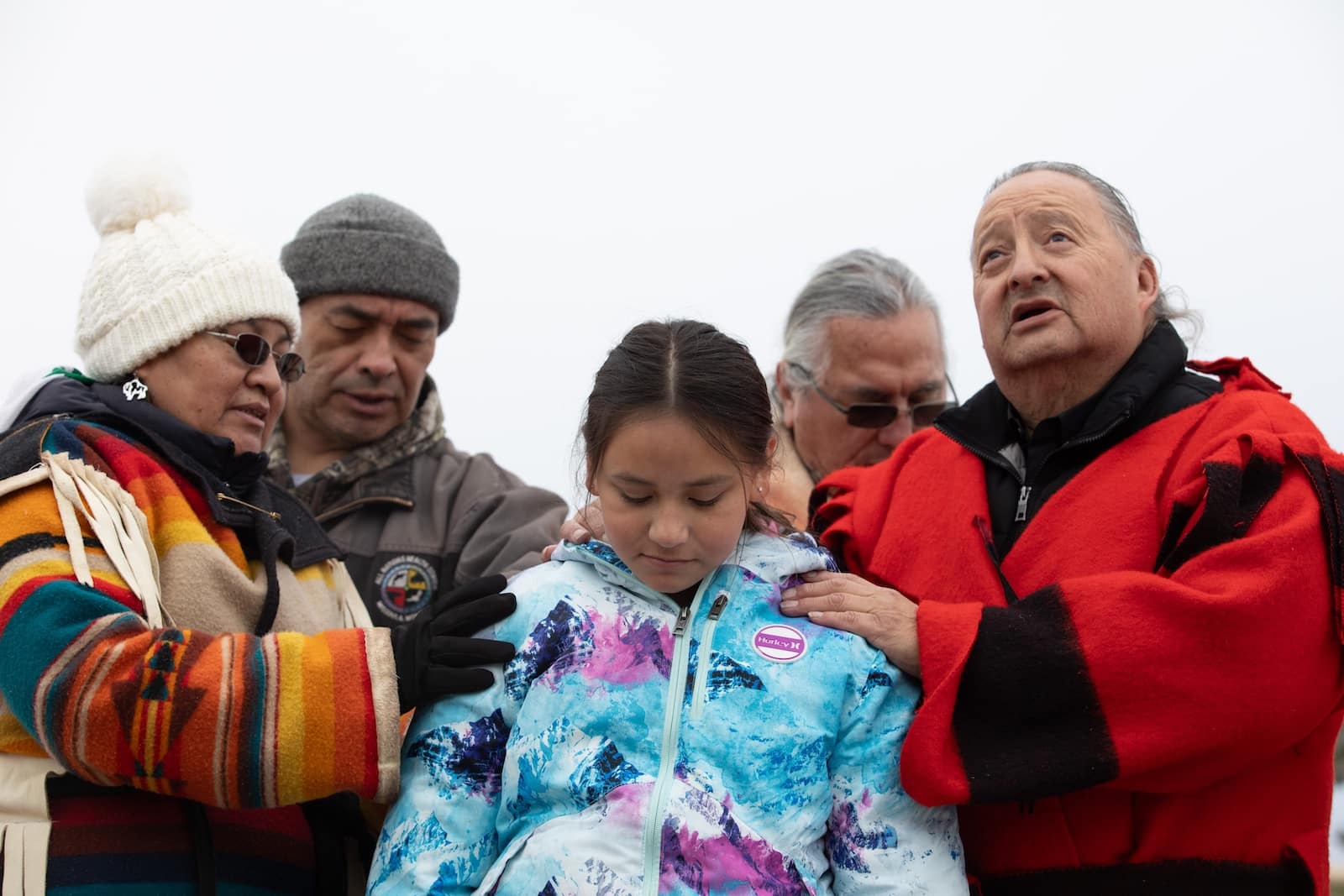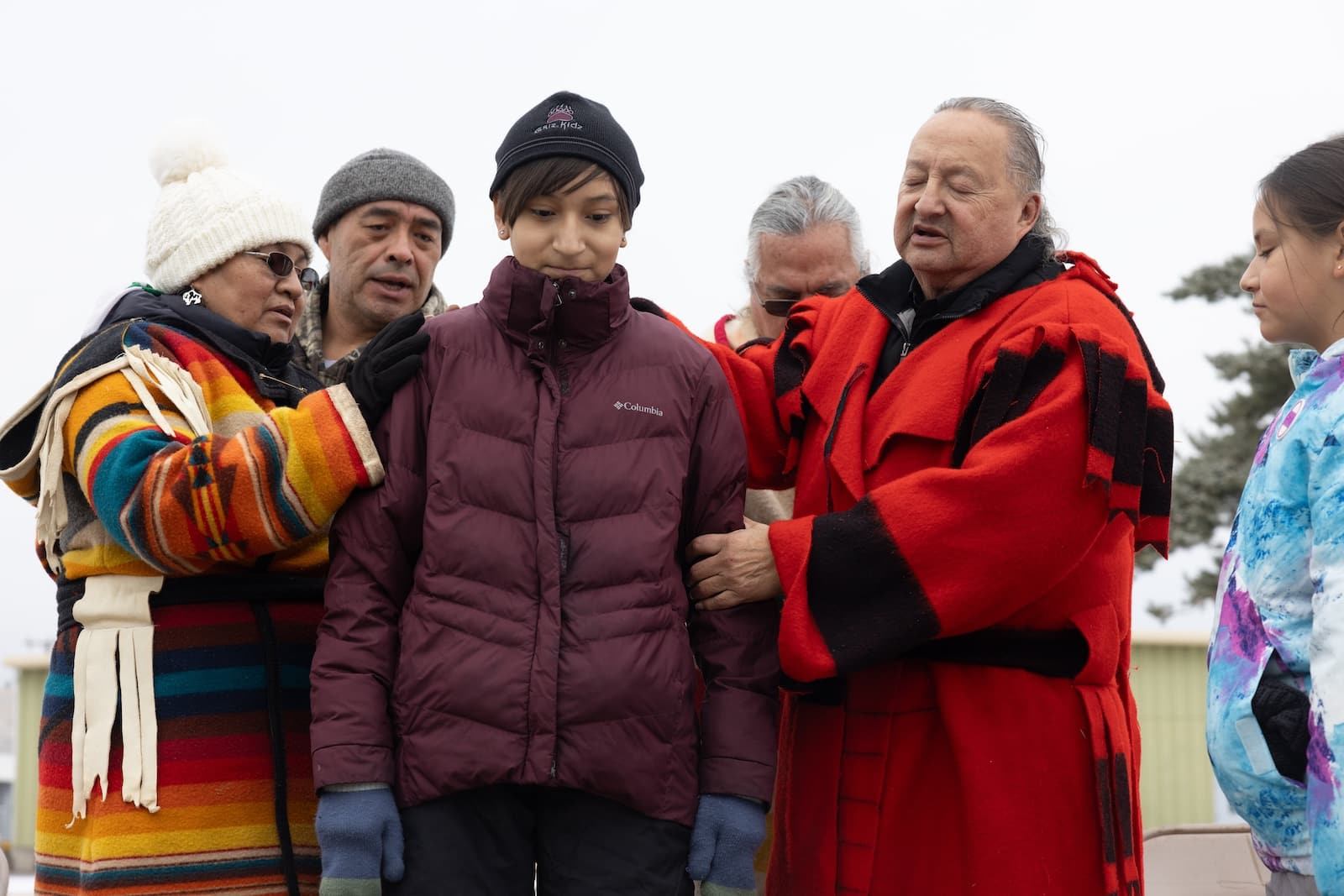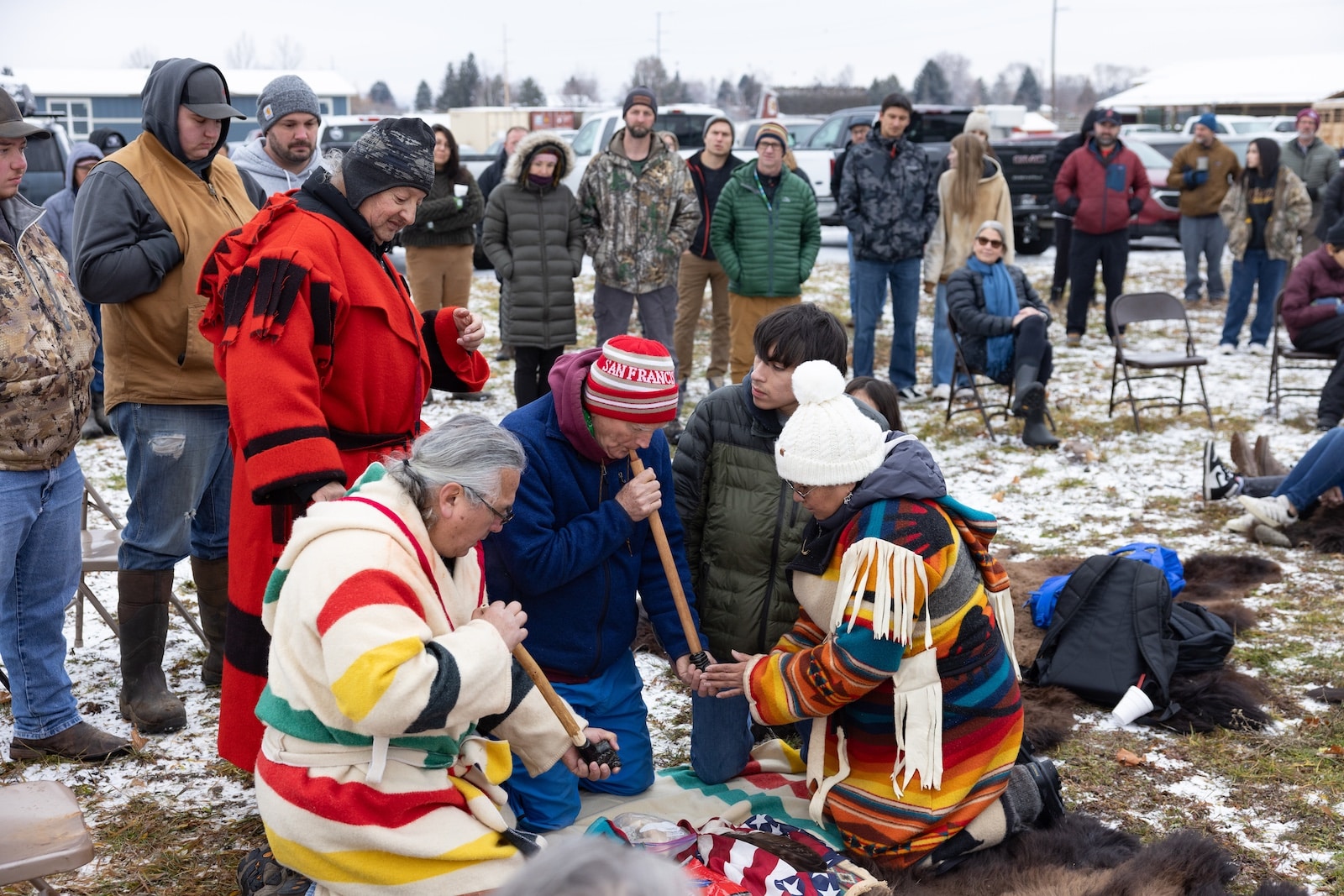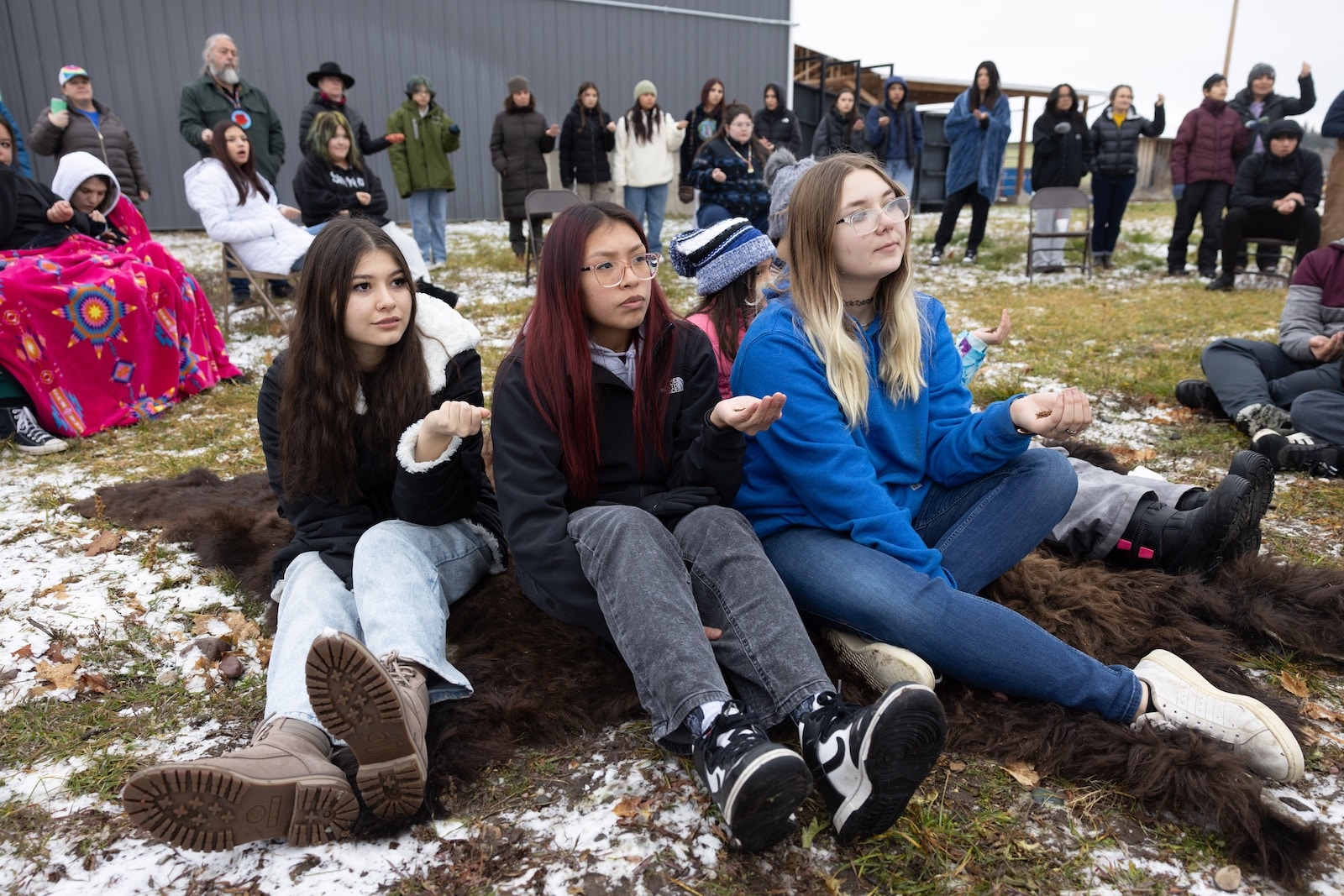
“How many of you guys eat hamburger? A steak?” asked Larry Ground, a Blackfeet tribal elder, in front of 50 teenagers sitting in the snow.
Native American students from Sentinel High School, Big Sky, Hellgate, Willard and Connect Academy bundled up on Tuesday, Dec. 17, and headed out to the Missoula County Public Schools Agricultural Education Center for a visceral lesson on the cultural significance of buffalo.
The day-long event, which was inspired by a visit to a buffalo harvest in Great Falls in 2023, was brought to Missoula by the Native American Student Services Department within Missoula County Public Schools.
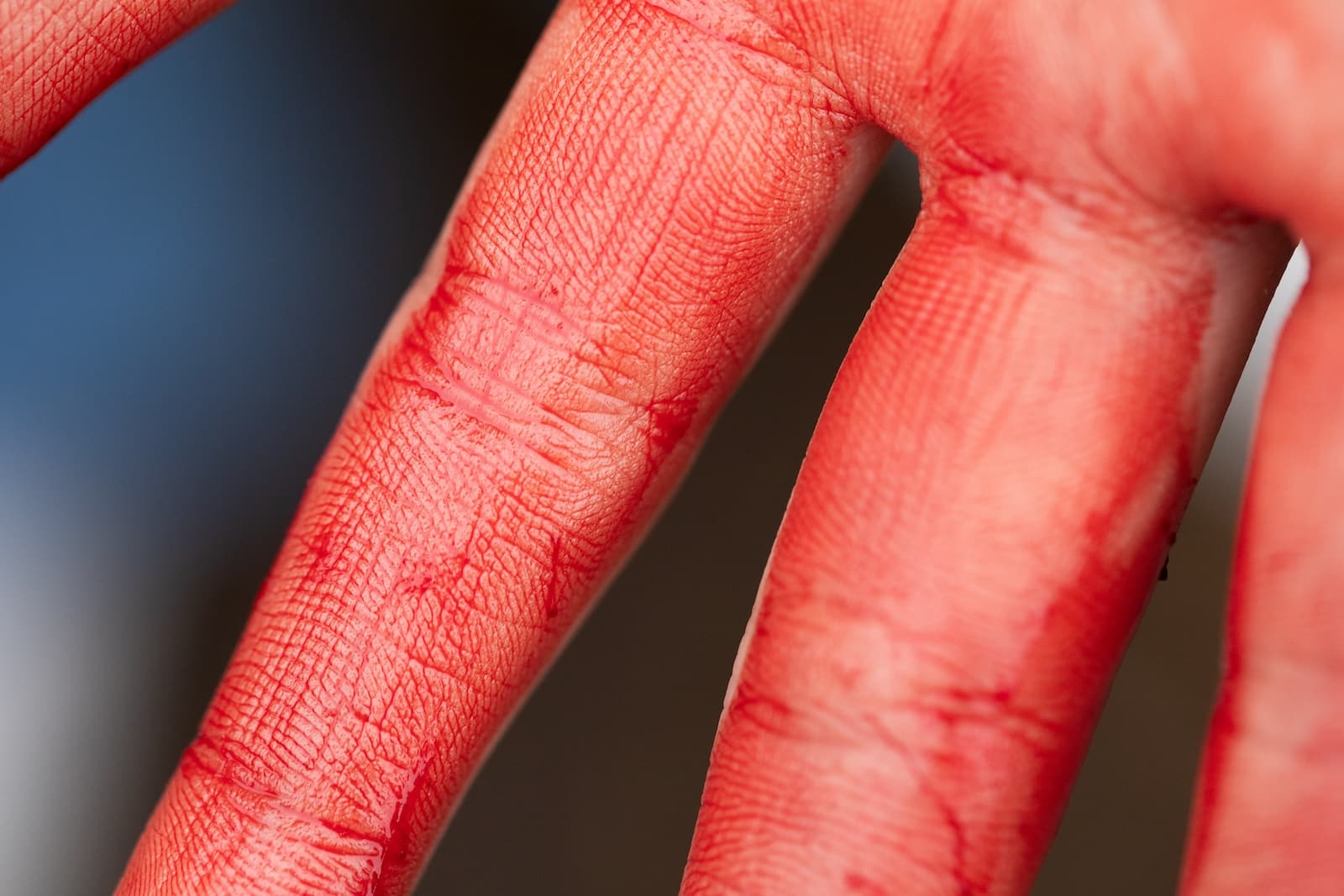
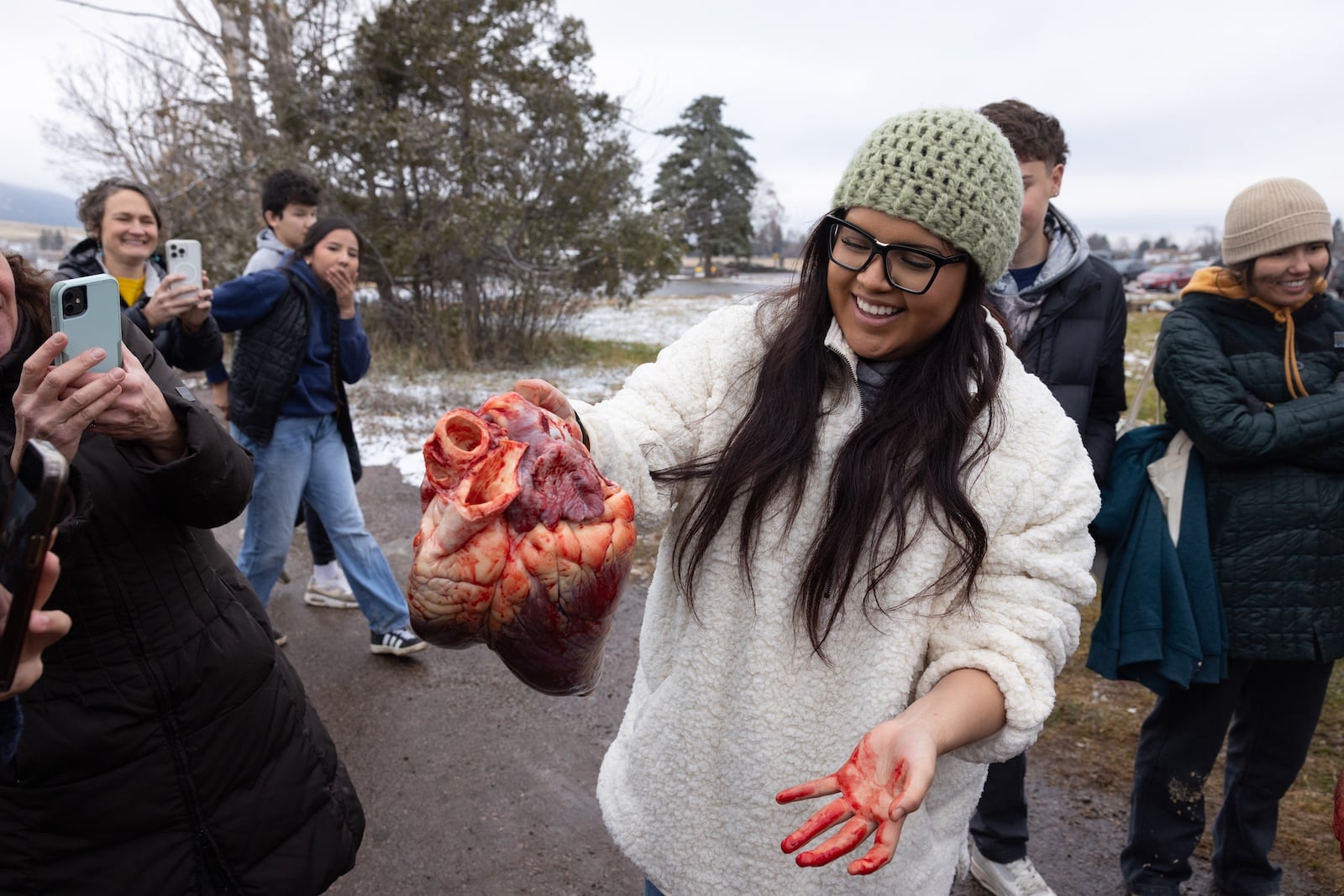
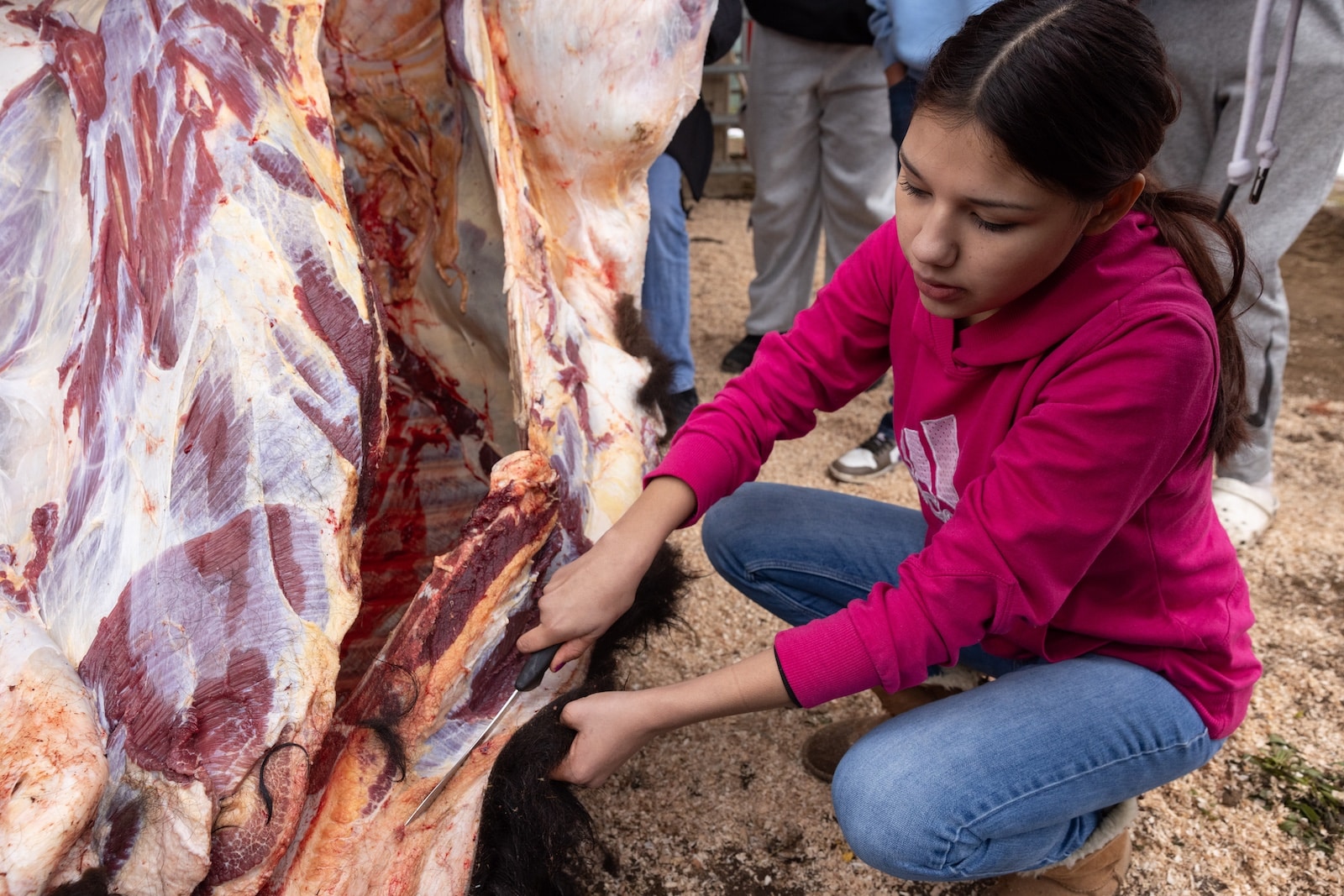
Although many students kept their hands wrapped around their cell phones throughout the day, Kaia Bird, a 16-year-old who attends Sentinel, said she appreciated the experience, and enjoyed feeling the animal with two hands in a gesture of good health and spirit.
“We’ve been doing this a long time — thousands and thousands of years.”
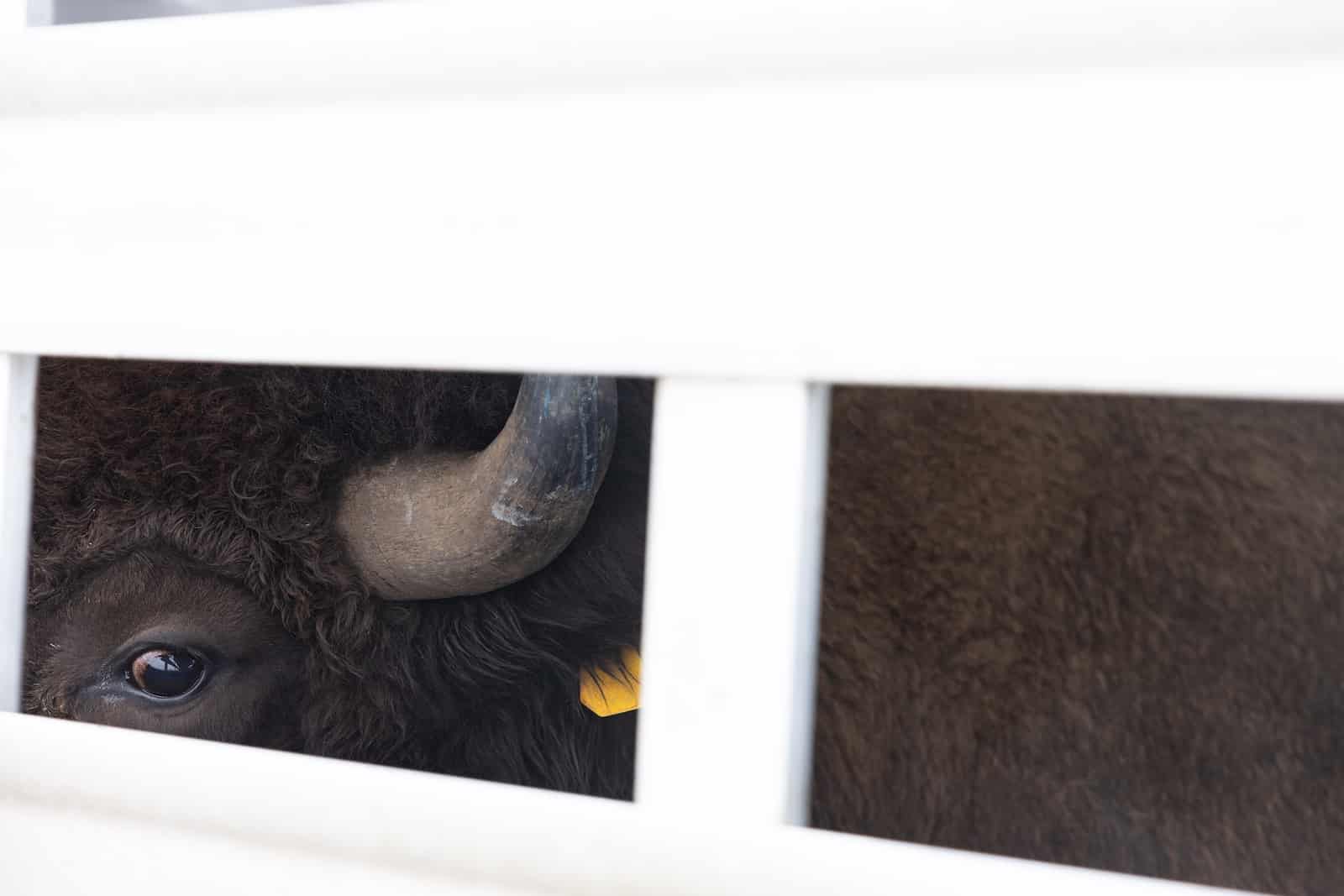
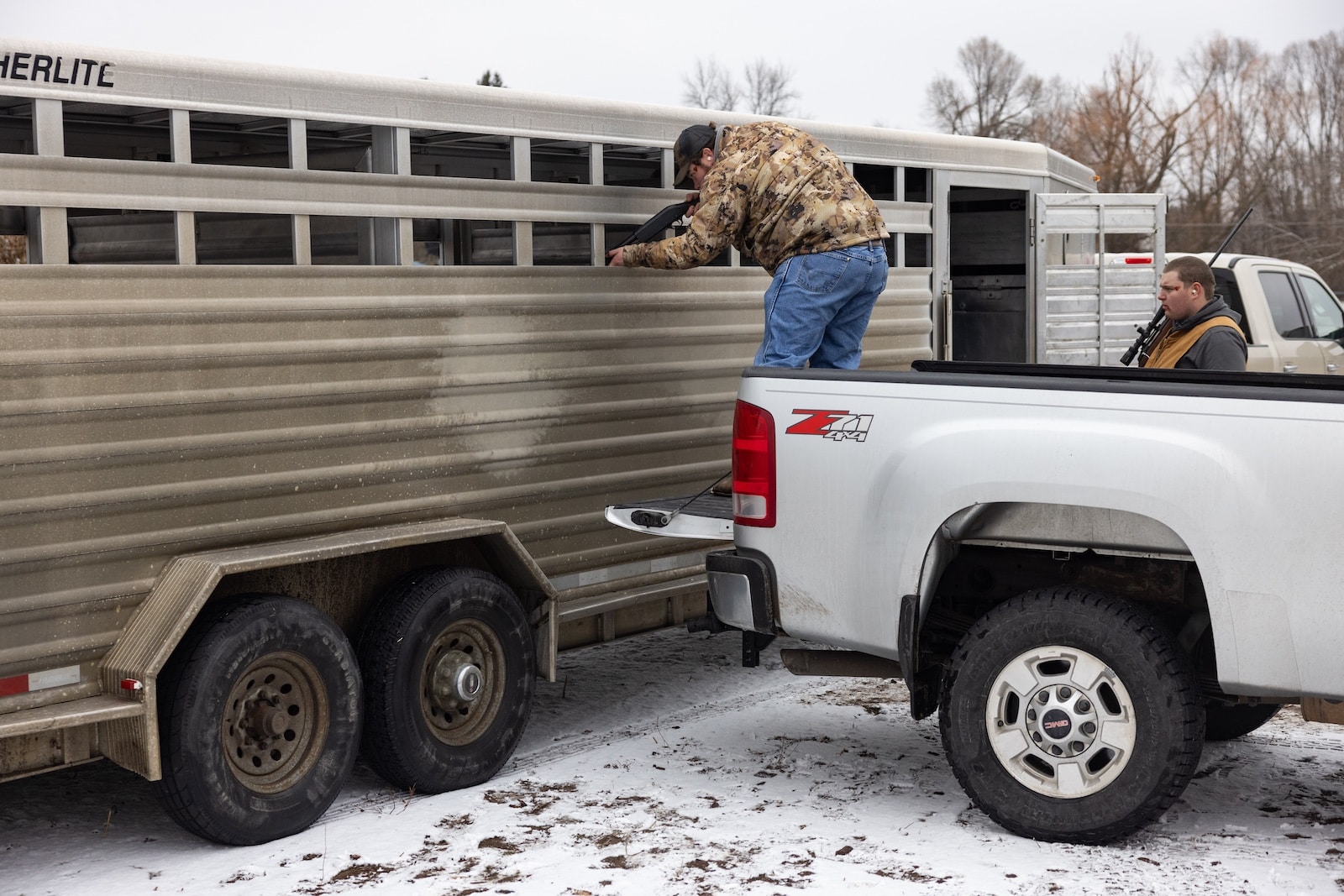
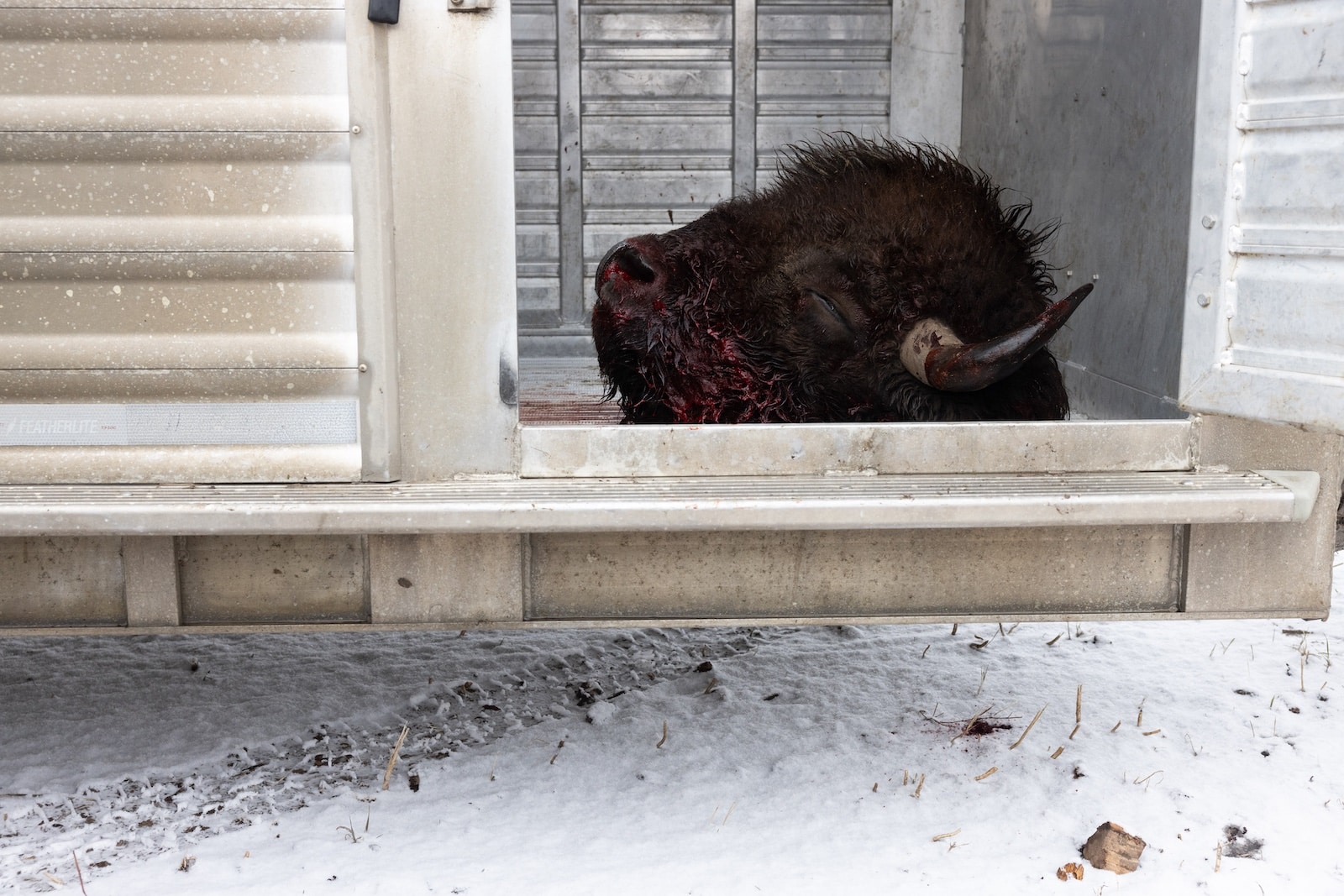
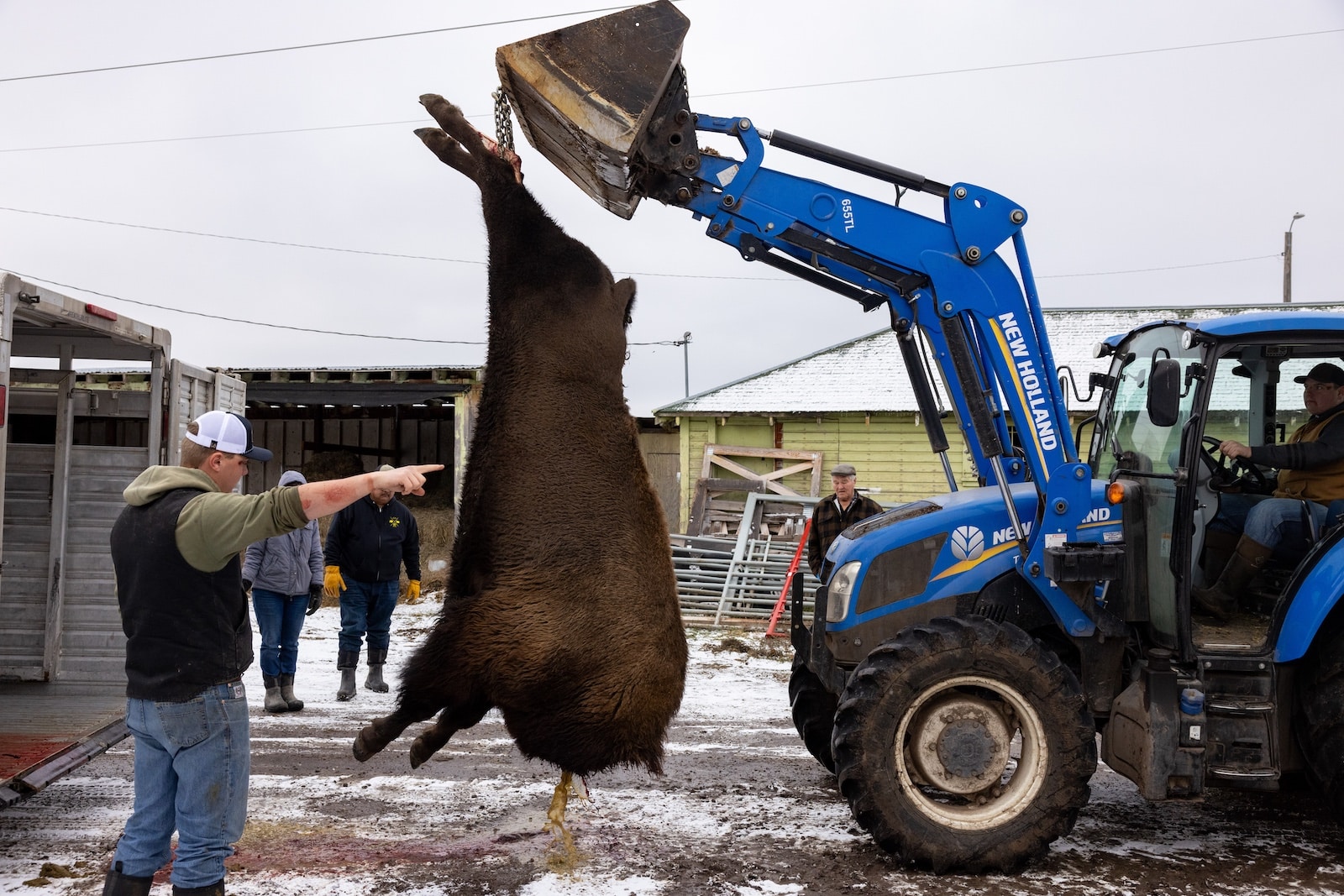
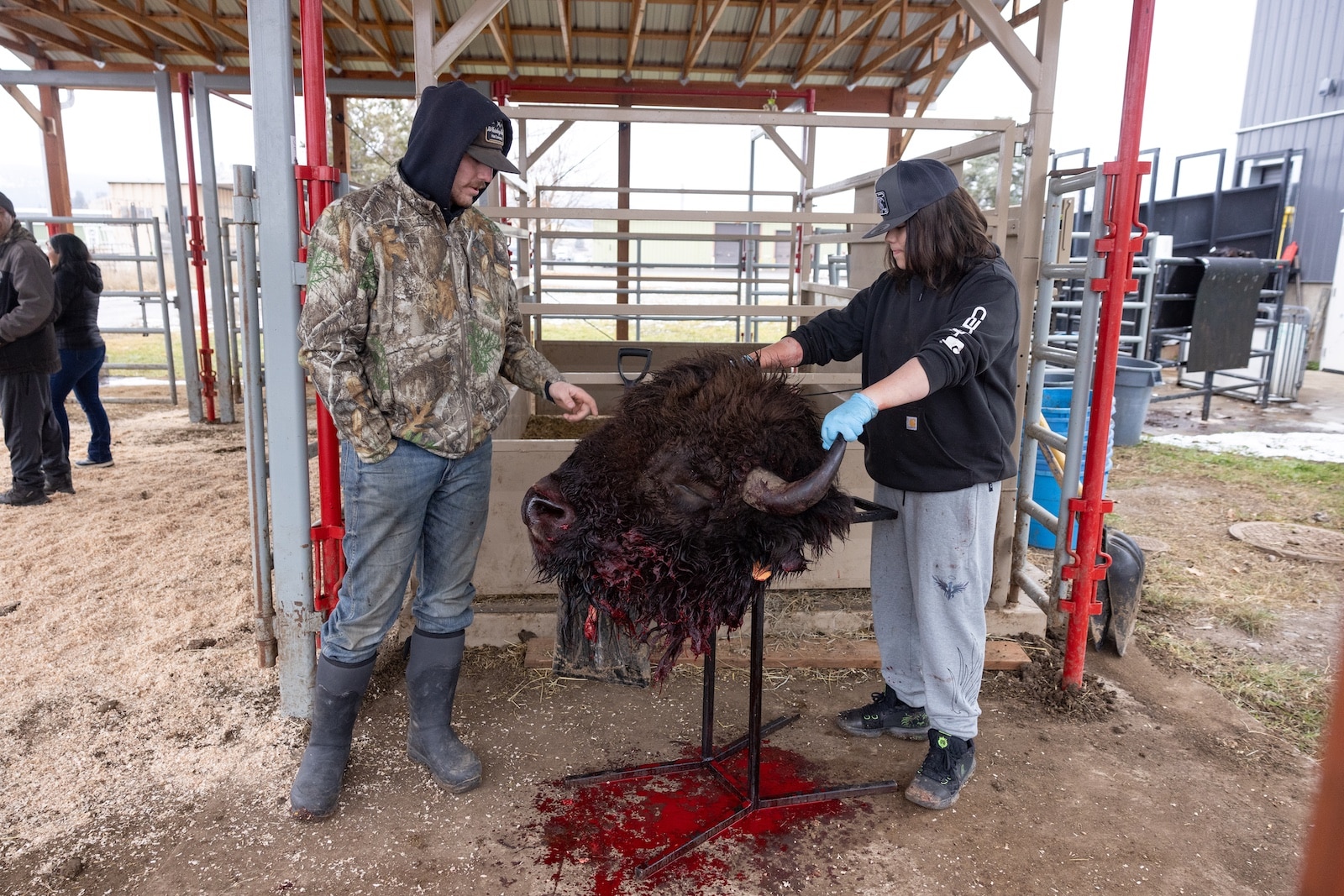
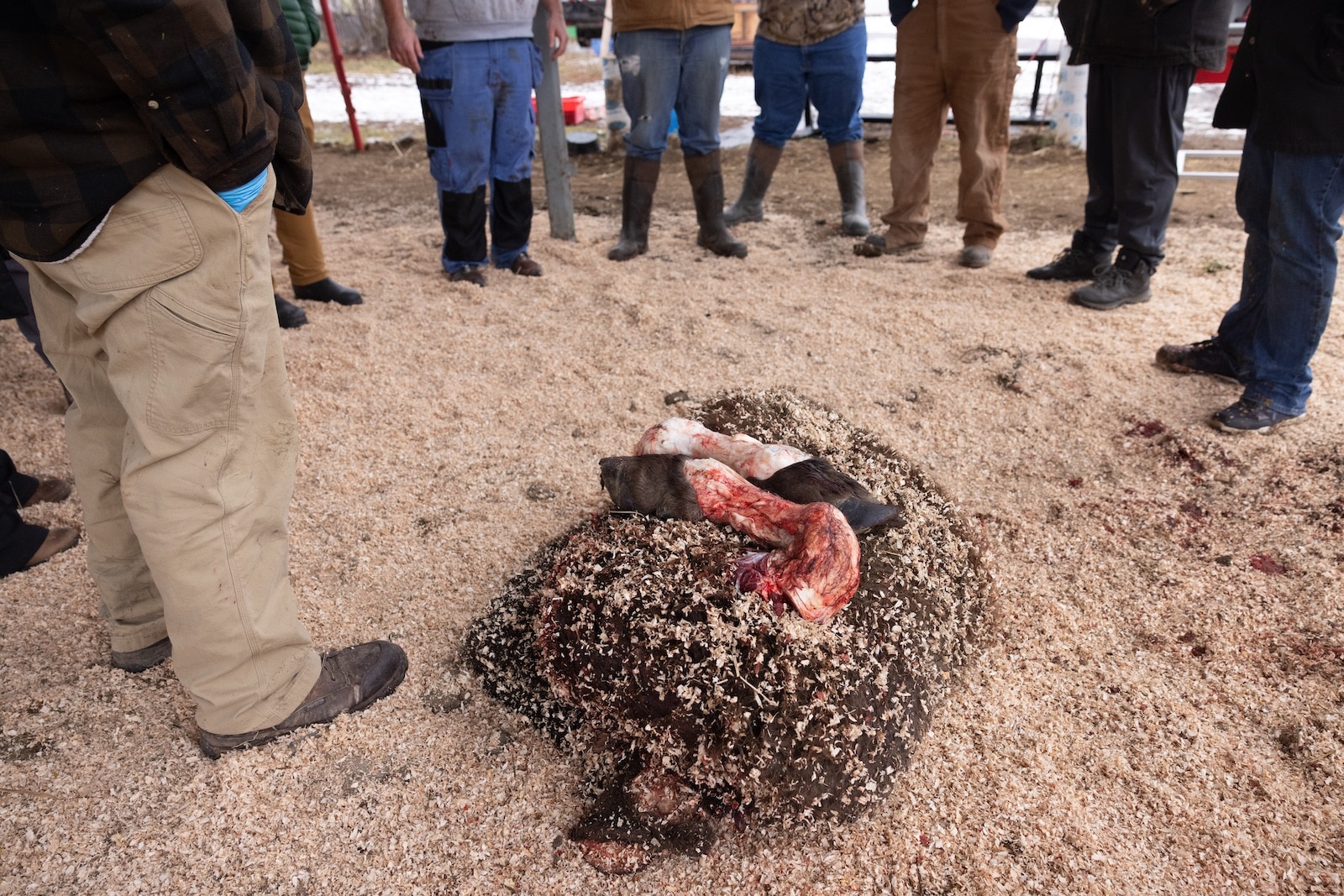
The five-year-old bull, which weighed more than 900 pounds, was brought to Missoula from the Harlow Ranch Bison Company in Thompson Falls by owners Melinda and Adam Anakalea. The MCPS Agricultural Education Center team harvested it off-site using a shotgun, and then students helped gut and skin the animal. The meat will be given to the Native American Student Services community.
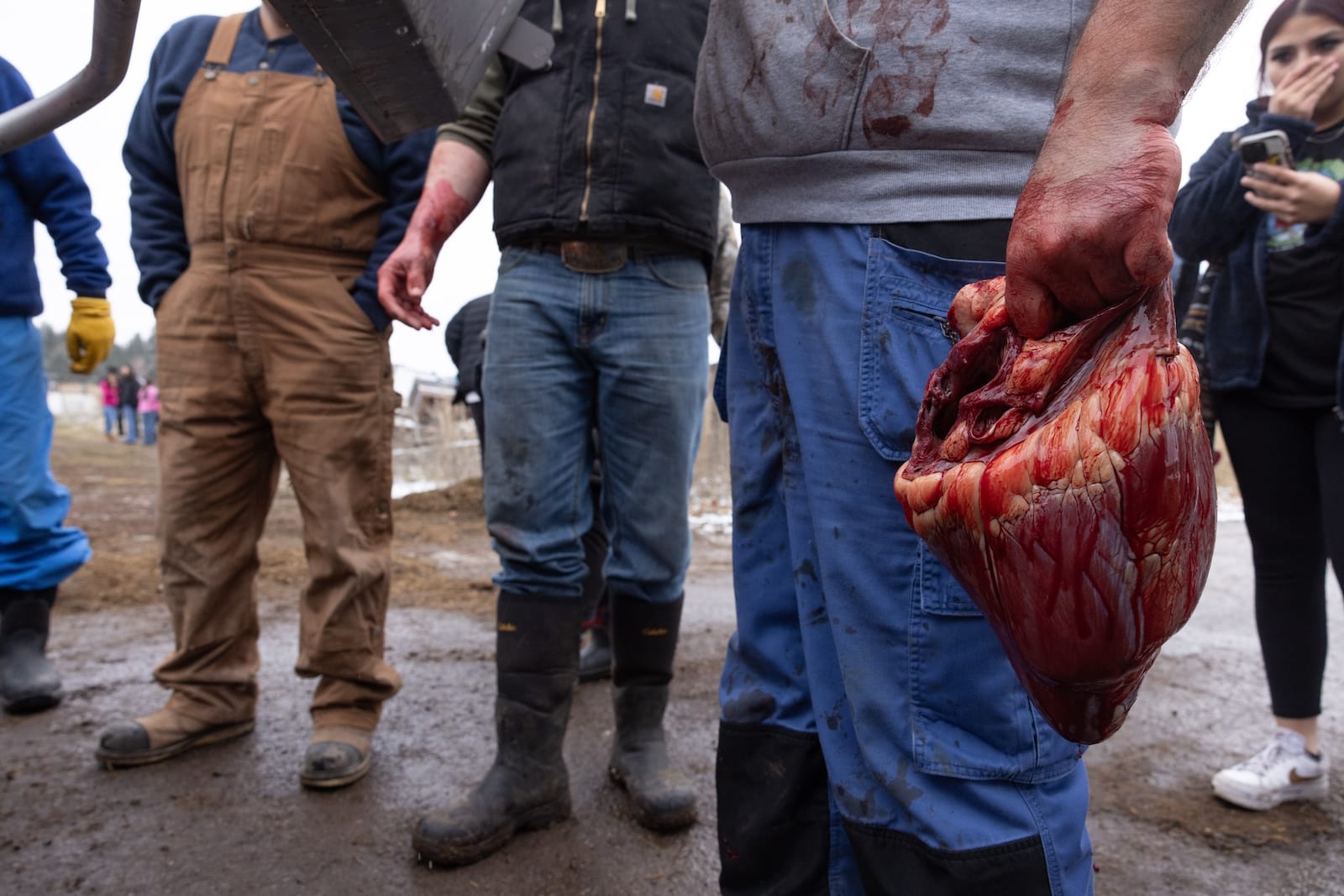
Per Blackfeet tradition, a buffalo’s heart, tongue, liver and stomach are removed first. The Blackfeet word for Buffalo is “iinnii.”
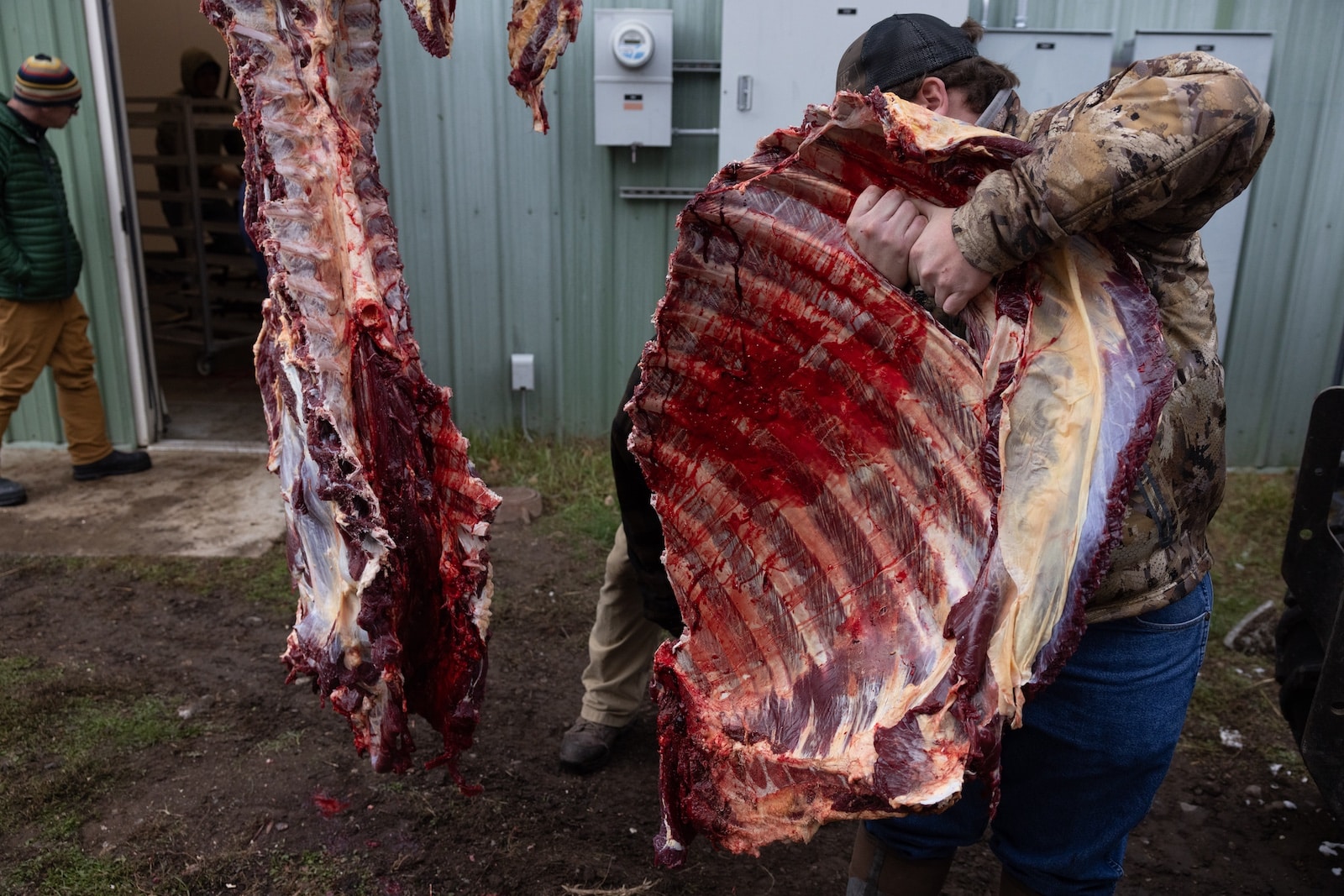
Christina Flammond, who helps run C&C meat processing in Babb, traveled to Missoula to lend a hand alongside her son Chaz and father Charlie. A buffalo is typically hung for two weeks and processed in under an hour, explained Christina, who has been cutting meat for decades.
“We’ve been doing this a long time — thousands and thousands of years,” Flammond explained as she pointed out a piece of stomach called the Bible because its folds can resemble the pages of a book. She sees a through line between the restoration of the buffalo, which were nearly wiped out in the U.S. by 1900, and reconciliation for Native American people.