A few members of the University of Montana football team were taking the field for practice when Jeff Ament, the bassist in local skate punk act P.E.S.T., met The Pulp for an interview in an otherwise barren aluminum sea in the upper reaches of Washington-Grizzly Stadium.
Ament, certainly better known as the bassist in the gazillion-record-selling grunge band Pearl Jam, is perhaps more acquainted with football than a stereotypical member of the pool-skating, jean-ripping, guitar-distorting set. Not only has Pearl Jam filled stadiums for several decades — as it will do at Wa-Griz this Thursday, August 22 — Ament was himself a multi-sport athlete. At Big Sandy High School, he excelled in football and basketball then went home and skated the ramp in his yard and discovered the kind of alternative music that jocks in teen dramas beat up freaks for listening to.
Ament is at home in this contradiction. As he travels around the state with Montana Pool Service, a non-profit he founded that has built more than 30 skateparks in mostly rural and tribal communities in the region, he encourages kids to “do both” — to embrace the nuances in their lives, to carve the bowl after football practice.

Montana, after all, is full of contradictions: staggering beauty and Superfund sites, isolation and community. Some days, the brutality of a state built on white ethnic dominance and rapacious extraction are inescapable. And yet on others, Missoula hardcore kiddies-turned-commercial-juggernauts like Ament and golden era skateboarding stalwarts like Lance Mountain fill out Pep’s Bar and Lanes in Big Sandy, population 600 (and change), and thrash.
That was the case last week at the 14th annual Big Sandy Pig Roast, a punk fest organized under the Montana Pool Service banner that brings all sorts of current and retired miscreants for meat and music in Big Sandy, where Ament’s father was once the mayor. The roast epitomizes Ament’s approach to his native state. While other musicians with Montana ties mostly grew up elsewhere (like Modest Mouse’s Isaac Brock), don’t talk about Montana, or even speak negatively about it (like the late Steve Albini, a legendary music producer and near-contemporary of Ament’s who turned his famously sharp tongue on both Pearl Jam and Hellgate High over the years), Ament has stayed in his home state and invested in its cultural and communal development.
But that isn’t to say he doesn’t recognize this place’s cruel ironies. One of the bands that played the pork roast is the Dead Pioneers, an Indigenous punk act.
“Our mascot [at Big Sandy High School] was the Pioneers,” Ament told The Pulp last week. “To have a native band called the Dead Pioneers come in and sort of educate folks, that’s kind of my personality. That’s always been my personality.”
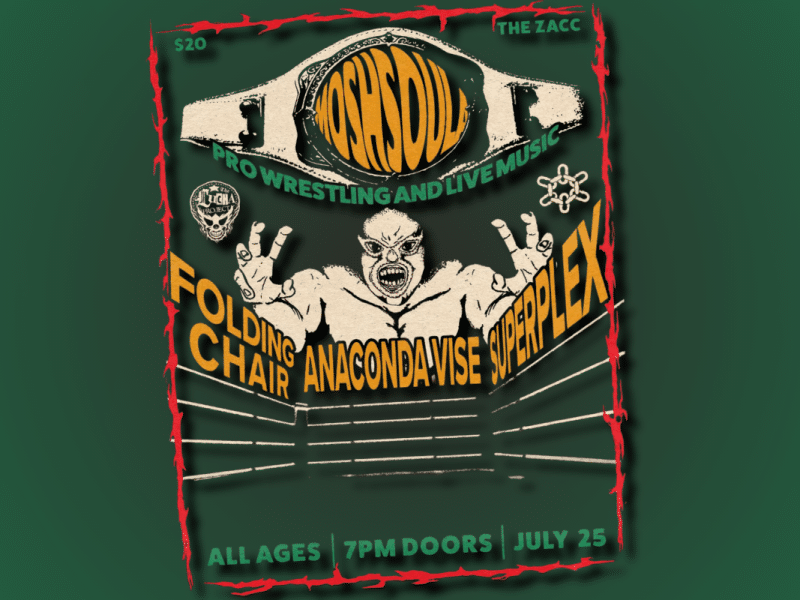
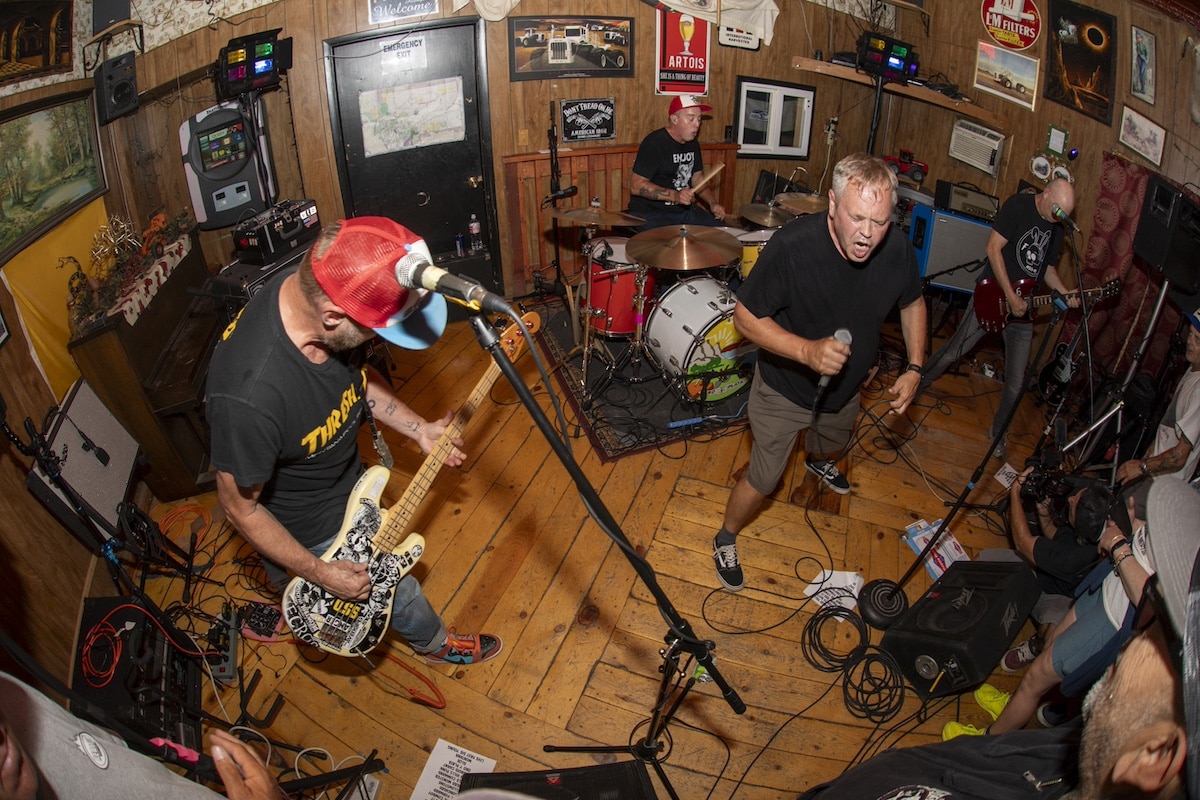
The music on the newly released third EP from P.E.S.T., a JFA-esque hardcore band that Ament formed in 2021 with other longtime Missoula punks, is imbued with this sense of humor. P.E.S.T., which also features Missoula’s Charlie Beaton and Dave Parsons, jabs at the show “Yellowstone” (“Fuck Off Kevin Costner,” as the song “Yellowstone” goes), the Oro y Plata motto and Nazis in the Flathead. And other songs in the P.E.S.T. catalog take digs at various Montana towns and their people, like in “Black Lab Subaru” for Missoula (though Butte is more or less revered in “Be Good to Butte).
The best thing is you build those parks and then the next summer you go around the state and when you pull up — you don’t even tell them that you’re coming — and you pull up and there’s five or six kids or 10 kids hanging out, and you just sit in your car and watch ’em interact and laugh and just like, man, that’s all you’re trying to do.
But Ament is not a cynic. In the hours preceding Pearl Jam’s show next week, the band is hosting a free tailgate festival called “Our Village” that will bring together local nonprofits, progressive voter outreach organizations, local bands and poet laureate Chris La Tray. While the event is not specifically tied to Democratic U.S. Sen. Jon Tester, who’s running for a fourth term against Republican challenger Tim Sheehy this year, Ament is a major supporter of Tester, the other famous native of Big Sandy, Montana.
As windbreaker-clad coaches and all manner of football paraphernalia appeared on the field at Wa-Griz, The Pulp caught up with Ament about the pork roast, P.E.S.T., Montana politics, the Bee Gees and much more. This conversation has been edited for clarity and length.
The Pulp: There’s a handful of prominent musicians that I can think of from Montana, but most of them don’t really publicly represent the state and certainly haven’t stuck around and invested in it like you have — and not just in Missoula, but in some of these tiny towns. Why do you think you’ve kept your local spirit alive?
Jeff Ament: Things were getting so crazy for us in Seattle that I would just come back here and hang out with [friends] who I knew from college. And it was normal back here. I’d come back and people just treated me like they treated me my whole life up until that point. And then the more I kept coming back, the more I was like, “Oh, this is where I’m at, this is where I’m gonna spend time.” And I think it’s like the longer that I spent here, the more that I would see young people interested in the same things that I was interested in when I was a kid. The kids that were sort of on the edge and sort of just saw things through a different lens. And then when you have the ability to help them build a skate park or give them some advice if they’re trying to get a band going or put a record out or any of that stuff, that’s super exciting. Cause you relate to …
You’re like, “I wish I had that”?
Yeah. I mean, I kind of did have that a little bit. There was a guy, Randy Pepprock here, who still lives down the Bitterroot, who had a band called Who Killed Society. He’d be like, you know, “Get your band together and you can play with us next month.” And his best friend was Steve Albini. Steve went to Chicago and Randy — I think they had a friendly competitiveness — and so Randy moved to Seattle, and I lived with Randy the first month I lived in Seattle. And it’s just that idea of doing your thing, getting out. I think the best thing is, you get out, develop some skills, maybe you make some money and you come back and you try to introduce the good things about what you saw out there into the place where you came from.
When did you first develop an awareness that you were interested in music and culture outside of the mainstream?
The only radio up there was country. So half my friends listened to country and the other half listened to pop music. But I had a cool uncle who was into Santana and Led Zeppelin, and when I was younger, he was giving me Beatles singles. That’s where I first heard the Kinks. There was a single with “Well Respected Man” on it, I didn’t really know what the lyrics were but that informed me.
And the fact that it wasn’t George Jones or whatever.
Yeah, or like, the Bee Gees. And then through magazines I found out about the New York scene and punk rock.
What have you seen happen to these places or to these kids when you put a park there, you create something for them to gravitate around. What kind of difference does that make?
The best thing is you build those parks and then the next summer you go around the state and when you pull up — you don’t even tell them that you’re coming — and you pull up and there’s five or six kids or 10 kids hanging out, and you just sit in your car and watch ’em interact and laugh and just like, man, that’s all you’re trying to do. And the other part, it’s all a little bit accidental. It’s like what writers always say, “Write what you know.” I have this skill set that’s unique to me. And over the course of time, I’ve developed relationships with like the best skatepark builders and great musicians and whatever. And so you come back and you go, “Well, this is what I know.” Families come up to me now and say, “The reason we moved here is because there was a swimming pool and skate park.” I think that’s one thing in terms of my relationship with Tester. Like, Tester has spent so much time trying to help rural Montana. I’m helping, putting these really good skate parks in these small towns, and reinvesting in these small towns in a way that most of the towns wouldn’t even think about.
Were people ever like, “We don’t want these punks in our town”?
For sure, 10 years ago it was that way. Now we have 10 towns on a waiting list for the next two years.
It’s interesting to listen to you talk about your love for some of these places after listening to some P.E.S.T songs. “Save the Cowboy” has the line “I love you Big Sandy, but you’re bringing me down.” And off the new EP, “Flathead Monster,” has some stuff that can be construed as critical. (The song, named for a mythical Loch Ness Monster-esque creature in Flathead Lake, references Prussian Blue, a neo-Nazi family band with roots in Kalispell.) As cool as it is that these small towns are getting skateparks and what not, it seems like the music also talks about the alienation and paranoia in these places.
The great thing about P.E.S.T. is sitting around with Dave [Parsons] and Charlie [Beaton] and talking about, you know, all these towns sort of have either like a like a mascot, a story, a theme, and we’re sort of taking those themes and just sort of looking at it from the other side and poking at it a little bit. And also getting out the problems we had growing up when people are yelling, calling you names and whatever.
Is that part of your experience? Like, getting harassed by farmers or whatnot?
I had an interesting thing, and I’ve seen this as we built the skate parks, like when we built Hamilton, maybe the second or third time that I skated down there, there were these big kids skating in the park. And they were kind of killing it. I heard the one kid say, “Oh, I gotta go to practice.” I was like, “What practice are you going to?” He said he’s a football player. And Hamilton was state champs the year before, and I was like, “Oh, you guys won it last year, right?” And he’s like, “Yeah, and we’re gonna win it again this year.” I just kept reinforcing in him: “Keep doing both.” You can play football and you can do this. Because that’s what I did. Nobody told me till I came to college that I couldn’t do both. When I was growing up, I was a really good football and basketball player, and I had a ramp in my yard, and I would come home from football and I would just skate my ramp for two hours. And then I came here [to the university] and it was like, “Hey, if you wanna hang out with us, you can’t hang out with those people.” I had to choose at that point, and I chose to be with my punk rock friends.
It’d be a different world, I guess, if you became a football player.
By the time I was done with high school, I was done with the lacerated kidneys and the concussions.

Were you aware of Tester growing up in Big Sandy?
Jon, when he was probably a junior or senior in high school, reffed my sixth, seventh grade basketball games. I mostly remember because he only had the thumb and the pinky on the guide hand, but I remember how great of a basketball player he was.
What do you remember thinking when he first got involved in national politics?
I just remember thinking that he was like a real guy with no agenda or connections to lobbyists and everything that’s wrong with government. And he’s largely still that same guy. He’s gotta be one of the only guys in Congress who’s really connected to where he came from like that. Look at what else is going on in Montana. Like all our other congressmen are from other places. And their whole thing is that they’re tied to corporate America. They might bring some jobs in, but most of the money’s going out.
Was the timing of the concert in Missoula intentional? Did you want to have a show here ahead of the election?
Yeah. It sort of is easier for me to ask the guys in the band because social and political causes are so a part of our fabric. It’s the one time I can go back to them and say, “Hey, we’re gonna play Montana. You guys up for playing Montana? You know, Tester’s up for election next year.” Everybody’s like, “Yep. We’re all in.” It’s twofold for me. I get to come back and sort of throw some energy around, what Jon’s trying to do, and then I get to play my hometown.
Tell me a little about Our Village and how that came together.
It’s basically organizations that I’ve sort of rallied around for the last 25 years, and I’ve gotten to be friends with a bunch of these folks, and then when you get to go behind the door of these places, you just see how hard they’re working and how much they care for their community. So it’s a way to bring all those organizations together and celebrate what they’re doing and bring young people into it. It’s just a way to put together this thing in a way that only I could do. It’s a unique community that I’ve been involved with, and I’m so proud of this community too. Two summers ago, there’s just some crazy stuff going on with our governor, and I remember feeling funny about Montana. And then I came back last summer and there was a big march for Zooey Zephyr, and we rode our bikes down in it and I was like, “Ah, we’re fine here. Missoula’s gonna be fine.”

Our Village takes place north of Washington-Grizzly Stadium in the tailgate area from 2 PM to 5 PM. Free. Pearl Jam plays Washington-Grizzly Stadium at 7 PM. More info and tickets here. To listen to the latest P.E.S.T. EP on Bandcamp or find it on vinyl at Ear Candy Music.