For archival documentary filmmakers, the past isn’t just something to be recalled — it’s something to be unearthed, reassembled, and made relevant to current audiences. The art form takes fragments of history — old newsreels, forgotten interviews, grainy home movies — and stitches them into a narrative that speaks to the present, sometimes urgently so.
For instance, Alain Resnais’ 1956 Night and Fog, which used archival images to confront the horrors of the Holocaust, was a mere 30 minutes long, but its utilization of black and white stock footage combined with color film told a compelling story just 10 years after the liberation of Nazi concentration camps. Archival techniques became more prominent with the rise of television documentaries in the mid-20th century and have continued to be innovative now that vast archives of footage are more accessible than ever. There are the war-focused archival docs like The Atomic Cafe (1982), which used newsreel footage to explore the nuclear arms race, or Peter Jackson’s They Shall Not Grow Old, which used materials from the BBC and Imperial War Museum to tell the story of men in World War I. And then there are personal archive stories that manage to take the small world of a person (or family) and create something profound.
This year’s Big Sky Documentary Film Festival, opening this weekend in Missoula, features some striking examples of the archival craft that do more than just recount history — they interrogate it. Also Resisters repurposes Vietnam War-era images to explore the cyclical nature of militarism and protest, drawing from the words of pacifist David McReynolds. The Ban turns a critical eye toward the British government’s censorship tactics during the Troubles in Northern Ireland, using unseen archival footage to draw parallels between past and present crackdowns on dissent. Then there’s The White House Effect, which rewinds to the early days of the climate crisis, charting how political maneuvering under the George H.W. Bush administration altered the course of environmental policy. And, in Appalheads, a daughter revisits her father’s Appalachian filmmaking legacy to explore her own ties to home.
The power of archival documentary lies in its ability to collapse time. Much like how a collage artist reconfigures existing images into something new, filmmakers working with archival footage take history and make it feel immediate. The best archival documentaries don’t just remind us of what happened — they ask us to reconsider why it happened and how those events ripple into our own time. The films at this year’s festival embody that philosophy, whether it’s a story of war resistance, media suppression, environmental warnings, Indigenous sovereignty, or familial legacy, each of these films makes the case that history is never static.
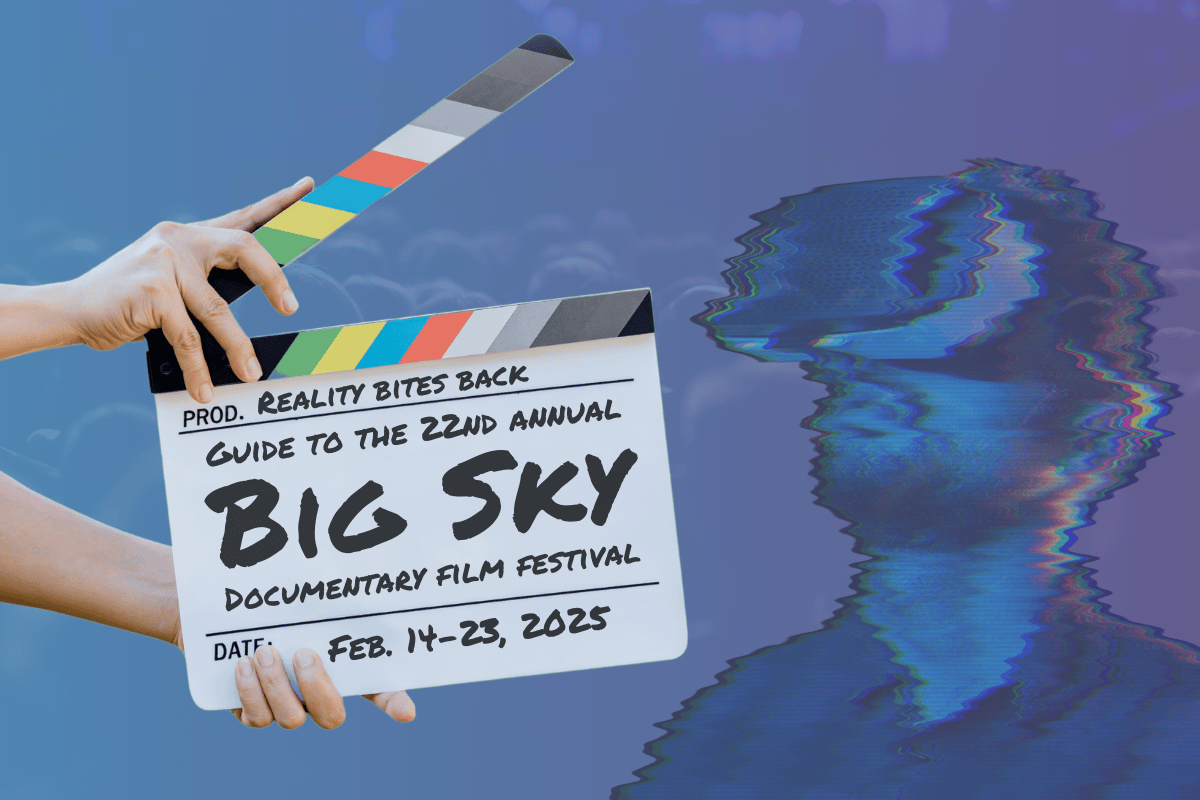
Archival documentaries are just one of many styles of documentary you’ll catch at this year’s festival. Now in its 22nd year, BSDFF has grown from a best-kept secret to a celebrated non-fiction film event, probably because it maintains its local flavor. For 10 days every February, downtown Missoula transforms into a documentary lover’s paradise, with screenings happening across beloved local venues like The Wilma, the Roxy, and the ZACC. With over 150 films from around the world, Big Sky is more than just a festival — it’s a full-on gathering of filmmakers, industry folks, and documentary diehards. There’s also DocShop, a five-day industry event packed with panels, workshops, and networking sessions, plus the Big Sky Pitch, where filmmakers get the chance to sell their next big project. Whether you’re there to catch groundbreaking new films or just soak up the creative energy, Big Sky is the kind of fest that makes Missoula feel like the center of the documentary universe — at least for a little while. And in anticipation of the event, we give you several reviews of films to get you started. —Erika Fredrickson
🎞️
Jump to: Your Opinion, Please • Recorder: The Marion Stokes Project • Tiwahe • The Falcons • One In Five Hundred • Johatsu – Into Thin Air • SALLY • Roadside Elegiac • My Back Pages • Union • Flamingo Camp • Stolen Kingdom • CamperForce
Your Opinion, Please
Starting in 1997, broadcasting from studios at Montana State University-Billings, Yellowstone Public Radio hosts Marvin Granger and Ken Siebert opened their phone lines to anyone and everyone who wanted to call in and talk about whatever was on their minds. Completely unvetted and unprompted, callers from across Montana shared their thoughts on any topic they chose — live on the air.
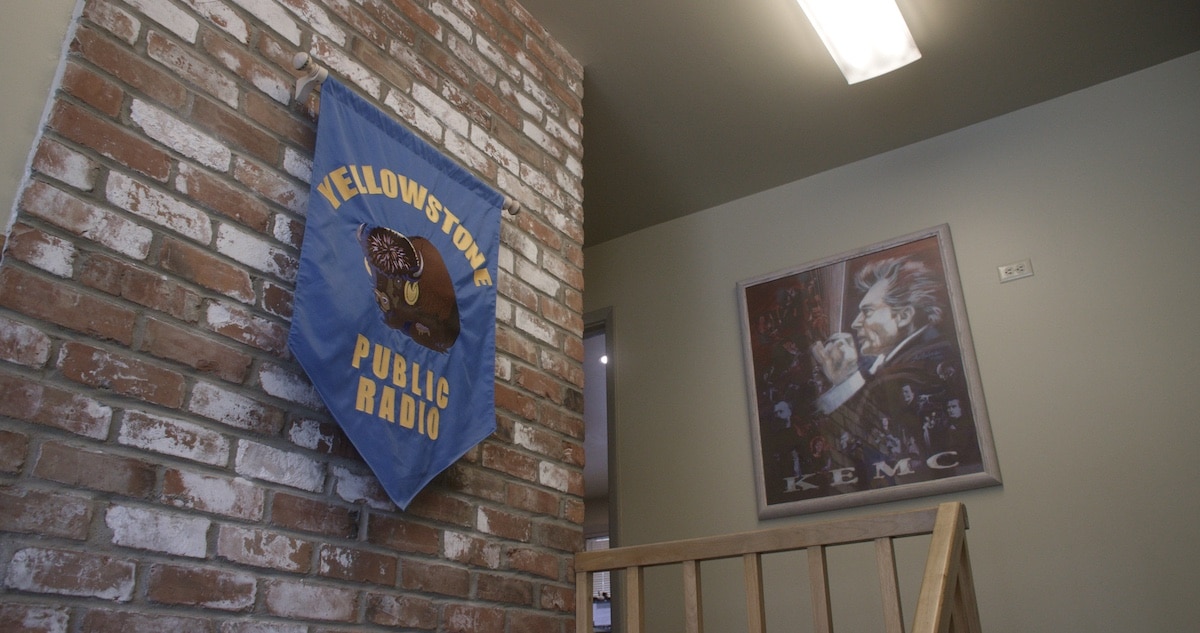
For 10 years, Montanans dialed into the program, “Your Opinion, Please,” to discuss elections, religion, war, abortion, and just about anything else. One frequent caller used his time to recount his journey in trying to understand the appeal of poetry. Another wanted listeners to know that garlic can be a helpful remedy if you suspect food poisoning. Because “Your Opinion, Please” was a live call-in show, it never had reruns, and sadly, Yellowstone Public Radio never archived it.
However, when Granger’s son, Marshall, was graduating from Billings High School, his tech-ed teacher — a devoted public radio enthusiast — gifted him a CD-ROM loaded with hundreds of hours of “Your Opinion, Please” recordings. For years, Marshall held onto the disk, knowing he wanted to do something with it. Now, after moving to Los Angeles to pursue a career as a film editor, he’s brought this incredible piece of Montana history to the big screen in his stunning and deeply thoughtful documentary short, Your Opinion, Please.
While one might expect the family connection to make this documentary a personal reflection on his father — who comes across on both the show and the film as calm, erudite, and well-read — Marshall instead steps back and uses this unique archive to reflect on Montana itself. Each clip from the radio show is paired with breathtaking footage of Big Sky Country, captured by Marshall and his brother during a three-week road trip across the state. From impossibly long dirt roads to small-town storefronts to trains winding through mountain ranges, the film immerses viewers in Montana’s beauty, charm, and history. The combination of decades-old conversations and present-day footage creates a profound sense of both space and time.
More than just a nostalgic look back, the film offers insight into Montana then, now and in the future. The topics callers discussed back then — frustration with elected officials, concerns over out-of-staters moving in to “play cowboy,” the effects of industry and urban sprawl on the environment — are still being debated today. But unlike today’s internet and social media echo chambers, these conversations were carried out in the spirit of civil discourse, reminding us of what meaningful dialogue once sounded like.
Much has changed since “Your Opinion, Please” went off the air in 2007, and Marshall Granger admits a show like it couldn’t exist today. But in exploring how the world has shifted, he also apparently found a change in himself. “I don’t know if this film will offer a lesson on how to fix anything,” he says in the film. “But it’s a reflection on what sharing an opinion with another human voice might sound like. I just hope it does something for people in the way it did something for me.” —Charley Macorn
Screening at Missoula Children’s Theatre on Mon, Feb. 17th @ 11:45 a.m. and again at the ZACC on Tue., Feb. 18th @ 7:30 p.m.
Director: Marshall Granger
15 minutes
World Premiere
Recorder: The Marion Stokes Project
Not sure if you’ve noticed, but reading the news lately has been stressful. I talk to friends about the best way to do it and still preserve our wellbeing. First thing in the morning? In five-minute increments? One friend stays completely away and has her partner give her a gentle “summary” each night. Another only listens to a certain public radio podcast they trust.
Of course, it didn’t used to be like this. Fifty years ago, America sat down every night and watched the nightly news together for 30 minutes. Only the biggest stories were covered, there wasn’t time for arguing talking heads, and pretty much everyone accepted what they heard as straight fact.

Then, one day in 1979, a woman named Marion Stokes started following the Iran Hostage Crisis. And as her interest grew, she began to notice discrepancies in the reporting — she could see the CIA molding the story and how it could be filtered differently by different sources. She began recording the news for this reason and then, in time, every channel on television, 24 hours a day. It resulted in an archive of 70,000 VHS tapes that span what happens to be most of my lifetime.
Recorder accomplishes a storytelling technique that I love so much: It tells the very small story of a single person at the same exact time it tells a huge story about humanity. In an hour and a half, we learn so much about a strange, special woman who was ahead of her time and also about the sometimes strange, sometimes scary evolution of the news media over the past 50 years.
In tandem, we learn about Marion Stokes, an African-American socialist who is obsessed with uncovering the truth of everything. We also learn about the history of televised news — from how the Iran hostage crisis led to “Nightline,” which morphed into the 24-hour news cycle. Both subjects are equally fascinating, and the documentary’s writing and editing are brilliant — we feel as if we are observing Stoke’s life while her televisions run devotedly in the background. Her story is interrupted by Regan’s shooting, the Challenger, Bill Clinton’s impeachment, and 9/11, and it works beautifully. Even when she dies, one day in 2012, the news is unbelievably heartbreaking (I won’t give it away).
If there was ever a time to take a step back and think about how the media intertwines with our lives, and how the media has changed in a way that Marion seems to have predicted long ago, it’s right now. I can already tell that this is a movie I will think about each time I turn on (and turn off) the news.
In addition: This movie was directed by Matt Wolf. The Big Sky Film Festival is featuring his work as a retrospective, and showing several of his movies, including two other feature films, Teenage (about the surprisingly short history of teenagers) and Spaceship Earth, the story of Biosphere 2. He’s also speaking on Monday, Feb. 17 at 1 p.m. at DocShop — and I am excited to be there.
Screening at the Missoula Children’s Theater on Sat., Feb. 15 at 5:15 p.m.
Director: Matt Wolf
87 minutes
Retrospective
Tiwahe
I admit I was uncomfortable in the first minutes of Tiwahe. The shots are long and quiet. The audience is given extremely little context as to what’s happening, save for a shot of the sign heading into the town where we’ve been dropped: Welcome to Hays / This is God’s Country / Please don’t drive through it like Hell / Thanks / Population 1482 plus one old grouch. Other than that, we aren’t given names, intertitles, or even captions when the subjects speak in their native languages. The filmmakers make it clear: We are outsiders, and we don’t know as much as we thought we did.

But as the film continues, we slowly ease into Hays, Montana, located on the Fort Belknap Indian Reservation. We are presented with one vignette after another: a little girl learning how to add from her grandmother, a father and son fixing a four-wheeler, kids skateboarding on a summer day. As time passes, you slowly acclimate to the pace of the movie — and of life there — and then you slowly get to know the population of the town. I’ve never seen a documentary that feels so much like visiting a place in real time.
Tiwahe means family in Lakota, and this documentary accomplishes something special: steadily, deliberately making us all feel like family — people who understand each other and grant each other empathy. As one Hays resident says near the end of the movie, “As long as everyone respects how we live, that’s a good deal.” It really is a good deal. And it’s a lovely 90 minutes to get there. —Sarah Aswell
Screening at the ZACC on Wed, Feb. 19th @ 2:15 p.m.
Directors: Joshua Benson, James Suter
90 minutes
World Premiere
The Falcons
The Falcons is not your average making-the-band documentary.
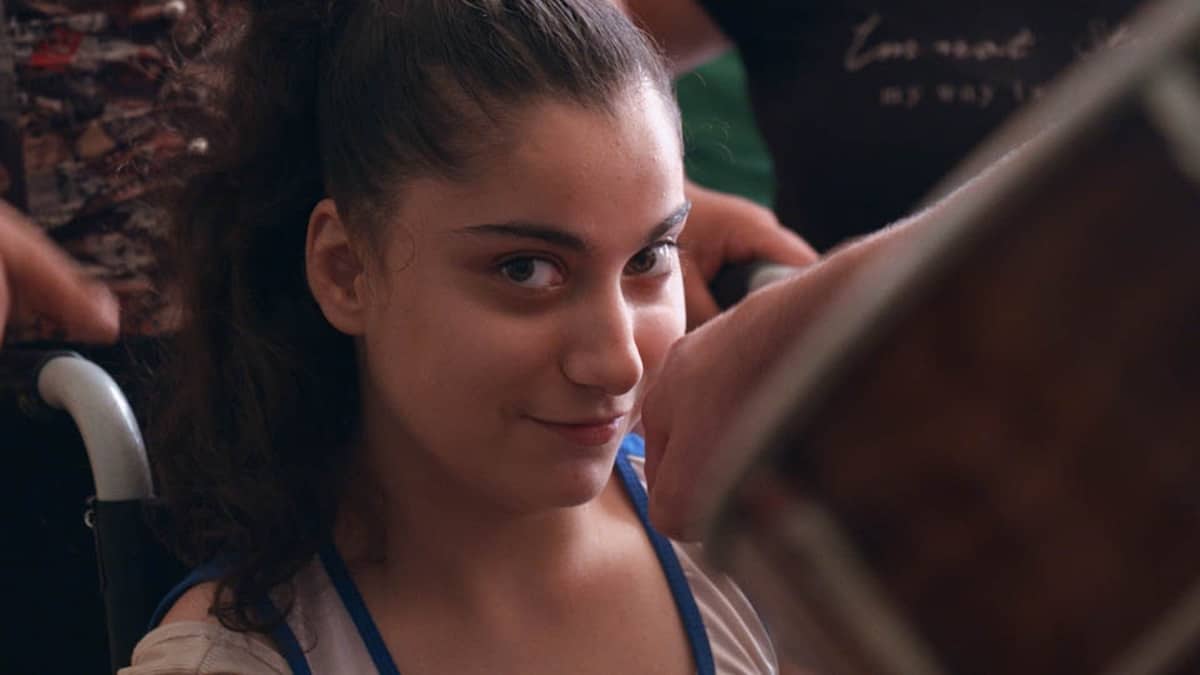
The short film takes us inside the Specialized Children’s Home in Nor Kharberd, Armenia, where a group of youths — led by two sisters, the professional musicians Anna and Anahit Mkhitaryan — perform in an ensemble called the Tshakhruk Ethnoband. The group encompasses a band, choir and theatrical group; all of the participants live at the home, and have physical disabilities.
The Falcons was shot and edited by the American-Armenian writer and director Taniel Kilajian (the film also boasts a co-sign from the iconic auteur Terrence Malick, for whom Kilajian formerly worked as a production assistant). Kilajian has a gift for capturing the intimate moments shared between the musicians; his camera lingers on smiling faces, on kids hugging and goofing around, on Anna Mkhitaryan corralling the band together (with just a hint of irritation) to begin practice. The film’s most compelling moment, I think, comes when a young man, who was born without vocal cords, sings a solo, accompanied by a peer playing a woodwind instrument. As Anna explains, the boy’s father is a singer, and he dreams of performing on the big stage himself.
The film is full of powerful moments, but Iacks some context that would have made it more compelling. For one, we don’t learn why the Mkhitaryan sisters decided to form the band. At another point, Anna Mkhitaryan suggests that the group is practicing for a festival, but we don’t get any more specifics on the gig, or why she makes the stakes appear so high.
The Falcons nonetheless remains a valuable and poignant document not just of music’s singular and magical power to bring people together, but of kids’ universal desire to have fun and play around, no matter the circumstances. —Max Savage Levenson
Screening at the ZACC on Sat., Feb. 22nd @ 6:00 p.m.
Director: Taniel Kilajian
14 minutes
Northwest Premiere
One In Five Hundred
One in Five Hundred takes its time to bring up a phrase I was waiting for (rhymes with “shlimate shmange”). That’s not to knock this thorough and journalistic retelling of the historic flood that walloped Yellowstone National Park in June 2022. Heavy snowpack followed by torrential rain caused rivers and creeks of the Yellowstone watershed to burst their banks, leading to all kinds of problems for park infrastructure and communities downstream.
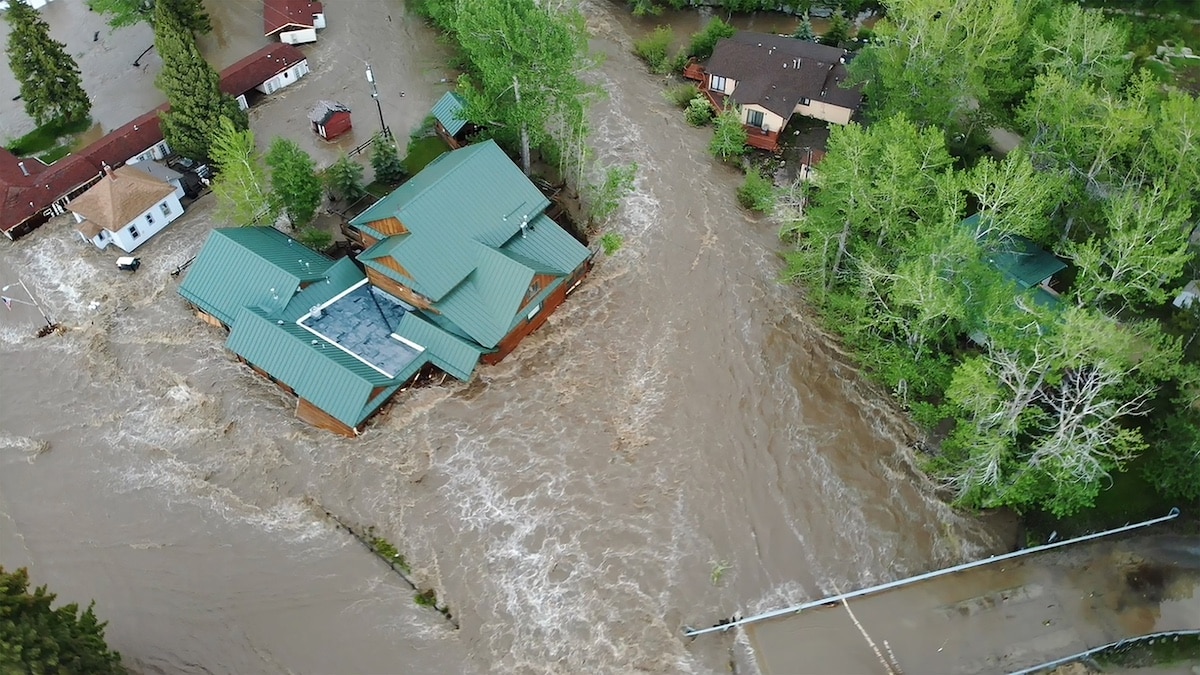
The zippy hourlong film packs in a thorough overview of the flooding that quickly destroyed roads, homes and businesses. The scenes remain astounding: swollen rivers and creeks inundating valleys, trees snapping like twigs, entire buildings pushed off their foundations and taken by the current. Business owners, a pastor, Yellowstone staff and scientists all weigh in.
One In Five Hundred seems to present the case that not enough help came for the small, tourism-dependent communities outside Yellowstone, including Gardiner, Cooke City and Red Lodge. When floodwaters washed away roads and bridges these park gateways became dead-ends, leaving hotel and restaurant owners high and dry for months. Why drive to Cooke City if you can’t drive into Yellowstone from there?
These towns are familiar and special places that hold much of my eastern Montana family lore, as the kids say these days. My parents toured all through the region on my dad’s Harley Davidson Shovelhead in the 1980s, sometimes relying on the kindness of strangers and motel staff if the bike broke down. (Sorry for mentioning that, Dad.) Later, once kids came along, Mom and Dad took us on family vacations to see Yellowstone bison and Beartooth Pass. I squabbled with my brother and sister in motels in Gardiner. We always stopped for soft-serve ice cream at Rockvale.
I’ve seen much of the flooding aftermath for myself. On an unseasonably hot fall day in 2022, just a few months after the waters subsided, we drove out to Cooke City and gawked at debris and ruined buildings. We felt good about getting lunch there to support a local restaurant, and Cooke City is beautiful in its own right, a charming little hamlet at 7,000 feet, nestled among high peaks. I remember the highway leading to Yellowstone Park simply stopped at a jagged edge with a “Road Closed” sign. Everyone we met talked about the flood — but nobody talked about the reason for our increasingly erratic weather.
One in Five Hundred reminded me that the future of many communities around the world, big and small, are threatened by a warming climate and natural disasters. The title prompts the question: Will such a disaster still just happen once every 500 years? —Kate Whittle
Screening at the Roxy on Tue., Feb 18th @ 4:30 p.m.
Director: Hugo Sindelar
57 minutes
World Premiere
Johatsu – Into Thin Air
What if you could hit the reset button on your life? What if you could make one phone call and wake up in a different city, with a different name, with a different job? And never see anyone from your old life ever again?
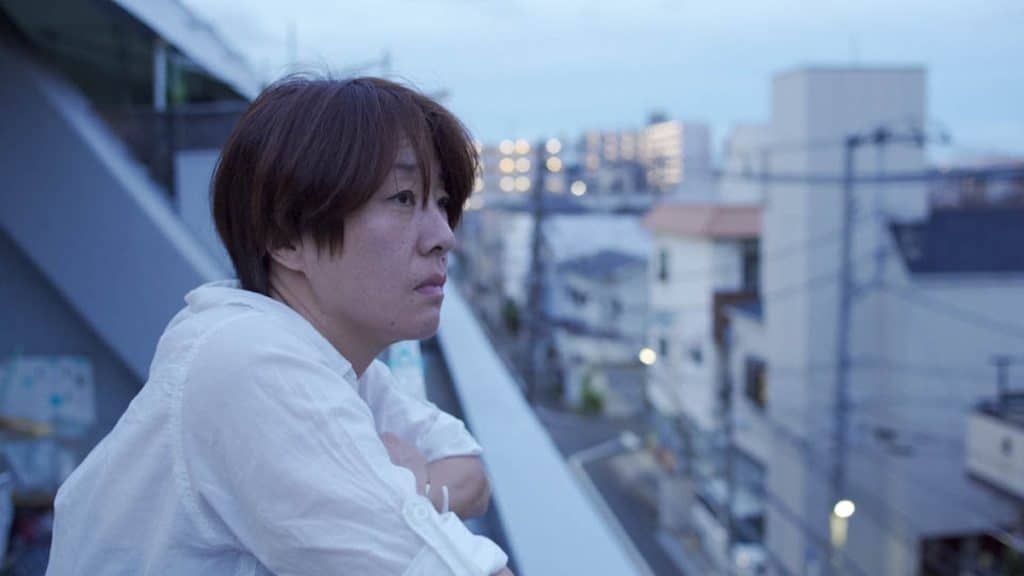
Johatsu — which means “the evaporated” or “the disappeared” in Japanese — shows us exactly what it would be like. Since the economic collapse in the 1990s, “night moving” companies have existed in Japan, mostly within the lines of the law. These businesses disappear thousands of people a year across the country, allowing them to escape money issues, abusive relationships, gang entanglements, or public disgrace. The one common denominator seems to be shame — too much shame to continue living their current lives.
The documentary follows a handful of people in the Night Mover world: a woman who owns a company, a man who “evaporated” 35 years ago, a man who disappeared from his life and now works as a mover, and a few people who have just undergone the experience. Every minute is fascinating, and every minute has you wondering if you’d ever, in any circumstances, make the call.
Suicide has been a part of Japanese culture for thousands of years, from seppuku to kamikaze — and it’s the dark subject at the heart of this film, talked about openly by almost everyone interviewed. It’s heartbreaking to hear the stories of people who never see their family members ever again, who never know what has become of them. But this alternative seems to offer those who use it a unique second chance — a chance to escape death and rebuild their lives with pride. There is so much loss and so much to be gained. All you have to do is get in the van. —Sarah Aswell
Screening at the Wilma on Sat. Feb. 22nd @ 8:00 p.m.
Directors: Andreas Harmann, Aarta Mori
90 minutes
North American Premiere
SALLY
As you might remember from your textbooks, Sally Ride was the first American woman to go to space. In SALLY, expect plenty of classic NASA rocket takeoffs, ’80s hairdos and sexism (NASA engineers famously packed a makeup kit and 100 tampons for Sally’s four-day trip to space). But this film is really a love story about Sally’s relationship with Tam O’Shaughnessy, her lesbian partner of 27 years, and who has an executive producer credit.
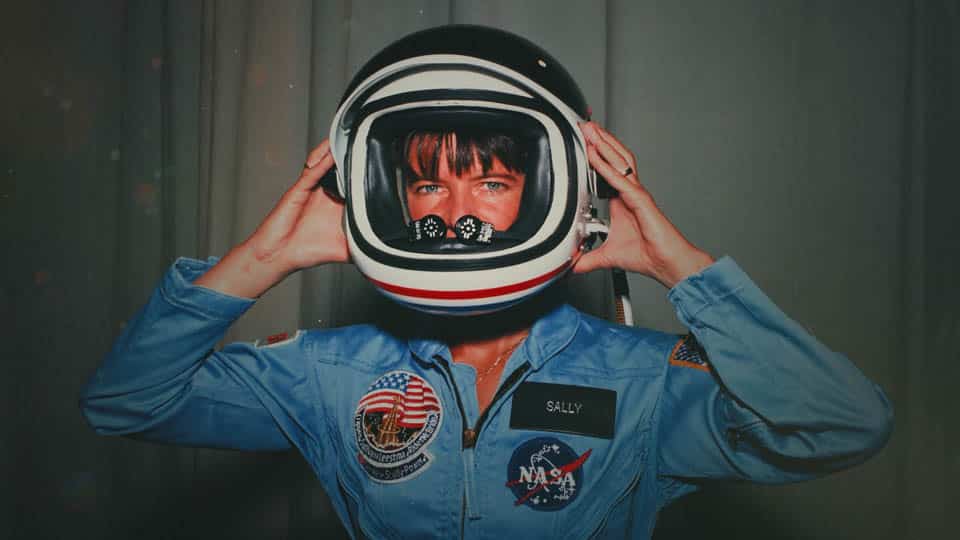
Sally, who died in 2012, chose to stay closeted for nearly her entire life, forcing O’Shaughnessy — a talented athlete and academic in her own right — to pretend to be her roommate. Her affection and candor carries the film and humanizes Sally in a new way, as we can only speculate about Sally’s thoughts and motives. Some reenactment scenes depicting romantic interludes are shot so tenderly I felt like I was intruding on a private moment.
Screening a film like SALLY feels a little extra poignant with the Trump’s administration’s clampdown on scientific research, DEI, trans and queer people, and threats to the Artemis program, which aims to put a woman on the moon for the first time and build on Sally’s legacy. If it gets off the ground, I would hope that that hypothetical lady moonwalker would depart under less scrutiny and sexism than Sally Ride did in 1983. —Kate Whittle
Screening at the Wilma on Sat., Feb. 15th @ 3:00 p.m.
Director: Cristina Costantini
99 minutes
Montana Premiere
Roadside Elegiac
As we zip down Montana’s highways and drive its winding mountain roads, the ubiquitous white crosses that stand perched at roadsides tend to fade fast from our memories, lost in a blur of travel, conversation, radio chatter and distracted thoughts. But Roadside Elegiac, a meditative and illuminating short film from Zachary Garmoe, asks us to live, if only for a few short minutes, with the people who die in roadside crashes, and the members of the American Legion who work diligently to construct the white crosses that honor them.
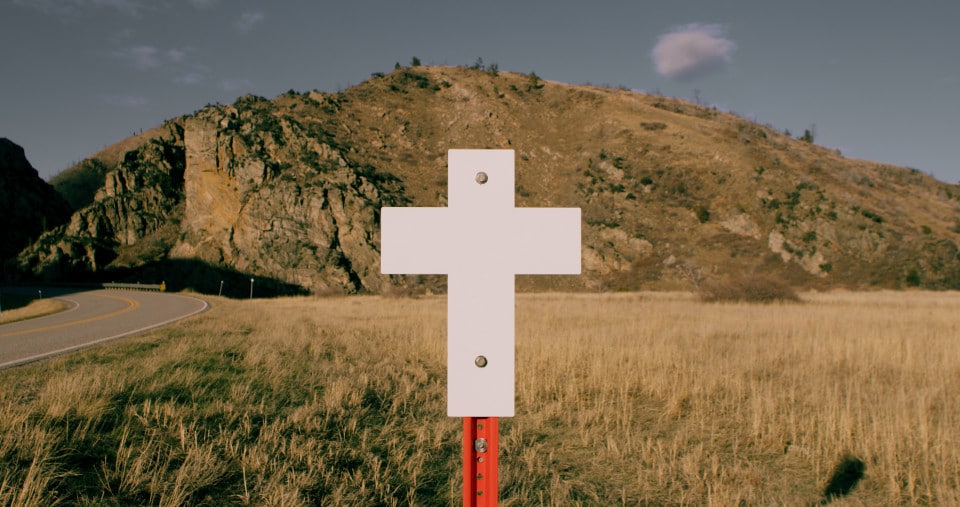
Garmoe, who is also a graduate student with a focus on Science & Natural History Filmmaking at Montana State University, paces his film slowly and gracefully. His camera lingers not just on the crosses themselves, but on the varied landscapes around Bozeman where the film was shot, and on the expressive faces of American Legion members (the end credits identify the interview subjects by name, but we don’t know which is which).
Garmoe’s interviews, albeit sparse, shine light on the history of the Legion’s efforts to construct the crosses. We get a sense of the passion behind their work, and the deep knowledge they have of the crash scenes where the crosses stand. “The fact that we’re able to put a physical object in a place where somebody didn’t plan to leave this world, allows me to feel like maybe I’m saving someone else,” one says.
Roadside Elegiac offers a powerful snapshot of an overlooked facet of our daily, shared life. Despite its brief run time, it packs an outsized punch; it encourages us to slow down, and to consider the preciousness of our own lives, and those we pass on the road. —Max Savage Levenson
Screening at the ZACC on Thu., Feb. 20th @ 12:00 p.m.
Director: Zachary Garmoe
7 minutes
World Premiere
My Back Pages
Towards the beginning of My Back Pages — a short film from directors Nick Canfield and Paul Lovelace that follows an avid Bob Dylan memorabilia collector in the process of donating his collection — the camera lingers on a shard of wood in a glass frame.
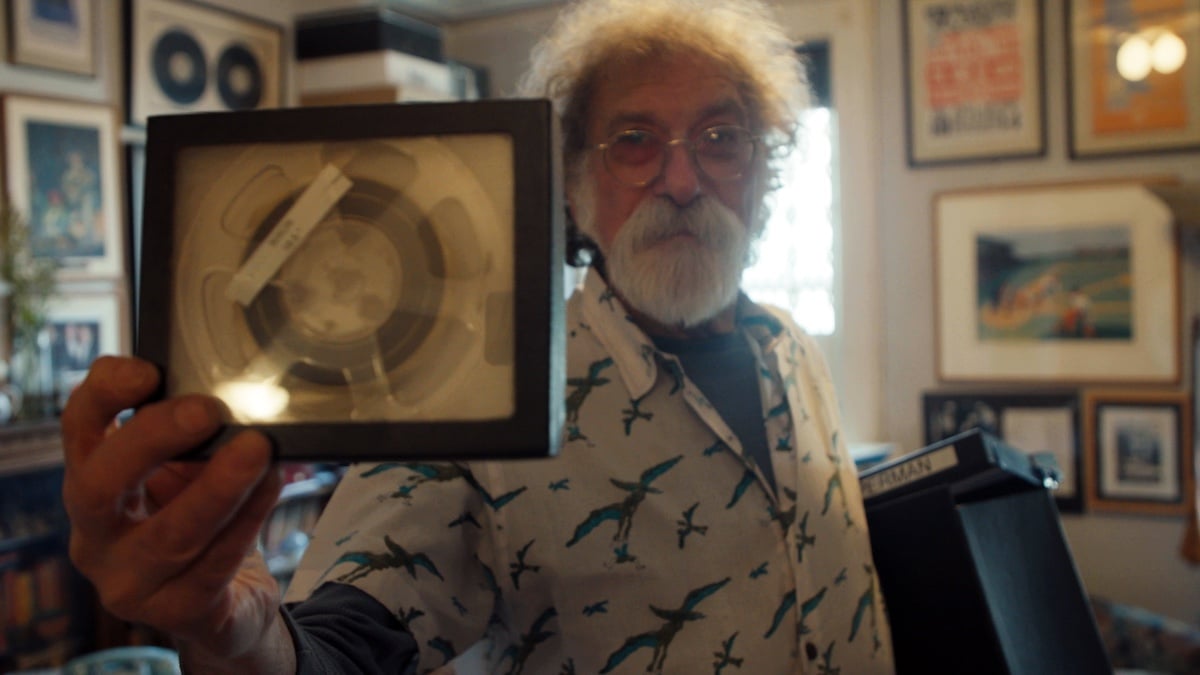
As Mitch Blank, the collector in question, excitedly explains, the plank of wood was “exactly where Buddy Holly was standing on stage when Bob Dylan saw him at the Armory in Duluth.” Blank soon shows off more curios: an autographed Dylan baseball, a file of “Dylanisms” (newspaper clippings riffing on Dylan lyrics) and, in a wooden box, the first solo postcard for a Bob Dylan performance.
Yet despite the eccentricity of his collection (and the zeitgeist energy currently swirling around Dylan himself), it’s Blank — in his 70s, boasting a robust silver goatee, a halo of Einstein hair and a hippie-fied Albus Dumbledore twinkle in his eye — who proves to be the enigmatic focal point of the ten-minute film.
Squeezed into a Greenwich Village apartment that he shares with overflowing shelves of memorabilia (which isn’t limited to Dylan-related items), Blank spouts off on life, collecting, music and death with the prophetic air and wry humor of his muse. He’s wacky, but also self-aware. “You can’t live and then die with things unless you pass the baton to somebody who is going to take it and go for the next furlong. You must empty yourself to be refilled,” Blank says of donating his collection.
In the middle of the film, Blank follows his former possessions to their new home at the Bob Dylan Center in Tulsa, Oklahoma. At the museum, he meets with his fellow gray-haired Dylanphiles, tours the exhibit that now bears his collection and fires off more adages at anyone within earshot. “Hopefully in several hundred years … if the planet still exists, then somebody might be interested in seeing who the other Shakespeare guy was,” he remarks.
The scene is funny, sweet, and like everything about My Back Pages, a potent reminder of the way art takes on a life of its own, inspiring fans, collectors and future bards to keep it alive. —Max Savage Levenson
Screening at the Wilma on Sun., Feb. 16th @ 12:30 p.m.
Directors: Nick Canfield, Paul Lovelace
10 minutes
Northwest Premiere
Union
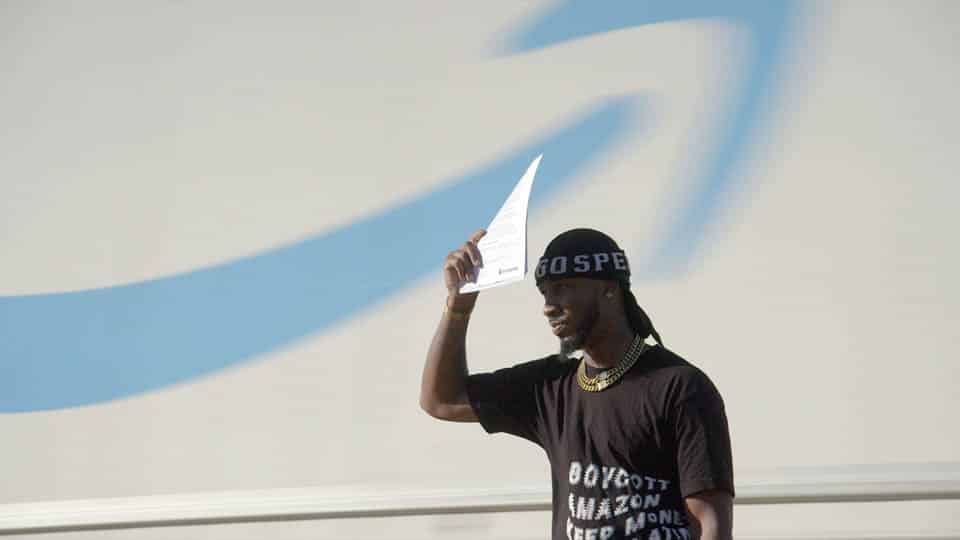
If you’re buying a ticket to Union, which follows Amazon workers trying to unionize their warehouse in Staten Island, the film’s themes of wealth inequality, class struggle and Amazon’s numerous reported worker mistreatments are probably not breaking news to you. You may also remember how this particular effort turned out. But the lesson of Union is in the process. The filmmakers depict the union organizers doing the grunt work of building a movement by running a free food stand in the middle of the night, connecting with the people they want to empower, making phone calls, filing paperwork, facing arrest and simply persisting, again and again, in the face of a contrarian legal system and corporate hegemony.
Organizing isn’t completely serious — sometimes the activists give away pizza and weed (really) and there’s fun and friendship. They achieve some incredible victories. But we also see planning meetings and Zoom calls that will be very familiar to anyone who’s sat on a nonprofit committee — people who all want to do the right thing but fiercely disagree on the way to achieve it.
For even the most tuned-in leftist, Union offers thought-provoking insights into good old-fashioned grassroots, community organizing, and the ways that it can be successful against incredible odds — as well as how it can fail. —Kate Whittle
Screening at the Missoula Children’s Theatre on Sat., Feb. 22nd @ 7:30 p.m.
Directors: Brett Story, Stephen Maing
104 minutes
Retrospective
Flamingo Camp
Pushed to the fringes of society for their sexualities and gender expressions, a cadre of queer and transgender nomads, punks, and artists come together in the California desert to carve out a home of their own. Their community takes root on the margins of Slab City, an unincorporated off-the-grid settlement near the Mexican border. Under the relentless sun, the queer residents of Flamingo Camp build a life for themselves among doomsday preppers, white nationalists, and aging hippies.
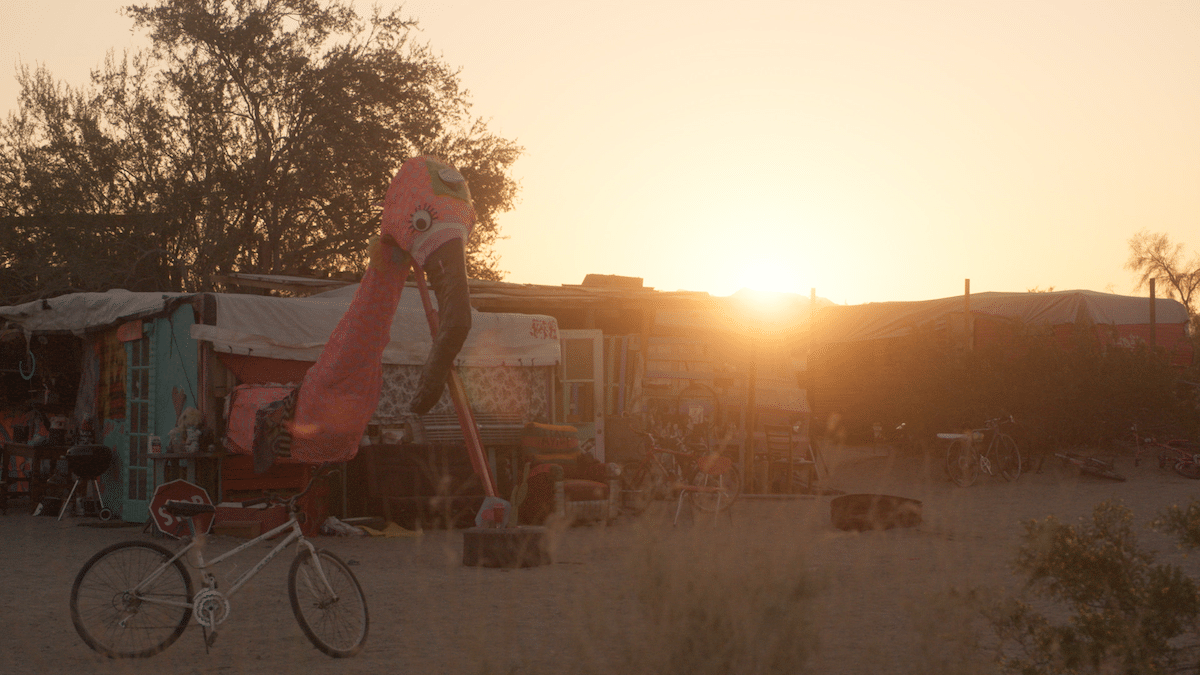
This cluster of rundown trailers, ramshackle sheds, and trashed campers — anchored by a massive flamingo statue — is the closest thing many of them have to a home. They survive through bartering, dumpster diving, and staging drag shows for their neighbors, finding a sense of peace and security nowhere else has offered. But when one of their own is brutally stabbed to death, that fragile sense of safety is shattered beyond repair.
Chris Coats’ documentary is by turns joyful, heartbreaking, and deeply unsettling. It’s painful to watch a sanctuary so violently ripped away from people with nowhere else to go. The filmmakers, originally setting out to profile desert outsiders, stumble into a far bigger— and much sadder — story. What begins as a portrait of queer youth smoking weed and cooking communal meals becomes a devastating chronicle of a grieving mother arriving to collect her child’s remains.
As transgender and queer people across the country and the world face an increasingly uncertain future, the story of Flamingo Camp feels tragically prescient. —Charley Macorn
Screening at the ZACC on Mon, Feb. 17th @ 7:30 p.m.
Director: Chris Coats
80 minutes
World Premiere
Stolen Kingdom
A blast of punk rock riffage immediately tips the hat that this is more of a “kooky slice of subculture” documentary than newsy investigation into the theft of an animatronic at the Walt Disney EPCOT Theme Park.

Stolen Kingdom begins with tales of young urban explorers and their adventures from a time long, long ago, perhaps the 1990s. Some archival video might even be from a VHS camcorder. EPCOT was — and probably still is — home to acres of shuttered rides and attractions that the company doesn’t even bother to demolish. These broken-down remnants of Disney magic lured bored young people to sneak in and climb around. Trigger warning if you have a phobia of animatronics and/or mannequins, because surreptitiously captured footage depicts amusement park rides from an angle that the Disney Imagineers never meant the public to see. There are also many photos of the miscreant dudes touching mannequins’ boobs.
The rough-cut screener that I watched took some ultimately irrelevant detours before arriving at the more meaty central story about theft of park material, but it’s a fun — and bizarre — ride along the way. —Kate Whittle
Screening at the Wilma on Sun., Feb. 16th @ 8:00 p.m.
Director: Joshua Bailey
83 minutes
World Premiere
CamperForce
In recent years, accounts of alarming and unsafe work conditions at Amazon warehouses have become nearly as ubiquitous as the company itself. Yet CamperForce, a short film directed by Brett Story, zeroes in on a particular element of the larger issue: retirement-age RV dwellers who work as seasonal workers in Amazon’s fulfillment centers.

The film is billed as an adaptation of Nomadland, a 2017 book by the journalist and Columbia University professor Jessica Bruder. In addition to co-producing CamperForce, Bruder also contributes clandestine footage of the fulfillment centers, complete with automated stacks of packaged goods and creepy sci-fi sounds.
Despite its overtones of faceless corporate dystopia, CamperForce succeeds by turning its focus to the “Workampers” themselves. The film’s main characters are Barb and Chuck, a sunny couple who lost their life savings in the 2008 housing crash and eventually found seasonal work at an Amazon warehouse. In neutral tones, the pair recount the physical toll of the job — which involved walking a half-marathon in every shift and which caused damaged hands and a potential concussion.
Yet they nonetheless express gratitude for the job. Amazon “can count on us because they know we need the money,” Barb says of retirement-age workers.
Story, the director, compliments Barb and Chuck’s story with footage of an RV show in Hershey, Pennsylvania. At the show, held in an arena, we see physical therapists hawking supplements and exercise gear to counteract the muscular and nervous system hazards of the job. We also see recruiters offering gigs at $12 an hour to retirement-age Americans who seem fully unfazed by the low wage.
The central argument of CamperForce is that Amazon — which launched the titular program in the wake of the 2008 recession — preys on older, financially vulnerable Americans to do hard work for shit pay. As the film notes, the amount of senior citizens working in America has doubled since the 1980s. Furthermore, nearly one-fifth of Americans 50-plus have no retirement savings. Whether or not you agree with Story and Bruder’s argument, their film shows that for so many Americans who should be enjoying their golden years, basic survival remains the name of the game. —Max Savage Levenson
Screening at the ZACC on Sat., Feb. 22nd @ 12:45 p.m.
Director: Brett Story
16 minutes
Retrospective
🍿
Jump to: Your Opinion, Please • Recorder: The Marion Stokes Project • Tiwahe • The Falcons • One In Five Hundred • Johatsu – Into Thin Air • SALLY • Roadside Elegiac • My Back Pages • Union • Flamingo Camp • Stolen Kingdom • CamperForce