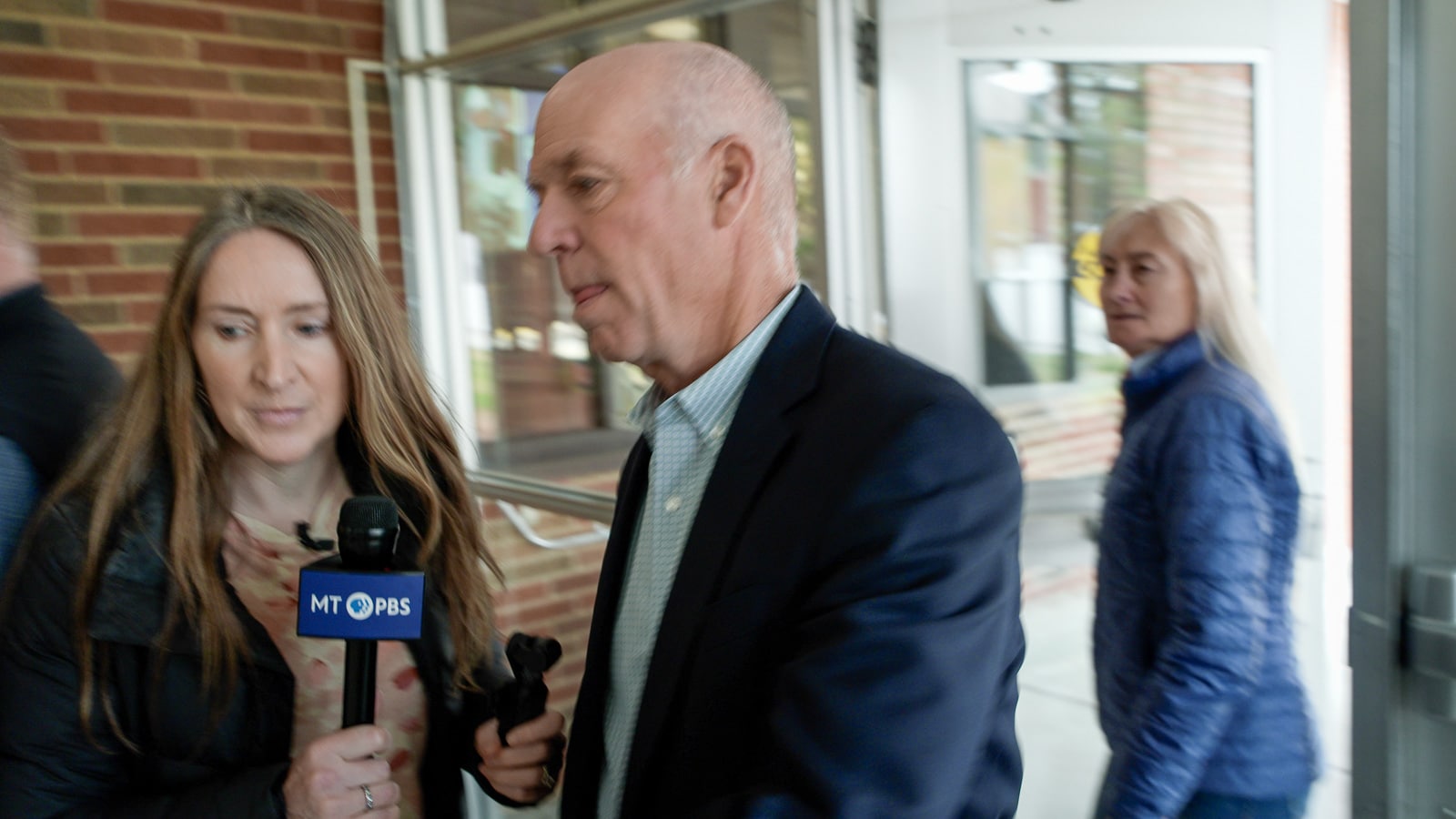
Missoula-based Montana PBS reporter Anna Rau spent April 23 refreshing the website of the state Department of Environmental Quality, waiting to see if it would release new guidance for consumption of sport fish in the state.
In a few hours, a report Rau produced for the station’s Impact series was set to debut. It would show widespread contamination of PFAS — “forever chemicals,” as they’re called — in the state’s fisheries, enough to make some fish dangerous to eat. More than that, she found evidence that the state knew about the contamination back in 2024, but the governor’s office intervened and blocked the information from being released to the public.
Rau had heard the state might publish new guidance to head off her story. Preparing for the possibility of retracking part of her segment, she kept vigil over the DEQ website. She had been nagging state officials for news of the report. Surely, she would know when it came out. Right?
But while she had her attention on the DEQ website, Montana Fish, Wildlife and Parks released the new guidance on its web page, just two and a half hours before Rau’s show was scheduled to air. She didn’t find out until she heard from a local news editor that the state had sent out a “cryptic” press release. The guidance suggests that women and children should avoid eating certain types of large fish in certain waterways — particularly at Fort Peck Reservoir — and limit consumption of other kinds of fish. But the press release studiously avoids saying as much.
“If they’re hiding this, what else are they hiding?”
Rather, it merely points to the existence of the new guidance, and says that using new standards for PFAS contamination “resulted in 21 new or updated fish consumption advisories for Montana waterbodies.“ It also notes that “while it is important to be aware that eating fish caught in Montana may expose individuals to low levels of PFAS in some waterbodies, eating a moderate amount of a variety of fish can provide significant health benefits for many people.”
With the guidance released — and her program on the air — Rau jumped into action.
“It was like, ‘News team, assemble!’ from Anchorman,” Rau told The Pulp. “‘We are re-anchoring this thing at 9 a.m.’”
Now, the YouTube version of the broadcast has this note: “This investigation first aired Thursday, April 23. The next morning, it was updated from its original version to reflect that state officials released new fish consumption advisories 2.5 hours before the initial broadcast.”
Rau’s report is a bombshell. Not only did she find PFAS contamination in fish at concentrations thousands of times above federal drinking water standards, and not only did she receive documents through a public records request that suggest the state sat on the report — which is based on sampling conducted almost three years ago — she also found that the state chose to use standards to evaluate PFAS contamination that are less stringent than new guidance from the federal Environmental Protection Agency, yielding fewer red flags. Had the state used the EPA standards, several fish species across all the waterways where the state found PFAS contaminants would be subject to sweeping “avoid all consumption” advisories.
The Pulp spoke with Rau to learn more about the evolution of the story, its political ramifications, and whether Montanans should eat the fish they catch. Our conversation has been lightly edited for clarity.
The Pulp: So, if I’m fishing in Montana, should I eat the fish I catch?
Anna Rau: If I was fishing with my family, I don’t think I would eat any this summer until I got greater clarity on how bad it is and where it is, and if I did, it would be one, and it would be a smaller fish. There’s so much unknown at this point, and I feel like trust might be an issue. With drinking water, the EPA wants a maximum contaminant level of 4.0 parts per trillion. But there is no level of PFAS exposure they say is safe. Farmed fish and store-bought fish generally have far lower PFAS levels than the wild-caught kind. So, if people want to avoid PFAS but still eat fish, the store-bought option is better.
For context, Rau found some evidence that some fish samples in the Fort Peck Reservoir had PFAS contamination concentrations of as much as 5.4 parts per billion — orders of magnitude more than the federal drinking water standards.
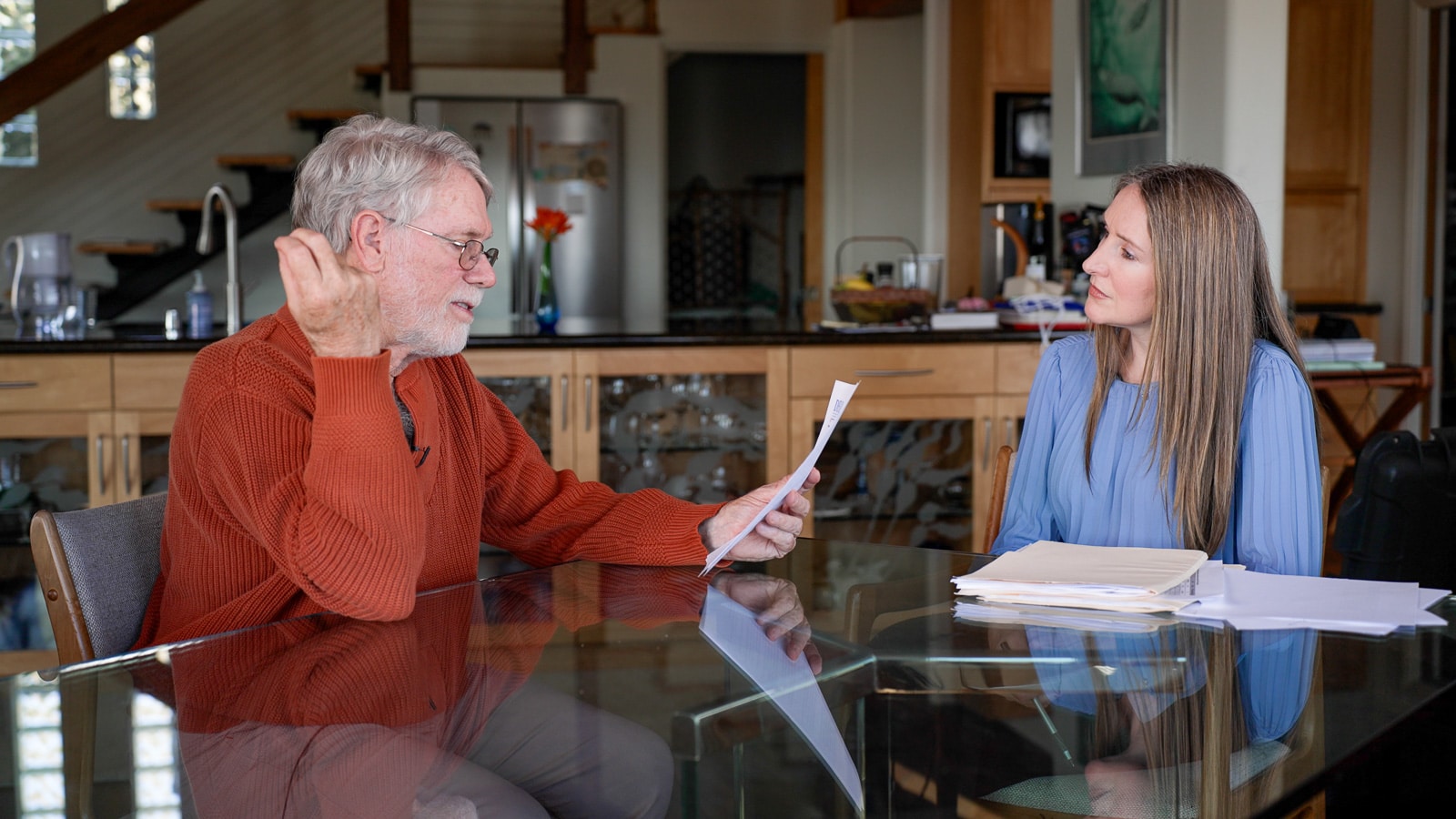
So this report is the product of years of work, and follows multiple other stories you’ve done about PFAS contamination. Can you take us through this saga from the beginning?
Years ago, I started looking at biosolids — treated sewage applied to farmland as fertilizer.The EPA had a whole thing on sludge and biosolids. I started looking at all these chemicals in sludge. A lot of them are unregulated. But one they did know of is PFAS. I had heard about PFAS but I didn’t want to know more, necessarily. But if they’re going to have new restrictions on biosolids, the screw that’s going to turn is PFAS. That led me down the road to actually test fertilizers for PFAS. I tested four different kinds, learned how to convert the measurements, learned how to read a PFAS report.
And so I did that story. Then I figured that if they’re planting it on farm fields, there’s probably PFAS in our food. We tested four different foods from a local grocery store. The U.S. Food and Drug Administration had done testing nationally, but their testing limits were really high, like 70,000 parts per trillion. But there were hundreds of parts per trillion in, like, kale. That was really surprising to me. We also tested rainwater that fell over Missoula — it had two-to-three parts per trillion of PFAS. The rain falling from the sky is almost at a level that you wouldn’t want to drink.
When I did the story about PFAS in food, I interviewed someone at DEQ.
They said, As a matter of fact, we’re testing for PFAS in fish tissue. They said results were coming back sometime soon — but summer rolled by, fall rolled by. “Where are these numbers?” I followed up again in January 2025. “Where are these test results? Where is this report?” They said, You’ll have to file a FOIA.
When the FOIA came back, the result was a 700-page PDF of garbled data. There was a lab report, and you’d see these hits, hits, hits, and I knew they were high. When I looked at Fort Peck, I knew this was bad. I wanted to ask DEQ about these levels, why there were no fish consumption advisories, and where the heck was this report. They knew I’d figured out the numbers were bad. In October, I filed a sweeping request. It took them about a month and a half. Right before Christmas 2025, I got the document dump. There were thousands of documents. I had a page of notes that’s now 45 pages long, throwing things in there as I read them. Finding the memo is when I really hit pay dirt. They were ready to release things, to put out the best available science, and at that point, they stopped.
Here’s the point in Rau’s report where she describes the “stunning DEQ memo”:
We talk a lot about peoples’ low trust in institutions, and in science. Something like this, it’ll only make that trust harder to come by, right?
From what I can tell, the staff at DEQ are great — they really care, they want to do the best job they can, and they’re working hard for taxpayers. The people testing those fish, preparing the reports, they’re doing what’s right, despite the pressure. It’s leadership that has damaged trust. If they’re hiding this, what else are they hiding? It is incumbent upon us as journalists to push for that, and if they don’t release public information, we have to sue. To restore trust, I think we’re going to need some sunshine, and sunshine is the best disinfectant. That’s on us as reporters. The more scrutiny and pressure we apply, the better the leadership we get.
Maybe this is a bit of a stretch, but that must feel difficult, given how the federal government has come after PBS’ funding.
What I would say is this: When I got hired for this job many moons ago, one of the first questions I asked was, “How is this funded? What if I report on something the state or university doesn’t like?” We made sure that I am funded purely by donations. We are answerable to our viewers and I am free from any of that restraint. My boss told me: We’re going to be sure you don’t feel any kind of pressure so you can focus on your work. When I told my current boss I was going to interview the governor and didn’t know how it was going to go, she told me to go do it and that he’d deal with everything else.
I fully expect somebody in the state, some lawmaker, to come at us in the next legislative session, and that is just the MO. But we can’t be afraid. We can’t be cowed.
I want to go back to something you said earlier — that even rainwater over Missoula has PFAS contamination. If that’s the case, if PFAS is basically unavoidable, why should people worry about this news?
The difference between you developing a disease from this and you being healthy is dose. If we can take action to avoid even a little bit of these exposures, that can help mitigate disease. Because it’s everywhere — in the rain, in our homes, in our sewers — where we can really make a difference is at these wastewater treatment plants. We need to figure out what a scalable, affordable solution looks like — one we can actually get our arms around. There are things that can be done. And if there’s nothing that can be done about this, we’re doomed as a society. They stopped producing PFOS in 2007, and the level in Americans’ blood has declined significantly since then. Things will get better when we do something.