If you dial 911 anywhere in Missoula County, your call will be answered by a dispatcher in a windowless room in the basement of the county courthouse.
It might be answered by Ashley Barrow, in jeans and a pink sweatshirt, with Birkenstocks on her feet and a smudge of hot orange polish on her big toe. Barrow will have a “dispatcher’s ear” cocked to the radio traffic and the lines that her colleagues are monitoring. She may be dealing with other emergencies—like the smoking SUV that just hit a tree on Big Flat Road—but she’ll aim to answer your call by the third ring. The first thing she’ll want to know is your location, so she knows where to send help.
The dispatch center is a large room with butter-colored walls. Barrow and three colleagues sit at desks, facing an array of computer screens. A TV mounted near the ceiling streams the osprey camera in Hellgate Canyon, the dispatchers’ window to the world outside. If it starts snowing, they know to buckle up for accident reports.
The dispatchers in this room have learned a few things: that emergencies tend to happen in threes, Sundays are bad for domestic violence, a full moon brings babies, and holidays are hard on veterans. They know never to say the “Q” word—quiet—lest all hell break loose.
They’ve helped deliver babies over the phone. Barrow once saved the life of a man who fell off his tractor by instructing a caller in CPR. Just this morning, she kept a terrified girl on the phone who wanted to kill herself, kept her talking—about school, sports, anything—long enough for two sheriff’s deputies to race out to her home.
Barrow will be ready for your call. She will have left her house early and picked up a tall iced tea at Florence Coffee. Before beginning her 12-hour shift, she will have sat outside in her truck long enough to blast her music, take some breaths, and say a prayer.
When the phone rings, Barrow never knows what the emergency will be. It might be the woman who calls repeatedly. Barrow will ask her how she slept and if she’s had her coffee and her pills. But even after 11 years on the job, every day brings something new, like the time a woman tried to enroll her Cabbage Patch Kid in kindergarten.
When Barrow answers your call, a yellow light will illuminate above her desk. You can expect her voice to be calm. She will ask where you are. If you are agitated, she may speak quieter or call you by your name. If you shout, curse or hang up, Barrow won’t take it personally.
“It’s usually the worst time of their life, calling 911,” Barrow says. “They’re not calling to say, Hi.”
Barrow coordinates the first responders who will come to your aid. Often, she sends the help you might expect: a police cruiser, a fire truck and an ambulance. But since 2020, she has another option: a group of mental health first responders called the Mobile Support Team. These responders won’t arrive on scene with sirens or flashing lights. They’ll be in a gray minivan, an EMT and a clinical social worker trained to step in where there is no fire, crime or immediate injury, and to help the people who are often the hardest to help.
The team, among the first of its kind in Montana, started answering mental-health calls in 2020. A year later, the number of calls assigned to it nearly doubled. Now its funding, which has been tied to the Covid-era American Rescue Plan, is under threat as looming property tax increases resulting from the housing boom have local politicians and taxpayers uneasy about any new spending. At this point, the program is just trying to maintain its services as its future remains in limbo.
Working in the gray
The headquarters of the Mobile Support Team is a nondescript two-story office building next to a land surveying company in Missoula’s Riverfront neighborhood. There’s a basketball hoop outside the front door, hemmed in by a privacy fence that still smells of cedar.
“We’re a catch-all. We work in the gray a lot. We can meet people where they’re at. We’re in plain clothes, not a police officer with a uniform and a gun.”
Quinn Mawhinney,
Mobile Support Team clinician
Inside the office is a makeshift living room, with a couch, some chairs and a windowsill of succulents. On a Thursday morning in September, a handful of team members are gathered around a dark wood coffee table that holds iPads and laptops and a role-playing card game called Here to Slay, in which players enact monster-battling heroes.
Colin Roberts, a licensed clinical social worker with a red beard and glasses, sits on the couch in a polo and green pants. Erika Gotcher, a paramedic with sandy hair tied high, sits on a chair in Blundstones and a navy EMT suit with pink trauma shears on her leg. She listens to the police radio on an earpiece. Ursula Holloway, a behavioral health manager, is in flats and a cardigan sipping from an insulated mug. Quinn Mawhinney, another clinician, wears a mauve corduroy jacket. Nick Stahler, a dark-haired, muscular EMT, spent his day off running a seven-hour traverse in the Bitterroots. The staff of 16 rotates shifts, but a team like this is on duty every day from 10 a.m. to 8 p.m.
The team reviews some recent cases. A mom is having trouble with her teenage son who has autism and has been breaking doors. A man discharged from the state psychiatric hospital in Warm Springs yesterday is now at the Poverello Center. A city police officer just sent a picture of a woman experiencing psychosis, asking if the team knows her. Holloway remembers her name. The team has responded to her house before. “She has fish tanks,” Holloway says. “They were immaculate.”
They talk about an unhoused man whose tent caught fire. Another man in a wheelchair was kicked out of the Pov for a behavioral incident. He’s not in good health, and Roberts is worried.
“We’re going to be down to 40 degrees next week and all he has is sweatpants and a T-shirt,” he says.
Another man is struggling after losing his place at a recovery services center for smoking marijuana. Roberts saw him banging his head on concrete last winter, saying, “I’m tired of being cold.” Another woman with autism and an intellectual disability is suffering from delusions and is now couch-surfing in another state.
On any given day the Mobile Support Team might respond to someone complaining of a person breaking into their house to steal groceries from their fridge, or someone with fairies in the corner of their room. The team has responded to people passing through Missoula, too, like a woman experiencing mania who said she would be fulfilling a 9,000-year prophecy if she got to New York. The team, a county resource housed in the city fire department, fields calls from 911 dispatch, direct requests from law enforcement or fire, and also from community support services.
“We’re a catch-all,” Mawhinney says. “We work in the gray a lot. We can meet people where they’re at. We’re in plain clothes, not a police officer with a uniform and a gun.”
The trauma next door
One of the first calls of the day comes from Lilian Kennedy, the team’s case facilitator. It’s Kennedy’s job to follow up on the longer-term needs of people in crisis. She might connect a client with Missoula Aging Services, say, or sit with someone sobering up in the emergency department. She finds emergency housing for people on the streets. Her role is to brainstorm resources, and to advocate for her clients throughout the bureaucracy of getting help.
“The system is broken,” she says. “If you don’t fight for them, who is going to fight for them?”
Kennedy prides herself in moving quickly to meet her clients’ needs so they don’t get lost. “When I start, I finish,” she says. She’s currently studying for her master’s in social work.
Recently Kennedy has been working with a young man, we’ll call him Jason, who has long struggled with mental health issues and has been fighting with his parents. Today Jason is planning to move out of his parents’ home. His parents were going to help him. Now Jason wants nothing to do with them.
“We don’t show up with solutions. We stay engaged, de-escalate and find out what that person needs in that moment.”
John Petroff,
Mobile Support Team manager
Roberts, the bearded social worker, answers Kennedy’s call and sets the phone on the coffee table. Over speakerphone, Kennedy tells the team she talked with Jason for an hour the day before, and that he was scared about moving but can’t be around his parents any longer. Their fighting has gotten worse. Earlier this year, police responded to his home and found something in his room that might suggest violent intent. It’s not hard to imagine how Jason might end up arrested or worse.
Kennedy tells the team she’s worried about Jason. He’s terrified, she says, but he trusts her and she wants to help him.
Roberts says his clinical sense is to get Jason out of crisis before he moves out of the house.
Roberts calls Jason’s father—whose sigh on the phone sounds like something deflating—and asks if he’d like them to come talk to Jason. He would.
Roberts and Gotcher head out to a tidy garage and climb into Fire 181, a gray Dodge minivan parked next to a chop saw. The back seat is lined in white linen. Two bottles of water sit in the drink holders. It’s like a nice taxi in a foreign country.
“Smells nice and sterile in here,” Gotcher says, slipping behind the wheel. “Just how I like it.”
Gotcher and Roberts drive across town and pull up outside a house with a green lawn and a fading garden in a leafy residential neighborhood. It could be almost any middle-class home in Missoula.
Jason’s father meets Roberts and Gotcher outside. He says Jason is packing. Roberts and Gotcher step inside. Hanging on the wall are framed pictures from happier times. Half-filled suitcases are strewn across the floor.
Roberts finds Jason, who says he has no intention of going anywhere with his parents. He’ll be homeless if his parents won’t support him.
Roberts tells Jason he knew he was having a hard time and he wanted to check in and see if he could help. He tells Jason about different living situations his parents have found for him. Jason is silent.
“Well, I hope your day gets better,” Roberts says. “Good luck out there. I know we’ve just talked briefly, but you’ve got a lot of potential.”
Outside, Roberts turns to Gotcher. “I guess that’s all I could’ve hoped for,” he says, “that he heard us that he has options.”
Jason’s father approaches, sliding both palms down his face as if wiping a window. He says he and his wife want to help their son, but they don’t always know how.
Roberts listens with a concerned frown and his hands folded, prayerlike, at his waist. He tells Jason’s father that the team is on duty until 8 o’clock every day and to call if he needs anything.
Back in the minivan, Roberts says that such an ambiguous outcome is not unusual on their calls. He explains that his goal was to listen and to let Jason know his options. You can’t help someone until they’re ready, and the team’s success often comes after repeated contact. Building rapport is essential. Driving back to headquarters, Gotcher adds that although Jason was the identified patient, his father also needed support.
“Caregiver stress is real,” Roberts says.
Keeping the minivan on the road
Missoula’s Mobile Support Team is one of at least 30 similar civilian crisis response programs throughout the country, according to the Vera Institute of Justice. The earliest program of this kind is called CAHOOTS, which started in Eugene, Oregon, in 1989 and has served as a model for many that have followed.
“There’s really been the best kind of explosion of these types of resources,” explains Daniela Gilbert, director of Vera’s Redefining Public Safety Initiative. “They’re proving that they can respond safely. They’re proving that they can free up officers to respond to other calls.”
One in five Americans live with mental illness. Gilbert says that people experiencing a mental health crisis are 10 times more likely to be the victim of a police shooting and that people of color often suffer most from America’s overreliance on law enforcement. She says it takes time and money to build sustainable alternative response models.
After analyzing public 911 call data from around the country, Vera found that around 19 percent of 911 calls could be answered by civilian response units like the Mobile Support Team. This spring, the Los Angeles Police Department listed 28 types of calls that should not require a police response—including welfare checks, people under the influence, loitering, panhandling and urinating in public.
“Police didn’t become the default first responders overnight,” she says. “A lot of the services people need have been underfunded for a long time.”
Missoula’s Mobile Support Team was born out of a 2019 strategic planning meeting held by Kristen Jordan, then the director of Missoula County’s Criminal Justice Coordinating Council, and now a city councilmember representing Ward 6. Jordan had been looking at data gathered in something called Sequential Intercept Mapping, in which a community examines the intersections of criminality and mental health. That project showed Missoula needed another first response to address growing mental health needs.
In 2019, Jordan gathered about 35 stakeholders from the criminal justice system to discuss how Missoula might better respond to individuals experiencing a mental health crisis. Most agreed that Missoula would benefit from a mobile team to respond to these needs.
“When you dial 911,” Jordan says, “is it appropriate to send the police out when someone is clearly having a mental health issue? We’ve got to limit violent interactions between law enforcement and people in mental health crisis.”
Around that time, the state put out a request for proposals to fund mobile crisis units. Brad Davis, assistant chief of the Missoula Fire Department, suggested the fire department could house such a program. The fire department is a trusted, nonthreatening entity already adept at emergency response. Davis collaborated with Partnership Health Center to provide the mental health expertise. They put together a proposal and received the funding. They were among the earliest such programs in Montana, although now they count among 13 in the state.
By November 2020, the team was operational. The first year they responded to 1,242 calls. In 2022, they responded to 2,186. This year they’ve responded to 1,465 calls so far. Now the team often operates two vans—Fire 181 and Fire 182. Data gathered during the first seven months of the program shows that the team helped divert 13 people from jail and 169 people from the emergency department, resulting in an estimated tax-payer savings of $252,934.
“Police didn’t become the default first responders overnight. A lot of the services people need have been underfunded for a long time.”
Daniela Gilbert,
Vera Institute of Justice
“I don’t know how we survived without the Mobile Support Team,” Jordan says. “It financially makes sense. It makes sense from a mental health perspective. And it’s also a service that allows the fire department and law enforcement to do the jobs they signed up for.”
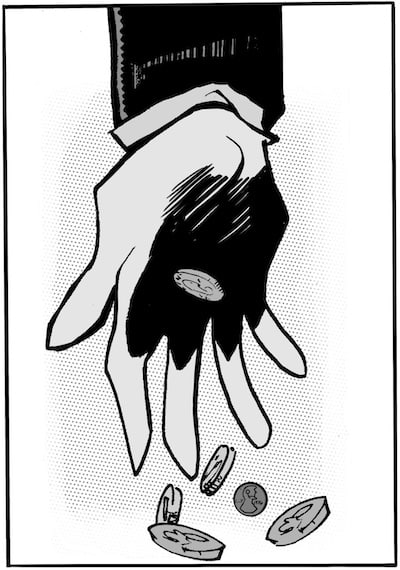
Three years into the program, however, the Mobile Support Team has no long-term funding. The team sources its $1.4 million annual budget from a state crisis diversion grant and money rolled over from the American Rescue Plan Act of 2021. Eventually the team hopes some of its services can be reimbursed by Medicaid. Permanent funding for the team was to be included in a fire department mill levy on election ballots this fall, but the city council voted to remove that levy because of rising property taxes.
Davis is concerned. He says it’s hard to predict when the money will run out, and in the meantime the team is focused on maintaining, not growing, its capacity.
“There’s no doubt,” he says, “at some point the city or the county are going to have to figure out how to fund this more permanently.”
Sealing the cracks
Gotcher, who became an EMT after a stint teaching leadership skills on high ropes courses on the East Coast, was there for the team’s first call, back in November 2020. A woman downtown was shouting obscenities. Looking back, Gotcher smiles at the scale of the team’s reaction. Four of them piled out of the van, including Gotcher with her full medical bag. When the woman didn’t want help, Gotcher had her sign a refusal-of-care form. Since then, Gotcher has responded to her often.
“Now it’s, ‘Hey, how’s it going?’” she says. “A lot has changed.”
Gotcher says the Mobile Support Team’s purpose is to get clinicians to people in crisis. But it often helps to have an EMT there, too. One day, the fire department asked the team to check on a grandmother who was feeling anxious. Gotcher had the woman walk around her home. She was wobbly on her feet and when she got back to her chair, she complained that it was moving. Gotcher brought her to the hospital where a scan revealed the woman had a brain tumor.
Unlike other first responders, the Mobile Support Team can work with a patient as long as necessary. The team spends an average of one hour and 15 minutes on-scene with a client.
“We can take as much time as we need,” Gotcher says. “We have time to do the research beforehand and talk to people afterward.”
The team is like a walking Rolodex of community services. They connect people with resources like the Dakota House, Winds of Change, Blue Heron Place, PATH, PACT, AWARE, and the Temporary Safe Outdoor Space.

When it comes to helping people, all options are on the table. The team might give someone food and water, take them to an appointment or have their prescriptions filled. They’ve helped people copy numbers into a new cell phone. Once the team took a man to the post office.
“It’s fun to be the in-between,” Gotcher says. “All possible outcomes are in play, as long as it’s safe, legal and the best thing for the patient.”
“There are a lot of options that aren’t the hospital,” Roberts adds. “We really try to go in there with no agenda.”
More than half of the team’s calls are for housed individuals, but the team interacts plenty with people experiencing homelessness, a population that has higher rates of co-occurring health conditions as well as mental and substance abuse disorders, according to the Substance Abuse and Mental Health Services Administration. Forty-nine percent of unhoused people have been the victim of a violent crime, compared to 2 percent for the general population, according to a study from the National Health Care for the Homeless Council.
“Negative sentiment toward unhoused people is really high right now,” Roberts says. “I definitely try to think of the root cause of all of this, which is, full stop, the lack of affordable housing.”
Mawhinney, another clinical social worker, used to work at the Poverello Center. She says the stereotype of homeless people traveling to communities with the best services is false. “These are your neighbors,” she says. “They’ve been living here a long time.”
So, when a call comes in to check on an aging veteran, Mawhinney gets into the minivan with Stahler, the EMT. On the way to the scene, Mawhinney explains that this man, we’ll call him David, is falling through the cracks. He doesn’t qualify for financial support from Veterans Affairs. He was approved for an assisted living mental health facility out of state, but two health care workers say he was disqualified because he uses a walker, which could be used as a weapon. He’s been staying at a shelter, but he’s having trouble walking and can’t get to the bathroom in time. Unable to complete his activities of daily living, he’ll lose his bed and will have nowhere to go but the streets.
“All possible outcomes are in play, as long as it’s safe, legal and the best thing for the patient.”
Erika Gotcher,
Mobile Support Team paramedic
Mawhinney and Stahler find David leaning against a building on which “Nothing Matters” has been scrawled in purple crayon. Beside him are his walker, a cardboard box full of belongings and a jar of instant coffee. His hair is short and his beard yellowed from smoke.
He tells Mawhinney and Stahler he’s worried about his medication. Someone stole his Tylenol, he says. He’s watching his others like a hawk. He dumps a bottle of yellow and green pills onto the pavement. “There were 30 of them,” he says.
Stahler asks David some questions about his health. Earlier this year David spent some time in the hospital. He says he wants to quit smoking. He says he doesn’t feel safe at the shelter. It’s hard to sleep because of the noise and, because he’s tired, he sometimes forgets to sign up for the lottery system the shelter uses to assign its limited beds.
“Do you feel you need to be evaluated today, to go to the hospital?” Mawhinney asks.
David says he wants to, but he’s worried about his stuff. He’s been buying books at the library. One of them contains the complete works of Van Gogh. The other is an illustrated guide to birds of the world. “If I had to get rid of them,” he says, “I’d just stay here.”
Mawhinney says they can bring him to St. Pat’s for an evaluation, and that he can bring his stuff with him. She explains they may decide to send him to Warm Springs. David moistens his lips with a swollen tongue, and says that’s what he’d like. As he ties up his black boots, a sparrow lands on the pavement and hops toward him. David’s eyes brighten.
“Hey, there’s my buddy, Petey,” he says, “looking for something to eat.”
While Stahler gathers his things, Mawhinney helps David to his feet and drapes his arm over her shoulder to walk him to the van.
“Oh, here we go,” David says.
Mawhinney fills out a mental health referral form with David’s medical history and background information. Stahler drives to St. Pat’s, where he parks in the ambulance bay. He and Mawhinney walk David into the orange zone of the emergency department, the mental health wing, past a burly EMT security guard in a tactical vest. A nurse escorts David to a small room with a soft chair.
At the nurse’s station, Mawhinney gives David’s information to a woman in pink scrubs and Danskos. She explains he’s here for a voluntary mental health evaluation. Quickly it’s decided that David will be transported to the state psychiatric hospital in Warm Springs.
“The best outcome for him is what he agrees to and what he wants,” Mawhinney says, “as long as it’s safe.” And while Warm Springs isn’t the best place for everyone, she says he’ll have a better chance there of being connected with the long-term services that he needs.
Stahler and Mawhinney get back in the van to return to headquarters, their shift not yet halfway over. On the drive, Mawhinney calls the social worker at Veterans Affairs, but the call goes to voicemail and the mailbox is full.
The fourth response
John Petroff is the fire department’s operations manager for the Mobile Support Team. A Zootown Crossfit instructor in his off hours, Petroff sports a horseshoe mustache of the sort you sometimes see on a firefighter. (He also has two Dalmatians.)
Petroff says the Mobile Support Team’s strength is in the flexibility of its approach and the long-term follow-up with people in need.
“We don’t show up with solutions,” Petroff says. “We stay engaged, de-escalate and find out what that person needs in that moment. Sometimes they need someone to talk to because they’re anxious.”
Petroff says other first responders can’t afford to spend the time with people that the Mobile Support Team does. Sometimes people are arrested or taken to the hospital, which may escalate their crisis. The Mobile Support Team can connect with people, respond more intentionally to their needs and help them incrementally improve their lives. In doing so, the team keeps people safe, out of the hospital and out of the criminal justice system. Ultimately, he says, the survival of the team is in the community’s hands.
“I feel like the community supports it,” Petroff says. “With the way mental health response is being brought to attention nationwide, I believe we’ll find a way to fund it and make sure it exists.”
Gotcher says people sometimes forget how precarious their good fortune is. A lost job, a medical problem or an eviction could be all that separates an average Missoulian from someone in need of the Mobile Support Team.
“The thing that I see is the lack of empathy toward people who are experiencing hardships,” Gotcher says. “People lose the humanity in it and think it never would happen to me.”
Kiki Radermacher, a behavioral health manager for the Mobile Support Team, says people often think she has a hard job. But unlike other first responders, she says, she gets to see the whole story of a person’s life improve.
“We’re experiencing those wins every day,” she says.
Radermacher recalls a divorced woman in her 70s who had no housing. She was incontinent, so she couldn’t stay at shelters. Over time, she was barred from grocery stores and hotels. Her only option was to live on the streets. Radermacher was worried she would die of cold in the winter. Without the Mobile Support Team, the woman would have had more contact with law enforcement and it’s likely she would have been charged with crimes and ended up incarcerated. Instead, after more than a year of support, the team found the woman a rare place in the Mental Health Nursing Care Center in Lewistown.
“People on this team care,” Radermacher says. “It is the fourth response. We have fire. We have law enforcement. We have EMS. This is what has been missing all along.”