When Scott Mathson walked into The Recording Center in early 2023, he was 31, grieving, and aching to get back to music. His father had died a couple of months earlier, leaving Mathson his 12-string guitar. Mathson wrote a song on it for him called “Hold You Dear,” and brought a demo to the studio along with old recordings he’d made as a teenager in his Great Falls basement.
“I wanted to work with the studio on taking my home recordings to the next level,” he says.
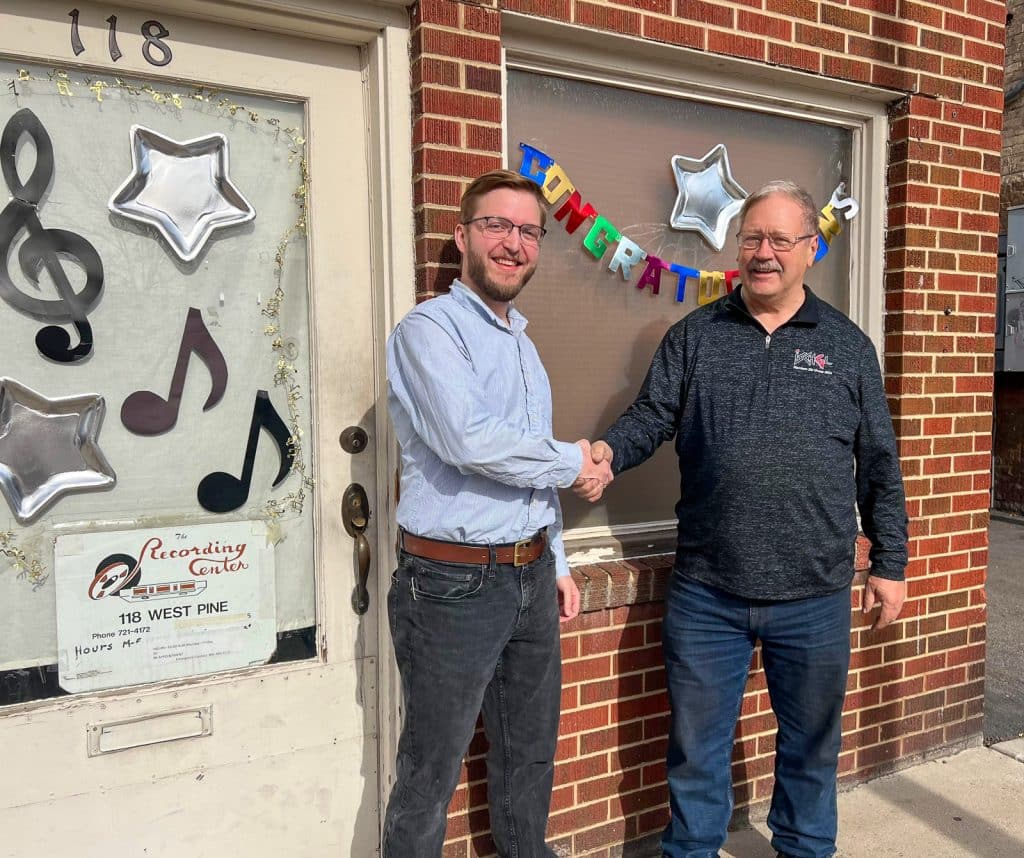
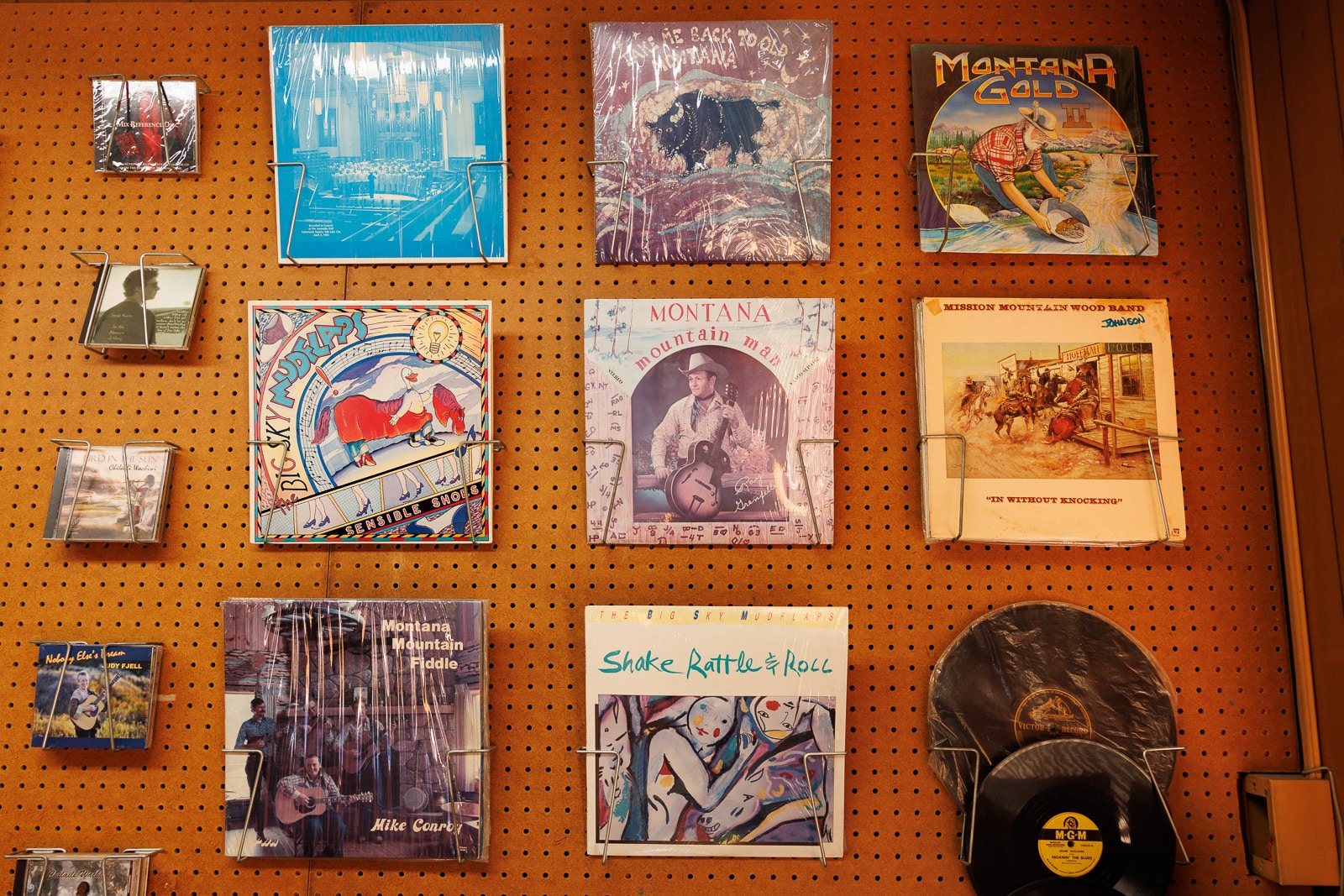
The Recording Center is easy to miss — inside a low-key brick building on West Pine Street downtown Missoula, next to 3B Bagels (formerly Sushi Hana). Its nondescript doorway opens into a small, wood-paneled front room full of shelves lined with cassette tapes, 7-inch records and full-length LPs — classic and obscure, spanning decades of Montana music, including the compilation Montana Gold featuring the Mission Mountain Wood Band, The Lost Highway Band, the Bop-a-Dips and D’Club La Peach. In the corners of the room are stacks of old-format audio — DAT and SVHS tapes. On the table is a CD duplicator.
Mathson found himself surrounded by a living, working archive, stratified by decades of projects, formats, and gear, with the treasure-trove feel of a Saturday morning estate sale: Years of recordings capturing Missoula choral and symphony concerts, history lectures on Lewis and Clark and science lectures on climate change, opera performances, punk bands and folk bands, audio of sound effects like fire crackling and the wet echo of caves.
“I just kind of took stock and said, ‘Man, life is truly short.’”
Mathson, who has a mellow presence and warm, empathetic smile, had grown up loving music, playing guitar and singing with his dad — songs like “House of the Rising Sun” and “Unchained Melody.” They played together at the Catholic church the family attended where his dad led hymns.
“He brought a one-man-band lightness and energy,” Mathson says, “with a bag full of percussion instruments — tambourine, shakers, etcetera — that he would hand out to others, and he would conduct the rhythm for them to play.”
In high school, he’d dreamed of attending the Recording Workshop in Chillicothe, Ohio, a trade school that for decades has trained serious working audio engineers in the craft. But after graduating, he instead pursued what he felt was practical. He attended the University of Montana, then dropped out and went into tech, building websites. He and his wife bought a house in Missoula. But he was still figuring out what came next when his dad died.
The loss gutted him, and he suddenly found himself reckoning with the musical dreams he’d never pursued. But it had also opened him up. Inside the studio, looking at the mics and soundboards, he could feel he was on the brink of something new.
“I just kind of took stock and said, ‘Man, life is truly short.’”
Over the months following his discovery of the studio, Mathson became a regular and got to know its long-time owner, Rick Kuschel. He built a website for Kuschel and brought in more clients, and Kuschel taught him the equipment.
In October 2024, when Kuschel decided to retire from the business, Mathson bought The Recording Center. With it came a legacy and a practice — and, slowly, a way back to his own music.
‘Stick a fork in it’
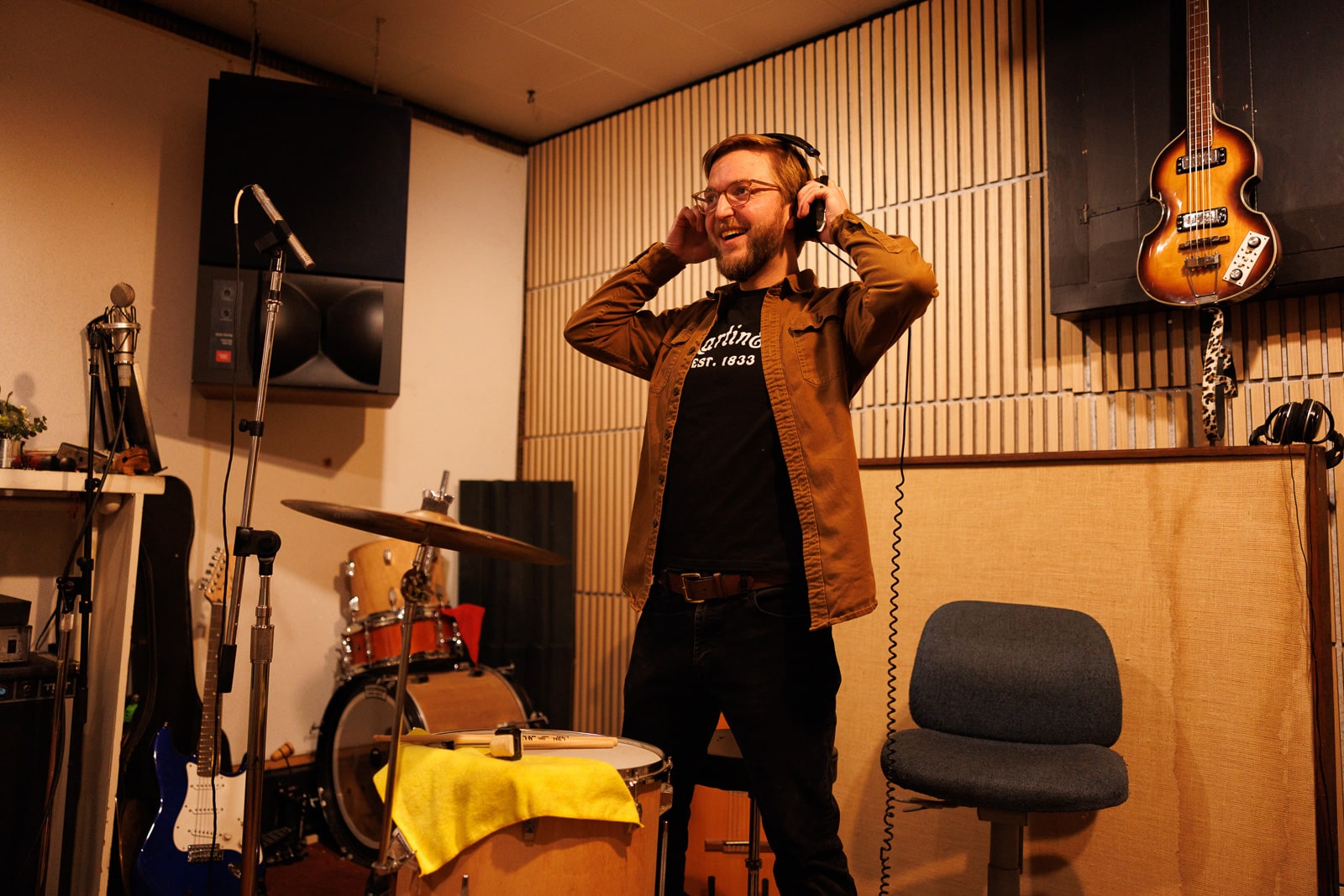
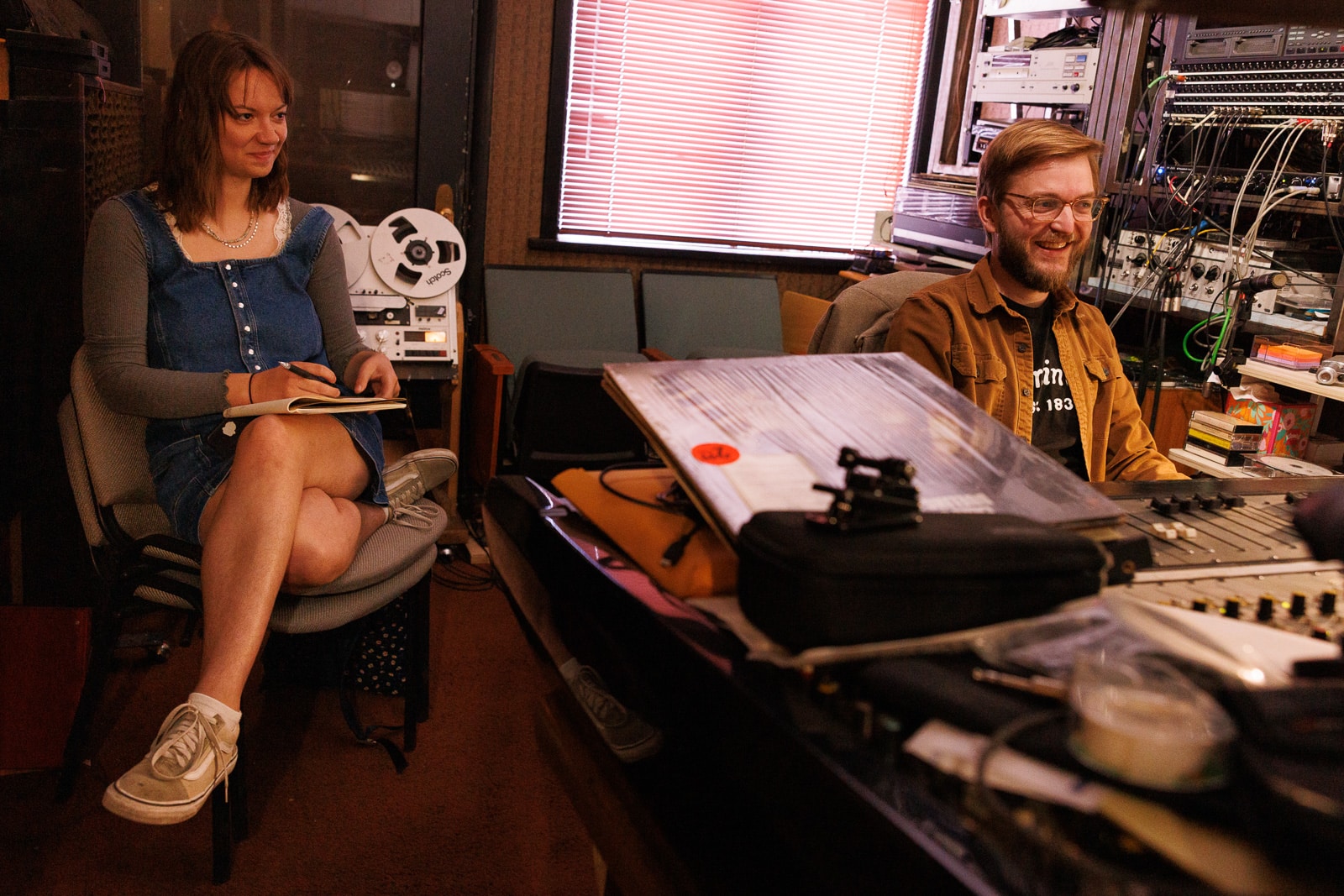
A short hallway from The Recording Center’s front room leads to the recording studio itself, padded in acoustic foam. There’s a couch along one wall and a few chairs, all in a 1970s color palette of cream, merlot and chocolate. Through a glass window, the engineering room houses a large vintage Peavey mixing board, reel-to-reel tape decks and a 1960s broadcast microphone, alongside a computer monitor glowing with a Pro Tools session mid-mix.
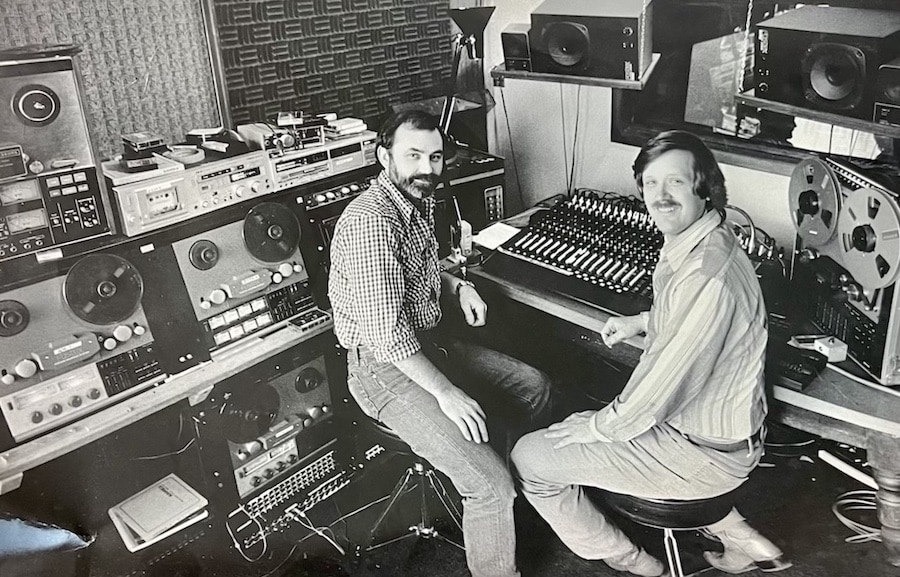
Recording studios tend to have distinctive personalities. Some are polished and curated, others feel like arty clubhouses. Studios in Missoula and the Bitterroot Valley tend to have a garage-band feel or modest folk-and-country atmosphere — easygoing spaces built around modern tech. The Recording Center doesn’t quite fit those descriptions. Its personality isn’t cultivated so much as accumulated, an apt aesthetic for Missoula’s longest-running studio, dating back to 1986.
It has also always reflected the person running it. And from the beginning, that person has been Rick Kuschel, an audio engineer and connoisseur whose curiosity has led him from one project to the next. The studio has been built around his instincts — always chasing the next format, the next project, whatever came through the door.


In a way, the Recording Center happened by accident. Kuschel’s family owned the space but didn’t use it for much. They ran the Music Center in the larger storefront at the corner of Higgins and Pine, selling instruments, hi-fi equipment, records and tapes, and offering repairs. When a friend of Kuschel’s started raving about new multi-track recording equipment he saw in a magazine, Kuschel decided to order it.
“Well, if I was going to buy the stuff and sell it in the store, I had to know how to use it,” he says.
That led to setting up a demo studio in the store’s unused space to test equipment. When the Music Center sold in 1986, Kuschel kept the studio space and bet he could turn a buck.
“I had to figure out, how am I going to keep myself out of mischief and make a living?”
He partnered with Spiker Communications, an advertising and marketing company founded a few years earlier, and they began producing radio ads — for ski hills and other local spots — using professional actors and cutting-edge equipment. Missoula was smaller then, with limited airtime. Every ad stood out.
“I specialized in nothing and was able to do almost anything.”
“We were doing really high-quality work,” he says. “And at that time, people were willing to pay for good-quality advertising.”
From there, the studio expanded into other projects. Kuschel recorded musicians, duplicated thousands of cassettes using high-end Nakamichi decks, and later CDs. He recorded university recitals, lectures and concerts, and did audio on documentaries and travelogues. He was constantly learning, buying new equipment whenever something better came along.
“I specialized in nothing and was able to do almost anything,” he says.
Voice actors were essential and he had access to some of the most well-known people in the area, including musician and longtime Montana resident Huey Lewis and J.K. Simmons, the prolific actor and University of Montana graduate known for Spider-Man, Juno, and Whiplash, among others.
One of the most consistent voice actors he worked with was Hoyt Axton, the singer-songwriter who wrote Three Dog Night’s hit “Joy to the World” and the Steppenwolf classic “The Pusher” (and, notably, played the dad in Gremlins). When Kuschel took on the narration for a documentary on the building of the Alaska Highway, Axton, then living in the Bitterroot, was the voice. Over the next year, they recorded narrations together for the profile series “Life and Times” on the Nashville Network.
“These were people like Faron Young — famous people,” Kuschel says. “And Axton would voice over each one. The last one that we were to do was Glen Campbell.”
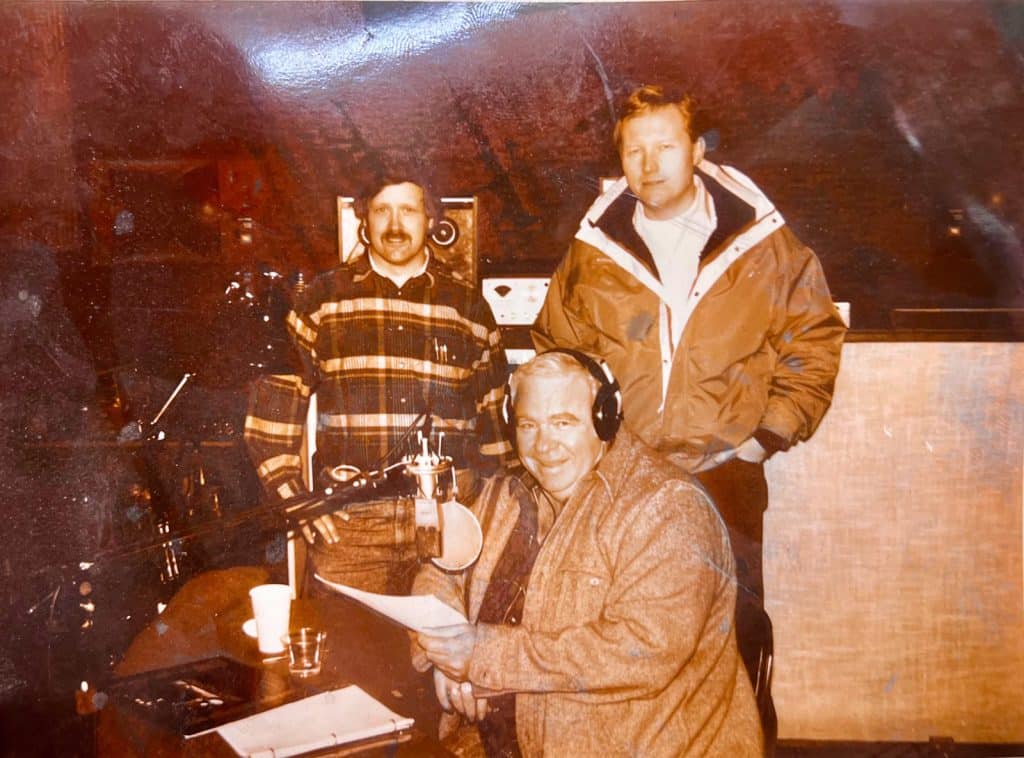
But the same week they were to record it, Axton had a stroke. When Kuschel talks about it, you can tell that the way he understands a person is through the sound of their voice — a superpower he’s honed over decades as a studio engineer.
“His voice was never the same after that,” Kuschel says. “He lost that smile in his voice and that twinkle-in-his-eyes sound. It was gone. And that was very sad.”
He recorded Americana acts and singer-songwriters — including Missoula’s Cash for Junkers and Tom Catmull — alongside punk bands like The Banned, who he found entertaining even though he didn’t always understand them.
“They were a hoot,” he says. “One of the mistakes I made at first was to make them sound too good. They’d tell me, ‘Oh, no, no, no! It sounds too good.” He laughs.
So he’d make the band sound rawer.
“I learned a lot of stuff. I had a couple of mentors, and I had books, and I learned how things worked — why they worked,” he says. “And every time something better came along, I’d buy it. It made a lot of difference.”
When Mathson said he was interested in taking over the studio, Kuschel thought it was a good idea — and has been passing along everything he knows ever since.
“He’s taken a different direction than I would even think,” Kuschel says. “But good for him. He’s got the youth. He’s got the foresight. He has knowledge of things that I never cared about — or didn’t learn. The technology changes so fast. If you’re not going to stay on the bleeding edge of this business, you’re going to be in trouble. But it’s really good to know the old stuff, too.”
Above all, though, it’s having an ear — knowing what to listen for, and recognizing when you’ve captured something special.
“We’ve had people come in here and cry and scream. It’s kind of an honor, I guess.”
One of those moments came with Michael Purrington of The Lost Highway Band, who came in years after the group had broken up to record a demo of songs he’d written, including two songs about his sobriety: “Gloom, Doom, 7-Up & Jesus” and “I Think I’ll Quit Drinkin’ Today.”
When Purrington finished the take of “I Think I’ll Quit Drinkin’ Today,” he waved it off as a throwaway.
But Kuschel had heard the brilliance of it. “I said, ‘Michael, stick a fork in that one. It’s done.’”
They listened back and Purrington teared up. He had sung the song in such a way that his tenor shifted — took a turn. At the end you realize that the narrator of this song — he’s not going to quit drinking.
“You can hear that in his voice,” Kuschel says. “ I was just tickled pink that I was there for that. The band tried to record it again that way, and never got the feel again. I love that magic. I love it when it happens.”
Wherever the work takes you
Last October, I met Kuschel and Mathson at the studio. Inside the engineering booth, Mathson played me some raw decades-old live recordings transferred from reel-to-reel tapes of Jay Rummel — the late visual artist known for his intricate depictions of Missoula’s 1970s and 1980s art scene — playing guitar at various after-parties and venues around town. Those transfers are for Dave Martens, a Montana musician who digs up and preserves old and often obscure Montana recordings as part of his Lost Sounds Montana project.
He has a few transfer projects under way at any given time, some he inherited from Kuschel, including Wild Montana’s Trail of the Week podcast that airs on The Trail and recording concerts for the choral ensemble Dolce Canto and the String Orchestra of the Rockies. Kuschel taught him about mic placement and the way an environment can impact a recording.
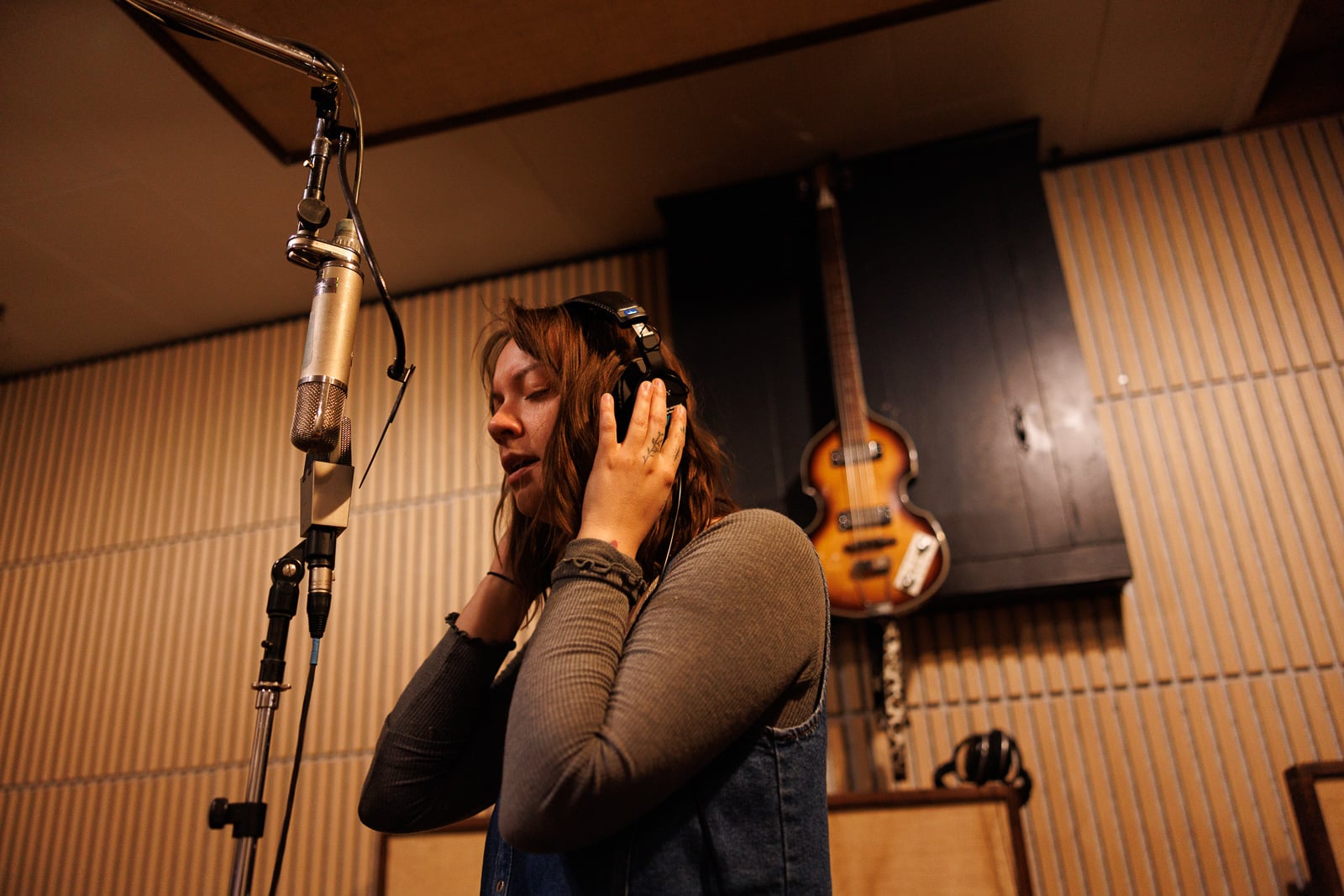
Like how a cave’s high humidity can unpredictably drop the pitch of a drum — something Kuschel learned while recording Indigenous drummer Brooke Medicine Eagle near the Dearborn River. Kuschel solved the problem by recording the cave’s acoustics separately and combining them with a studio session, where the drum stayed in tune.
Kuschel, characteristically, has a maxim for it. “The more you do it, the better you become,” he says — “assuming you don’t go deaf in the meantime.” (He has been very careful about preserving his hearing.)
Inside the engineering booth, Mathson smiles, half-working, half-listening, as Kuschel moves freely from one animated story to the next — including the time he packed equipment into Yellowstone National Park during the 1988 fires to record the sound of an active wildfire.
“I would have paid to go on that trip,” Kuschel tells me.
Mathson has found his footing by following the same instinct — say yes, go wherever the work takes you, and trust you’ll get something good.
“After a decade of working in tech, I was just tired of screens. I like the tactile, grounding approach of tape or even mixing on this board.”
Since taking it over, the studio has been his whole focus, and he’s taken on projects like recording the popular Tell Us Something live storytelling event. Through the website, he draws in clients from across the country looking for a recording studio in the region. Recently, that led to a multi-month audiobook project with Simon & Schuster for Missoula author Brian Buckbee’s “We Should All Be Birds.” It took 52 hours of recording to distill down to a 10-hour book, a process Mathson found himself settling into.
“He is such a sweet, tender soul,” Mathson says. “I mean, I kind of lean more on that sensitive introverted side, and so we really hit it off.”
On any given stretch, Mathson might be juggling a handful of music projects at once — albums in various stages of mixing and mastering, old recordings being transferred into digital formats, podcasts coming through the university. He’s also expanded the studio’s field recording work: where Kuschel recorded the state high school music festival for Missoula schools only, Mathson now travels to capture choir, band and orchestra performances across Montana.

For recording music, he has up-to-date gear, but also actively uses vintage gear. Which route he takes depends on what kind of feel the musician is going for. Digital software comes naturally to Mathson, but the old-school equipment and mixing boards feed a hunger for the craftsman side of work he’d been missing and has grown to love.
“After a decade of working in tech, I was just tired of screens,” he says. “I like the tactile, grounding approach of tape or even mixing on this board.”
Over the past year, he’s recorded several Montana musicians, including folk artist Azure Larkwood and retro-country group Cow Shit Kate and the Hot Shots. Sometimes he gets a louder, faster band like when he recorded punk rock group Senterline.
The Recording Center’s archival layers bring out another side of Mathson. There are hundreds of DAT tapes with decades of concerts on them, and the machines that can still play them won’t last forever, and neither will the tapes. So he’s been digging — pulling formats, finding songs he’d like to remaster, tracking down musicians about a re-release. He wants people to hear this music again.
He’s also grappling with what happens once that studio’s material enters the modern ecosystem, where recordings get scraped, uploaded, misattributed and monetized online. He uses a credits platform called muso.ai to track The Recording Center’s catalog across streaming services in real time.
Recently it surfaced a recording of the University of Montana Grizzly Marching Band performing “Up with Montana” streaming without a clear source. With the studio purchase, Mathson holds the original masters. Now he can make sure the recording — and any others that originated at the studio — have full context online: who owns it, who gets credit, who gets paid. It’s a problem that barely existed when Kuschel was making tapes and CDs. But it’s part of the business now — to capture sound and also account for where the sound goes.
‘That’s my religion’
However different their styles, Kuschel and Mathson are attuned to the same thing — the moment when someone in the studio stops performing and just feels it.
“We’ve had people come in here and cry and scream,” Mathson says. “It’s kind of an honor, I guess. It’s fulfilling being a part of that — healing or loss or frustration.”
Recently, he made one of his first field recordings for Dolce Canto at the mission in St. Ignatius, experimenting with mic placement during rehearsal and finding that middle ground in a room, not so far that the reverb takes over, not so close that everything goes dry.
We listen and Mathson suddenly says, “This moment…” as the choir’s vocals swell.
“It’s spiritual,” he says. “That’s my religion, honestly. Those moments.”
Sometimes Mathson feels the regret swell, too, and wonders what might have happened if he’d followed his music dreams from the beginning. But now that he’s here, he finds that it’s not always easy to balance running the studio with the reason he came there in the first place.
One way he’s tending to his own music needs: He’s been singing in the Missoula Symphony Chorale.
“That was a new world for me,” he says. “A challenge, but also a big growth opportunity to learn actual techniques of singing.”

Still, his own songwriting has been harder to return to. It’s not just a time issue. Talking with Mathson, it’s clear he’s still unlocking something in himself.
“It’s funny,” he says. “I’m this stepping stone for other people’s dream of getting their music out. But I’m kind of too afraid — or holding back from putting my own stuff out. I think I’m just getting stuck in this perfectionist zone.”
In the studio, he’s become practiced in controlling sound levels and textures. But grief is the opposite of that. It’s unmetered and unmixable. He’d been holding onto the song he wrote for his dad three years ago. In late December, on his dad’s birthday, he finally released it into the world.
He’s been sorting through old VHS tapes and photographs from his childhood, wishing there was more footage of his dad. He has a video on his phone of his Dad singing “House of the Rising Son” for karaoke night at the Eagle’s Lounge. He opens it up and we watch his Dad belting out, “The only thing a gambler needs is a suitcase and a trunk…”
“I miss that voice,” Mathson says afterward. “You don’t get that back.”
Except, one time, it did find its way back to him.
A musician named Ken Jones — a friend of Kuschel’s — came in to record recently. When Mathson heard a similar tone in his vibrato baritone voice, he stopped him.
“I hear my dad’s voice in you,” he told him.
“Well, what was one of his favorite songs?” Jones asked.
Mathson picked up a guitar. They started with “Wagon Wheel,” the Old Crow Medicine show song that was partially written by Bob Dylan and later covered by Darius Rucker, and then continued trading songs campfire-style back and forth.
“That was so special,” Mathson says. “To feel his spirit come through.”