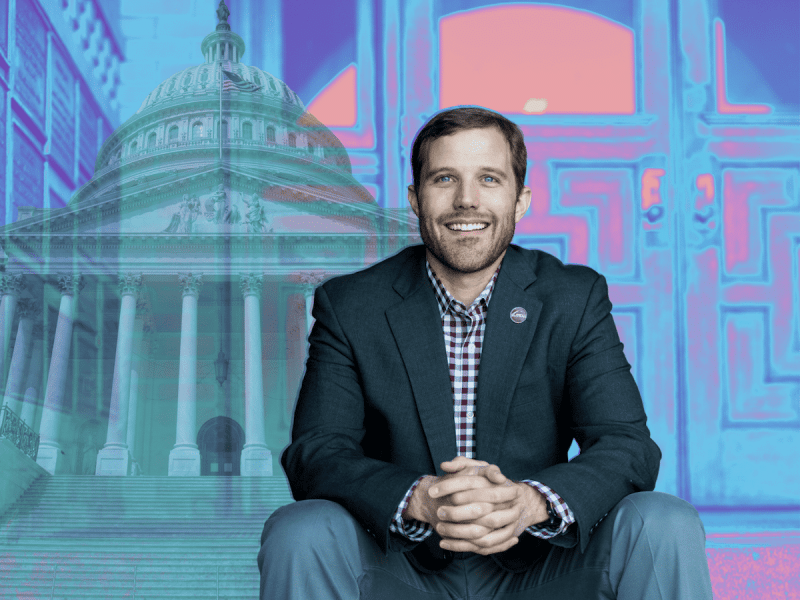
Seth Bodnar, the president of the University of Montana, is planning a run for U.S. Senate this year, a spokesperson for Bodnar told the Montana Free Press’ Tom Lutey.
Bodnar would run as an independent, setting the stage for an unconventional matchup against incumbent Republican Sen. Steve Daines, a key ally of President Donald Trump in Montana.
It would also mean a shakeup at the university — the spokesperson told Lutey that Bodnar would resign as president in order to run for U.S. Senate.
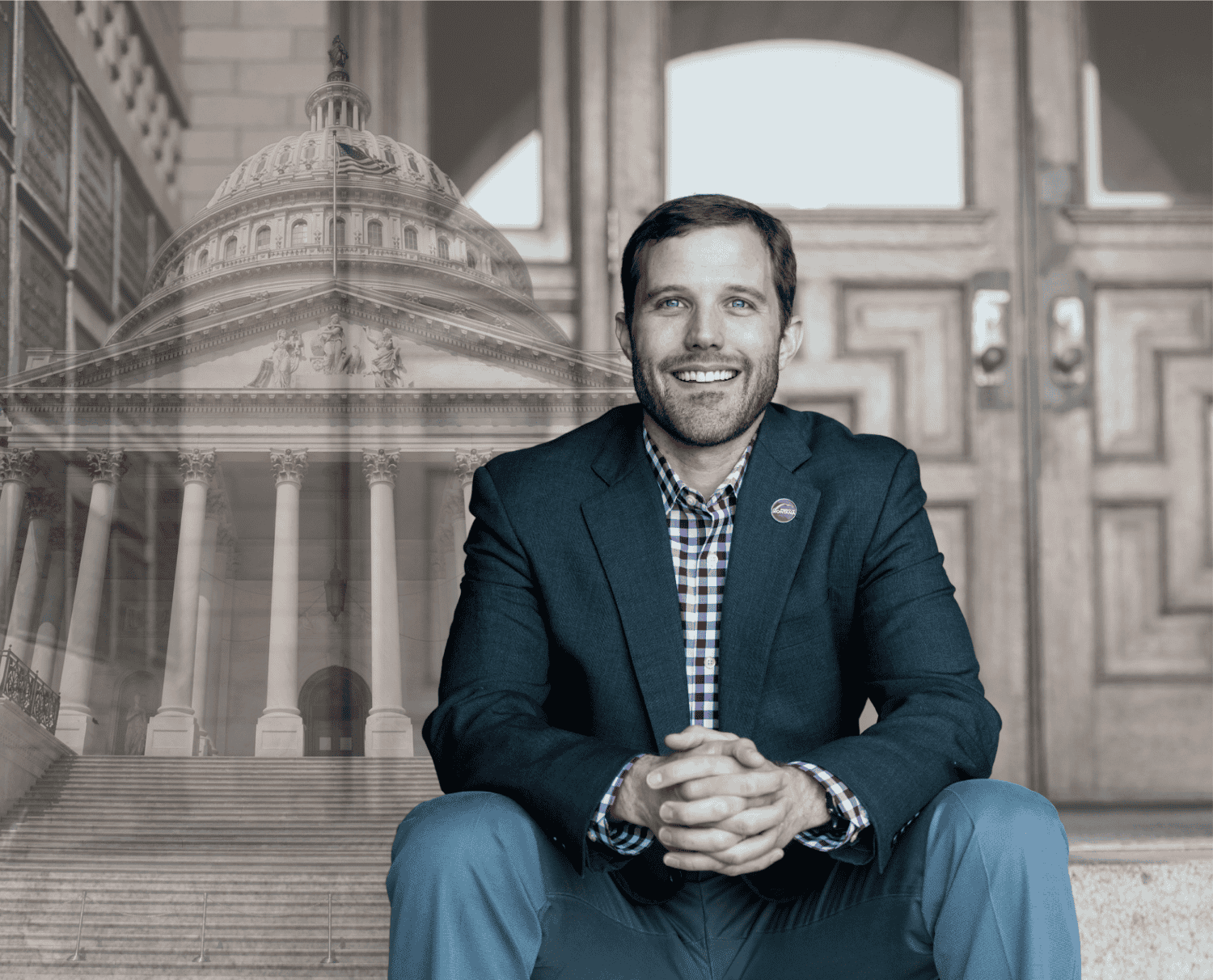
Rumors began swirling about Bodnar’s potential run following the circulation of a text message from former Montana U.S. Sen. Jon Tester, a Democrat, lambasting his own party and calling on Bodnar to mount an independent campaign. The Lee Enterprises State News Bureau’s Carly Graf reported that the text had been forwarded to at least a dozen people in recent days.
Bodnar, 46, is a former Green Beret (and current reservist) and General Electric executive who has led the university since 2018. I can attest as a former state-wide political reporter that his name has long come up in conversations about likely candidates for statewide or federal office in Montana.
Bodnar “has a great family, came from business, has what I believe is the best job in Montana, is currently in the military and is a Rhodes scholar and would fight to stop all the insanity that is going on in our dictatorship today not rubber stamp it,” Tester’s text reads, per Graf’s report.
“[Bodnar] would fight to stop all the insanity that is going on in our dictatorship today, not rubber stamp it.”
— Former Sen. Jon Tester
(This isn’t the first time Jon Tester has called Trump a dictator, but it’s especially striking to hear it from someone who strained toward the middle during his time in office.)
And only a candidate in the political middle can win, Tester insisted in the text, saying the Democratic Party was “poison” in his last two campaigns, the latter of which, in 2024, ended with his defeat by Republican challenger Tim Sheehy after 18 years in the Senate. During that period, Montana went from a purplish state with a heterodox electorate to one that solidly supported increasingly hard-right Republicans up and down the ballot. The GOP now controls every statewide office in Montana.
“I actually have been encouraging not because of party, but because of the man and I fully know to win anybody has to run a near flawless race that is well funded and well staffed,” Tester’s text reads.
Graf reported that the Lee papers had confirmed the authenticity of the message.
Some common elements for a medium-to-high profile political candidacy in the state are certainly found in Bodnar — the (comparative) youth, the military and private sector experience, the absence of a potentially problematic voting record. On paper, Bodnar doesn’t look too different from Sheehy, himself a 40-something combat veteran with a private sector background and no campaign experience prior to running for Senate. Both look like they might be used in a military recruitment ad campaign.
A major independent run for U.S. Senate would certainly be unusual, but in Tester’s estimation, it may be the only way to unseat Daines given the failure of the state Democratic Party to field winning candidates at any but the local level. I could write ad nauseam about the nature of that failure and speculate on the reasons — indeed, I’ve done some of that in these pages before — but for now, I’d direct readers to the excellent, revealing reporting from Lutey, Graf and others. And let us not forget that regardless of candidate quality, Democrats face an uphill battle in a state that Trump recently carried by 20 points. The Cook Political Report rates the 2026 Senate race in Montana as solidly Republican, despite what could be a rough midterm for the president’s party.
It’s also safe to say that Tester and the state party have not been on the best of terms as of late, and his promotion of an independent candidate this cycle likely won’t help mend that relationship.
Bodnar’s spokesperson told Lutey the university president would not comment on his run until he was ready to formally announce. When he does so, he’ll join a field of perennial also-rans and neophytes vying to defeat Daines. So far, the Democratic primary includes Reilly Neill, a former state lawmaker from Livingston; Michael Black Wolf, a tribal historic preservation officer from the Fort Belknap Indian Community; Helena’s Michael Hummert, a “realist liberal Democrat”; and Alani Bankhead, an Air Force veteran and former human trafficking investigator who moved to the state three years ago. In the Republican primary, Daines faces a challenge from frequent candidate Charles Walking Child.
Anti-GOP forces in the state have tried the independent route before, though not with any great success. Gary Buchanan, an investment manager, ran as an independent against then-GOP Congressman Matt Rosendale in the state’s eastern U.S. House district four years ago, losing by more than 30 points (though beating out the Democratic candidate, Penny Ronning).
Independents have won Senate races before, but all three — Vermont’s Bernie Sanders, Maine’s Angus King, and Connecticut’s Joe Lieberman — have more-or-less run alongside and caucused with the Democratic Party.
Daines was first elected to the Senate in 2014. As chair of the National Republican Senatorial Committee in 2024, he and his staff played a major role in recruiting Sheehy and orchestrating Tester’s defeat.
Down ballot
Missoula-area voters will have another federal election on their ballots this midterm — the race for the state’s first U.S. House district, which covers most of the western third of the state, including Missoula, Bozeman, Butte, Hamilton and Kalispell. Incumbent Republican Ryan Zinke, who has been elected to the House four times, is seeking another term. On paper, this is the most winnable federal race in the state for Democrats, but it’s still a district that leans solidly Republican. Zinke defeated Democrat Monica Tranel for the second consecutive time in 2024 by almost 10 points.
So far, four Democrats have lined up to challenge Zinke, including a former gun industry executive and gubernatorial candidate, two military veterans claiming multigenerational rancher bona fides, and a Missoula smokejumper and labor organizer.
The candidates in the crowded race are:
- Sam Forstag, a Missoulian, smokejumper and former lobbyist who was active in organizing federal employees during the recent government shutdown
- Matt Rains, who lives on a livestock ranch in Simms
- Russ Cleveland, who lives on a ranch near St. Regis
- Ryan Busse, a former firearms industry executive who mounted a failed bid for governor against incumbent Republican Greg Gianorte in 2024 — and whose sons were plaintiffs in recent high-profile youth-led climate change litigation.