

Seth Bodnar, the president of the University of Montana, is stepping down, UM announced this week, amid speculation that he will run for the U.S. Senate.
Bodnar has led the university for the last eight years. Earlier this month, the Lee Enterprises State News Bureau reported that he was considering a run as an independent against Republican incumbent U.S. Sen. Steve Daines — and was encouraged to do so by former Sen. Jon Tester, the last Democrat to hold statewide office in Montana.
In a statement issued Wednesday, Bodnar didn’t confirm a possible Senate bid, but he acknowledged looking for other avenues to serve Montana. His abrupt resignation in the middle of the school year certainly suggests he’s strongly considering a run.
“I love this university and am inspired by our work here,” Bodnar said. “Service has always been the animating force of my life, and Chelsea and I would like to consider whether to pursue a new way to serve our state and our nation.
“Today, I remain all in on Montana, UM, and the vital work we do — for our students, for our state, and for our country,” he added, employing what already sounds like some campaign-ready language. “What we do here matters. Now more than ever.”
The timeline for Bodnar’s resignation — and whether he’ll be immediately followed by an interim president or a permanent replacement — isn’t clear, though UM says the leadership transition process has already begun.
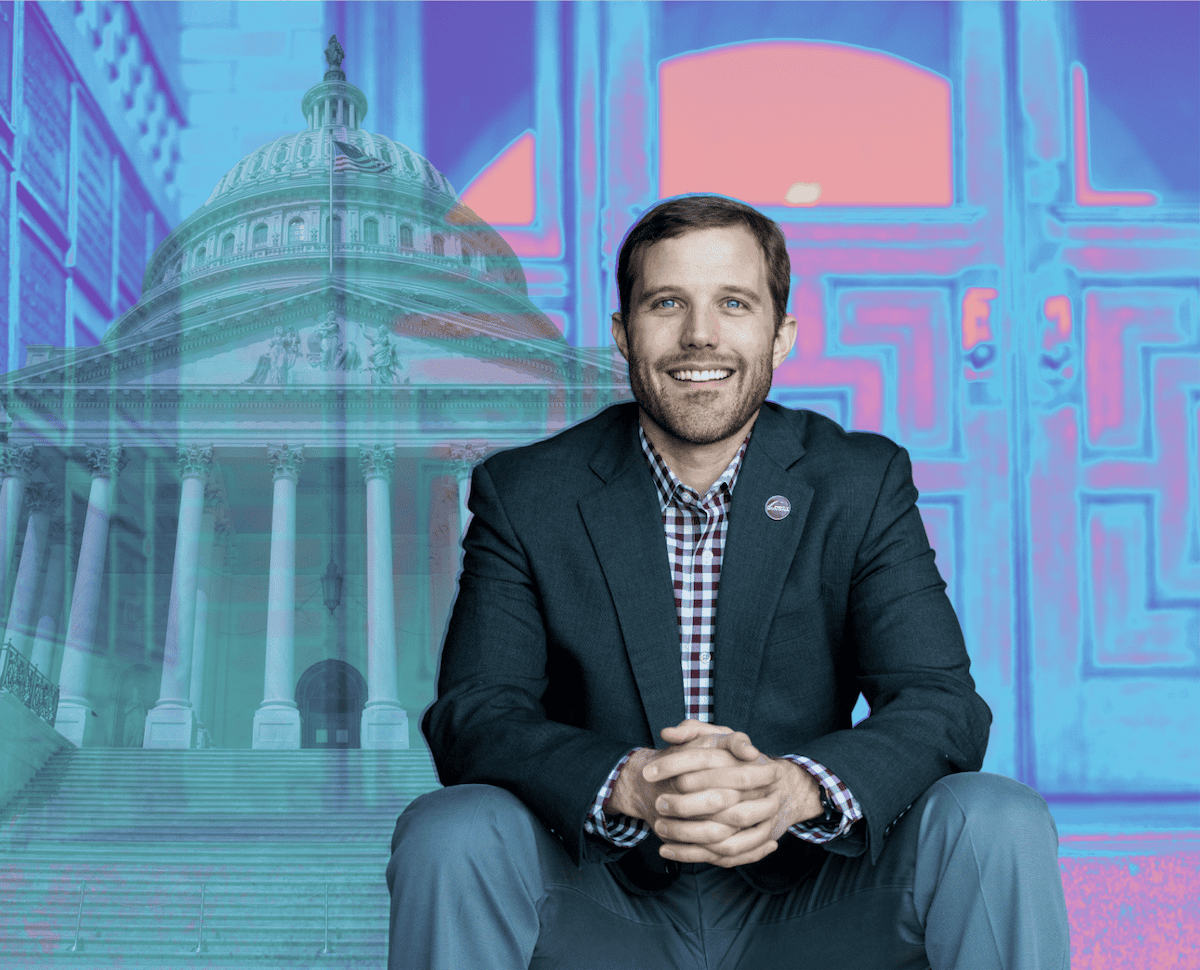
“This announcement’s new and it comes fairly quickly, but we’ll develop a process that we think will best suit the needs of the campus, and I think in my mind that is to figure out how to get a permanent hire made as soon as we possibly can to continue leading this institution forward,” Clayton Christian, the Montana University System’s commissioner of higher education, told KPAX’s Zach Volheim this week.
Bodnar, 46, is a former Green Beret, Rhodes Scholar and General Electric executive who took the reins of what had historically been the state’s flagship university in a time of great tumult. The university was losing money and hemorrhaging students, its undergraduate enrollment dropping by more than a third from 2011 to 2017, more than any other university of its kind in the country. In 2015, Jon Krakauer’s “Missoula: Rape and the Justice System in a College Town,” which detailed allegations of rape against UM football players and the difficulty that young women faced seeking justice, brought national scrutiny. One player ultimately pled guilty, while the team’s quarterback was expelled and eventually acquitted by a court.
Bodnar was an unconventional hire — at the time, a 30-something with a sterling military and private sector resume but no doctorate nor experience in the higher levels of university administration. But higher education officials felt they needed an outside perspective to pull UM out of the muck.
During Bodnar’s tenure — albeit, after a couple years — the university’s enrollment decline stabilized and eventually reversed. UM also achieved its first R1 classification, a designation reserved for universities with the highest levels of research activity.
“Together, we have reversed a decade-long enrollment decline,” Bodnar said in his statement. “We’ve achieved record-high retention and graduation rates. We’ve significantly expanded access to education for low-income, first-generation, Native American, and military-affiliated students.”
He also touted successful fundraising and infrastructure development initiatives.
But — and perhaps as private sector types coming into an institution of higher education with an unstable budget are wont to do — Bodnar also oversaw sweeping cuts to faculty and programs, especially in the humanities.
Even today, the University of Montana is set to lose chunks of its humanities offerings, with the administration proposing to shed renowned master’s and minor programs in English Literature, Irish Studies and Eco-criticism — cuts students are currently petitioning to halt. (I would also add that UM is simultaneously doubling down on artificial intelligence initiatives, which might reveal something about broader institutional priorities in a time of nationwide convulsions in higher education).
In 2021, the university was also sued in a Title IX case, with female employees alleging a discriminatory and hostile environment under Bodnar’s watch. UM settled the lawsuit in 2024, paying out $350,000 and committing to a review of its Title IX policies and training.
Bodnar, with his sharp jawline and military-private sector background, certainly cuts the profile of a politician. Even when he was hired as university president, there were questions about his commitment, especially given the sizable pay cut he took when he left the corporate world.
In a prescient comment to the university magazine in 2018, theatre professor and presidential search committee member John DeBoer — now a vice provost — said he hoped Bodnar “stays for as long as it takes to do right by us.
“And then, if I have to vote for him for governor or president, I’ll do that, too.”
At the time, Bodnar emphasized his commitment to the university.
“I hope he stays for as long as it takes to do right by us. And then, if I have to vote for him for governor or president, I’ll do that, too.”
—John DeBoer in 2018
“This is not, for me, a stepping stone to anything else,” he told the magazine. “This, for me, is a job I want to see through, and when I’m no longer the right person to do that, I’ll know when it’s right to step aside.”
But, of course, as anyone who has covered politics knows, there are few better indicators that someone has political ambitions than their proactive denial of those ambitions.
How those ambitions will now shake out is anyone’s guess. As we wrote last week, independent bids for the Senate are rare and even more rarely successful. But Bodnar arguably has a higher profile than any of the several Democrats who have entered the race.
Tester, at least, seems to think that a Democrat can’t unseat Daines, a two-term Senator with close ties to the Trump administration and other national Republicans. Indeed, Daines — who until recently served as chair of the National Republican Senatorial Committee — was a key figure in recruiting Tim Sheehy as an ultimately successful challenger to Tester in 2024.
A quick glance at federal campaign finance records reveals that when Bodnar has made political contributions in the past, he’s mostly given to General Electric’s political action committee, but also to Democratic candidates in Virginia and Rhode Island.
Political observers expect that the 2026 Senate race in the state will lean heavily Republican and likely draw less national attention and fundraising than the Tester-Sheehy contest, which broke campaign finance records. But for someone with Bodnar’s profile, it’s not hard to imagine that a Senate bid, even a failed one, could itself be a “stepping stone” for another campaign down the line. Bodnar has not granted interviews beyond his initial statement.
“The momentum we’ve built will continue, just as it has since this university was chartered nearly 133 years ago,” his statement reads. “We have an outstanding leadership team in place, an excellent group of deans, and incredibly talented faculty and staff. Our enrollment trajectory is positive, with applications for this coming fall’s class very strong and retention and persistence rates continuing to rise. Our strategic direction is clear. And the important work underway — to expand opportunity, deepen our impact, and serve the needs of all Montanans — will carry forward.”


