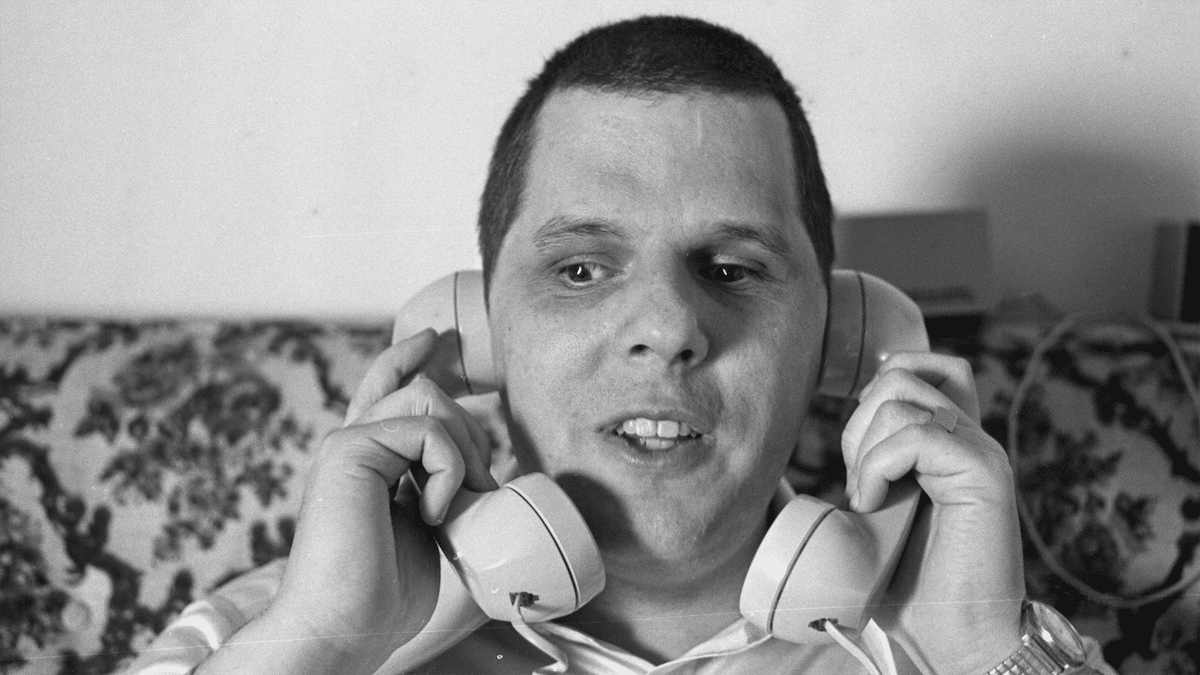
In the 1960s, the tech industry wasn’t yet a personality trait and the world’s most powerful network ran on copper wire and tone. If you knew the right sound, which was exactly 2600 hertz, you could slip through the telephone system’s analog seams. One person who figured that trick out was a blind teenager. He had perfect pitch, obviously, and a gift for whistling. He was born Josef Carl Engressia Jr., but would later rename himself Joybubbles.
Joybubbles, a documentary playing at the Big Sky Documentary Film Festival, is a portrait of Joybubbles and his early arrival to the “phone phreak” scene. This hacking subculture was all about manipulating telecommunication systems, often to make free long-distance calls. The film is told through Joybubbles’ own words, drawn from a cache of cassette recordings, along with archival footage and interviews. It’s a story about technology, but also about who gets to participate in it.
The Pulp spoke with director Rachael J. Morrison about how she came across Joybubbles and what messages are at the heart of the story. Our conversation was edited for clarity and brevity.
The Pulp: What’s the background on this documentary — what led you to making it?
Rachael J. Morrison: It’s a documentary about someone who was born blind, and he figured out how to hack into the analog telephone system by whistling a magic tone. I found out about him when I read his obituary in The New York Times. He passed away in 2007. I was just fascinated with his life — this stranger-than-fiction life that he led. I thought there already would have been a documentary or a book or something about him, but there wasn’t. So I thought about it for a while, and then got in touch with a friend of his. And then it kind of snowballed.
What kind of material did you have to work with? Archival audio?
So when I started, I just set out to interview people. I didn’t really know what it was going to be. I mean, I knew it’d be a documentary, but I wasn’t sure what form it would take. And as I was doing that, I met a woman who was going to write a book about him, which she never did. She’s in her late 80s, this woman named Cynthia Bend, and she had him record his whole life story on a series of cassette tapes that had never been shared with anyone. So, it’s like a director’s dream — I’m also an archival producer, and it’s so, so rare that something like this happens. But that changed the entire film. So, the film is now narrated by him, and then there are interviews peppered in, and then archival footage. I have footage of him, because he was in the news a lot, but it’s a lot of emotional weaving of archival to watch while you’re listening to him tell his story.
So you had been ready to make the documentary without the interview tapes, or before you knew about them?
I kind of just didn’t know what I was doing, and then was just blessed with this amazing gift, which I think worked really well because he had passed away, so he gets to tell his own story instead of other people making up the story for him. And he’s also blind. I think people with disabilities, their stories get told by other people. So it feels important to me — it was really important to me when we were editing it and making it that we use as much of that audio as possible, so that he can tell the stories. And there’s a bunch of other audio I also found over the years. So it’s kind of like a collage of all that.
How long did it take you?
It took me about a decade to make the film.
Wow. That’s amazing!
Yeah, but in that time, I ended up finding all this material. As people [found out] I was making the film, they’d be like, “Oh, I actually have this stuff,” and then would reach out. It was sort of a magical experience.
What other filmmaking projects have you done?
It’s my first feature. I made a short, and it premiered at the Camden Film Festival in 2019. That was about this black market in Maine for fishing and selling eels. So Joybubbles was one of the very first hackers. He was part of this underground movement of telephone hackers. And [the short film] was also about this underground black market. It’s sort of like a gray area of illegal activity, which is my interest. Two very different films. That one was shooting on site, with everyone out in the field — no archival. And this one is all archival.
What else do you want people to know about this film?
The film is about analog technology and about one of the very first hackers — because the telephone system was the first real worldwide network. It’s about someone living with a disability, and the expectations that society had on him, the challenges that he faced — not because of him, but because of everyone else. And just thinking about how technology can bring people together and not just pull people apart, which is a big conversation that we’re having right now.