The city of Missoula is finalizing a deal with a Whitefish developer for a hotel and conference center project at the Riverfront Triangle, the long-languishing 2-acre property at the intersection of Orange and Front streets — no doubt the most prime, if blighted, piece of undeveloped real estate in downtown Missoula.
The project, to be developed by Whitefish’s Averill Hospitality, would include a 180-room hotel, 15,000 square feet of conference space, parking, a public plaza and — potentially — residential condominiums, the city announced Thursday morning. Averill would purchase the city’s portion of the triangle for $4 million.
The Riverfront Triangle is located in an urban renewal district, thus the project may be eligible for tax-increment financing if approved by the Missoula Redevelopment Agency. MRA projects must benefit the public in some way. The city says this development would enhance pedestrian connectivity along the Clark Fork River, improve traffic flow, offer a new public space and catalyze area development.
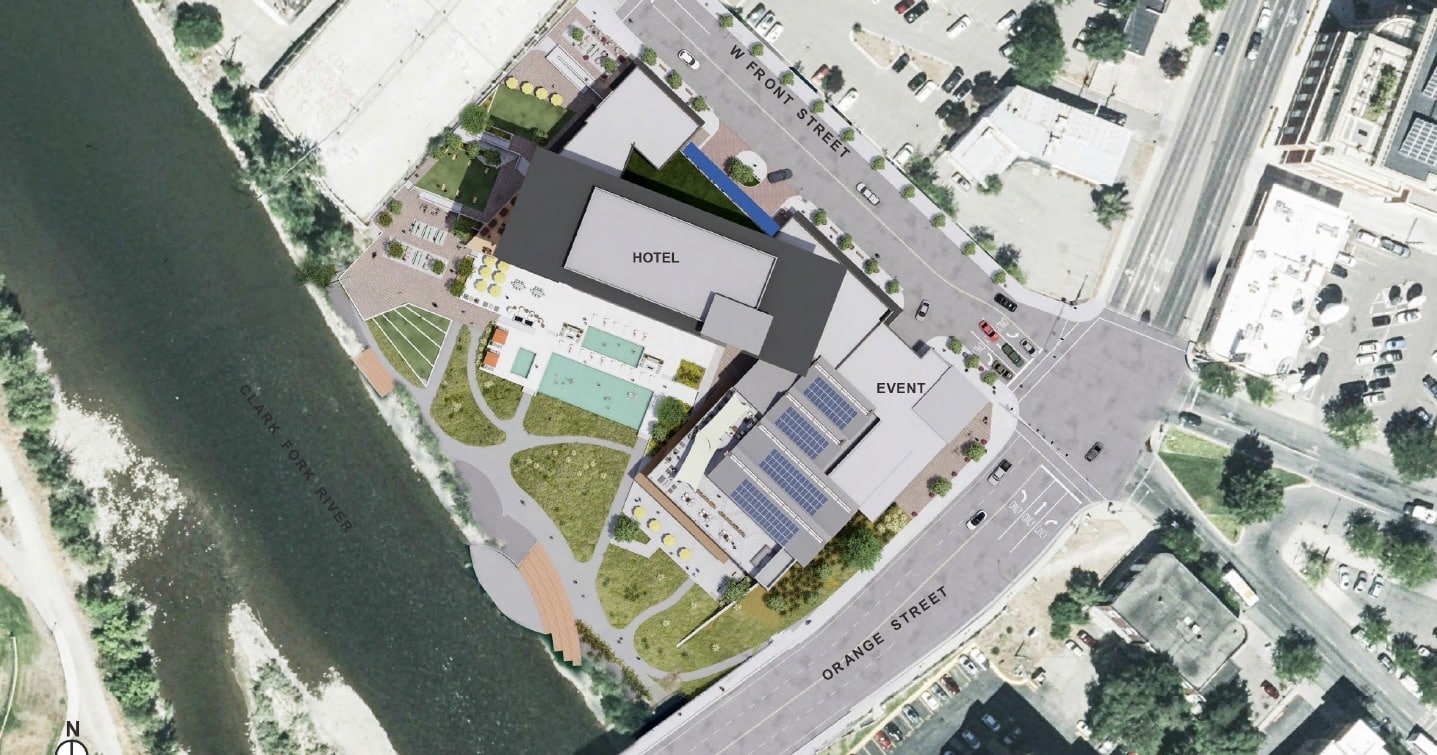
The developer is also offering to donate revenues from a 1 percent assessment on room, food and beverage sales to the city’s Affordable Housing Trust Fund for at least 10 years or until $3 million is contributed. It’s the first time a developer has made such an offer, Missoula Mayor Andrea Davis said during a press conference Thursday.
“I am so thrilled to be standing here on a site that the city has owned for decades and decades — that we have long wanted to turn into a redevelopment, into part of our community, to be able to extend downtown, to see this as a vibrant part of our downtown,” Mayor Andrea Davis said.
Several proposals for developing the triangle have come and gone over the years. In 2019, developers Nick and Robin Checota announced a plan for a $100 million civic center, hotel and events project, which was scrapped during the COVID-19 pandemic. Other proposals along the same general lines have also emerged and faded.
The project will go before the MRA board on July 7, to a city council committee the following week and to the full council the next, assuming it receives favorable votes at each step.
PROST!
The Missoula City Council this week adopted a new citywide plan for expanding park space — and access to it — in the Garden City over the next 15 years.
The Parks, Recreation, Open Space, and Trails (or PROST) 2040 Master Plan, adopted by unanimous vote Monday, replaces the city’s 2004 master plan and calls for an additional 367 acres of park space by 2040 to accommodate an estimated population of almost 116,000. The new plan not only has more discussion of pickleball and much less of in-line skating than its early aughts predecessor, but also reflects broader citywide discussions and concerns around housing, equity and the environment.
“We’ve been operating off the old master plan, which was developed at a time when we were looking at suburban style development, a very, very different environment,” Donna Gaukler, the director of Missoula Parks & Rec, told members of the city council. “This plan is much more up to date: It looks at an urban environment, it looks at our land use plan and our population growth and how we continue to provide quality of life for our residents.”

That means that while the plan does call for more recreational facilities, its larger focus is increased walkability and access, density, and ecological sensitivity. It aims to ensure that residents can reach a park within a 10-minute walk or roll (on a bike, in a wheelchair, etc.)
Accomplishing this goal means not only adding new parkspace near new development on the city’s edges but also looking inward, per the plan. Much as the city’s growth plan calls for dramatically increasing the stock of housing through infill development, the parks plan calls for acquiring and developing park space in existing urban areas. There’s an interesting intersection of policy goals here: Neighborhoods with the densest residential housing, such as Franklin to the Fort, tend to have the least access to parkspace as well as the worst transportation connectivity to natural space, as Gaukler told the city council.
These neighborhoods tend to also be the most deforested. Indeed, PROST names tree cover is one of the city’s most immediate recreational and environmental challenges. The urban canopy is declining at a rapid clip, with two trees removed for every one planted. This was exacerbated during last summer’s vicious wind storm, which damaged about 6,000 trees. The city only just completed its last contract for tree removal related to the storm this month, Gaukler said. Urban forests mitigate heat, improve air quality and generally enhance the quality of life of a place, research shows.
Another notable environmental dimension of the plan is its call for more indoor recreation. Most peer cities have a designated indoor recreational facility, according to the parks department. Other than its aquatics center, Missoula does not. But increasingly extreme weather — hot, smoky summers paired with long, cold (although comparatively less snowy) winters — means there’s a great demand for indoor recreation, officials explained. The plan recommends partnering with schools to help meet this demand.
The parks plan was developed over two years with public comment from over 5,000 Missoulians, according to the city.
“Parks are about people, so we are listening to people and what they want,” Gaukler told the council.
Perspective: Missoula lawmaker on changes to gender-affirming healthcare at CMC
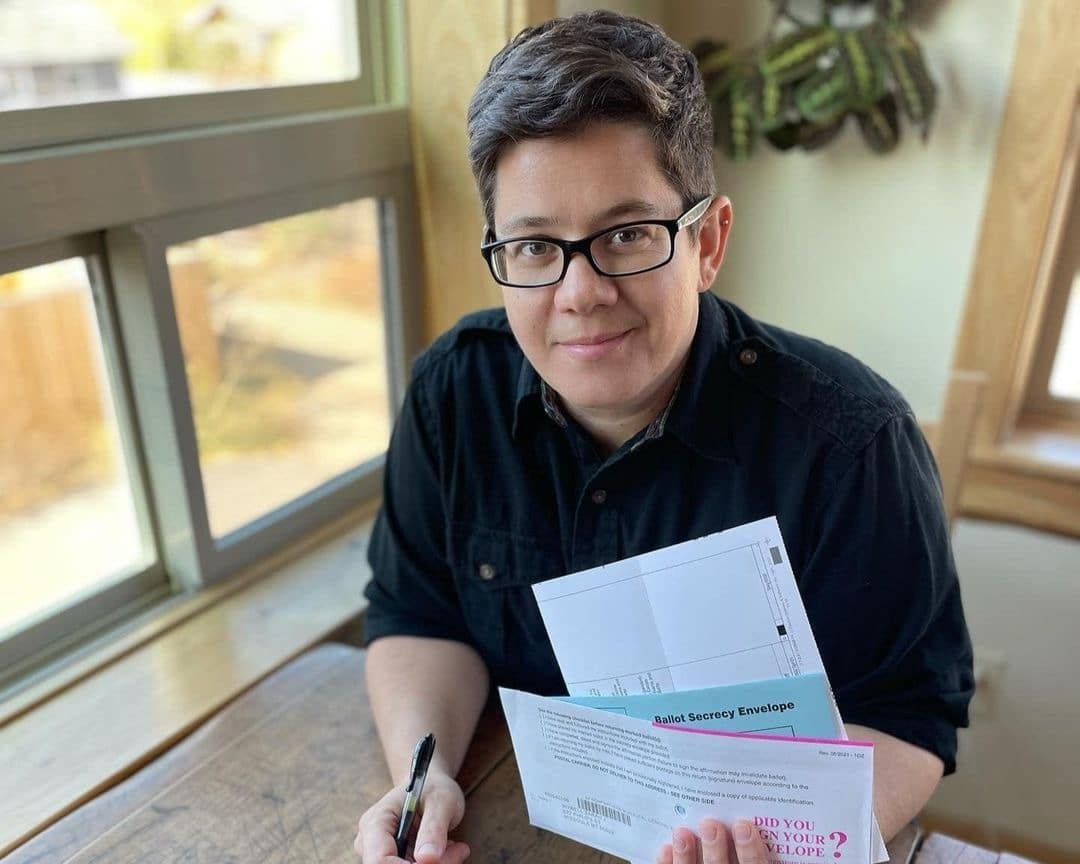
Community Medical Center’s recent announcement that it would stop providing gender-affirming care for minors because of changes to state and federal policy came as a surprise and a disappointment to Rep. SJ Howell, a Democratic Missoula lawmaker.
“I know that there still are providers offering gender-affirming care and I don’t think that stopping the provision of care based on the threat of lawsuits is a good idea,” Howell told The Pulp. “It’s doing exactly what the legislation intended.”
Howell is the first non-binary lawmaker in the state Legislature’s history. From their position on the House Judiciary Committee, they’ve also been involved in key debates and negotiations around the slew of legislation restricting gender-affirming healthcare Montana lawmakers have proposed in recent years.
The hospital’s decision seems to stem from two new laws. Senate Bill 218 creates a cause of legal action against providers who offer gender-affirming care if it “results in any injury, including physical, psychological, emotional, or physiological harms” and that injury is “proximately caused” by a deviation from the standard of medical care.
House Bill 682, on the other hand, establishes a two-year statute of limitations for claims for damages resulting from gender-affirming care. The law also says that insurance providers that cover gender-affirming treatment also must cover detransition treatments.
Howell told The Pulp that both bills began with sweeping scopes that were heavily limited through the amendment process. HB 682 began its life with a 25-year statute of limitations, well beyond what most providers are covered for through malpractice insurance. SB 218 as initially introduced not only also included a 25-year statute of limitations provision but included gender-affirming care for adults and established strict liability for providers in a tort claim. This would have held providers liable regardless of their intent or the relevant standard of care.
“I wouldn’t have even really had to show an injury (to have a case),” Howell said.
But the amendments dramatically dulled the bills’ teeth. Providers are already subject to malpractice claims if their treatment falls below the standard of care. And two-to-four years is a fairly standard statute of limitation for such a claim, Howell said. While HB 682 says that insurance providers that cover gender-affirming treatment also must cover detransition treatments, insurers told lawmakers that “if it’s covered it’s generally covered both ways,” Howell said.
In other words: “I felt like the amendments that we put on to both of these bills limited the potential liability enough that providers would continue providing care,” Howell said.
The legislature has considered numerous bills restricting gender-affirming care in recent sessions. Some failed to gather enough support. Some — like a ban on gender-affirming care for minors — made it out of the Capitol but faced an immediate legal challenge and fell to a judge’s order. Others were passed but amended to make minimal changes to the existing legal landscape, a product of the shrewd and sometimes morally hazy calculus of legislators trying to balance their own feelings with pressures from their caucuses, party leadership or local political groups.
Even with all this, gender-affirming care remains legal in Montana, including for minors.
But Howell acknowledged there are forces beyond those in Helena at play: President Donald Trump’s proposed budget calls for eliminating federal funding for any gender-affirming care. An executive order from January similarly says the federal government won’t “fund, sponsor, promote, assist, or support” gender-affirming care for minors.
“These things are stacking up,” Howell said. “When I hear about decisions like (Community’s), it’s really disappointing, but I also understand the policy landscape.”
Howell said bills and policies like these have a chilling effect, even if their legal impact is hard to pin down, by raising the possibility of lengthy, expensive lawsuits against providers. Indeed, whether these bills would have such an effect was a big point of discussion during the legislative session, Howell said. Now it seems that effect is quite real — real enough, perhaps, to face a legal challenge of its own.
“I do anticipate litigation,” Howell said.