At the height of the pandemic, an encampment tucked beneath a freeway overpass in Oakland grew into one of the largest unhoused communities on the West Coast. Residents called it Wood Street Commons. They built gardens and showers, organized security and mutual aid, and — when eviction loomed — took the state of California to court.
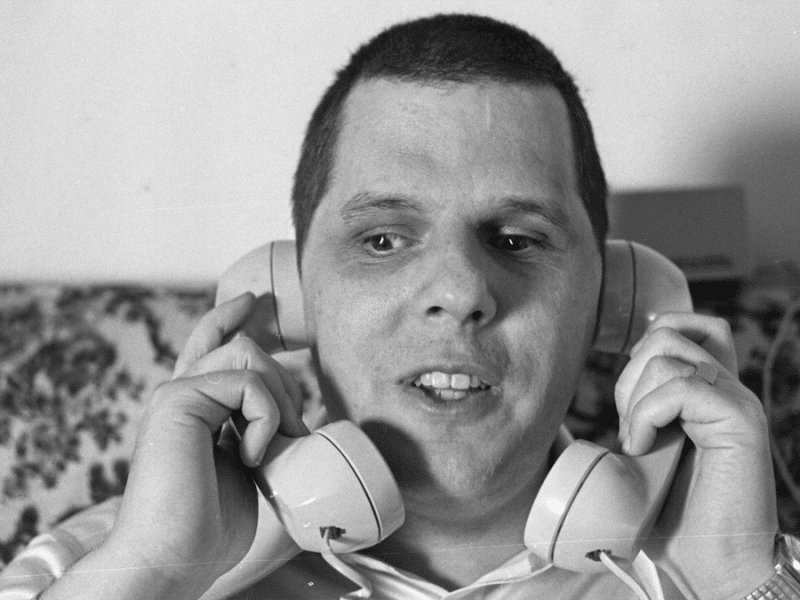
Wood Street, directed by award-winning Bay Area journalist and filmmaker Caron Creighton, follows that community, documenting day-to-day encampment life and its escalating fight to exist. At the center of the story are two unhoused men, John Janosko and LaMonte Ford, who step up to become community organizers in the fight. It’s an intimate portrait of collective survival and civic action. It’s about the potential of organizing. And it’s about the limits of organizing within a punitive system that governs how — and where — people are allowed to exist.
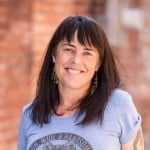
The documentary was pitched at the Big Sky Documentary Film Festival in 2024 during Big Sky Pitch, and it makes its world premiere here in Missoula at the Festival this week. The film screens Wednesday, Feb. 18, followed by an extended Q&A at the public library. In advance of its world premiere, The Pulp sat down with Creighton and Ford to talk about how a newspaper assignment became a multi-year film project, what drove Ford to become an activist, and what they hope audiences in Missoula will see in Wood Street’s story. Our conversation was edited for clarity and brevity.
The Pulp: Can you tell me what your role in this story looked like?
Caron Creighton: I met the Wood Street community when I was working as a reporter for the San Francisco Chronicle. I met them around 2021, at some point, and did a couple of stories on them. They got eviction notices from the state of California and I thought it was so interesting and powerful that I was seeing this group of homeless folks take the state to court. They had lawyers. They were exercising their power in a really powerful way. And since I had done a couple stories on them already, my bosses at the Chronicle were kind of like, “Well, I think that story is kind of tapped out.” And I was like, “Um, OK.” I was ready to quit my job, so I quit my job and bought a camera and started filming.
Had you done documentary work before?
Creighton: I had done video work before. I bought a nicer camera, I invested in a good camera and decided to just commit myself to that. I didn’t know that it would be the next three-plus years of my life, but … yeah. It’s been really lovely and kind of an exercise in expanding beyond journalism, to try to understand someone else’s perspective and try to give them space to tell a story, kind of through my lens, if possible. And Monte was one of the first people I met up there.
LaMonte Ford: I remember her combat boots [laughing].
I’m one of the co-founders of Wood Street Commons, which is an encampment community in Oakland, California. It was our task to organize and try to stand up for ourselves so that we could stay where we were.
What made you decide to do that?
Ford: We were tired of being pushed and pulled. We were pushed and pulled and then sent to this specific area where they said we could stay for a while. And towards the end of that, they saw a reason to evict us. They wanted to build this elaborate apartment building there, and we were like, “No, not this time. We’re not going this time. We’re going to stand, we’re going to fight, we’re going to do everything that we can to stay.” Because we’d actually invested a lot of our time and efforts into that property. We’d built showers. We’d built gardens. We did as much as we could without government help — without city, state or government help. So we were actually at wit’s end at that moment.
Creighton: Monte kind of alluded to this. Wood Street was one of the biggest encampments — definitely one of the biggest in Oakland. It was a place where all the other folks who’d been pushed from other encampments around the city ended up. A lot of folks told me that the police told them, as they were being swept, “Just go to Wood Street.” So it eventually became a community, at its peak, of around 300 people. And then part of it was evicted by the state of California, and so it was around 100 [to] 150 people toward the end.
Yeah, there’s the image of a garden planter being crushed that struck me as particularly awful.
Creighton: There were a lot of outside advocates, too, who came and helped and worked with the community. Not that it was their idea to plant a garden, but a lot of gardeners and different [volunteers] brought their different skillsets to Wood Street, and Wood Street brought their skillsets to these outside people, and it merged into this thing. That’s what the garden made me think of: this symbol of the spirit of community really being crushed in that moment.
Yeah, it really feels like that. When you entered into this story, did you have a sense of where things were going to go?
Creighton: I mean, I think I’m a very cynical person, so it’s not that I didn’t think Wood Street would succeed. I think I had an understanding of the power of the state and the city, but I also hoped — with everything they did, I wanted them to succeed. It’s hard to say, looking back. I was focused on the day to day, and just following their every move.
Ford: Every move.
[Laughing]
Creighton: Yeah. [To Ford] What did you think? I never asked you that.
Ford: I honestly thought that we were going to achieve our goal. Because this was one of the first times everyone stood and fought, you know? It wasn’t just one or two people. It was a collective effort. So I thought we were going to win, so much so that I waited until the very last day to leave. I didn’t even see my environment get crushed, because I honestly thought we were going to win. Because we had so many things in place that did answer a lot of the concerns of the people, and with a little bit more assistance, we would have been able to address all of the concerns and complaints.
Creighton: And they staged a really powerful fight against the city. That’s a big portion of the film, is their activism — all the outreach they do. It’s a group of people in, quote-unquote, “the lowest circumstances” in our country, using all of the resources that we’re told are available to us when we’re kids learning about civics and government. And then, you know, coming through and having a result that is not desirable. But I think they do all the things the right way, and they can’t win. I think it’s a really powerful and necessary story, especially for where we’re at in our country right now.
You’ve held discussions around this film, right?
Creighton: We did a bunch of screenings and fundraisers in the Bay Area. We’re doing a discussion today after the movie, too.
Missoula is so different from the Bay Area, but also, similar things are happening here. What are you hoping to communicate to people?
Creighton: Yeah. I mean that. I want to show — I mean, this is unique, and not every city has really big encampments that have their own community. But I think showing the spirit of community and how being together, rather than separated, really helps people that are living on the street. It helps them survive. Period. And how sweeps are so painful and devastating for people and do not help them. And also to show that that is similar in every city across the country. It manifests slightly differently, but that is a thing that is true — from what I’ve just seen — talking to people in Missoula and reaching out to people in various cities. That feels important to me. And I’m curious to see if we can bridge some of those connections in the conversation tonight. I want to hear from people in Missoula who watched the movie and tell me, “This is similar. We’ve seen this here.” I’m really curious what it brings up for them.
Ford: I’d like to see cities and states step up now before it’s too late. Like she said, our numbers [of people who stood up] were really large because we were left to our facets. I’m not sure if that’s the case here, but in order to stage that, maybe they could learn from us and have some takeaways to get ahead before it happens.
Creighton: We’re also going to show the film tomorrow at the Watershed [Navigation Center] for a private screening for folks. One thing I really hope is that people who are living on the street can take inspiration from the film and know that they have power — and power of community and organizing. Power in numbers. And learn from the things Wood Street did that worked and the things that didn’t work. That’s something that I hope people can take away for sure.
Screening at MCT on Wed. Feb. 18, at 5 p.m. with an extended Q&A from 7 to 9 p.m. across the street at the Missoula Public Library.