Voters, ready your pens.
Tuesday is election day, and Missoulians will have the chance to decide a slate of municipal races, including for mayor, as well as a county infrastructure levy. But elections aren’t just about candidates. On a deeper level, voters will weigh in on some of the big questions facing the city and coloring the campaigns: How can the city and county address the regional housing crisis? How can government provide services while budgets are tight and resistance to property tax increases are high? Does Missoula need more radical change (and radical politicians) or simply smarter policy?
In other words, there’s a lot on ballots this year. But we’re watching some races more closely than others. While there are lots of important issues to consider, one city council candidate, Ward 5 incumbent Stacie Anderson, runs unopposed, as do all three municipal judges (Jennifer Streano, Eli Parker and Jacob Coolidge). And we’re also keeping an eye on the impact of a new election law passed by the Montana Legislature that adds an extra step to voting by mail.
Ballots went out two weeks ago, and many Missoulians have already voted. But for those who haven’t — or if you just want our two cents on what to pay attention to — here’s what we’re watching.
New ballot verification requirements
Before we get into the candidates, let’s talk briefly about the logistics of voting.
This is technically a nonpartisan, all-mail election. But while it’s too late to mail your ballot and have it counted by Tuesday, it’s not too late to vote.
In the days leading up to the election, you can drop off your ballot at the county elections office from 8 a.m. to 5 p.m. On Election Day itself, you can drop off your ballot at seven locations around the city and county, including three offering drive-through drop off, and at the elections office.
The locations are, per the county:
- Hellgate Elementary baseball fields: 2385 Flynn Lane, just north of the school campus (drive-through)
- McCormick Park: 600 Cregg Lane, Missoula (drive-through)
- South Russell Street, between the YMCA and Fairgrounds (drive-through)
- Bonner School: 9045 Hwy 200, Bonner
- Frenchtown Rural Fire District: 16875 Marion St., Frenchtown
- Lolo School: 5305 Farm Lane, Lolo
- Seeley Lake Elementary School: 200 School Lane, Seeley Lake
But you still need to prepare your ballot as if you were mailing it in, even if you’re dropping it off in person. You can’t vote in a ballot box like you would for a presidential election — you have to fill out your ballot and seal it in the accompanying affirmation envelope.
And thanks to a new law passed by the Legislature this year, you’ll need to sign and print your year of birth on the envelope for your ballot to be counted.
County elections administrator Bradley Seaman told KPAX this week that the elections office has rejected around 750 ballots because of the new requirement. Rejected ballots can be resolved until 5 p.m. the day before the election, and Seaman said the county has already helped about 250 voters do just that. If your ballot is rejected, you should hear from the county by email, call or letter, and you can go to the elections office to fix the issue.
Sponsors of the new bill, which passed on mostly party lines with Republican support, say it’s necessary to “prevent fraud, reduce errors and [increase] voter confidence while also promoting election integrity,” as State Sen. Shelly Vance, R-Belgrade, put it in a hearing on the bill back in April.
Of course, this comes at the cost of making it harder for your voice to be heard. The law has been challenged in court by a series of advocacy organizations who argue it creates a burden on the right to vote without actually improving election integrity.
The law “imposes unnecessary requirements on absentee voters that will do nothing other than increase the chances that lawful voters have their ballot rejected, in violation of state and federal protections of the right to vote,” attorneys for the plaintiffs, Disability Rights Montana and Big Sky 55+, wrote in a May lawsuit. A Lewis and Clark County District Court judge has yet to rule on the case, so while judges have struck down other legislative attempts to bolster voting requirements in recent years, this one still stands.
The race for mayor
This year, Missoula Mayor Andrea Davis is running for her first full term. She was first elected in 2023 to carry out the remainder of the late John Engen’s most recent term, and now is seeking re-election.
Davis, the former executive director of affordable housing non-profit Homeword, is running against Shawn Knopp, a longtime Missoulian who works as a project manager at Montana Glass and is making his third bid for mayor. As we discussed in an earlier edition of Fresh Press, Davis and Knopp agree on a lot, especially when it comes to the severity of the city’s housing crunch.
But there are some important differences. Davis has oriented much of her campaign around the city’s code reform effort and new land use plan, both of which promise to dramatically increase the amount and variety of housing across all neighborhoods in the city while also improving multi-modal connectivity and adding greenspace, among other changes. She’s touted her ability, meanwhile, to take a chunk out of the city’s substantial budget deficit with a penny-pinching approach that still maintains services and programming.
Knopp, on the other hand, has a somewhat more conservative bent. His big priority is cutting spending to only the essentials — police, fire and roads — to prevent further increases in property taxes, one of the main mechanisms for increasing city revenue. Still, he said at a candidate forum this month that he’d be interested in a plan to fund affordable housing through municipal bonds, an idea popular with local left-wing candidates — so it’s not all black and white.
Either way, Davis cruised through the primary election, while Knopp only got 27 percent of the vote. And the forum showed she’s far more capable of articulating a comprehensive plan for running the city than Knopp, who often (though not always) found himself echoing Davis’ points instead of disputing them. So this looks like a fairly safe race for Davis.
There’s no doubt been criticism of Davis’ tenure as mayor — whether from conservatives who want less spending and less obviously liberal politics or from leftists who decry her closure of the Johnson Street homeless shelter and the council’s vote to ban park camping — but that criticism didn’t manifest in a robust electoral challenge this cycle.
The left-liberal divide
One issue we’re watching in several council races is the competition of ideas between candidates who represent the council’s liberal orthodoxy and those who want more radical change.
Nowhere has this been more obvious than in the Ward 3 race between two incumbents, Daniel Carlino and Jennifer Savage. Savage previously represented Ward 1, but moved wards this year, setting up a hot contest against Carlino.
In their official statements, the candidates have similar diagnoses of the city’s problems, particularly affordability. But they take different tacks.
Carlino is a Democratic Socialist who carries the endorsement of that party’s western Montana chapter. He’s an advocate for social housing and other policies that decommodify land and shelter. He’s also in favor of restricting tax-increment financing and reallocating some of the money the city spends on enforcing its urban camping law toward providing shelter and social services. He’s called for the city to divest from Israel.
Savage, on the other hand, has touted the city’s code reform efforts and her ability to work with other members of the council to actually pass policy (her Instagram is full of testimonials to that effect), not just rail against capitalism. She wants the city council to focus on issues that are within its control and that can be addressed through careful planning and strategic partnership.
It’s been something of an ugly campaign, with supporters of each candidate issuing broadsides against the other in newspaper op-ed pages and on social media. To some Savage supporters, Carlino is all talk and no action, too focused on the global fight against capitalism and scoring points against his opponents and not enough on getting things done. To some of Carlino’s supporters, Savage abandoned her ward to challenge a politician who will stand up to landlords and developers and fight to keep Missoula affordable.
Both candidates have also filed political practices complaints against each other. Savage alleged that Carlino failed to properly report voter outreach texts sent by a third-party firm that claimed corporate interests, Israel supporters and right-wing interests are targeting his seat. Carlino, on the other hand, alleged Savage failed to report in-kind donations from Mayor Davis in the form of election communications from Davis supporting Savage’s campaign and accused the pair of illegal coordination.
The Montana Commissioner of Political Practices, who adjudicates campaign finance complaints, found that Savage’s complaint had partial merit and referred the issue to the Missoula County Attorney’s Office, but dismissed Carlino’s for a lack of evidence. Carlino has said the texts about Israel and right-wing interests were sent by a contractor without his approval, and that he would remedy the reporting issues.
We can see the divide between these two candidates in other council races on the ballot, though perhaps without the same level of animus. The Western Montana DSA has endorsed four candidates — Carlino, incumbent Kristen Jordan, Lucas Moody and David Quattrocchi.
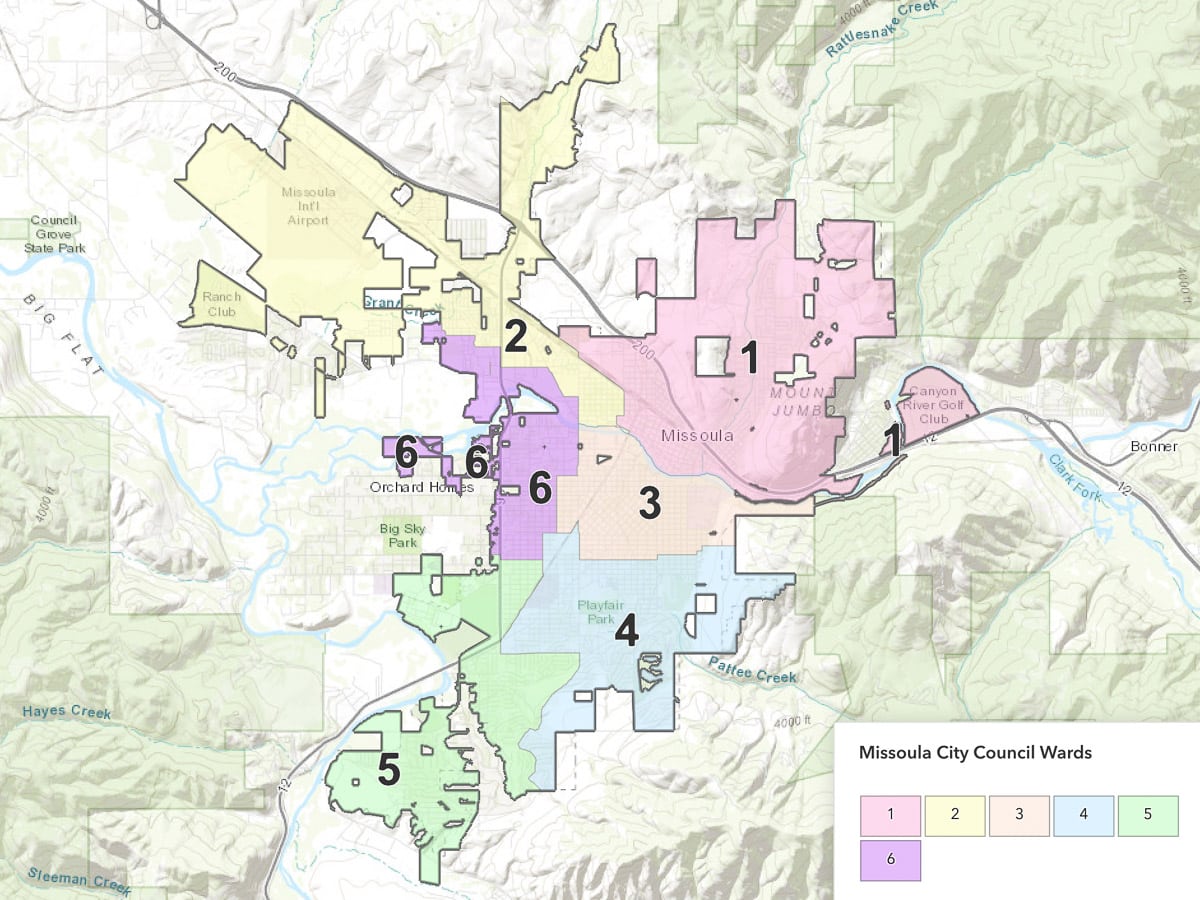
In Ward 6, Jordan is facing a challenge from retired electrician Chris Foster, who wants to rein in city spending. In Ward 4, Quattrocchi is challenging incumbent Mike Nugent, who ran against Davis for mayor in 2023 but has since emerged as a strong advocate of her approach. Moody is competing against educator Betsy Craske for the Ward 1 seat that until recently had been occupied by Savage.
There’s also an interesting matchup for the other Ward 6 seat, which sees incumbent Sandra Vasecka, a rare Libertarian on the council, facing a rematch from progressive Sean Patrick McCoy. The race between the two in 2023 ended in a tie, and Vasecka was ultimately appointed to the council. But McCoy doesn’t have a DSA endorsement and Vasecka is not a liberal, so this race doesn’t have quite the same valence as the aforementioned contests.
In any case, it’s not as if any of the candidates are denying Missoula has a housing problem or climate change, at least for the most part. And besides, there’s only so much one city can do with a limited budget and restrictive state and federal law.
The real division in these races comes down to worldview. On one hand, there’s what we might call the Davis coalition — those who think the city can plan, build and zone its way to success and sustainability with technocratic precision and public-private partnerships, that radical rhetoric only means so much if you’re not willing to work with your fellow council member. On the other, there’s the Carlino contingent — those who think the council has for too long primarily responded to the needs of developers, realtors and non-profit executives, leaving the working class in the rearview mirror despite the council’s ostensible progressivism. Sure, their rhetoric might be a little inflammatory, their voices in council meetings a little pitched — which, to supporters, signals the kind of urgency the moment demands.