Liz Carlisle grew up in Missoula and then left for some impressive degrees in geography — a BA at Harvard and a PhD at UC Berkeley. But the work she does is far from the ivory tower sort. I’ve known Carlisle our whole lives, and one of my favorite facts about her is that she was once an emerging country singer, opening for stars like Travis Tritt and LeAnn Rimes, before finding her way to agroecology. Her résumé is polished, her writing brilliant, but to me what stands out most is how curious, collaborative, inspired and willing to get close to the ground she is, literally and figuratively.
Carlisle’s earlier books, “Lentil Underground” and “Healing Grounds,” follow renegade Montana farmers and tradition-keeping growers reclaiming suppressed agricultural practices. In “Healing Grounds” she notes those practices aren’t relics, they’re traditions pushed to the margins. That makes them, she says, “about regeneration but also … about liberation — and the two were powerfully intertwined.”
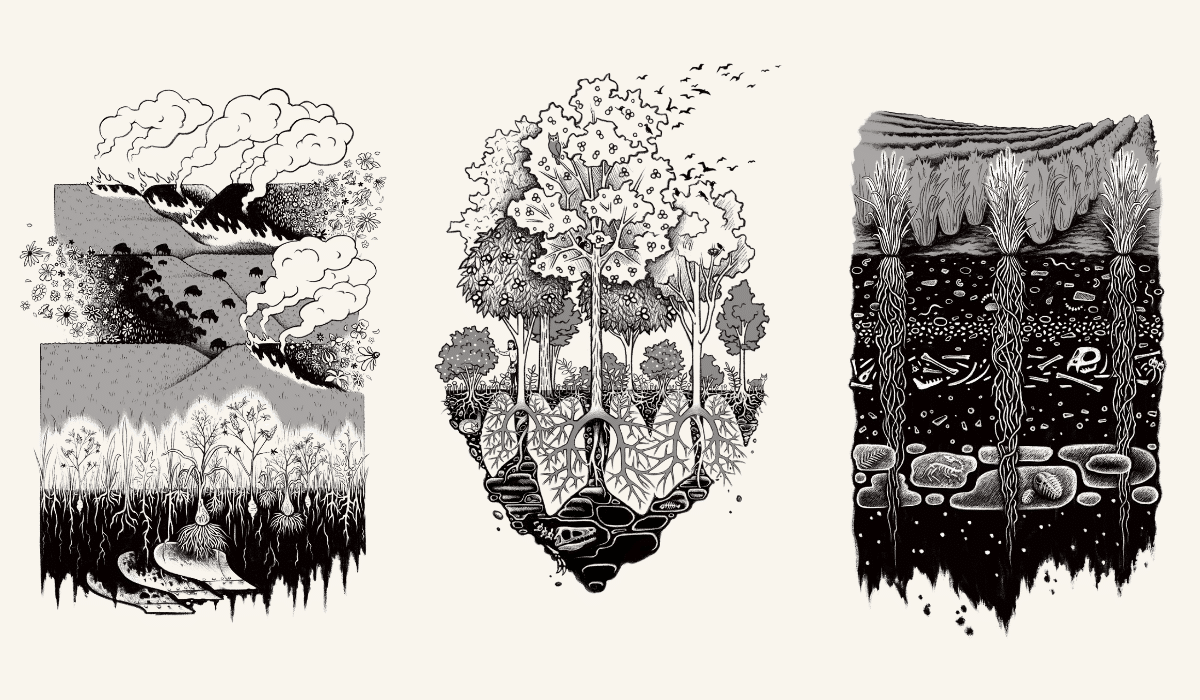
Her newest project, “Living Roots: The Promise of Perennial Foods,” is a collection she co-edited, of essays and poems from chefs, scientists, farmers, and Indigenous land stewards working in urban food forests, experimental grain plots and grasslands where bison are being reintroduced as broader ecological and cultural restoration.
“The sort of food systems being celebrated are these perennial polycultures, and the book itself is a sort of perennial polyculture.”
Carlisle returns to Missoula for a Blooms and Brews event on Tuesday, April 14, at the Missoula County Fairgrounds’ G.W. Marx Exploration Center, for a conversation with farmer and county commissioner Josh Slotnick, co-editor Aubrey Streit Krug, and Mariah Gladstone, a renowned Blackfeet/Cherokee chef and food and environmental advocate (who will share some perennial-based appetizers).
Ahead of the event, The Pulp talked with Carlisle about the evolution of her books, why this latest project called for a chorus of voices, and what perennial foods can teach us about resilience. This interview has been lightly edited for clarity.
The Pulp: You’ve now worked on three interconnected books, which are “Lentil Underground,” “Healing Grounds,” and this new collection on perennial foods. How do you see the evolution — or trajectory — from your earlier books to this one?
Liz Carlisle: Well, I’ve always been really interested in a more sustainable and just food system over the course of my writing career, and I’ve always been really interested in how Montana figures in there. I really started that journey learning from Montana farmers who have been leading the way on more organic and regenerative ways of farming.
The longer I worked in this area, the more I started learning about Indigenous leadership in this arena, and these deep histories of Indigenous food systems that were built to work in particular places, including in Montana. And one food system in particular that was raised all the time as this sort of paragon of a sustainable food system — that makes sense in a place — is a buffalo food system.

For “Healing Grounds,” I had the incredible privilege of interviewing Latrice Tatsey … learning about the work that she and others have done around buffalo restoration at Blackfeet Nation, and also this really interesting story about her family, who also ranches cattle, and how those two things fit together for her.
So that story was extraordinary, and I got to meet these other three incredible women from other communities and other parts of the country for that book. There was this common theme of working with perennial plants, both in North American Indigenous food systems and also Indigenous food systems from other parts of the world that continue in diaspora in this country. I just kept hearing of perennial plants as pieces of those food systems over and over, whether it was regenerative grazing bison or cattle, or agroforestry practices, or even folks starting to develop some more perennial grains.
And so that’s really where this book came about.
For readers who might be new to this topic, what exactly are “perennial foods,” and why do they matter, ecologically and economically?
Perennial foods come from plants that live for more than one year. So, fruit trees, nut trees, animals raised on perennial pasture, and then some newly developed perennial grains.
Because they develop these really deep root systems, they have all of these practical advantages for us as people. They’re more resilient to climate change. They also help us reduce the emissions of our food system. They build soil health and clean up air and water pollution. They reduce farmers’ reliance on fertilizer and pesticides and also plowing. All of that can save money and be good for the environment.
There’s also this sense that they offer this teaching about investing so much of their key resource — this solar harvest — in their underground community, to confer community wealth that can help all the members of the earthly community get through hard times together.
Your previous books were ones you wrote, but this one is a collection. Why did this project need a more collective, edited format?
I think all my writing projects have been experiments in collaborative storytelling, and I was excited for this one to work with this multi-author collective. Really, one of the primary stories of the book, in many ways, is this kind of chorus of voices.
I hope that anyone who reads this book will resonate with at least one of these essays, one of these contributors, as somehow speaking to them and to their path. The sort of food systems being celebrated are these perennial polycultures, and the book itself is a sort of perennial polyculture.
“That’s a lot of what these farmers and scientists and chefs reflected on in their essays: this life strategy of perenniality that they’re intimately familiar with because they know these plants so well, and what that offers to us as human.”
There’s a 7.2-acre urban food forest in Atlanta, and there’s buffalo restoration happening in the Blackfeet Nation and at Cheyenne River Sioux, and there’s this awesome prairie strips project — farms in Iowa where farmers are adding back native prairie to 10 percent of their farms. Each one of those efforts is really inspiring, but when you read about them all together — and think about them together — you think about what all of those living roots in the ground add up to for us, ecologically and culturally.
We’re in a time when industrial agriculture feels like it’s moving backward in some ways, especially with an administration not interested in climate change initiatives or sustainability. How do you see these perennial food stories offering practical ways forward, or applications, in this moment?
I think the stories themselves are inspiring, in the sense that many of the contributors have themselves, or in their communities, been through extraordinarily difficult times. They talk about building a future with these perennial plants through extraordinarily difficult and dark times.
In that sense, it’s an inspiration to know that everything I enjoy today is the result of people of the past believing that there would be a future, even though they were experiencing difficult things.
And then there’s also this teaching of perennial plants that comes out in so many of these essays. What makes a plant perennial is that it lives for more than one year, and the way it’s able to do that is that it takes a really significant share of the energy that it harvests from the sun and invests it below ground in root systems — and in this whole community of organisms underground that help each other out. That is what allows the plant to get through the winter, the drought, the flood, live through all these things, and live for multiple years — sometimes hundreds of years, in the case of plants like olives.
That’s a lot of what these farmers and scientists and chefs reflected on in their essays: this life strategy of perenniality that they’re intimately familiar with because they know these plants so well, and what that offers to us as humans, thinking about how to get through a hard time. How can we more deeply come together in community and in shared prosperity, to ride out what we’re going through?
In our mainstream food system, one thing we lack is deliberate storytelling around what we do and why we do it. Or if we do tell stories, it’s about extraction. Indigenous storytelling tends to center on belonging to the earth. Can you talk about the cultural storytelling that comes through, especially from Indigenous contributors?
Every one of these essays is a love letter to a particular perennial. And it’s so clear that each of these writers is in deep, deep relationship with the perennial food that they care for. Rosalyn LaPier writes about her experience growing up as a Blackfeet woman, and her mother’s experience going out and collecting serviceberries as a child — and all of the myriad ways in which serviceberries would show up in daily life as a food but as medicine as well, and also as a tool for daily tasks.
People write about cultural foods as well as connecting across generations — that an olive tree you might interact with also carries a memory of previous generations. All of these essays are deeper than, “This is a delicious food,” or even, “This is a food that solves an immediate ecological problem.” It’s this deeper sense of an ongoing relationship with a perennial food that is meeting the need of a community over a long period of time. And at the same time, that community is caring for that perennial food. So there’s this real sense of reciprocity and deep relationship.
Were there particular essays that really surprised you or stood out?
Absolutely. I love Mariah Gladstone’s essay about the key role of fire in sustaining perennial food systems, and her journey growing up in Montana with cultural connections but still being taught in school that fire was always destructive. Then, as she became an environmental scientist and deepened her connection with her traditional ecological knowledge, she recognized that fire has, in fact, for Blackfeet Nation people, often been a generative force, and a way of sustaining these incredibly abundant food landscapes. These incredibly abundant grasslands, from which bison eat and then people eat. There’s this reciprocity of people sustaining the landscapes with fire and then being able to harvest food. So that essay really struck me.
And then Rosalyn LaPier wrote an essay around plant foods and Blackfeet Nation plant foods in particular. She focused on serviceberries, but with this similar sense of abundance — her essay is called “Landscapes of Abundance” — as opposed to a philosophy of managing individual plants over individual growing seasons, which is so often the way Western culture thinks of farming.
Both Mariah and Rosalyn write about these landscape-scale ways of managing and caring for land that help to bring forth all of this abundance of plant and animal foods in ways that aren’t extractive — in ways that allow the plants, the animals, and the people to all sustain in these relationships for long periods of time.
I love Rosalyn’s writing and the knowledge she has.
Rosalyn’s writing is incredibly poetic, and there are all these details that stuck with me. I was aware that serviceberries were an important food source, but she gives incredible detail about drying serviceberries on the roof of her grandmother’s house, and then filling these 50‑pound sacks with the dried serviceberries that would be used throughout the year. She has all these other details about other uses of other parts of the plant, and the one that totally sticks with me is using these small sharpened twigs to pierce the ears of babies — just all these ways of this plant being woven into everyday life.
Missoula County Department of Ecology and Extension hosts a conversation with Liz Carlisle, Aubrey Streit Krug, and Mariah Gladstone, moderated by Josh Slotnick, about “Living Roots: The Promise of Perennial Foods” on Tue., April 14, 6–8 PM @ G.W. Marx Exploration Center, 1075 South Ave. W. $10. Register here.