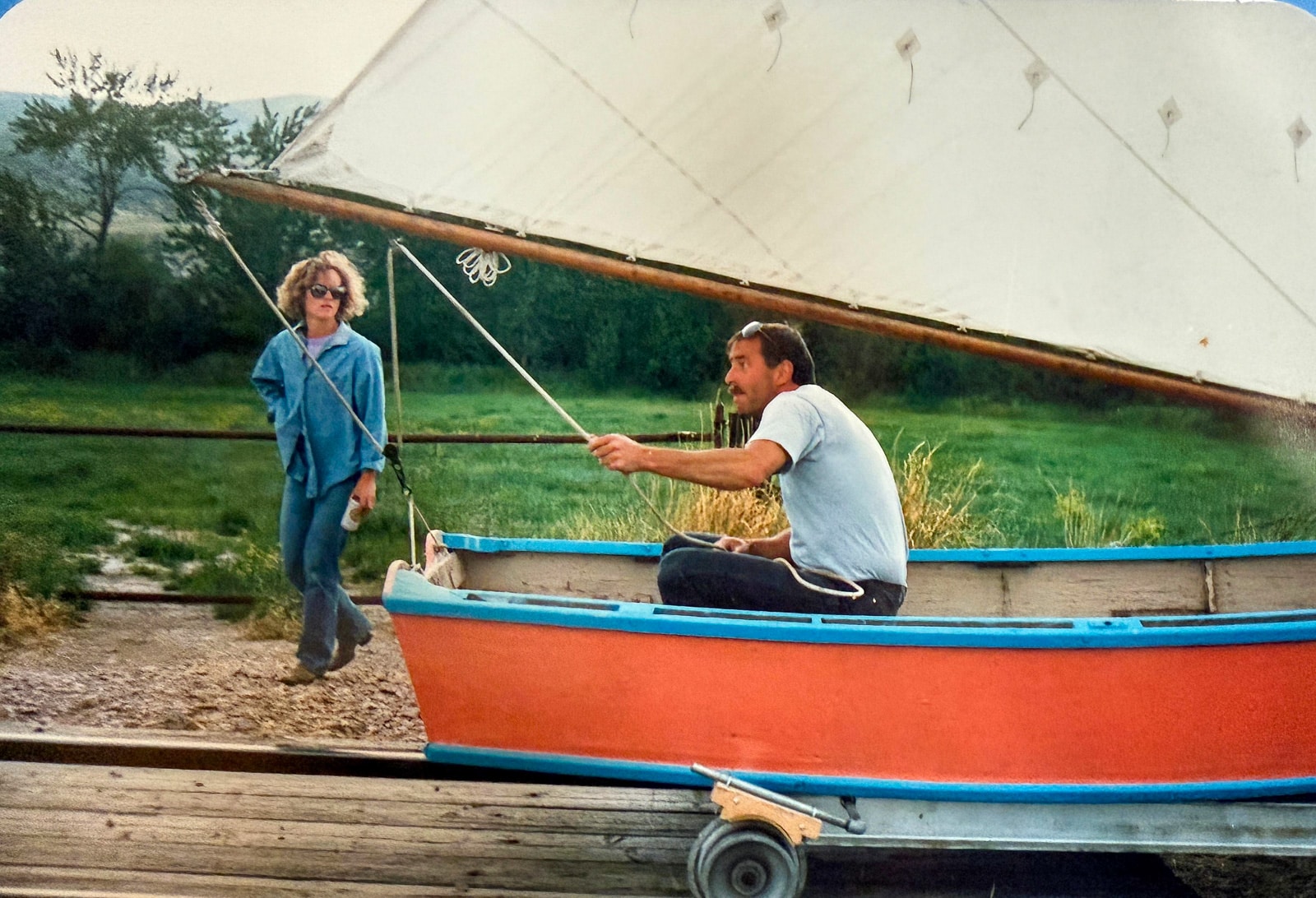
I learned Bill Vaughn had died the way many people likely heard from him in recent years: through his newsletter email.
When Squalor Zone Reports appeared in my inbox earlier this month, I expected some new dispatch — a colorful story, a rant, a historical detour, some line sharp enough to make me laugh and gasp at the same time. Instead, it was a note from his wife, Kitty Herrin, announcing that Vaughn had died Jan. 25 at age 77.
For Missoulians who knew his work, Vaughn occupied a particular and increasingly rare corner of local literary life: part journalist, part historian, part fabulist, part mischief-maker, and part neighborhood crank in the best sense. He wrote deeply researched nonfiction books, taught writing, started an underground Missoula paper called The Borrowed Times, in 1972, and spent years producing the kind of local commentary that was too wry and spiky to fit neatly inside conventional opinion writing.
He was the author of three nonfiction books: one about the intertwined fortunes of two Irish-American ranching clans, another about Native American boarding schools and a third about the ancient history of the hawthorn tree. Earlier in his career, he wrote vividly strange first-person magazine pieces for national outlets, many for Outside, that turned physical stunts and private obsessions into literary spectacle.
I first encountered Vaughn in 1999, when I took an evening magazine-writing class from him at the University of Montana. He wasn’t a regular faculty member, which added to his mystique. I remember his blunt feedback, but even more, I remember the stories about his reporting life — including one article about being rejected from “Survivor” and sneaking onto the island anyway, and another involving windsailing on railroad tracks, which, if you’re wondering, was both illegal and deliciously dangerous.
That combination of reporterly seriousness and comic recklessness was central to his work. Vaughn could make a piece feel rowdy without being sloppy, and he could make deeply researched writing feel alive without sanding down its oddities.
Vaughn could make a piece feel rowdy without being sloppy, and he could make deeply researched writing feel alive without sanding down its oddities.
Some Missoulians knew him through Reports from Dark Acres, the independent online publication he wrote from the piece of land he bought outside of town that he and Kitty called Dark Acres, named for the shadow Black Mountain cast there in winter. The publication mixed local criticism, gossip, history, absurdist observation and actual public service. Vaughn wrote about school trustees, Planned Parenthood service cuts, neighborhood minutiae and city absurdities with the same alert eye. He had no interest in sounding institutional. He sounded like himself.
He could also be savage. He was especially good at skewering officials, boosters and bureaucrats selling some synthetic version of authenticity. He understood, and made fun of, Missoula’s habit of narrating itself as exceptionally cool. His proposed slogan for a county seal contest — “Missoula. A Place, Sort of” — was a joke, but also not really. Like much of his writing, it worked because the joke carried an argument.

That may be part of why Vaughn’s voice mattered here. He was not a civic flatterer. He did not write the kind of soft-focus regional prose that treats Montana as a brand, or Missoula as a lifestyle accessory. But he didn’t write for the rebel underground, either. He wrote against puffery. He wrote with an obvious affection for this place, but not the obedient kind.
And he was serious about the things that deserved seriousness. The same writer who could produce prankster-adventure journalism for Outside also wrote “The Plot Against Native America: The Fateful Story of Native American Boarding Schools and the Theft of Tribal Lands,” giving the book a title that refused the usual historical restraint. In that case, the force of the language wasn’t theatrical. It was corrective.
His sentences, meanwhile, were built for pleasure. They moved with swagger and surprise. For an Outside story about trying, as a middle-aged man, to finally earn the Eagle Scout badge he had narrowly missed as a kid, Vaughn titled the piece, “Look Upon My Neckerchief and Know That I Am an Eagle.” That dramatic overkill was part of the engine. He understood that nonfiction could be informed and outrageous at once.
He could do something else, too, that is harder to pull off than satire: He could write nostalgia without getting mushy. In “Skating Home Backward,” an Outside piece with the gloriously overcooked subhead “A Wetland Restoration Comedy: How one man transformed a vile, polluted, dank little swamp into the perfect glassy ice pond,” Vaughn captures childhood longing with real beauty. Even when he was being funny, he was often after something more durable — memory, desire, the private mythology of place.
He did not write the kind of soft-focus regional prose that treats Montana as a brand, or Missoula as a lifestyle accessory. But he didn’t write for the rebel underground, either. He wrote against puffery. He wrote with an obvious affection for this place, but not the obedient kind.
I didn’t know him well. My interactions with him were brief, intermittent snapshots over the years. We spoke briefly when I was asked to moderate a 2022 Montana Book Festival panel with him and journalist Nate Schweber — an animated writer with Missoula roots. Within minutes of their high-spirited discussion, it became clear I was unnecessary. I got to sit back and watch the two of them be funny and dynamic without my help. When The Pulp launched in 2023, he sent a message through our website: “Hi. I have this $20 bill I’ve been hoarding (don’t ask). Email me a mailing address and I’ll send it to you.” And he did.
Later, after he moved from Reports from Dark Acres to his newsletter, Squalor Zone Reports, he sent me a note welcoming me as a subscriber and adding, “I love The Pulp. Excellent work.” For me, that’s praise that carries weight. A gift. Because 25 years after taking his UM writing course, I’m still applying a Bill Vaughn scrutiny to my writing and editing.
His voice feels newly precious now. At a moment when so much nonfiction is flattened by professional sameness and polished for approval by AI, Vaughn’s writing felt, and still feels, defiantly unprocessed. It had edge, speed and appetite, marked by sentences that unfurled with meandering relish or struck with stinging brevity. Even when he overdid it, it was with precision. And the excess was human excess. You would never confuse it with “content.”
Missoula will keep producing smart writers, cranks, historians and stylists. But Bill Vaughn was all of those at once. He wrote with snarky irreverence and big feeling, paying close attention to the details of a place to understand what made it tick. Writers who do that are tender. They’re watching out for all of us.
A few days ago I emailed Kitty my condolences and mentioned the writing course from decades ago. She replied, “He loved teaching that class and still remembered all of his students.”
When I first saw the newsletter about his death, I thought for a moment it might just be Bill writing some outlandish dispatch. With someone like Vaughn, it’s easier to believe that than the plain, dumb truth of him dying. Losing him is personal for those who knew and loved him, but it’s also a civic and literary loss of an irreplaceable writer with an unmistakable voice.
Go read Bill Vaughn.
And check out the essays and tributes being published about him on Squalor Zone Reports.