Photos by John Stember
This is the cover story in the first edition of The Pulp’s new quarterly paper, which you can find for free at businesses all around Missoula. Learn more about the paper here.
New to The Pulp? Welcome! Sign up for our free weekly newsletters — and if you like what you’re reading, chip in here. Thanks!
The old world may be dying while the new one struggles to be born, but for a few brief moments at the Cut Bank Golf & Country Club it’s a beautiful May afternoon. Sun and blue skies. A light wind imported from Canada. Lovely conditions for the University of Montana athletic department to get out and stage a golf tournament as part of its annual spring tour.
Then it all turns to shit.
Just as the coaches and staff are loading up their golf carts to begin play, the clouds turn an angry shade of gray. That light wind becomes menacing, ripping hats off heads and branches off trees. Soon it’s pelting rain, then hail, all of it blowing sideways across pockmarked fairways at about 40 miles per hour and carrying everyone’s drives away with it. All attempts at conversation perish in the gale.
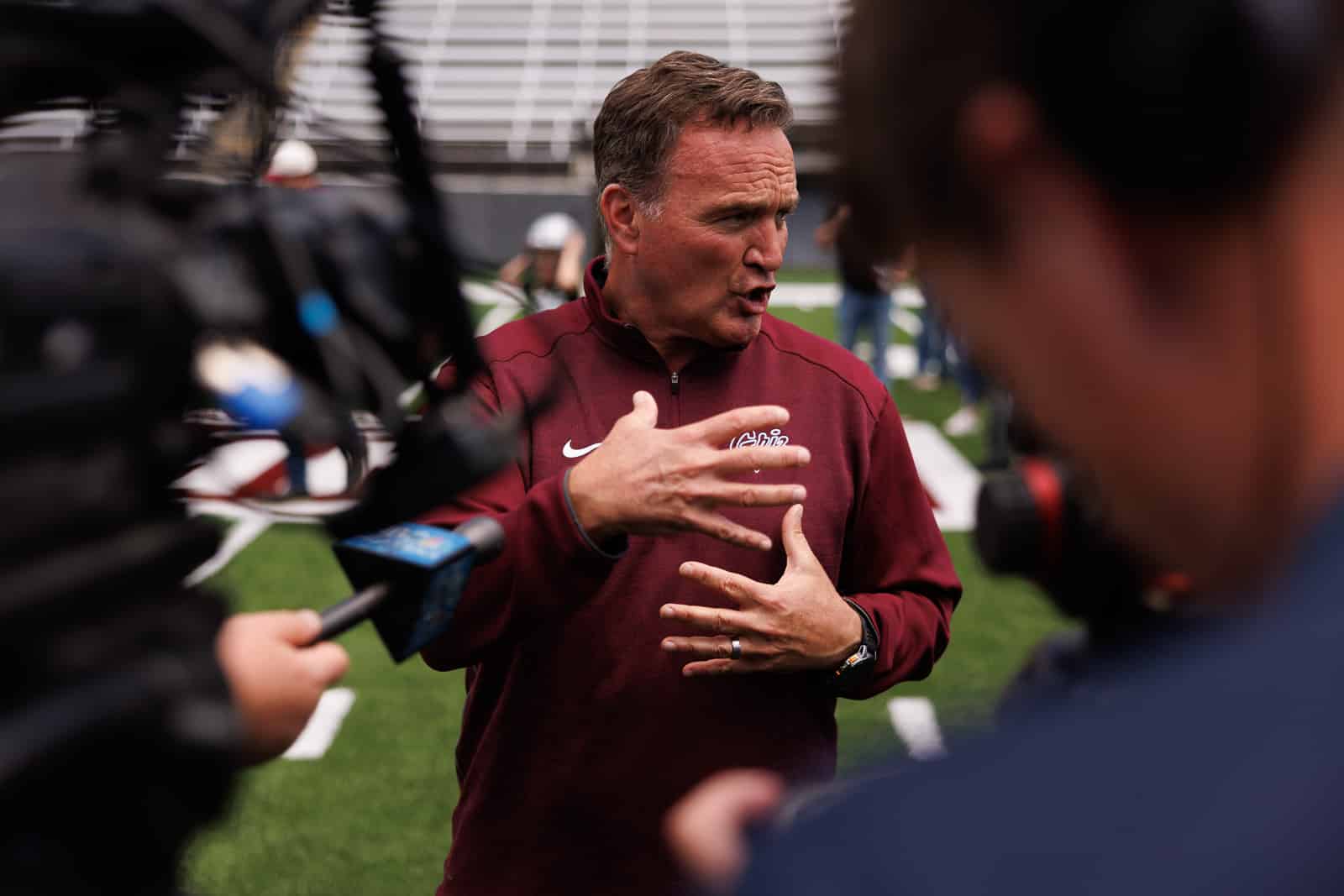
Kent Haslam, director of athletics at the University of Montana, is undeterred. A solidly built man in his late 50s, he’s got that year-round glow of clean living and a certain income tax bracket. He speaks softly but with the confidence of someone who hasn’t often had to raise his voice in order to be listened to.
Haslam has a personal policy for these Grizzly Scholarship Association golf tournaments: If the people who paid to be here still want to play, regardless of rain or snow or thundering warnings from above, then he’ll play. He’s done it on courses from Fort Benton to Sidney over the last decade-plus. He’s done it through sideways hail and sudden spring cold snaps. He doesn’t even particularly like golf. But then, these outings aren’t really about golf.
Montana’s athletic department does this every spring. It loads up coaches and other department personnel and traverses the entire state. Last night this little road show was at the Great Falls Civic Center for a dinner and auction. Next week it will be Havre and Billings.
These things raise some money for the GSA, sure. But entry in today’s tournament was only $25 apiece ($50 if you want dinner afterward) and fewer than 40 people showed up. The Griz athletic department will spend more money just driving this bunch around at a time when gas prices are soaring and the state isn’t getting any smaller.
“The first thing they want to know is, are we going to win any games this year? The other thing they ask is, [which players are] getting paid and how much?”
The real goal is less immediately financial and more ephemeral. They’re out here to bring the gospel of Grizzly sports to the people, in the hopes that once football season ramps up again those people will return the favor — even when it means driving four hours from Cut Bank to spend a golden fall Saturday at Washington-Grizzly Stadium. The goal is connection. They want to show Montana’s far-flung fans that Griz Nation loves them back.
This year that need is even more urgent. You can tell by the questions people are asking at some of these stops.
“The first thing they want to know is, are we going to win any games this year?” says second-year Lady Griz basketball head coach Nate Harris. “The other thing they ask is, [which players are] getting paid and how much?”
The first question is one that Griz coaches can’t answer, seeing as how it hinges on an unknowable future. The others — the money questions — are ones they absolutely could answer but won’t.
This is the new way of things in college sports. The money is abundant and essential and its final destination is a state secret. That doesn’t stop anyone from asking, though. And really, whether the questions are about the wins or the money, they’re all essentially asking the same thing. These are chaotic, changing times for college athletics and so people want to know:
What’s happening?
Where are we going?
Will we like it there?
It’s Haslam they’re looking to for answers. At the start of 2026, he seemed to have it mostly figured. Then he lost his head football coach. Then the president of the university left to run for political office. Now people are starting to whisper in the halls about whether a change at the top of the athletic department is coming next.
As longtime Montana sports writer and current Daily Inter Lake editor Fritz Neighbor told me, “It seems like Kent could really use a win right now.”
But whether you’re on the field or in the front office, wins don’t come easy these days — or cheap.

If you haven’t been keeping up with the last few years’ worth of seismic shifts in how college sports operate, the short version is that for many decades the NCAA insisted that student-athletes must be shielded from the impure and corrupting force of money, lest the entire enterprise be ruined. Better for that money to flow in great gushing torrents to the adults in the room. You know, for safekeeping and so forth.
But what happened was that as the rivers of money swelled and spilled their banks, the inequity of the arrangement began to seem too glaring to ignore. Players saw their own faces in things like lucrative video game franchises for which they received not a dime. They watched schools and coaches and conference commissioners get draped in wealth. With the onset of legalized sports gambling, literally everyone could profit off their success but the athletes themselves.
Eventually some of the players got with lawyers and took the matter to court. A combination of court decisions and tweaks to various state laws first allowed student-athletes to receive money in exchange for name, image, and likeness rights in 2021. (This is now known by the catch-all term NIL. You might have seen it in action when Griz football star Junior Bergen inked a deal with a local car dealership.)
Later, in June 2025, the House v. NCAA settlement went even further, paving the way for schools to pay players directly. This is how, in the space of about five years, something utterly forbidden was transformed into something commonplace. What was once a sin was now, with the stroke of a pen, the status quo.
For an illustration of just what a dramatic change this is, consider that in 1987, Southern Methodist University (SMU) was hit with the NCAA “death penalty” for buying itself a national championship-caliber football team. SMU had been paying players for years and everyone knew it. Then it got caught. Then it continued paying players because it didn’t want them squealing to the NCAA when the money they’d been promised suddenly stopped. The football program was effectively shut down (though later reinstated in a much diminished form) because some 13 SMU football players, according to the NCAA, were paid a total of about $61,000 across two seasons in the mid-1980s.
That was then. Things are different now.
In 2025, Indiana University was praised for winning a national championship in football despite reportedly paying its players only about $21 million in total. In 2026, Notre Dame is expected to spend well over $40 million on its team. The University of Texas is said to be drifting closer to the $50 million mark.
“I have no idea what Alabama is paying. I have no idea what LSU is paying. I have no idea what the [Montana State Bobcats] are paying their athletes, and I don’t want them to know what we’re paying ours.”
These are dizzying changes to a guy like Marcus Welnel. When he joined the Griz football team as a freshman in 2017, the NCAA rules limiting the benefits players could receive felt almost comically stringent.
“We couldn’t even get cream cheese on our bagels,” Welnel told me. “They could give us the bagel, but if we got cream cheese on top of it, that was too much of a perk as a student-athlete.”
Now, four years removed from his final season as a Griz linebacker, Welnel holds a job that didn’t exist when he played here: Chief Revenue Officer. It’s Welnel’s job to raise the money that the athletic department will use to pay its players, and then sit across the table from them, or their representatives, and negotiate what they’re worth. (Welnel estimates that about 80 percent of Griz players on the payroll now have some form of agent. Even just a couple years ago, he said, “it was almost none.”)
If Welnel were doing this job in the NFL, they’d call him the general manager. Instead he’s doing it at the same university where he was told, not so long ago, never to even let a team booster buy him a slice of pizza.
“It changed so fast,” Welnel said. “That was actually one of the obstacles for us at first. We had to go to donors and local businesses and say, ‘Hey, you can support our student-athletes directly now.’ We had to get everyone to forget the rules of a few years ago.”
All across college sports, schools work to keep their payouts as secretive as possible, which makes the entire market for players a black box surrounded by rumor and speculation.
“I have no idea what Alabama is paying,” Welnel said. “I have no idea what LSU is paying. I have no idea what the [Montana State Bobcats] are paying their athletes, and I don’t want them to know what we’re paying our athletes. It’s all about competitive advantages, so everyone’s doing the best we can to get data from different sources, and a lot of times it’s unreliable because the agents are really inflating the market with what they put online and on social media.”
But those rumor mills do love to toss around dollar amounts. After Griz running back Eli Gilman rushed for over 1,000 yards with 15 touchdowns in the 2024 season, many Griz fans worried that he might be lured away by bigger money elsewhere. When he was still on the roster in 2025 — and had an even better year as a bigger part of the Griz offense — estimates on what it took to keep him became a favorite topic at tailgate parties.
At the FCS level, the money might not be as eye-popping as fans assume. One source I spoke to estimated Gilman’s pay at just under $50,000 per season. Another put it at under $100,000. (For the sake of comparison, the University of Florida is expected to pay running back Jadan Baugh somewhere around $1 million this year.) Current NCAA rules also give players the option to transfer at the end of each season, which amounts to a free agency bidding war every year.
These altered transfer rules also help explain some aspects of what you might call The Curious Case of the Two Bobbys.
When I first visited the UM athletic department in late January, I encountered longtime head football coach Bobby Hauck stampeding through the building in a Grizzly tracksuit, glaring down that hawk’s beak of a nose, rushing to and fro like a man who longs for more hours in each day.
Sure, he was coming off a season in which his team had been beaten by their hated rivals in Bozeman not just once but twice — their only losses of the season — and then had to watch from home as Montana State won the national championship that had so long eluded Hauck during his tenure here. But all expectations were that he’d simply reload and come back next year, eager to right these wrongs.
Two weeks later, Hauck abruptly announced his retirement from coaching. Coaching just wasn’t fun anymore, he said during a February press conference, especially in this new age of college sports. Hauck, at 61, sounded like an old dog reluctant to learn these new tricks.
“I just haven’t been enjoying it enough,” he told reporters. “I want to enjoy my career and my job. A lot of the head coach stuff in current day Division I college football is not enjoyable.”
So that was that, a career wrap on Hauck after eight Big Sky Conference titles and an overall record of 151-43 across two different head coaching stints, meaning he’d retire as the winningest coach in University of Montana history. Except, LOL, just kidding. Less than one week later the University of Illinois announced that it had hired Hauck as its new defensive coordinator. His retirement had lasted about five days.

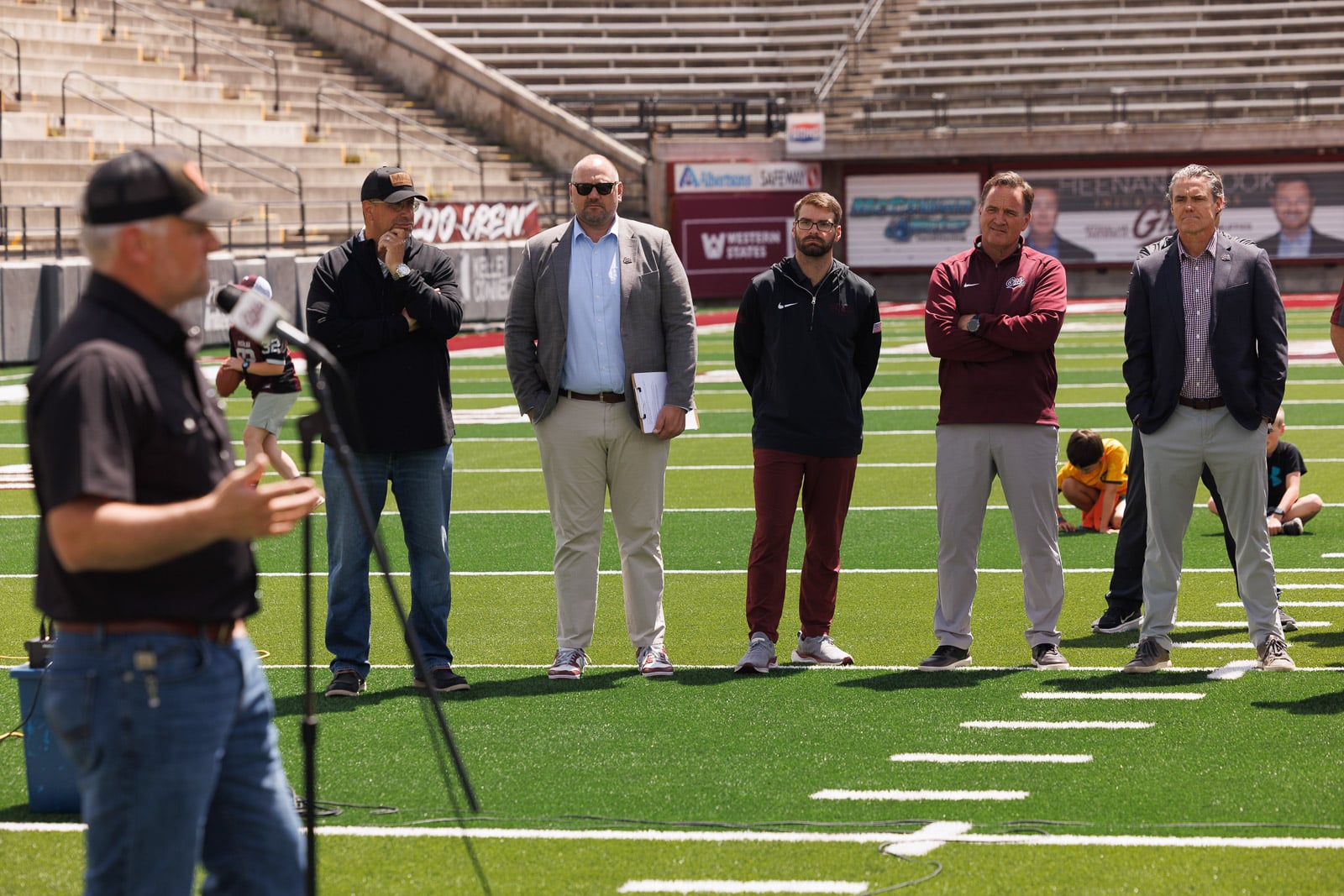
This was one of the things some Griz supporters wanted to ask Haslam about during the spring tour across the state. Did Hauck just pull a fast one on us? If so, how mad should we be exactly, since it was starting to seem like he might never take us to the national championship promised land?
“Well, I’ll let you all decide what you think that word [retirement] means,” Haslam, ever the diplomat, told a crowd of a couple hundred people in Great Falls.
But Hauck’s sudden departure created another problem. NCAA rules allow for players to get another shot at transferring any time there’s a head coaching change in their program. That transfer portal only opens five days after a new coach is hired and allows players 15 days after that to officially transfer. But until then, every day without a hire is another day Montana’s players are in limbo and another day rival programs have a chance to informally signal interest in the players through backchannels, even though formal negotiation is against the rules. The fastest way out of that vulnerable stretch was for Haslam to hire a new head football coach fast.
“The last thing I wanted to do,” Haslam told me in June, “was to go through this long drawn out search that sowed even more doubt into the minds of our players and allowed the vultures to circle over us.”
This is how Haslam settled on Bobby Kennedy, a man who’s spent the last three decades coaching college football but has never before been a head coach. He didn’t even set foot in Missoula until last August, when he showed up here as the wide receivers coach. It’s not typically the role that serves as a launchpad to the top job. Hauck announced his “retirement” on Feb. 4. The next day, Kennedy was introduced as head coach.
“I’ve had the opportunity to be a head coach before, I did not take that opportunity,” Kennedy said in the press conference. “… I wanted to make another run at something I thought was really special. I’ve interviewed for a number of jobs, I finished second a couple of times. I think they really screwed up, but I’ve wanted to be a head coach.”
Kennedy was a key attraction during the spring tour. Longtime Griz fans wanted to get a look at the new man, take his measure in person. On the Cut Bank course, he was paired with some Griz old-timers in what organizers joked would be a “trial by fire.” It was also an introduction to how things are done here in Montana.

You want to coach this football team? Prepare to be answerable to some septuagenarians who’ve been coming to Griz games since the team wore copper and gold. They’re going to crack open a Michelob Ultra as they encourage you to run the damn ball more this season, and you will be expected to be cool about that. It’s part of the job. Lane Kiffin over at LSU isn’t doing golf tournaments for $25 a head, but if you want to last with the Montana Grizzlies, you will.
And it’s all so that — when the team takes the field this fall — these longtime Griz boosters can tell their friends: Oh yeah, Bobby Kennedy. Good guy. Played golf with him last spring. Should do well this year.
Fortunately for everyone, Kennedy slides into this part of the job like a hand in a glove. He’s naturally affable and charismatic, the kind of man whose strongest muscles must be in his face because he never stops smiling.
“He’s really good at the shaking hands and kissing babies part of the job,” Eric Taber, director of communications for football and tennis, told me.
He’d better be. He’d also better be good at the winning football games portion. The entire athletic department — and to some extent, the university itself — have a lot riding on it.
Think about the job that Kent Haslam accepted back in 2012. This was the old world, as far as college sports was concerned. Paying players was an unthinkable sin. Endorsement deals were only for pros. There were free bagels here and there, like the one Marcus Welnel got as a player. But no cream cheese on top. The scholarship itself was the whole reward for being a standout high school athlete.
Even then, Grizzly sports teams were essentially divided into two categories: the ones that generated revenue and the ones that didn’t. Football, men’s basketball, and women’s basketball — these sports brought in money at the University of Montana. The others — volleyball, soccer, tennis, track and field — didn’t.
Haslam’s job was to oversee this broad range of programs. Part of how he got the job was that his predecessor and former boss, Jim O’Day, was abruptly fired after several scandal-plagued years. Griz football players just couldn’t seem to stop getting arrested. Fistfights in bars and frat houses. Fans waking up in fear of the police blotter. The team was even forced to vacate some wins after the NCAA learned that a booster had provided players with bail money.
Then there were the sexual assaults. A quarterback accused. A running back convicted. The website Jezebel called our town “America’s rape capital.” The school’s reputation took a hit. Enrollment dropped. The town’s name became a book title, and not in a good way. You might have heard about it.
UM President Royce Engstrom eventually decided to clean house. O’Day was out. Haslam, who at the time was the associate athletic director for development, was in. The idea seemed to be: stop the scandals, stop the bleeding, quiet the noise.

Haslam, a straight-arrow with a placid demeanor, seemed like a logical choice for this task. He’s a BYU grad who did a double major in broadcast journalism and Japanese. He worked in minor league baseball with the Triple-A team in Salt Lake City. He worked in the majors for the Anaheim Angels, where part of his job duties involved serving as an interpreter for Japanese pitcher Shigetoshi Hasegawa.
He also worked in the communications department for the organizing committee responsible for the 2002 Winter Olympics in Salt Lake City, where he says he got a lesson in leadership through challenging times just by watching Mitt Romney come in and save those games from bribery scandals.
“Forget the politics. Watching how he managed that situation was really impactful for me to see,” Haslam told me. “We were a small organization. I mean, I was driving him around and writing talking points for him in speeches. We were going through FBI investigations, and [the Department of Justice] was coming in. I’m sitting there getting interviewed by the DOJ. ‘Have you ever given someone a bribe?’ I’ve been here two months. But watching him lead made an impact on me. How he came in and re-instilled this great confidence and stability — that was impactful for me as a 28, 29-year-old guy trying to figure out what I wanted to do with my career.”
But when Haslam took over at UM, he had no idea the job would turn into this. On one end of the spectrum he’s answerable for the success or failure of what are essentially professional sports teams in football and basketball. On the other, you’ve got programs that are still just old-fashioned school sports, but competing on an increasingly uneven playing field.
Take men’s tennis, for example, where the Griz won the Big Sky Conference tournament in 2025, then entered the national championship tournament and faced the University of Texas.
“Their whole team is getting paid,” said Jason Brown, head coach of men’s tennis at Montana. “They’re professionals.”
Montana doesn’t have the money for that type of broad success across multiple sports. Its total athletic department budget is just over $30.8 million, according to its 2025 report filed with the NCAA’s Membership Financial Reporting System. (For the sake of comparison, San Diego State University has a budget of just over $104.8 million. Texas State, one of the “poorest” schools in the PAC-12, has a budget of $55.5 million.)
“I think we all understand that when football wins, we all win.”
Montana’s operating budget includes around $6.7 million worth of ticket sales, $1.16 million in student fees, and $6.2 million in contributions from individual and corporate donations. The school is constantly hitting up the big donors for more money, but not many of them are motivated by a desire to see UM become a national powerhouse in tennis.
Brown doesn’t kid himself about that.
“Football is the big dog at Montana,” Brown said. “I said in a head coaches’ meeting one time that I’d be happy to go 0-20 in tennis if we could win the [national championship] in football. There were a couple other coaches looking at me like they were going to die from shock, but I’m serious. You don’t understand the impact football success at Montana has for all of us.”
This was a sentiment I heard over and over while reporting this story.
“I think we all understand that when football wins, we all win,” said volleyball head coach Allison Lawrence.
Some of that is economic. Griz softball could have an undefeated season, but it still wouldn’t bring RVs full of fans from all over the state to spend their money in Missoula on game days. But there are also the intangibles to consider.
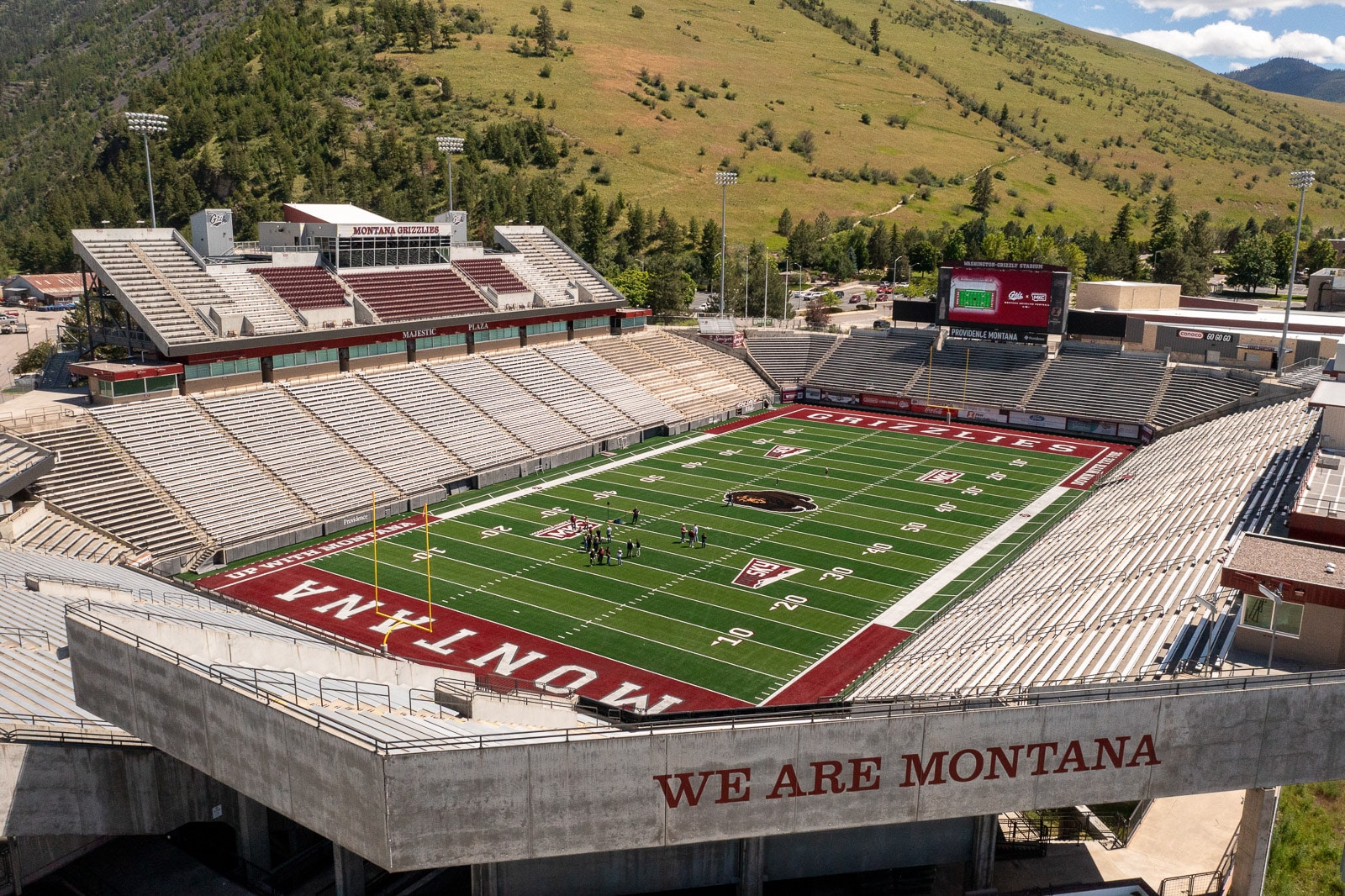
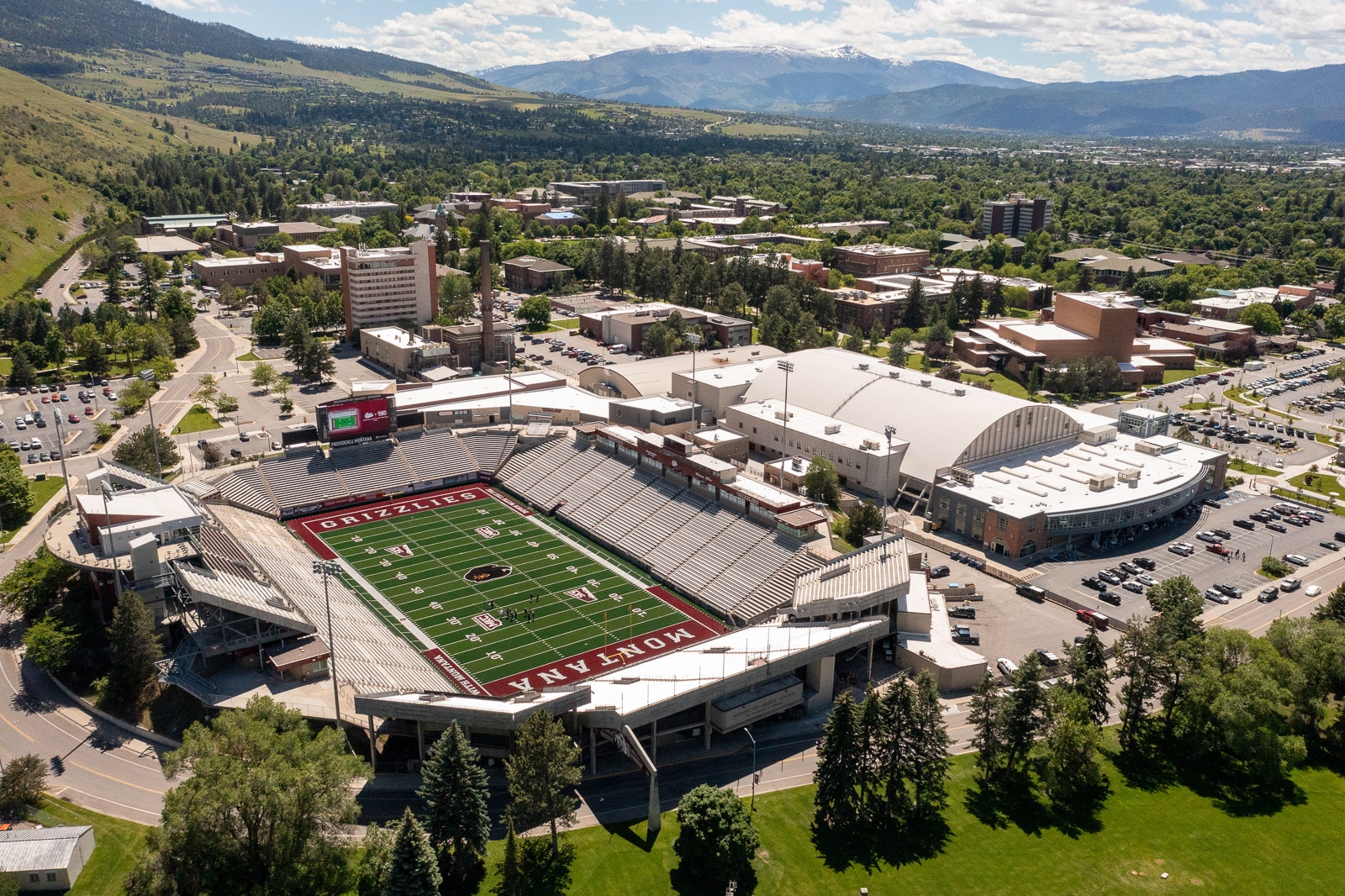
If you look at the university’s marketing materials these days, what you’ll notice is a heavy emphasis on the experience of college here. Rock climbing. River adventuring. Warm spring days out on the oval. And yeah, the implied promise of glorious fall Saturdays hoisting a cool domestic beer in the parking lot of Washington-Grizzly Stadium, getting ready to cheer the Griz to one of many victories.
Welnel, who grew up in Helena before coming here to play for the Griz, is very aware of this aspect of the sales pitch.
“I have a sister who’s a junior in high school right now,” Welnel said. “I don’t know if she has any clue what she wants to major in or any of that. She’s looking at college and thinking about the experience. Where are the nice dorms? Where is the best dining hall? Where can you go and get that football game tailgating experience on Saturdays? I think college-age kids right now care a lot about that experience.”

There’s an argument to be made that it’s entirely reasonable for them to focus on that, especially right now, since no one can really guarantee them much about the benefits a college degree will confer upon them. Maybe they’ll put in four years here and get a job afterward. Maybe all they’ll emerge into is student loan debt and a job market decimated by AI. The jury’s still out on that.
But in the meantime, wouldn’t it be fun to be a college student in such a classically American college town?
“Missoula itself is the best recruiting tool you could hope for,” the tennis coach Brown told me. “It’s practically undefeated for me.”
Brown, whose team often includes everyone from Montana natives to international students, said he could only recall losing one recruit who’d visited campus and still decided to go elsewhere.
“Otherwise,” he said, “Missoula does its job.”
This appeal works on coaches too, at least to a point. Chris Citowicki was the most successful soccer coach in UM history by the end of the 2025 season. Throughout his eight years here, his teams were essentially a lock to win some form of the Big Sky Conference title. Under Citowicki, Griz soccer made history as the first team in the conference to win three consecutive outright conference championships.
But when he got an offer from Washington State, he had to do some difficult math.
“As a family, our plan was to come in and rent for a couple years, then buy a house,” Citowicki told me. “We never bought a house. We rented our entire time in Missoula. If we could have never left, I don’t think we would have. It’s such an amazing place to be. But all of a sudden it’s become so expensive that we just couldn’t make it work anymore.”
Citowicki lobbied for a pay raise that might make staying at UM more tenable, he said. But ultimately, women’s soccer wasn’t high enough on the priorities list, a reality he could understand even if he didn’t love it.
“Kent [Haslam] never lied to me,” Citowicki said. “He was always business-first. That meant telling me, ‘Chris, here’s what needs to be fed first.’ We had the goal of getting NIL and revenue-sharing for our players, but the Montana athletic department is a business that needs to grow and raise more revenue just to stay competitive at football, and football is what brings in the revenue. It’s not that Kent wouldn’t give me what I wanted; I think he just couldn’t at this point in time.”
UM simply won’t be able to hold onto breakout stars for long. Not if there are competing offers from bigger schools with bigger budgets.
UM faculty have heard this line from the administration for decades. There’s never any money. Programs are always in danger of being cut. Robert Stubblefield, director of the BFA in Creative Writing at UM, has seen this dance up close. He’s also a Griz fan and sports enthusiast who sits on the university’s athletic committee, which receives regular updates from Haslam and the athletic department.
“I’ve always felt like U of M really is committed to the academic progress of their athletes,” Stubblefield said. “I mean, they check up on it, they follow up on it. I don’t think it’s just lip service and I’ve always appreciated that.”
But maintaining continuity for student-athletes has become a challenge in the transfer portal age, he said. Professors don’t know which students will return to their programs each year. Neither do coaches.
“It’s got to be a really challenging time for somebody like [men’s basketball head coach] Travis DeCuire, who has a player who comes in, kind of overperforms, and then they’re poached by some school with the bigger NIL budget,” Stubblefield said.
For those unaware, he’s referring to the memorable tenure of Money Williams. As a junior guard, he led the Big Sky in scoring (the first Griz player to do so since Anthony Johnson in the 2008-09 season) and was named MVP of the conference tournament. Then the bigger schools came calling. This year he’ll suit up for Boston College. No one is saying how much it cost to lure him away, but the consensus was that it was far enough beyond the Griz basketball budget that it wasn’t much of a conversation.
This is a new reality that Griz sports have resigned themselves to. They simply won’t be able to hold onto breakout stars for long. Not if there are competing offers from bigger schools with bigger budgets. The trick now is figuring out how to turn this into a feature rather than a bug.
“I think we’ve got to learn to be OK with that,” Welnel told me. “At first, our fans hated it. The administration hated it. Our coaches hated it. But you look around, and that’s what you’ve got to work with at some point. We want our kids to stay and we’re going to retain our athletes as best we can. But sometimes it’ll mean telling a kid, ‘Hey instead of going and being a backup at Arkansas or LSU, why don’t you come here as a freshman, start for us, be a star, help us win a national championship, and then after that go be the starter at LSU.’”

Not everyone loves this pitch. To some boosters I talked to on the spring tour, it sounded too much like renting players rather than recruiting them. Some said they felt less enthusiastic about donating money just to pay a defensive back who’d be gone next season.
But, as one woman told me before trailing off with a meaningful look in her eye, “if we want to beat the Cats next year…”
There’s another concern at the top of longtime booster Clinton Jackson’s mind.
“Look around this room,” he told me during a break in the fundraising auction in Great Falls. “You see a lot of gray heads. The young people just aren’t getting into the Griz the same way. They’re more interested in other things.”
The roughly $6.2 million in contributions that the Griz brought in last year stacks up fairly well against other programs of a similar size and stature. It’s slightly less than the $6.59 million that Montana State reported, but still well ahead of other conference foes like Idaho ($2,996,850) and Weber State ($1,590,881).
But how long can you keep that up? What happens to those contributions if the Griz fall too far behind the Cats, or just fail to tap into the next generation of Griz fans? What happens if contributing supporters eventually feel too tapped out to keep pace — a growing phenomenon that Patrick O’Rourke, an accountant who tracks NIL spending for his website NIL-NCAA.com has dubbed “booster fatigue.”
“You can only hit these people up for so much money before they start telling you no,” O’Rourke said. “Or they ask you, ‘Where’s the national championship you said we were going to win?’ Now you’re answerable to them in a different way.”

It also means turning school sports boosters into something akin to part owners of a professional sports franchise. And owners might expect to be treated differently. The same code of silence around NIL payments doesn’t work when it’s their money you’re using to buy new players.
For Haslam, there’s another question buried in all this. He’s been in the job since 2012 — a long time for a college athletic director. Now there’s a new university president, a whole new administration, plus a new head football coach.
Change is in the air.
When I first sat down with Haslam in January, he said there was really only one thing that could make him decide he no longer had a home in Grizzly athletics.
“If it ever got to a point where it was just completely detached from the university and college life — where it’s totally outside and just using the brand of the college — that would be a point I wouldn’t cross,” Haslam said. “Where there’s no longer the goal of graduating student-athletes, that would be the point I might think, I might as well pursue a career with the NBA or professional baseball.”
Then again, so much has changed already. A decade ago, Haslam admitted, he didn’t think they’d be paying players. He still thinks the whole NIL enterprise could use a little more regulation — “it could hardly be any less regulated than it is now,” he said — but he also doesn’t want to be the stodgy old guard resistant to change. That, he insisted, was a great way to fall behind.
“History and tradition are tremendous anchors, no doubt about it, but anchors can serve two purposes,” Haslam said. “They can keep you in a spot during a storm, or they can prevent you from moving forward.”
At the risk of beating a dead metaphor, there are those who will tell you college sports is in the storm right now. There are others who insist these are the calmest seas we’ll ever see again — and if the Bobcats are going to raise sail and barrel through the waves, the Griz can do the same or get left behind. Because next spring’s golf outings will be here before we know it. The boosters will be cracking open cold ones and asking coaches to explain themselves. They’ll only listen to that we’ll-get-em-next year crap for so long. What if they get fed up? What if they decide it’s no longer worth their money? What if one spring they don’t show up? Maybe that’s when we find out the only thing worse than golfing into a hail storm is doing it all alone.