

After four terms in the Montana House of Representatives, David Bedey is no stranger to political tension. His voting record has put him on the opposite side of Democrats one minute and fellow Republicans the next, often on issues of intense public interest and impact. In 2024, he even publicly admonished a statewide official — and member of his own party — for failing to take accountability for a poorly managed multi-million-dollar government project.
But for Bedey, who’s now running for the Montana Senate, none of that compares to the persistent drumbeat of primary season attacks leveled against him this spring by a Montana GOP that no longer recognizes him as one of its own. Mailers targeting his 2026 bid for Senate District 43 have flooded his mailbox and those of thousands of his Hamilton-area constituents accusing him of working against conservative interests, of being “a wolf in sheep’s clothing.” Similar attacks materialized on streaming services and airwaves, clearly designed to undermine voter confidence in Bedey’s conservative credentials.
“I’m an outcast now,” Bedey — a Bitterroot Valley native, retired U.S. Army colonel and former physics professor at West Point — told The Pulp. “I’ve been excommunicated.”
Never mind that many of the legislative votes cited in the ads were ones Bedey cast to advance big-ticket items on Republican Gov. Greg Gianforte’s agenda. Or that Bedey has accumulated considerable legislative influence of his own as head of the committee overseeing Montana’s $3.5 billion education budget. The message he’s taking away from the 2026 primary is that in the eyes of party bosses, fealty to ideology trumps loyalty to constituency. He’s not about to let someone else define for him what it means to be a Republican.
“I’m an outcast now. I’ve been excommunicated.”
“I ran because I’m deeply concerned about preserving our institutions — a very conservative way of looking at things — and I see dangers to that, dangers that are posed by my own party right now and dangers that are posed by the Democratic Party,” Bedey said. “I’m anxious to do what I can to put things right so that our system works, so that we can govern ourselves in a way that was envisioned by our founders.”
The Montana Republican Party did not respond to questions The Pulp sent to party chairman Art Wittich, a former Montana legislator himself who was convicted by a jury in 2016 of illegally coordinating with third-party political groups during his 2010 Republican legislative primary — a conviction that was upheld by the Montana Supreme Court. But Wittich, who was elected party chairman last year, recently told The New York Times that, “If you self-declare as a Republican and you’re in effect coordinating and passing Democrat ideas, you’re a Democrat.”
That comment alone explains Bedey’s exile from the Montana Republican Party.
Throughout his four sessions in Helena, he’s been a member of the so-called Solutions Caucus — a band of more center-right Republicans who have sided with Democrats to renew Medicaid expansion, secure $100 million to increase starting teacher pay and push back on efforts to reform a state court system their far-right colleagues view as unfriendly toward conservative values. The Solutions Caucus has been a defining feature in state politics for more than a decade, but its bipartisan deal-making on major issues including health care and property tax relief put nearly two dozen members in the electoral crosshairs ahead of the June 2 primary, among them the de facto caucus chair Llew Jones of Conrad.
Jones fended off that challenge this week, handily winning his Republican primary contest along the Rocky Mountain Front. Other conservatives stripped of formal party recognition similarly eked out wins — Brad Barker in Red Lodge, Valerie Moore in Plentywood, Melissa Nikolakakos and her husband George Nikolakakos in Great Falls. But there were notable defeats too, among them Linda Reksten, the veteran Polson lawmaker and former chair of the House Education Committee, who lost to 20-year-old college student Finley Warden, and Ken Walsh, who was endorsed by Gianforte but still lost to party-endorsed challenger Trevor Walter.
For Bedey, victory this week was razor-thin, with the preliminary results showing him up just 76 votes against Republican opponent Kathy Love, a current one-term member of the state House. Love did not respond to repeated requests for comment on the race.
The rift might look like a local echo of the national Republican tension over Trump’s culture wars, his war with Iran and his attempted $1.8 billion “Anti-Weaponization Fund,” but Bedey and Jones insist the story is a distinctly Montana one that dates back more than a decade. Since roughly 2013, Jones said, Art Wittich and fellow far-right conservatives have sought to cull centrists from the party, giving rise to intraparty pledges of loyalty and attack-heavy primary seasons targeting Republicans who dared to go against party bosses and an increasingly hardline platform.
“It’s all about ‘Where should your loyalty lie?’” Jones added. “The issues they may have targeted [us] on may have been linked to whatever’s in the national news because they think that’s effective, but it all boils down to what you believe your priorities should be.”
Third party groups aligned with the Wittich-led GOP went to great lengths this spring to purge the Legislature of anyone who didn’t measure up to that particular barometer of conservatism. One series of attack mailers by the political action committee Accountability in State Government accused at least two Republican candidates of supporting “woke nonsense” during the 2023 session. The phrase was a veiled reference to a routine arts and culture grants funding bill — one that the group’s treasurer, former Republican state Rep. Dan Bartel, also voted for. Both candidates targeted by Bartel’s group filed campaign practice complaints against Accountability in State Government that have yet to be resolved.
“It’s not about the sound bites and the noise but how you try to make a meaningful difference in a world that changes consistently.”
When reached by phone June 1, Bartel declined to comment.
Perhaps the most dramatic twist in this intraparty schism to date came in late April when the Montana Republican Party passed a resolution admonishing 17 Republican primary candidates around the state and stripping them of any formal party recognition. Their transgression? Receiving campaign services from the Helena-based consulting firm Fireweed, which party leaders alleged was a progressive front group. The so-called “Fireweed Frauds,” as the resolution dubbed them, included Bedey, Jones and more than a dozen other members of the Solutions Caucus instrumental in the passage of bipartisan measures back in the 2025 session tackling property tax relief and public education funding.
Despite the primary losses of well-established allies like Reksten and Ed Buttrey, the longtime Great Falls lawmaker who first sponsored Medicaid expansion in 2015, Jones remains undeterred by the results of the June 2 election. Wittich’s attempt to purge the Legislature “seems to have fallen on its face,” Jones said, noting that centrists prevailed in four of the most high-profile contests — his own, along with those of Bedey, Barker and George Nikolakakos. And looking ahead to the 2027 legislative session, Jones sounded confident about the prospects of finding bipartisan compromise on pressing issues such as AI infrastructure, affordable health care and cleaning up recent changes to property tax laws.
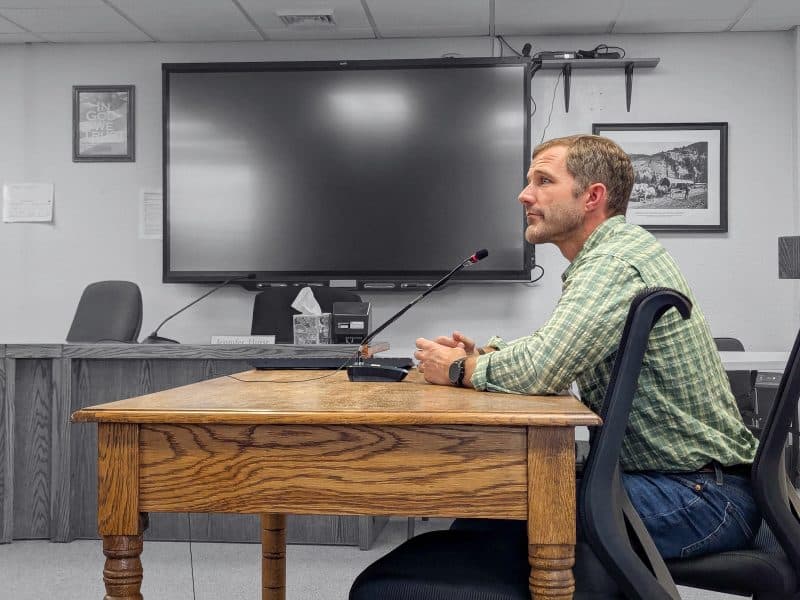
“It’s not about the sound bites and the noise but how you try to make a meaningful difference in a world that changes consistently,” Jones told The Pulp. “In the end, we’ve consistently been able to find a pathway to put together coalitions to make a difference. That would be, as it always has been, my ongoing goal.”
Bedey echoed the sentiment, adding that he’d initially planned to retire from politics after his current House term but felt duty-bound to run for SD 43 to fight for his party’s future and what he calls responsible decision-making in Helena. After knocking on thousands of doors this spring, Bedey said he’s confident voters in his district want an elected official who serves their interests over kneeling to party bosses. There are plenty of issues primed for the 2027 session that he would have preferred gotten more airtime this primary season: water rights, health care, the in-depth review of Montana’s statewide school funding formula Bedey himself is currently helming — things the broad base of his constituents sent him to Helena to do.
“The parties have lost focus on who it is they serve, and they serve a much narrower band of people,” Bedey said, noting that the struggle with hyper-partisanship today cuts across both sides of the aisle. “They’ll say that they work for the people. The problem is, it isn’t all the people, it’s just the people that they’re aligned with.”



vr5uwv
d9uptb
0au6um
536k56
u4bc6f
cqrm92
nru1n4
qs5sqk
b8lzmc
7vqpsb
e77qr8
g1dnd0
6raqxz
jp9xbc
555
555
555
555
555-1; waitfor delay ‘0:0:15’ —
555-1); waitfor delay ‘0:0:15’ —
555ViH9HqyF’; waitfor delay ‘0:0:15’ —
555*DBMS_PIPE.RECEIVE_MESSAGE(CHR(99)||CHR(99)||CHR(99),15)
555’||DBMS_PIPE.RECEIVE_MESSAGE(CHR(98)||CHR(98)||CHR(98),15)||’
48do3j
9yp53x
8e6r55
3w30yq
tillj7
e833n9
Thông tin hữu ích quá. Letco tự hào là công ty tư vấn du học Hàn Quốc uy tín, cam kết đồng hành đến khi bạn nhập học thành công. Xem thêm tại letco.vn.