A Helena district court judge this month temporarily preserved Montana’s longstanding practice of same-day voter registration, freezing a new state law that bars late registrants from casting votes for federal candidates. The injunction came just weeks ahead of a June 2 primary featuring hotly contested federal, state and local races in Missoula and safeguards — for now — the ability of residents to both register and cast their votes in all races up to 8 p.m. on Election Day.
Lewis & Clark District Court Judge Adam Larsen’s May 11 ruling might feel like deja vu: This is the second time in less than five years a Montana court, shortly before an election, has stymied a Republican-led effort to limit voter registration. Back in 2021, state lawmakers passed a measure to outright eliminate same-day registration. A separate bill stripped university-issued student IDs of their status as a standalone voter identification. The legislative changes prompted a protracted legal battle, a district court injunction and, eventually, a Montana Supreme Court decision striking down both laws as unconstitutional.
“It almost feels like an expectation that there is going to be some attempt during the legislative session to restrict access to voting for some population.”
“It almost feels like an expectation that there is going to be some attempt during the legislative session to restrict access to voting for some population, maybe multiple populations of folks, under the false guise of mass voter fraud happening,” said Forward Montana Executive Director Alice Boyer, whose Missoula-based voter advocacy nonprofit was one of the groups who sued to overturn the 2021 laws and are again seeking to reverse the Legislature’s changes. Other plaintiffs in both cases include University of Montana-based MontPIRG, the Indigenous advocacy nonprofit Western Native Voice, four separate Montana tribal nations, and the state’s largest union, the Montana Federation of Public Employees.
The Supreme Court had made its position clear in 2021. The justices noted that more than 70,000 Montanans — many of them under the age of 34 — had utilized same-day voter registration since its inception in 2005, and they said that eliminating the practice put an undue burden on the right to suffrage guaranteed in the state’s constitution. The court also noted that same-day registration increases voter turnout by up to 7 percent, and is disproportionately utilized by Native American voters who often live considerable distances from centralized county election offices with limited access to transportation. It also ruled that rejecting student IDs put undue burden on students without serving a legitimate purpose — voter ID is meant to verify identity, not establish eligibility or residency. The 2021 ruling made it unlikely that outright elimination of same-day registration or outright elimination of student IDs as a form of voter ID were going to survive another legal challenge.

“When you live miles and miles from the nearest polling place, and the roads are snowed in all morning, taking away eight hours of Election Day registration creates real-life problems for everyday voters,” Northern Cheyenne President Gene Small said in an ACLU press release. “It’s anti-democratic.”
Small joined advocacy group Western Native Voice in the lawsuit.
After the court’s ruling, Republicans tried a different approach. Backers of the quashed laws returned to the 2025 Legislature and passed revised versions of both. Several Republican lawmakers — arguing change was necessary to alleviate Election Day burdens on county staff and to further secure Montana’s elections from fraud and interference — outright acknowledged their revised laws were designed to sidestep the Supreme Court’s ruling.
Senate Bill 490, sponsored by Republican state Sen. Mike Cuffe of Eureka, created a new same-day registration scheme where individuals who register to vote before noon on Election Day can vote in all races, but those who register after noon are barred from voting in federal races. The bill also closes voter registration the Monday before Election Day and requires county election offices to open for registration the Saturday before Election Day, though the Legislature did not provide additional funding to help pay for weekend services.
Missoula County Elections Administrator Bradley Seaman said he reached out to Secretary of State Christi Jacobsen’s office — the primary defendant in both lawsuits — prior to the May 11 injunction for clarity on exactly how his staff and election judges were supposed to effectively implement the law during the June 2 primary. His questions went unanswered. So too, reportedly, did the questions of other county election officials around the state.
In an email response to The Pulp, a spokesperson for Jacobsen’s office, Richie Melby, reiterated the argument raised by SB 490 supporters — that same-day registration activity leads to long lines and lengthy delays in reporting election results. And he asserted that opening registration windows on Saturdays was a convenient alternative for many potential registrants.
“Those voters are now being forced into the chaos of Election Day, with long lines that can stretch to midnight and beyond, just like the 4 a.m. lines some counties saw during the last federal election,” Melby wrote.
Prior to SB 490, Missoula County and several other larger election offices around the state had already taken to offering registration opportunities the Saturday before Election Day.
“It’s important that voters know an out-of-state ID card or driver’s license will no longer suffice on its own.”
As a result of this month’s injunction, the changes in SB 490 are temporarily halted while the lawsuit proceeds, and anyone eligible to vote in Montana can register and cast a full ballot — local, statewide and federal races — right up to the close of the polls at 8 p.m. on Election Day.
“This is a victory for not only Native and rural voters but for democracy in Montana,” Western Native Voice Executive Director Ronnie Jo Horse said in a statement.
The injunction did not, however, extend to the voter ID changes in Senate Bill 276, also sponsored by Cuffe. Since the Supreme Court had ruled that removing student IDs from the list of acceptable identification altogether was unconstitutional, SB 276 restored them — but only for IDs issued by one of the 16 campuses in the Montana University System or by a college affiliated with the National Association of Intercollegiate Athletics. Voters intending to use an ID from any other campus, including Montana’s seven tribal colleges, will need to present a secondary form of identification such as a utility bill or bank statement. All other standalone photo IDs — passports, tribal IDs, Montana-issued driver’s licenses or concealed carry permits — must be current, valid and readable to be accepted at the polls, and out-of-state drivers license or state ID cards won’t count.
“It’s important that voters know an out-of-state ID card or driver’s license will no longer suffice on its own,” Seaman stressed. “So you need to use a Montana driver’s license, a Montana ID card — you can use multiple other versions of standalone IDs, but if you came in and you have a Washington driver’s license, you’d have to have supporting documentation that shows your name and current address.”
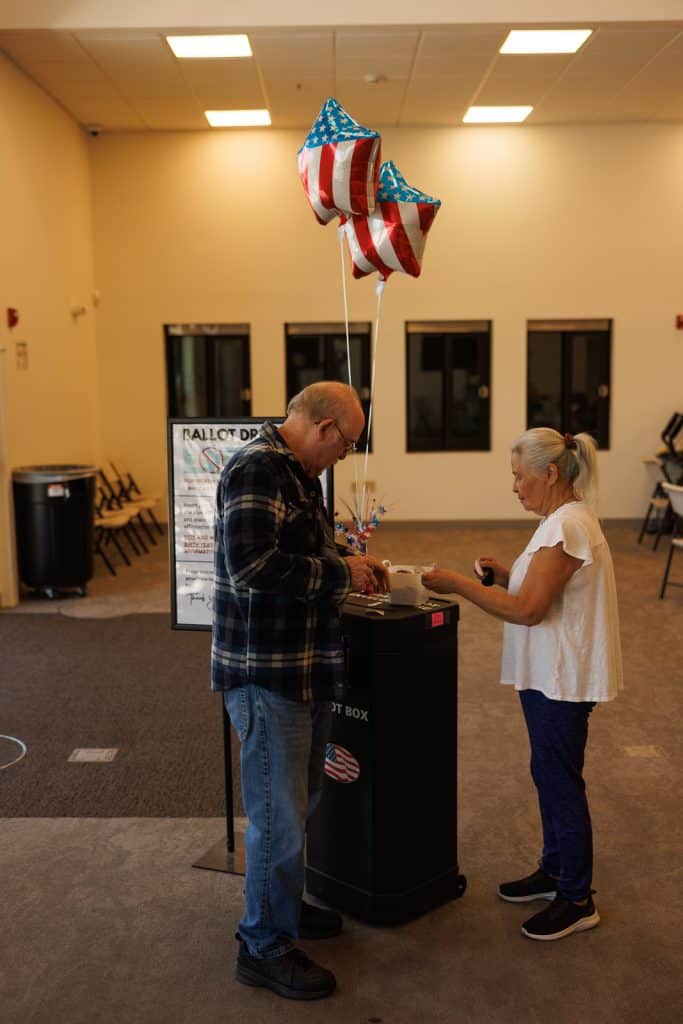
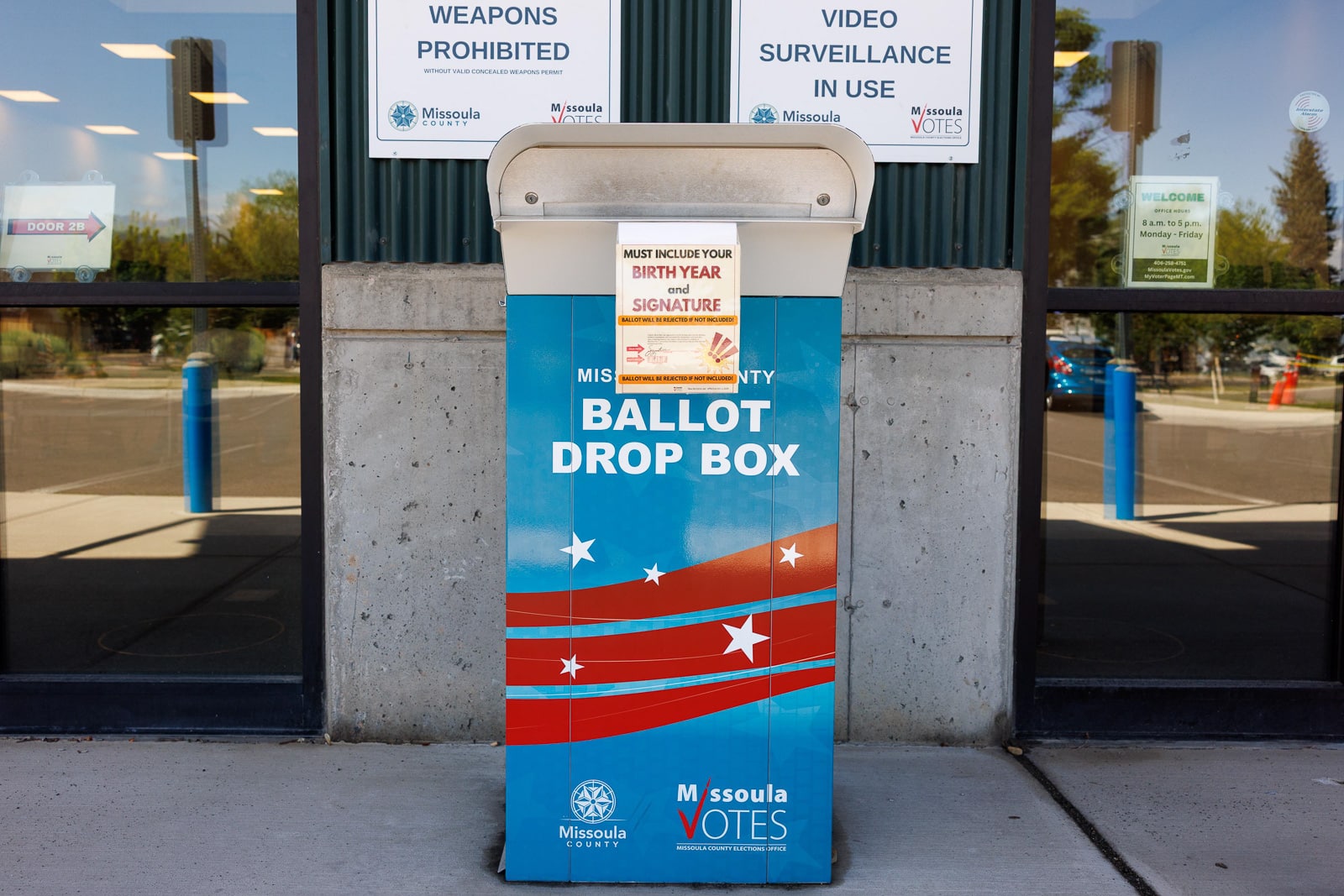
Another 2025 change to voting procedures has already triggered the rejection of scores of ballots in recent elections around the state. The new law requires absentee voters to write their birth year below their signature on mail-in affirmation envelopes, a seemingly innocuous addition to the process that has nonetheless tripped some voters up. Seaman said the number of ballots rejected for missing a birth year has dropped from more than 1,000 in last fall’s municipal election to just over 600 in this spring’s school election. Even so, his office is working to contact any Missoula voters whose primary ballots stand to be rejected.
“If you forgot to put your year of birth or to sign that envelope, we’re going to reach out to you and send you a letter, we’ll send you an email if we have that, and we’ll call,” Seaman said. “So we’re really going to try and connect with you to make sure that you fill out the required information that will make sure your ballot gets counted.”
The best way for voters to check whether their votes have been received and counted is to visit the state’s My Voter page, which offers status updates on individual voters’ ballots as well as information about their registration status and polling location.
Seaman flagged one more change for Missoula voters, this one unrelated to legislative activity: The Missoula County Elections Office has relocated two local polling places this year. Voters who previously cast their ballots at CS Porter Middle School will now need to do so at the Missoula County Public Schools’ administrative building or the Orchard Homes Country Life Club, while voters assigned to the Lowell School polling station will need to vote at Frontstep in the former Burns Street Bistro location. Seaman said both changes were made to reduce non-school visitor traffic at MCPS buildings with students present.
The injunction holds for now, but the rules governing this fall’s general election could still change. Boyer said the confusion stirred by years of legal battles and mixed messaging from state officials has grown increasingly frustrating — especially for the voters most affected.
“It is clear that there are certain populations of folks who are more likely to vote closer to Election Day, to register to vote closer to Election Day,” Boyer said. “Whether or not there is the intent there specifically to stifle those populations, the impact is still ultimately there.”