Photos by John Stember
In an ideal world, Andrea Stephens wants her body thrown in her backyard compost pile when she dies. But human composting is illegal in most states, including Montana, so the University of Montana wilderness professor has given a lot of thought to other options.
“Treating human beings as organic matter is part of a core value that I have,” Stephens said. “We’re no different than any other living thing on the planet, so trying to preserve my body feels wrong to me.”
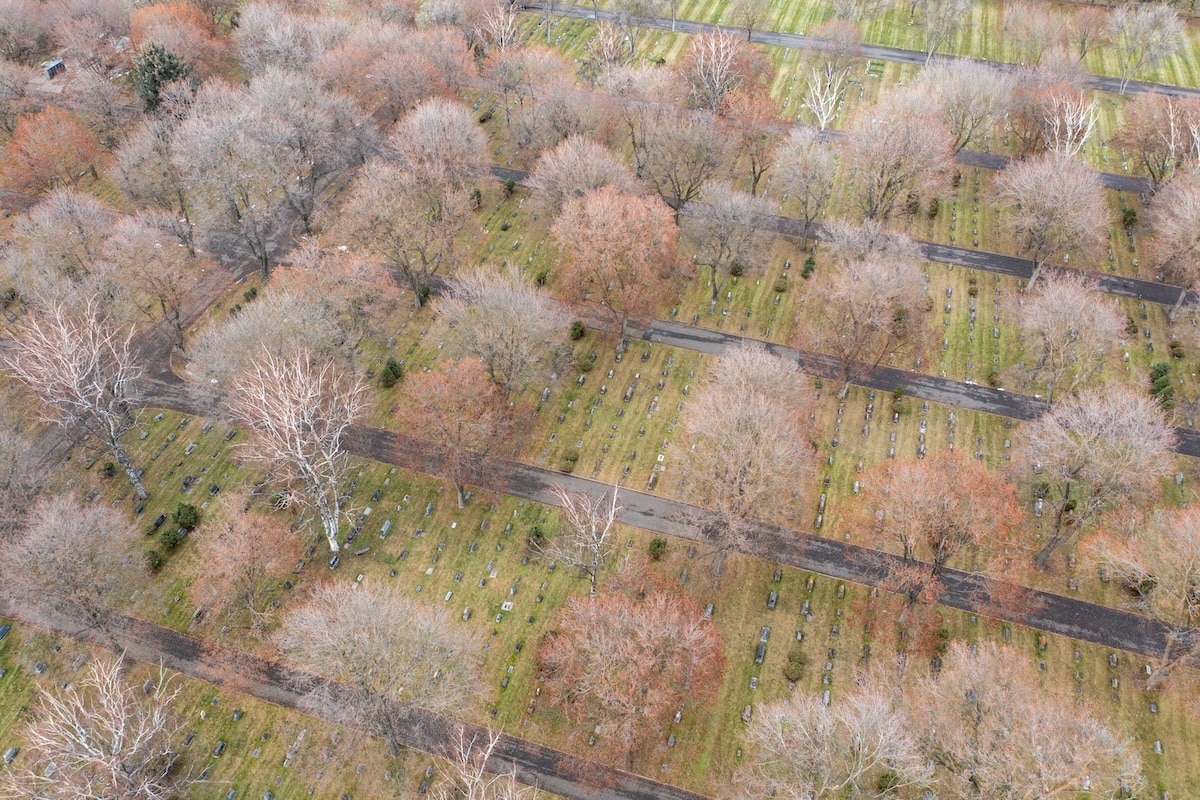
Requests from residents like Stephens and members of the cemetery board have prompted the Missoula City Cemetery — 80 acres northwest of town near the old Roseburg plant — to consider offering so-called “green burials,” which, if approved by the cemetery board, would allow people to opt for a more eco-friendly alternative to traditional burial practices.
Unlike in a typical burial, a body in a green burial is not embalmed. It’s placed in a biodegradable container such as a wicker or cardboard casket or cloth shroud rather than a casket made from treated wood and metal. There is no concrete liner to separate the container from the soil.
“I like the idea of my atoms being given back to the Earth. I don’t need to keep polluting and taking up space after I die.”
Instead of the usual six feet under, a green-burial grave is only three feet deep. That depth promotes better decomposition, according to the Green Burial Council, a nonprofit that sets national standards for natural burials. It also falls well within the general guideline to bury human remains at least 18 inches deep to prevent odors from reaching the surface.
In the “100 percent green” version, bodies are transported and graves are dug without the use of carbon-emitting machines, and there are no stone grave markers.
Christian Zal-Herwitz first brought green burials to the cemetery board at the start of his tenure as a board member in 2024. Inspired by friends who expressed their desire for more natural burial options and after deciding to purchase a grave plot at the city cemetery, Zal-Herwitz applied for the board’s most recent opening. Green burials have been on the agenda at the last three board meetings since April.
“This is one of the key things that I wanted to effect when I joined the board,” Zal-Herwitz said. “It’s been really exciting to see it start moving in a positive direction.”

Cemetery superintendent Brett Gilman is tasked with working through the logistics of Missoula’s potential green-burial offerings. He spoke with representatives of Billings’ public cemetery, which performed its first green burial last year. A request from the Yellowstone Valley Citizens Council prompted Mountview Cemetery in Billings to offer green burials with a few stipulations: A medical professional, coroner or mortician must verify that the body has not been embalmed and it must be privately transported to the gravesite without the help of cemetery staff.
Gilman said his main concern is the comfort of his staff when handling bodies wrapped in shrouds, but he thinks wicker caskets shouldn’t be a problem. He also noted that a city ordinance requiring concrete liners in graves would have to change. These liners protect the body from the elements and prevent the ground from collapsing beneath the weight of the casket. The city cemetery has had liner requirements since the 1960s, so to allow green burials, the cemetery board will need to request that the city council amend the ordinance.
In Missoula, 95 percent or more choose cremation due to the lower cost compared to burial. But cremation requires a lot of energy to sustain the heat needed for incineration, and the process releases toxic emissions.
At the most recent board meeting in October, members spoke with representatives of the Green Burial Council. The cemetery board will begin discussing next steps for how to implement green burials at their next meeting in January.
“We will be conducting more research and discussions to determine if it’s something we want to offer,” Gilman said. “But I think it would be well received in Missoula.”
Gilman expects green burials will be several hundred dollars less expensive than traditional burials, which can cost more than $3,000 at the city cemetery, not including the costs of the casket and funeral services. This could be the deciding factor for many families.
In Missoula, 95 percent or more choose cremation due to the lower cost compared to burial, which is much higher than the national average, according to data collected by Garden City Funeral Home. But cremation requires a lot of energy to sustain the heat needed for incineration, and the process releases toxic emissions. One cremation uses the same amount of energy needed to power a 2,000-square-foot home for a week, according to the Cremation Association of North America.
While the Missoula Cemetery hasn’t had many requests for green burials, that’s likely to change, according to superintendent Gilman. In a national survey conducted by Kates-Boylston Publications in 2021, 91 percent of respondents indicated they were interested in more environmentally funerals and burials, with 84 percent saying they would choose a green burial if it were offered. In the same study conducted in 2008, the interest was 43 percent.
In an informal survey on Instagram, this reporter asked Missoula residents if they were interested in eco-friendly burial options.
For policy analyst Cara Smith, the all-natural aspect of a green burial is a bonus in addition to the lower cost.
“The last thing I want is any of my loved ones worrying about the cost of burial,” Smith said. “But whatever happens to me, I want it to be eco-friendly.”
“I like the idea of my atoms being given back to the Earth,” said Dan Kooima. “I don’t need to keep polluting and taking up space after I die.”
Medical student Hannah Shaw agrees.
“I’d like my body to do something positive in death, like compost, or at least just not be doing more harm,” she said. “Let my body grow a tree or something, and if people want to visit that to remember me, that’s cool.”
“People who want to plant flowers or a tree over the grave of their loved one are imagining that the tree can take on some of the life of this person. But the body never touches the tree!”
For those wanting an even more eco-friendly option, human-composting services can create usable soil from human remains. Another option is “water cremation,” which uses water and alkaline chemicals to dissolve a body and has a smaller carbon footprint than the usual process. However, neither of these practices is legal in Montana.
“Right now, if I made the choice to have an environmentally-friendly body disposition, that would be a very difficult process for my family,” said Kendra Potter, who works as a death doula in Missoula. Her work involves assisting people and their loved ones through the process of death and dying.
Seventy percent of Montanans die without making any provisions for after they’re gone, according to the Montana State University Extension. One of Potter’s goals is to provide education about after-death options to spare loved ones from making these decisions while they’re grieving. She helps people understand the options for body disposition, but she wishes there were more options available in Missoula.
“People who want to plant flowers or a tree over the grave of their loved one are imagining that the tree can take on some of the life of this person,” Potter said. “But the body never touches the tree! So we’re performing this ‘circle of life’ thing but we’re not actually participating in it.”
Potter expects that over half of her clients would elect to have a green burial if it were offered, and that the people of Missoula would enthusiastically support having that option.

Jasmyn Barham, a licensed funeral director at Garden City Funeral Home, says that the small number of requests for green burials the cemetery has received is because the funeral industry is steeped in tradition. People tend to follow what their family members did before them, but if green burials are offered, she thinks they’ll become more popular.
“Green burials are relatively new and uncharted territory for most people,” Barham said. “It would be smarter to get ahead of that trend, and make sure green burials are available when that time comes.”
While the funeral industry may be concerned with tradition, board member Zal-Herwitz thinks this is less of a problem in Missoula.
“How many people in this town are really interested in the formal, conventional process of most things?” Zal-Herwitz said. “This is the type of town where people are conscious of the effects of their behavior on the environment. [Green burials] just feel right for this population and the subculture here. That’s the Missoula vibe.”