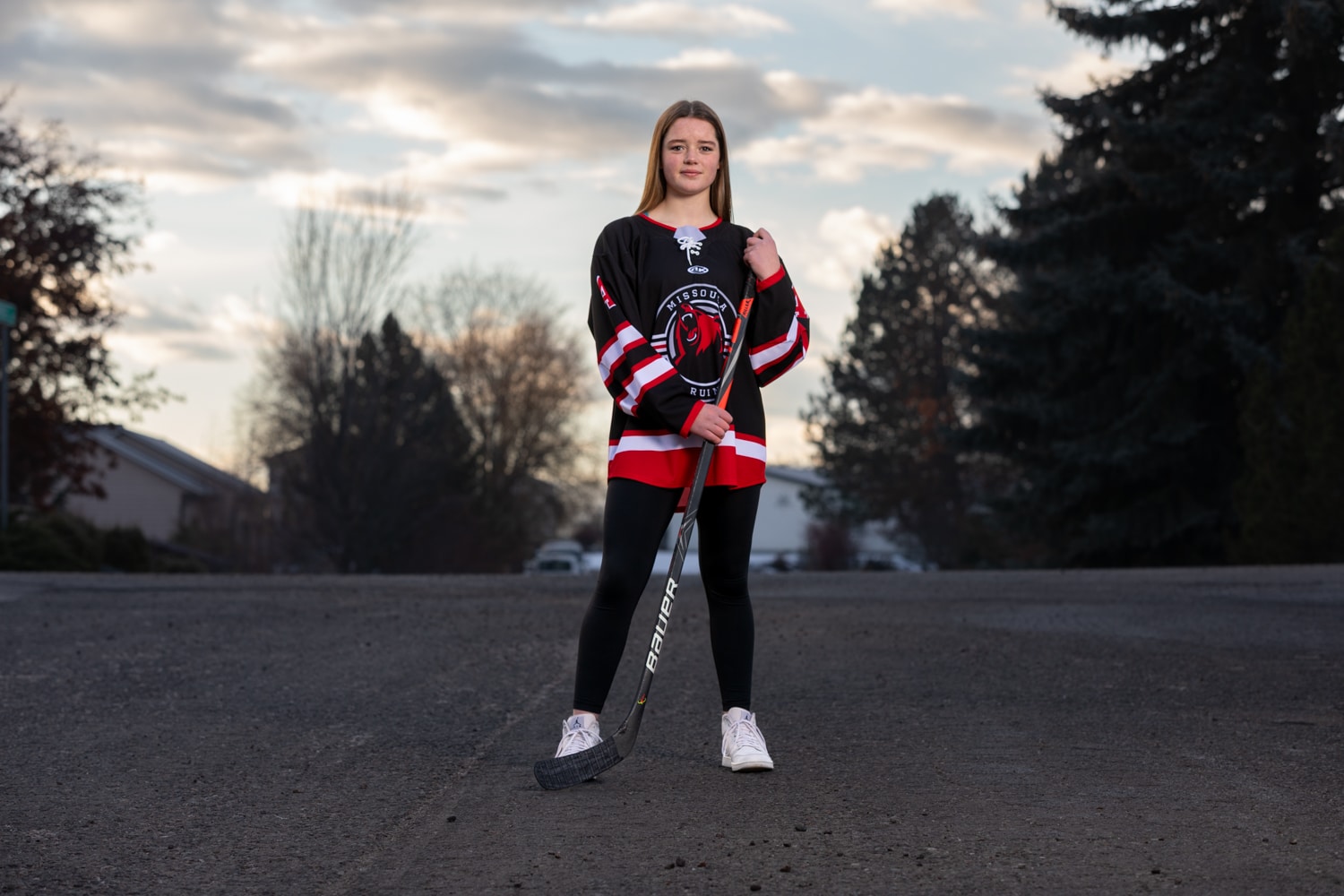
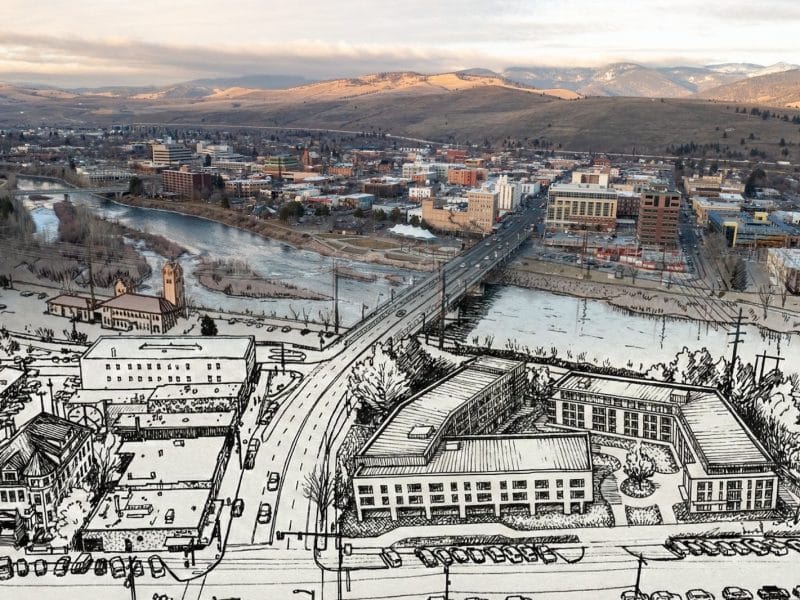
Words by Ben Fowlkes, photos by Andy Kemmis.
Say you grow up somewhere warm. We don’t have to get into specifics, but say it involved smog and palm trees and the only ice you saw was usually floating in a drink. Say you then decided to take up ice hockey in your late thirties despite having only a vague grasp of the rules and even vaguer grasp of ice skating itself.
There are some things you will learn very quickly in this scenario:
Most of what hockey players routinely and easily do on TV—knocking the puck out of the air with their sticks, skating backwards, doing anything at all on the backhand—might as well be sorcery to a beginner.
No matter how much protective gear you wear, a flying puck will always manage to strike some barely exposed part of your body, leaving behind a visible reminder of what six ounces of vulcanized rubber can do.

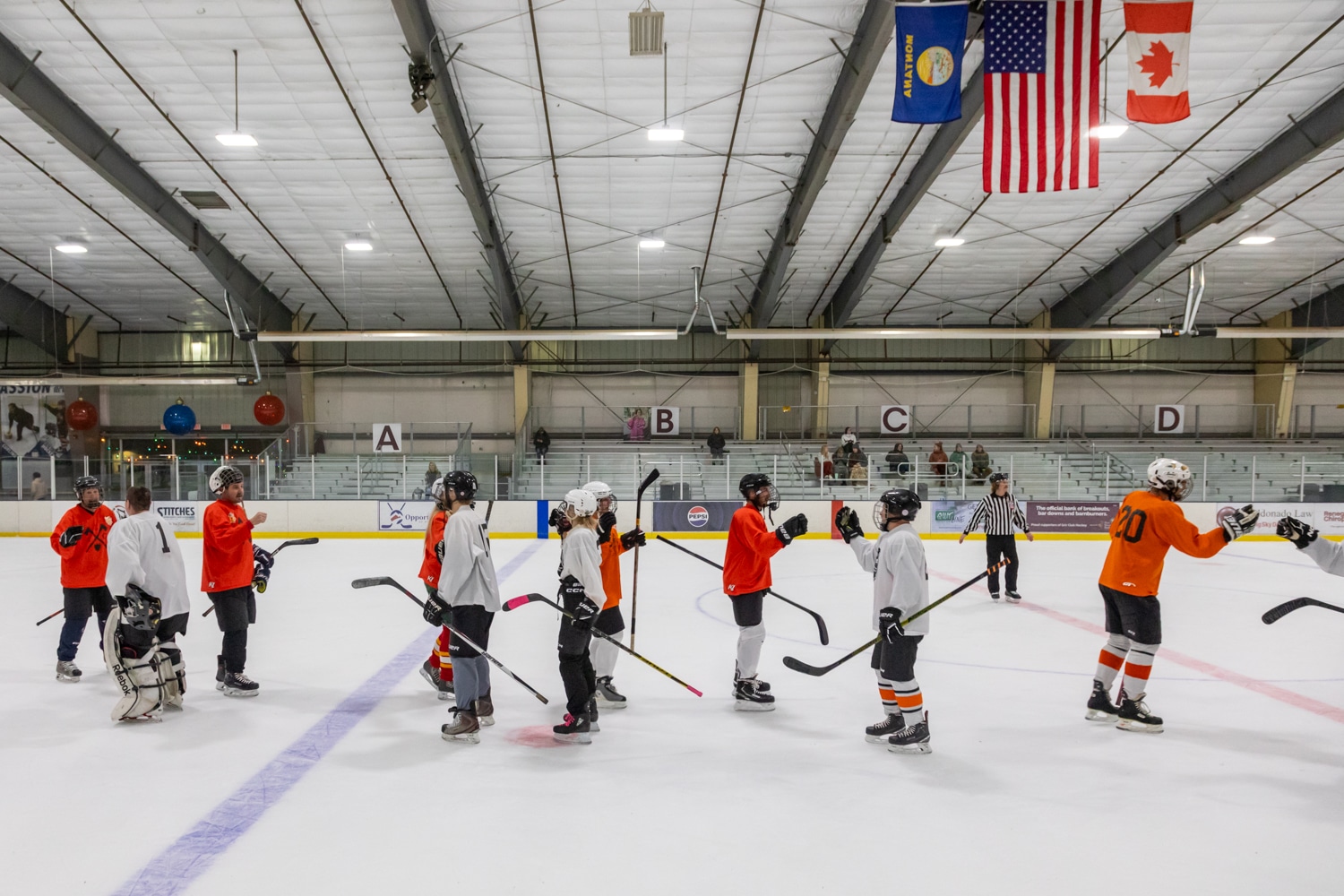
There are a lot of people—like, way more than you thought—who play hockey in Missoula. It’s a whole subculture, hidden away at Glacier Ice Rink inside the gates of the Missoula County Fairgrounds. And the only thing resembling marketing or community outreach for any of it is a roughly eight-by-five-foot electronic sign at the corner of Malfunction Junction occasionally reminding passing motorists that, yes, there is an ice rink here that does ice rink stuff, including adult recreational hockey.
It would be easy not to know this. I lived in Missoula for some 15 years without knowing it until one day I googled something along the lines of “Missoula hockey league signup?” I did not know how to ice skate. Not only did I not own any of the required equipment, I didn’t even know how much of it there was or how to put it on. I just thought hockey seemed like a fun sport to learn and I hoped people wouldn’t mind having a teammate who could barely stay upright on skates and who didn’t quite understand how offsides worked.
“Places that have hockey tend to love hockey. But how can you love hockey if you don’t have hockey? How are you even supposed to learn it?”
They did not mind at all, as it turned out. They seemed genuinely happy to have me there. This was a pleasant surprise, but also a preview of what I would find once I got drawn into the hidden world of Missoula rec league hockey. Like many niche communities in this town, it’s the kind of thing you could easily never think about if you’re not involved in it. But once you do get into it, you wonder how this whole little world could have been right there in your periphery this entire time.
Part of that is due to the isolated nature of an activity that’s almost wholly confined to one semi-obscure spot. If this were another sport, like the kind you drive by and see in action down at Playfair Park or Fort Missoula, the growth of Missoula hockey over the last couple decades might be more noticeable. But there are really only two ice rinks in town: the outdoor and seasonally dependent rink at Pineview Park in Missoula’s Upper Rattlesnake neighborhood, and the Glacier Ice Rink at the fairgrounds—which has the effect of hiding the goings-on from anyone who isn’t specifically looking for it.

The Glacier Ice Rink is an important part of this story. For obvious reasons, yes, but also some less obvious ones. In a lot of ways, the rink is both the problem and the solution. Let’s start with the problem, which is essentially a numbers game.
According to the Glacier Hockey League, there are typically around 1,000 players registered to play in Missoula’s adult recreational leagues each winter. That number was slightly higher just before COVID arrived, and has gradually inched back up ever since. That makes hockey one of Missoula’s most popular organized team sports for adults. It also makes Missoula’s adult league one of the biggest in Montana.
There’s a downside to this. In the winter, Glacier Ice Rink operates two sheets of ice—one indoors, one outdoors. If you’ve ever attended the Western Montana Fair, you have likely walked on the melted versions of these ice sheets while observing various farm animals.

But two sheets of ice is really not much ice for a thriving winter sports program. On weekday afternoons and early evenings, the bulk of the ice time is reserved for kids’ programs. Youth hockey leagues start with “termites,” who are age six and under, and go all the way through high school.
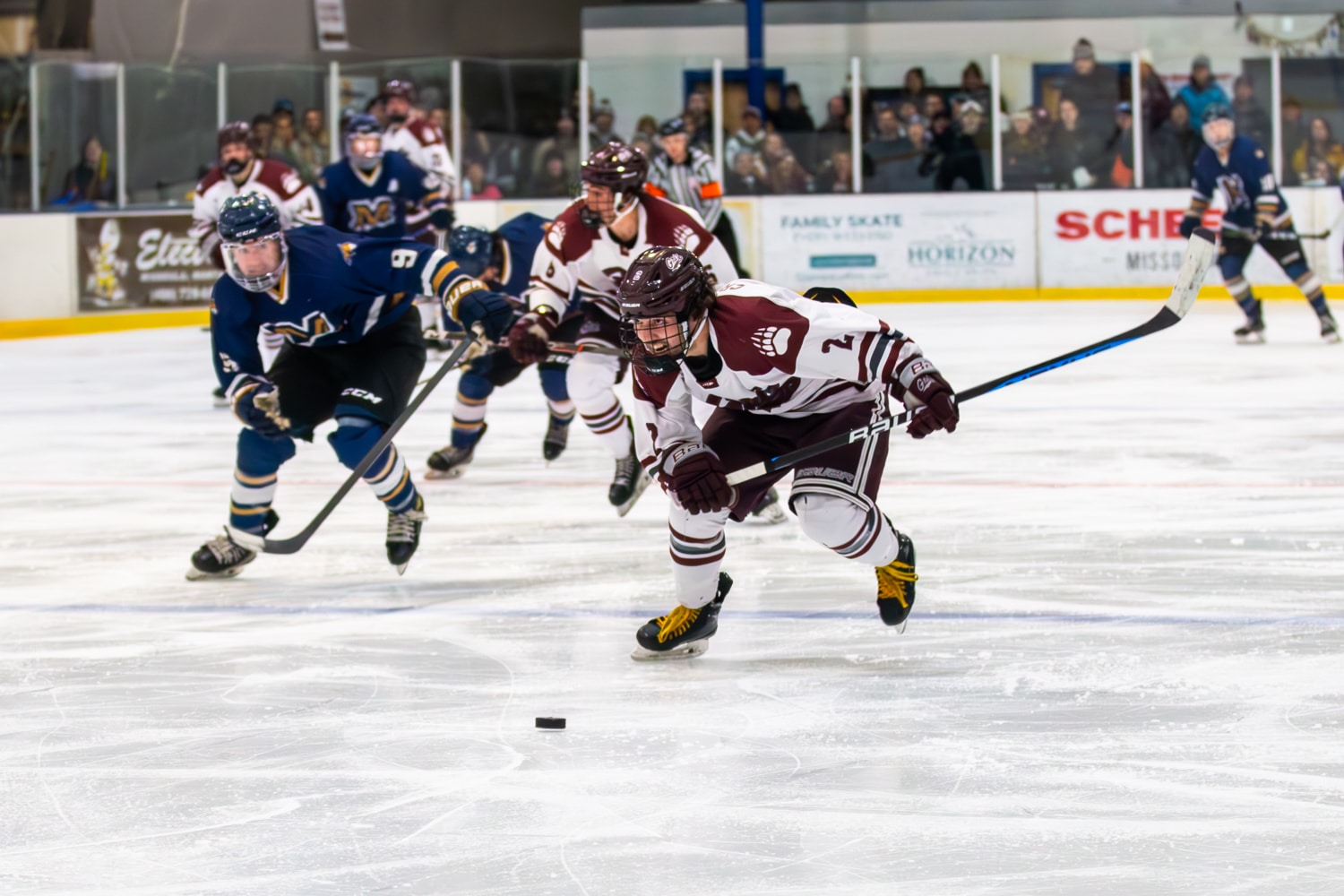
A few years ago, the University of Montana also started a team—not as an NCAA sport, but through the American Collegiate Hockey Association. Griz hockey games have turned out to be a hot ticket in town. Friday and Saturday night games are typically packed with students and hockey enthusiasts and, increasingly, people who are neither but have simply heard the games are a good time (and they are).
Add in the other programs—public ice skating sessions, figure skating, curling, the occasional private rental for some kid’s birthday party—and this doesn’t leave a ton of available ice time for middle-aged beer league players. It also doesn’t leave much room for expansion, according to Ryan Geiges, director of adult hockey for the Glacier Ice Rink.
“We’re basically at capacity,” Geiges said. “My hands are sort of tied. We can’t grow anymore because the ice time is just not available.”

Geiges is what you might call a hockey lifer. He grew up playing the game as a kid in Philadelphia. He turned out to be pretty good at it, so he kept playing at Penn State. Later he worked as a fishing guide in northern Pennsylvania, which is one of those career paths that inevitably brings a person to Montana sooner or later.
When Geiges first moved to Missoula in 2000, there wasn’t much of a local hockey scene. The ice rink was not so much a venue as it was a sheet of ice with a roof.
“One building. No walls. It was just a lid, really,” Geiges said. “It was a barn. We got dressed in animal stalls. There was sawdust on the floors and everything.”
This gets at the core of the problem with forming a hockey scene from the ground up. Hockey is not a sport with a particularly low barrier to entry. If you want to play basketball, all you need is the ball and a hoop. For something like soccer, you need even less.

But for hockey, you need stuff like ice (occurring naturally or otherwise, depending on your latitude), plus a fair amount of somewhat expensive equipment (helmets and shinpads are nice, but you really won’t get far without skates and sticks). If you’re going to have anything resembling a league, you also need other people who have all these things along with a desire to get out and play.
That can create a bit of a chicken-and-egg situation. Places that have hockey tend to love hockey. But how can you love hockey if you don’t have hockey? How are you even supposed to learn it? It’s not exactly like learning other, for lack of a better term, running-based sports. Here you have to start by learning to ice skate—an entirely new system of bodily conveyance—before you can even begin to add all the skill and strategy and hand-eye coordination while gliding on metal blades at high speeds.
Having a centrally located rink, with walls and everything, is good for addressing this. It gives you a place to gather and teach people. Those who already know how to play can rekindle their love of the game. Those who don’t, whether they’re kids or adults, can learn from scratch. Thus does the gospel of hockey spread.
But ice rinks are not cheap to operate. The energy costs alone border on the insane, according to Geiges. And if you’re hoping to build a bigger rink with more sheets of ice that might be used to facilitate growth? For that you might need something like the $19 million fairgrounds improvement bond that Missoula voters rejected in the November 2022 election.
“The timing of it was terrible,” Geiges said. “Coming out of COVID, people worried about rising property taxes already. But that was the window of opportunity that was there, and hopefully getting it on the ballot at least got it some exposure for next time.”
That brings us to another chicken-and-egg situation. For most voters, that $19 million bond on the ballot probably just looked like another unnecessary weight to add to the already heavy tax burden dragging down the Missoula property owner. The fairgrounds are fine as they are, right? You go there once a year, eat a Viking, look at some sheep, and call it good. If you don’t use the ice rink, you probably don’t ever think about the ice rink.
The hockey people rallied hard for that bond. Not only because the rink is a second home—part playground, part meeting point, part BYOB bar—but also because they feel the strain of an ice rink stretched to capacity. Ask any Missoula rec league hockey player what their least favorite part of the experience is, and they’ll all tell you the same thing—it’s the ice times.
“Missoula rec league hockey games are one of those rare places where the lawyer passes to the bartender, who dishes it to the bus driver, who slings it past the insurance adjustor for a game-winning goal.”
“The games can be really late,” said Nate Michaels, a novice hockey player who also happens to be the director of the Montana Volleyball Academy. “I don’t mind the late nights so much, but afterwards I’m always amped up for a bit and don’t get much sleep. The morning after a hockey night is probably the worst part.”
The fact that middle-aged people with jobs and kids and responsibilities keep doing it anyway (there’s a reason 10:30 p.m. boxercise classes aren’t much of a thing), suggests that they must be getting something special out of the experience beyond just sports and exercise.
Michaels got into hockey after his wife, University of Montana women’s volleyball head coach Allison Lawrence, took up the sport. She was looking for a new athletic outlet that she could fit around a busy work and childcare schedule, which made the late-night games actually seem appealing since “everyone I would be caring for would be asleep.”

She expected hockey to be like other rec league sports, whether it’s softball or kickball or soccer.
“I thought it would be all about the game time, where it’s competitive in the moment, and interactive with your teammates during a game, but kind of a ‘show up, play, and leave’ sort of structure,” Lawrence said. “The reality could not have been more different.”
Lawrence began her hockey tenure in WHAM, the Women’s Hockey Association of Missoula. (WHAM recently updated its bylaws to include women and non-binary people, but opted to keep the same acronym because, well, it’s rad.) What she found there, she said, was much more of a holistic experience—on and off the ice—than she expected.
“I’ve never felt this particular type of empowerment and community,” Lawrence said. “A locker room full of women who span all ages, bonding over hockey and sharing their lives. People show up early just to hang out and stay late, talking and laughing. I’ve met people in all different industries and from different communities within Missoula, and I feel like I’ve made lifelong friends.”
This is not an uncommon revelation, according to WHAM president Kari Hong. Players are often surprised to discover not only how quickly hockey friends become actual friends, but also how the experience of playing hockey together bonds people from all different backgrounds, ages, and career fields. Missoula rec league hockey games are one of those rare places where the lawyer passes to the bartender, who dishes it to the bus driver, who slings it past the insurance adjustor for a game-winning goal.
“I play with a nurse, a Sunday school teacher, a judge, a police officer,” Hong said. “The youngest person in our league is 23 and the oldest is 74. It’s just really special. And it feels like we live in a really divided time, so I don’t know if there are a lot of spaces anymore where you get that cross-section of the community all coming together.”

But like the co-ed Glacier Hockey leagues, WHAM also feels the crunch of limited ice time. All the available roster spots for this winter’s league sold out within 36 hours, Hong said. Also like the co-ed leagues, WHAM does essentially zero advertising or marketing. Still, new players keep finding their way to the rink, having heard about it from friends or family, somehow without being deterred by the fact that games might not start until 11 p.m. some nights.
This brings me to a question I’ve asked myself many times, and without necessarily arriving at a satisfactory answer. What is it about hockey as a sport, and the Missoula hockey community specifically, that does this? I’ve played all the usual American sports. I’ve done multiple Missoula rec leagues and sports-adjacent hobbies, from softball to flag football to jiu-jitsu to yoga to cross-country skiing.

But at 44, there’s not much I’m willing to leave the house for at 11 p.m. on a weeknight. And as a person who’s not especially outgoing or social or even all that nice, there’s also not much that can get me to form new and truly valued friendships. So how did hockey get to be at the top of both lists?
Because I’ve often found that strangers can explain such phenomena to me better than I can explain it to myself, I put the question to Hong. Like me, she only started playing hockey a few years ago, and with zero prior experience.
“I think some of it is having the rink as a central gathering point,” Hong said. “Some of it is the locker room experience. And some of it is the game itself, how you have to work together in hockey a lot more than other sports.”
There’s also another part, she said, something that’s especially relevant for those of us who came to the game later in life.
“As an older athlete, I know my fastest 5K time is behind me,” Hong said. “My best game of tennis is behind me. But I truly believe my best hockey is still ahead of me.”
And yeah, at least for us middle-aged novices, this is a big part of the initial draw. We might be the older, slower, weaker versions of our former selves, but when you start at zero in something brand new there’s nowhere to go but up. You’re reminded that you can still learn new things, can still improve and grow. You are not a collection of diminishing returns. It is not too late to add some new tools to the old toolbox.
And then? Well, you get so caught up trying to learn to skate backwards and shoot off the backhand that you almost don’t notice you’ve become part of something until one night you look around the locker room, sweaty and exhausted at some ungodly hour, and realize you’re surrounded by friends.
🏒🏒🏒
Slap shots and snapshots
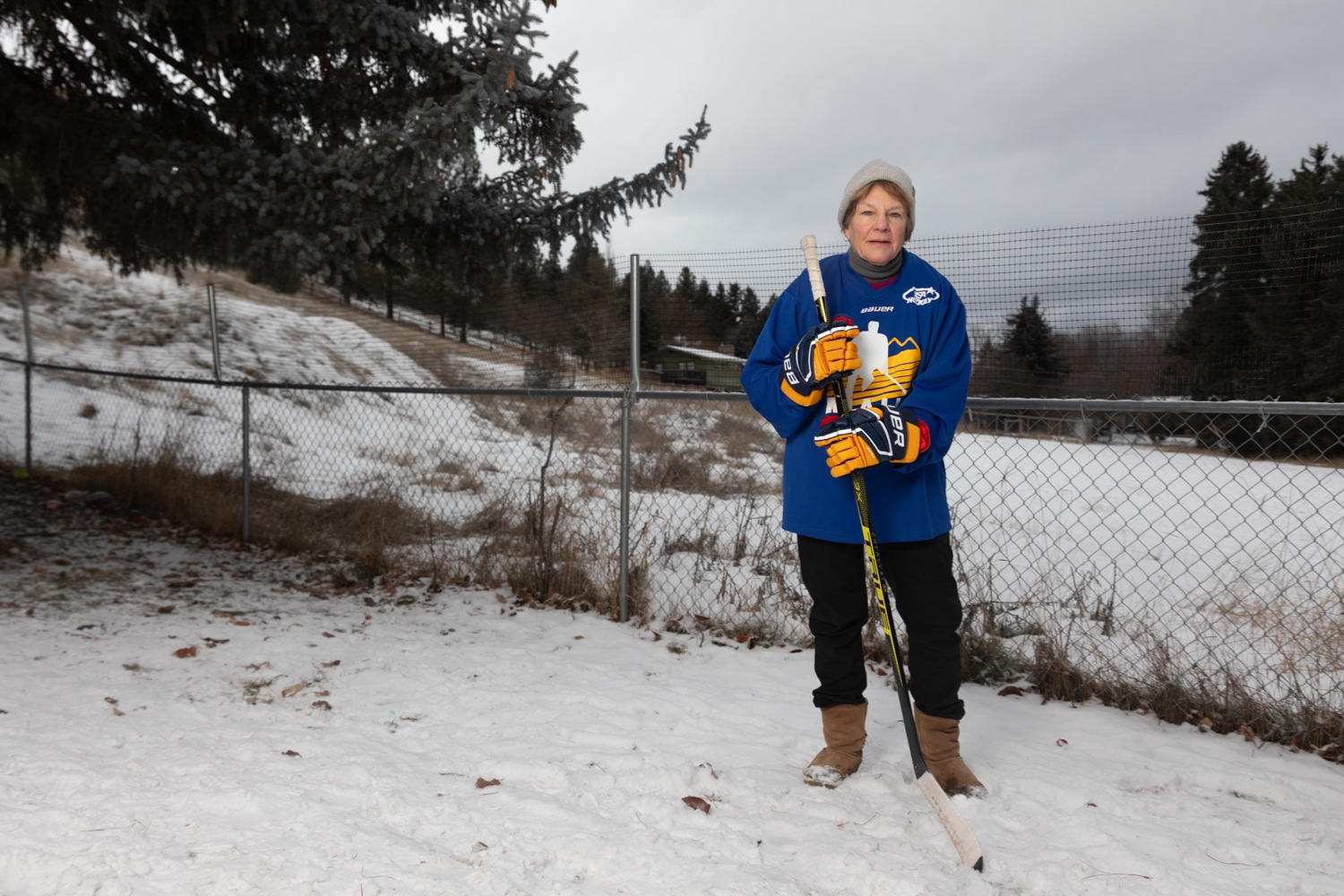
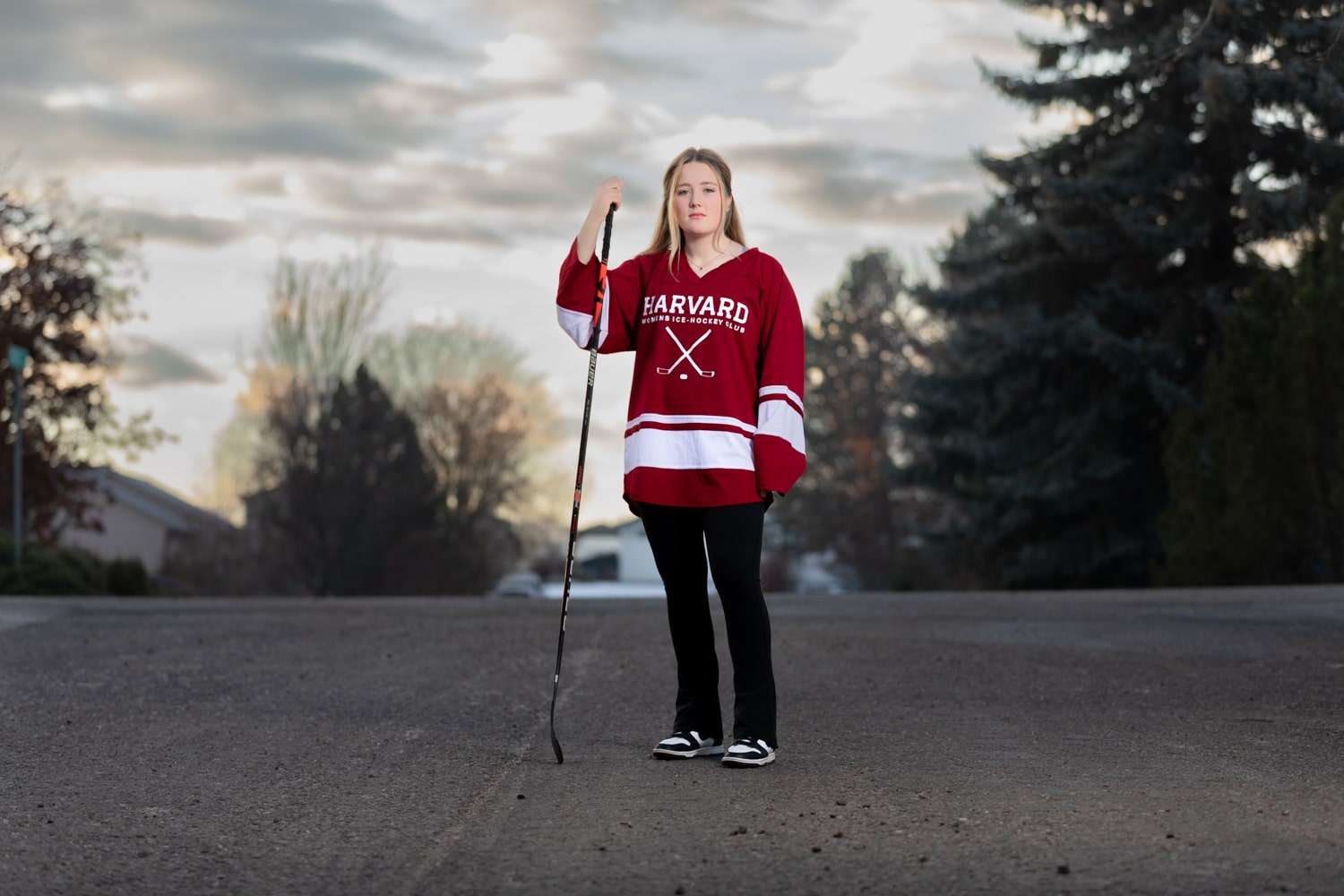
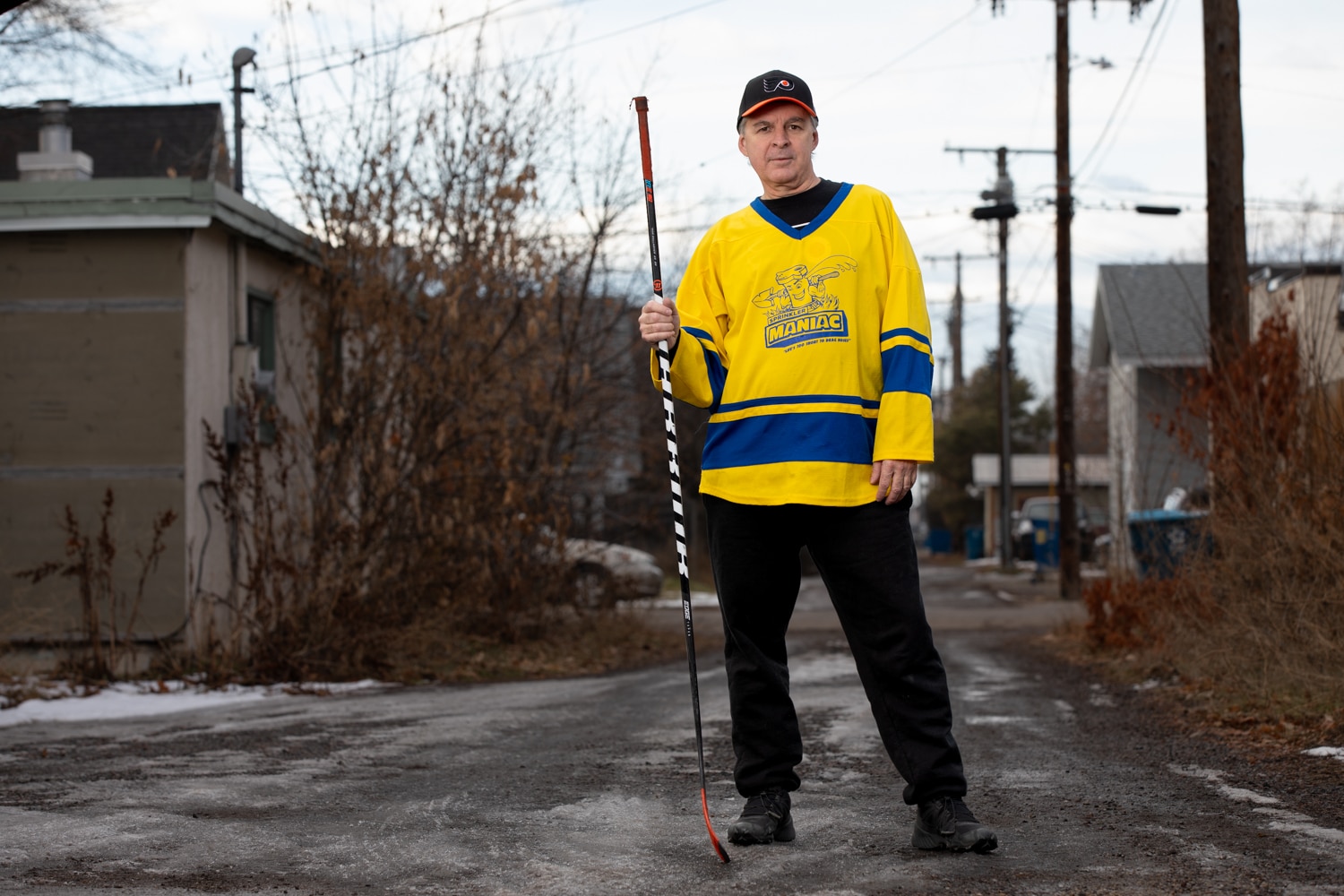
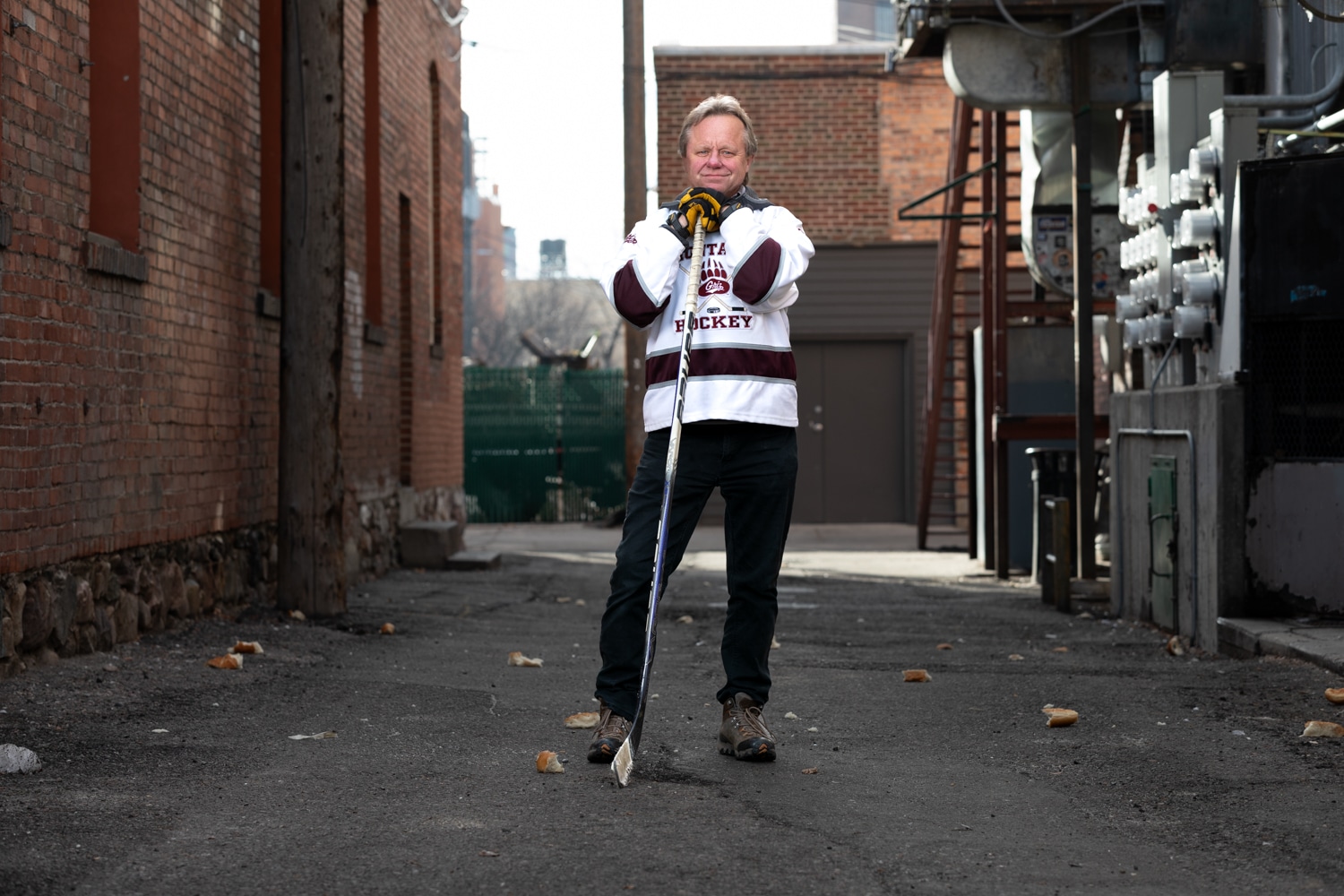
Missoula’s rec hockey rink rats share vignettes with photographer Andy Kemmis.