In 2022, Montana’s policing regulators at the Public Safety Officers Standards and Training Council, or POST, received a request for basic information that the board had released before: the names of the law enforcement officers that POST certifies to work in Montana, and their public employers.
It’s simple data that most states around the country release. Montana, up until that point, counted itself among them, having provided the data to journalists at least twice before: In 2017 to a reporter with the Scripps News Washington Bureau, and in 2019 to Invisible Institute, a Chicago-based journalism nonprofit.
However, this new request, from a reporter with the Associated Press, was different. Not because the content or context of the request were significantly different, but because the political environment at POST had undergone seismic shifts.
A few years before, in 2019, lawmakers ostensibly looking to streamline government had organized POST under the Montana Department of Justice, run by the state attorney general. Previously, POST was an “administrative attachment” to the DOJ, but maintained its own staff and relative autonomy as a “quasi-judicial” agency.

Now, rather than holding the same right to “hire its own personnel and independently administer the conduct of its business” that it previously had, POST was just another bureau of the DOJ, required to “coordinate with [DOJ] to hire the bureau chief” that would run POST, according to the new statutory language.
Questions had been raised by the then POST director during the 2019 legislative process about whether there were any conflicts with a “quasi-judicial” agency like POST, which oversees all sworn law enforcement officers in Montana, being directly administered by an agency that employs many of those officers in its other divisions, like the state Highway Patrol and Division of Criminal Investigation.
“You don’t know what the cost to our stakeholders and communities will be with this change,” wrote POST director Perry Johnson in his letter, which also described the same concerns that had arisen in a previous 2007 legislative process. During that process, amendments to ensure POST’s independence from DOJ were introduced “to avoid the appearance of ‘the fox guarding the henhouse,’ when the citizens of Montana wish to make a complaint regarding an officer,” he wrote.
Still, the bill passed.
As POST staff worked to fulfill the AP’s records request, this all came to a head. Staff members who, just a couple years before, had willingly released data about the state’s law enforcement officers, were now met by strong opposition from the staff of Attorney General Austin Knudsen, who took office in January 2021 and informed POST that DOJ would be overseeing its responses to public records requests.
“You have an executive branch directing a quasi-judicial branch [about] what to release to the media, and how we’re going to do it.”
“POST staff made me aware that they are required by the DOJ to … to always let them know if there’s any of these public records requests, and to coordinate with their communications, public relations people,” Cascade County Sheriff Jesse Slaughter, who leads the POST council, said during a meeting in December 2022.
“You have an executive branch directing a quasi-judicial branch [about] what to release to the media, and how we’re going to do it.”
POST staff would eventually acquiesce to the demands of Knudsen and his staff, but the dispute would lead to a continuing question over who should police Montana’s police — and how much leeway they should have to do so.
However, that debate can only go so far, at least in terms of public participation. As part of its reaction to the AP’s request, POST eventually passed a new public records policy stating that it will never release comprehensive data identifying officers and their employment histories.
Now, the lack of transparency is spotlighted by a data tool launched this week by Invisible Institute, a Chicago-based nonprofit public accountability journalism organization, showing exactly that information in 17 states — not including Montana.
Wandering officers
In addition to the AP, in recent years Montana’s data have been sought by a reporter for The Seattle Times, a law professor and criminologist with Duke University, and a coalition of news organizations convened by Big Local News, a program of Stanford University’s Journalism and Democracy Initiative, and including Invisible Institute.
The lack of transparency in police employment data prevents the public, press, and researchers from being able to monitor the state’s oversight of “wandering officers”: those who leave one police department after committing misconduct and easily find work at another.
In other states, researchers and reporters have been able to use the data to show gaps in state oversight systems. A report by a Texas advocacy group has prompted reform legislation and a state-run public database, and in Florida, research showed that “wandering officers” are not only more likely to be fired again, but also rack up more discipline. Reporters from Ohio to California to West Virginia have utilized employment history data in wide-ranging investigations into “wandering officers” and the agencies that hire them.
Under then-AG Tim Fox, during the first years of POST’s new existence within his office, Montana released data on police certifications and employment history to at least two news outlets.
However, under AG Knudsen, the state denied requests for the data.
A political reversal in policy
AG Knudsen first registered his discontent through a March 31, 2022 email addressed to Eric Gilbertson, a Lewis & Clark County sheriff’s deputy who was serving as the POST bureau chief at the time.
“The Montana Department of Justice DOES NOT recommend releasing the names of every law enforcement officer in the state to the AP,” Knudsen wrote. “It is reasonable for law enforcement officers to expect privacy until there is evidence they have violated” the public trust.
He quoted David Ortley, a deputy attorney general: “This is a one-time event; once all names have been released the bell cannot be un-rung.” Both men failed to note, however, that the POST council would be merely re-ringing a bell it had already rung twice before.
Ortley also cited an “informal survey of officers” at the Montana Law Enforcement Academy, where he served as legal counsel and is still an instructor. The survey resulted in officers rejecting the idea of releasing their employment information.
“Those who have come from out-of-state feel even stronger based on the unwarranted attacks in populated areas,” he noted.
Knudsen claimed that releasing data showing the name and employment history of Montana police officers would easily result in the officers’ photos and residences being exposed. “Montana is seeing a large increase in Mexican drug cartel activity,” he wrote. “I simply don’t think it wise to prospectively provide the cartels with photographic facial recognition and home address intelligence on Montana’s law enforcement professionals.”

Despite the state having previously released them several times, “I believe that disclosure of the names of those who have not been disciplined will result in litigation,” Ortley warns in Knudsen’s email to the council. Then-Solicitor General David Dewhirst “feels it would be better to defend [an] action brought by the AP, rather than an officer, agency, or union,” he wrote.
At the next POST meeting, on May 11, 2022, the AG’s staff and POST continued the debate in explicitly political terms. “Once you are disciplined, once you have allegations against you, then the public has a right to know, particularly in light of … everything is post-Ferguson, Mo., George Floyd, everything that has happened in the world of law enforcement,” Ortley told the council, according to a transcript.
“The public has an interest in fair and honest policing, but I don’t see [what] in these cases changes anything when an officer raises his or her right hand, takes an oath, that they’ve waived the right to privacy.”
Stuart Segrest, POST’s legal counsel, appeared to push back against Ortley. “I agree with you that officers still have a right to privacy,” he said, “and even after they’ve been disciplined, for example, I don’t think [the public] can ask for their Social Security number or unrelated medical history.
“But as far as their name and the fact that they are an officer, that’s public information, just like anybody else who works for a public agency, a government agency. Why does it matter to you this is a list as opposed to an individual officer whose name is already public information, and the fact they are an officer?”
Being able to look up the handful of officers who may work at a smaller department is “completely different than saying, ‘Here are the names of 1,600 police officers in Montana. Do with them what you want,’” Ortley responded.
POST director Gilbertson followed up. Considering that many officers have their names listed on public websites, he said, “when I weigh that in light of the increased responsibility that police officers have, I just wonder if you have any thoughts [about] … information that is already out there in another format.”
“They don’t have any choice,” Ortley replied. For example, someone could use the Montana transparency website to find out how much members of the Montana Highway Patrol are being paid. “That’s one thing. That goes with the job. You don’t have any choice with that,” he repeated.
“But when you have a certifying body — you participate in a gathering, and there’s photographs taken, and you have to sign a [release form], I think that’s where POST is like, ‘By the way, the information we retain on you, whether or not we’ve ever had any dealings with you, that is public,’” Ortley said.
(None of the requests had sought photos from events that POST held, or photos at all.)
“I think that’s as best as I can articulate it,” he continued. “It’s a great question. But as we sit here in May 2022, I couldn’t have imagined that we would have this in society, and I think it will only get worse. I don’t know that that’s an adequate answer, but it’s the best I can do.”
Ortley warned, “Ultimately, if this is in front of the Montana Supreme Court, they don’t care what our opinions are. They’re going to try to gauge what would society expect is a reasonable expectation of privacy as a police officer.
“I think Montana society supports law enforcement, unlike Minneapolis, Minn., or Ferguson, Mo., or Portland, Ore. I think Montanans support law enforcement.”
Aside from a brief question from a member of the public who had attended the meeting for a different agenda item, the council did not hear from any non-law enforcement voices during this meeting, and voted after discussion in closed session to only release the names of officers who had been sanctioned by POST going forward.
“I think Montana society supports law enforcement, unlike Minneapolis, Minn., or Ferguson, Mo., or Portland, Ore. I think Montanans support law enforcement.”
The only indication on the meeting agenda that the council had been intending on discussing Knudsen’s letter — let alone voting on a policy change — was an oblique reference to the fact that POST had received records requests.
Eight months later, a new request for police certification and employment history was sent by the Big Local News coalition, and was denied.
“Because of the Right to Privacy guaranteed to all Montanans in Article II, Section 10 of the Montana Constitution, opposition of the Montana Attorney General, and hundreds of Montana peace officers who are in good standing, the Montana POST Council has voted to only produce identifying information of Montana peace officers whose certification has been sanctioned by POST,” wrote Kristina Bolger, a paralegal for POST.
“This position represents the balancing of the public’s right to know against the individual officers’ right to privacy in the absence of disciplinary action having been taken against them.”
Missing the question
The state’s changed approach to the question misses “two-thirds of the legal test” to determine if there actually is a public right to access the information, according to Mike Meloy, an attorney with the Montana Freedom of Information Hotline. It would be unreasonable to think that the state’s constitutional right to privacy extends so far as to block the names of public servants from release, he said.
“Even if one determined that there is a right of privacy that the public would recognize as reasonable” — the first two prongs of the test — “I don’t think a court would conclude that the demands of privacy concerning the names of a police officer and where they’re employed would clearly exceed the merits of public disclosure, which is what the constitutional test requires,” he said.
Others who have tried and failed to obtain the data since the policy change include a Seattle Times investigative journalist, a Montana statehouse reporter for Lee Enterprises newspapers, and Ben Grunwald, a Duke University law professor and criminologist who previously studied Florida’s police certification data.
The about-face puts Montana in the minority of states that now block access to this data. Reporters with the Big Local News project have obtained police certification data in over 30 states, including Montana’s neighbors Idaho, North Dakota and Wyoming.
Montana joins a handful of other states — Colorado, Louisiana, and Virginia — that previously released certification or employment history data to journalists but now refuse to.
Police oversight under political scrutiny
The dispute over how to respond to the AP’s request can be viewed along the arc of efforts to exercise authority and oversight over the state’s police.
The first attempt to regulate police in Montana was initially passed in 1971 simply as an advisory body that established police standards and training, and had no role in oversight beyond that. (In fact, in a prescient twist, the board was initially created as a bureau under the DOJ, only for that structure to be vetoed by the governor as unconstitutional.) It existed as a standards advisory body, organized under the Bureau of Crime Control, for the next several decades.
Then, in 2007, a bill administratively attached the POST council to the DOJ, opened avenues for officers who were denied certifications to appeal, and — for the first time — allowed POST to suspend or revoke the existing certification of a law enforcement officer.
In addition, for the first time, agencies were required to start reporting the employment changes and disciplinary actions of their officers to POST — creating the employment history data that the agency once released, and is now refusing to provide to journalists.
The agency’s enforcement began gently. In 2009, the council hired Clay Coker, a former police chief in Libby, as its first compliance officer, tasked with ensuring that departments report data accurately, which was no small feat. “There were a lot of agencies carrying the names of people who had been gone 20 years,” Coker told the Billings Gazette in 2010.
That same year, however, POST also began to flex its muscles. After receiving complaints about Lake County sheriff’s deputy Dan Duryee lying about his military experience, and subsequently putting another officer in harm’s way during a SWAT response, POST notified the sheriff’s office that it disagreed with its decision to merely suspend Duryee.
The POST staff recommended that Duryee’s certification be revoked, and pushed the sheriff’s office to have him psychologically evaluated.
This prompted then Lake County Attorney Mitch Young to go to the August 2011 POST council meeting in Helena to complain about the agency’s “presence in Lake County,” the Missoula Independent reported that December. “If you want to be respected, you have to behave in a respectable manner, and that hasn’t happened … and I’m hoping that will change,” the prosecutor said.
This probe and others in Lake County, where investigators with POST and the Montana Department of Fish, Wildlife & Parks also found a poaching ring on tribal land involving officers from several local agencies, would end up being found largely in favor of the officers under investigation — and having significant consequences for the regulators driving the investigations, according to a 2013 investigation in the Independent.

For bringing administrative charges against Duryee and investigating the other police agencies, POST director Wayne Ternes was accused of a “power grab” by then Missoula Police Chief Mark Muir on behalf of the Montana Association of Chiefs of Police, and eventually terminated by POST.
A public records lawsuit brought by the Independent in its reporting also resulted in a court decision finding that “the duties of a POST-certified peace officer irrefutably involve law enforcement and other public safety concerns.”
As public employees “in a position of public trust, [officers] may have less of a reasonable expectation of privacy regarding the information that bears on [their] ability to perform public duties,” the court found, citing to earlier Montana Supreme Court decisions, and finding that POST’s investigative files should be released.
Over the coming years, law enforcement officials would continue to take the view that POST’s efforts to bring policing in Montana in compliance with regulations equated to state interference with their affairs.
In 2019, Billings Police Chief Rich St. John sent a letter to the council appearing to castigate it for revoking the certification of Joshua Schoening, a former Billings officer who had punched a civilian and refused to perform sobriety tests after crashing his car off-duty. Schoening later pleaded guilty to driving under the influence and disorderly conduct and was returned to duty by St. John before POST decertified him in 2018.
“The message that was sent was that ‘we will do what St. John won’t,’” the longtime Billings chief wrote. “The decision created the perception that a department’s discipline needed to support that of POST, or it would be superseded. I believe it should be the other way around.”
Then-Whitefish Police Chief Bill Dial, who was a member of the POST council, pushed back against criticism of POST to the Billings Gazette: “If something is so egregious it causes public consternation, and causes us as law enforcement to be looked at in a different light, then I think that it’s a duty of any leader to report it to the licensing agency,” he said. (After a scandal, Dial would himself be decertified by POST in 2023.)
As an independent agency exercising its authority over policing in 2017 and 2019, when POST staff received data requests from journalists, they made the decision to survey law enforcement agencies of which officers should be removed because their undercover identities may be exposed by the release of their names, and then released the names and employment information for the rest of the thousands of law enforcement officers in the state.
As a bureau controlled by the politically appointed staff of an elected official in 2022, the same agency chose to deny access to updated information about the state’s police.
Since that request, however, POST has regained its legal independence. What remains to be seen is whether it will regain its transparency.
Now, a temporary legislative fix
In the 2023 legislative session, POST staff worked with Rep. Bill Mercer (R-Billings) on a bill that seemed minor, but ended up restoring some autonomy to the way peace officer standards are implemented in Montana.
Mercer’s HB 697 allowed POST’s 2019 placement within the DOJ — which, on paper, had only ever been temporary, and was extended by the legislature in 2021 — to expire, “and thereby placed POST staff back under the direct control of the Council,” an overview of the changes written by POST reads.
In the months leading up to the bill’s filing, POST’s council, staff, and stakeholders debated the political implications of its placement within DOJ ad nauseam — first prompted by the question of whether data showing the names of certified law enforcement officers in Montana are public.
In POST’s December 2022 meeting, Slaughter introduced a new MOU between POST and DOJ, governing relations for the time being and setting some boundaries. In doing so, he referenced the debate over “separations of powers.” He continued, “What kicked it off was probably the FOIA, public information request.”
“I talked with Lt. Gov. Kristen Juras, and I made her aware. I said, ‘We are having some pretty significant and frustrating conflicts. They haven’t come to a head yet, but they likely will in the near future if we don’t remedy some of these,’” Slaughter said during the Dec. 7 meeting. “‘We are appointed by the governor, but our staff is hired by the Attorney General — so it is a complicated relationship that we have and then to make sure that we are still quasi-judiciary, and that we maintain our separation of powers.’”
During that meeting, POST council members also wondered whether the Department of Justice staff could overrule them and bring about another conflict if they made a decision as an appointed board about what records to release.
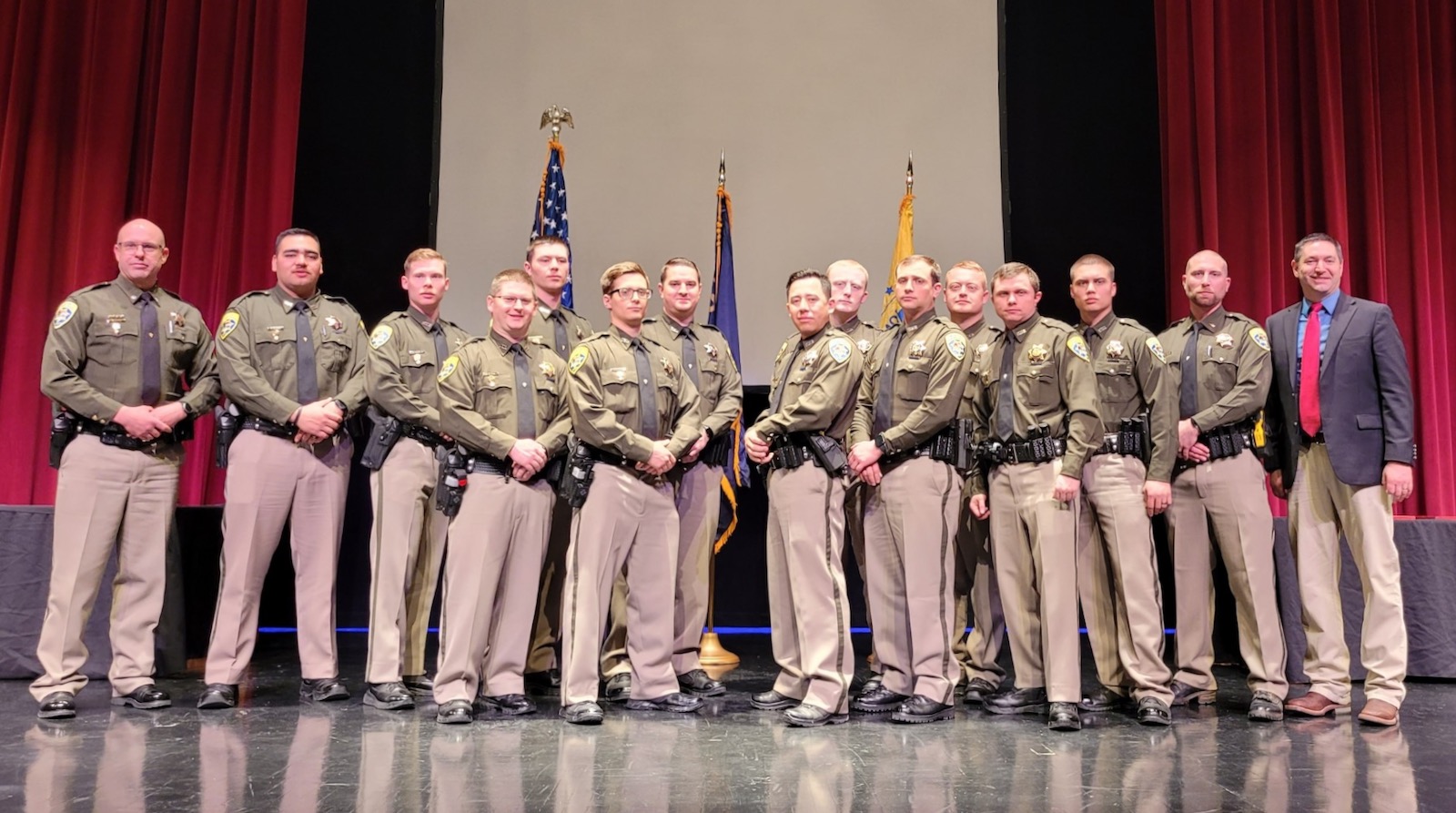
Bolger, POST’s paralegal, told the council members during the meeting that the DOJ’s response to releasing information had changed over time. Originally, she said the DOJ staff had said “do what you do with the press,” but then changed their policy to letting them know about items of public interest before they’re released.
However, when the Associated Press request came in, the DOJ shifted again.
“They were actually jumping in and saying, ‘We want to have a say in what you release,’” Bolger said. “It’s been very confusing for staff.”
During its next meeting, in February 2023, the POST council formally moved in favor of distancing itself from the DOJ, coinciding with the filing of Mercer’s legislation. Now, the debate is what agency it should be administratively reattached to.
Rep. Mercer initially wanted to reshuffle POST back to the Board of Crime Control, where it had been administratively attached before the 2007 reforms, and where he was a previous chair of the board.
He received some partial support from the Montana Sheriffs and Peace Officers Association, whose representative voiced concerns about POST’s independence as a bureau under DOJ, and wanted to revert it to being administratively attached to DOJ.
But during a February 2023 hearing before the House Judiciary Committee, a week after POST ceremonially voted in favor of removing direct DOJ control, the bill went through significant changes after lawmakers heard opposition from Lt. Gov. Juras — who said that the Board of Crime Control couldn’t address the administrative needs of POST — and the Montana Police Protective Association (MPPA).
On behalf of the MPPA and the Montana Association of Chiefs of Police, lobbyist Shelby Demars told lawmakers that POST needed the strong hand of the DOJ to guide it.
While POST was under the Board of Crime Control and an administrative attachment to DOJ, Demars said, “MPPA observed that not only did the POST council go through periods where staff seemed unaccountable to the decisions of the council, but there also seemed to be an inequitable application of discipline where similar instances were committed by different officers.”
“And,” she continued, “the disciplinary measures recommended by local departments we saw during that time when [POST was] not under DOJ seemed to fall on deaf ears.
“It is our position that these instances have improved markedly since POST has been housed under DOJ,” she said, “and that, more importantly, that it is not subject to radical swings in operational philosophy depending on the individual mantras of the executive director, the chair, or any other single member of the body.”
The AG’s office also testified in opposition. “Currently, under Attorney General Knudsen, the POST council is given very broad latitude to operate,” Knudsen’s chief of staff Will Selph told lawmakers.
Referencing earlier testimony criticizing POST’s placement under DOJ, Selph pushed back in strong terms: “You did hear some alluding to impropriety — I don’t think any of that actually exists,” he said. “I don’t think that that was necessarily something that should have been brought before the committee, because that could certainly be said about anybody who controls or operates the POST council, so it’s not really a fair accusation to make.”
After that hearing, the bill’s text was cut down in the House and Senate — first pinging to keep POST within DOJ, and then ponging to allow its placement within DOJ to sunset and order a study POST’s structure, making it an independent agency administratively attached to DOJ once more, at least until the next legislative session.
“What we learned through this process is it’s going to be very difficult to get consensus, and what we need to do is study it thoroughly in the interim so that we can come back with a clear recommendation about what should be done,” Mercer said on the House floor after the bill came back from the Senate.
During the interim period between legislative sessions, the Law and Justice Interim Committee is holding hearings for its study of what POST should look like.
The issue of public access to POST’s data was not raised, according to a review of meeting recordings. Nor does it appear in the draft final report to the legislature, approved in July 2024.
However, in December 2023, the independent POST council approved a new policy governing the agency’s responses to public records requests. In it, it made a policy decision on its own about access to its data.
Under the heading “Request for a[n] officer list or other export of information from POST’s database,” the policy reads that POST “staff will not release an officer’s name” or other, more personal information when sought in any format except on an individual basis.
The policy doesn’t cite any authority in state law or Supreme Court decisions.
What’s at stake
A nationwide challenge of some police departments to recruit and hire new officers has prompted some police officials and experts to raise the alarm that this shortage could allow for more wandering officers with histories of misconduct to fill open positions.
While some Montana agencies, like the Highway Patrol, have reported shortages, and some are actively recruiting already-certified officers to “laterally” transfer to their agencies, the problem seems to be less acute in Montana than other states.
That may be because the state has seen a significant influx — an over 1,000-percent-increase — of officers requesting to transfer in from other states since 2017, POST director Timothy Allred told the LIJC in September 2023.
Other politically conservative states in the West, including South Dakota and Idaho, have reported similar increases.
“The general public, and importantly a person who is pulled over or arrested by a particular officer, should have a right to know that officer’s history.”
However, Montana also refuses to release data showing who these lateral transfer officers are, or what states they came from — preventing anyone but the POST from being able to gain a full picture of the background of the officers flocking to Montana.
“The general public, and importantly a person who is pulled over or arrested by a particular officer, should have a right to know that officer’s history,” said Nicholas Miller, the current president of the Montana Association of Criminal Defense Lawyers. “Public data that is obscured and difficult to find does not promote public trust in transparency and freedom of access to information.”
To some experts, these gaps in the system — and the marked increase in out-of-state officers looking to transfer into Montana departments — mean that the state should be more transparent with their data, not less.
Count Christy Lopez among them. Beginning in 2012, the former Justice Department official led the unprecedented civil investigation of Missoula law enforcement amid allegations that the Missoula Police Department, Missoula County Attorney’s Office and University of Montana mishandled dozens of sexual assault cases. Lopez later led the federal consent decree investigations of police departments in Ferguson, Mo., and Chicago.
“It’s hard to imagine data that would be more important or relevant for the public to have, and where the state would have less of an argument that that information shouldn’t be shared,” Lopez said.