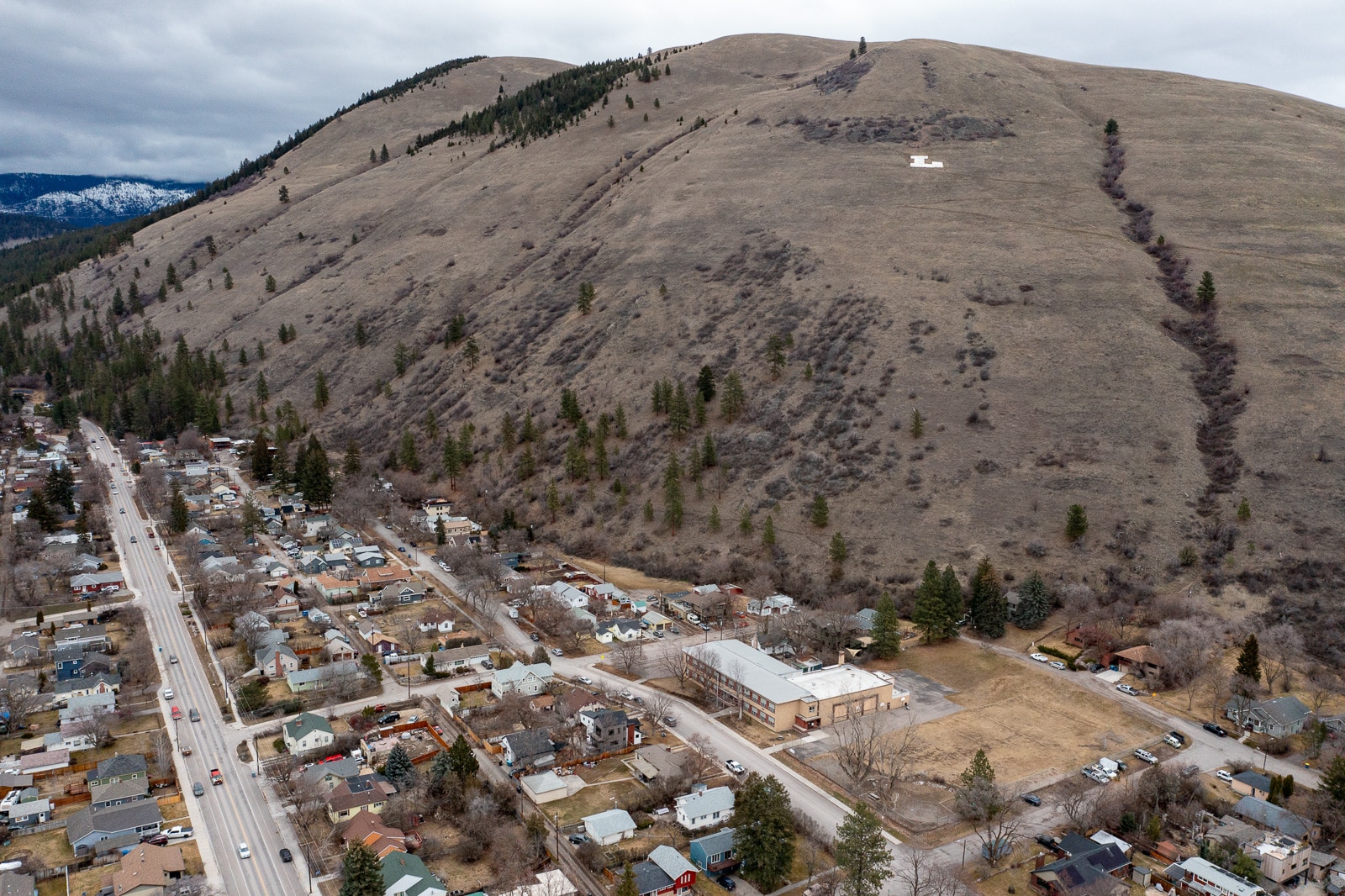
Some come alone. Some come as families with kids and dogs. Some are from out of town, some live in the neighborhood. Some come multiple days in a row, some only once. Whoever they are, city officials say they’re violating winter closures on Mount Jumbo designed to protect local elk, and they’re doing so at unprecedented rates — and at risk of their faces showing up on the Missoula Police Department’s Facebook page.
The city has documented more than 35 alleged violations of the closures so far this season, which is three to four times as many as last winter, Jeff Gicklhorn, the city’s conservation lands superintendent, told The Pulp.
“And I suspect we’re missing about half,” he said. “In the past, we’ve seen 10, maybe 20, and that’s in a high year and only on the very edges of the closure.”
The increase is a potential problem for the more than 125 elk — not to mention deer and other wildlife — who come down from snowy, high-elevation habitat to dine on the slopes of Mount Jumbo during the winter. And city police and officials are ramping up enforcement, posting trail-cam images of alleged violators on Facebook and threatening the possibility of criminal trespass charges.
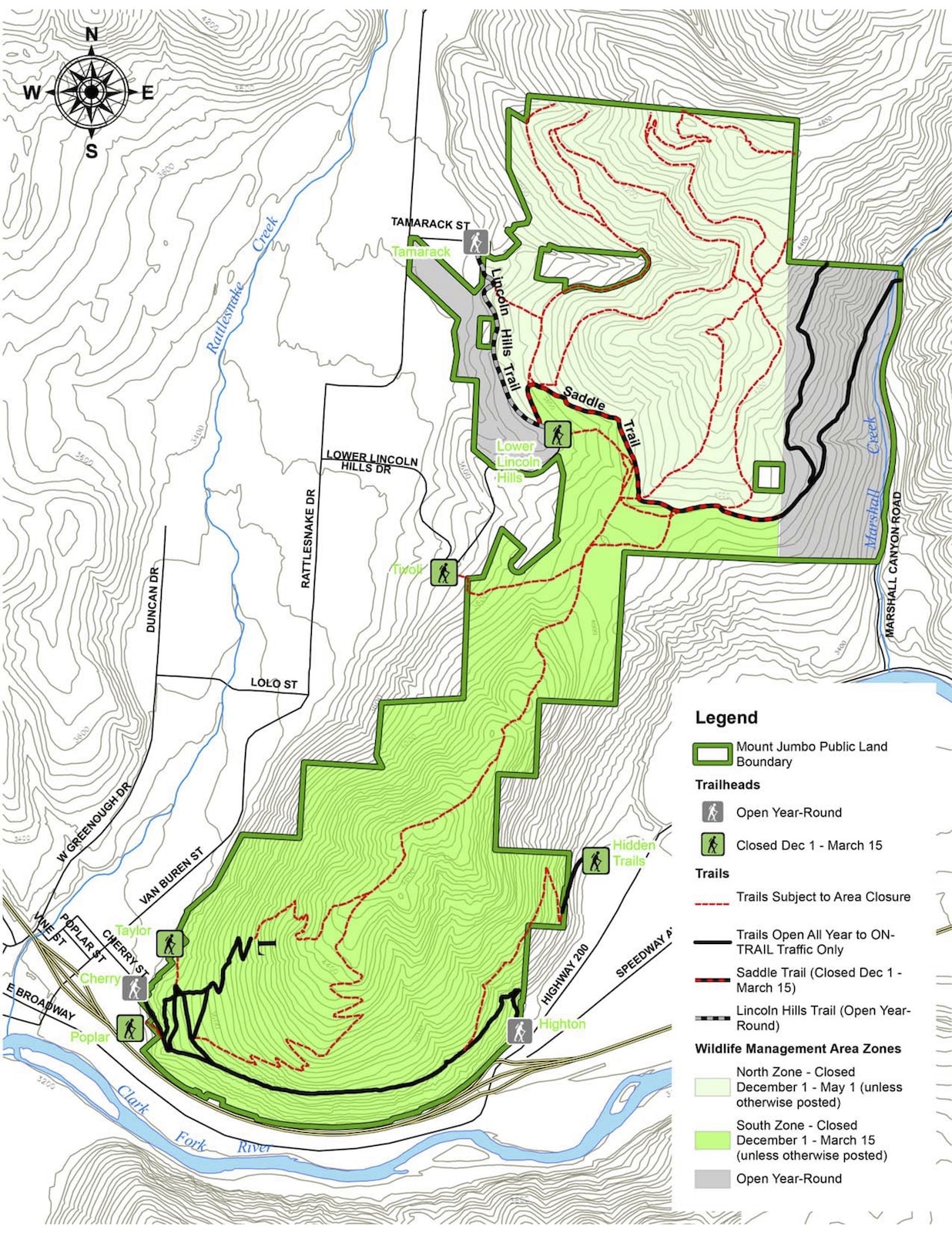
The closure begins Dec. 1 and covers most of the mountain, divided into two zones. The south zone, stretching roughly from I-90 to the Saddle Trail above the Lincoln Hills neighborhood, is off limits until at least March 15. The north zone, between the Saddle Trail and Rattlesnake National Recreation Area, remains closed until at least May 1. The “L” and I-90 trails are open year-round.
Elk perceive the mountain, which is primarily owned by the city, as “relatively safe” compared to surrounding federal and state lands, Gicklhorn said, where the herd faces hunting pressure.
But human — and dog — interactions can change their behavior. For the elk, Gicklhorn said, an off-leash dog “feels like a predator-prey interaction.” By the same token, there’s a risk that the elk become habituated to humans and descend into the Rattlesnake to look for food. (How’s that for pro-growth zoning?)
As Gicklhorn told the Missoula City Council last week: “I know council has been talking about urban deer — an urban elk problem would be significantly worse.”
“We don’t want to be up on the mountain looking for people, because our presence is going to disturb the elk. Hence cameras.”
People, he said, seem to think that the winter closure is about snow, so when the mountain is bare and the weather mild — and this winter has been one of Missoula’s warmest on record — they assume the posted signs no longer apply. In other words, trespass rates tend to rise along with temps, and this season has been an outlier in both regards.
Gicklhorn noted that the city isn’t seeing many cars in trailhead parking lots, suggesting that some of the trespassers live in the neighborhood and are accustomed to privileged access to Jumbo’s trails.
“I understand, ‘Hey, this is my local trail, this is where I go for my daily exercise, my daily mental health.’” he said. “But the balance is that this is closed to the entire community. It’s not just closed to one neighborhood or individuals who live outside of that neighborhood. The city has 50 or more miles of trail open.”
The Missoula Police Department’s use of trail-cam photos to help identify alleged trespassers is new this season. So far they’ve posted images of 15 individuals captured by the motion-sensing cameras since Feb. 8. The city first put cameras up during the 2024-2025 season, but not before snow set in and trespassing petered out.
“We don’t want to be up on the mountain looking for people, because our presence is going to disturb the elk,” he said. “Hence cameras.” He noted that they don’t point toward private property.
Violating the closures is prohibited by Missoula Municipal Code 12.40 and carries the possibility of a $500 fine. But city legal staff said at a Feb. 11 council meeting that prosecutors and police have the ability to charge violations as criminal trespassing, punishable by possible jail time — though this would be highly unlikely.
The posts have generated a range of feedback on social media, ranging from “Respect the signs” to “It’s public land, isn’t it?”
“I think it’s a little strange to be reporting your neighbors for walking on Mount Jumbo,” one commenter said. “I would think that people could be at least a little more self-governing without high-surveillance tactics!”
“I would think that people could be at least a little more self-governing without high-surveillance tactics!”
In another post, the department responded that it “understands that some in our community have concerns about enforcement related to trespassing on Mount Jumbo during seasonal closures,” but that “when a crime is reported to our department, we investigate it.
“That applies to all reported violations, regardless of type or perceived severity. Our responsibility is to enforce laws and municipal code consistently and fairly.”
But cracking down on trespassing also requires some neighborly accountability. The city benefits from volunteer elk spotters who use binoculars and telescopes to track elk herds (and interlopers) on the mountain from vantage points in their houses. These volunteers have been lauded in state Fish, Wildlife and Parks documents for their contributions to management data. And they’re valuable assets in the effort to combat winter closure violations.
“I do think there is this element of neighbors and friends and family members holding each other accountable to help follow the rules,” Gicklhorn said. “It’s incumbent upon everyone to be a steward of these natural spaces and wildlife populations.”
The city first instituted closures on the mountain in 1996, Gicklhorn said, and formalized them as part of a community-driven Mount Jumbo management plan in 1999. The details of the closures haven’t changed much since then, but the pressures on local wildlife have, with more trail development and more traffic. Still, the elk population has grown gradually over that time, from 50 to 90 to as many as 134 this year. (The crowdsourced nature of this data does make the numbers a little inexact.)
Tensions between Missoula recreationists, elk and the city aren’t new either. Voters helped finance the purchase of the mountain through passage of an open space bond. And some of them feel that entitles taxpayers to year-round access of the mountain, as longtime Missoula journalist Keila Szpaller reported for the Missoulian back in 2007.
“A lot of the public would like to use it more. We pay for it. We’re still paying for it,” one man told Szpaller. “If it’s a warm winter and I can mountain bike in December, I’d like to.”
Similar stories dot Missoulian archives in earlier years. In one 2004 piece, an FWP staffer reminded the public that the Mount Jumbo elk herd is part of what gives the mountain its character: “It’s one of the reasons people coughed up $3 million to buy Mount Jumbo. People want to be able to see the elk up there.”
The elk, unlike the people hiking past the closure signs, have no choice about where they winter. Enforcing the closure, Gicklhorn said, is about protecting wildlife the city has committed to conserving — and honoring what voters paid for.
“We are trying to manage the mountain for the elk with the winter closure, and we’re trying to make decisions in the summer through habitat management projects,” he said. “If we’re doing that to improve the habitat but we’re allowing trespass that is leading to harassment and energy expenditure and changes in behavior for the elk, that doesn’t seem to work well together.
“The fact that there’s a wild elk herd one mile from downtown Missoula is incredibly unique.”