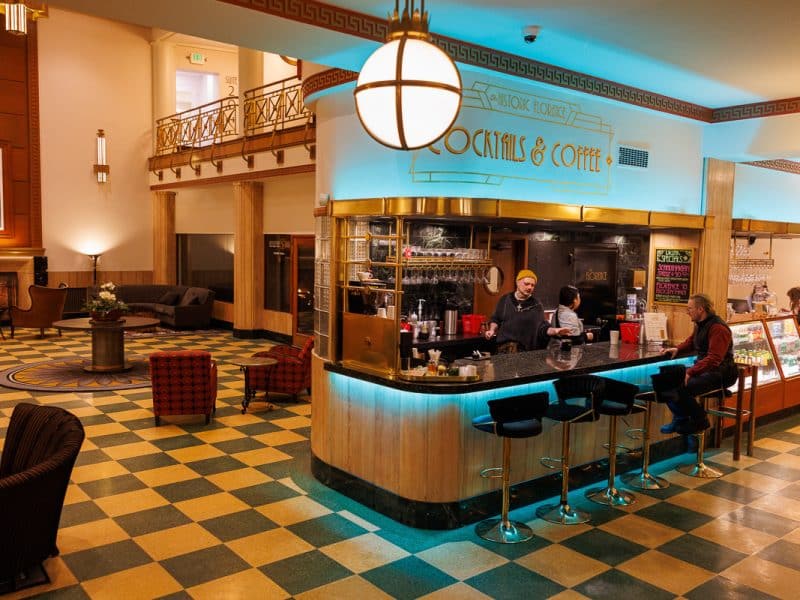
The half-mile stretch of West Broadway where Stephanie Martino’s 710 Montana dispensary is located houses at least seven other cannabis shops.
“It’s crazy how many dispensaries are here,” she said. “When we started on West Broadway, there were no others. Now there are so many just on that street.”
The number of dispensaries in Missoula has topped 50, state data show, further stiffening competition as sales level off and as businesses navigate a host of other challenges and uncertainties unique to the cannabis industry.
Two and a half years after recreational cannabis came online and led to an explosion in sales, Montana’s cannabis industry is at an inflection point. Statewide, the number of cannabis growers, manufacturers and dispensaries is decreasing, an indication that market and regulatory pressures are forcing the industry to rightsize.
“We’re not growing a money tree anymore.”
“We’re not growing a money tree anymore,” said Martino, who started in the industry 16 years ago. “The expenses involved with growing those plants, we have to pay them. … It’s not what everyone thinks the marijuana industry has become. Some of us are trying to get by and level out because of oversaturation.”
Recreational sales have plateaued after peaking last summer, according to state data. Total sales, including medical cannabis, have also flattened, with medical sales down nearly two-thirds compared to January 2022. Missoula County sales have followed similar trends.
Montana Cannabis Guild President and CEO Pepper Petersen said dispensaries are seeing more customers buying less.
“Those things are going to factor into business failures, business successes just as much as the number of dispensaries,” he said. “Given all these factors, it’s inevitable to see closures, failures, consolidations. I think that’s good for the business.”
On top of those challenges, businesses are working to shore up their customer bases ahead of another looming change—the potential end of the statewide moratorium on new licensees that’s currently blocking new and out-of-state businesses from moving in.
The Montana Legislature may consider extending the moratorium beyond its 2025 end-date, a move some Missoula businesses support to keep small, locally owned shops from being overrun by large out-of-state players.
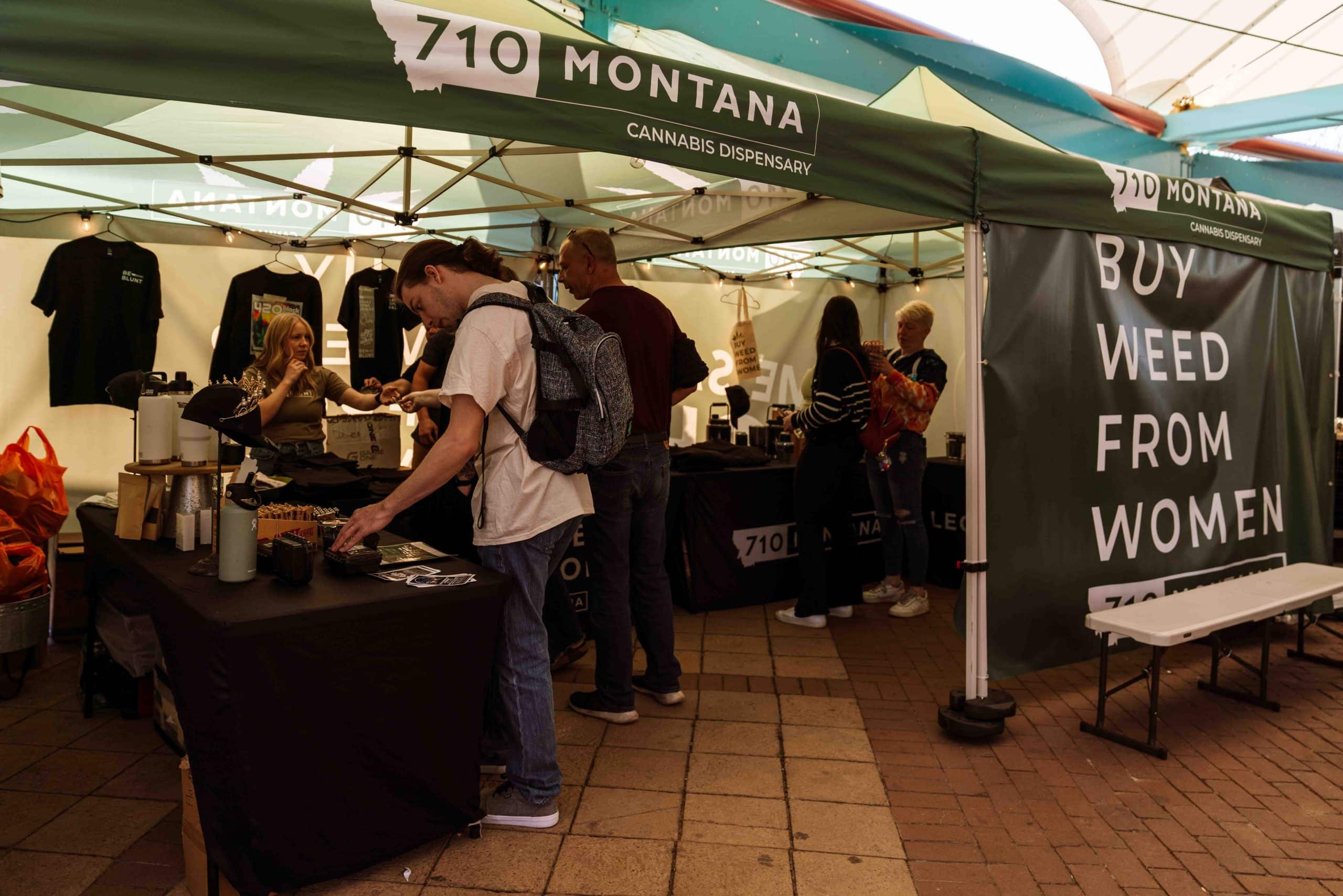
“We would like a couple more years under the moratorium to let the laws settle and all be established so we can all succeed when it does lift,” Martino said.
In July, the Missoula City Council placed a two-year moratorium on issuing new businesses licenses for dispensaries for a different reason—a spike in youth cannabis use. It’s a reminder of the social challenges the industry faces even as it welcomes the pause.
Now that the novelty of recreational cannabis being widely, legally available has worn off, and as the market matures, classic economic principles are increasingly coming into play.
“That’s going to mean people without adequate financing and streamlined business procedures will fail,” Peterson said, while larger, more successful businesses benefiting from economies of scale can invest in “marketing, new products and potentially to buy real estate.”
Over the last couple years, he said, as many Montana communities have allowed dispensaries to open within city limits with fewer zoning restrictions, location has become a larger factor in success. Some dispensaries located out of town that flourished when they were the only option are likely struggling now because of lack of proximity to customers, he said.
While Peterson said it’s difficult to predict how the industry will weather economic trends, individual businesses’ locations, cash reserves and number of employees are good indicators of their stability.
“People with a good hold on retail and a good location will succeed,” he said.
As the cannabis industry has grown, so has its impact on the state’s economy. In the Department of Revenue’s latest biennial report, based on data that’s now more than two years old, it counted 402 licensed cultivators, 444 dispensaries and 217 manufacturers statewide, among which there’s significant but unspecified overlap. It also reported 4,745 cannabis worker permits. But there’s been virtually no analysis of the industry’s larger economic footprint—the extent to which the industry generates economic activity among contractors, real estate agents, accountants, attorneys, suppliers, marketers and so on.
Laurence Hubbard, the former president of the Montana State Fund, said the lack of data is largely a function of the cannabis industry existing on the margins of the U.S. financial system, which affects banking, taxation and businesses’ ability to raise capital. (One example is Montana dispensaries only being able to accept cash.)
“Is there a means for these businesses to actually function in what we would call a normal system?” Hubbard said. “That’s a growth issue for the industry, and it’s a political issue, as well as an economic issue. Getting data is also dependent upon being able to access the traditional systems that produce that information, like the Bureau of Labor Statistics.”
What’s known is how much tax revenue the industry has provided the state and local governments. State taxes are set at 4 percent for medical marijuana and 20 percent for adult-use (recreational) sales. From January 2022 through June 2024, the state estimates it’s collected over $7 million from medical sales and over $120 million from recreational sales, for a total of $127.3 million.
The revenue goes toward the state’s Healing and Ending Addiction through Recovery and Treatment account, wildlife habitat, state parks and other specific programs before spilling over to the general fund.
Most counties that allow recreational sales have additional local-option taxes of up to 3 percent on recreational or medical or both. The county keeps half and allocates 45 percent to its cities based on population. Missoula County levies a 3 percent tax on recreational sales and no tax on medical sales. The county’s 2024 budget includes $500,000 in cannabis tax revenue that goes toward general fund expenses such as the county attorney’s office, 911 and elections.
Tax revenue doesn’t include annual license fees and other fees businesses must pay upon opening a location, moving or expanding. These are what fund the Cannabis Control Division within the state’s Department of Revenue, which oversees the industry and manages licensing and enforcement.
“Is there a means for these businesses to actually function in what we would call a normal system?”
Dispensaries pay $5,000 per location annually, growers pay from $1,000 to $37,000 depending on operation size, and manufacturers pay between $5,000 and $20,000 depending on monthly production. The state charges additional fees for storage, worker permits and background checks. Many businesses hold multiple licenses and run multiple locations, meaning their fees can reach six figures.
Petersen said he’s been told by a national marijuana policy reform organization that as long as Montana lawmakers are fighting over the state’s cannabis revenue, advocates don’t have to worry about repeal. Montana saw one fight play out recently over Senate Bill 442, which reallocated marijuana tax revenue to conservation and county road projects. After the Legislature passed the bill last year, Gov. Greg Gianforte vetoed it on the last day of session. After nearly a year of litigation, a veto override effort failed in April.
“What I expect is that battle is going to continue, which for us is a positive thing,” Petersen said. “People recognize the impact of tax dollars, of the industry, and hopefully the importance of individual jobs in their districts.”
Montana’s cannabis industry has been a rollercoaster since voters approved the state’s first medical marijuana law 20 years ago, and Bobby Long has been aboard for the last 14 years of the dizzying twists and turns.
But let’s go all the way back. In 2004, 62 percent of Montana voters created a medical marijuana program by citizens’ initiative, a result that only surprised out-of-state observers unfamiliar with Montanans’ libertarian leanings. It didn’t change a whole lot, though. Over the following five years, the threat of federal prosecution kept medical marijuana in Montana to nothing more than a shadowy cottage industry. By early 2009, the state counted less than 3,000 registered medical “patients,” and less than 1,000 designated growers, known as “caregivers.”
The landscape changed dramatically in the fall of 2009 when the Obama administration issued a memo saying federal authorities would defer to state marijuana laws. Seemingly overnight, Montana’s back-alley medical marijuana industry took to main street. Many cautious, by-the-book operators seeking to legitimize and normalize medical cannabis set up shop. Opportunists intent on exploiting the state’s vaguely written citizens’ initiative did, too.
The latter included one controversial Missoula entrepreneur’s “cannabis caravans”—one-day clinics set up in hotel conference centers across the state where physicians rubber-stamped hundreds of patients’ medical marijuana paperwork for $150 a pop. Those clinics, along with a handful of other pro-cannabis doctors who separately accounted for several thousand patients each, drove enrollment in Montana’s medical marijuana program from roughly 3,000 to 30,000 in less than two years.
It was in the middle of that boom, in 2010, that Bobby Long opened a dispensary called Sweetwater. He did so despite his sense, he said, that the industry was growing much too rapidly. Cannabis remained a Schedule I narcotic. Montana remained a conservative place. “It was not difficult to see that there was a major problem brewing,” he said.

When the Montana Legislature convened in early 2011 a crackdown on medical pot was atop conservative lawmakers’ to-do list. Long rented a van and drove several of his patients to Helena to urge legislators not to repeal the program. But before they could pass a bill it was the feds who sent a chill across the industry. That March federal agents raided 26 medical marijuana homes, businesses and warehouses across the state, which Long, who wasn’t targeted, called one of the most terrifying times of his life. A lead author of Montana’s medical marijuana law, who was among those indicted, said at the time: “There’s a feeling that our law has functionally been repealed by the federal government.”
If the feds functionally repealed it, two months later the Montana Legislature effectively did. Lawmakers passed a bill banning providers from accepting payment for marijuana and limiting them to three patients each. While a lawsuit kept much of the law off the books, which meant Long and other resolute caregivers could continue home-delivering cannabis to their patients, the state and feds’ one-two punch put the industry in purgatory.
A few years later, in 2014, with the Legislature’s de facto repeal still tied up in court, Long opened his current business, Flower. He leased a basement suite at the corner of Higgins and Main. It was a weird time. Montana’s cannabis community was drafting a new ballot initiative with less restrictive rules. The Montana Supreme Court was about to decide on the existing rules that had yet to go into effect. In early 2016, the court upheld the law. It also delayed the implementation of the law’s severe restrictions—when the remaining cannabis businesses in the state would be forced to shut down—until the end of August. Meanwhile, medical marijuana proponents succeeded in getting a new initiative on the November ballot.

And it was in early August when Long moved Flower to street level on Higgins, in the high-visibility space La Belle Vita now occupies. “I’m either going to be completely screwed,” he reasoned, “or this is going to be a new day.” He ran Flower on Higgins for 30 days. On September 1, when the new law left no means to run a business, he transformed Flower into an art gallery featuring portraits of his patients, a space for dialogue as the November vote neared. During those months of limbo in 2016 he also leased a 7,000-square-foot warehouse outside Lolo.
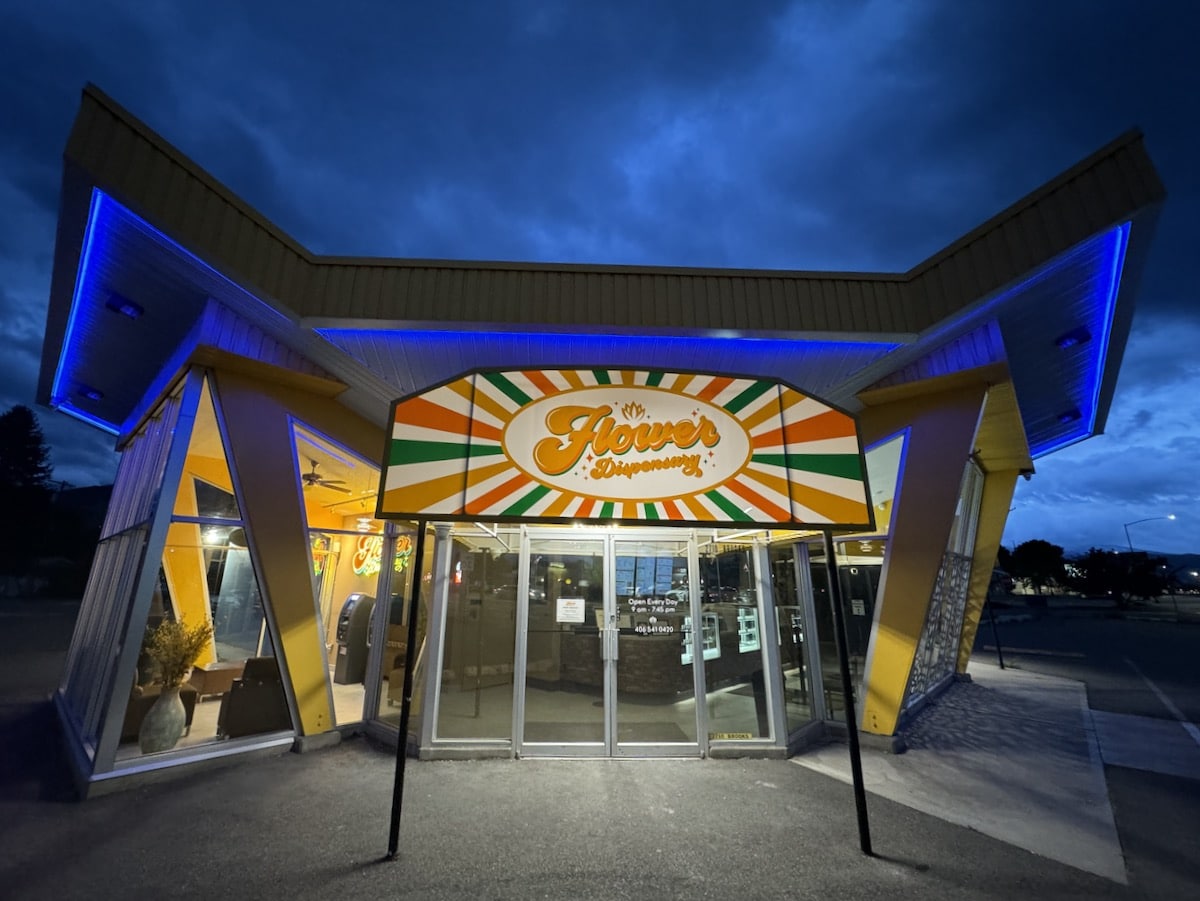
The ballot initiative passed. A few weeks later, Long signed a lease to move Flower to Brooks Street, inside part of the old Subway building. Four years later, 57 percent of Montana voters approved an initiative legalizing recreational cannabis, a law that went into effect in January 2022. Since then, cannabis sales receipts across the state have totaled $780 million, with the recreational market accounting for more than $600 million.
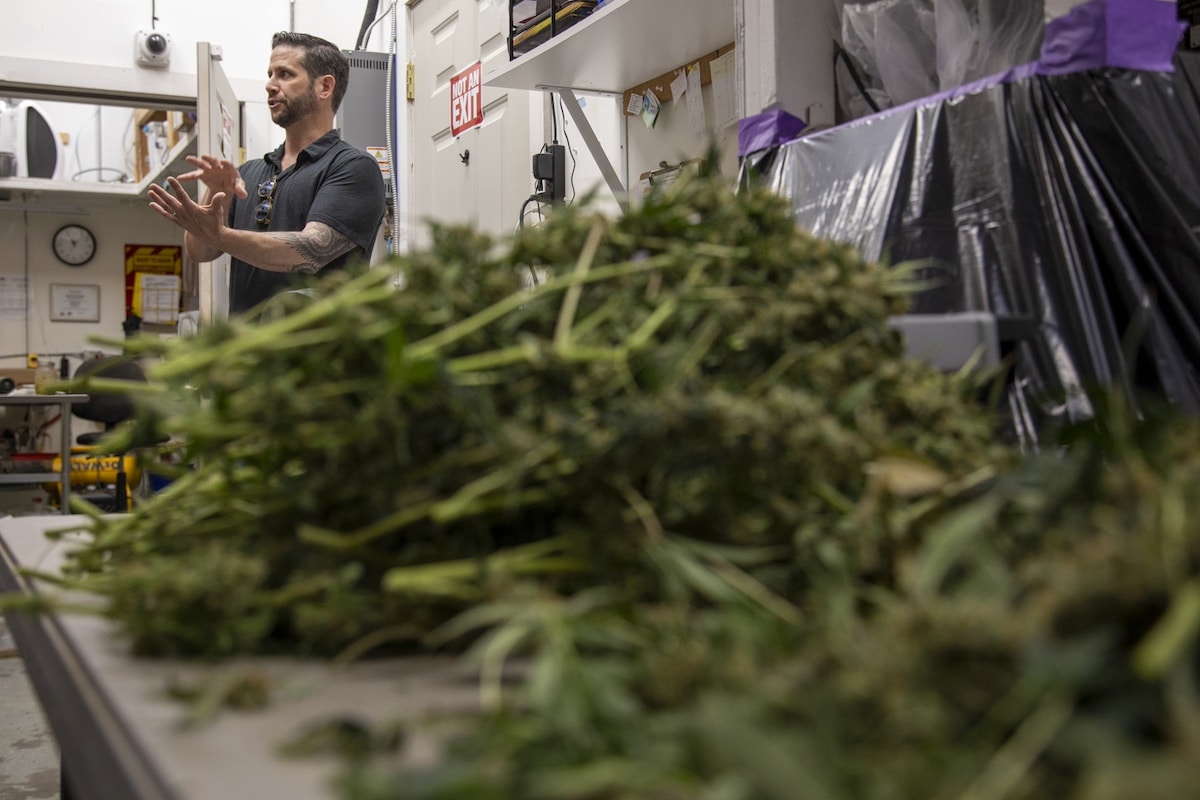
Today, Flower has around 20 full-time employees plus several part-timers. One morning in May, Long gave The Pulp a tour of Flower’s Lolo production facility. It’s cramped and loud now, but back in 2016 when he leased the building, he remembers his wife asking, “What are you going to do with this much space?”
“It’s a terrible industry—oversaturated, overtaxed, overregulated.”
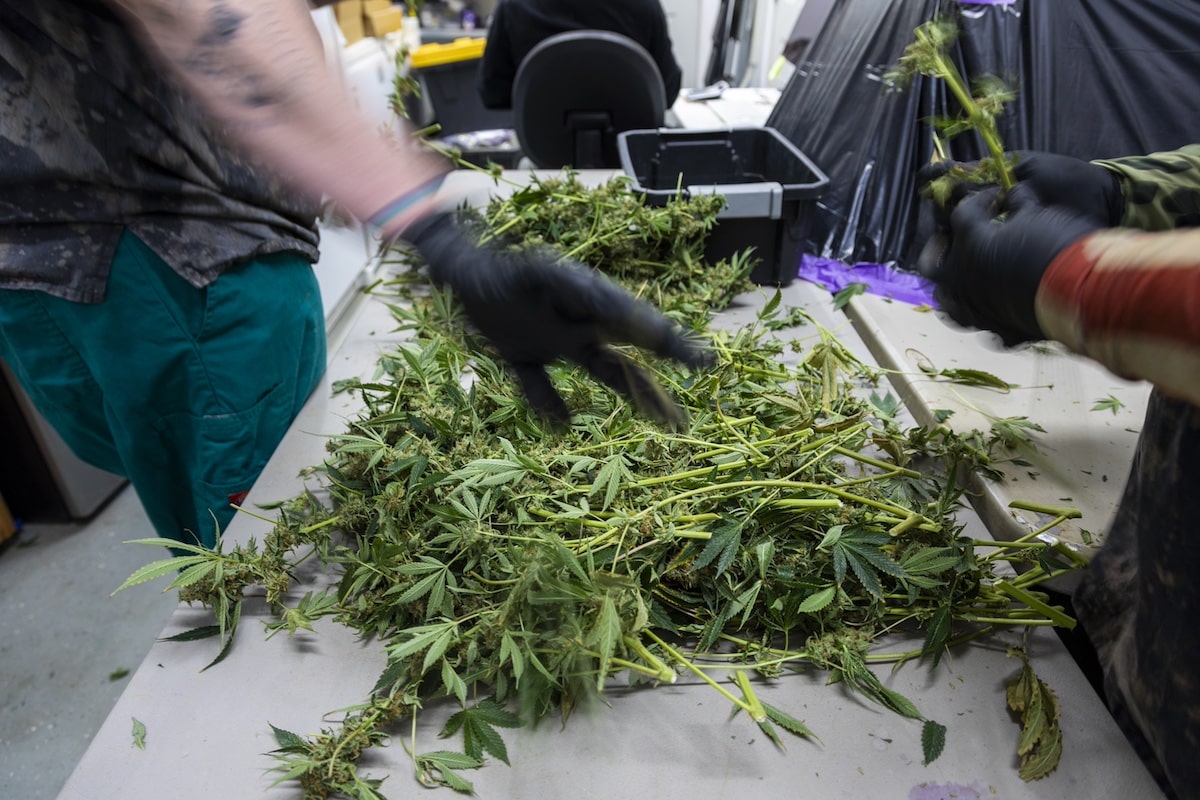
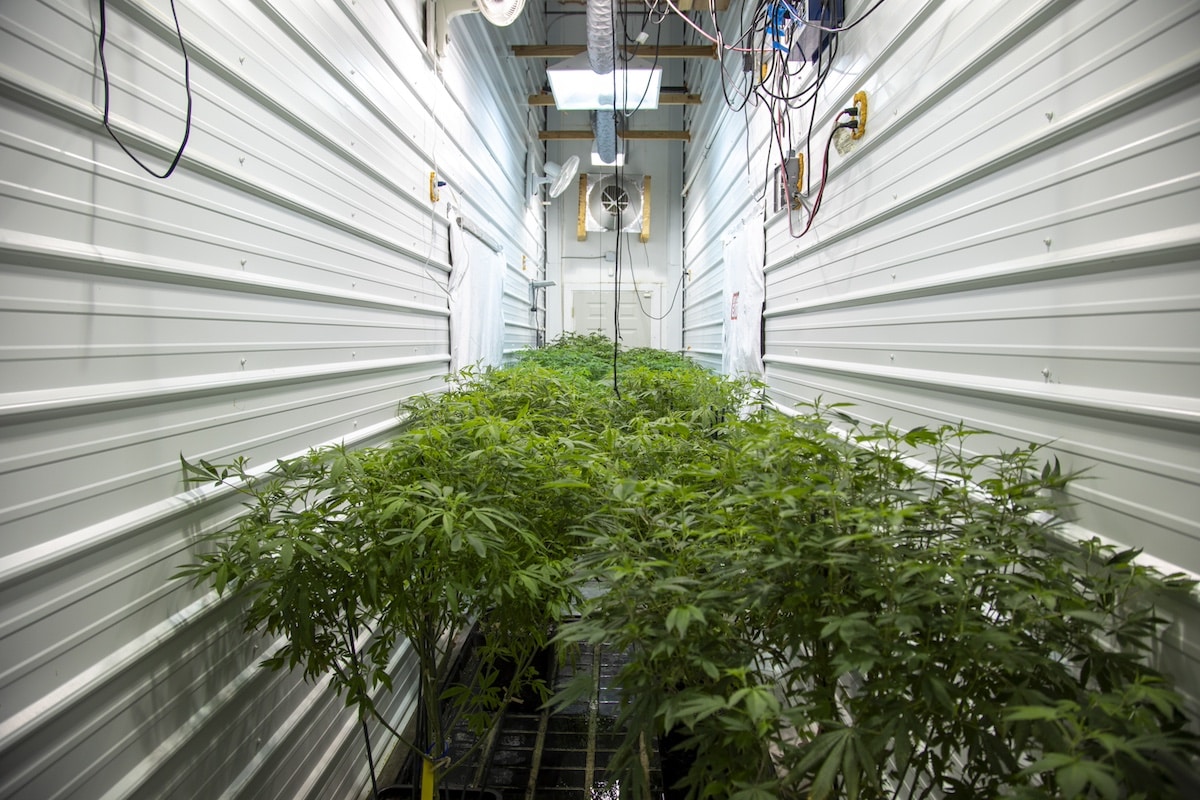
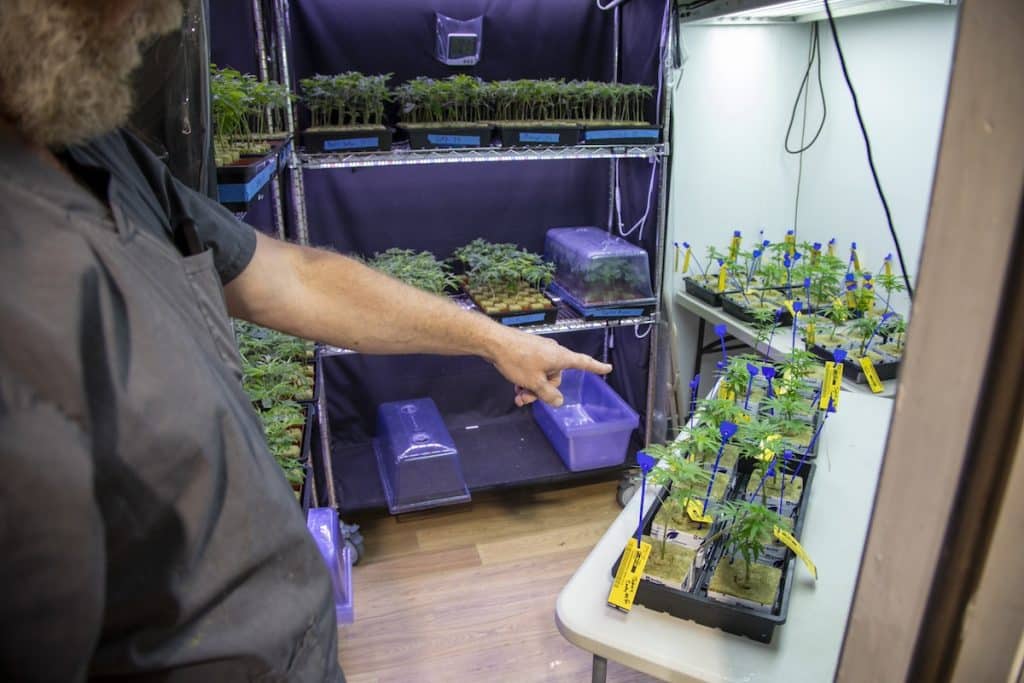
Now it barely contains the operation, which Long described as vertically integrated from seed to sale. It includes a clone room, vegetative rooms, flowering rooms and a room for mother plants, as well as labs for extraction and tissue culture. Standing in the middle of all of it, he talked loudly over the din of the building’s sophisticated HVAC system, which is central to its finely tuned environmental controls.
“The biggest investment I’ve ever made in my life, it’s not even my house—it’s the fucking HVAC,” Long said, estimating it cost around $350,000.
It’s one of the many big investments—and big gambles—Long has made over the years to grow Flower into one of Missoula’s more prominent dispensaries, a perennial “Best of Missoula” winner. He describes a learn-on-the-fly approach that’s less business savvy than instincts and obsessiveness. At one point he became so consumed by it he suffered a mental health breakdown. He’s nearly 15 years in and still can’t help but view any success as tentative. He said friends in the industry have asked him, “‘Bobby, why are you so ambitious?’ I’m like, ‘Dude, I’m just hoping to survive.’”
“It’s a terrible industry,” he said. “Oversaturated, overtaxed, overregulated. A bazillion parts and pieces, super fickle, a perishable product, an agricultural product. Let’s take the worst of everything and mash it all together and you’ve got the cannabis industry.”
He describes the state’s regulations as “over the top,” “excessive” and “redundant”—and a big reason why he and others in the industry anticipate a wave of consolidations and closures.
“Honestly, I’ve looked at the number of stores and thought how in the world is this even happening? How are these operators staying open?” he said. “You would think more would have started to close down by now. I’m mildly surprised more haven’t. But don’t underestimate them. These are people who are dedicated to what they’re doing. They care.”
As the industry sees signs of stagnation—between January 2022 and early April 2024, the number of cultivator sites had dropped 18 percent, manufacturers 24 percent and dispensaries 5 percent—businesses are urging regulatory relief.
“The bureaucracy is really a defining factor of the cannabis marketplace as much as anything and is affecting small businesses in tremendous ways,” said Petersen of the Montana Cannabis Guild.
Along with the licensing restrictions and fees, the state regulates how the cannabis industry operates, requiring worker permits, security, signage, and product tracking.
Businesses can promote themselves and market their brands but can’t advertise products except online. Since restrictions can make it difficult for dispensaries to distinguish themselves, many rely on word-of-mouth and repeat customers.
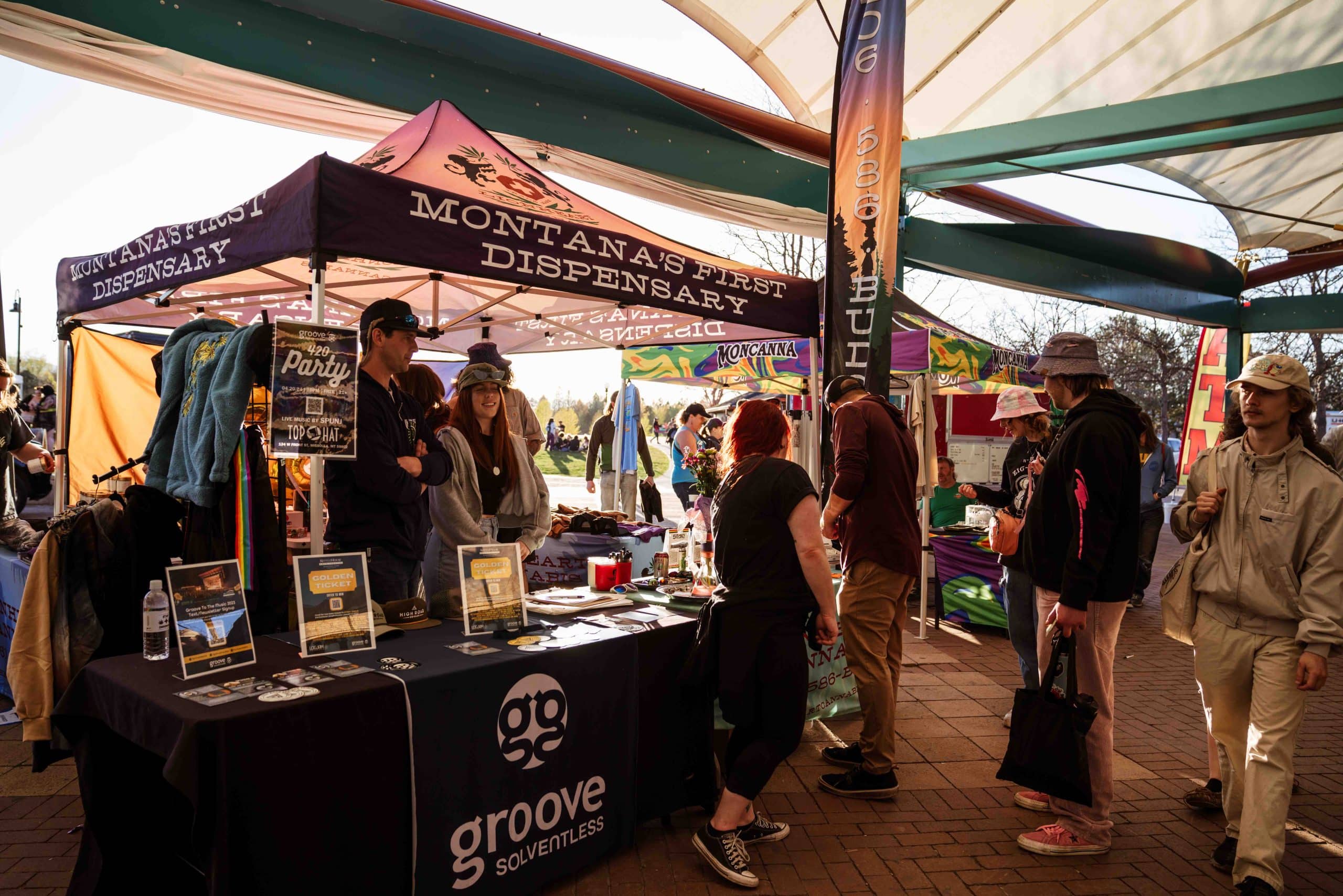
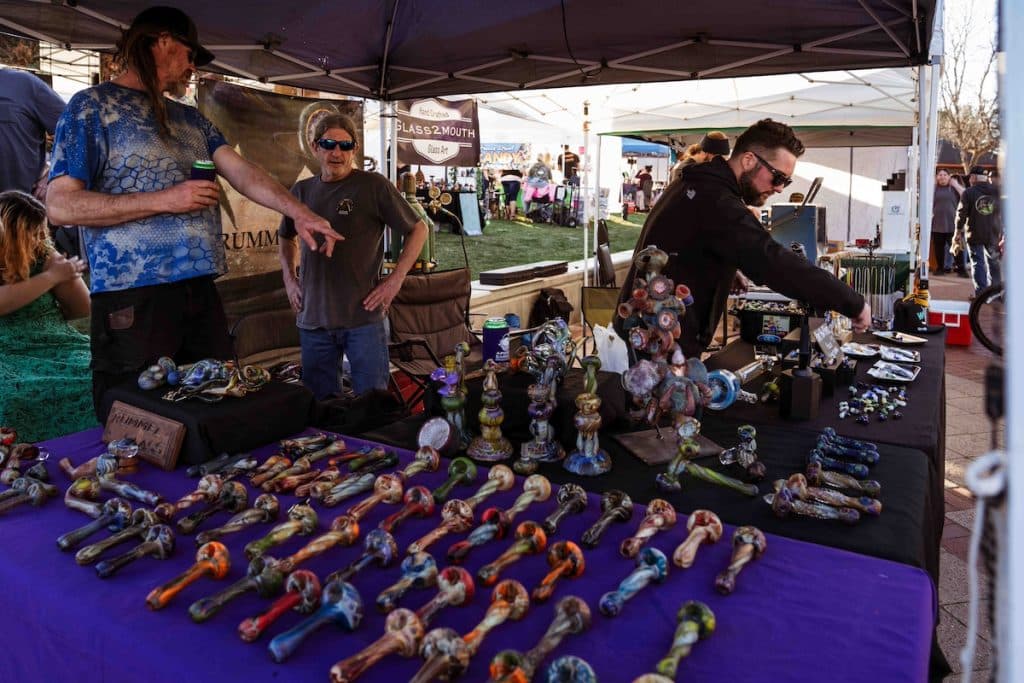
For businesses at Missoula’s 420 Block Party, the April event was another way to get their name out there and connect with the community.
Travis Bradford, who operates Red Dawg Cannoisseur with his parents, said the restrictions make it difficult for customers to find the business located on South Avenue. But the shop’s family business aspect and friendly atmosphere keep customers coming back, he said
“It has been a learning experience,” he said. “We want to show it’s kind of for everybody. We try to be as inclusive and loving as possible.”
Martino, the owner of 710 Montana, said word of mouth, networking at events and engaging in the community help get her dispensary’s name out there.
“Going from gray laws to having certain things set in stone, even if it doesn’t make sense, it helps,” she said.
Since the inception of the recreational program, the state has changed regulations multiple times, something the Montana Cannabis Guild has pushed back on. Petersen said the organization has a contentious relationship with the state Cannabis Control Division because of its ever-evolving rules and what he described as its inadequate understanding of the business.
“There has not been a single rulemaking proposal we haven’t had significant problems with until recently,” Petersen said. “There’s no playbook written specifically for Montana, the Legislature made sure of that. We asked for study resolutions, proposed studies on how to define how to transition [to the recreational market] and they just wanted to stick their head in the ground.”
Petersen said while he understands the Legislature puts the Cannabis Control Division in a difficult position to “get it right” without much guidance, businesses still have a bottom line to consider.
Meanwhile, the industry’s hopeful Montana lawmakers will extend the moratorium on new licensees beyond 2025. A draft proposed to the Economic Affairs committee on June 27 would extend it through June 2027 and—going a step further than the current rule—prohibit businesses from adding new dispensary locations.
“Anybody in the industry will tell you we’ve reached a carrying capacity for dispensaries and we want to see that number decrease,” Petersen told The Pulp in May.
The committee is set to continue discussions at its August 29 meeting, but there’s no guarantee such a bill will be brought forward during the legislative session next year.
Petersen said the moratorium will likely be needed until counties come up with their own limitations. When recreational cannabis was legalized, he said, many local governments “stuck their head in the sand” instead of getting a handle on the issue. His group encourages the counties that prohibit cannabis businesses entirely to reconsider their own regulations rather than deny themselves the tax money.
“If you don’t like where dispensaries could be, zone them for a different place,” Petersen said.
Missoula already requires more distance between dispensaries than the state, and the City Council is taking further steps to restrict new dispensaries because of concerns about an increase in youth cannabis use.
On July 8, the council approved a two-year ban on new recreational dispensaries in city limits, including new locations for existing businesses. The ban aims to give the city time to rework dispensary zoning regulations during its code revision process this fall.
“We’re looking at how we can basically hit pause with our dispensaries and figure out bigger buffer zones,” Ward 3 Councilmember Gwen Jones said during a June meeting. “So ultimately when there’s attrition, we’ll have a more spread-out landscape with less dense dispensaries, so that hopefully it’s better and we have less youth using recreational marijuana in Missoula.”
Martino, the owner of 710 Montana, said the pause protects existing business owners and will help combat Missoula’s dispensary oversaturation.
“We need to preserve the industry that’s been built,” she said. “The oversaturation has pushed people down to a minimum profit level with employment rates increasing and expensive equipment.”
While an abundance of dispensaries may have driven down the price, customers won’t reap the benefits long if locations can’t make enough money to stay in business, Martino said.
The proposed statewide moratorium similarly gives a chance for local businesses to succeed, Martino added. It’d maintain the hold on new dispensaries while allowing licenses to change hands, giving those who want to leave the industry a potentially profitable way out.
“I don’t think there should be a hold forever,” Martino said. “It’s just trying to … keep the viability of actually allowing us to succeed and gain that upper hand more so than anything.”