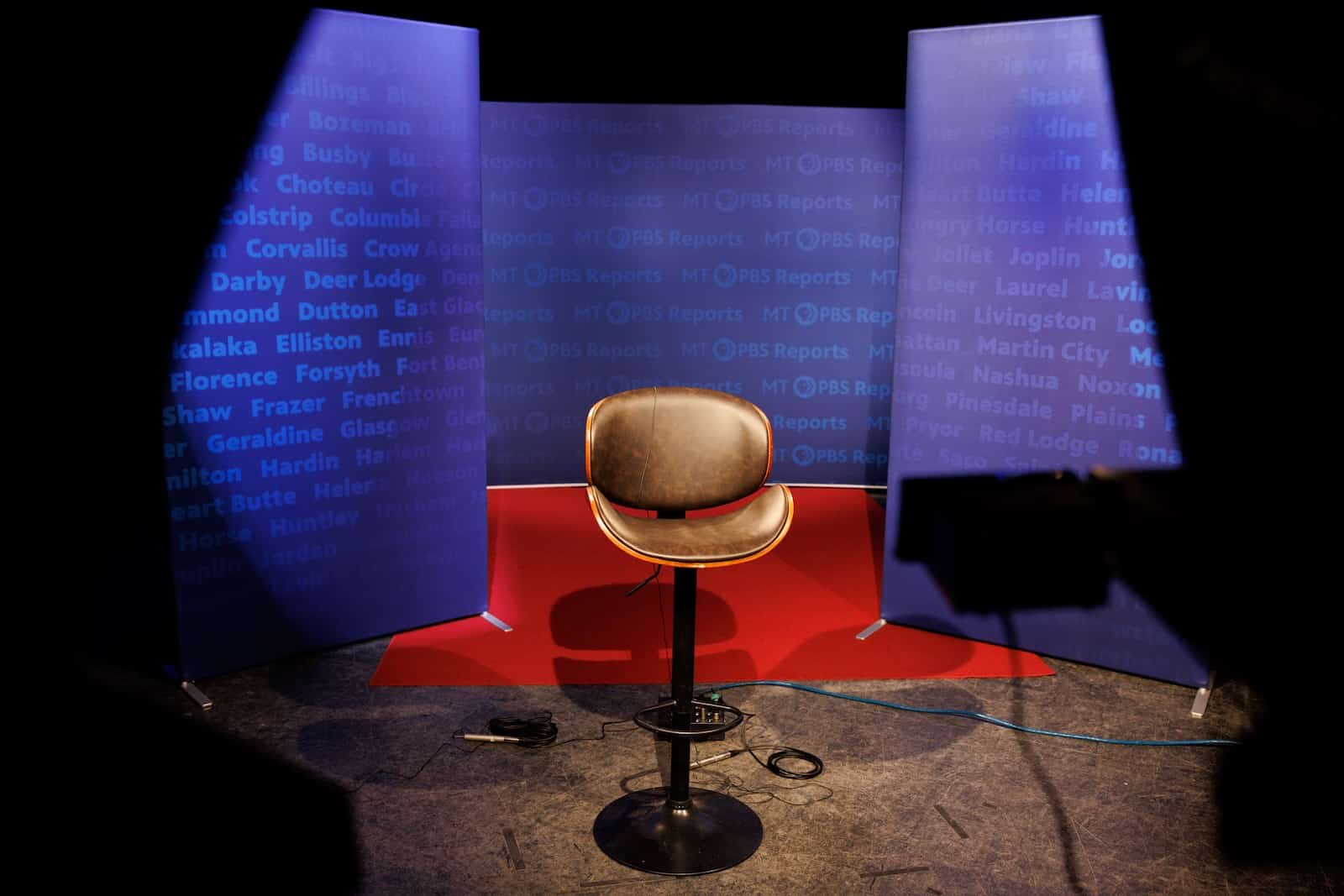
Aaron Pruitt still remembers when Montana PBS first went on air.
Pruitt, director and general manager of Montana PBS, was a freshman at Montana State University back in 1984, the same year a helicopter lowered an antenna onto a dorm roof at MSU and the station began broadcasting.
Pruitt came to college with plans to become a photographer, but his freshman advisor, Jack Hyyppa, the founding general manager of Montana PBS, convinced him to get involved with the station instead. Pruitt now holds his advisor’s former position and has been at the station for 31 years.
“It is a very personal thing,” Pruitt said over the phone from Bozeman, listing off the number of programs he has produced during his tenure, from the Montana Summer Symphony to documentaries like Class C, Indian Relay and Butte America. “That has been my history and helping those stories get told — it’s something I’m very passionate about.”
But now, for the first time in Pruitt’s career — or, really, in anyone’s career in public media — the nation’s top public broadcasters, National Public Radio and the Public Broadcasting Service, are facing an existential threat.
On June 3, President Trump, who’s long been hostile to publicly funded media organizations, formally asked Congress to rescind $9.4 billion in federal funds, including $1.1 billion previously approved for public broadcasting over the next two years. The request followed Trump’s executive order on May 1 directing the Corporation for Public Broadcasting to end all federal funding for NPR and PBS, because he claims they produce “radical, woke propaganda.”
Federal grants through the CPB — an independent nonprofit created by Congress to ensure access to media that serves the public interest — are critical for public radio and television stations across the country, particularly those in rural states like Montana. Rural stations rely on federal funding at nearly twice the rate of their urban counterparts, according to CPB data, with federal grants representing an average of 17 percent of rural stations’ revenue compared to just 9 percent for non-rural stations.
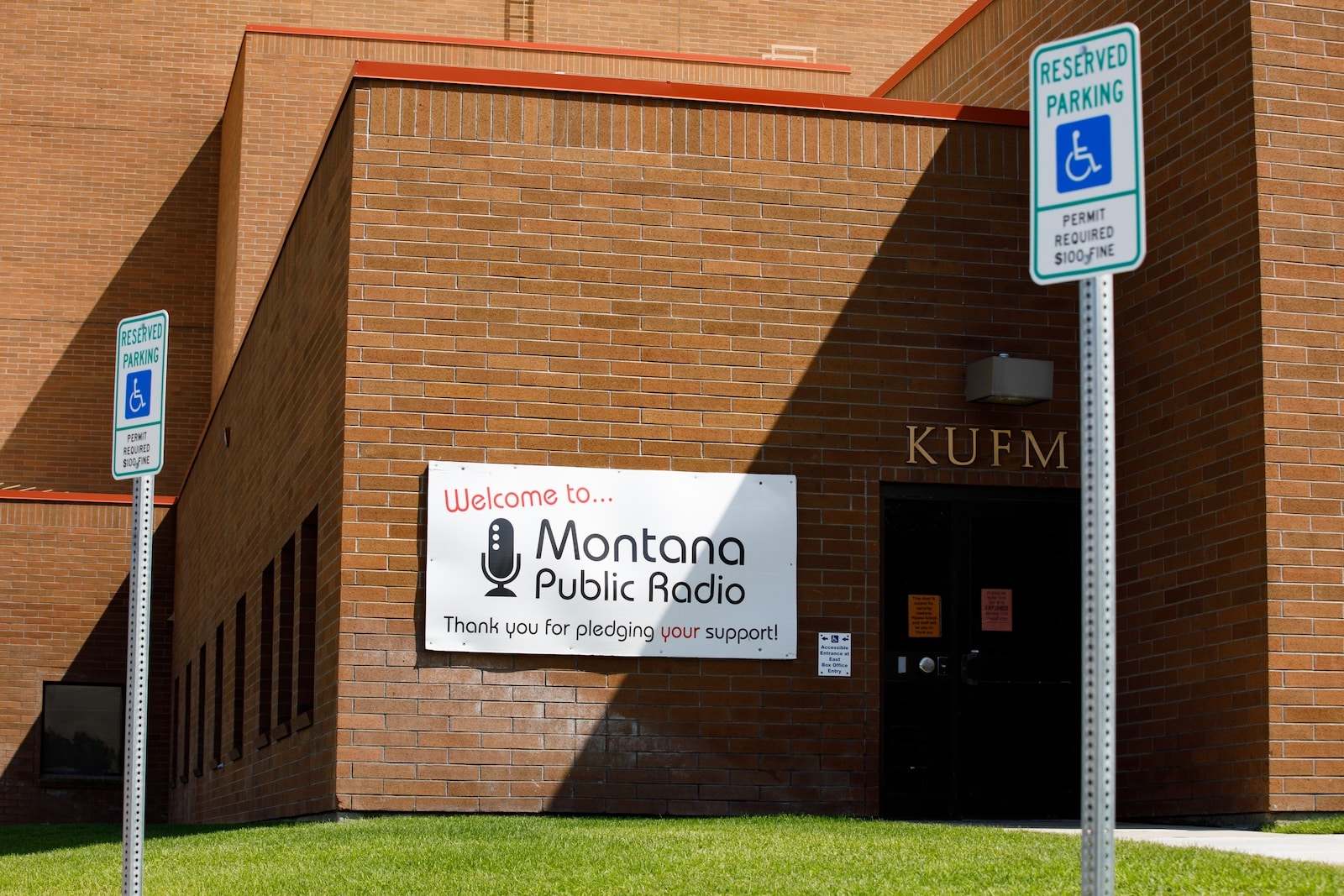
If Congress nixes CPB funding, Montana Public Radio stands to lose $353,000 — 11 percent of its budget — and Montana PBS faces a $1.8 million shortfall, nearly 20 percent of its budget. Yellowstone Public Radio, which serves central and eastern Montana, and the Bozeman alternative music station KGLT also receive CPB grants. Combined, the four Montana public media stations have $2.6 million at stake as federal lawmakers consider Trump’s request.
Pruitt describes Montana PBS’s funding sources as a three-legged stool, made up of a small federal investment — it costs about $1.60 per American taxpayer per year to fund public television and radio — plus university support and donations from viewers.
“If you take one leg of that stool out, it is really hard for us to sustain that going forward,” Pruitt said.
Appealing to individuals to donate more, which Pruitt says he sometimes hears floated as a solution, isn’t a practical fix either.
“We have pledge drives and we do direct mail and we do fundraising, and we have 23,000 members in Montana that already support Montana PBS, but to expect that they’re going to be able to come up with another $1.8 million to fill this hole is just not realistic,” Pruitt said.

Studies by both the CPB and the Government Accountability Office have similarly concluded that there is no private substitute for federal funding of public media.
Not only do rural stations depend more on federal dollars, but faraway listeners and viewers are more expensive to reach, requiring additional transmitters and towers. To offset these costs, Montana PBS receives an additional CPB service grant to help broadcast to households even in the most remote corners of the state
Thanks in part to this extra support, Montana PBS is in the final stages of acquiring two commercial stations — one in Miles City and one in Glendive — to expand its broadcast area in eastern Montana. They’ll provide the first free over-the-air service in both communities and, in Glendive, the only public television channel broadcasting emergency alerts.
But without CPB funding, Pruitt says, making the necessary infrastructure updates at both stations would be more challenging.
Replacing outdated equipment is particularly critical because public media acts as a back-up for the nation’s wireless emergency alert system. Broadcast infrastructure can be used to reach cell phones even during power outages or when internet or cellular connections are down, with generators helping to make broadcast facilities “hardened” in case of natural disasters.
“One thing that I think is critically important that Montana Public Radio provides is the emergency alerts, and that’s a kind of unknown or unthought of aspect of what it is that we do,” said Anne Hosler, director of the Broadcast Media Center at the University of Montana, which houses MTPR and KUFM-TV, Montana PBS’s Missoula affiliate. “It’s really important that Montanans have access … so that they can keep themselves and their families safe.”


A 2023 survey of more than 200 stations nationwide estimated that if public broadcasting is defunded, 46.1 million Americans who live in rural, island or tribal communities would lose access to their only source of local media.
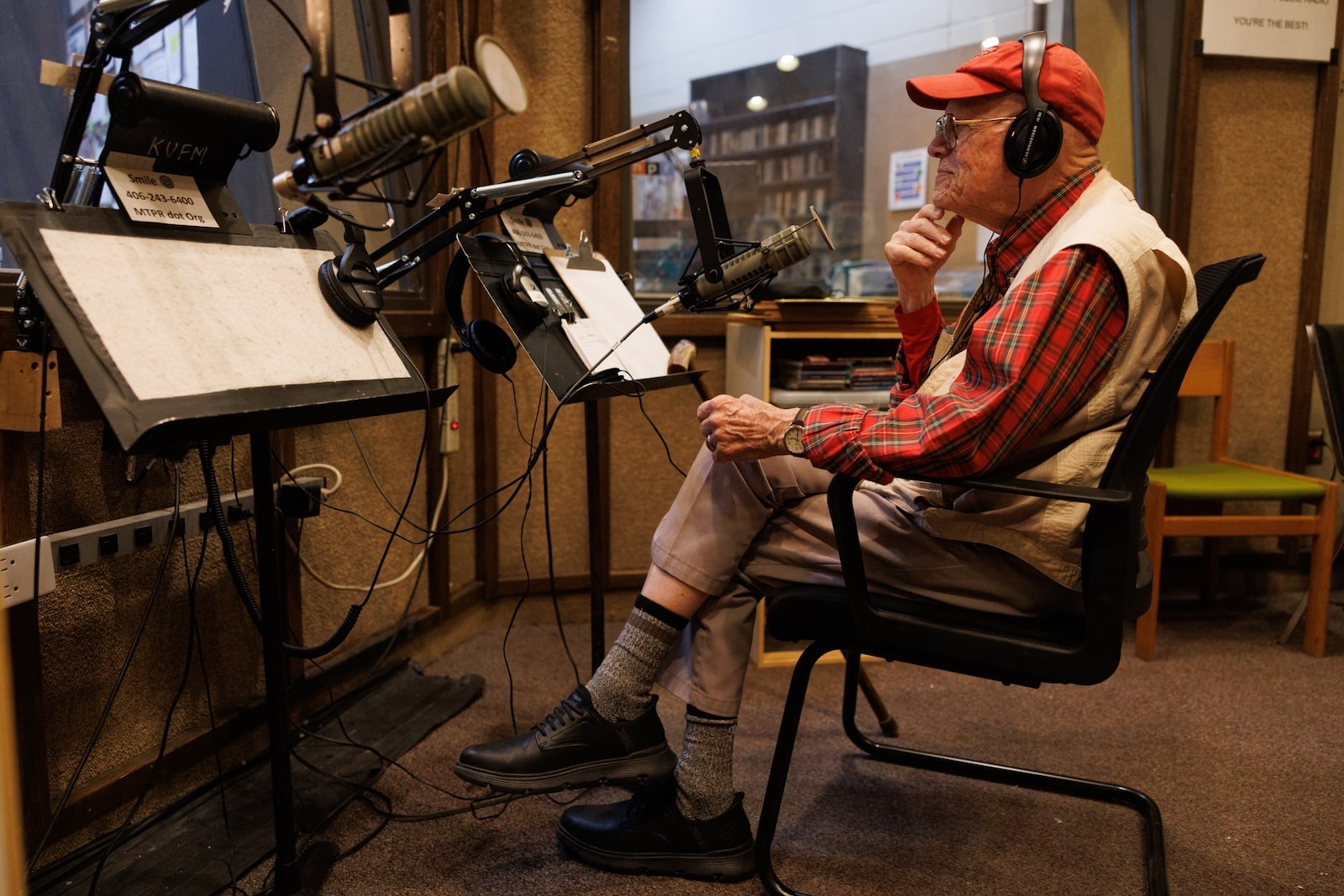
“There’s nothing more important than having reporters on the ground talking to folks in these communities,” Hosler said. “Wherever it is, we want to be there and thoroughly report the Montana news that our state and our listeners depend on.” She added that MTPR has invested in hiring more local reporters over the last few years in order to expand its news coverage capacity.
“There’s nothing more important than having reporters on the ground talking to folks in these communities.”
Both Pruitt and Hosler declined to comment on how federal funding cuts would specifically impact operations at Montana PBS and MTPR, but each indicated that it will require “tough decisions” to be made. The impact of federal cuts, Hosler said, would be felt immediately.
And they’ve both taken to the air waves and social media channels to urge viewers and listeners to contact the four conservative Republicans who make up Montana’s congressional delegation through the Protect My Public Media campaign.
“At Montana PBS, we take our responsibility seriously to help build bridges across the state by connecting Montana’s communities to one another and to the world,” Pruitt said in a MTPBS video posted the day after Trump requested the funding clawback.
“But all of that is at risk,” added Hosler. “A proposal has come forward in Washington DC to eliminate federal funding for public media, which would jeopardize Montana PBS’s future.”
Friends of Montana PBS, a nonprofit that raises funds to support the station, is also rallying support.
“Cutting federal funding would leave many Americans, especially those in rural states like Montana, without critical services local public television stations provide,” current and former board members wrote in a letter published in the Daily Inter Lake in May. They cited free educational programs for children, documentary storytelling and legislative coverage. (Accompanying the letter, at least the online version, is a political cartoon of Big Bird, Bert and Ernie, and Kermit the Frog all roped and bound and walking the plank on a Trump pirate ship.).
Two weeks ago, the House narrowly approved Trump’s rescission request. Now, it’s under consideration in the Senate, where the Appropriations Committee held a hearing on Wednesday. Lawmakers must act on the rescission request by July 18, as required by the 45-day deadline set by law — otherwise, the funding will be released back to the CPB.



Meanwhile, NPR and PBS have both sued the Trump administration over Trump’s executive order directing the CPB to cease federal funding to public broadcasters.
“It is not always obvious when the government has acted with a retaliatory purpose in violation of the First Amendment,” states the suit filed on May 27 by NPR along with three Colorado public radio stations. “But this wolf comes as a wolf.”
The CPB is also suing the president over his order aimed at firing three of its five board members.
While Trump’s rescission request to Congress itself is legal, Katherine Maher, CEO and president of NPR, still challenges its legitimacy. “The proposal, which is explicitly viewpoint-based and aimed at controlling and punishing content, violates the Public Broadcasting Act, the First Amendment, and the Due Process Clause,” Maher said in a statement.
Each week, an estimated 70,000 listeners tune in to MTPR and some 275,000 viewers watch Montana PBS — numbers Pruitt says are impressive.
“That’s remarkable engagement from Montanans with their public television station in an age when there’s so many other sources of content, and I’m so very proud of that,” Pruitt said.
“We hate to see the service diminished in any way. And I think Montanans would hate to see our service diminished.”