Jule Banville has spent more than a decade asking her journalism students at the University of Montana to do something a lot of reporters stopped doing years ago: pick up the phone and report an obituary. Not the kind families write themselves — which often consist of the bare-bones lists of survivors and accomplishments — but deeply reported features in the tradition of Jim Sheeler, the late Rocky Mountain News writer whose short profiles cut straight to what made a person human.
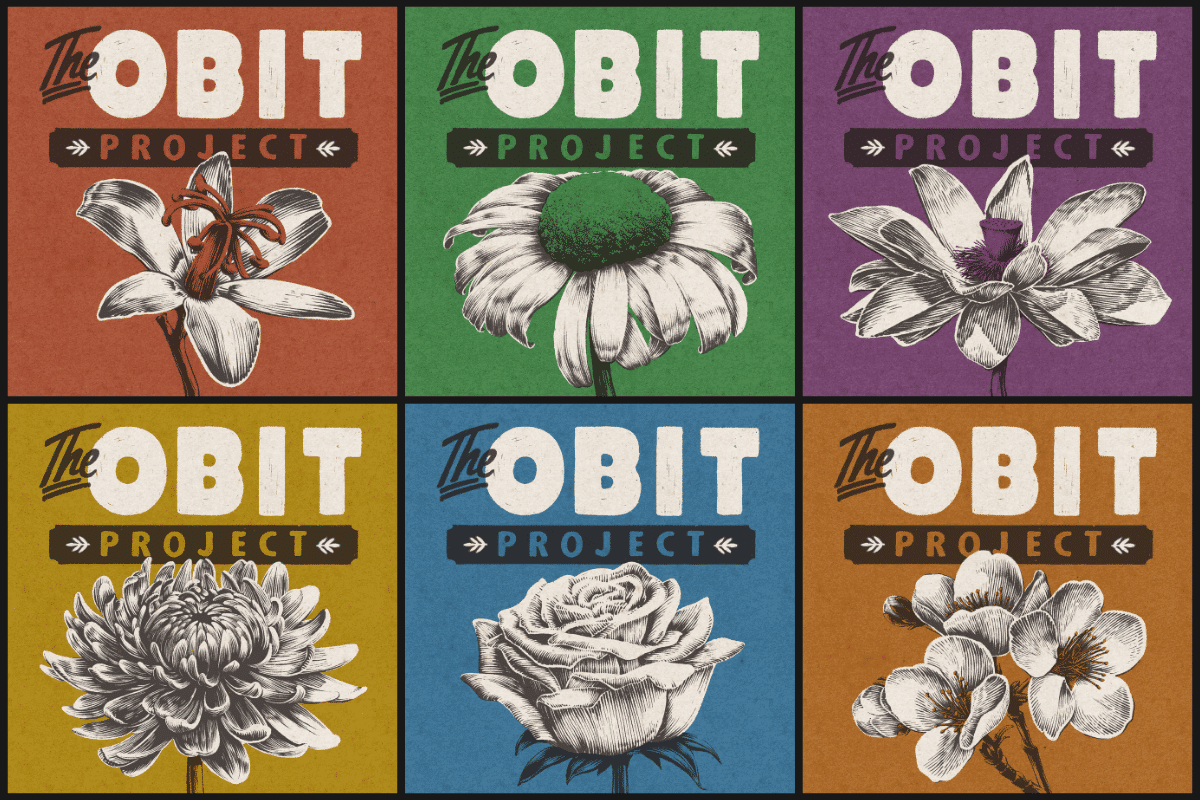
That classroom assignment has now grown into something much bigger. The Obit Project is a 12-episode podcast that tells stories about the lives of real Montanans after they die. It’s co-hosted by Banville with Jad Abumrad, who founded the pioneering public radio podcast Radiolab. I love Abumrad (he created one of my favorite podcast portraits, Dolly Parton’s America), but I’m saving my breathlessness for Banville here, because the Obit Project idea comes from her long-running feature writing course at UM’s journalism school and her own expert background in audio storytelling.
Banville loves the obit form and she gets everyone she can to read Sheeler’s collection of obituaries called “Obit: Inspiring Stories of Ordinary People Who Led Extraordinary Lives.” In her own writing and audio storytelling, she is someone to aspire to. She rejects earnestness in favor of direct, specific and often funny observation — a casual precision and mastery of understatement that earns your trust. Because she never overreaches or oversells, when she finally lands an emotional gut-punch, it gets you. Her best students absorb the same lesson: that a single well-observed detail, delivered in your own voice, will resonate more than anything. The obit is the perfect form to learn this.
The Obit Project grew out of Banville’s teaching, though most episodes so far are audio pieces by former students and more seasoned journalists, edited by Banville with help from various producers. Listen to the first five and you get a sense of how each producer’s obsessions shape the story they chose to tell.
“It’s that act of love — this little tiny detail about this person who would just show up and be really interested in this kid’s basketball games — that’s what’s important.”
Those episodes cover a lot of ground, in types of people and in feeling. Isaac Opatz, a fairly recent graduate of the journalism program, is probably best known as a singer-songwriter and frontman of the band The Best Westerns. He created the first episode — scored with his own music — which introduces us to Terry Holo, a guy whose obit photo made him look like The Dude, and who turned out to be considerably more.
In another, Jacob Baynham, an instructor in the J-school and a sometimes-Pulp writer who wrote one of our favorite Pulp stories ever — the dog poop story — offers an obit about a circus elephant struck by lightning and buried under the fairgrounds in Dillon, Montana, but that is really, secretly, also about a man obsessed with the elephant and, in the end, a story about the power of local lore.
JoVonne Wagner, a Blackfeet Nation reporter who writes for Montana Free Press, tells the heartbreakingly beautiful story of a young man named Brendon Galbreath, a citizen of the Blackfeet Nation who died after a traffic stop in Missoula. Here, through Wagner’s careful telling, Galbreath is remembered not for the dramatic circumstances of his death — which made the news — but for the person he was to one of his closest friends.
Before and after each story, Banville and Abumbrad discuss what drew them to it — and what the story is really about, which is always much more than just the person who died.
The Pulp recently spoke with Banville about what inspired the project, what she’s looking for in an obit story, and why reporting on death isn’t actually a downer.
The Pulp: How did this project come together?
Jule Banville: It’s been in the slow cooker for a while, but it started with an assignment I did in a feature writing class. Whoever teaches the class can kind of decide what it is, and I decided that part of that class for me is going to be obits, because I like obits.
And so for a decade, maybe, I had students find obits, usually in the Missoulian at that point, now on the websites of funeral homes. And then they would go report. It’s a cool assignment because the sources are listed right there — the people who survived this person. They would write these beautiful stories that were based on Jim Sheeler, who died a few years ago. He wrote these beautiful short obituaries that were not like, here’s everything the person did in their life, but were just gorgeous little features about what made a person tick.
And then Jad is my old friend. We worked together in the early 2000s at WNYC, and we stayed friends. He came to visit Missoula, like people do, and we were drinking wine, like we do. He asked me about what was going on and we ended up talking about the assignment. And then because he is Jad, he got out a napkin and started drawing things. And eventually it was like, “This would be a fun thing to hear.” So now it’s a fun thing to hear, hopefully.
What did Jad bring to the project? How was he involved?
I would say that he was in on the big picture of it. I was the main editor on it. And Mary Auld also — she is the showrunner for this, and she runs the Montana Media Lab here at the J-school. So the two of us did a lot of the day-to-day, really working with these stories and with these producers.
Jad would float in and be very smart about big-picture edits and universal themes in the stories. And it was super helpful, especially with the students, he would listen to some of their tape early on and then give them direction.
In reporting, what kind of details do you look for to make these obit stories?
In the first episode, by Isaac Opatz, there’s this moment at the end — I don’t want to give it away. I mean, it starts with a person dying, but there’s this moment where the guy’s nephew starts to talk about how his uncle went to his third and fourth grade basketball games and put up his tripod and, you know, filmed all the shots of all the kids. And how that’s not really a thing that gets in a traditional obit. But it’s that act of love — this little tiny detail about this person who would just show up and be really interested in this kid’s basketball games — that’s what’s important. That little detail, to me, says a lot about this man and his relationship with his nephew and what he cared about and what they had between them. There’s lots of moments like that. There’s one or two of those in every episode. And that’s the part I love. I love the little nuggets.
What’s the appeal of obits as a way to tell stories?
I think a lot of us have had to write them, right? I mean, now they are written by families, and so you lose a person and then you have to sit down and decide, what do I want to say about my person, and what do I want to share, and what’s going to really resonate with people who knew him or knew her or them — whoever — and who didn’t know that person.
I think this project is appealing because you take what a family member probably wrote, and then you, as a journalist, kind of have to wade through that. Sometimes these stories are a lot about the people who are left, right? Because they’re not interviewing the person at the center of the story.
So it’s really about the relationships that we have with people after they’re not here. I think that’s a cool thing. I think it’s a good story. For me, the narrative of someone’s life is actually what is great journalism and I think making students and other people in this particular project do that — it’s been kind of life-affirming, even though it’s about death.
Episodes of The Obit Project drop weekly on Thursdays and also air on Montana Public Radio.