This is Part 3 of “Unsettled Ground,” a collaboration between The Pulp and the University of Montana Public History Program. This exhibit explores the experience of mobile home residents: how and why they came to live in mobile homes, what “home” and “community” mean to them, how they faced hardship and stigma, and how they built communities. Find the other parts of this reporting project here.
“It’s such a hard thing to talk about because everyone who lives in a trailer is different. Every story is different.” — Richard Fifield, author and lifelong mobile home resident
Affordability
From the start, trailer parks offered working-class families, returning veterans, students and others a cheaper path to housing. Missoulian classifieds give a sense of the numbers. The homes themselves ranged from two to ten thousand dollars in the latter half of the 20th century.
The low price came with hidden costs. Residents paid rent, like tenants in other places, but they also typically owned their homes, so they shouldered the costs that came with homeownership including, heating and electricity bills, loan payments, taxes, insurance, and repairs. The latter could be particularly difficult as the non-standard materials and factory-built construction made mobile homes tricky to fix. And help was hard to find. A 1975 edition of The Missoulian listed two ads for mobile home repair against hundreds for conventional houses, and options remain slim today. For residents living paycheck to paycheck, those costs complicated the promise of affordability.

“We were not able to afford a stick-built home due to our low incomes. And my husband had lived in a mobile home all of his life. He was very comfortable with the idea of purchasing a mobile home as an alternative. So, we did. And the location of the mobile home we settled on was a short distance outside of the city limits… It’s a rural neighborhood. It was quiet. It felt safe. And a good school was nearby, and it just seemed ideal for raising kids. So, the great appeal to me was that we could have our own little green space around us without hearing neighbors just a thin wall away” — Maria Cassidy, reflecting on her reasons for moving into Harvey’s Mobile Home Park in the 1990s
“Sometimes it was just, like, not being able to afford rent… I think that contributed to the moving around, is just like, not having anywhere to go.” — Anthony Johnson, former mobile home resident, on why his family moved so often when he was younger
“And selling the park was the only way we could get out of debt. And looking back, I wish we just raised the rent fifty bucks, and then we could still own it. But we didn’t think that the people had the fifty bucks to take [a rent increase]. But after we sold it, that’s what [the new owners] did.” — Tom Wheeler, former co-owner of Westview Mobile Home Park, on the park’s 1988 sale
“The problem here isn’t mobile homes. It is poverty and lack of representation… I can think of three trailer courts that are gone.” — Richard Fifield on circumstances in East Missoula
Stigma
Mobile home residents have long faced stereotypes from people with little understanding of mobile home communities or the difficulties of finding affordable housing. In a discussion of trailer courts, the Missoula County sheriff told the Missoulian in 1974 that there seemed to be a “lower class of people all the way around” in low-income neighborhoods. Portrayals of residents as lazy, criminal or negligent shaped laws and policies that left them more vulnerable to poor conditions and displacement. Those stigmas also shaped how residents saw themselves, and some carried a sense of shame about where they lived.
“They have such a social stigma. At one time they referred to anybody in mobile homes as ‘trailer trash.'” — David Rieker, lifelong mobile home resident and former park manager
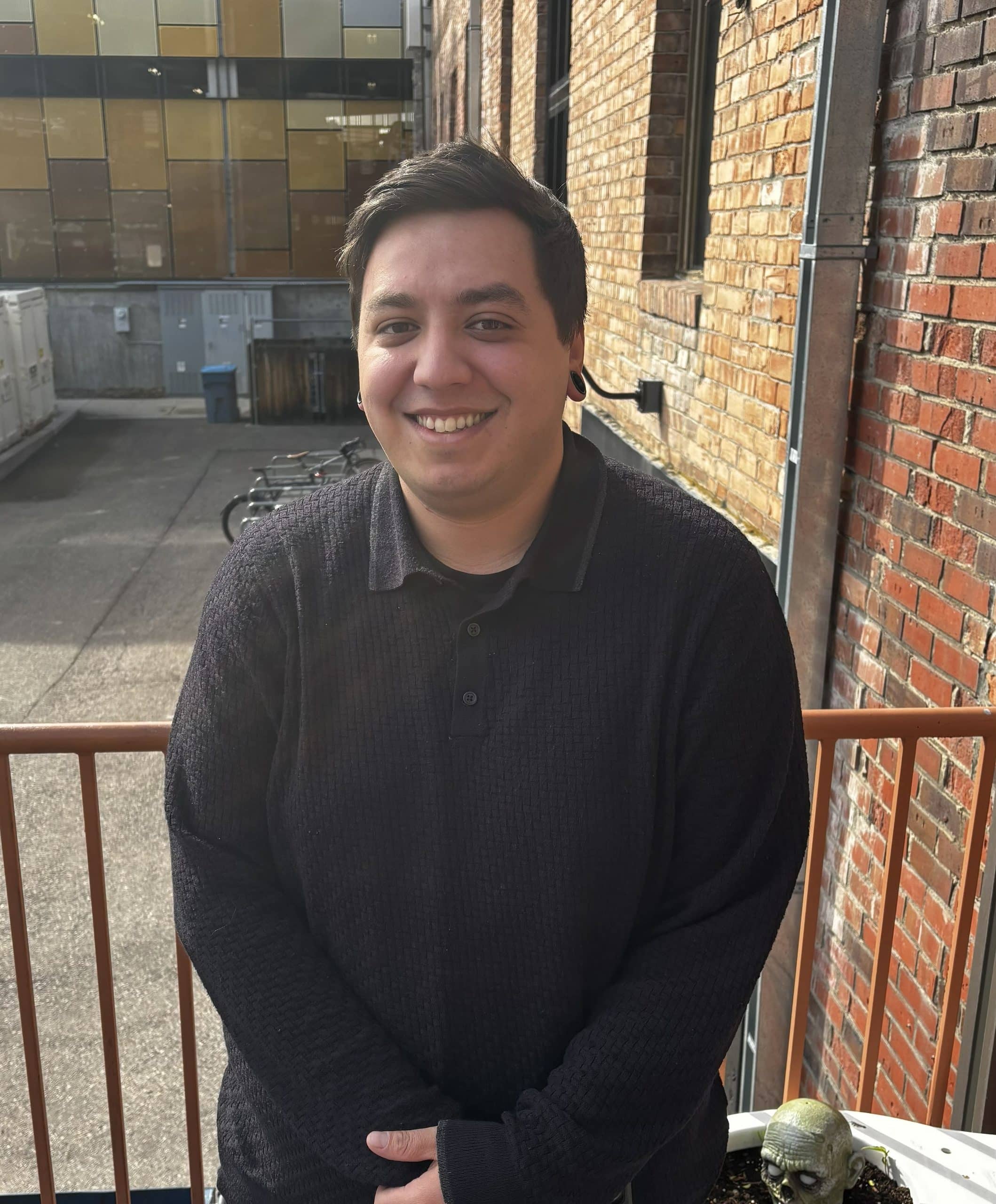
“I would make my friends drop me off a block or two before I was ever even home. Because when I lived in a trailer, I didn’t want them to know where I was at, you know.” — Anthony Johnson, former mobile home resident, on his internalized shame
“The people that get a mobile home and live in a mobile home park, they get a bad rap like they’re a bunch of low lives but they’re not. They’re hard working people.” — Tom Wheeler reflecting on the park’s residents
Crime, health and safety
Trailer parks have often been associated with crime, substance abuse, and antisocial behavior in ways disproportionate to their actual incidence. Studies have found that parks are generally no more prone to these problems than similar neighborhoods, and newspaper coverage of Missoula’s parks over the last decade likewise gives little indication that these problems occur at higher rates than in comparable neighborhoods. Substance abuse and violent crime have certainly affected some of these communities. Residents, however, tend to describe these problems as concentrated among a few people and driven by economic hardship and absent landlords.
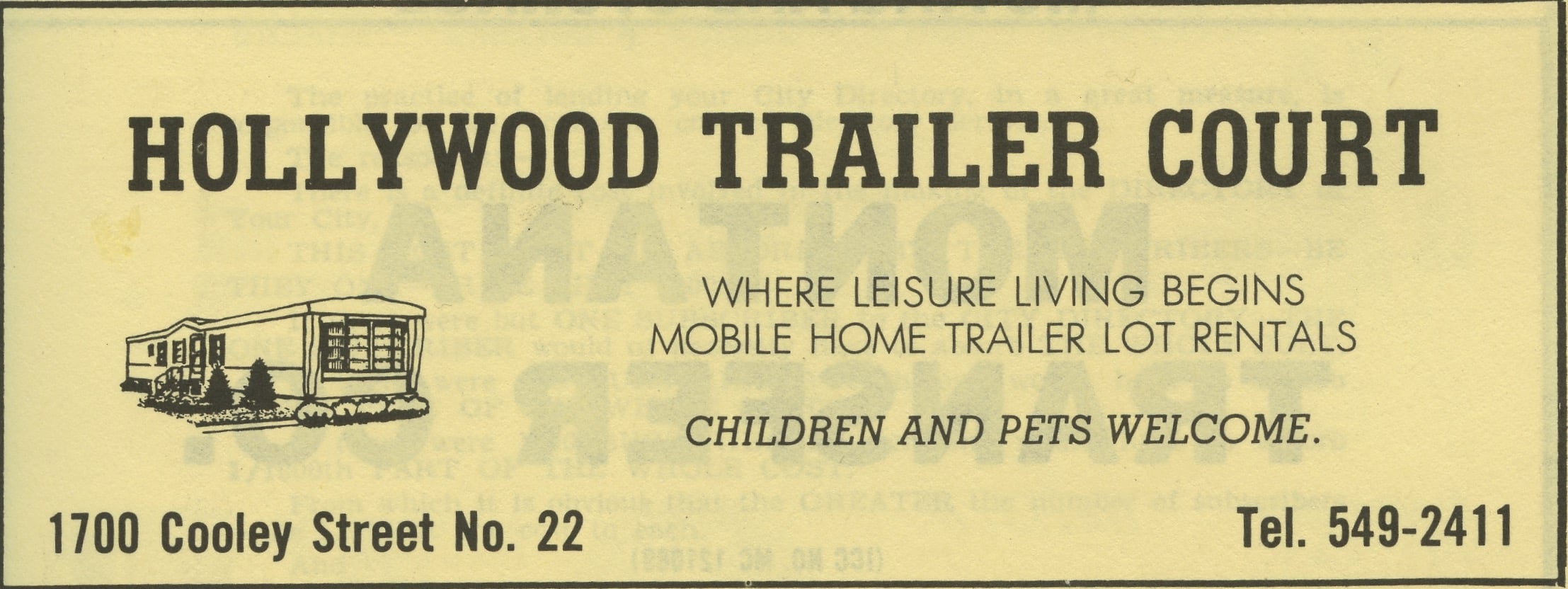
The history of Hollywood Trailer Court provides a useful example of how the character of trailer courts can change over time. The Caplis family built Hollywood in 1965, with one family member living on the premises and serving as park manager. By the mid-1990s, however, the Caplises were using Lambros Real Estate to manage the property, though the family later charged Lambros with mismanaging it. By the mid-2000s, the park had been sold to an out-of-state investor, Fred Haruda, an Oregon doctor who owned multiple mobile home parks, which he liked because of their low overhead. He was not a “hands-on landlord.”
By this time, residents’ experience of the park had been transformed. In the mid-1990s, Hollywood had been a well-tended, pleasant place to live, according to residents. By 2006, however, it was rife with abandoned trailers, strewn with garbage, and dirty. After years of feeling safe, one resident noticed an uptick in police arrests, vagrants, and drug dealers. She awoke at night to sounds of violence. Residents blamed the landlord, who in turn blamed the property management company he had hired. Hollywood’s negative image has persisted since then, but notably, for most of its history it did not have a negative reputation.
“The worst part about the trailer park was the addictions. You know, for the people that lost their jobs and couldn’t pay rent. You evicted them, that was hard to do to some people. Some people it wasn’t hard to do.” — Tom Wheeler on the park’s struggles after sawmill closures in the 1980s
“Smaller trailer parks had pride… They mowed them. They took care of their places. They made them look nice. Because it wasn’t much but it was all they had… The people that own them don’t live there, they’re corporate-owned now… With corporate ownership, it has nothing to do with people. It has nothing to do with pride. It’s what they- you gotta generate a profit.” — David Rieker, lifelong mobile home resident and former park manager, on the greatest challenges park residents face
“Part of the magic was being able to diffuse tense issues… Everybody knew somebody… I was a local, I was trusted. So, for me managing a trailer court was very easy… Corporations can’t do that. And you just put somebody in that doesn’t know anybody and you got drugs and everything involved. It’s a much more volatile situation now than ever before.” — David Rieker on how being part of the community helped him manage potentially violent situations in his park
Identity and pride
Despite these struggles, many residents and local owners took great pride in their communities. They describe park life as challenging but fundamental to who they are, and they emphasize roots, belonging and self-sufficiency. Many of their hardships, including unaffordable relocation, missing infrastructure and exploitative out-of-state owners, were produced by housing systems, not by the character of the people living there.
“I am a poor person… I own it, I claim it, it’s my identity. It made me who I am.” — Richard Fifield on pride of ownership in the face of financial difficulty
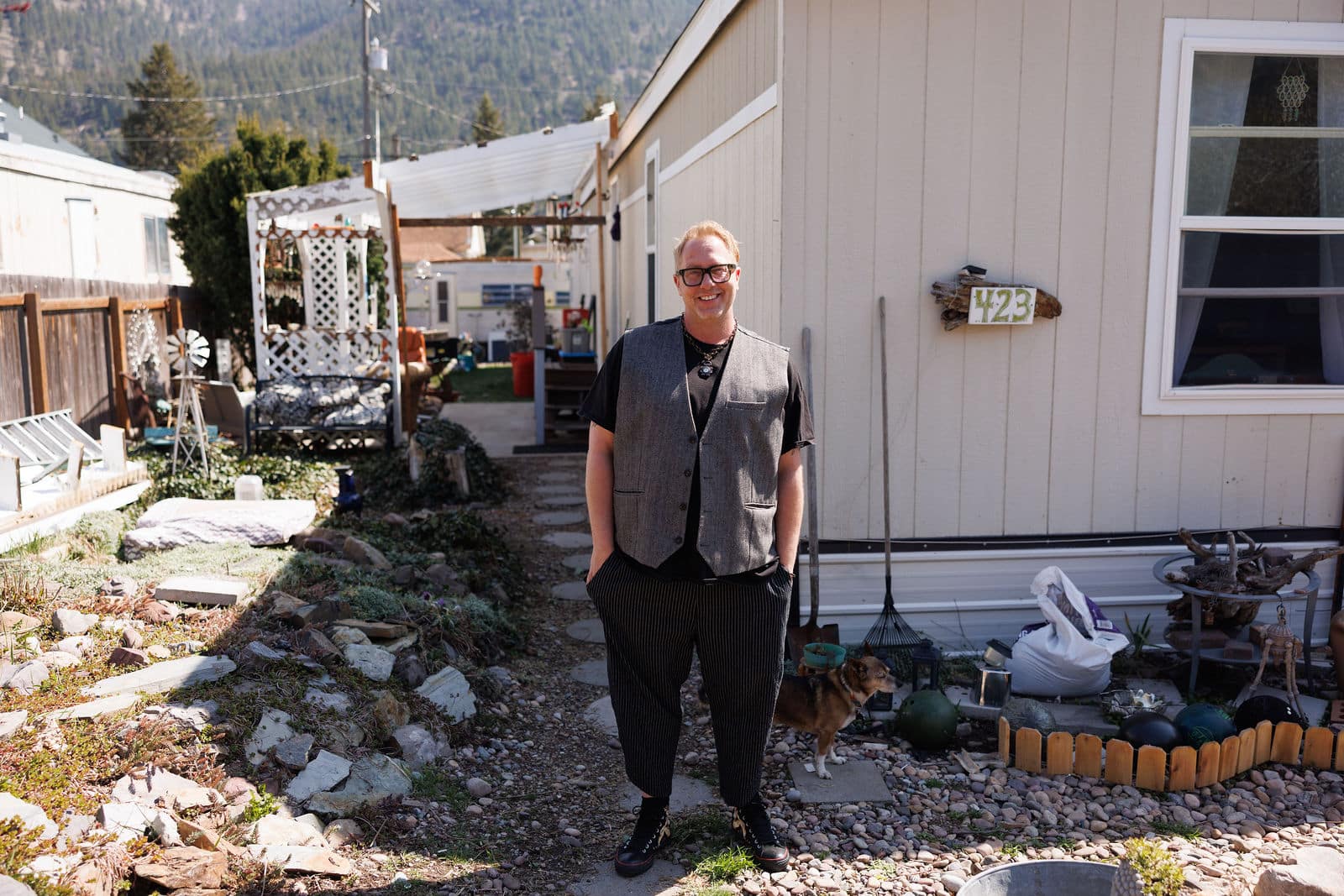
“A lot of the homes on these lots and these parks, the established parks are, I mean some of them are fifty years old. And the people that live in them are very proud folks. I almost like to describe it as like the pioneer spirit with a lot of them. You know the people that live in these places have just this really strong drive to be independent.” — Brian Lease, lifelong mobile home resident and current president of the Buena Vista Community Resident Owned Cooperative
“They might be poor, but they always paid. And you always took care of them. And again, it was a community. It was just like a tribe, if you want to call it such. You had the older, and you had the younger, and a few in the middle.” — David Rieker, lifelong mobile home resident and former park manager, on how residents took care of each other
“And we became dependent, and we shared. We had the same common interest. Even though one of the people that was in our trailer court, that was one of my better friends at the time, he was a star for the Montana Grizzlies. He graduated in 1969 or 70, and he played pro ball in Canada, and he worked out at Bonner. He was a foreman, a job supervisor, whatever. He was there. There was a lot of people lived in trailer courts that today have six figure incomes… But they started in a simple deal. And some of the best friendships and bonds they made were in the trailer court.” — David Rieker, on the range of people who lived in his trailer court
“But without a school, without a grocery store, without any social services, how do you build a community?” — Richard Fifield, on the challenges to community building in East Missoula
“A house is a house is a house. But I think being born in a trailer house is gonna give you a different answer than somebody who was a newer adopter.” — Richard Fifield, on the perspective of lifelong mobile home residents
A ‘mobile’ life?
“Mobile home” suggests something portable. But once a home was set on its lot, moving it was rarely practical. At the same time, residents lacked the legal permanence of traditional homeowners.People put down deep roots in places that could be sold out from under them.
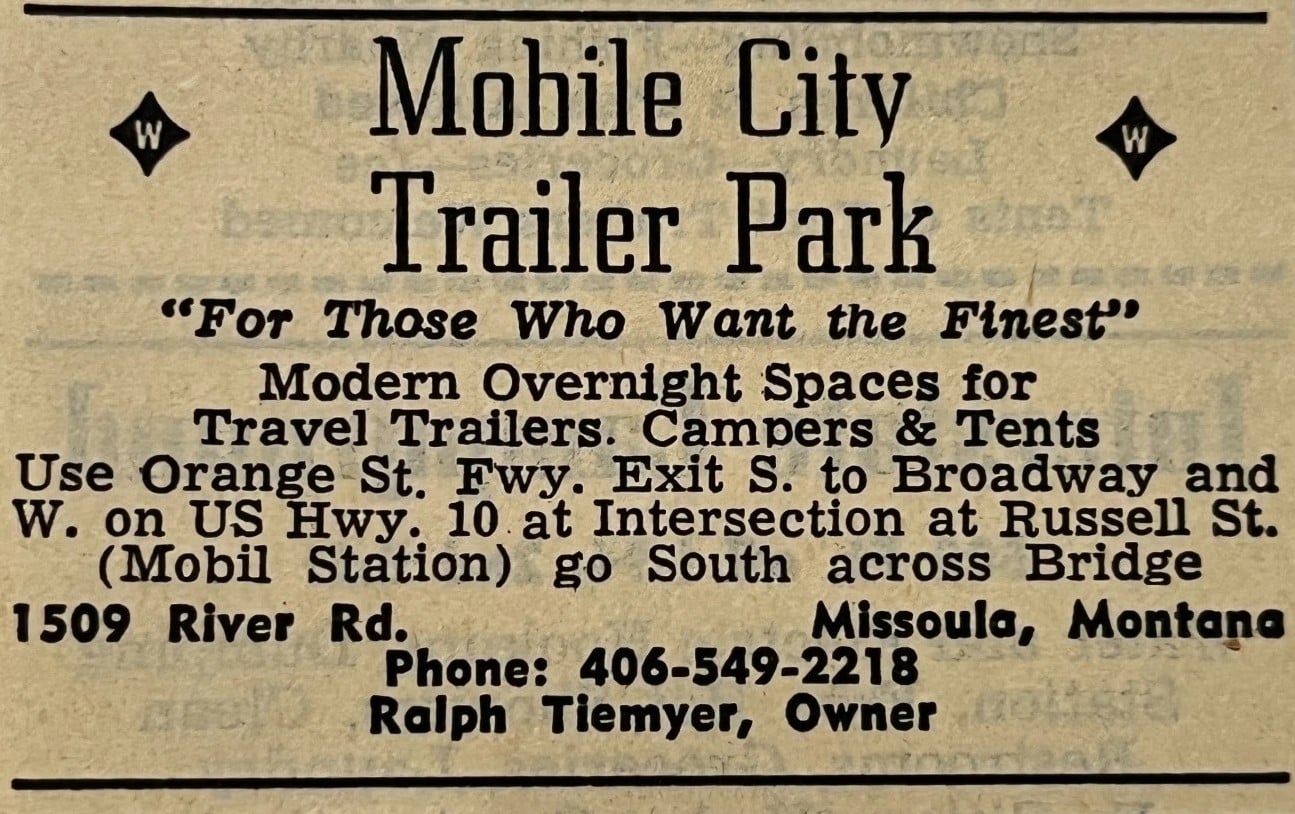
Trailer parks and mobile homes had their origins in mobile and flexible living — a way of life reflected in this advertisement for Mobile City Trailer Park in 1974 — but that mobility became increasingly restricted over time. Credit: Woodall’s Directory.
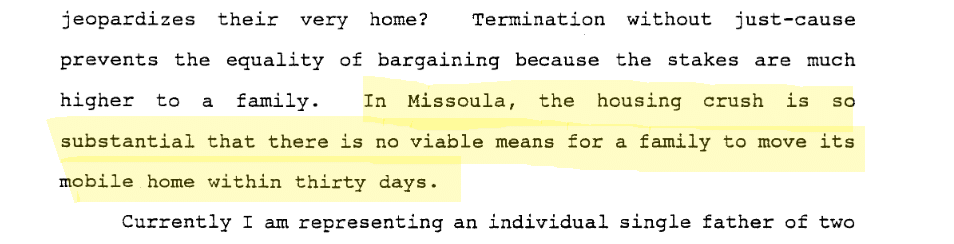
“And if you give somebody 30 days to move their trailer, it’s impossible. You can’t find a mover to do it. You can’t find a place to put it. So it’s a racket. They’ll leave their trailer there. The landlord immediately resells them… But what do you choose?” — Richard Fifield, on the challenges residents face when trying to relocate
“Roots matter so much to the formation of our psyches and our souls. I mean, I’m sure old money apartment living is different, right? But what do roots mean? And what does a foundation mean? Because in this case, all of this disaster could have been avoided if I could have put this house on a permanent foundation.” — Richard Fifield, on the sense of impermanence felt by many mobile home residents
What the headlines left out
Outsiders rarely saw the full picture. Journalists, policymakers and zoning boards tended to show up only when something went wrong, and the public record reflects that. Those headlines built an image of “trailer park” life that many residents absorbed. Living in a park meant constantly negotiating between how the world saw you and how you saw yourself. The oral histories collected here fill in what the headlines left out.
Previous: Part 2: Traveling toward permanence | Next: Part 4: From court to court