
Unsettled Ground
History, experience, community and conflict over mobile homes in the Missoula area.
A collaboration between the University of Montana Public History Program and The Pulp.
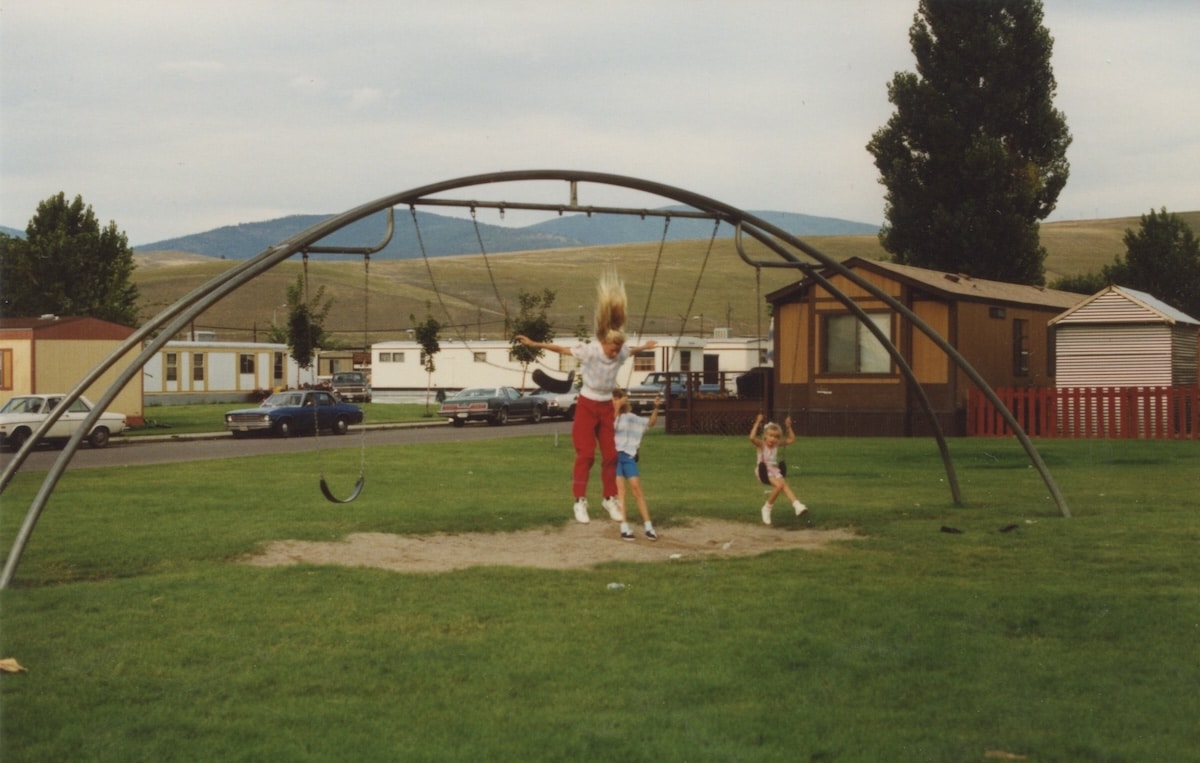
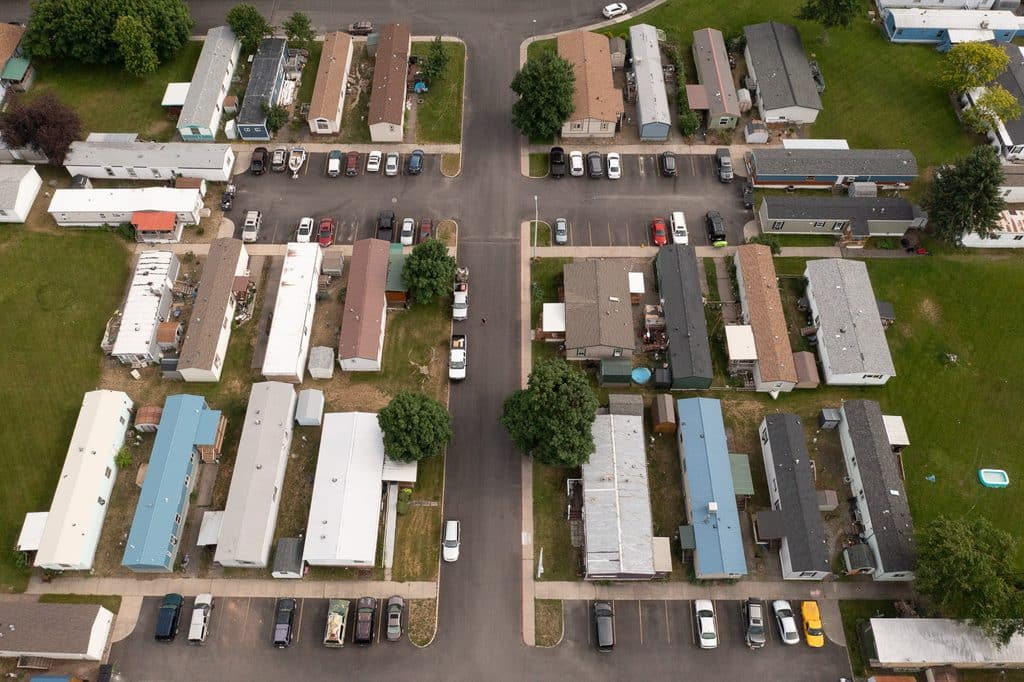
If you spend any time cruising around Missoula, you will see mobile homes. Some are single homes alongside more “conventional” stick-built houses in a neighborhood. Some sit at the edge of a pasture or the entrance to a ranchette on the urban fringe. Others form little clusters, tucked into the corner of a residential block. And still others group together in bigger formations — half circles and grids — in official mobile home parks and trailer courts.
You may also notice that there are virtually no mobile homes in some places — the Rattlesnake, the University District, the South Hills — and that is part of the story of mobile homes in Missoula, too. But there are a lot of mobile homes and trailer parks in Missoula — far more than in most places in the United States. These mobile homes and parks have been in Missoula for a long time, but the challenges they face mean that many have disappeared or are in danger of disappearing.
This digital exhibit, a collaboration between the University of Montana Public History Program and The Pulp, tells the story of how mobile home living developed in Missoula and the challenges this sort of housing has faced. We tell it through traditional historical sources but also through the voices of mobile home residents who contributed their knowledge and experience through oral histories.
Mobile homes have been a vital part of Missoula’s housing, even as mobile home residents have faced stigmatization, exclusion and exploitation.
Mobile homes have been a vital part of Missoula’s housing, even as mobile home residents have faced stigmatization, exclusion and exploitation.
Mobile homes are a Missoula story. They are a distinctive part of how our area looks, feels and works. The story is complicated, and there is more to it than can be encapsulated in a single exhibit, but the research and oral histories we have conducted show that mobile homes have been a vital part of Missoula’s housing, even as mobile home residents have faced stigmatization, exclusion and exploitation.
To tell the different parts of the history of mobile homes in Missoula, we have developed two interactive maps and four exhibit sections that explore different aspects of the story of mobile homes.
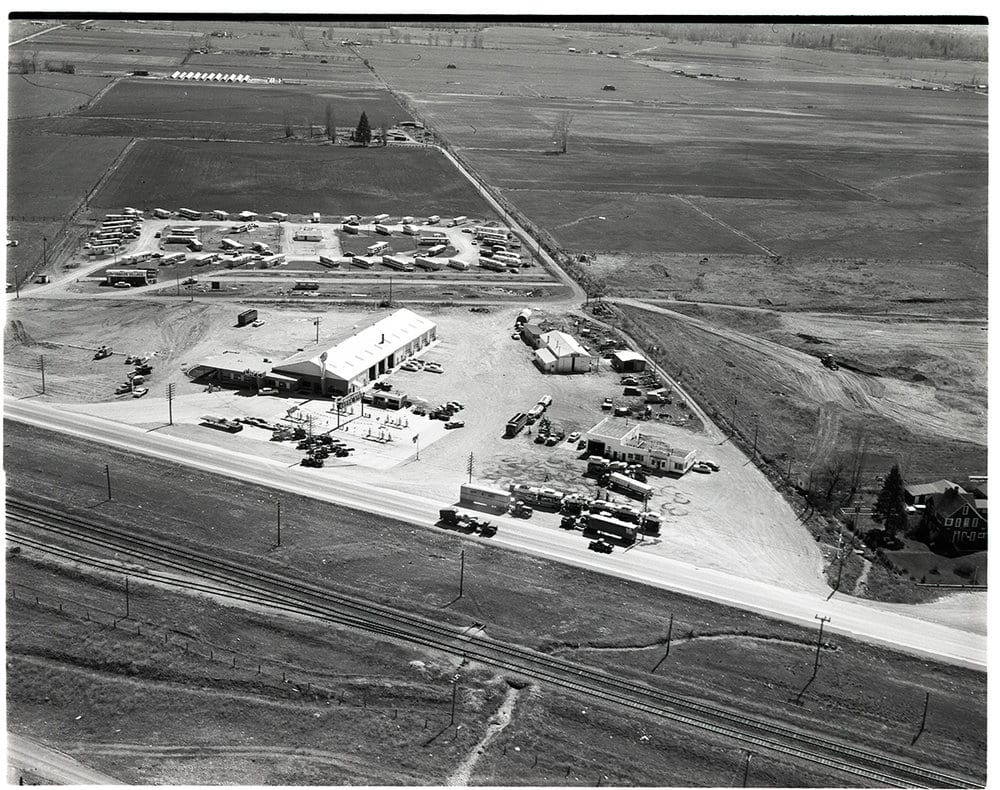
The “Unsettled Ground” story map (above) hops around to specific places — parks, trailer dealers, neighborhoods, small towns — to give you a broad overview of the history of mobile homes, from the establishment of the first parks in Missoula’s center, to the expansion of trailer courts as working- and middle-class homes at midcentury, to battles over zoning, sanitation, powerful landlords and tenant rights.
With the “Missoula Mobile Home Patterns” map below, you can explore all current mobile home parks in Missoula, along with several important former parks. Zoom in to see where parks are located, when individual parks were established or demolished, and how development shifted over time — especially as newer parks were built farther from the city center.
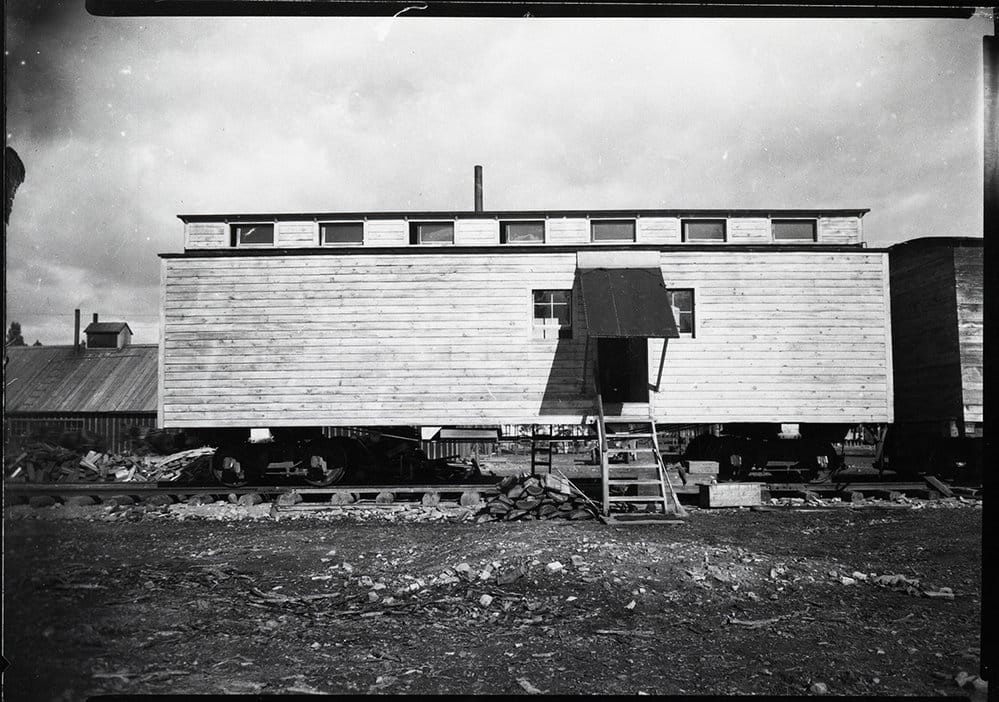
The “Traveling toward permanence” exhibit takes you on a ride from the transient roots of trailers to their more stable, if still vulnerable, existence up on blocks or permanent foundations in residential trailer parks, showing how Missoula’s story was shaped by state and national factors.
The “A mobile life” exhibit explores the experience of mobile home residents: how and why they came to live in mobile homes, what “home” and “community” mean to them, how they faced hardship and stigma, and how they built communities.
The “From court to court” exhibit traces the story of mobile homes in Missoula through law and policy, charting the evolution of regulations, zoning and tenant-landlord laws related to trailers and mobile home parks.
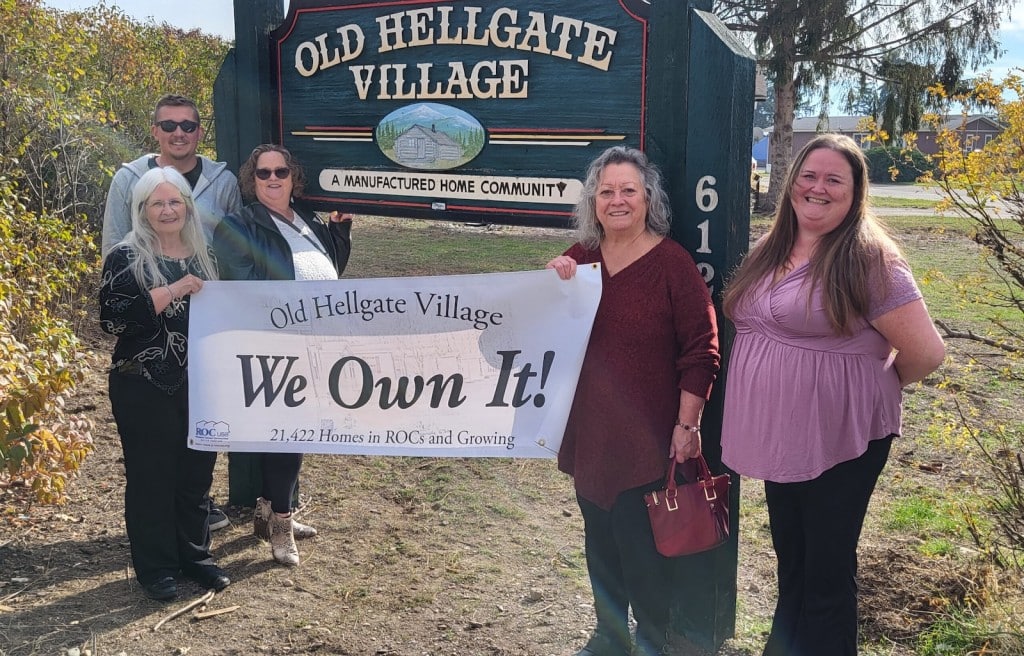
The “Owning and organizing” exhibit turns to the recent history of mobile home parks, outlining the emergence of new patterns of ownership — from local owners, to out-of-state investors, to private equity firms — and the parallel development of tenant activism, organizing and resident-owned cooperatives.
October 2026
Part 2: Traveling toward permanence
How the mobile home went from travel accessory to long-term housing in Missoula.
Part 3: A mobile life
How Missoula mobile home residents talk about affordability, stigma and pride.

Part 4: From court to court
How national, state and local laws shaped mobile home parks in Missoula.
Part 5: Owning and organizing
How Missoula mobile home residents have organized as park ownership changed.
The Pulp’s reporting is part of this project. Robert Chaney’s story, informed by the students’ research and interviews, follows the history into the present, as out-of-state investors buy up Missoula’s mobile home parks and residents organize to push back.
Mobile permanence
Stigma and zoning pushed Missoula’s trailer parks into the black holes of local memory. Now, as out-of-state investors move in, residents are pushing back — and their history is finally coming to light.
By Robert Chaney
About the project
This digital exhibit, a collaboration between the University of Montana Public History Program, The Pulp, and the Mansfield Library Archives and Special Collections, explores the history of mobile home living in Missoula through interactive maps and thematic exhibits. It traces the growth of trailer courts and mobile home parks, changing patterns of zoning and ownership, and the experiences of residents who built homes and communities within them.
Alongside traditional historical sources, the project draws on oral histories to bring residents’ voices, knowledge, and experiences into the story. Because the lives of everyday people are often poorly documented in the historical record, we focused especially on gathering a wide range of stories from mobile home residents. We also interviewed park managers and people who have worked with mobile home residents as organizers, cooperative housing advisors, legal and political advocates, and government officials.
In addition to their use in this project, these oral histories will be collected together as the Mobile Missoula Oral History Project, which will be preserved and made available through the Mansfield Library Archives and Special Collections at the University of Montana.
Authors, contributors and partners
The following students from the University of Montana’s “Making History Public” class wrote and developed this project based research and oral histories they conducted: Cecilia Ahrens, James Been-Rodriguez, Isabel Biggers, Kasey Binsted, Dylan Brown, Caitlynne Callahan, Iliana Capozzoli, Rhiannon Crockett, Madeline Delaney, Tristan Dreke, Linnea Farr, Desiree Funston, Emma Hixson, Caleb Hooper, Devon Huff, Sam Jackson, Olivia Kohn, Josie Macek, Rebecca Maine, Myles Maloney, Emily Miesen, Gaven Meyer, Nora Mullen, Logan Nickel, Hogan O’Donnell, Lana Santiago, Meghan Schaeffer, Jack Smart, Joe Smiley, Paige Sogard, Sean Staples, Mason Swenson, Lynsie Tucker, Henry Young.
Leif Fredrickson, director of the Public History Program at the University of Montana, taught the “Making History Public” class and coordinated the project.
Erika Fredrickson and Leif Fredrickson edited the project.
Justin Bangston developed data and digital resources for the project, including implementing the embedded sound and creating the Missoula Mobile Home Patterns map.
Rob Chaney was the project’s lead journalist, reporting on current mobile home issues.
John Stember contributed photography to the project.
Special thanks
The following organizations and individuals spoke to our class, helped us find oral history narrators, or otherwise helping inform us or advise us on this project: Montana Gaddis, Richard Fifield, Missoula Tenants Union, Neighborworks Montana, and Front Step.
The Missoulian, the Mansfield Archives & Special Collections, Aidan Courtney and Rangitsch Brothers, Linda Wolf, Britt Dalton, and Nora Mullen allowed us to use their photographs and images.
GIS Specialists at Missoula County and the City of Missoula shared files with us to help make our maps.
Sources
Oral Histories
Mobile Missoula Oral History Project
Newspapers
Daily Inter Lake
Daily Missoulian
Flathead Beacon
Great Falls Tribune
Missoula Current
Missoula Independent
Missoula Sentinel
Missoula Times
Missoulian
Montana Free Press
Montana Kaimin
Pantograph
Other Primary Sources
U.S. Census
Montana State Legislature Hearings
Missoula City Laws and Regulations
Montana State Code
Bibliography of Secondary Sources
Apgar, William, Allegra Calder, J. Michael Collins, and Mark Duda. An Examination of Manufactured Housing as a Community- and Asset-Building Strategy. Working Paper W02-11. Cambridge, MA: Joint Center for Housing Studies of Harvard University, 2002.
Carter, Donald Ray. “The Mobile Home as a Source of Medium Priced Housing with Particular Reference to Great Falls, Montana.” Master’s thesis, University of Montana, 1972.
Edgcomb, James A. “Zoning for Manufactured Housing: A Case Study in Missoula, Montana.” Master’s thesis, University of Montana, 1988.
Felser, Gary Jay. “The Mobile Home Park in the United States: A Developmental History.” Bachelor’s thesis, Massachusetts Institute of Technology, 1972.
Formanack, Allison Beth. “Mobile Home on the Range: Manufacturing Ruin and Respect in an American Zone of Abandonment.” PhD diss., University of Colorado Boulder, 2018.
Founds, Katie M. “‘We Had Become Trailer People’: Stigma, Social Boundary Making, and the Story of the American Mobile Home Park.” PhD diss., University of Kentucky, 2020.
Hart, John Fraser, and John T. Morgan. “Mobile Homes.” Journal of Cultural Geography 15, no. 2 (1995): 35–53.
Hart, John Fraser, Michelle J. Rhodes, and John T. Morgan. The Unknown World of the Mobile Home. Baltimore: Johns Hopkins University Press, 2002.
Herbert, Chris, Alexander Hermann, Daniel McCue, and Chadwick Reed. A Review of Barriers to Greater Use of Manufactured Housing for Entry-Level Homeownership. Cambridge, MA: Joint Center for Housing Studies of Harvard University, 2024.
Historic Resources Group. SurveyLA: Los Angeles Citywide Historic Context Statement. Residential Development and Suburbanization, 1880–1980: Trailer Parks and Mobile Home Parks, 1920–1969. Los Angeles: City of Los Angeles Department of City Planning, Office of Historic Resources, 2016.
Hormel, Leontina. Trailer Park America: Reimagining Working-Class Communities. New Brunswick, NJ: Rutgers University Press, 2024.
Hurley, Andrew. “The Invisible Suburbs: Trailer Parks in St. Louis, 1920–1990.” Gateway Heritage 20, no. 4 (Spring 2000): 4–15.
Jackson, Kenneth T. Crabgrass Frontier: The Suburbanization of the United States. New York: Oxford University Press, 1985.
Krakhmalnikov, Eduard. “The Trailer Park That Became a City: Hilltop and the Importance of Mobile Home Parks as Endangered Historic Places.” Minnesota History 65, no. 8 (Winter 2017–18): 314–324.
Lawrence, Parker Clifton. “Home Sweet Mobile Home Park: Developing a Historic Context for a Modern Resource.” Master’s thesis, University of Georgia, 2014.
Moore, Marvin M. “The Mobile Home and the Law.” Akron Law Review 6, no. 1 (1973): 1–41.
Ore, Janet. “Mobile Home Syndrome: Engineered Woods and the Making of a New Domestic Ecology in the Post–World War II Era.” Technology and Culture 52, no. 2 (April 2011): 260–286.
Rhodes, Michelle Jo Ann. “The Manufactured West: House Form and Region.” Master’s thesis, Simon Fraser University, 1998.
Salamon, Sonya, and Katherine MacTavish. Singlewide: Chasing the American Dream in a Rural Trailer Park. Ithaca, NY: Cornell University Press, 2017.
Smith, Dina. “Lost Trailer Utopias: The Long, Long Trailer (1954) and Fifties America.” Utopian Studies 14, no. 1 (2003): 112–131.
Stoltz, Zoe Ann. “A Mobile Solution: Manufactured Housing in Twentieth-Century Montana.” Montana: The Magazine of Western History 66, no. 1 (Spring 2016): 59–71.
Stoltz, Zoe Ann. “From Camping to Permanence: A History of Montana Mobile and Manufactured Homes.” Master’s thesis, University of Montana, 2011.
Sullivan, Esther. “Displaced in Place: Manufactured Housing, Mass Eviction, and the Paradox of State Intervention.” American Sociological Review 82, no. 2 (April 2017): 243–269.
Sullivan, Esther. Manufactured Insecurity: Mobile Home Parks and Americans’ Tenuous Right to Place. Berkeley: University of California Press, 2018.
Thornburg, David A. Galloping Bungalows: The Rise and Demise of the American House Trailer. Hamden, CT: Archon Books, 1991.
Twitchell, James B. Winnebago Nation: The RV in American Culture. New York: Columbia University Press, 2014.
Wallis, Allan D. Wheel Estate: The Rise and Decline of Mobile Homes. New York: Oxford University Press, 1991.
Wright, Gwendolyn. Building the Dream: A Social History of Housing in America. New York: Pantheon Books, 1981.