A proposed AI data center in the Bonner Milltown industrial park is headed for its first formal public hearing July 1 after developers submitted a completed application to Missoula County this week.
And if recent meetings of the Bonner Milltown community council and other public forums are any indication, there could well be some fireworks at the July 1 meeting of the county Consolidated Land Use Board, the body considering the project. In occasionally testy exchanges with company representatives, members of the community have repeatedly raised concerns about noise, water consumption, energy rates and the potential job benefits.
“I’ve been in planning and zoning a long, long time, over 30 years,” said Rick Hall, the chair of the community council and a member of the planning board, at a meeting this week. “I don’t know that I’ve ever seen anything that has generated more comments.”
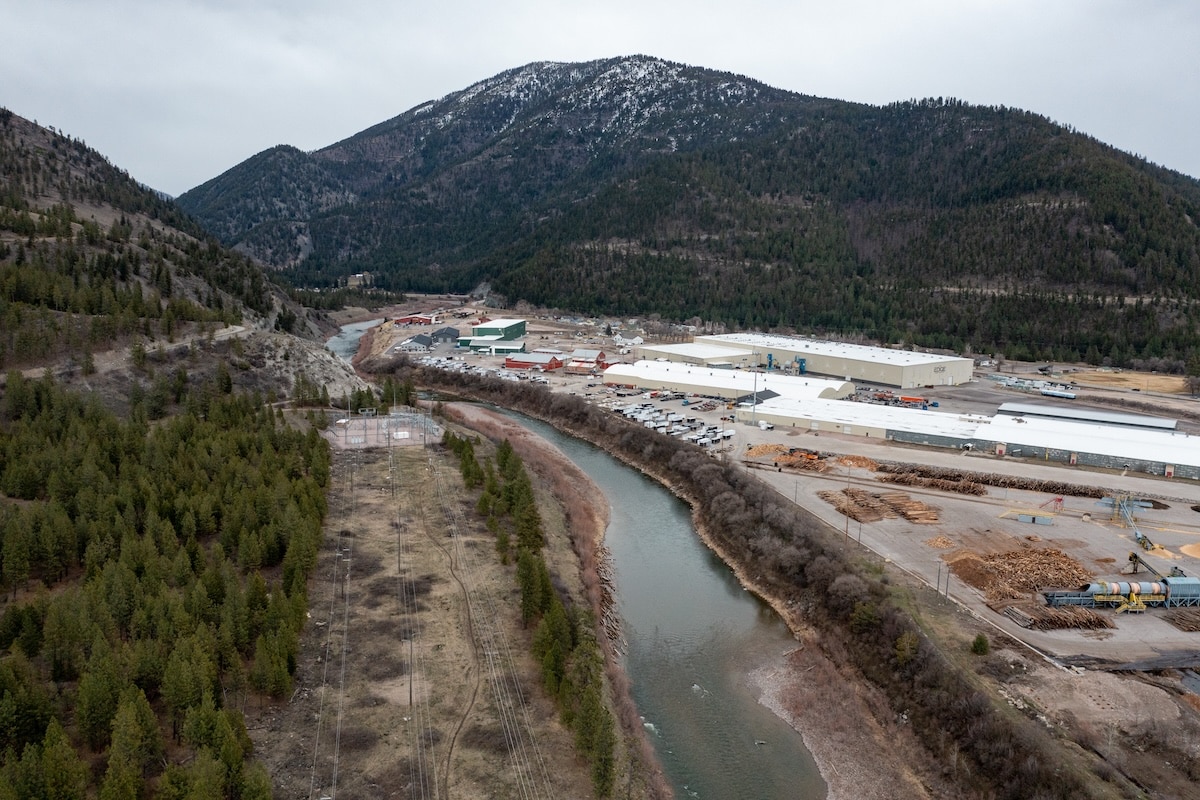
And who could blame them? As Claire Bernard wrote for The Pulp last month, the community has been burned many times over — by a collapsing timber industry and, more recently, another AI-adjacent project, a bitcoin mining facility that went bankrupt in 2020 after years of community complaints about noise and power consumption.
“This is a brand new frontier fueled by a lot of promises,” one commenter at the community council meeting this week said. “Industry has let us down in the past. So public mistrust should not come as a surprise.”
The company has attempted to answer some of these concerns with promises of minimal impact on the water supply and energy rates, and a minimal noise footprint and negligible waste heat, some details of which are laid out in the completed application.
Krambu says the Bonner site can accommodate up to 29 MW of power usage, but in an April filing the company’s engineer disclosed that full buildout could reach 100 MW, depending on available power and market demand. Its application puts water usage at around 50,000 gallons a month — drawn from an on-site fire suppression well, not the domestic well serving nearby residences.
“Krambu will be constructing a modern data center in Missoula,” a narrative document the company submitted with its application says. “The equipment they are using is state-of-the-art.”
But many are a bit more than mistrustful. Count Paul Barmore among them. The metal artist who owns Big Sky Flies wrote a petition opposing the project that now has more than 4,300 signatures. He told the community council he grew up near the Yellowstone Club, and said the tony resort would rather pay fines for dumping sewage into the Gallatin River than change its practices.
“So when I see businesses coming with a lot of money to a beautiful place like this, I’m very suspicious,” he said. “Do we really want this industry in Montana? I don’t see any argument for why we do. I see arguments for why it might not harm the community and might not harm the river, but as far as accepting them with open arms and trusting them even though they have NDAs and they can’t talk about things, I’m not having any of that and I’m rejecting it completely.”
The project will have to comply with zoning regulations the county developed in the fallout of the bitcoin mining fiasco that require the use of renewable energy, among other environmental contingencies. But the current review by the land use board is focused narrowly on the data center’s potential impacts on nearby residential properties.
“In my time on planning and zoning, whether a business is good or bad for a community has never been a decision for whether you approve it or not.”
For many, the concerns run much deeper than water and noise. The project stirs broader anxieties around AI — who benefits, who bears the costs, and whether it’ll cost more jobs than it creates. (Krambu says the facility will require no regular staff.)
But these existential worries aren’t necessarily the purview of the county government.
“In my time on planning and zoning, whether a business is good or bad for a community has never been a decision for whether you approve it or not,” Hall said. “It’s whether it’s allowed by code, whether it meets the zoning.
“I think we ought to ask, is a bigger casino good for our community?” he continued, referencing another controversial proposed development nearby. “Probably not. But that is not the yardstick for whether a business is there or not. And you know, in this country, it’s whether businesses choose to be there so they can make money. That’s it. Not to be good to the community.”
That said, another member of the community council, Jane Kipp, remembered an example that might contradict that narrative.
“A long, long time ago, 25 years or something, they wanted to put a pre-release center where the casino is going. It’s now the travel plaza, and the community came out in force against it, and I remember people being very very upset. ‘It’s too close to the school, too close to my house, too close to everything that everybody was used to.’ And it moved into town on Mullan Road. Went to somebody else’s neighborhood, not ours. And so it can be done.”